DD
MM
YYYY

PAGES

DD
MM
YYYY

spot_img

PAGES

Home Blog Page 1301

Microsoft’s Nadella Declares DeepSeek’s R1 Model First Real Rival to OpenAI, Undercutting Hype Around Google, Meta, and Musk’s AI Efforts

0

Microsoft CEO Satya Nadella has declared DeepSeek’s R1 artificial intelligence model as the first to truly compete with OpenAI’s models—a statement that, though seemingly focused on a single startup, has inadvertently belittled the progress made by other prominent players in the AI race, including Google’s Gemini, Meta’s Llama, and Elon Musk’s Grok.

In an interview published Thursday by Bloomberg Businessweek, Nadella said: “OpenAI has been so far ahead that no one’s really come close. DeepSeek, and R1 in particular, was the first model I’ve seen post some points.”

The phrasing leaves little ambiguity. Despite the billions of dollars invested in the AI models built by major U.S. tech firms, Nadella has reserved praise only for a Chinese challenger, suggesting that other contenders have yet to meet the bar set by OpenAI.

The R1 model, developed by Beijing-based DeepSeek, has stirred significant attention since its release, particularly after its free chatbot unexpectedly shot to the top of the U.S. Apple App Store in January. That surge sent a ripple through the AI investment ecosystem, triggering a sell-off in shares of companies tied to AI infrastructure, especially chipmakers like Nvidia, amid fears that more affordable models could weaken demand for high-end hardware.

Nadella’s statement, though intended as an endorsement of DeepSeek, is being interpreted across the industry as a blunt demotion of the progress made by rivals like Google’s Gemini, Meta’s Llama, and xAI’s Grok.

Microsoft is a major investor in OpenAI and has been seen as a close strategic ally. But its decision to not only host DeepSeek’s R1 on its Azure AI Foundry but also publicly elevate it above all others, except OpenAI, adds a new dimension to the competitive narrative.

DeepSeek’s rise also has geopolitical undertones. The company is based in China, and while Microsoft offers R1 through its cloud platform, it has taken precautions to avoid sending data to DeepSeek’s domestic servers.

“Using R1 on Microsoft’s platform means that data would not be sent to DeepSeek’s servers in China,” the company emphasized in its communications.

Microsoft’s AI platform head, Asha Sharma, noted in January that R1 underwent “rigorous red teaming and safety evaluations” before being offered to customers on Azure. This assurance was likely aimed at addressing concerns about data security and model safety, especially given the sensitive nature of deploying foreign-developed AI models within enterprise environments.

OpenAI CEO Sam Altman, while acknowledging the rising competition, also commended DeepSeek’s achievement. In January, Altman called R1 “an impressive model, particularly around what they’re able to deliver for the price,” and added that DeepSeek’s progress was “invigorating,” prompting OpenAI to accelerate some of its planned releases.

But others have been more cautious in their appraisal. Ben Buchanan, a former special advisor for AI in the Biden administration, said during a March episode of The Ezra Klein Show that R1’s development wasn’t as groundbreaking as headlines might suggest. “R1 is actually not that unusual,” Buchanan said, explaining that while DeepSeek’s engineers are “extremely talented,” their breakthroughs were largely the result of the same algorithmic efficiency efforts already being pursued by other AI labs, such as those at Google, Anthropic, and OpenAI.

Still, it’s Nadella’s comment that has now drawn the clearest line in the sand.

By placing DeepSeek’s R1 in a class of its own—just beneath OpenAI’s flagship models and above the likes of Gemini and Llama—the Microsoft boss has effectively reshuffled the perceived hierarchy of AI powerhouses. Google’s Gemini, launched with fanfare as the successor to Bard, was billed as a “GPT-4 killer” in some early tech coverage. Meta’s Llama models, particularly Llama 2 and the more recent Llama 3, have been positioned as open-source alternatives intended to democratize access to advanced AI. And Elon Musk’s Grok, developed under xAI and integrated into X (formerly Twitter), has been marketed as an edgy, real-time AI personality capable of competing with leading models.

Yet none of these have received the kind of affirmation Nadella has now offered DeepSeek. His remark subtly implies that, from the vantage point of performance and potential, none of the other major players have managed to stand out.

R1’s rise also presents a complicated narrative for U.S. tech firms that have emphasized AI sovereignty and control. While many Western nations have expressed concern over China’s push to dominate AI, Microsoft’s own endorsement—and decision to integrate R1—underscores the reality that innovation is not confined by geography.

DeepSeek’s R1 is now available via Microsoft’s Azure AI Foundry and GitHub, giving developers and enterprise clients direct access to the model within Microsoft’s cloud infrastructure. That also means DeepSeek can scale globally without the geopolitical friction associated with routing data back to China, at least not through Microsoft’s ecosystem.

For Microsoft, the move is pragmatic. The company is hedging its position: doubling down on OpenAI, while also opening its platform to competitive models that offer value. For the rest of the industry, particularly Alphabet, Meta, and xAI, Nadella’s public endorsement of a Chinese model may sting more than expected.
Petrobras Seeks Comeback in Nigeria’s Oil Sector, Targets Deepwater Exploration

0

Brazil’s state-run oil company, Petrobras, is looking to return to Nigeria’s energy sector, with a revived interest in frontier deepwater oil blocks, marking a potential reversal of its earlier retreat from Africa’s biggest oil producer.

The development was confirmed by Nigeria’s Minister of Foreign Affairs, Yusuf Tuggar, during an interministerial review meeting held at the Presidential Villa, Abuja, as preparations intensify for the Nigeria-Brazil Strategic Dialogue Mechanism (SDM) scheduled for June 2025.

Once a stakeholder in the Agbami Field—operated by Chevron—Petrobras left Nigeria more than a decade ago amid a $100 billion debt crisis that forced the Brazilian oil giant to divest assets globally, including in West Africa. The company had entered the Nigerian oil sector in 1998 and remained active for years in the country’s deep offshore blocks before quitting operations as part of a broader restructuring effort.

But with the Tinubu administration’s market-driven economic reforms and signals of regulatory clarity in the oil sector, Petrobras is exploring a comeback. According to Tuggar, Petrobras is keen on deepwater opportunities, specifically frontier acreage that may not yet have been extensively developed.

“Petrobras is no longer active in Nigeria, but they are very keen on coming back,” Tuggar said. “They said they want frontier acreage in deep waters.”

He added that the company is also eyeing collaboration with the Nigerian National Petroleum Company Limited (NNPCL) on ethanol blending, a potential extension of Brazil’s global push for biofuel adoption.

The meeting, chaired by Vice President Kashim Shettima, brought together key ministers and the Solicitor-General to align Nigeria’s goals for the upcoming SDM—a bilateral platform aimed at advancing cooperation across multiple sectors. Shettima underscored the strategic importance of the Nigeria-Brazil relationship, urging ministries to finalize draft agreements that could open the door for meaningful foreign investment.

“The presence of six ministers and the Solicitor-General of the Federation shows the importance we attach to our relationship with Brazil,” Shettima stated. “2025 presents a critical opportunity to deepen economic and technical ties with one of the world’s leading emerging economies.”

The dialogue will include 12 draft Memoranda of Understanding pending legal clearance, covering sectors such as energy, agriculture, health, and culture. Both public institutions and Brazilian private sector actors, led by their Vice President, are reportedly involved in the lead-up to the event.

What’s driving Petrobras’ return?

Petrobras’ renewed interest in Nigeria aligns with its recent pivot toward overseas asset acquisition. In February 2025, the company revealed it was in talks with major players like ExxonMobil, Shell, and TotalEnergies to buy into their existing African energy portfolios, as the company seeks to strengthen its upstream operations.

This shift is happening as Petrobras emerges from years of austerity, having once planned to divest up to $21 billion in assets during its financial crisis in 2017. At the time, it sold off various holdings, including $2.9 billion in global assets to Norway’s Equinor, as part of a broader debt reduction strategy.

The revival of interest in Nigeria is expected to benefit both countries. For Nigeria, Petrobras’ re-entry could revitalize exploration and production in deep offshore basins, many of which remain underexplored due to historical underinvestment and regulatory uncertainty. For Petrobras, Nigeria represents an entry point to West Africa’s energy corridor, providing a platform for high-margin, long-term crude production.

Beyond oil, Petrobras is also expected to discuss a biofuels partnership with Nigeria. The company’s ethanol blending proposal, if adopted, could create a secondary fuel market in Africa’s most populous nation. Tuggar noted that the company intends to collaborate with the NNPCL on developing local ethanol-blending frameworks—echoing Brazil’s model, where ethanol is a core component of the national fuel mix.

This move fits squarely into President Tinubu’s broader energy transition plan, which seeks to reduce Nigeria’s reliance on petrol imports while attracting green energy investments.

However, experts caution that Petrobras’ return may hinge on Nigeria’s ability to guarantee contractual stability, regulatory predictability, and operational security in the Niger Delta, where most deepwater activities are based. The region has long grappled with piracy, sabotage, and insecurity, even as oil majors continue to shift their portfolios toward less risky, low-carbon assets.

Moreover, Nigeria is facing a production slump, with daily output hovering well below the 1.5 million barrels per day OPEC quota, due largely to crude theft and pipeline vandalism. Petrobras’ participation could boost confidence in the upstream sector—but only if Nigeria can ensure that operating conditions are conducive.

Petrobras’ possible re-entry, if finalized, may not only mark a turning point for Brazil-Nigeria relations but also signal a new era for foreign participation in Nigeria’s offshore oil frontier. The upcoming SDM dialogue in June will be pivotal, not just in shaping that narrative, but also in signaling whether Tinubu’s reforms have truly turned Nigeria into a viable investment destination once again.

Microsoft Shuts Down Bing Search APIs, Leaves Developers in the Cold as AI Integration Takes Over

0

Microsoft is shutting off access to its Bing Search APIs, marking a major shift in its search data strategy that will cut off thousands of developers, startups, and rival search engines from one of the most widely used search indexes on the web.

The tech giant quietly announced that Bing Search APIs will be officially retired on August 11, 2025, after which all existing instances will be “decommissioned completely” and no new customers will be allowed to sign up.

The move is significant and has sent ripples through the developer ecosystem, as it effectively eliminates raw access to Bing’s search data — a lifeline for several third-party platforms that depend on Bing results to power their services.

While Microsoft has offered a replacement through its AI-integrated service “Grounding with Bing Search” as part of Azure AI Agents, this alternative is far from a one-for-one substitute. It provides search summaries rather than raw, indexable data and is tailored more for chatbot applications than traditional search use cases. Developers do not get access to the full set of search results or metadata — a change that limits flexibility and breaks compatibility for many existing apps.

Smaller Developers Left Behind

Notably, big customers like DuckDuckGo, which has long relied on Bing to power its privacy-first search engine, will retain access to the Bing APIs after the cutoff date, according to a report by Wired. But smaller developers and startups will be locked out, prompting fears of increased consolidation in the web search market and a loss of viable alternatives to Big Tech’s stranglehold.

This marks a culmination of Microsoft’s trend over recent years, during which it quietly raised prices for Bing Search API access, making it increasingly unaffordable for smaller users. Now, with this full deprecation, even those who managed to keep up with rising costs are being forced to find alternatives or shut down.

AI at the Center of Microsoft’s Strategy

Microsoft’s move comes at a time when the company is rapidly pivoting towards AI-centric business models, particularly since the explosive rise of generative AI. Grounding with Bing Search is part of Microsoft’s Azure OpenAI stack, which powers chatbot experiences by fetching and summarizing content from the web. But the pivot comes with trade-offs. Many developers have voiced concerns that Microsoft is replacing a flexible, open search API with a closed system geared more towards enhancing its AI agents than supporting broader use cases.

The replacement service offers structured, filtered outputs optimized for AI prompts rather than full access to search results. This limits transparency and granularity, pushing developers to either adapt their products entirely or abandon Bing’s ecosystem.

Timing and Regulatory Overtones

The timing of the announcement, just days before Microsoft’s Build developer conference, and just a week after the U.S. Department of Justice’s latest action in its antitrust case against Google, is notable. The DOJ is seeking to break up Google’s dominance in the ad tech business, a campaign that has reignited scrutiny of anti-competitive behavior across the tech sector, including concerns over control of access to web search data.

Microsoft, for years the underdog in the search race, now finds itself in a position where it too is cutting off access to key internet infrastructure. This comes at a time when open and diversified access to search data is increasingly seen as critical to breaking monopolistic control over information on the internet.

With Bing Search APIs gone, the field is narrowing. The decision could undermine emerging competitors in the AI and search space that rely on multiple data sources to build smarter, faster tools — companies like Perplexity, Cohere, or Mistral, which are already experimenting with new ways to retrieve and synthesize web information.

One of the few options still standing is Brave Search, an independent engine developed by the privacy-focused browser company Brave. Brave Search not only operates its own independent index, but also offers an API that’s being adopted by AI startups eager to move away from Microsoft and Google dependencies.

The Brave Search API is being praised for being developer-friendly and affordable, with a free tier offering up to 2,000 queries per month, and flexible paid plans for larger needs. This makes it particularly appealing for the smaller developers being cast aside by Microsoft’s latest shift.

This transition marks a turning point in how web data will be accessed in the age of AI. While Microsoft touts this as a move toward a smarter, AI-integrated future, critics say it’s also a blow to transparency, innovation, and competition in the digital economy.

Developers who relied on Bing for everything from academic research tools to search overlays and browser integrations will now be forced to rethink their architecture or shut their services down. And for users, this could mean fewer search tools, less innovation, and increased centralization of how information is discovered and delivered.

At Fiverr, AI Skills Aren’t Optional—They’re a Deal Breaker, Says CEO Micha Kaufman

0

In an era where many employers still treat artificial intelligence (AI) as a secondary skill, Fiverr is taking a radically different stance: no AI, no job.

The CEO of the freelance services giant, Micha Kaufman, told Business Insider that he wouldn’t hire anyone who hasn’t already adopted AI in their work.

“Even candidates who say they’re open to trying AI, but haven’t actually used it, would be a red flag,” he said. For Kaufman, it’s not about willingness; it’s about action.

“You can’t wait to be taught something,” he explained. “If you don’t ensure that you sharpen your knives, you’re going to be left behind. It’s that simple.”

Kaufman’s bold declaration wasn’t just made in a media interview—it was delivered directly to Fiverr’s 775 employees in a company-wide memo last month. That message, which he later posted publicly on X, wasn’t sugar-coated. It opened with a clear warning: “AI is coming for your jobs. Heck, it’s coming for my job too. This is a wake-up call.”

He stressed that no role is immune. “It does not matter if you are a programmer, designer, product manager, data scientist, lawyer, customer support rep, salesperson, or a finance person—AI is coming for you,” the memo read.

In his interview with Business Insider, Kaufman explained that the memo was not about instilling fear, but about urging realism.

“If you don’t make that move, you’re going to be out of work,” he said. “Not only in our company but also across the industry. There’s not going to be a demand for people who are working like it was five years ago.”

Freelancers Ahead of the Curve

Fiverr’s core user base—freelancers—are often better positioned to embrace rapid change, Kaufman observed. With less bureaucracy and more incentive to stay ahead, freelancers frequently spend “days and days” experimenting with emerging tools, while many salaried workers remain boxed into traditional routines.

He pointed to Fiverr’s internal data for evidence of this shift. The company’s May Business Trends Index, which tracks millions of user searches globally, revealed a staggering 18,347% spike in demand for AI agent services over the last six months. Searches for AI video creators jumped by 1,739%. New roles such as “vibe coders,” “agent trainers,” and “ComfyUI consultants” have quickly emerged among the platform’s top earners.

Don’t Fear AI—Outpace It

Kaufman is not alone in sounding the alarm about the accelerating role of AI in the workplace. Klarna CEO Sebastian Siemiatkowski said earlier this year that AI could do “all our jobs, my own included.” Shopify CEO Tobi Lütke went further, requiring teams to prove that AI cannot do a task before hiring additional staff. At Duolingo, contract workers have already been replaced by AI. Salesforce, meanwhile, is using AI-powered internal coaches to help employees reskill rather than lay them off.

But where many executives frame these changes as tough but necessary adjustments, Kaufman is pushing for a more fundamental shift in mindset. He insists that AI literacy must now be considered a core competency.

“The people who are never going to be displaced or replaced are the people who are going to find ways to replace 100% of what they do now with technology,” he said. Far from threatening their jobs, this kind of thinking earns his respect. “Because that just frees up their time to focus on things that technology cannot provide right now.”

He emphasized that it’s not about ticking boxes or listing tools on résumés. “It’s curiosity, adaptability, and a willingness to experiment” that separates future-proof talent from those at risk of being replaced.

Human Judgment Still Matters—But Not Without AI

Although he is unapologetically pro-AI, Kaufman doesn’t believe the machines are ready to fully replace human nuance yet. He said the goal isn’t just to automate tasks, but to amplify what humans can do.

“These new tools, these new models, agents, are able to provide us with a lot of work that was just taking time,” he said. But the “special human touch” remains essential. “I want my people to focus on these more complex, nuanced human tasks rather than continuing to work like it’s 2024. If you’re still doing that, you’re doing something wrong.”

Kaufman’s remarks stand in sharp contrast to broader corporate hiring patterns, where many companies still regard AI as a “nice-to-have” skill. His no-compromise approach marks a cultural shift that could soon draw a line between AI-native organizations and those still playing catch-up.

His insistence on hiring only those who already use AI also challenges traditional views about onboarding and training. While many HR departments still assume workers can be brought up to speed after they’re hired, Kaufman sees that as too slow and a sign of complacency.

“If you’re not already experimenting, you’re behind,” he said.

AI Won’t Replace You. But Someone Who Uses It Will.

Perhaps the most provocative line from Kaufman’s interview is this: “There’s less of a risk of technology displacing people. But I think there’s more risk of people who are very versed in technology displacing people who are not.”

In a world increasingly dominated by large language models, autonomous agents, and generative tools, the threat isn’t just automation—it’s adaptation. Those who embrace AI aren’t waiting to be saved; they’re building the future themselves.

Iran Reportedly Open to Signing a Nuclear Deal with United States

0

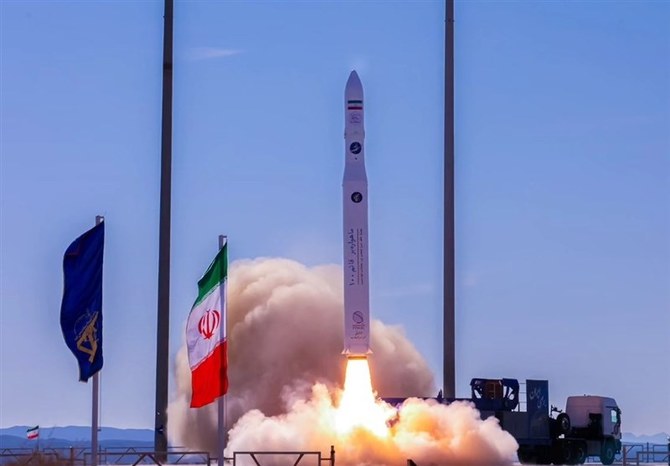
Recent reports indicate Iran is open to signing a nuclear deal with the United States, with conditions centered on sanctions relief. On May 15, 2025, a top adviser to Iran’s Supreme Leader, Ali Shamkhani, told NBC News that Tehran is ready to agree to a deal with President Donald Trump, emphasizing Iran’s willingness to forgo highly enriched uranium in exchange for lifting economic sanctions.

President Trump, speaking on the same day, claimed the U.S. is “very close” to securing a deal, stating Tehran had “sort of” agreed to terms, though a senior Iranian official countered that no new U.S. proposal has been received and Iran will not compromise on its right to enrich uranium. The talks, held indirectly in Oman, have seen progress, with the fourth round concluded on May 11, 2025.

Both sides described the negotiations as “difficult but useful,” with further discussions planned. Iran has proposed a novel approach: a joint nuclear-enrichment venture involving regional Arab countries like Saudi Arabia and the UAE, with American investment, to address U.S. concerns while maintaining its enrichment program at civilian levels (3.67% purity, as per the 2015 deal). However, the U.S. has maintained a hardline stance, with envoy Steve Witkoff insisting on “zero enrichment” and dismantlement of key facilities, a position Iran considers non-negotiable.

Despite public optimism from Trump and U.S. officials, significant gaps remain. Iran insists on its right to civilian enrichment under the Non-Proliferation Treaty, while the U.S. demands a complete halt to enrichment activities. Tensions are compounded by Trump’s “maximum pressure” sanctions, including recent measures targeting Iranian oil exports, and threats of military action if diplomacy fails.

Arguments reflect mixed sentiments, with some suggesting a deal is near, while others highlight skepticism due to past U.S. withdrawal from the 2015 JCPOA and ongoing regional rivalries. The feasibility of Iran’s proposed regional consortium is questionable, given the lack of diplomatic relations between the U.S. and Iran for 45 years and the reluctance of American firms to invest in Iranian facilities.

Additionally, Israel’s threats to strike Iran’s nuclear sites and regional volatility, including the Israel-Hamas conflict, complicate negotiations. While both sides express a preference for diplomacy, the deep divide over enrichment and sanctions relief suggests a deal is not imminent without significant concessions. A potential Iran-U.S. nuclear deal in 2025 carries significant implications across geopolitical, economic, and security dimensions.

A deal could mark a rare diplomatic breakthrough, easing 45 years of hostility, though deep mistrust and lack of direct ties limit broader reconciliation. Failure to reach an agreement risks escalating tensions, potentially leading to U.S. or Israeli military action. Iran’s proposed joint nuclear venture with Saudi Arabia and the UAE could reshape Middle Eastern alliances, fostering cooperation but also complicating U.S.-Israel relations if Tehran retains enrichment capabilities. Saudi Arabia’s interest in its own nuclear program may intensify if Iran’s program persists.

A deal could bolster U.S. influence in the Middle East under Trump’s administration, countering China and Russia’s growing ties with Iran. Conversely, a failure could push Iran closer to Moscow and Beijing, strengthening their regional foothold. Lifting U.S. sanctions would unlock Iran’s oil exports and frozen assets (estimated at $100 billion), boosting its economy but flooding global oil markets, potentially lowering prices. This could strain OPEC+ cohesion, particularly with Saudi Arabia.

Increased Iranian oil supply could reduce energy costs, benefiting consumers but pressuring U.S. and other oil producers. American investment in a regional nuclear consortium, if pursued, could open new markets but faces domestic political resistance. A deal could stabilize the region, encouraging foreign investment in Gulf states, but ongoing U.S.-Iran tensions or Israeli opposition could deter investors.

Security Implications

A deal capping Iran’s enrichment at civilian levels (3.67%) could reduce proliferation risks, but U.S. demands for “zero enrichment” are unlikely to be met, raising concerns about Iran’s latent nuclear weapons capability. Failure to agree could accelerate Iran’s path to a bomb, with breakout time estimated at weeks by some analysts. A deal might de-escalate proxy conflicts involving Iran-backed groups (e.g., Hezbollah, Houthis), but Israel’s vowed strikes on Iranian facilities could spark a wider war, drawing in the U.S. and Gulf states.

Success could strengthen the Non-Proliferation Treaty, while failure might weaken it, encouraging other states (e.g., Saudi Arabia, Turkey) to pursue nuclear programs. A deal could bolster moderates in Tehran but faces resistance from hardliners wary of U.S. intentions post-2018 JCPOA withdrawal. Economic gains might stabilize the regime amid domestic unrest. Trump could tout a deal as a foreign policy win, but concessions to Iran risk backlash from Republican hawks and pro-Israel groups. Failure could fuel accusations of diplomatic weakness.

Israel’s opposition and potential sabotage, alongside Russia and China’s influence on Iran, could derail negotiations. The Israel-Hamas conflict adds volatility. Even if signed, a deal’s durability is questionable given the U.S.’s 2018 JCPOA exit and upcoming U.S. elections in 2026, which could shift policy.

In summary, a deal could stabilize the region, boost Iran’s economy, and curb nuclear risks, but entrenched mistrust, regional rivalries, and domestic politics on both sides pose significant hurdles. Failure risks escalation, with broader consequences for global security and energy markets.