DD
MM
YYYY

PAGES

DD
MM
YYYY

spot_img

PAGES

Home Blog Page 1304

Qatar Deal Could Reshape U.S. Economic and Geopolitical Landscapes

0

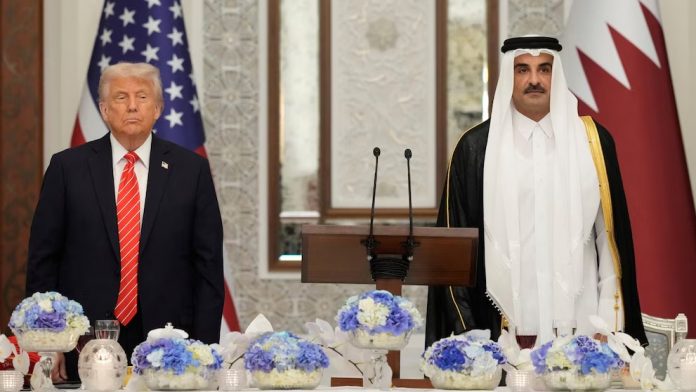
President Donald J. Trump has secured a $1.2 trillion economic commitment from Qatar, announced by the White House on May 14, 2025. The deal spans aviation, energy, technology, and defense, including a $96 billion Qatar Airways order for 210 Boeing 777X and 787 jets, $1 billion for quantum technology and workforce development, and agreements involving Qatar Energy and McDermott.

This is part of nearly $2 trillion in U.S. deals from Trump’s Middle East trip. However, some sources, like Bloomberg, report a lower figure of $243.5 billion, suggesting possible discrepancies in the total value. As economic “commitments” may not always translate to finalized investments. The $1.2 trillion economic commitment from Qatar to the U.S., carries significant implications for both nations and highlights a polarized divide in perception and impact.

The deal includes a $96 billion Qatar Airways order for 210 Boeing aircraft (777X and 787), potentially creating or sustaining thousands of jobs in the U.S. aerospace sector. Additional investments in energy (Qatar Energy) and technology ($1 billion for quantum tech and workforce development) could further stimulate job growth in high-tech and energy industries. If realized, the $1.2 trillion commitment strengthens U.S.-Qatar trade ties, positioning the U.S. as a preferred destination for Qatari capital. This could diversify U.S. economic partnerships beyond traditional allies.

Investments in aviation, defense, and quantum technology signal long-term growth in strategic industries, potentially enhancing U.S. technological and military competitiveness. The deal reinforces Qatar’s role as a key U.S. ally in the Middle East, home to the Al Udeid Air Base, a critical hub for U.S. military operations. This could counterbalance influence from rivals like China or Russia in the region. Trump’s ability to secure such a massive deal during his Middle East trip (totaling nearly $2 trillion in commitments) bolsters U.S. diplomatic leverage, potentially reshaping Gulf state alignments.

Qatar Energy’s involvement suggests expanded LNG or oil-related projects, which could stabilize U.S. energy markets or enhance export capacity. The $1 billion quantum technology investment could position the U.S. as a leader in this emerging field, with applications in cybersecurity, AI, and defense. Economic “commitments” are not guaranteed. Past high-profile deals, like Saudi Arabia’s 2017 pledges, have often fallen short of promised figures. Bloomberg’s lower estimate of $243.5 billion suggests potential exaggeration or miscommunication.

Heavy reliance on Qatari investment could raise concerns about foreign influence over U.S. industries, particularly in defense and technology. Benefits may concentrate in specific sectors (e.g., aerospace, tech) or regions, potentially exacerbating domestic economic divides. Supporters view this as a triumph of Trump’s deal-making prowess, showcasing his ability to secure historic investments that Biden’s administration couldn’t. They argue it validates his “America First” economic strategy, bringing jobs and global respect to the U.S. Social media posts on X, like those from TheCalvinCooli, amplify this, framing Trump as a master negotiator outshining predecessors.

Critics question the deal’s legitimacy, citing discrepancies (e.g., Bloomberg’s $243.5 billion vs. $1.2 trillion) and Trump’s history of overstating economic wins. Some, like Noonz, express skepticism on X, warning of potential foreign influence or unfulfilled promises. Democrats may argue it prioritizes Gulf state interests over domestic issues like healthcare or infrastructure.

Workers in aerospace (e.g., Boeing employees), energy, and tech may see direct gains, while other sectors (e.g., retail, agriculture) may feel sidelined. Rural and industrial heartland communities might benefit less than urban tech hubs, deepening regional disparities. Large corporations like Boeing and McDermott stand to gain significantly, but the trickle-down effect to workers is uncertain. Unions may demand guarantees that jobs created are high-quality and sustainable.

Nationalists celebrate the deal as a win for U.S. economic sovereignty, while globalists warn of over-dependence on authoritarian states like Qatar, which faces criticism for human rights issues. This tension fuels debates about aligning with Gulf monarchies. Allies like the EU or Japan may view this as a U.S. pivot toward Gulf wealth, potentially sidelining traditional partnerships. Israel, a key U.S. ally, might welcome Qatar’s economic alignment as a stabilizing factor.

China and Russia may see this as a U.S. attempt to lock in Middle Eastern capital, prompting them to counter with their own regional investments. The Qatar deal could reshape U.S. economic and geopolitical landscapes, driving growth in strategic sectors and strengthening Middle East ties.

However, its success hinges on execution, transparency, and equitable distribution of benefits. The divide—between political factions, economic classes, and global perspectives—reflects deeper tensions about Trump’s leadership, foreign investment, and America’s role in the world.

3 Coins Ready to Explode Next: Top Crypto Buys for Short-Term Returns

0

If you’re chasing quick gains in crypto, timing is everything. The market never sleeps, and new opportunities are always popping up—some backed by solid fundamentals, others driven by pure hype.  Tokens that offer short-term returns are ideal choices for short-term traders seeking to generate substantial returns on their investment. Right now, three tokens are gaining momentum with the kind of setups that short-term traders dream about. From powerful ecosystems to meme-fueled momentum, these coins are poised to move—and fast.

Rexas Finance (RXS): A Top Crypto Pick for Short-Term Gains

Rexas Finance is not just another token hoping to ride market trends. It’s building a niche for itself in real-world asset (RWA) tokenization, one of the most promising narratives in the current crypto industry. Rexas Finance aims to create new opportunities in the traditional market by turning these traditional valuable assets into digital tokens. This process removes barriers such as high costs and illiquidity. That means you don’t need to be a millionaire to own a piece of a luxury apartment building or a valuable art collection. With Rexas, anyone can start building wealth—no gatekeeping.  Behind this vision is the Rexas ecosystem, which offers next-level DeFi tools for a wide range of uses. The Token Builder enables users to launch their tokens without prior coding experience. There’s also Rexas Estate, where you can buy and trade fractional shares in high-end properties. Additionally, tools like QuickMint Bot, GenAI for NFTs, and the Rexas Treasury are designed to facilitate both passive income and creative growth. Rexas Finance presale has seen massive participation. So far, Rexas has raised over $48 million, showing strong demand and community support. It is in its final stage, priced at just $0.20 per token. RXS goes live at $0.25 on June 19, and investors are already buzzing. Early backers have seen returns as high as 566%, and many analysts believe this could be just the beginning. Predictions suggest that the token could reach two digits within the first few weeks of its launch.  With momentum, a real product, and a market narrative that’s only going to get bigger, RXS is well-positioned for massive gains. That’s the kind of setup that could deliver some of the best short-term gains in 2025.

Fartcoin (FARTCOIN): The Meme Coin With Explosive Potential

Priced at $0.78, it has already increased by more than 100% in the past 30 days. Whales are loading up — a fresh wallet just dropped $1 million to scoop it at local highs.  Technically, FARTCOIN just broke through its 20-day EMA, and Bollinger Bands are tightening. This is a classic setup for a major breakout. If it clears the $0.95 resistance zone, $1 is the next easy target. Plus, with RSI sitting comfortably at 57, it still has momentum.  Chart watchers say Fartcoin has just completed a bullish cup and handle pattern, characterized by solid volume and accumulation between $0.90 and $0.95. That’s a green flag for short-term buyers. Although there is some capital outflow as larger holders take profits, overall momentum remains up. If Fartcoin breaks $1, the next stop could be $1.09 and beyond.

Pepe Coin (PEPE): Quiet Now, But Ready to Pop

Pepe Coin is gearing up for a major move, and short-term traders should be paying attention. Analysts are spotting several rare bullish signals on the charts. A double-bottom pattern is forming, and one respected expert believes PEPE could double in the coming weeks. That would push its price to around $0.000016, with the potential to rise even higher if momentum continues to build. Currently, PEPE is trading near $0.0000071, with strong support and multiple bullish chart patterns, including a falling wedge and an ascending channel. The coin recently bounced from key support and has reclaimed some critical moving averages. Plus, its 30-day volatility has dropped sharply—often a precursor to explosive price action. Retail investors are returning, with smaller transactions up 67% over the past week. And even though whales are still on the sidelines, five wallets just scooped up over $4 million worth of PEPE in hours—a clear sign of smart money stacking. If PEPE breaks above $0.0000076, liquidation zones could trigger a rapid rally. With the memecoin crowd warming up again, PEPE might surprise everyone.

Conclusion

Crypto moves quickly, and the biggest winners are often the ones who spot momentum before the crowd catches on. The three altcoins mentioned above are the top picks for short-term gains.  Rexas Finance’s token launch is near and is poised to hit double digits soon. Fartcoin demonstrates that even joke tokens can hold significant profit potential with the proper market setup. And Pepe Coin is quietly forming one of the most bullish patterns of the season. Among them, Rexas Finance stands out due to its real-world utility in the DeFi sector. This makes it not only a top pick for the short term but also for the long term, too.

For more information about Rexas Finance (RXS) visit the links below:

Website: https://rexas.com

Win $1 Million Giveaway: https://bit.ly/Rexas1M

Whitepaper: https://rexas.com/rexas-whitepaper.pdf

Twitter/X: https://x.com/rexasfinance

Telegram: https://t.me/rexasfinance

Tether to Launch QVAC, a Decentralized Open-Source AI Platform

0

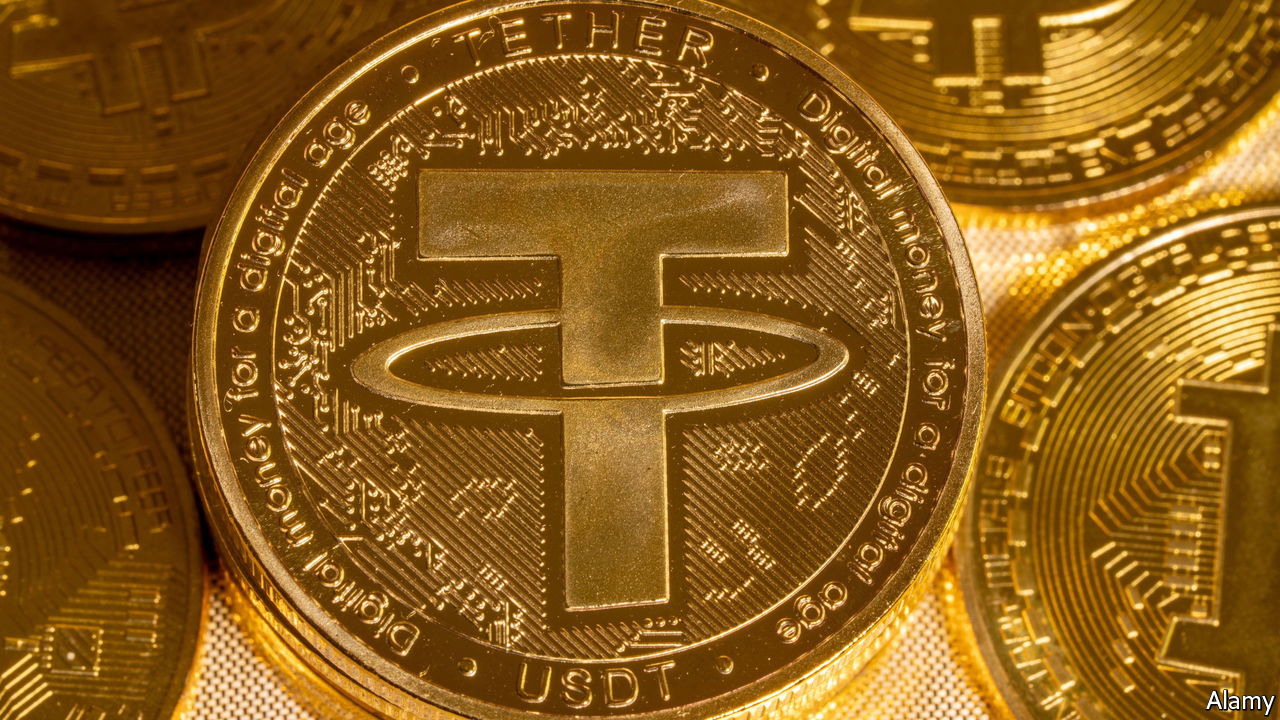
Tether, a major player in the digital asset industry, announced QVAC (QuantumVerse Automatic Computer) on May 14, 2025, a decentralized, open-source AI platform designed to run directly on users’ devices. This initiative emphasizes privacy, autonomy, and scalability by enabling AI agents to operate without reliance on centralized cloud infrastructure or third-party intermediaries.

Key features of QVAC

Local Device Operation: AI applications and agents run on users’ devices, enhancing privacy by avoiding centralized data centers.

Peer-to-Peer Communication: The platform supports direct, decentralized connections between devices.

Native Blockchain Support: QVAC integrates Bitcoin and USDT payments through Tether’s Wallet Development Kit (WDK), enabling autonomous transactions.

Open-Source Development: Developers can access tools to build scalable AI applications with native support for blockchain-based payments, potentially tailored for crypto wallets.

Tether positions QVAC as a step toward “Infinite Intelligence,” aiming to set it apart from rivals by prioritizing user control and decentralization. The platform is described as a significant evolution of Tether’s vision, expanding beyond stablecoins into AI-driven innovation. The announcement of Tether’s QVAC, an open-source AI platform with native blockchain support, carries significant implications for the AI and blockchain industries, as well as for broader societal and technological divides.

By running AI on local devices and avoiding centralized cloud infrastructure, QVAC prioritizes user privacy and reduces dependence on tech giants like Google or Amazon. This could appeal to privacy-conscious users and crypto communities. Peer-to-peer communication and open-source development may lower barriers for developers, fostering innovation in decentralized AI applications, especially for crypto wallets and blockchain-based services.

Native support for Bitcoin and USDT payments via Tether’s Wallet Development Kit (WDK) enables autonomous, trustless transactions, potentially revolutionizing use cases like microtransactions, DeFi, or tokenized economies. QVAC’s decentralized model competes with centralized AI providers (e.g., OpenAI, Google). If successful, it could shift market dynamics toward user-controlled, blockchain-based AI ecosystems.

Tether, primarily known for stablecoins, is diversifying into AI, signaling a broader ambition to dominate the intersection of blockchain and AI. This could intensify competition in both sectors. Open-source tools and blockchain payment integration may attract developers to build QVAC-based applications, creating new revenue streams in decentralized AI markets.

Native blockchain support could drive mainstream adoption of cryptocurrencies for everyday transactions, particularly in regions with high crypto penetration. Tether’s history of regulatory challenges (e.g., transparency concerns around USDT reserves) may invite scrutiny of QVAC, especially given its blockchain and payment features. Governments could question its privacy-first model or its potential for unregulated financial activity.

QVAC’s reliance on local device computing could exclude users with low-end hardware, as running AI locally demands significant processing power. This may deepen the gap between users in developed regions with advanced devices and those in developing areas with limited tech access. While open-source, QVAC’s focus on blockchain and AI requires specialized knowledge, potentially limiting participation to technically skilled developers. Bridging this divide would require accessible documentation and tools for non-experts.

Although QVAC avoids cloud costs, high-end devices capable of running AI locally may be expensive, disproportionately affecting lower-income users. Blockchain transaction fees (e.g., Bitcoin or USDT) could further exclude those unable to afford them. By enabling crypto-based microtransactions, QVAC could empower unbanked populations in regions with high crypto adoption (e.g., parts of Africa or Latin America), providing access to AI-driven services without traditional banking.

QVAC’s privacy-first, decentralized approach aligns with crypto advocates’ values but may clash with regulators and users who prioritize oversight and security. This could polarize adoption between libertarian-leaning crypto communities and mainstream users wary of unregulated tech. The platform may deepen the ideological split between supporters of centralized AI (controlled by corporations) and decentralized AI (user-controlled). Adoption may vary by region, with crypto-friendly areas embracing QVAC and others sticking to familiar centralized platforms.

QVAC’s success may hinge on crypto penetration. Regions with established blockchain ecosystems (e.g., Southeast Asia, parts of Africa) may adopt it faster, while areas with stringent regulations (e.g., EU, China) may lag, creating a global disparity in access and impact. If Tether provides low-cost, user-friendly tools and supports offline or low-bandwidth modes, QVAC could democratize AI access in underserved regions, narrowing the global tech gap.

Tether’s QVAC has the potential to reshape the AI and blockchain landscape by prioritizing decentralization, privacy, and crypto integration. However, its success depends on addressing the technological, economic, and social divides it may exacerbate. To bridge these gaps, Tether must ensure accessibility for low-resource users, simplify developer tools, and navigate regulatory challenges.

IFC and Canadian Govt. Invest $5M in Husk Nigeria to Expand Solar Mini Grids in Northern Communities

0

The International Finance Corporation (IFC), in partnership with the Canadian Government, has committed $5 million to Husk Nigeria in a bid to scale up the deployment of solar hybrid mini-grids across underserved communities in Northern Nigeria.

The investment, announced in Lagos on Thursday, is part of a broader plan to address the country’s deep-rooted energy poverty and expand access to affordable and reliable power in areas still largely disconnected from the national grid.

The funds will support Husk in constructing and operating up to 108 solar hybrid mini grids. These installations are expected to deliver approximately 28,750 new electricity connections, reaching around 115,000 individuals and businesses in remote communities where grid extension remains financially and logistically impractical.

This investment marks the first project under the IFC’s Distributed Access through Renewable Energy Scale-up (DARES) Platform—a $200 million debt facility launched in November 2024 to spur private-sector-led renewable energy solutions across West and Central Africa. Husk’s Nigerian project, with a total estimated cost of $25 million, is thus positioned as a flagship initiative for the DARES platform’s rollout.

The DARES Platform is closely aligned with the World Bank-financed Nigeria DARES Project, a much larger intervention approved with a budget of $750 million in December 2023. Implemented by Nigeria’s Rural Electrification Agency (REA), the Nigeria DARES Project aims to deliver decentralized renewable energy (DRE) solutions to over 17.5 million Nigerians, targeting households, micro, small, and medium enterprises (MSMEs), and public institutions.

IFC said its $5 million commitment to Husk consists of a $2.5 million senior loan from its own account, paired with a concessional subordinated loan of $2.5 million from the Canada-IFC Renewable Energy Program for Africa. The financing is structured as a revolving loan facility, allowing Husk to draw and repay funds multiple times during the course of the project. This model is designed to provide flexible, long-term, and affordable capital, often a major bottleneck for renewable energy developers operating in rural sub-Saharan Africa.

Ethiopis Tafara, IFC’s Regional Vice President for Africa, described the initiative as an “innovative approach to tackling one of Africa’s most pressing challenges—energy access.” According to Tafara, IFC’s collaboration with Husk sets a precedent for replicable, scalable models across the continent.

“By partnering with Husk, a leading renewable energy developer globally, through the first project under the DARES Platform, we are not only addressing the immediate electricity needs of underserved communities in Nigeria but also laying the foundation for a scalable model that can be replicated across the continent,” Tafara said.

Husk’s CEO, Manoj Sinha, echoed that sentiment, stating that the nature of the financing is what the mini-grid sector has long required to unlock its full potential. “This innovative debt facility is exactly what the minigrid industry needs to scale — blended, long-term and affordable capital,” he said.

Speaking specifically on the project’s implications for Nigeria, Olu Aruike, Country Director for Husk Nigeria, emphasized the impact of scaling solar mini-grids on rural electrification goals. “Adding 108 new communities to our minigrid portfolio with IFC support is an important step toward our goal of deploying at least 250MW of decentralized renewable energy projects in Nigeria,” Aruike said.

The partnership also underscores the increasing involvement of international development institutions in Nigeria’s energy transition efforts. Both the IFC-backed DARES platform and the World Bank-funded Nigeria DARES project feed into the Federal Government of Nigeria’s broader Energy Transition Plan (ETP), which aims to deliver universal access to energy, end energy poverty, and facilitate the country’s pathway to net-zero emissions by 2060.

Data from the REA shows that the Nigeria DARES Project aims to power up to 3,244,900 households through decentralized renewable energy. This would impact over 17.5 million Nigerians, many of whom live in the northern region, where energy access remains one of the lowest in the country.

While Nigeria has made some progress in expanding its electricity grid, millions of citizens, particularly in rural and conflict-prone regions, remain in darkness or rely on costly and polluting alternatives such as diesel generators and kerosene lamps. Solar hybrid mini grids offer a cleaner, more sustainable, and increasingly viable alternative. However, the sector continues to struggle with high upfront capital costs, limited access to finance, regulatory bottlenecks, and long timelines for project development.

The IFC-Canada-Husk collaboration is one of several recent initiatives intended to overcome these hurdles by reducing financial risk and crowding in more private investment into the mini-grid space. The revolving nature of the loan facility offered to Husk is expected to accelerate deployment by easing cash flow constraints and allowing the developer to roll out sites more quickly without waiting for full returns on prior installations.

As Nigeria moves to diversify its energy mix, reduce emissions, and fulfill its electrification commitments under the Sustainable Development Goals (SDGs), initiatives like this are likely to play a critical role. However, questions remain about long-term sustainability, affordability for end-users, and the regulatory support needed to ensure off-grid power solutions reach scale. Other concerns include the government’s recent move to ban the import of solar panels, with the aim of boosting local production. Experts have warned that if carried out, a solar import ban will significantly jeopardize the push to bridge Nigeria’s electricity deficit through cleaner energy.

YouTube Deploys AI to Target Ads at Viewers’ Emotional Peaks

0
A picture shows a You Tube logo on December 4, 2012 during LeWeb Paris 2012 in Saint-Denis near Paris. Le Web is Europe's largest tech conference, bringing together the entrepreneurs, leaders and influencers who shape the future of the internet. AFP PHOTO ERIC PIERMONT (Photo credit should read ERIC PIERMONT/AFP/Getty Images)

In a bold push to redefine digital advertising, YouTube has announced a new artificial intelligence tool called “Peak Points,” designed to target ads to viewers at moments of maximum engagement.

The move, unveiled during YouTube’s annual Brandcast event in New York, signals a deeper integration of artificial intelligence across the platform and a strategic bid by parent company Alphabet Inc. to enhance monetization.

The technology is powered by Google’s Gemini AI model, trained to analyze the structural and emotional flow of videos, examining frames, transcripts, and viewer behavior, to pinpoint the exact moments when a viewer is most captivated. Ads will then be delivered shortly after those moments, with the aim of capturing heightened attention and maximizing click-through rates.

A New Frontier in Emotion-Based Targeting

YouTube’s Peak Points tool reflects a growing trend in digital media: aligning advertising with emotional cues rather than just demographics or behavioral data.

Some analysts have likened it to a marriage proposal, noting that once the big ‘yes’ happens, that’s the peak moment—the viewer is emotionally invested. That’s when you hit them with an ad.

In this way, the platform intends to create a more psychologically responsive advertising strategy, which could give advertisers a measurable edge. Higher viewer attention typically translates into better ad performance, and for content creators, this could mean higher revenue.

YouTube’s ad ecosystem is largely driven by metrics like click-through rates (CTR) and watch time, both of which stand to benefit if Peak Points can keep viewers engaged even through interruptions.

The tool is currently in pilot testing, with a broader rollout planned for later in 2025.

The Technology Behind Peak Points

Gemini AI, Google’s latest large-language model, lies at the core of this initiative. It processes metadata and structural elements of each video, such as visual transitions, emotional tone in dialogue, and audience retention metrics, to map out where attention spikes occur. These “peak” engagement points are then earmarked as optimal ad slots.

YouTube says it has been refining the AI by analyzing massive troves of content across genres. The company hasn’t disclosed exactly how much data the system requires to make accurate predictions, but executives say the tool improves over time as it learns from viewer behavior.

This approach, known as AI-driven content segmentation, isn’t new in theory, but YouTube is the first major platform to apply it at this scale for advertising. It’s a far cry from the traditional pre-roll and mid-roll ad placements, which often interrupt videos indiscriminately, irrespective of narrative pacing or emotional weight.

Advertising Meets Emotion — But At What Cost?

While the new tool is generating buzz in advertising circles, it is also sparking concerns about the user experience. Many believe that inserting ads immediately after emotional high points could backfire.

“This is digital advertising at its most intrusive,” said a user in a popular Reddit forum reacting to the announcement. “Imagine a cancer survivor video, and right after the heartfelt recovery moment, you get a car commercial. That’s jarring, not smart.”

Some industry observers agree. While emotion-based targeting is effective in theory, it can erode trust if it feels manipulative or overly commercialized.

The backlash taps into a broader debate about the role of AI in shaping user experiences. As platforms like YouTube and Instagram increasingly integrate machine learning models to optimize revenue, questions are emerging about the consequences of prioritizing engagement over authenticity and mental well-being.

Alphabet’s Monetization Gamble

Alphabet Inc., YouTube’s parent company, is under increasing pressure to justify its investments in AI. With rivals like OpenAI and Meta aggressively pursuing AI-integrated services, Alphabet is leaning on its dominant platforms—Search, YouTube, and Android—to showcase practical AI applications.

The launch of Peak Points represents one such pivot. Advertising remains YouTube’s biggest revenue engine, generating over $40 billion annually. The Peak Points initiative could help grow that number, particularly as the company competes with platforms like TikTok, which has revolutionized mobile video consumption with short-form, addictive content that’s difficult to monetize effectively.

As of Thursday, Alphabet’s stock (GOOG) traded at $164.57, with a slight dip of -2.24 USD or -0.01% from the previous close. The company has a market cap of over $1.87 trillion, a P/E ratio of 16.9, and earnings per share of $9.15. While these figures reflect a stable valuation, the real battleground is innovation, and AI is the frontline.

Ethical Concerns in an AI Arms Race

The Peak Points launch arrives amid growing global concern that Silicon Valley companies are deploying AI-driven products faster than they can ensure safety or accountability. Several prominent tech figures, including former Google engineers and AI researchers, have warned that the race for monetization is outpacing discussions about consent, transparency, and fairness.

YouTube insists that Peak Points is designed to “enhance viewer experience by making ads feel more natural,” but the jury is still out on whether viewers will see it that way.

YouTube has not confirmed whether users will have an option to disable these ads or opt out of emotionally timed placements. As the pilot phase continues, user feedback is expected to determine how aggressively the feature is rolled out or modified.

YouTube has promised more updates on the tool’s progress later this year.