DD
MM
YYYY

PAGES

DD
MM
YYYY

spot_img

PAGES

Home Blog Page 1319

US April CPI Data Reported at 2.3% YoY Marked Lowest Inflation Rate Since February 2021

0

The April 2025 Consumer Price Index (CPI) data, reported at 2.3% year-over-year, came in below the expected 2.4%, marking the lowest inflation rate since February 2021. Core CPI, excluding food and energy, was 2.8%, also below forecasts. This cooler-than-expected inflation has shifted market expectations, with prediction markets like Polymarket now pricing in two Federal Reserve rate cuts for 2025, likely in September and October, totaling 50 basis points. This aligns with reports indicating traders are adjusting to a lower probability of aggressive rate cuts, influenced by steady economic indicators and tariff uncertainties.

The April 2025 CPI data (2.3% headline, 2.8% core) coming in below estimates signals cooling inflation, closer to the Federal Reserve’s 2% target. With prediction markets pricing in only two rate cuts (50 basis points) for 2025, likely in September and October, several implications arise. The Fed may maintain higher interest rates longer, as inflation remains above 2% and economic growth holds steady (e.g., Q1 2025 GDP growth at 2.5% annualized). This reduces the urgency for aggressive easing.

The Fed’s cautious approach, as echoed in recent FOMC statements, suggests rate decisions will hinge on incoming data, particularly inflation and employment. Cooling CPI could ease pressure, but persistent core inflation (2.8%) may limit cuts. Bond yields, like the 10-year Treasury (around 4.3% per recent data), may stabilize or rise slightly, reflecting expectations of sustained higher rates. Equity markets could face volatility, especially in growth stocks sensitive to interest rates.

Lower inflation supports real wage growth (wages up 3.9% year-over-year), potentially boosting consumption. However, higher rates could temper borrowing for big-ticket items like homes or cars. Mortgage rates (hovering near 7%) are unlikely to drop significantly with only two cuts, potentially keeping housing affordability constrained.

Higher borrowing costs may delay capital expenditures, particularly in rate-sensitive sectors like tech and real estate, though stable inflation could encourage long-term planning. Fewer rate cuts could bolster the U.S. dollar, impacting emerging markets with dollar-denominated debt and U.S. exports. Posts on X highlight concerns about tariff policies (e.g., proposed 10-20% tariffs) potentially reigniting inflation, which could complicate the Fed’s calculus and limit further cuts.

The CPI data and reduced rate cut expectations reveal a divide in economic outlooks, evident across markets, policymakers, and public sentiment. Fed hawks, like Governor Waller, argue for maintaining higher rates to ensure inflation doesn’t resurge, especially with tariff risks and a tight labor market (unemployment at 3.8%). They view two cuts as sufficient to balance growth and price stability.

Doves, including some regional Fed presidents, advocate for more cuts to support employment and prevent overtightening, citing cooling inflation and moderating wage growth. They worry two cuts may be too conservative if growth slows. Equity investors optimistic about a “soft landing” see lower inflation as positive for corporate margins, especially in consumer-driven sectors. They expect markets to adapt to a higher-rate environment.

Fixed-income traders and bearish equity investors warn that sticky core inflation and tariff risks could force the Fed to pause cuts entirely, squeezing valuations in rate-sensitive sectors like tech (e.g., Nasdaq P/E ratios near 30). Public sentiment reflect mixed views—some celebrate lower inflation as relief for household budgets, while others express frustration over high borrowing costs and housing unaffordability.

Progressive groups push for more cuts to ease economic burdens on lower-income households, while conservative voices, citing tariff-driven growth, argue for tighter policy to curb potential inflation spikes. Goldman Sachs and JPMorgan revised 2025 forecasts to two or three cuts, aligning with prediction markets, but warn of upside inflation risks from trade policies. Morgan Stanley, however, sees a case for three cuts if global demand weakens.

The cooler CPI strengthens the case for a measured Fed approach, with two rate cuts reflecting a balance between growth and inflation control. However, the divide—hawks vs. doves, bulls vs. bears, and public vs. policy priorities—underscores uncertainty. Tariff policies and global economic trends could tip the scales, either toward tighter policy or a more accommodative stance. Markets will likely remain volatile as these tensions play out, with the Fed’s December 2025 meeting and updated dot plot providing critical clarity.

PumpSwap Launched Revenue Sharing Aimed at Incentivizing Creators

0

PumpSwap, the decentralized exchange developed by Solana-based meme coin launchpad Pump.Fun, launched a revenue-sharing model on May 12, 2025, distributing 50% of its trading revenue to token creators. Creators earn 0.05% (5 basis points) in Solana (SOL) per transaction for eligible tokens. PumpSwap’s fee structure includes a 0.25% fee per trade, with 0.2% allocated to liquidity providers and 0.05% retained as protocol revenue, though some sources suggest total fees may reach 0.3% due to an additional creator vault fee.

Based on April 2025’s $11.2 billion trading volume, creators could have shared approximately $5.6 million. The move aims to incentivize long-term project development but has faced criticism on X for potentially rewarding developers of abandoned or “rug-pulled” tokens, with users like 0xRiver arguing it may discourage community-driven projects. The revenue-sharing model, distributing 0.05% per transaction to token creators, aims to encourage developers to build and maintain sustainable projects on PumpSwap.

By tying creator earnings to trading volume, it aligns their interests with the platform’s success, potentially fostering higher-quality tokens and reducing speculative “pump-and-dump” schemes. With PumpSwap’s April 2025 trading volume at $11.2 billion, the 50% revenue split could yield significant payouts—around $5.6 million shared among creators monthly. This could attract more developers to the platform, increasing token diversity and trading activity, but the actual distribution depends on individual token volumes.

The model strengthens PumpSwap’s position in the competitive DeFi space, particularly against rivals like Raydium or Uniswap. By rewarding creators, it may drive liquidity and user adoption, as projects gain incentives to promote their tokens actively. Critics highlight the potential for abuse, as creators of low-effort, abandoned, or “rug-pulled” tokens could still earn revenue if their tokens maintain trading volume. This could dilute the quality of projects and reward bad actors, undermining trust in the platform.

The Divide in Perspectives

Many, particularly developers and traders, view the revenue share as a game-changer. Posts praise PumpSwap for empowering creators with a passive income stream, potentially stabilizing meme coin ecosystems. Some argue it could reduce reliance on ICOs or pre-sales, democratizing funding. CryptoBanter called it “a bold move to keep creators in the game,” suggesting it could spark a wave of innovative projects.

Critics like 0xRiver on X argue the model inadvertently rewards developers of failed or scammy projects, as revenue is tied to trading volume, not project quality. They fear it disincentivizes community-driven tokens where developers relinquish control post-launch. Some posts criticize the model for favoring creators over decentralized governance, potentially concentrating influence among a few high-volume projects. DefiDegenerate noted, “This feels like a step back from true DeFi principles.”

Fee Structure Debate: Confusion over PumpSwap’s fees (0.25% vs. reported 0.3% with a creator vault fee) has fueled distrust. Users question transparency and whether the additional fee burdens traders. The revenue share creates tension between incentivizing creators and preserving decentralized, community-led projects. Critics argue it prioritizes developers over token holders or liquidity providers.

While some see the model as a way to curb meme coin volatility, others believe it may fuel speculative trading without addressing underlying project fundamentals. PumpSwap’s revenue-sharing model could reshape the meme coin and DeFi landscape by attracting creators and boosting platform activity, but it risks rewarding low-quality projects and alienating advocates of decentralization.

The divide reflects broader tensions in DeFi between incentivizing innovation and maintaining equitable, transparent ecosystems. Monitoring trading volume and creator behavior in coming months will clarify whether the model drives sustainable growth or exacerbates existing flaws.

Airtel Africa Launches $55m Share Buy-Back Tranche After Profit Turnaround

0

Airtel Africa Plc has commenced the second tranche of its ongoing $100 million share buy-back programme, valued at $55 million, days after releasing a significantly improved financial result that marked a sharp turnaround from last year’s losses.

The telecoms and mobile money operator confirmed the start of the new tranche in a disclosure filed with the Nigerian Exchange on Tuesday, the same day the buy-back resumed. This follows the successful completion of the first tranche worth $50 million in April, a component of the broader $100 million programme announced in December 2024.

The company said Barclays Capital Securities Limited has been engaged to execute on-market purchases of its shares in this second leg of the programme. Acting as a riskless principal, Barclays will make trading decisions independently, with no direct influence from Airtel Africa.

The company reiterated that the sole objective of the buy-back is to reduce its outstanding share capital, noting that all repurchased shares will be cancelled. The $55 million tranche is expected to be completed on or before 19th November 2025.

Capital Restructuring and Balance Sheet Strengthening

While the company stated the buy-back is strictly a capital reduction measure, analysts say it aligns with Airtel’s broader aim to strengthen its balance sheet and increase shareholder value following a volatile year dominated by currency shocks.

Reducing the company’s outstanding shares not only boosts earnings per share in future reporting periods but also minimizes future dividend payouts and other cash obligations tied to capital maintenance. It also signals confidence in the company’s valuation at a time when its stock has come under pressure across multiple exchanges where it is listed.

The share buy-back is unfolding amid improving macroeconomic conditions in some of Airtel Africa’s key markets, notably Nigeria, where currency instability had previously wiped off much of the group’s gains.

Background to the Programme

The current $100 million buy-back initiative, first unveiled in December 2024, was designed to be executed in two tranches.

The first tranche of $50 million began immediately after the announcement and concluded in April 2025. The newly announced tranche will take up the remaining $55 million, with Barclays overseeing the entire execution period.

This is Airtel Africa’s second share repurchase initiative. The first, also worth $100 million, was executed in 2024 as the company began deploying surplus capital to manage its share capital structure more efficiently.

Financial Recovery and Tariff Boost

The buy-back announcement comes as Airtel Africa basks in the glow of a robust financial turnaround. The company reported a pre-tax profit of $661 million for the year ending 31st March 2025, reversing a pre-tax loss of $63 million in 2024. After-tax profit stood at $328 million, compared to a $89 million loss last year.

The reversal was driven in large part by easing currency headwinds, especially in Nigeria, which had weighed down earnings in the previous fiscal year through massive foreign exchange and derivative losses.

According to the company’s latest earnings report, revenue grew by 23.2% in constant currency terms in the fourth quarter of the 2025 fiscal year and 17.8% in reported currency, underscoring the impact of strong operational execution and improved tariff frameworks in Nigeria.

“Our Q4 performance demonstrates the effectiveness of our strategy, with the recent tariff adjustment in Nigeria contributing significantly to revenue growth,” said Chief Executive Officer Sunil Taldar. “An improving operating environment and focused execution contributed to strong momentum in our financial results.”

Airtel Africa operates in 14 countries across sub-Saharan Africa and is one of the region’s leading providers of telecoms and mobile money services. The company has consistently positioned itself as a low-cost, high-growth operator despite facing persistent macroeconomic volatility, especially in its largest market, Nigeria.

With strong results, a leaner capital structure on the horizon, and shareholder confidence appearing to return, Airtel Africa’s strategic moves are expected to boost its stock performance in the coming quarters.

While the company hasn’t ruled out further buy-back programmes, the current one reflects its optimism about future earnings and the firm’s desire to return value to investors following a year marred by economic turmoil and FX crises in its core markets.

Musk Pitches Tesla’s Robotaxi to Saudi Arabia As Growth-Driven Global Expansion Heats Up

0

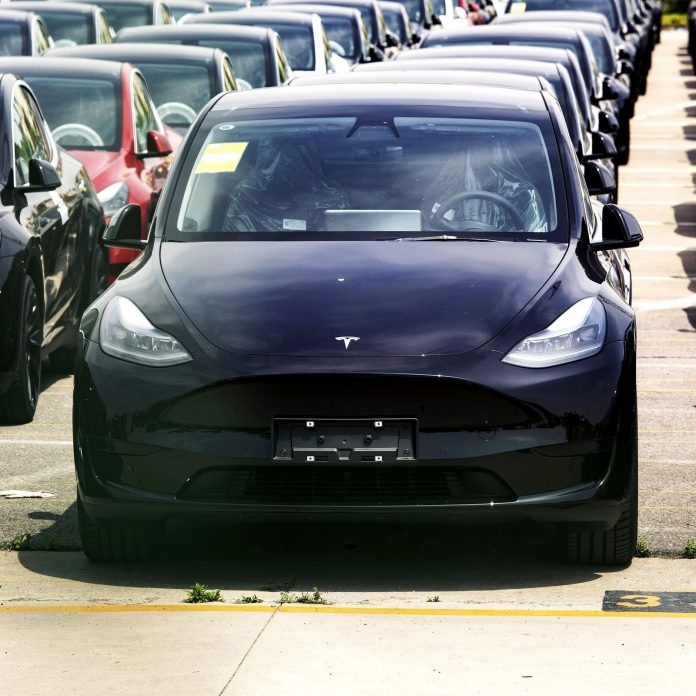
Tesla CEO Elon Musk is looking to bring the company’s highly anticipated robotaxi service to Saudi Arabia, a move that aligns with the Kingdom’s Vision 2030 plan and Tesla’s broader strategy to reignite growth through global expansion.

Musk made the pitch during the U.S.-Saudi Investment Forum in Riyadh, telling Saudi Minister of Communications and Information Technology, Abdullah Alswaha, that the Kingdom would be an ideal market for autonomous vehicles.

“Really, you can think of future cars as being robots on four wheels, and I think it would be very exciting to have autonomous vehicles here in the Kingdom if you’re amenable,” Musk said during a panel session at the forum.

Robotaxi as Tesla’s Recovery Bet

Musk did not give a timeline for the rollout in Saudi Arabia, but Tesla is set to pilot its robotaxi service in Austin, Texas, this June. The launch will mark the beginning of what Musk hopes will be a rapid global deployment of autonomous vehicles — a central pillar in Tesla’s next growth phase.

Tesla’s push into robotaxis is not just about innovation — it’s a calculated business move amid intensifying competition in the U.S. electric vehicle market. As sales slow globally and rivals such as Ford, Rivian, and Chinese automakers eat into Tesla’s share, the company is under pressure to find new revenue streams and growth frontiers.

Tesla has described the robotaxi service as a revolutionary model that can turn its cars into income-generating assets for owners. In a post from Tesla’s official account, the company said: “With the Robotaxi Network, your Tesla will be able to earn money while you’re not using it, essentially paying for itself — it will go to work, just like you.”

This concept is aimed at increasing the appeal of Tesla vehicles by offsetting their high purchase price with potential income from autonomous ride-hailing services — a game-changing pitch that no other automaker is currently offering at scale.

Dan Ives, a longtime Tesla bull and analyst at Wedbush Securities, reinforced the importance of this strategy.

“I disagree that the Waymo/Toyota is a groundbreaking deal and a threat to Tesla. Tesla will own the autonomous market in my view and no one can compete with their scale and scope. It starts in Austin in June then the autonomous journey begins. Key chapter of growth,” Ives said in a recent note.

Why Saudi Arabia?

Saudi Arabia is aggressively investing in cutting-edge technologies to reduce its dependence on oil. Vision 2030, the Kingdom’s economic diversification blueprint, has earmarked tech and mobility as priority sectors. The country has already released a regulatory framework for autonomous vehicles and is welcoming partnerships to accelerate their adoption.

On the same day Musk spoke in Riyadh, Saudi Arabia’s Transport General Authority announced a memorandum of understanding with Uber to launch robotaxis in the country. Uber plans to roll out autonomous vehicles with onboard safety operators in 2025, working in collaboration with Chinese tech firm Pony.AI. The MOU signals intent but does not yet guarantee deployment.

Uber is already a dominant player in Saudi Arabia’s ride-hailing market, operating both under its brand and through its regional subsidiary Careem, which serves 26 cities across the Kingdom. Pony.AI, however, carries some baggage. Its U.S. operations were suspended after California revoked its permit in 2022 over multiple safety violations.

Tesla, by contrast, has a global reputation and an integrated approach to autonomy, controlling both hardware and software development. That full-stack model — something competitors like Waymo, Uber, and Apple do not offer — positions Tesla to scale faster, according to analysts.

A High-Stakes Global Race

Tesla’s international ambitions for robotaxis are heating up at a time when global regulatory momentum around self-driving vehicles is beginning to shift. Countries like Saudi Arabia are opening up to autonomous technologies, seeing them as integral to smart cities and next-generation mobility.

If successful, the Saudi venture could serve as a launchpad for Tesla into the broader Middle East and North African markets, where public transportation infrastructure is still developing and tech-savvy populations are open to disruptive innovation.

Tesla’s competitors are not standing still. Alphabet’s Waymo and Toyota are teaming up to expand their robotaxi services in select U.S. cities. Apple is also quietly developing autonomous tech. But unlike Tesla, most of these players rely on third-party vehicle platforms or lack the end-to-end integration that gives Tesla control over production costs, software updates, and data.

However, the success of Musk’s pitch depends much on what happens in Austin. If Tesla successfully rolls out its robotaxi pilot next month, it could pave the way for international deals like the one Musk is seeking in Saudi Arabia. The company still faces regulatory scrutiny, public skepticism, and unresolved safety concerns, but the economic logic of autonomous fleets — vehicles that work around the clock, generate income, and reduce congestion — is too compelling to ignore.

Musk, never short on ambition, believes Tesla will not only dominate the EV space but also lead the future of transportation through autonomy. Saudi Arabia, with its big tech appetite and strategic need to diversify, may prove to be an ideal partner in that journey.

eToro’s IPO Priced at $52 Per Share, Begins Trading on NASDAQ

0

eToro, the Israel-based stock and cryptocurrency trading platform, priced its upsized initial public offering (IPO) at $52 per share, surpassing its initial target range of $46 to $50. The IPO raised approximately $620 million, with 11.92 million Class A common shares offered, valuing the company at around $4.2 to $4.4 billion. Trading began on the Nasdaq Global Select Market on May 14, 2025, under the ticker symbol ETOR. The strong pricing and upsized offering reflect significant investor confidence in eToro’s digital asset and trading services.

The successful IPO of eToro at $52 per share, valuing the company at $4.2–$4.4 billion, carries significant implications for the fintech and trading industry, as well as broader market dynamics. The upsized IPO and above-range pricing signal strong investor confidence in eToro’s business model, which blends social trading, cryptocurrency, and traditional stock trading. This could spur further investment in fintech platforms catering to retail investors.

eToro’s platform, known for its user-friendly interface and social trading features, democratizes access to financial markets. Its Nasdaq listing may attract more users globally, reinforcing the trend of retail investors participating in markets traditionally dominated by institutions. With eToro’s significant focus on cryptocurrencies, the IPO underscores the growing acceptance of digital assets in mainstream finance, potentially encouraging other crypto-focused platforms to go public.

eToro’s $620 million raise provides capital to expand its offerings, improve technology, and compete with rivals like Robinhood, Interactive Brokers, and Coinbase. This could lead to increased innovation but also consolidation in the crowded fintech space. The company’s global presence (regulated in regions like the EU, UK, and Australia) positions it to challenge U.S.-centric platforms, potentially reshaping market dynamics.

The influx of capital could fuel eToro’s expansion, creating jobs in technology, customer support, and compliance, particularly in Israel and other operational hubs. High-profile IPOs like eToro’s can influence market sentiment. A strong debut could lift fintech stocks, while any post-IPO volatility (common in tech IPOs) might dampen enthusiasm.

As a platform offering both stocks and cryptocurrencies, eToro operates in a heavily regulated space. Its public status may invite closer scrutiny from regulators like the SEC, especially regarding crypto trading and investor protections. The IPO could set a precedent for how regulators view hybrid trading platforms, influencing future fintech listings.

eToro’s platform aims to democratize trading, but participation still requires disposable income and financial literacy. Wealthier individuals or those in developed markets may benefit more, potentially widening wealth gaps. The IPO itself is a wealth-creation event for eToro’s founders, early investors, and institutional backers like SoftBank, ION Group. Retail investors, while able to trade ETOR shares, may not see comparable gains, reinforcing the divide between institutional and individual investors.

eToro operates in over 100 countries, but its services are more accessible in regions with robust internet infrastructure and regulatory frameworks (e.g., EU, U.S.). Users in developing nations may face barriers like high fees, currency conversion costs, or limited access to certain assets. eToro’s social trading feature allows users to copy experienced traders, but success depends on understanding markets. Those with limited financial education may take undue risks, leading to losses and reinforcing socioeconomic divides.

eToro’s user base skews younger and tech-savvy, potentially excluding older or less digitally inclined individuals. This could widen generational wealth gaps as younger traders leverage platforms like eToro to build portfolios. Studies show men are more likely to engage in active trading than women. eToro’s growth may disproportionately benefit male users unless it actively addresses gender imbalances in its marketing and education efforts.

eToro’s platform requires reliable internet and devices, which may exclude individuals in rural or underdeveloped regions. This digital divide limits who can benefit from eToro’s services or the broader fintech boom. eToro’s use of technology (e.g., analytics, social trading algorithms) gives an edge to users who can navigate these tools. Those without tech proficiency may lag, creating a skill-based divide. While eToro promotes crypto trading, the technological complexity of blockchain and wallet management may deter less tech-savvy users, concentrating crypto wealth among early adopters or tech enthusiasts.

eToro’s IPO is a milestone for fintech, signaling robust growth in retail trading and cryptocurrency adoption. However, it also underscores economic, social, and technological divides that could widen without deliberate efforts to promote inclusion. By leveraging its capital and platform, eToro has an opportunity to bridge these gaps, but systemic challenges like wealth inequality and digital access will require broader industry and policy collaboration.