DD
MM
YYYY

PAGES

DD
MM
YYYY

spot_img

PAGES

Home Blog Page 1320

America Opens the Gates For $5m As Musk Reveals Trump’s “Gold Card” is Being Tested

0

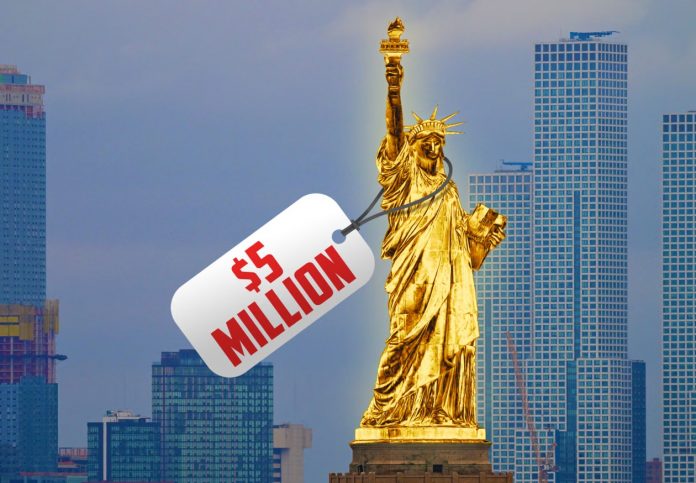
The “gold card” immigration visa plan of U.S. President Donald Trump, designed to offer permanent residency at the cost of $5 million, is being tested, according to tech billionaire Elon Musk.

Unveiled aboard Air Force One, the cash-backed path to citizenship is already stirring up global buzz and elite wallets. The card, branded the “Trump Card,” doesn’t just promise U.S. residency, it also offers tax breaks, elite status, and a promise: no quotas, no waitlists, and certainly no “woke” bureaucracy.

Musk let the cat out of the bag, announcing on X: “Once it is fully tested, it will be rolled out to the public with an announcement by the president.” The response came as a nod to a thread by blockchain entrepreneur Mario Nawfal, who had already dug up a federal website and digital backend built by none other than the Department of Government Efficiency—DOGE.

The program is changing the trajectory – proving that the fastest route to American soil is no longer through asylum, talent, or hardship—it’s through wire transfer.

“Over 1,000 gold cards have already been sold,” Commerce Secretary Howard Lutnick said in April.

That’s $5 billion in one day—enough to light up Washington’s accounting books. With an estimated 37 million people globally who can afford the price tag, the Trump administration believes this scheme could help chip away at the country’s towering $36.5 trillion debt.

While the details are still sketchy, the plan so far is this simple: no job creation requirement, no background of innovation or achievement necessary. Just five million dollars and a taste for exclusivity.

EB-5, Meet Your Replacement

For years, the EB-5 investor visa served as the go-to route for high-net-worth individuals to secure U.S. green cards, particularly Indians wary of H-1B bottlenecks and green card purgatory. That program demanded a lower investment, $800,000 in targeted areas, and came with strings attached: job creation, bureaucratic scrutiny, and fees nearing $200,000.

By contrast, the Trump Card ditches the red tape for a red carpet.

Nawfal calls it what it is: “a high-roller fast lane to U.S. residency.” He touts it as having “no woke quotas, no endless backlogs—just cash, credentials, and country club-level vetting.” Critics might call it plutocracy by another name.

Tax-Free Paradise for the Ultra-Rich

One of the card’s more startling perks is a possible exemption from U.S. global taxation, allowing holders to earn abroad without Uncle Sam’s gaze. For many billionaires, that’s not just a perk—it’s a dealmaker.

“If Trump gives golden visa holders an exemption on their worldwide income outside of the U.S., it will make the $5-million price tag look like chaar anna for rich people,” said Russell A. Stamets of Circle of Counsels, comparing the price tag to pocket change in India’s old currency.

He also pointed to another dimension of the appeal: the easing of anti-bribery and anti-corruption oversight under Trump’s second term.

“The golden visa may prove very attractive for a certain set of the global wealthy,” he noted.

India’s Shortcut Just Got Shut

For many Indian investors, the EB-5 visa has been the lifeboat out of America’s labyrinthine immigration process. That lifeboat might now be gone.

Varun Singh, managing director at XIPHIAS Immigration, warns that it could lead to serious consequences.

“The removal of the EB-5 visa programme would be a severe blow to Indian investors, the U.S. economy, and bilateral ties,” he said. “It has been an economic driver, with Indian investors contributing billions of dollars to real estate, infrastructure, and technology sectors in the U.S.”

The risk isn’t just economic—it’s reputational. The U.S. has long framed its immigration system as merit-based. Now, many believe it is leaning uncomfortably close to selling citizenship to the highest bidder.

“The shift signals a philosophical break,” Singh added. “Indian investors may now turn to other global residency programmes such as Greece’s Golden Visa, Portugal’s Golden Visa, and schemes in the UAE and Canada. These provide faster routes, with less political theater.”

The American Dream—Repriced

For many around the world, the American dream has always been aspirational. But with the Trump Card, the dream is now transactional.

Time will tell if the program succeeds in helping cut the U.S. debt, or simply becomes a collector’s item for oligarchs. However, for a growing class of ultra-wealthy global citizens, the border is no longer a barrier. It’s a velvet rope, and Trump just handed them the VIP pass.
U.S Treasury Department to Meet Key Crypto Players Starting From Today

0

The U.S. Treasury Department is reportedly hosting a series of private roundtables with key players in the cryptocurrency industry this week, starting around May 12, 2025. These closed-door meetings will focus on various aspects of the crypto ecosystem, including decentralized finance (DeFi), banking, and cybersecurity.

The discussions aim to address regulatory and policy challenges in the digital asset space, reflecting the Treasury’s ongoing engagement with industry stakeholders to balance innovation with financial system integrity. Specific details about attendees or outcomes remain limited due to the private nature of the meetings.

The U.S. Treasury’s closed-door meetings with key crypto players signal a pivotal moment for the cryptocurrency industry, with significant implications and a clear divide in perspectives. The meetings could lead to clearer regulatory frameworks, addressing ambiguities around DeFi, stablecoins, and crypto exchanges. This might foster innovation by providing guardrails that legitimize the industry, attracting institutional investment. The Treasury may push for stricter oversight, potentially imposing rules that stifle smaller players or DeFi projects. Measures could include enhanced KYC/AML requirements or limits on decentralized protocols, raising compliance costs.

Cybersecurity and Financial Stability

The focus on cybersecurity suggests concerns about crypto’s role in ransomware, money laundering, or systemic risks (e.g., stablecoin collapses). Outcomes might include mandates for robust security standards or stress tests for major platforms. Overemphasis on risks could lead to policies that unfairly target crypto, ignoring its benefits or resilience compared to traditional finance.

Discussions with banks indicate efforts to bridge crypto and traditional finance, potentially easing access to banking services for crypto firms. This could stabilize the industry by reducing reliance on offshore or fringe financial institutions. Banks may resist due to perceived risks, or the Treasury could impose conditions that favor centralized players, marginalizing DeFi.

The U.S. risks falling behind jurisdictions like the EU or Singapore, which have clearer crypto regulations. These meetings could shape policies to keep the U.S. competitive, retaining talent and capital. Heavy-handed regulation could drive innovation offshore, as seen with firms relocating to crypto-friendly regions.

Positive signals from the meetings (e.g., pro-innovation policies) could boost crypto markets, particularly for projects aligned with regulatory priorities. Conversely, hints of crackdowns could trigger sell-offs, especially in privacy-focused or DeFi tokens. Short-term volatility is likely as markets react to leaks or speculation.

The meetings highlight deep divides among stakeholders, reflecting competing visions for crypto’s future. Many crypto firms and advocates push for light-touch regulation, arguing that overreach stifles innovation and undermines decentralization. They emphasize crypto’s potential to democratize finance and enhance efficiency.

The Treasury prioritizes financial stability, consumer protection, and preventing illicit activity. Officials may view crypto as a risk to the dollar’s dominance or a vector for crime, favoring strict oversight. Centralized Entities (e.g., Coinbase, Circle), these firms often welcome regulation to gain legitimacy and market share, as they can afford compliance. They may advocate for rules that entrench their dominance.

Decentralized projects fear regulations designed for centralized models, which could outlaw anonymous wallets or smart contracts. Their exclusion from invite-only meetings risks unrepresented interests. Traditional financial institutions want crypto to fit within existing frameworks, potentially limiting its disruptive potential. They may lobby for policies that protect their turf.

Innovators argue for a new paradigm, resisting rules that force crypto to mimic traditional finance. This tension shapes debates on custody, stablecoins, and banking access. The U.S. seeks to maintain financial hegemony, wary of crypto’s potential to bypass sanctions or empower adversaries. This contrasts with global players advocating for open, borderless systems.

The divide could lead to fragmented regulations, complicating cross-border operations. Pro-Crypto Advocates (visible on platforms like X) many view the meetings skeptically, fearing regulatory capture or bias toward Wall Street. Others, including policymakers, argue that crypto’s risks justify secrecy and caution, prioritizing national security over industry demands.

The Treasury’s meetings could set the tone for U.S. crypto policy, with outcomes ranging from innovation-friendly frameworks to restrictive measures that reshape the industry. The divides—between regulators and innovators, centralized and decentralized players, and U.S. and global priorities—will likely persist, influencing which voices dominate.

While regulatory clarity could unlock growth, the risk of overreach or exclusion of key stakeholders looms large. Monitoring leaks or public statements post-meetings will be crucial for gauging the direction, as will sentiment on platforms like X, where crypto communities are vocal.

Stripe Unveils Major Upgrade to Make Global Money Management Seamless And Programmable

0

Stripe, a leading global financial infrastructure platform, has announced its most significant upgrade. It aims to make money management fully internet-native and programmable.

The company is rolling out new capabilities designed to help users store, send, and receive money in multiple currencies across stablecoins and traditional currencies on local rails. Over the next year, these features will be available by default to all Stripe users.

This announcement was made at the company’s 2025 annual conference, where it shared some of the biggest changes. As part of the update, Stripe introduced new money management tools built into the Stripe Dashboard. Businesses in the US and UK can now store and manage funds in multiple currencies, convert between them, and send and receive payments using local payment networks.

Additionally, Stripe announced the upcoming launch of Stablecoin Financial Accounts. This feature will enable users in over 100 countries to store, receive, and send funds using either crypto or fiat payment rails from a dollar-denominated stablecoin balance.

At the company’s annual conference, Stripe introduced Global Payouts, a feature that allows businesses in the US and UK to send funds to customers, affiliates, contractors, or other third parties in 58 countries using just an email address.

Notably, the company previewed a new USDC-denominated corporate card available through the Visa network. Powered by Stripe Issuing and Bridge, this offering represents another step forward in Stripe’s vision for programmable financial infrastructure.

Another major announcement was Stripe Orchestration, which allows businesses to manage multiple payment processors seamlessly from a single dashboard. This feature gives full control and visibility over payment routing and performance. The Optimized Checkout Suite is also seeing significant enhancements. Soon, customers will be able to use one-click Klarna via Link. This summer, Stripe Managed Payments, a merchant of record solution, will launch, handling global tax compliance, fraud disputes, checkout UX, and customer support.

AI is also powering Stripe’s checkout experience more than ever, using over 100 signals to dynamically personalize payment methods and fields. Stripe now supports 125+ global payment methods, including real-time options like Pix and UPI. Businesses can localize prices across 150+ markets with Adaptive Pricing, and display any payment method with any processor using the Payment Element.

Launched in 2010 by Irish brothers Patrick and John Collinson, Stripe was created to simplify online payments for businesses and developers. The company has grown significantly to become one of the most prominent fintech startups globally.

It announced that it processed $1.4 trillion in total payment volume in 2024, a 38% increase from 2023, equivalent to roughly 1.3% of global GDP. The company now serves half of the Fortune 100, 80% of the Forbes Cloud 100, and 78% of the Forbes AI 50, with major clients like NVIDIA, PepsiCo, and Amazon.

Notably, Stripe supports 35 million registered users, with each averaging 50 monthly transactions, and maintains a 99.99988% API availability rate. More than 300,000 businesses now rely on Stripe Billing the core of Stripe’s Revenue suite, including some of the world’s most prominent AI companies such as OpenAI, Anthropic, Cursor, Midjourney, and more recently, NVIDIA.

Stripe has unveiled its most significant updates to the Revenue suite to date. These enhancements include the introduction of two new extensibility features Scripts and Workflows which transform Stripe into a fully programmable revenue engine. Additionally, Stripe has upgraded its usage-based billing capabilities to better support the monetization of AI-driven products and services.

Looking ahead, Stripe aims to support emerging markets by adding 25 new payment methods and enhancing its Stablecoin Financial Accounts to drive financial inclusion.

Apple to Increase iPhone Prices Amid U.S.-China Tariff Tensions, Plans New Features to Soften Blow

0

Apple Inc. is considering raising prices for its upcoming iPhone lineup in response to escalating U.S.-China trade tensions and tariffs imposed by President Donald Trump, according to a report by The Wall Street Journal.

The tech giant, caught in the crossfire of global trade disputes, is navigating a complex landscape of rising costs, supply chain shifts, and competitive pressures, with analysts warning that price increases could jeopardize its market share.

The U.S. has maintained a 30% tariff on Chinese imports, despite a recent agreement to slash some tariffs between the U.S. and China. For Apple, which assembles most of its iPhones in China, these tariffs are expected to add significant costs. The company stated earlier this month that tariffs would increase expenses by approximately $900 million during the April-June 2025 quarter.

To mitigate these costs, Apple is accelerating its shift to manufacturing in India. The company announced it would source a majority of iPhones sold in the U.S. from India during the April-June period, according to Bloomberg. This strategic pivot, however, introduces new logistical challenges, including higher labor and shipping costs, as evidenced by Apple chartering cargo flights to transport over 600 tons of India-made iPhones to the U.S.

Impact of Potential Price Hikes on Consumers

According to the Wall Street Journal report, Apple is planning to couple potential price increases with new features and design changes, such as an ultrathin design, to justify the higher costs.

Analyst projections underscore the scale of potential price hikes. Rosenblatt Securities estimated last month that the base iPhone 16, currently priced at $799, could rise to $1,142 due to tariffs, a 43% increase. Similarly, UBS analysts predicted that the iPhone 16 Pro Max, starting at $1,199, could see a $350 increase, bringing its price to around $1,549, a nearly 30% rise, according to CNBC.

Consumer reactions have already begun to surface, with reports of panic-buying at Apple stores as shoppers anticipate price hikes. CNN on Friday reported an increase in foot traffic at Apple stores, driven by tariff fears.

However, analysts warn that sustained price increases could erode Apple’s market share, particularly as competitors like Samsung capitalize on advanced AI features that Apple has been slower to adopt.

The broader trade environment remains volatile, with tariffs creating what some analysts call a “category 5 price storm” for consumer electronics. Apple’s cautious approach to pricing reflects an effort to balance cost recovery with maintaining consumer goodwill. The company aims to avoid directly attributing increases to tariffs by tying price hikes to new features, a strategy that could help preserve its brand image.

However, Apple’s stock saw a 7% surge in premarket trading on Monday, following the U.S.-China tariff reduction agreement, signaling market optimism about potential relief. However, the persistent 30% tariff on Chinese imports continues to pose a significant hurdle.

A Tech Industry-wide Problem

Apple is not alone in grappling with tariff-related challenges. Amazon faced scrutiny last month when its low-cost Haul unit considered listing import charges due to U.S. tariffs, prompting the Trump administration to accuse the company of a “hostile political act.”

Apple may face the same response from the White House. Trump said on Sunday that he spoke with Apple CEO Tim Cook, without giving details.

However, like many other companies caught in the tariff conflict, Apple faces a delicate balancing act. The company has to choose between raising prices to offset tariff costs, which risks alienating price-sensitive consumers, or maintaining its original prices with squeezed profit margins. The shift to Indian manufacturing, while a long-term solution, introduces immediate challenges that may not fully shield Apple from tariff impacts.

Trump Orders Drugmakers to Cut Prices By 59% Within 30 Days or Face Global Benchmark Rule

0

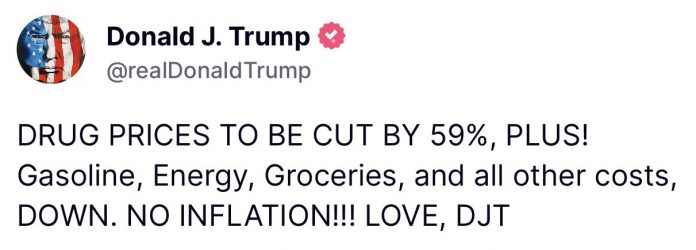
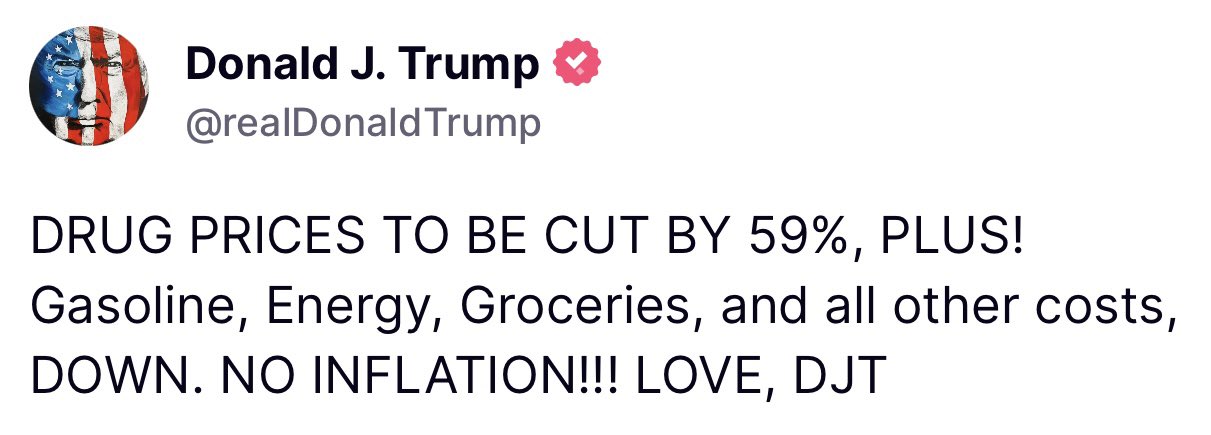
President Donald Trump on Monday signed a sweeping executive order that could shake the foundations of America’s pharmaceutical pricing model, setting a 30-day deadline for drugmakers to cut the cost of prescription drugs  by 59% or face new pricing regulations tied to what foreign governments pay.

The move marks the administration’s most aggressive push yet to tackle what Trump calls “a rigged system” that has forced Americans to pay more than any other country for the same medicines.

At the White House press briefing, Trump said the U.S. will no longer be the pharmaceutical industry’s “piggy bank,” describing the order as a major correction that would “equalize” drug pricing globally.

“We’re all going to pay the same. We’re going to pay what Europe pays,” Trump said, flanked by Health Secretary Robert F. Kennedy Jr., CMS administrator Dr. Mehmet Oz, FDA commissioner Dr. Marty Makary, and NIH director Jay Bhattacharya.

The executive order mandates the Department of Health and Human Services (HHS) to broker new prices for medications. If negotiations with drugmakers fail within 30 days, the administration will implement a new regulation that ties U.S. drug prices to the much lower prices paid by countries in Europe and elsewhere — a controversial model dubbed the “most favored nation” rule.

While the potential savings for Medicare and Medicaid could be substantial, it remains unclear how much of that relief will trickle down to the millions of Americans covered by private insurance, where government leverage over pricing is limited. However, Trump claimed the order would “save taxpayers trillions of dollars” and “reduce healthcare costs by numbers never even thought of before.”

No official analysis was released by the White House on how much the order would save or which drugs would be impacted, though Trump and his advisers suggested the measure could cover high-cost injectables, cancer treatments, and other expensive medications administered under Medicare.

Industry Pushback and Unanswered Questions

The pharmaceutical industry, a powerful lobbying force in Washington, has already begun pushing back. In a statement released on Sunday, Stephen J. Ubl, president and CEO of the Pharmaceutical Research and Manufacturers of America (PhRMA), slammed the plan as a “bad deal” that could harm patients and stifle innovation.

“Importing foreign prices will cut billions of dollars from Medicare with no guarantee that it helps patients or improves their access to medicines,” Ubl said. “It jeopardizes the hundreds of billions our member companies are planning to invest in America, making us more reliant on China for innovative medicines.”

Ubl’s warning echoes the long-standing argument by drugmakers that high U.S. prices are essential to fund the research and development of new drugs — a claim Trump dismissed as hollow.

“Pharmaceutical companies make most of their profits from America,” Trump said on Monday. “That’s not a good thing.”

What remains uncertain is the extent to which the president’s order, if implemented, will hurt the industry’s bottom line. Analysts say that tying drug prices to international benchmarks could deal a serious blow to pharmaceutical firms’ revenue growth, especially since many rely heavily on high-margin sales in the United States to offset lower returns abroad.

The pharmaceutical industry globally is valued at around $1.5 trillion, with U.S.-based companies representing a significant portion of that total. Giants like Pfizer, Merck, Johnson & Johnson, AbbVie, and Eli Lilly have seen massive market capitalizations, with the top five U.S. pharma firms alone collectively worth over $1 trillion as of early 2025. Any disruption to their U.S. pricing model would likely send ripple effects across global financial markets.

Trump’s critics note that the announcement, like many of his previous attempts to take on Big Pharma, may face serious legal and logistical hurdles.

Legal Clouds Above the Executive Orders

Trump’s earlier attempt to implement a “most favored nation” pricing policy during the final stretch of his first term in 2020 was blocked in federal court. At the time, the industry successfully argued that the rule would give foreign governments undue influence over how drugs are priced in the U.S., and a judge halted the plan on procedural grounds. President Joe Biden’s administration later abandoned it.

This time, Trump appears more determined to see it through. He’s also backed by a restructured health leadership team that includes Kennedy, Oz, and Makary — all outspoken about healthcare costs and transparency.

Speaking on Monday, Oz said the HHS will engage directly with pharmaceutical executives over the next 30 days to demand revised pricing based on international benchmarks. If talks break down, the administration will proceed with regulatory changes, bypassing Congress, where multiple bipartisan efforts to lower drug costs have failed.

The legal gray area around whether an executive order can force such sweeping pricing changes, particularly outside of Medicare and Medicaid, remains unresolved. But Trump, banking on public frustration over drug costs, appears willing to test the limits.

Political Capital vs. Corporate Lobbying

Trump’s message was that the U.S. has for too long subsidized cheaper drugs for the rest of the world. He accused pharmaceutical companies of deceptive messaging about R&D costs and vowed not to be swayed by the industry’s campaign contributions.

“For years, they said it was Research and Development Costs,” he wrote Sunday on Truth Social. “And that all of these costs were, and would be, for no reason whatsoever, borne by the ‘suckers’ of America, ALONE.”

“Campaign contributions can do wonders, but not with me, and not with the Republican Party,” Trump added. “We are going to do the right thing.”

The pharmaceutical lobby is one of the most powerful in Washington. According to OpenSecrets, the industry spent over $375 million on lobbying in 2023 alone, more than any other sector, and has consistently ranked among the top donors to both parties.

The potential impact on global drug pricing strategies and U.S. healthcare costs is hard to predict. While Americans pay more for drugs, the savings often go toward innovation that benefits global populations. Many believe that weakening the financial base could slow the pipeline for new treatments.

But Trump’s supporters say the current system is untenable.