DD
MM
YYYY

PAGES

DD
MM
YYYY

spot_img

PAGES

Home Blog Page 1327

Cryptocurrency Lending Explained. Platforms, Benefits, and the Real Risks

0

In the fast-paced world of digital assets, cryptocurrency lending has emerged as a game-changer, especially for traders looking to unlock liquidity without offloading their holdings. Powered by blockchain technology and a growing range of both centralized and decentralized solutions, this sector now plays a vital role in the evolving digital economy. And with institutional crypto lending gaining traction, it’s clear this isn’t just a niche service anymore — it’s here to stay.

Let’s break down how these lending models work, what they offer, and what every trader should be aware of before diving in.

Centralized Crypto Lending Platforms, Pros and Pitfalls

At its core, a centralized crypto lending platform operates much like a traditional bank. These platforms serve as intermediaries between lenders and borrowers, taking custody of users’ crypto assets and managing the loan process on their behalf. Users deposit crypto — often stablecoins or major assets like BTC or ETH — and receive interest in return, while borrowers use their crypto as collateral to secure a loan.

There are clear benefits to this setup. For one, centralized platforms often offer user-friendly interfaces, fiat on-ramps, and customer support — features that are especially helpful for newer users. KYC/AML compliance adds a regulatory layer that many institutions prefer, and some platforms even offer insurance for user deposits.

But it’s not all smooth sailing. The biggest drawback? Custodial risk. Users must trust the platform with their private keys and assets, which goes against the crypto ethos of self-sovereignty. Additionally, in times of market stress, centralized lenders have frozen withdrawals or faced insolvency, leaving users exposed.

Decentralized Finance (DeFi) Lending Platforms — Automation Meets Autonomy

Now let’s talk about the wild west of lending — decentralized crypto lending platforms. These protocols, built on the backbone of decentralized finance (DeFi), are non-custodial, transparent, and governed by code rather than people.

DeFi lending platforms operate on smart contracts — automated code that handles everything from deposit management to loan disbursement and liquidation. Want to lend your crypto? Just deposit it into a liquidity pool and earn yield. Need a loan? Lock your assets as over-collateralization, and borrow instantly — no human approval needed.

This model has some serious upsides:

  • 24/7 access;
  • no sign-ups;
  • total transparency since everything happens on-chain.

You can see how much is locked, borrowed, and repaid in real time. Plus, interest rates adjust dynamically based on market supply and demand — a double-edged sword, but one that traders can capitalize on.

However, DeFi isn’t risk-free. Bugs in smart contracts can — and have — led to massive losses. There’s also the issue of Peer-to-Peer (P2P) lending risks:

  • liquidity crunches;
  • volatile APYs;
  • limited recourse if something breaks.

Add in the lack of regulation, and it’s clear that while DeFi offers freedom, it demands vigilance.

No matter the platform, cryptocurrency lending offers major benefits. It helps traders access capital without selling their bags — great for tax strategies or staying exposed to potential upside. Lenders, on the other hand, can earn solid yields compared to traditional savings.

But let’s talk risks. Market volatility is the elephant in the room. Because of crypto’s wild price swings, most loans require over-collateralization, meaning you might need to lock up $2,000 in ETH to borrow $1,000. If the market dips and your collateral ratio drops, you’re at risk of liquidation.

For traders looking to put idle assets to work or access liquidity without selling, lending can be a solid strategy. But as with any corner of crypto, doing your homework is non-negotiable. Understand the platform. Know your risks. And always, always manage your collateral wisely.
“Too late dude. The damage is done:” Traders Downplay Musk’s Return To Tesla

0

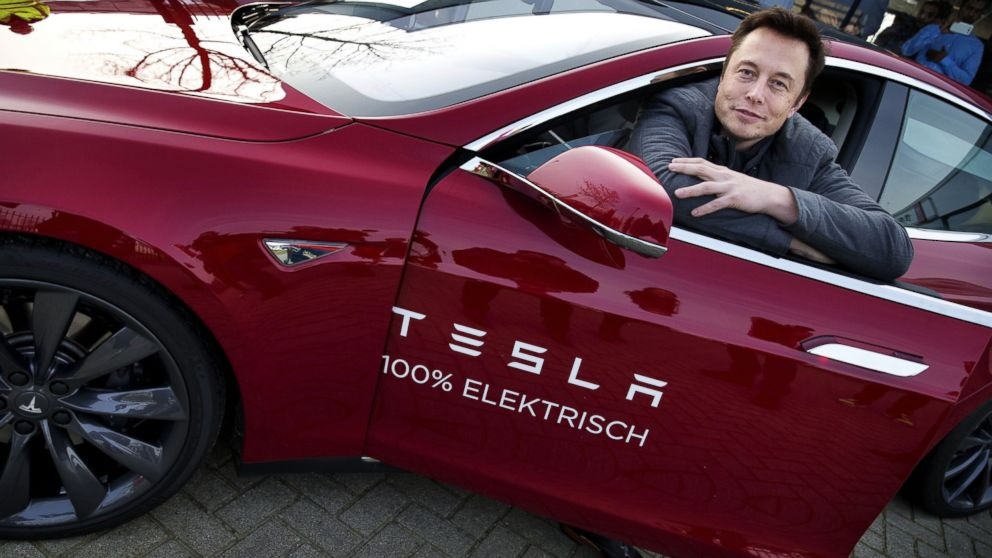
Tesla shares saw a brief rally on Wednesday after Elon Musk promised to step back from his political activities and renew his focus on the electric vehicle maker. But while the pledge temporarily calmed Wall Street nerves, many retail investors and analysts believe the move is coming far too late—and it may not be enough to reverse the damage already done to Tesla’s reputation, fundamentals, and stock value.

The Tesla CEO, during the company’s earnings call, said he would reduce his involvement in the Department of Government Efficiency (DOGE) beginning in May. The department, though unofficial and symbolic, had come to embody the CEO’s flirtation with politics and public policy interests that investors say have distracted him from Tesla’s day-to-day operations.

Musk’s political leanings and unfiltered presence on X, which he acquired in 2022, have become a source of tension with investors and consumers. Tesla’s once-pristine image has grown increasingly polarizing, particularly among environmentally conscious liberals, a key customer base for electric vehicles.

“Right, why do people think Elon and his insanity being at full on display at Tesla is going to help the company sell more cars to liberals?” one user on the retail trading forum r/WallStreetBets wrote.

Markets React, but Sentiment Still Weak

Wednesday’s modest rebound in Tesla’s share price did little to quell the grim reality: the stock is still down more than 35% year-to-date, and nearly 60% below its all-time high. Investors have been increasingly rattled by what they see as Tesla’s fading growth story, with first-quarter earnings underscoring the seriousness of the challenge ahead.

Tesla reported $19.3 billion in revenue for the quarter, missing analysts’ expectations of $21.4 billion. Automotive revenue plunged 20% year-on-year, and margins continued to shrink in the face of price cuts and intensifying global competition. Deliveries, the most closely watched metric by investors, also fell for the second consecutive quarter.

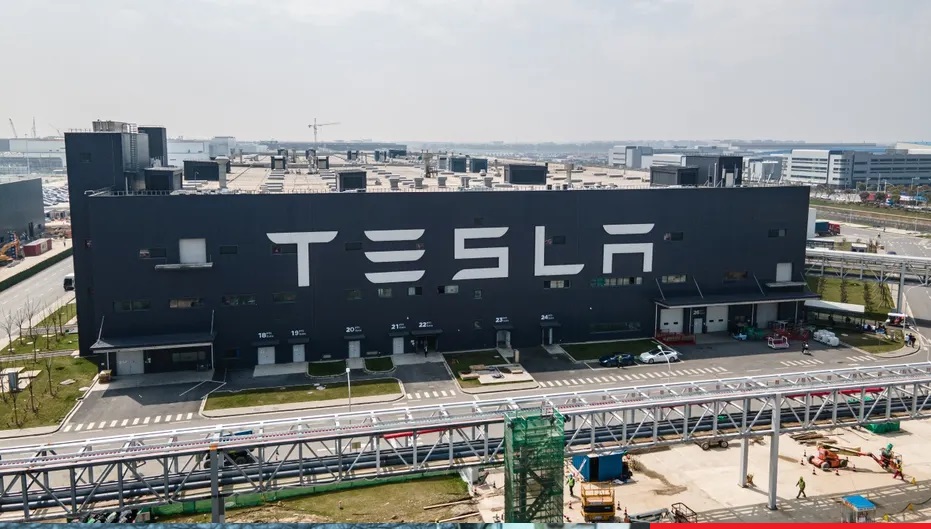
Even Tesla’s newer ventures, like its Optimus humanoid robot project, have been hit by external shocks. Musk revealed earlier this week that the production of Optimus has been affected by China’s restrictions on rare earth exports—an area where China holds near-monopoly control. The restrictions are part of Beijing’s retaliation in its ongoing tariff war with Washington, which analysts say is beginning to take a deeper toll on U.S. tech companies.

According to Musk, Chinese authorities want assurances that rare earth magnets used in Tesla’s robots won’t be diverted for military use. While he insisted that the materials are solely for industrial robotics, export approval is now tied to licensing from China’s Ministry of Commerce—a bureaucratic obstacle that could delay Tesla’s plans to scale Optimus in its EV factories.

Traders Aren’t Convinced

For many traders, Musk’s pledge to refocus on Tesla is seen as little more than damage control. The sentiment on forums like r/WallStreetBets remains deeply skeptical.

“Too late dude. The damage is done,” one user wrote. “If you think Q1 is bad, just wait for Q2.”

Others warned that Tesla’s price-to-earnings (P/E) ratio—still inflated relative to peers—would come under pressure as the company’s earnings growth slows and competitors flood the EV market with cheaper alternatives.

“There’s nothing unique in the pipeline,” another user said, pointing to the lack of new mass-market products from Tesla in recent quarters. Delays to the Cybertruck stalled robotaxi development, and tepid enthusiasm around the Optimus prototype have all contributed to a sense of drift at a company once hailed as the future of transportation.

The glut of used Tesla vehicles hitting the market, particularly in the U.S. and Europe, is also fueling anxiety. As demand softens, resale values have dropped, undercutting confidence in Tesla’s pricing power and the long-term value proposition of its cars.

Analysts Lower Expectations

The disappointment in Tesla’s earnings has reverberated across Wall Street. Goldman Sachs, RBC Capital Markets, and Cantor Fitzgerald were among the firms that trimmed their price targets for the stock, citing declining margins, weakening demand, and Tesla’s decision to rescind its forward guidance for 2025.

Steve Westly, a former Tesla board member, told CNBC’s Closing Bell Overtime that Musk’s re-engagement with Tesla might help steady the company in the near term, but that a broader strategic shift will be needed to reignite growth.

For a company that once defied gravity, both in terms of valuation and public perception, Tesla is now grappling with a new, more sobering reality.

Musk insists that Tesla will recover and expand into robotics and autonomous technology. But as the stock continues to languish and consumer sentiment drifts, investors are increasingly asking a more uncomfortable question: has Tesla peaked?

Tech Will Power Nigeria’s Empires of the Future

0

By 2030, I expect 80% of the richest Nigerians to have made money from technology. For all the paralysis in the land, Nigeria is having one of its finest cambrian moments on the formation of enduring companies. The last time we were this bold, on entrepreneurial capitalism, was in the early 1990s when some of Nigeria’s current leading banks were established.

The 1990s gave us the new generation of banks. The 2000s brought voice telephony. The 2010s ushered mobile internet. The 2020s would deliver the era of application utility across industry sectors and market territories.

Here is the deal: most companies are expiring or have expired as new technology vectors penetrate into the nation. AI (artificial intelligence) has taken out many SaaS products in the nation.  Upon this AI domain, many things will happen. We will see technology systems change the ordinances in markets by fixing frictions at scale. From education to healthcare, from financial services to logistics, and beyond, it would be exciting. The empires of the future are being built – get ready, Nigeria is a promise!

Yet, I challenge the government to do more by building platforms of commerce. These platforms are built by governments and entrepreneurs build companies on them. The platforms include road, clean water, security, postal systems, and amenities which enable companies to grow and thrive. For these emerging wealth creators to drive a more equal abundance of the future, Nigeria must build these platforms. Otherwise, many of the citizens will not benefit because no matter what happens, tech will “collect” from the economy.

Musk Admits China’s Restriction on Rare Earth Minerals Will Hurt Tesla’s Robot Ambitions

0

Tesla’s plans to scale production of its humanoid robot, Optimus, have run into geopolitical headwinds as China’s latest export controls on rare earth elements ripple through the global tech economy.

On Tuesday’s earnings call, CEO Elon Musk confirmed that Beijing’s restrictions on critical rare earth magnets have directly impacted production of the robots, forcing the company into a holding pattern while negotiating access to the materials.

“China wants some assurances that these aren’t used for military purposes, which obviously they’re not. They’re just going into a humanoid robot,” Musk told investors, downplaying the concern but acknowledging the company is working through sensitive discussions with Chinese authorities.

The rare earth materials at the heart of this friction, particularly medium and heavy rare earths like dysprosium, terbium, and samarium, are essential for high-efficiency magnets used in Tesla’s robots and electric vehicles. Beijing’s new rules require exporters to obtain licenses and submit end-use declarations, a move widely seen as retaliation for U.S. President Donald Trump’s latest round of tariffs on Chinese goods.

But analysts say this is not just about tit-for-tat policy. China’s control over the global rare earth supply—estimated at over 70% of global output—gives it leverage that hits at the very core of U.S. technological advancement.

Tesla is already feeling the heat. Optimus, the humanoid robot Musk has declared foundational to Tesla’s future, is caught in the middle of the growing tension. Musk had announced that the company would produce about 5,000 units of the robot this year, with thousands expected to be deployed across Tesla’s EV factories. The machines, equipped with AI and built for labor-intensive tasks, are key to Tesla’s diversification strategy as its core EV business faces rising competition and a sagging stock price—down over 37% year-to-date.

“The future of the company is fundamentally based upon large scale autonomous cars and large scale, large volume and vast numbers of autonomous humanoid robots,” he said.

But now, Tesla is not only dealing with uncertainty over material access but also facing a potential timeline squeeze. While Musk tried to reassure investors that the company still intends to deliver thousands of units, industry observers warn that any extended delay in accessing critical components could derail deployment or reduce output.

Making matters more complicated, Tesla’s rivals in the humanoid robotics space, particularly China’s Unitree Robotics and AgiBot, are gearing up for mass production this year. Analysts suggest that the export restrictions could end up giving Chinese players an upper hand, not just in access to resources but also in time to market.

For China, the rare earth restrictions underline the idea that control over physical supply chains still trumps virtual dominance in a high-tech world. The U.S. may lead in software and innovation, but China holds the keys to the physical materials needed to build next-generation machines—humanoid or otherwise.

Trump’s administration is softening its tone on tariff negotiation with China, with President Donald Trump saying on Tuesday that the U.S. “is going to be very nice” to China.

“145% is very high, and it won’t be that high,” Trump said. “No, it won’t be anywhere near that high. It’ll come down substantially. But it won’t be zero ? used to be zero. We were just destroyed. China was taking us for a ride.”

Tesla, for its part, is already exploring material alternatives and redesigns to reduce its dependence on Chinese-sourced rare earths. But experts caution that diversification will take time—years in some cases—and will not solve the immediate shortfall.

Meanwhile, former Tesla board member Steve Westly emphasized the urgency of finding a new growth engine amid EV headwinds. He told CNBC that Tesla’s EV margins are shrinking, and the company needs this robotics bet to work. If they can’t get materials, that’s a massive setback, he said.

Trump Signals Tariff Retreat, Analysts Say He’s “Folding”, Giving Beijing Upper Hand

0

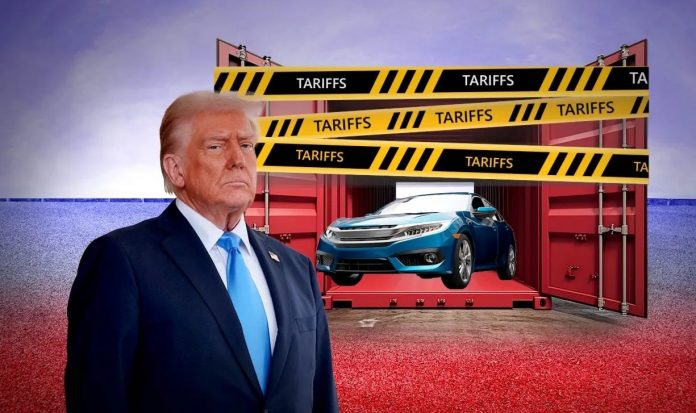
President Donald Trump on Tuesday signaled a potential retreat from his administration’s aggressive trade stance against China, saying the steep 145% tariff rate currently imposed on Chinese imports “won’t be that high” for long.

His remarks, made in the Oval Office, added to mounting speculation that the U.S. is preparing to soften its position amid growing economic fallout and pressure from businesses hit by the escalating trade war.

Trump’s declaration came just hours after Treasury Secretary Scott Bessent privately admitted that the current U.S.-China trade impasse is “not sustainable.” Though Trump struck a hopeful tone about eventual negotiations, insisting “we’re going to be very nice,” there was no indication that formal talks have resumed. The White House later confirmed that there have been no direct communications between Trump and Chinese President Xi Jinping.

Still, Trump said the current tariff rate “will come down substantially,” but not to zero — a level he claimed previously “destroyed” the U.S. economy.

The shift in tone did not go unnoticed by market watchers and analysts, who described it as a retreat under mounting pressure.

“Trump has just folded on Powell and China! Not going to fire Powell and China tariffs to come down substantially… This man is running a circus. This daily flip-flop is disgraceful and a joke,” said Puru Saxena, founder of Hong Kong-based investment research firm AlphaTarget, in a post on social media.

Trump’s softening posture has been interpreted as a signal of vulnerability, with several analysts arguing that China now holds the upper hand in any future negotiations. According to the South China Morning Post, advisers close to Chinese policymakers see the White House’s recent statements as a sign that the U.S. side is “folding.” That perception, experts suggest, could embolden Beijing to hold out for more favorable terms — or make fewer concessions altogether.

“[Trump] needs a quick deal,” Garcia-Herrero told the South China Morning Post. “China does not need to offer anything big in such circumstances, because the US is so desperate for a deal. With a few billion in imports from the US, China might manage to lower the tariffs. The deal might be sweeter for China than in 2019.”

One source familiar with Trump’s strategy said the White House is even willing to phase in tariffs over five years — a dramatic shift from the abrupt enforcement deadlines that defined earlier rounds of tariffs. Another possible concession, the source said, includes coordinating future tariffs with negotiations, rather than slapping them on unilaterally.

But while Trump confirmed he’s open to dialing back tariffs, he remained adamant that duties on Chinese goods would not be entirely lifted. “It won’t be zero,” he said.

Analysts say the policy shift is being driven not by diplomacy but by economic headwinds. Since Trump announced the universal tariffs earlier this month, industry data shows that ocean container bookings from China to the U.S. have plummeted more than 60% industry-wide — a direct hit to U.S. supply chains. The downturn is affecting everything from electronics and household goods to raw materials critical to American manufacturers.

“There’s a real squeeze happening here,” said Chen Zhiwu, a finance professor at the University of Hong Kong. “The more he talks like this, the more it shows how anxious the U.S. side is.”

According to Chen, China sees little incentive to rush back to the table and might benefit from prolonging the standoff, especially as the yuan gains popularity in regional trade.

Trump’s calls for cooperation come as China continues to demand that the U.S. drop what it calls “threats and coercion.” Beijing has also stepped up its own diplomacy, reportedly engaging U.S. allies like Japan to build opposition against Trump’s tariff plan, a move seen as undermining Washington’s leverage.

Despite the political theater, Trump remains without a clear path to securing a deal. Talks have not resumed, and China has yet to formally respond to U.S. overtures. Instead, Beijing has stuck to its retaliatory tariffs, now totaling 125% on U.S. exports, while exempting select industries such as semiconductors and medical devices in a bid to contain the domestic impact.

Even U.S. officials appear to be hedging expectations. Bessent, speaking Tuesday to investors, warned that the negotiations with China would likely be a “slog,” and that while a de-escalation is expected, the process will be neither fast nor simple.

In Beijing, Foreign Ministry spokesperson Guo Jiakun reiterated China’s stance that the U.S. must “stop making threats and resorting to coercion” if it wants a path to dialogue. Until then, analysts believe China is content to wait out the storm.

“Rising living costs, economic disarray, and popular discontent will eventually force a definite pivot of Trump’s approach,” said Xu Tianchen, a senior China economist. “China is betting that time is on its side.”

With the U.S. economy showing signs of strain and businesses warning of disruptions, Trump’s shift from hardline rhetoric to cautious optimism may not be the final act, but it’s certainly a curtain-raiser for a more complicated phase of the trade war.