DD
MM
YYYY

PAGES

DD
MM
YYYY

spot_img

PAGES

Home Blog Page 1329

Is It Too Late to Get into Bitcoin (BTC) and Dogecoin (DOGE)? Consider This Soaring Gem to Change Your Portfolio in 2025

0

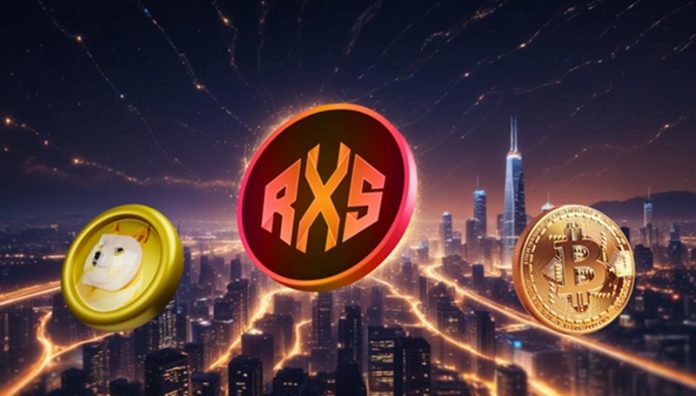
Dogecoin has dropped nearly 80% from its 2021 peak, with on-chain data revealing whales abandoning their holdings. Analysts note billions of DOGE sold since April, pushing its network profit/loss metric into negative territory. While some predict a rebound if key resistance levels break, uncertainty lingers. Bitcoin faces similar turbulence, struggling below $86,000 amid mixed demand signals and institutional outflows. Both assets show volatility, leaving investors questioning their next move. Enter Rexas Finance (RXS)—a blockchain project bridging real-world assets like real estate and gold with fractional ownership. With a $48 million presale surge and a confirmed 2025 launch, RXS emerges as a strategic alternative for portfolios seeking stability and growth.

Dogecoin’s Rocky Path 

Dogecoin’s price hovers near $0.15, trapped in a bear cycle since February. Santiment data highlights sustained whale sell-offs, driving the network into a $107.3 million realized loss zone. Analysts like Olivier Maximus suggest a potential breakout if DOGE reclaims $0.20, but failed rallies since March cast doubt. Technical patterns like the inverse head-and-shoulders hint at upside, yet macroeconomic headwinds and meme coin reliance keep gains fragile. For investors eyeing DOGE, patience remains critical—but time may be running out as newer projects like Rexas Finance redefine utility.

Bitcoin’s Macro Hurdles 

Bitcoin’s climb to $86,000 sparks cautious optimism, yet demand metrics tell a different story. Spot ETF outflows exceed $870 million since April, while exchange reserves hit five-year lows. Analysts debate whether recent price action signals a trend reversal or temporary relief. Peter Brandt dismisses bullish chart patterns as “hopium,” while others point to weakening trade volumes—down 6x from 2021 peaks. With resistance near $86,500 and institutional interest wavering, Bitcoin’s short-term potential appears capped. Investors seeking exponential growth must look beyond established giants to innovations like Rexas Finance.

Rexas Finance’s Strategic Advantage

Rexas Finance transforms how global assets are bought and sold. By tokenizing real estate, gold, and commodities, the platform lets users purchase fractional stakes with a single click. Imagine a retail investor in Tokyo owning 10% of a Parisian apartment, earning passive income through blockchain-automated rent distribution. This model taps into the $16 trillion real-world asset market, democratizing access previously reserved for high-net-worth individuals. Every tokenized asset on Rexas’ ERC-20 platform guarantees transparency, eliminating intermediaries and reducing costs.

Rexas Finance empowers users to tokenize personal assets via its Token Builder, a user-friendly interface requiring no coding expertise. Entrepreneurs leverage the Launchpad to crowdfund projects, pooling capital from global backers.

The Quickmint Bot accelerates asset digitization, while AI Shield audits smart contracts for vulnerabilities. These tools dismantle barriers between physical assets and blockchain, positioning Rexas Finance as a hub for decentralized finance innovation.

Presale Momentum and Market Confidence 

Rexas Finance’s presale has raised $48.2 million, with 92.2% of its 500 million RXS allocation sold. Early investors watched the token climb 6.6x from $0.03 to $0.20, fueled by whale activity—one Ethereum wallet recently acquired 750,000 RXS ($150,000). Avoiding venture capital, Rexas Finance prioritized public access, reserving 50% of its 1 billion tokens for presale participants.  A CertiK audit ensures security, while listings on CoinMarketCap and CoinGecko boost credibility. With a confirmed $0.25 listing price and three Tier 1 exchange launches planned, RXS targets $10+ post-2025 debut—a 50x leap from current prices.

Seizing the Rexas Opportunity 

Rexas Finance’s $1 million giveaway amplifies its appeal, offering 20 winners $50,000 each for completing social tasks. This campaign, paired with a 22.5% staking pool, incentivizes long-term holding. As Bitcoin and Dogecoin navigate choppy waters, RXS stands out with real-world utility, presale traction, and a clear path to disrupt asset ownership. For investors questioning if it’s too late to join crypto’s next wave, Rexas Finance isn’t just an alternative—it’s a blueprint for 2025’s portfolio evolution. Secure RXS tokens now before the final presale stage closes.


For more information about Rexas Finance (RXS) visit the links below:

Website: https://rexas.com

Win $1 Million Giveaway: https://bit.ly/Rexas1M

Whitepaper: https://rexas.com/rexas-whitepaper.pdf

Twitter/X: https://x.com/rexasfinance

Telegram: https://t.me/rexasfinance

 

PONZI SCHEME: Mistakes of PWAN in Response to SEC’s Regulatory Oversight

0

When a public institution like Nigeria’s Securities and Exchange Commission (SEC) sounds an alarm about a company’s practices, the response from that company matters just as much as the warning itself. That was the case recently when the SEC issued a press release about Property World Africa Network (PWAN), cautioning the public against investing in its real estate investment offering, PWAN MAX. According to the SEC, PWAN is not registered to solicit investments and appears to be operating in a way that shares traits with a Ponzi scheme. The commission pointed to unusually high returns and failure to honour withdrawal requests as troubling signs.

PWAN responded swiftly, but not effectively. The company denied the SEC’s characterization, calling it inaccurate and misleading. It explained that its real estate “Buy-Back” offering is not a typical capital market product and claimed it falls outside of SEC’s jurisdiction. The company added that if a clear regulatory framework were introduced for its type of business, it would comply.

At first glance, this might seem like a confident and measured reply. But on closer examination, PWAN’s response shows a series of misjudgments that damaged its credibility rather than defended it.

One of the first mistakes PWAN made was treating the SEC’s warning as a misunderstanding, rather than a serious allegation. By focusing its energy on the legal technicalities of regulation, arguing that its operations don’t fall under existing SEC rules, it appeared to dodge the real issue. The concern was not just about regulatory definitions, but about the safety of investors’ money and the trustworthiness of PWAN’s practices.

This kind of response may satisfy lawyers, but it doesn’t satisfy the public. People who have given their money to PWAN, or were considering doing so, are less concerned about whether an investment product fits into a specific legal category, and far more concerned about whether the company can be trusted to return their funds when promised. In ignoring this basic emotional truth, PWAN lost an opportunity to connect with its audience and reassure them.

Even more concerning was PWAN’s complete silence about the experiences of its investors. The SEC specifically mentioned that withdrawal requests had not been honoured, yet PWAN’s statement did not even acknowledge that this had happened. There was no apology, no explanation, and no empathy. That absence sent a clear message, even if it wasn’t intended: that the company was more interested in protecting itself than in helping the people who might be hurt by its actions.

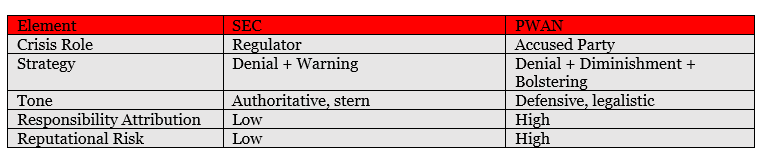
Exhibit 1: Between SEC and PWAN

Source: SEC, 2025; PWAN, 2025; Infoprations Analysis, 2025

Rather than offering clarity or transparency, PWAN chose to hide behind legal language. It said it had taken legal advice, and that its activities were not covered by current regulations. It promised future cooperation, but only if new rules were introduced that explicitly apply to its kind of business. This approach may work in a courtroom, but in the court of public opinion, it simply doesn’t hold up. When trust is in question, people look for moral responsibility, not legal loopholes.

The company’s tone also made things worse. There was no warmth in its statement, no concern for investor worries, and no sign that the company was listening. Instead of sounding like a business leader addressing its community, the response read like a legal memo. It felt distant, defensive, and corporate.

What could PWAN have done differently? Quite a lot. For starters, it could have acknowledged the concerns raised by the SEC and the confusion felt by the public. It could have spoken directly to its investors, offering a clear breakdown of how its business works and what measures are in place to protect client funds. It could have promised to improve transparency or even paused some operations while it worked with regulators to clarify the situation.

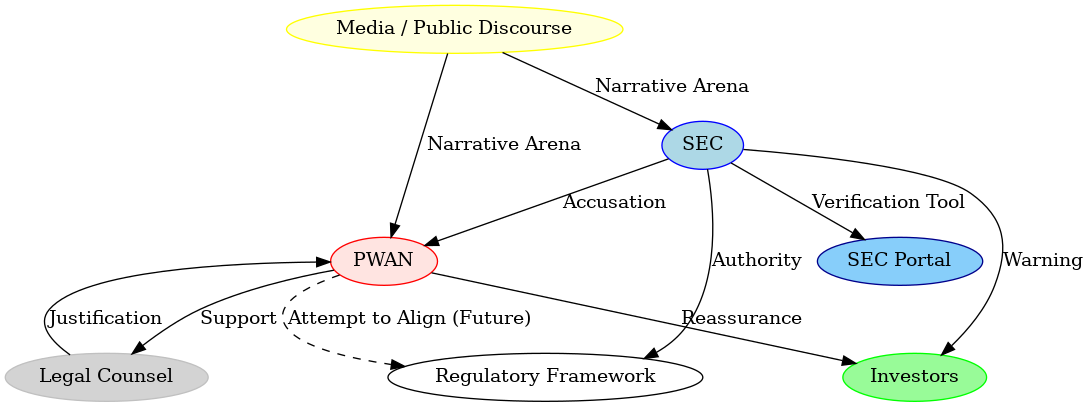
Exhibit 2: Emerged struggled legitimacy network 

Source: SEC, 2025; PAWAN, 2025; Infoprations Analysis, 2025

Most importantly, PWAN could have responded with a sense of care and responsibility. Instead of leading with denial and legal jargon, it could have shown leadership by saying: “We hear your concerns, and we want to be transparent and accountable.” That kind of message doesn’t require an admission of guilt, it requires an understanding of trust and the responsibility that comes with managing other people’s money.

When trust is at risk, the best response isn’t to retreat into legal details or insist on technicalities. It’s to meet people where they are, speak with honesty and empathy, and offer real steps forward. PWAN had a chance to do that. Unfortunately, it chose the opposite path, and it may be a long time before it earns the benefit of the doubt again.

Crypto Market Capitalization Surges Past $3.4 Trillion

0

The cryptocurrency market has seen a significant surge, with the total market capitalization increasing by 10% to reach $3.4 trillion. This milestone reflects renewed investor confidence and bullish momentum across the crypto space. Concurrently, U.S. spot Bitcoin exchange-traded funds (ETFs) recorded substantial weekly net inflows exceeding $920 million, indicating strong institutional and retail interest in Bitcoin exposure through regulated investment vehicles.

The rally in the crypto market cap aligns with several catalysts, including positive geopolitical developments, such as the partial easing of U.S.-China trade tensions, and growing institutional adoption. Bitcoin, trading around $103,000, has been a key driver, with its market cap comprising over 56% of the total crypto market. The $920 million in ETF inflows underscores the increasing appeal of Bitcoin as a “digital gold” asset, particularly amid economic uncertainties and tariff-related market volatility. Notable ETFs, such as BlackRock’s iShares Bitcoin Trust (IBIT), have led the inflows, with IBIT alone managing over $56 billion in assets.

Altcoins like Ethereum, Solana, and XRP have also contributed to the market cap growth, with DeFi platforms like Unichain and Hyperliquid showing explosive gains in total value locked (TVL). Stablecoins on Solana hit a record $13.11 billion market cap, further signaling robust liquidity in the ecosystem. However, the market remains volatile, with Bitcoin facing resistance around $96,000–$97,000, and some investors hedging through short-Bitcoin products.

This data suggests a broader risk-on sentiment, supported by macroeconomic factors and institutional participation, but investors should remain cautious of potential corrections given the market’s sensitivity to regulatory and economic shifts. The 10% surge in the crypto total market cap to $3.4 trillion and the $920 million in weekly net inflows into Bitcoin ETFs signal significant implications for the cryptocurrency ecosystem, while also highlighting a growing divide between traditional finance (TradFi) and decentralized finance (DeFi), as well as between institutional and retail investors.

The $920 million in Bitcoin ETF inflows reflects strong institutional demand, particularly through vehicles like BlackRock’s IBIT, which manages over $56 billion in assets. This trend suggests that institutions view Bitcoin as a hedge against inflation, currency devaluation, and geopolitical uncertainty, especially amid tariff threats and U.S.-China trade tensions. ETFs provide a regulated, accessible entry point for traditional investors, reducing reliance on crypto exchanges and potentially stabilizing Bitcoin’s price volatility over time.

However, institutional dominance could centralize influence over Bitcoin’s market dynamics, raising concerns among crypto purists who value decentralization. The $3.4 trillion market cap, with Bitcoin comprising over 56%, indicates a maturing market with growing liquidity. Stablecoins on Solana reaching a $13.11 billion market cap further bolster this, enabling seamless transactions in DeFi ecosystems.

Altcoins like Ethereum, Solana, and XRP, alongside DeFi platforms like Unichain and Hyperliquid, are diversifying the market, reducing Bitcoin’s historical dominance and signaling broader use cases for blockchain technology. This maturation could attract more regulatory scrutiny, as governments seek to balance innovation with investor protection and financial stability.

The rally aligns with a risk-on sentiment, partly driven by optimism around U.S. economic policies under a new administration and easing trade tensions. Bitcoin’s appeal as “digital gold” grows in an environment of potential fiat currency devaluation and tariff-driven inflation. However, the market’s sensitivity to macroeconomic shifts—such as Federal Reserve rate decisions or unexpected regulatory crackdowns—poses risks of sharp corrections, especially with Bitcoin testing resistance at $96,000–$97,000.

Retail Investor FOMO

The market cap surge and ETF inflows are likely fueling retail investor enthusiasm, with platforms like Coinbase and Binance reporting increased trading volumes. Bitcoin ETFs represent a bridge between crypto and traditional finance, allowing investors to gain exposure without navigating decentralized wallets or exchanges. This integration boosts legitimacy but ties crypto to TradFi’s infrastructure, subject to centralized oversight and custodial risks.

DeFi advocates argue that ETFs undermine crypto’s ethos of decentralization, as they rely on custodians and regulated entities. Platforms like Unichain and Hyperliquid, with soaring TVL, emphasize self-custody and permissionless finance, appealing to those wary of centralized control.

Institutions, with their large capital pools, are driving ETF inflows and shaping market narratives. Their involvement stabilizes prices but risks marginalizing retail investors, who may face higher entry barriers in a market increasingly influenced by Wall Street. Retail investors, active on platforms like X, continue to fuel altcoin rallies and meme-driven tokens. However, their speculative behavior contrasts with institutions’ strategic allocations, creating a divide in investment philosophies and market impact.

This gap could widen if institutions push for more regulated products, potentially sidelining retail-driven projects or triggering regulatory clampdowns that disproportionately affect smaller investors. The ETF boom highlights a centralized narrative, where crypto is packaged as a TradFi asset class. Meanwhile, DeFi’s growth—evident in Solana’s stablecoin surge and Ethereum’s scaling solutions—emphasizes decentralization and financial sovereignty.

This ideological split could influence future development, with centralized crypto products gaining mainstream traction while decentralized protocols cater to niche, ideologically driven communities. The $3.4 trillion market cap and $920 million in ETF inflows underscore crypto’s growing mainstream acceptance, driven by institutional capital and macroeconomic tailwinds.

However, they also expose a deepening divide between TradFi and DeFi, as well as between institutional and retail investors. While these dynamics signal a maturing market, they raise questions about crypto’s decentralized roots and the balance of power in its ecosystem. Investors should monitor regulatory developments, institutional flows, and DeFi innovation to navigate this evolving landscape, as the interplay between these forces will shape crypto’s trajectory in 2025 and beyond.

A Look Into World Liberty Financial Governance For USD1 Airdrop Proposal

0

World Liberty Financial (WLFI), a crypto project backed by the Trump family, opened a governance vote on May 6, 2025, to distribute its USD1 stablecoin to eligible WLFI token holders. The airdrop aims to test the platform’s onchain distribution system and reward early supporters. The vote, which closes on May 14, 2025, has received overwhelming support, with 99.97% of votes (approximately 2.6 billion tokens) in favor and only 0.03% (about 901,000 tokens) against, as reported on May 7, 2025.

The exact amount of USD1 to be distributed and the airdrop date are yet to be finalized, depending on eligible wallets and budget. WLFI reserves the right to modify or cancel the airdrop at any time. USD1, launched in March 2025, is a fully backed stablecoin pegged to the US dollar, supported by US Treasuries, cash, and equivalents, and has a market cap exceeding $2 billion, ranking among the top stablecoins.

The World Liberty Financial (WLFI) USD1 airdrop proposal carries significant implications for the project, its token holders, and the broader crypto ecosystem, while also highlighting a divide among stakeholders due to its political ties, governance structure, and economic incentives. The airdrop serves as a live test of WLFI’s onchain distribution system on the Ethereum Mainnet, ensuring smart contract functionality and scalability for future operations.

A successful airdrop could enhance confidence in WLFI’s technical infrastructure, positioning it as a reliable DeFi platform. However, any technical failures could undermine trust and delay USD1’s broader rollout. By distributing USD1 to WLFI token holders, the airdrop rewards early adopters, fostering loyalty and encouraging further participation in the ecosystem. This could drive demand for WLFI tokens as new investors seek eligibility, potentially increasing token price, though speculative spikes may introduce volatility.

The governance vote (99.97% in favor as of May 7, 2025) demonstrates strong community support, reinforcing WLFI’s decentralized ethos. However, WLFI’s ability to modify or cancel the airdrop at its discretion may raise concerns about centralized control, potentially alienating some community members. The airdrop aims to boost USD1’s visibility and adoption before its public launch, positioning it as a competitor in the $230 billion stablecoin market dominated by USDT and USDC. With a market cap already exceeding $2 billion, USD1 ranks among the top stablecoins, and the airdrop could further enhance liquidity and market share.

USD1’s zero-fee minting/redemption and institutional backing (e.g., BitGo custody, Fidelity-managed reserves) differentiate it from competitors, potentially attracting retail and institutional users. However, the lack of public reserve attestations and limited liquidity compared to established stablecoins like USDT pose risks to adoption. The Trump family’s involvement (Donald Trump as “chief crypto advocate” and family-linked entity DT Marks DEFI LLC holding 22.5 billion WLFI tokens) has drawn significant scrutiny.

Democratic lawmakers, including Senators Elizabeth Warren and Richard Blumenthal, have raised concerns about conflicts of interest and national security risks, citing potential violations of the foreign emoluments clause. This could lead to stricter regulatory oversight, impacting WLFI’s operations and USD1’s credibility. WLFI’s claim that the Trump family has no operational or ownership role may mitigate some concerns, but the perception of political influence could deter users and investors wary of politically charged projects.

Economic and Market Risks

The airdrop could enhance USD1’s price stability by increasing circulation and liquidity, supported by arbitrage incentives and a diversified reserve (US Treasuries, cash equivalents). However, any mismanagement of reserves or failure to maintain the 1:1 peg could trigger market skepticism, destabilizing USD1 and affecting WLFI token sentiment. Holders receiving USD1 inherit risks tied to stablecoin adoption, including regulatory changes, market volatility, or operational issues, which could impact the perceived value of both USD1 and WLFI tokens.

WLFI’s branding as a “freedom-loving financial ecosystem” resonates with Trump supporters and those aligned with its narrative of economic independence. The airdrop is seen as a symbolic gesture reinforcing these values, appealing to a politically aligned community. The Trump family’s involvement has sparked a heated debate within the crypto community, where neutrality and decentralization are often prized.

Critics, including Democratic lawmakers and some crypto purists, question the project’s transparency and fear it prioritizes political ideology over financial integrity. This divide could limit WLFI’s appeal to a broader, apolitical audience. The airdrop’s structure (amount based on eligible wallets and budget) suggests equal distribution per wallet, but past airdrops often favor larger token holders. Those with significant WLFI holdings may expect greater rewards, potentially creating tension with smaller retail investors if the distribution feels inequitable.

Long-term investors may view the airdrop as a step toward ecosystem growth, while speculators might buy WLFI tokens to qualify, driving short-term price volatility. This could frustrate committed holders if speculative dumps follow the airdrop. The governance vote empowers token holders to shape WLFI’s direction, but WLFI’s ability to unilaterally modify or cancel the airdrop undermines this decentralization. Some community members may feel their votes lack real impact, creating distrust.

The 99.97% approval rate (2.6 billion votes in favor vs. 901,000 against) suggests strong consensus, but the low opposition (0.03%) may reflect apathy or lack of engagement from some holders, highlighting a divide between active governance participants and passive investors. Supporters trust WLFI’s commitment to transparency like the third-party audits, Chainlink’s Proof of Reserves and see the airdrop as a legitimate reward. This divide is exacerbated by WLFI’s rapid growth (raising $550 million from 85,000 holders) and USD1’s meteoric rise, which some see as unsustainable without clearer transparency.

The USD1 airdrop could solidify WLFI’s position in the stablecoin market, enhance community loyalty, and validate its technical infrastructure, but it also faces significant challenges. Political scrutiny, regulatory risks, and potential governance tensions could hinder broader adoption. The divide—between political supporters and critics, large and small holders, active and passive participants, and optimists and skeptics—underscores the polarized reception of WLFI’s initiatives.

The project must navigate these divides by prioritizing transparency, equitable distribution, and regulatory compliance to maintain trust and achieve long-term success. For the latest updates, stakeholders should monitor WLFI’s governance forum and official announcements.

Robinhood Developing Blockchain-Based Tokenized U.S. Securities Platform For European Retail Investors

0

Robinhood is developing a blockchain-based platform to enable European retail investors to trade tokenized U.S. securities, such as stocks, according to multiple reports from May 2025. The initiative aims to leverage blockchain technology for faster settlements, lower transaction costs, and 24/7 market access, streamlining cross-border trading.

The platform is likely to be launched in partnership with a digital-asset firm, with Arbitrum (an Ethereum Layer-2 solution) and Solana being considered for the underlying blockchain infrastructure due to their scalability and low fees. No final agreement has been confirmed, and discussions are ongoing.

This move aligns with Robinhood’s European expansion, supported by a brokerage license obtained in Lithuania, allowing broader financial services in the EU. The platform is part of a broader trend among financial institutions, including BlackRock and JPMorgan, exploring asset tokenization to enhance transparency and efficiency.

CEO Vlad Tenev has emphasized that tokenized securities could democratize access to U.S. markets for non-U.S. investors, potentially increasing trading volumes. However, regulatory challenges, particularly aligning with EU’s MiCA framework and U.S. securities laws, may impact the rollout timeline.

The development of Robinhood’s blockchain-based trading platform for U.S. equities in Europe carries significant implications for markets, investors, and the broader financial ecosystem. It also highlights a growing divide between traditional finance and decentralized, blockchain-driven systems. European retail investors gain easier, potentially cheaper access to U.S. stocks, which are often high-growth assets like tech giants. Tokenization could lower barriers like high fees or complex cross-border processes.

Blockchain’s continuous operation enables round-the-clock trading, aligning with retail investor demand for flexibility and potentially increasing market participation. Blockchain can reduce settlement times from T+2 (or T+1 in the U.S.) to near-instantaneous, minimizing counterparty risk and improving liquidity.

By bypassing intermediaries like clearinghouses, tokenized trading could cut transaction fees, benefiting cost-sensitive retail traders. With a Lithuanian brokerage license, Robinhood can tap into the EU’s 450 million-strong market, diversifying revenue beyond the U.S. Offering tokenized securities could differentiate Robinhood from traditional brokers like Interactive Brokers or European fintechs like eToro.

Regulatory Challenges

Compliance with the EU’s MiCA (Markets in Crypto-Assets) framework, effective December 2024, is critical. MiCA governs tokenized assets, requiring clear classification (e.g., security tokens) and robust investor protections. Tokenized U.S. equities must align with SEC regulations, which remain cautious about crypto and tokenization. Cross-jurisdictional coordination could delay or complicate the launch. Tokenized assets may create novel tax reporting obligations for investors, potentially deterring adoption unless streamlined.

Robinhood’s move follows giants like BlackRock (tokenized funds) and JPMorgan (blockchain-based repo trades), signaling mainstream acceptance of tokenization. This could accelerate the shift toward digital assets in traditional finance. Tokenized securities can be fractionalized, enabling smaller investors to own portions of high-value stocks, potentially increasing market liquidity. Using scalable Layer-2 solutions like Arbitrum or high-throughput chains like Solana could set a precedent for future tokenized platforms, emphasizing low fees and high transaction speeds.

The platform’s success may hinge on integrating with existing financial systems and other blockchains, ensuring seamless asset transfers. Robinhood’s initiative amplifies the divide between traditional finance (TradFi) and decentralized finance (DeFi), as well as between regulatory approaches and market participants. Key aspects of this divide include:

Robinhood’s platform, while blockchain-based, is likely to remain centralized under its custody and brokerage model, contrasting with fully decentralized DeFi platforms like Uniswap or Aave that prioritize user control and disintermediation. TradFi relies on intermediaries (brokers, clearinghouses), while DeFi eliminates many of these. Robinhood’s hybrid approach—using blockchain but maintaining control—may face skepticism from DeFi purists who view it as “DeFi in name only.”

DeFi platforms often require crypto wallets and technical know-how, limiting their reach. Robinhood’s user-friendly interface could bridge this gap, bringing blockchain benefits to a broader, less crypto-savvy audience. The U.S. SEC’s stringent stance on crypto contrasts with the EU’s more structured MiCA framework, creating a regulatory patchwork. Robinhood must navigate this to ensure compliance, potentially shaping global standards for tokenized securities.

Regulators prioritize investor protection and market stability, often slowing innovation. Blockchain’s transparency and immutability could address some concerns (e.g., audit trails), but regulators may resist 24/7 trading or decentralized elements due to risks like market manipulation. Retail investors may embrace tokenization for its affordability and flexibility, while institutions may hesitate due to concerns about custody, counterparty risk, and regulatory clarity. Robinhood’s focus on retail could widen this gap.

Crypto enthusiasts may demand fully decentralized platforms, while traditional investors may prefer Robinhood’s regulated, familiar interface. This split could fragment market adoption. Traditional exchanges rely on legacy infrastructure (e.g., DTCC for settlements), which is reliable but slow and costly. Blockchain platforms like Robinhood’s could disrupt this, but integration with legacy systems remains a hurdle.

Choosing between Arbitrum (Ethereum ecosystem, robust but complex) and Solana (fast, cheaper but less decentralized) reflects a broader debate in blockchain about scalability vs. security. The choice could alienate users loyal to other chains. U.S. equities dominate global markets, and tokenization could entrench this by making them more accessible. Europe, aiming to bolster its own capital markets (e.g., via the EU Capital Markets Union), may push back through regulations favoring local assets.

Robinhood’s blockchain platform could revolutionize European access to U.S. equities, driving efficiency, reducing costs, and advancing tokenization in mainstream finance. However, it faces regulatory, technological, and market adoption hurdles. The initiative underscores a deepening divide between TradFi’s centralized models and DeFi’s decentralized ethos, as well as between regulatory regimes and investor preferences.