DD
MM
YYYY

PAGES

DD
MM
YYYY

spot_img

PAGES

Home Blog Page 1338

US-UK Trade Agreement is a Targeted Deal Reducing Tariffs and Job Supports

0
CREATOR: gd-jpeg v1.0 (using IJG JPEG v80), quality = 82

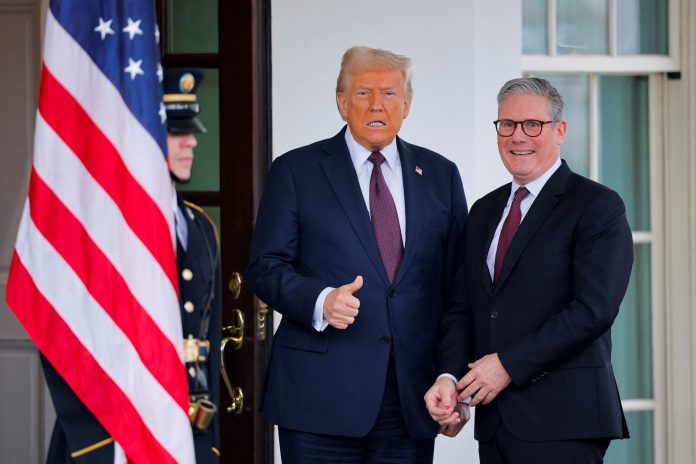
The United States and the United Kingdom has reached a trade agreement, announced on May 8, 2025, described as a significant step in strengthening economic ties between the two nations. However, the characterization of the deal as “full and comprehensive” requires scrutiny, as the details suggest it is more limited in scope than a traditional free trade agreement (FTA).

Key Details of the US-UK Trade Agreement

US tariffs on UK cars reduced from 25% to 10% for a quota of 100,000 vehicles. Steel tariffs eliminated, with the UK implementing tariffs and quotas on foreign steel to protect domestic industries. Ethanol tariffs removed, benefiting industries like beer production. New reciprocal market access for beef, with UK farmers granted a tariff-free quota of 13,000 metric tonnes for exports to the US. Expanded access for US agricultural products, machinery, and ethanol to the UK market.

The White House claims the deal will unlock $5 billion in export opportunities while enhancing national security. UK officials, including Prime Minister Keir Starmer, emphasize that the deal will save thousands of jobs and boost British businesses. The UK is reportedly purchasing $10 billion worth of Boeing planes, though it’s unclear if this is directly tied to the trade deal or a separate agreement. No changes to UK food standards, addressing concerns about lowering regulations to align with US practices.

The term “full and comprehensive” typically implies a broad agreement covering goods, services, investment, intellectual property, and regulatory alignment, as seen in FTAs like the US-Mexico-Canada Agreement (USMCA). However, this US-UK deal appears narrower: The agreement focuses on specific sectors (e.g., steel, cars, beef, ethanol) rather than a wide-ranging elimination of trade barriers. It includes quotas and partial tariff reductions, which are more characteristic of a sectoral trade deal than a comprehensive FTA.

There’s no mention of services, digital trade, or broader regulatory harmonization, which are staples of comprehensive trade agreements. Concerns about digital services and product standards were raised by critics but not addressed in the deal’s publicized terms. Some UK voices, like @LizWebsterSBF on X, argued the deal offers minimal US concessions while potentially compromising UK standards, though official statements refute this. Frontier Economics data cited in posts suggests the deal’s economic impact (-0.7% GDP) is less favorable than a potential EU deal (+1.5% GDP).

The White House and President Trump have framed the deal as a historic achievement, emphasizing reciprocity and fairness in trade. It’s presented as the first major trade deal since Trump’s return to office, with a focus on American economic and security interests. Prime Minister Keir Starmer’s government highlights job creation and industry protection, positioning the deal as a win for British workers.

While official accounts celebrate the deal, critics question its benefits, citing limited scope and potential long-term costs compared to rekindling EU trade ties. While the deal marks a milestone in US-UK relations, calling it “full and comprehensive” may be an overstatement. It addresses specific trade barriers but falls short of the depth and breadth of a true FTA. The agreement seems designed to deliver quick wins—e.g., tariff cuts and market access in politically sensitive sectors—while avoiding contentious issues like regulatory alignment or services trade, which could require lengthier negotiations.

The economic impact, as suggested by Frontier Economics, appears modest or even negative for the UK relative to other options like an EU deal. However, the deal’s strategic value—strengthening the US-UK alliance amid global trade uncertainties—may outweigh its immediate economic footprint. Claims about job creation and export growth should be monitored, as quotas (e.g., 100,000 cars, 13,000 tonnes of beef) limit the scale of benefits.

The US-UK trade agreement is a targeted deal reducing tariffs and opening markets in select sectors, but it is not a “full and comprehensive” FTA in the traditional sense. It delivers measurable benefits, such as tariff cuts and job support, but its scope is limited, and its long-term impact depends on implementation and future negotiations.
MTN Nigeria Crosses 90m Subscribers as Industry Recovers from SIM-NIN Cleanup; 9mobile Struggles

0

MTN Nigeria has surged past the 90 million active subscriber milestone, reinforcing its dominance in the country’s telecom industry as of March 2025.

This is according to the latest figures released by the Nigerian Communications Commission (NCC), which puts the total number of active mobile lines in the country at 172.4 million.

The new data points to a broader recovery in the sector, just over a year after the government-mandated National Identification Number (NIN) and SIM linkage audit wiped out over 60 million lines across networks. That cleanup exercise rattled the industry, slashing subscriber numbers and, to some extent, affecting revenues.

But MTN now controls 52.48% of the Nigerian mobile telecom market, with 90.4 million active connections — a major lead over rival Airtel Nigeria, which holds 33.78% market share and reported 58.2 million subscriptions. Globacom trails with 20.7 million active users, giving it a 12.01% slice of the market.

The most troubling trend, however, remains with 9mobile.

Once a vibrant player with ambitions to challenge incumbents, 9mobile now accounts for just 1.72% of the total market, with only 2.8 million active lines — a figure that remained static between February and March. While other operators reported modest growth month-on-month, 9mobile saw no movement, suggesting that subscribers neither joined nor exited the network in that time.

Industry insiders say this anomaly is not due to customer satisfaction but stems from technical issues that prevented users from porting out, a lifeline for subscribers hoping to escape worsening service quality.

A Crisis 9mobile Can’t Hide

For months, 9mobile has faced a cascade of complaints over network disruptions, slow internet speeds, and poor call quality. These concerns culminated in widespread rumors in March that the company was planning to shut down.

In response, 9mobile issued a statement vehemently denying any such intention, calling the speculation “false and misleading” and aimed at sowing panic among its subscriber base.

“We understand that some customers have recently faced challenges, particularly with Mobile Number Portability (MNP),” the company said. “We want to clarify that 9mobile has never restricted customers from porting to other networks.”

However, the company’s explanation — that the inability to port was due to “temporary technical challenges” — has done little to calm frustrated users. While 9mobile insists that the issues have been “largely resolved,” it also acknowledged lingering delays due to “ongoing system optimizations.”

The network further attributed some of the service disruptions to a transformation effort aimed at modernizing infrastructure and expanding coverage. It promised that its continued investment would “soon yield significant improvements,” even as subscribers in many parts of the country remain doubtful.

Contrasts in Fortunes

While MTN has not only regained its lost subscribers but expanded its reach, 9mobile appears trapped in a downward spiral of declining trust and technical setbacks.

Airtel, meanwhile, continues to consolidate its position as the second-largest network, even as it battles similar currency-related challenges that have plagued the entire telecom industry in Nigeria.

Analysts note that while MTN has managed to shield itself from some of the sector’s most disruptive shocks — thanks in part to aggressive network expansion and investments in digital infrastructure — 9mobile has lagged behind, hampered by weak capital inflow, management turnover, and legacy debt issues.

Industry observers believe the NCC may need to intervene more assertively to ensure that customers are not held hostage by underperforming networks. Mobile Number Portability is a regulatory right in Nigeria, designed to give consumers the freedom to switch providers when dissatisfied. Any hindrance, technical or otherwise, undermines that framework.

Airtel Nigeria Announces Plan to Spend Over N500bn on Network Expansion, 5G Rollout

0

Telecommunications giant Airtel Nigeria has announced plans to more than double its capital investment in Nigeria this year, setting the stage for an aggressive 5G rollout and sweeping network expansion across the country.

The development, disclosed in the financial statement of its parent company Airtel Africa for the fiscal year ending March 2025, shows that the Nigerian unit spent $168 million (approximately N259 billion) on capital expenditure during the reporting period. But for the new fiscal year, the company has committed to spending over N500 billion, based on current exchange rates.

This comes amid mounting pressure from Nigeria’s telecom regulator, the Nigerian Communications Commission (NCC), for operators to upgrade infrastructure in line with the quality-of-service expectations tied to recent tariff adjustments. Airtel’s move is a direct response to this regulatory demand and signals its intent to deepen its footprint in the Nigerian market, despite macroeconomic headwinds and currency volatility.

Broad Investment Scope

According to a statement from the company, the investment will focus on critical infrastructure across various segments of its operations:

Accelerated 5G Deployment: Airtel plans to fast-track 5G rollout across major urban and semi-urban areas. This would provide ultra-fast internet speeds and improved latency for users, positioning the telco competitively against early mover MTN Nigeria, which began 5G deployment last year.

Rural Network Expansion: The company says it is scaling its reach into underserved and rural communities, with new base stations and mobile infrastructure aimed at bridging Nigeria’s digital divide.

Fiber and Data Infrastructure: Airtel is also investing heavily in high-capacity radios and fiber-optic expansion to meet growing data demand. It intends to tap into the recently landed 2Africa submarine cable to boost international bandwidth and enhance data throughput.

New Data Center: A modern, state-of-the-art data center is under construction to enhance data management capacity and support the company’s growing consumer and enterprise needs.

Customer-Centric Innovations: Airtel has introduced AI-powered services designed to detect scam SMS messages in real time, upgraded its call centers, and is offering personalized mobile packages to give users more flexibility in managing their plans.

The investment also covers the expansion of its retail footprint nationwide and the rollout of new home broadband solutions to address increasing demand for reliable internet access in households.

Dinesh Balsingh, Chief Executive Officer of Airtel Nigeria, described the multibillion-naira investment as a vote of confidence in Nigeria’s digital economy.

“Our decision to double our investment reflects our deep commitment to Nigeria’s future,” Balsingh said. “As a company that views Nigeria as home, we are investing in transformative infrastructure that will deliver unmatched value to our customers and make connectivity an everyday reality for more Nigerians.”

He added that the initiative is not just about deploying advanced technology but about “empowerment and making a positive difference in people’s lives.”

Beyond technological infrastructure, Airtel says its plan will also help create thousands of jobs, enable small businesses, and extend digital access to excluded populations — reinforcing its ambition to act as more than just a telecom operator, but a key enabler of Nigeria’s digital transformation.

Airtel’s commitment comes just months after the NCC approved a 50% tariff increase for telecom operators, following years of stagnant pricing and rising operational costs. The approval was granted with the condition that operators significantly upgrade their infrastructure and improve service quality.

In line with this, MTN Nigeria, Airtel’s biggest competitor, also recently disclosed that it spent N202.4 billion on network investment in the first quarter of 2025 — a 159% surge compared to N78.1 billion in Q1 2024.

The competitive spending signals a broader push within the sector to meet regulatory benchmarks and consumer expectations amid increased data consumption and chronic network congestion in Nigeria.

While Airtel’s latest announcement suggests growing confidence in Nigeria’s telecom market, questions remain about the long-term sustainability of such capital-heavy strategies, particularly in a high-inflation, low-consumption environment.

However, with 5G adoption slowly gaining traction and millions of Nigerians yet to be connected to fast internet, Airtel’s massive reinvestment, which will play a huge role in shaping the future of Nigeria’s connectivity market, is expected to boost its revenue.

BTC surged by $100,000 and its market value exceeded $2 trillion. How to earn BTC every day by participating in the bull market dividend with SAVVY MINING?

0
CREATOR: gd-jpeg v1.0 (using IJG JPEG v80), quality = 82

[May 2025] Bitcoin (BTC) has recently surpassed $2 trillion in market value, surpassing e-commerce giant Amazon and becoming the world’s fifth largest asset. This not only highlights Bitcoin’s strategic position in the global financial system, but also indicates that crypto assets will enter the mainstream configuration vision, and the value of mining as an underlying generation mechanism is being re-evaluated.

According to the latest statistics from 8MarketCap, a global asset data platform, Bitcoin’s current market value has reached $2.04 trillion, with an increase of 4.75% in just 24 hours. Market sentiment is high, and investors’ demand for “participating in the bottom layer” is also rising rapidly. Traditional mining has high barriers to entry and complex technology, while cloud mining has the advantages of low barriers to entry, sustainability, and stable returns. SAVVY MINING is becoming a new channel for ordinary investors to obtain BTC.

About SAVVY MINING: Leader in Cloud Mining Infrastructure

At the critical juncture of global mining transformation, SAVVY MINING, as a global cloud mining platform established in 2017, has successfully built a global cloud mining system covering multiple dimensions such as AI computing power scheduling, green energy supply, and secure hosting system, relying on the compliance supervision of the UK Financial Conduct Authority (FCA). The platform has been operating more than 80 data mines for 8 years and serving more than 8 million users. Users can easily obtain real BTC income through one-click participation.

Join now with simple methods and intuitive profits

  1. Register an account to get $15 in start-up funds and participate in a free trial contract;
  1. Users can choose contract plans of different terms and currencies according to their budget, with a minimum of only $100. For example:
  • Experience Contract: Investment amount: $100, total net profit: $100 + $10.2

  • AntMiner S17: Investment amount: $500, total net profit: $500 + $43.4.

  • Ant Miner L9: Investment amount: $1,000, total net profit: $1,000 + $130.

– AntMiner S19: Investment amount: $3,000, total net profit: $3,000 + $607.5.

  • Bitcoin S21: Investment amount: $5,000, total net profit: $5,000 + $2,130.

  • On-rack Filecoin Miner: Investment amount: $10,000, total net profit: $10,000 + $8,300.

  1. All mining processes are fully managed by the platform, and the income is automatically settled daily, supporting withdrawal or continued earning at any time.

Highlights of platform advantages: Turning complex mining into “unnoticeable income”

1: An intuitive interface designed for beginners and experienced miners. Users do not need to buy expensive cryptocurrency mining equipment, sign contracts and get income every 24 hours.

2: AI algorithm optimizes mining path: SAVVY MINING deploys an intelligent computing power allocation system to automatically capture the optimal income path of the entire network, significantly improving mining efficiency;

3: Provide multi-currency support for deposits and withdrawals, and flexible configuration of multiple strategies: DOGE, BTC, ETH, SOL, XRP, USDC, LTC, USDT-TRC20, USDT-ERC20 and other currencies. Meet different investment preferences;

4: Green energy mines, promote sustainable mining: The platform has achieved clean energy power supply for more than 80% of the mines, and actively implements the commitment to carbon neutrality;

5: Double-layer encryption of funds and data: Equipped with SSL and AES 256-level encryption mechanism to ensure the safety of user accounts and assets; the platform provides insurance for each investment, underwritten by AIG Insurance Company.

6: Recommend friends to join and you can get a permanent 4.5% referral reward. The referral program can rebate up to $100,000, and there are no lock-up or mandatory binding clauses.

Safe and Sustainable Future Mining Model

In the increasingly complex crypto market, security and environmental responsibility have become important criteria for measuring mining platforms. SAVVY MINING always puts user asset security and operational transparency first. The platform uses industry-leading encryption technology and distributed risk control system to ensure that user accounts and earnings are not threatened. At the same time, all SAVVY MINING mines give priority to the use of renewable energy, comprehensively reduce carbon emissions, and achieve a balance between green computing power and profit growth. The platform is leading cloud mining into a new era of low carbon and high efficiency, helping users to contribute to the sustainable future of the earth while pursuing profits.

Conclusion

When Bitcoin enters the top five assets in the world, the next round of wealth dividends is no longer “buying” but “creating”. SAVVY MINING is a solid bridge to help global users grasp this trend.

For more information, please visit the official website: https://savvymining.com/

Official email: info@savvymining.com

Dogecoin Price Forecast: As DOGE Shows Weak Price Action in 2025, This Token is the One to Watch for 12500% Returns

0
CREATOR: gd-jpeg v1.0 (using IJG JPEG v80), quality = 82

Dogecoin has a trading value of $0.1462 and recorded a 3.02% decrease over the past day, alongside a 15.39% decrease during the previous month. The token’s downward movement shattered previous support levels, indicating a “Break of Structure” (BOS), and stable support must now be found to regain price stability. Dogecoin’s diminishing momentum has pushed investors toward the emerging cryptocurrency Rexas Finance (RXS), which guarantees unprecedented returns of 12,500%.

Final Chance! Rexas Finance (RXS) Presale 92% Sold — Listing at $0.25 on June 19!Rexas Finance (RXS) has emerged as a preferred cryptocurrency choice for investors because of its potential to benefit from the expanding Real-World Asset (RWA) tokenization field. Traditional crypto projects differ from RXS because they connect blockchain technology with investments in real estate alongside gold and commodities. Rexas Finance implements a distinct method to help investors acquire fractional ownership portions of expensive assets, thus broadening market access beyond institutions.

Stage 12 of the RXS presale is its last phase, selling each token for $0.200. Stage 12 has reached 92.05% completion, which resulted in the total collection of $48,047,460 from its $56,000,000 target while selling 460,235,009 tokens from the 500,000,000 total supply. RXS demonstrates continuous popularity growth as it establishes itself as a leading force in the crypto space. The official listing date of RXS at $0.25 on June 19, 2025, will contribute to stronger investor trust.

Rexas Finance Revolutionizes Real-World Asset Investing — Audited by Certik, Listed on CMC & CoinGecko!

Rexas Finance is an innovative cryptocurrency that transforms conventional methods people use to invest in real-world assets. Through asset tokenization, Rexas enables traditional market investments in real estate and commodities without liquidity and accessibility features. Rexas Finance brings together two innovative assets through its Rexas Token Builder, which makes asset tokenization simple, and its AI analytics tool helps users understand market trends and token performance.

Rexas Finance places security at the center of its platform design. Certik conducted thorough audits of the project, while CoinMarketCap and CoinGecko listed RXS on their platforms to provide transparent, reliable information for investors. RXS is a suitable choice for investors with different experience levels in the crypto market.

Only 7.95% Left! RXS Presale Nears Completion Before June 19 Listing — Experts Predict Massive Post-Launch Growth!

The exceptional results of Rexas Finance’s presale showcase its ability to transform blockchain technology into a transformative force for asset ownership systems. Early adopters of Stage 12 RXS presale present an impressive return on investment because 7.95% of available tokens remain unsold. Experts agree that the upcoming post-launch period for RXS will bring extraordinary growth because of its dedication to practical business solutions. A listing price of $0.25 on June 19 represents just a starting point for RXS’s anticipated upward price movement. RWA tokenization, through its innovative approach, makes the company stand out as a leading force in this new market segment, which provides institutional-level market access to investors.

Conclusion

Rexas Finance demonstrated its transformative power as a leading crypto market participant during Dogecoin’s challenging year of market volatility. Due to its real-world asset tokenization strategy, analysts forecast RXS will deliver profits of up to 12,500%, making this token a must-watch for investors in 2025.


Website: https://rexas.com

Whitepaper: https://rexas.com/rexas-whitepaper.pdf

Twitter/X: https://x.com/rexasfinance

Telegram: https://t.me/rexasfinance