DD
MM
YYYY

PAGES

DD
MM
YYYY

spot_img

PAGES

Home Blog Page 1344

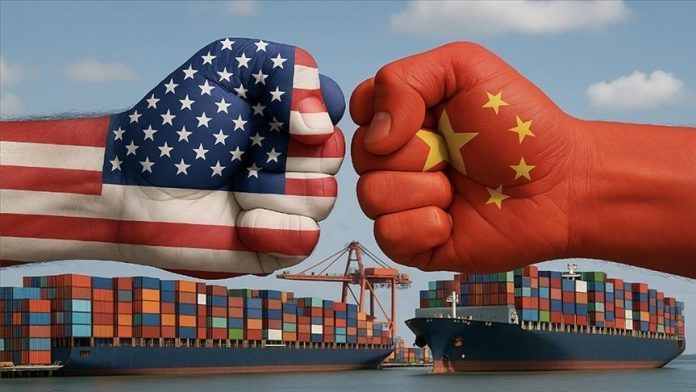
China Planned Trade Negotiations With U.S. Offers Pathway For Renewed Alliances

0

China has confirmed plans to initiate trade negotiations with the U.S., with talks scheduled to begin in Geneva, Switzerland, on Saturday, May 10, 2025. U.S. Treasury Secretary Scott Bessent and Trade Representative Jamieson Greer will meet with Chinese Vice Premier He Lifeng to address the ongoing trade war, marked by U.S. tariffs of up to 145% on Chinese goods and China’s retaliatory 125% tariffs.

The announcement has boosted market sentiment, with U.S. stock futures rising, contributing to a 0.5% gain in premarket trading on May 7, 2025, as investors anticipate potential de-escalation. However, President Trump’s refusal to lower tariffs as a precondition and China’s cautious stance, emphasizing “mutual respect,” suggest a major deal is unlikely soon. Equities later closed higher, with the S&P 500 up 0.43% and the Dow up 0.7%, driven by trade talk optimism and a late chip stock rally after reports of loosened AI chip restrictions.

The confirmation of trade negotiations between China and the U.S. carries significant implications across economic, geopolitical, and market dimensions. The talks aim to address high tariffs (U.S. at 145% on Chinese goods, China at 125% on U.S. goods). A potential reduction or phased rollback could lower costs for businesses and consumers, easing inflationary pressures. However, Trump’s hardline stance suggests tariffs may persist, maintaining supply chain disruptions and higher prices for imported goods.

Progress in talks could stabilize global supply chains, particularly for tech, automotive, and consumer goods reliant on Chinese manufacturing. Failure to reach an agreement may accelerate U.S. efforts to diversify supply chains to countries like Vietnam or Mexico. Reduced trade tensions could boost global GDP growth by improving trade flows. Conversely, prolonged trade war escalation could dampen growth, with the IMF estimating a potential 0.5-1% drag on global GDP from sustained U.S.-China trade barriers.

The 0.5% premarket gain on May 7, 2025, and subsequent S&P 500 (+0.43%) and Dow (+0.7%) rises reflect investor optimism about de-escalation. Sectors like technology (e.g., chipmakers) and consumer discretionary, sensitive to trade policy, could see further gains if talks progress. However, volatility is likely if negotiations stall. A positive outcome may strengthen the Chinese yuan and U.S. dollar, while boosting commodity prices (e.g., soybeans, metals) tied to Chinese demand. Prolonged uncertainty could pressure these assets.

Easing trade tensions may reduce safe-haven demand for U.S. Treasuries, potentially pushing yields higher as risk appetite grows. The talks signal a pragmatic step toward dialogue but are unlikely to resolve deeper issues like technology competition or Taiwan tensions. China’s emphasis on “mutual respect” and the U.S.’s tariff leverage suggest a contentious negotiation process.

Progress could ease pressure on allies like the EU and Japan, caught in the U.S.-China trade crossfire. Failure may push the U.S. to strengthen alternative trade blocs, like the Indo-Pacific Economic Framework. Loosened AI chip restrictions, as hinted in recent reports, could benefit U.S. semiconductor firms (e.g., NVIDIA, AMD) and Chinese tech giants, but national security concerns may limit concessions.

U.S. farmers, hit by Chinese tariffs on soybeans and pork, could gain from restored market access, though competition from Brazil and Argentina may cap benefits. U.S. manufacturers may face continued pressure from Chinese imports if tariffs ease, while Chinese exporters could regain U.S. market share. Trump’s refusal to lower tariffs preemptively and China’s history of retaliatory measures raise the risk of stalled talks, potentially triggering new tariffs or sanctions.

U.S. domestic pressure to protect jobs and counter China’s influence may limit concessions, while China’s need to project strength domestically could harden its stance. Emerging markets reliant on Chinese demand (e.g., Australia, South Korea) could face volatility if talks falter, while Europe’s export-driven economies may benefit from any de-escalation.

While the talks offer a pathway to reduce trade frictions, the entrenched positions of both nations suggest limited near-term breakthroughs. Markets may remain volatile, with equities and risk assets gaining on positive signals but vulnerable to setbacks. Long-term implications hinge on whether the talks evolve into a broader framework for U.S.-China economic relations or remain a tactical maneuver to manage domestic pressures.


Uber, WeRide Expand Robotaxi Partnership, Targeting 15 More Cities with $100m Investment

0

Uber’s autonomous vehicle ambitions are accelerating. The ride-hailing giant is expanding its partnership with Chinese self-driving technology firm WeRide, with plans to roll out robotaxi services in 15 additional cities outside China and the U.S. over the next five years.

This development follows their initial commercial robotaxi launch in Abu Dhabi five months ago, a venture that also involved local transport operator Tawasul.

As part of the expansion, Uber will inject $100 million into WeRide. The cash is expected to be transferred by the second half of 2025, according to a regulatory filing published Wednesday. The additional cities will include locations in Europe, with Uber integrating WeRide’s services into its app as it does in Abu Dhabi.

The deal is modeled after Uber’s U.S. partnership with Waymo. Under this arrangement, Uber handles routing and customer access via its platform, while the autonomous vehicle partner, Waymo in the U.S. and WeRide in this case, provides the AV technology. In Abu Dhabi, Uber and WeRide jointly manage the service through local fleet operator Tawasul and are also planning to expand into Dubai.

WeRide, which went public on the Nasdaq in October 2024, says the new funding will deepen its global rollout and support further development of its AV tech.

“The additional cities will focus on markets where Uber already operates and where AV regulations are favorable,” the company said in a statement.

This move is the latest in a string of autonomous partnerships Uber has pursued globally. In the past two months, Uber has announced separate deals with U.S.-based May Mobility and China’s Momenta. Over the past two years, Uber has locked in more than 15 collaborations with autonomous tech firms across ride-hailing, delivery, and freight logistics.

Uber’s most high-profile U.S. partnership remains with Waymo. The two currently offer robotaxi rides in Austin and are preparing to launch in Atlanta.

Internal Shifts Amid External Expansion

This expansion comes at a moment of internal recalibration at Uber. CEO Dara Khosrowshahi is pressing ahead with a series of workplace changes that some employees are resisting—and he’s openly fine with that.

In an interview with CNBC on Wednesday, Khosrowshahi made clear that while the company values its workforce, those unwilling to align with its direction are free to move on.

“The good news is the economy is still really strong. The job market is strong,” he said. “People who work at Uber, they have lots of opportunities everywhere.”

The CEO emphasized that Uber isn’t trying to drive people out, but that change is inevitable.

“We want them, obviously, to take the opportunity with us, to take the opportunity to learn,” he said.

The company’s latest policies require corporate staff to be in the office at least three days a week, specifically Tuesday through Thursday. Mondays and Fridays may be worked remotely. Remote workers have also been asked to return to physical offices. Additionally, the tenure requirement for a paid sabbatical has been extended, though Uber has not disclosed how many years.

“We want more people in the office,” Khosrowshahi said, framing the shift as an effort to support collaboration and mentorship. “It’s the right mix of giving your employees flexibility but also getting them to the office for those all-important teamwork tasks.”

An Uber spokesperson clarified that the policy changes are not tied to any planned layoffs and are not meant to spur attrition. Starting in June, the new hybrid work structure will go into effect.

Uber’s stance mirrors a broader trend in Big Tech where executives are reasserting workplace norms and cutting back on perks introduced during the pandemic. Amazon recently adjusted its compensation structure to reward top performers while cutting back on what underperformers earn. Meta’s Chief Technology Officer Andrew Bosworth told employees they could either “disagree and commit” or leave after the company rolled back diversity, equity, and inclusion initiatives and began trimming low-performing staff.

At Microsoft and other tech giants, job cuts have increasingly been tied to individual performance reviews.

Uber’s robotaxi push and internal restructuring highlight a balancing act: while the company invests heavily in next-generation transportation, it’s also reshaping its workforce expectations. Khosrowshahi is betting that employees who remain will be aligned with Uber’s long-term goals, both technologically and culturally.

Strike Launches Strike Lending, Using BTC to Borrow Fiat

0

Strike, a Bitcoin Lightning-based payments app founded by Jack Mallers, announced the launch of Strike Lending, a Bitcoin-backed lending service. This service allows eligible U.S. customers to borrow fiat currency, ranging from $75,000 to $2 million, using their Bitcoin as collateral without selling it. The loans have a minimum 12% APR, 12-month terms, and flexible repayment options (monthly or lump-sum at maturity). There are no origination or early repayment fees, and the loans do not affect credit scores.

Strike partners with third-party capital providers to facilitate the loans, transferring the Bitcoin collateral to these providers for the loan duration. The service is initially available in select U.S. regions, with plans for international expansion. This move aligns with a broader resurgence in Bitcoin lending, as companies like Coinbase and Xapo Bank have also introduced similar offerings.

The introduction of Strike Lending has several implications for the Bitcoin ecosystem, financial markets, and users. By enabling Bitcoin holders to borrow fiat without selling their assets, Strike Lending enhances Bitcoin’s role as a store of value and collateral, potentially increasing its adoption and mainstream financial integration. Users gain access to cash for personal or business needs while retaining potential upside from Bitcoin price appreciation, appealing to long-term holders (HODLers) who prefer not to liquidate their holdings.

Widespread Bitcoin-backed lending could reduce sell pressure during bullish markets, as holders borrow instead of selling. However, in a downturn, collateral liquidations by lenders could amplify price drops, increasing volatility. Strike’s entry intensifies competition with platforms like Coinbase, Xapo Bank, and others offering similar services. This could drive innovation, lower borrowing costs, and improve terms but may also lead to a race for market share, potentially increasing risk-taking.

Bitcoin lending operates in a gray area of U.S. financial regulation. As Strike expands, it may attract attention from regulators like the SEC or CFPB, especially regarding consumer protection, collateral custody, and anti-money laundering compliance. The 12% minimum APR is relatively high compared to traditional loans, and borrowers risk losing their Bitcoin if they default or if collateral value falls below loan requirements during price dips, necessitating careful risk management.

By offering loans without credit checks, Strike Lending could serve underbanked individuals or businesses, though the high loan minimum ($75,000) currently limits accessibility to wealthier users. Strike’s plans to roll out lending internationally could bring Bitcoin-backed financing to regions with limited banking infrastructure, boosting financial access but also introducing regulatory and operational challenges.

Strike Lending could strengthen Bitcoin’s financial ecosystem but introduces risks tied to market volatility, regulatory uncertainty, and borrower exposure, shaping how Bitcoin integrates into traditional finance. Strike’s Bitcoin lending program, while innovative, risks widening the gap between the crypto-wealthy and those with limited access to Bitcoin or financial resources.

The $75,000 minimum loan size restricts access to individuals or businesses with significant Bitcoin holdings, favoring wealthier users who already own substantial crypto assets. Borrowers must hold enough Bitcoin to cover the loan, which excludes those without crypto wealth or the means to acquire it, particularly in a high-price Bitcoin market (e.g., Bitcoin’s price has been volatile, often exceeding $90,000 in 2025).

The 12% minimum APR is steep compared to traditional loans (e.g., U.S. mortgage rates around 6-7% or personal loans at 8-10%). This could deter lower-income users, making the service more viable for those who can afford high interest rates. Bitcoin-backed lending primarily benefits early adopters or institutional investors with large Bitcoin holdings, enabling them to leverage their wealth for liquidity without selling. This amplifies their financial flexibility, potentially widening the wealth gap.

Those without Bitcoin or crypto knowledge miss out on these opportunities, as the service doesn’t cater to fiat-only or crypto-novice users. Initially limited to select U.S. regions, Strike Lending excludes global users in regions with weaker banking systems, where such services could have the most impact. Even with planned international expansion, regulatory hurdles may limit access in certain countries.

In the U.S., underserved communities without access to crypto exchanges or education about Bitcoin are less likely to participate, reinforcing financial exclusion. Using Strike Lending requires understanding Bitcoin, wallets, and custodial risks, as well as navigating third-party collateral transfers. This creates a divide between tech-savvy users and those unfamiliar with crypto, who may shy away due to complexity or distrust.

The lack of credit checks, while inclusive, doesn’t address the need for financial literacy to manage high-risk loans tied to volatile assets like Bitcoin. Wealthier borrowers with diversified portfolios can better absorb risks like Bitcoin price drops or loan defaults, while smaller retail investors face higher relative losses if their collateral is liquidated.

The absence of origination fees and credit impacts is a boon, but the high APR and potential for collateral loss disproportionately burden less affluent users who misjudge market conditions. By catering to Bitcoin holders with significant assets, Strike Lending may deepen the divide between the crypto “haves” and “have-nots,” mirroring broader wealth inequality trends. The rich can leverage Bitcoin to grow wealth, while others remain locked out.

If Strike lowers loan minimums, reduces rates, or expands to underserved regions, it could bridge the divide by offering alternative financing to those excluded by traditional banks. However, this would require significant outreach and education. Bitcoin lending could further polarize views between crypto advocates (who see it as financial freedom) and skeptics (who view it as speculative and elitist), fueling debates about crypto’s role in equitable finance.

Court Dismisses MultiChoice’s Suit on DStv, GOtv Price Hikes, Declares It Abuse of Process

0

A Federal High Court in Abuja has thrown out the suit filed by MultiChoice Nigeria Limited in a bid to shield its controversial DStv and GOtv price hikes from regulatory scrutiny, ruling that the case amounted to an abuse of court process.

Justice James Omotosho delivered the judgment on Thursday, weeks after hearing arguments from the pay-TV provider and the Federal Competition and Consumer Protection Commission (FCCPC). He found that MultiChoice had filed its case despite being aware of a similar ongoing suit brought by consumer rights lawyer Festus Onifade. That case, also before the Federal High Court but in a different division, deals with the same issues of pricing and alleged abuse of dominance.

“The plaintiff in this instant suit could have ventilated his grievance before the previous pending suit,” Omotosho ruled. “This is an abuse of court process.”

FCCPC Overreached Its Powers – But Still Wins

Although the judge sided with MultiChoice on some legal points, particularly that the FCCPC had overstepped its bounds by attempting to halt price increases without a completed investigation, he still dismissed the suit on the grounds of duplicity.

Omotosho acknowledged that while the FCCPC, as a federal agency, has the authority to investigate anti-competitive practices, it lacks the statutory power to stop a company like MultiChoice from setting prices in Nigeria’s deregulated economy.

“FCCPC is not vested with the power to suspend the price hike of an entity before conducting an investigation,” he ruled. “Nigeria operates a free market economy, and only the President can approve price regulation through a legally backed instrument or price control board.”

Despite the sharp rebuke of the FCCPC’s early interference, the case ultimately failed because it was improperly filed.

Background to the Case

In February 2025, MultiChoice announced another round of price hikes for its DStv and GOtv packages, citing inflation and operational costs. The new rates, which took effect March 1, included a 25% increase for DStv Compact (from N15,700 to N19,000) and a 20% increase for DStv Premium (from N37,000 to N44,500). The GOtv Supa Plus package also saw a rise from N15,700 to N16,800.

The announcement provoked a wave of public backlash, with many Nigerians pointing to the limited competition in the pay-TV market. In response, the FCCPC summoned MultiChoice for an investigative hearing and warned that failure to justify the hikes could lead to sanctions.

MultiChoice pushed back, filing a suit in March to stop the FCCPC from taking any steps against it based on a letter dated March 3, 2025. The company argued that the Commission had no legal authority to demand price controls or regulatory approval for service adjustments.

Lead counsel for MultiChoice, Moyosore Onigbanjo (SAN), told the court that price regulation falls outside the FCCPC’s statutory mandate. He insisted that Nigeria’s free market principles allow companies to set prices based on commercial considerations without needing regulatory clearance.

FCCPC Defends Mandate to Curb Market Abuse

The FCCPC’s legal team, led by Prof. Joe Agbugu (SAN), maintained that the Commission was not attempting to fix prices but to investigate MultiChoice’s dominant position and whether its actions violated market fairness.

Agbugu pointed to consumer complaints and argued that unchecked price increases without market competition could constitute abuse of dominance, which the FCCPC is empowered to address under its establishing law.

However, the court was unconvinced by this line of reasoning, at least regarding the timing of FCCPC’s intervention. Justice Omotosho ruled that an investigation must precede any directive or sanction, and the Commission had acted prematurely.

Even so, he concluded that the broader question of market dominance should have been addressed in the already pending suit filed by Onifade, making the MultiChoice action redundant.

Why is MultiChoice Targeted?

Economists have questioned the motive behind the FCCPC’s exclusive focus on MultiChoice, despite similar pricing moves by other content platforms and pay-TV providers operating in Nigeria. Many have attributed this development to MultiChoice’s multinational status.

However, the judge recalled a 2022 ruling by the Competition and Consumer Protection Tribunal that recognized MultiChoice’s right to raise subscription prices, noting that consumers could choose from alternative services.

He warned that any attempt to fix prices in a free market economy could deter investment and damage the country’s economic image.

“Prices cannot be regulated in a free market economy. Attempt to fix prices will only scare investors away,” he said.

The judge’s decision means MultiChoice’s suit is dismissed, and the FCCPC is free to proceed with its own legal action already filed in Lagos over the company’s failure to cooperate with regulatory investigations.

However, the ruling also draws clear boundaries for the FCCPC, clarifying that it cannot interfere with pricing unless a formal investigation finds evidence of market abuse. The Commission is limited to issuing guidelines or making recommendations to the President on price-related interventions.

This judgment reaffirms the challenge regulators face in reining in powerful market players in a liberalized economy. It also highlights the legal tightrope between consumer protection and upholding Nigeria’s constitutional commitment to a free market.

With the Abuja suit dismissed, the stage is now set for a potential legal showdown in Lagos, where the FCCPC’s case accusing MultiChoice of obstructing an investigation is still pending. MultiChoice, on its part, maintains that it is being unfairly targeted and that it operates within its rights under Nigeria’s economic framework.

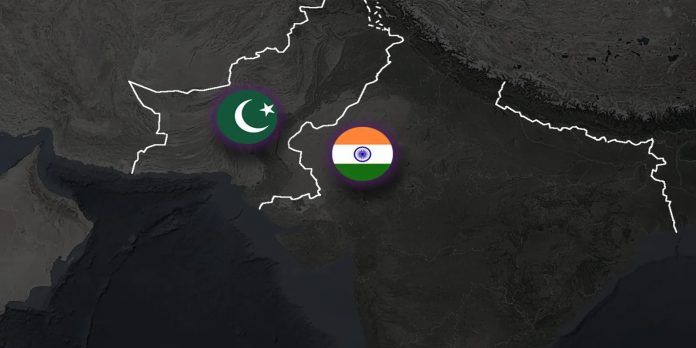
India’s Military Strikes on Pakistan Have Significant Global Implications

0

India launched military strikes, codenamed Operation Sindoor, targeting nine sites in Pakistan and Pakistan-administered Kashmir. The strikes were in retaliation for a militant attack on April 22, 2025, in Pahalgam, Indian-administered Kashmir, which killed 26 civilians, mostly Hindu tourists. India’s Ministry of Defence described the operation as “focused, measured, and non-escalatory,” targeting terrorist infrastructure linked to groups like Lashkar-e-Taiba and Jaish-e-Mohammed, with no Pakistani military facilities hit.

The strikes hit locations in Muzaffarabad, Kotli, and Bahawalpur, among others, using precision missiles without Indian aircraft entering Pakistani airspace. Pakistan condemned the strikes as an “act of war,” reporting 31 civilian deaths, including women and children, and 57 injuries. Pakistani officials denied the targets were terrorist camps, claiming civilian areas, including mosques, were hit. Pakistan’s military claimed to have shot down five Indian jets, including French-made Rafales, though India has not confirmed these losses.

Pakistan retaliated with missile strikes and heavy shelling along the Line of Control, killing at least 15 civilians in Indian-administered Kashmir. Tensions had been rising since the Pahalgam attack, with India accusing Pakistan of supporting the attackers, a charge Islamabad denied. Diplomatic measures, including visa suspensions and airspace closures, preceded the strikes. Global leaders, including the UN, US, and UAE, urged restraint, with concerns about escalation between the nuclear-armed neighbors.

Analysts warn that Pakistan’s vowed retaliation could lead to further conflict, though both sides’ actions suggest an intent to avoid full-scale war. The situation remains fluid, with both nations on high alert and international calls for de-escalation intensifying. The military strikes between India and Pakistan, following Operation Sindoor on May 7, 2025, carry significant implications across multiple dimensions.

Both nations possess nuclear arsenals, raising fears of escalation. While current actions appear calibrated to avoid all-out war, miscalculations or further retaliatory strikes could spiral, especially if Pakistan’s vowed response targets critical Indian infrastructure. Increased shelling and skirmishes along the LoC could destabilize Jammu and Kashmir, potentially drawing in more militant groups and complicating de-escalation.

India’s strikes aim to deter Pakistan-backed militant groups, but they may provoke intensified proxy attacks by groups like Lashkar-e-Taiba, further inflaming the Kashmir conflict. The strikes bolster Prime Minister Narendra Modi’s image as a strong leader ahead of domestic elections, but civilian casualties from Pakistani retaliation could fuel public discontent if the situation worsens.

Pakistan: The government faces pressure to respond decisively to restore national pride, but economic fragility and internal political divisions may limit its ability to sustain prolonged conflict. Anti-India sentiment could unify factions temporarily but risks domestic unrest if civilian losses mount.

Trade and Investment: Already limited bilateral trade is likely halted, with both nations closing airspaces and suspending visas. Foreign investors may pull back from South Asia due to heightened geopolitical risks. Pakistan, grappling with high inflation and debt, faces further strain from military mobilization and potential sanctions if branded the aggressor.

India’s economy, projected to grow steadily, could face disruptions in border regions and global market confidence if conflict escalates. The US, China, and Russia have stakes in South Asia. The US and UAE urge restraint, while China, Pakistan’s ally, may provide diplomatic or material support, potentially straining India-China ties further. Russia, balancing ties with both, may push for mediation.

Calls for UN intervention or sanctions could emerge, but Security Council divisions (e.g., China vs. US) may stall action. The strikes spotlight the Kashmir dispute, possibly reviving international debates over self-determination and human rights. India’s alignment with the Quad (US, Japan, Australia) may strengthen, while Pakistan could lean further on China and Turkey, polarizing South Asia’s geopolitical landscape.

Over 70 deaths (31 in Pakistan, 15 in India from retaliation, 26 from the initial Pahalgam attack) and numerous injuries signal a rising humanitarian crisis. Displacement along the LoC is likely as shelling continues. In India, anti-Pakistan rhetoric could fuel Hindu-Muslim tensions, while in Pakistan, nationalist fervor may suppress dissent but exacerbate sectarian divides. Prolonged conflict could drive refugees into neighboring Afghanistan or Bangladesh, straining regional stability.

Both nations may accelerate defense spending, with India leveraging its Rafale jets and Pakistan seeking Chinese or Turkish systems, escalating the arms race. Pakistan risks further isolation if evidence links it to the Pahalgam attack, while India’s unilateral strikes may draw criticism for bypassing international norms.

The strikes reinforce India’s hardline stance on Kashmir but may galvanize separatist sentiments, prolonging the insurgency. South Asia’s instability could disrupt regional energy routes (e.g., proposed pipelines) and global trade, given India’s role in tech and pharmaceuticals. The strikes highlight the persistent challenge of cross-border terrorism, potentially prompting stricter global counterterrorism measures or renewed focus on groups operating in Pakistan.

Military focus may divert resources from climate adaptation and food security, critical for both nations facing monsoon disruptions and agricultural stress. The immediate priority is de-escalation through backchannel diplomacy or third-party mediation (e.g., UAE, UN).

However, entrenched mistrust and domestic pressures make sustained peace elusive. The crisis underscores the need for a long-term resolution to the Kashmir dispute, though current dynamics suggest continued volatility. Global powers must balance strategic interests with humanitarian imperatives to prevent a broader conflict with catastrophic consequences.