
DD
MM
YYYY

PAGES

DD
MM
YYYY

spot_img

PAGES

Home Blog Page 1351

Trump’s Escalating Interest Rate Tension and Potential Rise on Inflation Due to Tariff

0

President Donald Trump has repeatedly pressured Federal Reserve Chair Jerome Powell to lower interest rates, escalating tensions by publicly calling for Powell’s termination. Trump argues that cutting rates would stimulate the economy, citing falling oil prices and claiming tariffs are boosting U.S. wealth. However, Powell has warned that Trump’s sweeping tariff policies are likely to increase inflation and slow economic growth, creating a challenging scenario for the Fed’s dual mandate of price stability and maximum employment.

Trump’s Position

Trump has criticized Powell for being “too slow” and “wrong” on monetary policy, accusing him of playing politics by not cutting interest rates. In posts on Truth Social, Trump claimed that lower rates are needed as tariffs “transition” into the economy, asserting that the U.S. is “getting rich on tariffs” and that inflation is declining (despite data showing otherwise). He has even suggested Powell’s “termination cannot come fast enough,” reigniting concerns about the Fed’s independence, a norm Trump has historically challenged.

Powell’s Warnings

Jerome Powell, in speeches on April 4 and April 16, 2025, emphasized that Trump’s tariffs—described as significantly larger than anticipated—are likely to lead to higher inflation and slower economic growth. Tariffs, such as a 10% baseline on all U.S. imports and up to 145% on Chinese goods, are expected to raise consumer prices, potentially causing a temporary or even persistent rise in inflation. Core inflation was at 2.8% in February 2025, above the Fed’s 2% target.

The tariffs could weaken growth by disrupting supply chains and reducing consumer and business confidence. The Fed lowered its 2025 growth forecast to 1.7% from 2.1%.  Powell noted the risk of stagflation—a combination of rising inflation, higher unemployment, and stagnant growth—last seen in the 1970s. This would put the Fed in a bind, as raising rates to curb inflation could exacerbate unemployment, while cutting rates to boost growth could fuel inflation.

Powell advocated a “wait-and-see” approach, keeping the Fed’s benchmark rate at 4.25–4.5%. He stressed the need to monitor data to ensure inflation expectations remain anchored and avoid a one-time price increase becoming sustained inflation. Trump’s tariffs include 25% duties on steel, aluminum, and goods from Mexico and Canada, a 145% duty on Chinese imports, and a 10% baseline tariff on all imports, with some exemptions for electronics. Retaliatory tariffs from China (34% on U.S. goods) and threats from the EU have escalated global trade tensions.

U.S. stock markets have plunged, with the Dow dropping 1,600 points on April 4 and the S&P 500 falling 4.5%, marking some of the worst trading days since 2020. Global markets also slid, reflecting fears of a trade war and potential recession. Despite tariff concerns, the economy remains solid, with a 4.2% unemployment rate and 228,000 jobs added in March 2025. However, consumer confidence hit its lowest level since January 2021, and small-business uncertainty spiked.

Fed’s Dilemma and Independence

The Fed faces a delicate balancing act. Cutting rates, as Trump demands, could exacerbate inflation, especially if tariffs drive persistent price increases. Conversely, maintaining or raising rates to combat inflation risks further slowing growth and raising unemployment. Powell has emphasized the Fed’s independence, refusing to engage with Trump’s political remarks and focusing on data-driven policy. Economists like Kathy Bostjancic of Nationwide argue the Fed is unlikely to cut rates soon, predicting a pause until Q4 2025 as inflation accelerates. Others, like Chicago Fed President Austan Goolsbee, highlight the lack of a clear playbook for navigating stagflationary shocks.

While Trump’s tariffs aim to boost U.S. manufacturing and correct trade imbalances, the consensus among economists and Powell is that they risk backfiring by raising costs for consumers and businesses, disrupting global trade, and potentially triggering a recession. Trump’s claim that tariffs are reducing inflation contradicts data showing inflation at 2.8% and rising goods prices. His pressure on the Fed undermines its independence, a cornerstone of stable monetary policy. On the other hand, Powell’s cautious approach may be prudent but could be criticized for underestimating the need for preemptive action in a volatile trade environment. The lack of modern precedent for such large-scale tariffs (the Smoot-Hawley tariffs of 1930 being the closest parallel) adds uncertainty to forecasting outcomes.

Trump’s push for lower interest rates and Powell’s warnings about tariff-driven inflation and slower growth highlight a fundamental policy clash. The Fed’s decision to hold rates steady reflects caution amid unprecedented trade disruptions, but the risk of stagflation looms large. The coming months will be critical as tariff effects materialize, potentially forcing the Fed to make tough choices between fighting inflation and supporting growth. For now, Powell’s focus remains on anchoring inflation expectations while navigating an economy facing significant uncertainty.
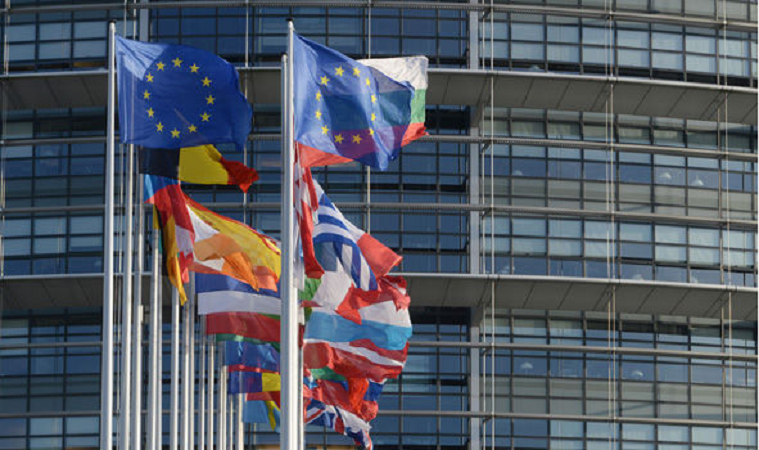

European Central Bank Cuts Its Interest Rate By 25 BPS

0

European Central Bank (ECB) cut its key interest rate by 25 basis points on April 17, 2025, lowering the deposit facility rate from 2.5% to 2.25%. This marks the seventh consecutive rate cut since June 2024, bringing the rate down from a high of 4% in mid-2023. The decision, unanimously supported by the ECB’s Governing Council, aims to bolster eurozone economic growth amid escalating global trade tensions, particularly due to U.S. tariffs imposed by President Donald Trump. ECB President Christine Lagarde cited “exceptional uncertainty” and a “deteriorated” growth outlook, driven by a 20% tariff on EU goods and additional industry-specific tariffs, as key factors.

Inflation remains close to the ECB’s 2% target at 2.2% in March 2025, supporting the disinflationary trend. Economists, including Deutsche Bank’s Mark Wall, expect further cuts, potentially reaching 1.5% by year-end, with markets pricing in additional reductions by June. However, some ECB policymakers warn that tariffs could fuel longer-term inflation, complicating future decisions.

Lower interest rates reduce the attractiveness of euro-denominated assets, decreasing demand for the currency. Following the announcement, the euro weakened slightly, with posts on X noting a decline against the U.S. dollar to around $1.04, reflecting market expectations of further cuts. U.S. tariffs, including a 20% levy on EU goods, exacerbate the euro’s depreciation. These tariffs, combined with the ECB’s dovish stance, signal weaker economic growth in the eurozone, further pressuring the euro.

Analysts cited suggest the euro could drop to $1.01-$1.03 by mid-2025 if trade tensions persist. The U.S. Federal Reserve’s tighter policy stance, with fewer rate cuts expected, widens the interest rate differential, favoring the dollar. This dynamic supports a stronger dollar-euro exchange rate, potentially pushing the euro lower. While inflation is near the ECB’s 2% target, potential tariff-driven price increases could complicate future ECB decisions. If inflation rises, the ECB might pause cuts, offering some euro support.

Lower interest rates reduce borrowing costs, encouraging consumer spending and business investment. This is critical as the ECB aims to counter a “deteriorated” growth outlook amid U.S. tariffs and global trade tensions. If stimulus overshoots, it could fuel demand-driven inflation, especially if tariffs increase import costs. However, with inflation near 2.2%, the ECB sees room for further easing.

Export-oriented sectors like automotive and manufacturing may face challenges from a weaker euro and tariffs, while domestic-focused sectors like services could benefit from cheaper credit. A depreciating euro (around $1.04 and potentially falling to $1.01-$1.03) makes eurozone exports cheaper, partially offsetting the impact of U.S. tariffs. This could support industries like machinery and chemicals.

A weaker euro raises the cost of imported goods, particularly energy and raw materials priced in dollars, which could squeeze consumer purchasing power and business margins. Lower yields on eurozone assets may drive capital outflows to higher-yielding markets like the U.S., further pressuring the euro. The rate cut supports demand, reducing the risk of deflation in a slowing economy. However, U.S. tariffs could introduce cost-push inflation by raising prices of imported goods.

If tariffs drive inflation above the 2% target, the ECB may need to slow or pause rate cuts, potentially limiting economic stimulus. Markets expect rates to fall to 1.5% by year-end, but persistent inflation could alter this trajectory. Lower ECB rates keep eurozone government bond yields, like German 10-year Bunds, suppressed, supporting debt affordability but challenging savers and pension funds.

A weaker euro and lower rates generally boost equities, particularly export-driven firms. However, tariff-related uncertainty could cap gains in sectors exposed to U.S. markets. The euro’s decline increases forex market volatility, as traders weigh ECB policy against U.S. tariff impacts and Federal Reserve actions. The weaker euro may escalate trade disputes, as the U.S. could view it as a competitive devaluation. This risks retaliatory measures, further disrupting eurozone exports. A stronger U.S. dollar due to the euro’s weakness could strain emerging markets with dollar-denominated debt, indirectly affecting eurozone banks with exposure to these regions.

Cheaper loans could boost spending, but higher import prices and tariff-driven uncertainty may dampen confidence, particularly in trade-exposed countries like Germany. Firms face a mixed outlook—lower rates aid investment, but tariffs and a weaker euro raise costs and complicate planning, especially for SMEs reliant on U.S. markets. Markets anticipate further cuts, with some economists forecasting a 1.5% rate by late 2025. However, the ECB’s data-dependent approach means inflation spikes or worsening growth could alter this path. The ECB’s dovish stance contrasts with the Federal Reserve’s relatively hawkish outlook, reinforcing dollar strength and euro weakness, which could shape ECB rhetoric to avoid excessive currency depreciation.

The ECB’s rate cut aims to stimulate growth but risks euro depreciation, higher import costs, and potential inflationary pressures from tariffs. While exporters may gain, consumers and import-reliant businesses face challenges. Financial markets will see mixed effects, with equities potentially supported but currency volatility rising. The ECB must navigate trade tensions and inflation risks carefully, as global uncertainties could force a recalibration of its dovish stance. Monitoring U.S. policy and eurozone data will be critical for future implications.

How To Raise Fund and Launch a Business – Ndubuisi Ekekwe

0

Factors of production enable the creation of products and services towards fixing frictions in markets. One of those factors, Capital, is very catalytic in the operations of firms. Among other things, it makes it possible for you to acquire other factors you do not have (you may need capital to pay workers, buy land, etc).

Join us today at Tekedia Mini-MBA as we discuss how to raise capital and launch your business venture. As I write, Tekedia Capital is investing in 18 companies covering continents and industries (check them here https://capital.tekedia.com/course/fee/ ). What do we look for in these ventures?

Sat, April 19 | 7pm-8.30pm WAT | How To Raise Fund and Launch a Business – Ndubuisi Ekekwe, Tekedia Capital | Zoom link

Tekedia Mini-MBA >> our product is knowledge

The State of Microprocessors for AI Era and Playbook for US

0

Summary, State and Possible Action

  1. Anthropic released Claude Sonnet 3.7, sparking humor about the company’s avoidance of the number “4” due to its meaning in Chinese.
  2. Sonnet 3.7 remains in the GPT-4 class of models in terms of compute, with future models expected to be larger.
  3. Grok 3, a new model, showcases advancements in compute capacity and reinforcement learning with human feedback, offering detailed answers but sometimes verbose explanations.
  4. ChatGPT excels in user experience, particularly with its Mac app, while Deep Research stands out as a top competitor in the field.
  5. OpenAI’s ChatGPT brand has gained significant popularity, surpassing 400 million weekly active users, positioning the company as a key player in consumer tech.
  6. DeepSeek, a Chinese open lab, introduces competitive models that impact API pricing and emphasize the importance of openness in AI models.
  7. The state of AI chips highlights Nvidia’s dominance, with DeepSeek’s success driving demand for Nvidia’s chips and impacting the market.
  8. TSMC’s leading position in chip manufacturing is underscored, contrasting with Intel’s challenges in transforming into a foundry and competing in the market.
  9. Intel’s struggles in the chip industry are attributed to its failure to adapt to the foundry model, impacting its competitiveness against companies like TSMC and Nvidia.
  10. The semiconductor industry has a significant presence in Asia, with companies like TSMC in Taiwan, SMIC in China, and Samsung in South Korea. The history of Silicon Valley’s development is closely tied to the semiconductor industry, which drove the venture capital model and the growth of the tech sector.
  11. The outsourcing of semiconductor manufacturing to Asia was a deliberate policy of the U.S. government, leading to a decline in American manufacturing and the rise of China as a manufacturing powerhouse.
  12. Taiwan plays a crucial role in the geopolitical dynamics between the U.S., China, and Taiwan. The U.S. faces a dilemma in balancing its relationship with Taiwan and China, especially concerning defense and economic ties.
  13. TSMC, based in Taiwan, is a key player in the global semiconductor supply chain. Both China and the U.S. heavily rely on TSMC for advanced chip manufacturing, making it a strategic asset in potential conflicts.
  14. Recent actions by the Trump administration, such as imposing tariffs on Taiwan’s semiconductor industry, aim to revitalize advanced semiconductor manufacturing in the U.S. by involving companies like TSMC, Intel, Broadcom, and Qualcomm in potential partnerships.
  15. However, the feasibility of TSMC taking over Intel’s foundry business is questioned due to the significant differences in manufacturing processes and equipment between the two companies.
  16. The dependency of the U.S. on Taiwan for both leading-edge and trailing-edge chip manufacturing poses a vulnerability, especially in the face of China’s growing chip capabilities.
  17. The potential risks associated with a conflict involving Taiwan, such as the destruction of TSMC’s facilities, highlight the critical role of Taiwan in the global semiconductor industry and the broader implications for technology and national security.
  18. Proposal to end the China chip ban by allowing Chinese companies like Huawei to make chips at TSMC and purchase Nvidia chips, potentially increasing China’s dependency on TSMC and impacting Nvidia’s dominance.
  19. Emphasize the importance of AI in China’s technological advancements and the potential risks and benefits of allowing Chinese companies access to cutting-edge chips.
  20. Suggest doubling down on the semiconductor equipment ban to limit China’s access to essential equipment and increase its dependency on Taiwan for chip manufacturing.
  21. Highlight the need for the U.S. to build trailing edge fabs domestically to reduce dependency on TSMC and ensure national security in chip production.
  22. Address the challenges faced by Intel in establishing leading edge capacity and propose solutions such as spin-offs, subsidies, and open-sourcing of chip development.
  23. Advocate for significant market interventions to shift U.S. companies’ reliance from TSMC to domestic chip manufacturing, emphasizing the importance of making Taiwan indispensable to China’s technology industry.
  24. Emphasize the need for strategic interventions to foster a strong AI industry on U.S.-made chips and secure trailing edge capacity beyond China’s reach, acknowledging the risks and sacrifices involved in implementing the proposed plan.

Context

The intersection of artificial intelligence (AI) development and semiconductor manufacturing plays a pivotal role in shaping technological advancements and global power dynamics. Key players in the AI field, such as OpenAI, Anthropic, and Deep Research, rely heavily on cutting-edge semiconductor technology to drive innovation. Companies like TSMC, Intel, Nvidia are at the forefront of semiconductor manufacturing, producing leading-edge chips that power AI applications across various industries. However, geopolitical dynamics involving Taiwan, China, and the U.S. add a layer of complexity to this landscape. The historical context reveals how past U.S. government policies led to the outsourcing of semiconductor manufacturing to Asia while also highlighting previous actions regarding Taiwan and China.

Recent events have underscored the importance of strategic positioning in the semiconductor industry for national security and economic competitiveness. Actions taken by the Trump administration aimed to revitalize advanced semiconductor manufacturing in the U.S., signaling a shift towards reducing dependency on foreign entities for critical technologies like semiconductors.

Proposals to end the China chip ban raise questions about potential impacts on industry dynamics while advocacy for strategic interventions seeks to promote domestic chip production for enhanced self-reliance. Looking ahead, potential shifts in the global semiconductor supply chain are expected as countries reassess their dependencies amidst increasing integration of AI into manufacturing processes and evolving government regulations shaping both industries’ future trajectories.

Exploring the Potential Remedies for Google’s Antitrust Violations in the Search Monopoly Case

0

On August 5, 2024, U.S. District Judge Amit Mehta ruled that Google violated Section 2 of the Sherman Antitrust Act by maintaining an illegal monopoly in the online search and general search text advertising markets. The court found that Google’s exclusive distribution agreements, such as paying $26.3 billion in 2021 to secure default search engine status on devices like Apple’s iPhones and Mozilla’s Firefox browser, had anticompetitive effects. These deals foreclosed rivals like Bing and DuckDuckGo from significant market access, reinforcing Google’s dominance approximately 90% of the U.S. search market and 95% on mobile. The ruling rejected Google’s claim that its dominance stemmed solely from superior product quality, emphasizing the exclusionary nature of its contracts.

A second trial to determine remedies, which could include structural changes or bans on exclusive deals, is ongoing, with Google planning to appeal. On April 17, 2025, Judge Leonie Brinkema of the U.S. District Court for the Eastern District of Virginia ruled that Google violated Sections 1 and 2 of the Sherman Act by illegally monopolizing the open-web display publisher ad server and ad exchange markets. The court highlighted Google’s practices, including tying its publisher ad server (DFP) to its ad exchange (AdX), and its acquisitions like DoubleClick, which consolidated market power. The ruling found that Google’s actions harmed competition and publishers by limiting options and inflating costs.

The Department of Justice and 17 states are seeking remedies, potentially including divestiture of parts of Google’s ad network business, though Google argues this could harm publishers. Google plans to appeal, noting the court found no harm from its advertiser tools or acquisitions. These rulings mark the first major U.S. antitrust victories against a tech giant since the Microsoft case in 1998. They reflect heightened scrutiny of Big Tech’s market dominance, with the DOJ also pursuing cases against Meta, Amazon, and Apple. The search case could reshape how users access search engines, potentially opening the market to competitors, while the ad tech case may disrupt Google’s $200 billion+ digital advertising empire.

Remedies are still under consideration, and appeals could delay changes for years. In contrast, the European Union has fined Google over €8 billion since 2017 for similar antitrust violations, including Google Shopping, Android, and AdSense practices, showing a more aggressive regulatory stance. Google denies systemic wrongdoing, arguing its services benefit consumers and that market definitions in these rulings are too narrow. Critics of the rulings, including some industry groups, warn that aggressive remedies could stifle innovation or raise costs for publishers and advertisers. Supporters, including U.S. Attorney General Merrick Garland and state attorneys general, hail the decisions as historic wins for competition and consumer choice.

Judge Amit Mehta found Google illegally maintained a monopoly in online search and search text advertising through exclusive distribution agreements (e.g., paying $26.3 billion in 2021 to be the default search engine on Apple, Samsung, and Mozilla devices). The remedy phase, known as the “second trial,” began in September 2024 and is ongoing, with a final ruling expected in 2025.

The Department of Justice (DOJ) is pushing to prohibit Google from entering contracts that make it the default search engine on browsers, operating systems, or devices. This could force Apple (Safari), Mozilla (Firefox), and Android manufacturers to offer users a choice of search engines at setup or allow easier switching. The DOJ argues this would restore competition by giving rivals like Bing or DuckDuckGo access to significant distribution channels (Google’s deals covered ~50% of search queries).

The DOJ may seek to compel Google to share search data e.g., user query and click data with competitors to level the playing field. Google’s vast data advantage fuels its search algorithm’s superiority, and sharing could help rivals improve their offerings. However, Google argues this raises privacy concerns and could degrade user experience. The DOJ has not ruled out breaking up parts of Google’s business, such as divesting Android or Chrome, which reinforce its search dominance.

However, Judge Mehta’s ruling suggested skepticism about structural remedies, focusing instead on behavioral fixes. Divestiture is considered a “long shot” due to complexity and Google’s integrated ecosystem. Inspired by EU remedies in the Android case, the court could require Google to implement a “choice screen” on Android devices or Chrome browsers, prompting users to select a search engine from a list of options. This has been effective in Europe, where Google’s search share dropped slightly after implementation.

While less likely, monetary penalties could be imposed to deter future violations. However, fines are less favored in U.S. antitrust law compared to the EU, where Google faced multibillion-euro penalties. The DOJ may seek to limit Google’s ability to tie search to other products e.g., Google Assistant, Maps or enter new exclusionary deals, ensuring competitors can access emerging platforms like AI assistants.

Ending default agreements could disrupt partnerships, potentially raising costs for companies like Apple, which relies on Google’s payments estimated at $20 billion annually. Apple might pass these costs to consumers or negotiate with other search engines. Remedies must ensure rivals can capitalize on new opportunities. Bing and DuckDuckGo have limited scale, and rapid market shifts could favor well-funded players like Amazon or OpenAI over smaller competitors.

Google argues that its default status reflects consumer preference and that remedies like choice screens could confuse users or degrade device performance. It also warns that data sharing could violate privacy laws like GDPR or CCPA. Remedies are unlikely to take effect before 2026 due to Google’s planned appeal, which could escalate to the D.C. Circuit Court of Appeals or the Supreme Court.

On April 17, 2025, Judge Leonie Brinkema ruled that Google illegally monopolized the publisher ad server (DFP) and ad exchange (AdX) markets through tying practices, exclusionary conduct, and acquisitions like DoubleClick. The DOJ, joined by 17 states, is seeking remedies to restore competition in the $200 billion+ digital advertising market. The remedy phase is in early stages, with proposals due in mid-2025. The DOJ strongly favors breaking up parts of Google’s ad tech stack, with a focus on divesting DoubleClick for Publishers (DFP), Google’s dominant publisher ad server, or AdX, its ad exchange. Divestiture would aim to dismantle Google’s “walled garden,” where it controls the buy-side (advertisers), sell-side (publishers), and exchange, holding a 60%+ share of the ad server market and 50%+ of the exchange market. The DOJ argues this would foster independent competitors and lower costs for publishers.

The court could prohibit Google from requiring publishers to use AdX to access DFP’s full functionality, or vice versa. This would allow publishers to work with rival ad exchanges e.g., Magnite, PubMatic without losing access to Google’s advertiser demand, breaking Google’s vertical integration advantage.

The DOJ may push for Google to make its ad tech tools interoperable with competitors’ platforms, enabling publishers and advertisers to mix and match services. For example, Google could be required to open AdX’s real-time bidding to rival ad servers, reducing barriers to entry. The court could ban practices like “First Look” or “Dynamic Allocation,” which gave AdX preferential access to publisher inventory, sidelining competitors. This would ensure fair auction processes across ad exchanges.

Google could be forced to provide advertisers and publishers with clearer data on ad pricing, fees, and auction dynamics. The DOJ found Google’s opaque practices obscured its market power, harming customers. To prevent further consolidation, the court might restrict Google from acquiring ad tech firms, similar to its DoubleClick and AdMob deals, which entrenched its dominance. While not the primary focus, the DOJ could seek financial penalties or restitution for publishers harmed by Google’s practices, such as suppressed ad revenue due to monopolistic fees.

Divestiture could disrupt the ad ecosystem, as many publishers rely on Google’s integrated tools. Smaller publishers fear reduced revenue if Google’s ad demand is fragmented, while larger ones e.g., News Corp support breakup for long-term competition. Google’s ad tech operates globally, and U.S. remedies could conflict with EU or UK regulations, which are also probing Google’s ad practices. Coordination may be needed to avoid contradictory mandates.

Google argues divestiture is disproportionate, claiming its ad tools benefit publishers by streamlining operations. It also contends that competitors like Amazon and Meta are gaining ad market share, reducing the need for drastic remedies. Google’s appeal, likely to the Fourth Circuit, could delay remedies until 2027 or beyond. The company may seek a stay on divestitures or other measures pending appeal.

Behavioral remedies like banning exclusive deals or mandating choice screens are more likely than structural breakup, given Judge Mehta’s focus on specific contracts and U.S. courts’ historical reluctance to split tech giants. The DOJ is pushing for aggressive measures, but Google’s integrated ecosystem makes divestitures e.g., Chrome legally and technically complex. Divestiture of DFP or AdX is a stronger possibility, as Judge Brinkema’s ruling emphasized Google’s vertical control, and the DOJ has prioritized structural relief. However, untying and interoperability mandates are less disruptive alternatives that could still open the market.

The EU’s €2.4 billion (Google Shopping), €4.34 billion (Android), and €1.49 billion (AdSense) fines, plus behavioral mandates like Android choice screens, provide a playbook. The EU’s ongoing probe under the Digital Markets Act could align with U.S. remedies, amplifying global impact.