DD
MM
YYYY

PAGES

DD
MM
YYYY

spot_img

PAGES

Home Blog Page 1353

Must-Have Tokens for June-July Crypto Surge: Why Big Players are Snapping up Ethereum, XRP and Salamanca (DON) Token

0

With many analysts predicting a mid-year rise in the crypto market, some impressive tokens are becoming popular among both individual and professional investors. Even as Bitcoin leads the way, attention is now turning to Ethereum (ETH), Ripple’s XRP and a popular meme coin called Salamanca (DON). Because of their special mix of setup, storytelling and community activity, these projects are sure to be worth watching as we move into June and July 2025.

Ethereum (ETH): The Macro Bull Flag Ready to Fly

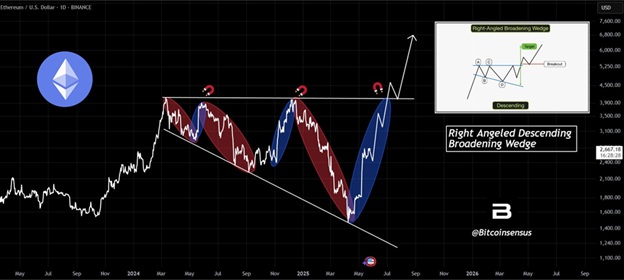
Ethereum has been quietly building a very strong bullish pattern. Since last year, ETH has been forming a right-angled descending broadening wedge which is a rare but proven structure that usually leads to a major breakout. Because the trendline has been respected several times and price is now approaching the upper limit, technical traders are closely watching ETH for a clear breakout.
Source / X

This isn’t the only thing going on. Ethereum’s system is still solid and Layer 2 rollups like Optimism and Arbitrum are helping to increase its capacity. After the merge, there has been an increase in institutional staking which supports the long-term faith in Ethereum.

XRP: A Reversal Confirmed as ETF Buzz Ignites Momentum

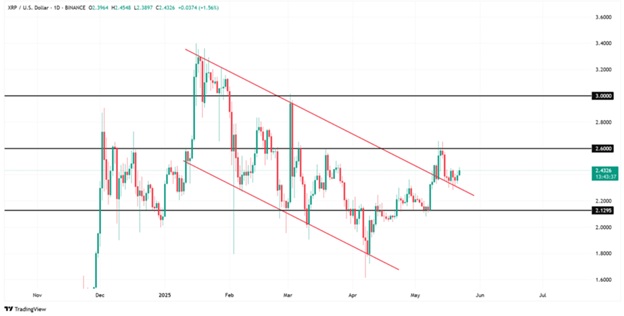
XRP, which has often been a controversial altcoin, is now gaining attention for a good reason. According to technical charts, XRP has now broken out of a long-lasting descending channel, a sign that the price is set to rise. Currently, the price is near the $2.00 resistance, and traders are quickly becoming more positive.
Source / Tradingview

Robinhood has added XRP ETF products, including 2x leverage and futures which means more institutions are accepting and exposing themselves to XRP. In the past, XRP has done well when regulations become clearer and new liquidity is introduced. The market is now seeing many traders hope for another test of the $3.80–$4.00 level, and some even aim for higher targets if the broader market gains momentum in July.

Salamanca (DON): From Meme to Market Momentum

ETH and XRP are backed by strong technical and institutional support, but Salamanca (DON) is making a name for itself in the meme coin arena with its cultural strength and surprising ability to bounce back. Drawn from the world of gritty TV, DON is built on Binance Smart Chain and is quickly building a strong ecosystem that expands its potential.


Salamanca is different from most meme coins because it is developing steadily, giving its community real value and planning to add DeFi and NFT features. Perhaps most importantly, DON continues to see strong daily trading and steady support, which suggests that demand is real. As of late May, the token was near $0.0012, but experts predict that a rise above $0.0020 could quickly lead to a sharp rise toward $0.01, which would be nearly 10x the current price.

Many people are joining the community on Telegram, X and Discord, thanks to viral content, anime-inspired branding and natural memes. Even though Binance hasn’t confirmed, DON’s price movement hints that whales are preparing for a rise before the listing.

Final Thoughts: Positioning for the Summer Run

As the crypto market enters a historically strong mid-year period, Ethereum, XRP and Salamanca (DON) are three different ways to invest: ETH for its stable background and chances to break out, XRP for renewed regulatory interest and ETF support, and DON for those looking for a risky but potentially highly rewarding meme coin.

These assets are based on real patterns, progress and important stories, not just guesswork. For anyone trying to take advantage of the June–July trend, these are the top tokens you should have in your 2025 portfolio.

For More Details:

Twitter/X: https://x.com/salamanca_token

Telegram: https://t.me/salamancatoken

Website: https://salamanca.club/
Neobanks Are Disrupting The Market With Their Agility and Customer-centric Approach

0

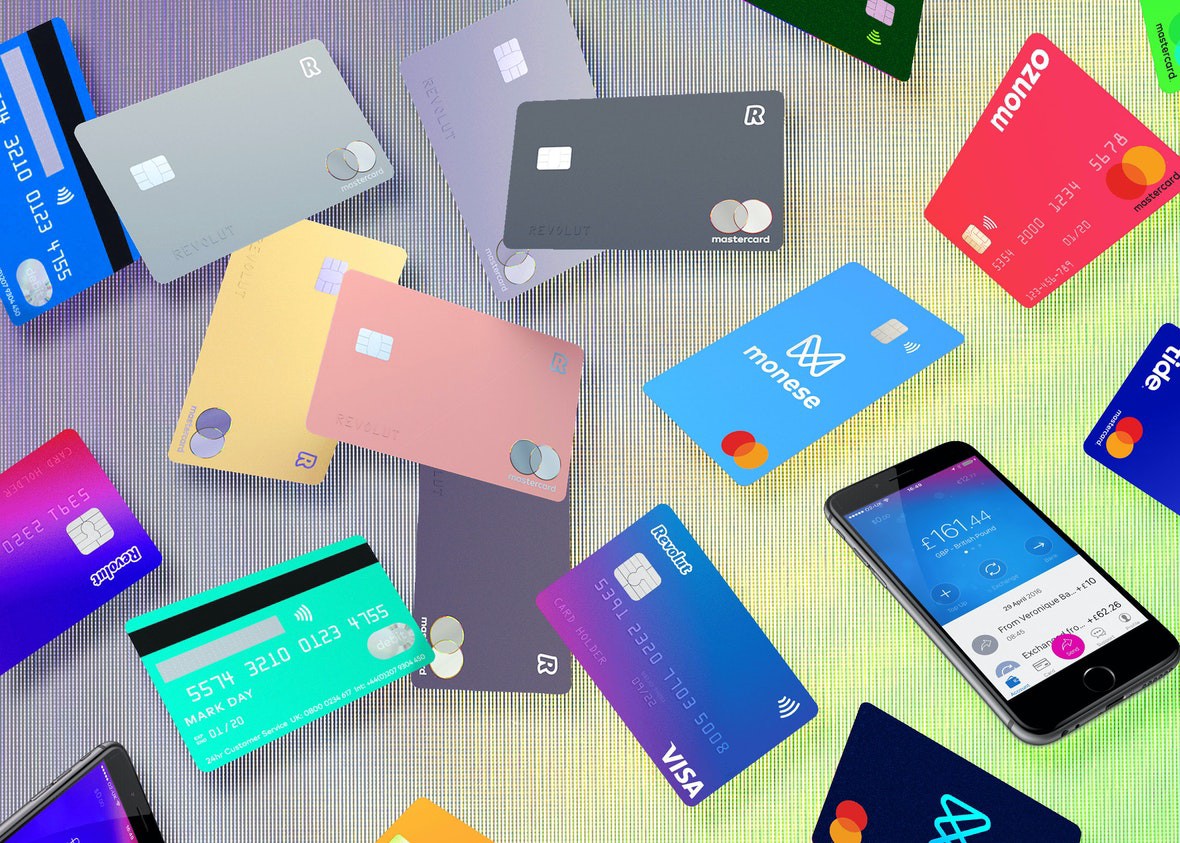
Neobanks, digital-only banks that operate without traditional physical branches, are rapidly disrupting the global financial ecosystem.

The emergence of these banks has revolutionized the banking experience for customers, especially in areas not sufficiently covered by conventional banking activities. Neobanking is one of the new technologies that have made financial services and processes easier, and more efficient and have changed how consumers access their funds.

Their rise is fueled by a combination of technological agility, streamlined operations, and a relentless focus on customer-centric solutions. These institutions leverage mobile-first platforms, data-driven personalization, and user-friendly interfaces to offer banking services that are faster, more accessible, and often more affordable than traditional banks.

In 2021, the global Neobanking market was valued at $30.77 billion and was anticipated to grow with a healthy growth rate of more than 54.00% over the forecast period 2022-2028. The market is expected to grow from USD 96 billion in 2023 to over USD 2 trillion by 2030.

One of the key differentiators of neobanks is their ability to respond quickly to evolving customer needs and market dynamics. By minimizing bureaucracy and embracing innovation, they are better positioned to experiment with new products, integrate emerging technologies like artificial intelligence and open banking APIs, and deliver seamless user experiences.

This disruptive model is resonating with consumers and investors alike. The explosive growth is driven not only by increased digital adoption but also by underserved populations gaining access to financial services through these platforms.

How Neobanks Are Disrupting the Market

Neobanks are reshaping the financial sector through their agility and customer focus in the following ways:

Streamlined Technology: Neobanks use cloud-based infrastructure and simplified IT systems, enabling faster product development and deployment. For instance, 60% of neobanks have integrated open banking APIs to connect with third-party financial tools, enhancing flexibility.

Rapid Innovation: Neobanks leverage artificial intelligence (AI), machine learning (ML), and blockchain for personalized services, fraud detection, and secure transactions. In 2023, 47% of neobanks introduced personal financial management tools like auto-budgeting, while 35% added cryptocurrency wallets.

Customer-Centric Approach: Neobanks offer users a friendly experience, by prioritizing intuitive mobile apps with features like real-time spending alerts, instant payments, and budgeting tools.

Accessibility and Inclusion: Neobanks target underserved groups, such as millennials, gig workers, and small businesses, offering simplified account opening and low-cost services.

In Nigeria, where a significant portion of the population is unbanked or underbanked, neobanks are playing a crucial role in promoting financial inclusion. By using technology to reach customers traditionally overlooked by conventional banks, they offer a range of services that are both accessible and affordable.

Their innovative offerings have seen them challenge traditional banking models that have dominated for decades. The likes of Kuda, Carbon, ALAT by Wema, VFD Bank and Lidya, amongst others, are providing a seamless and user-friendly banking experience. In 2024, Nigeria’s neobanking sector is estimated to have generated a transaction value of $1.658 billion.

The sector’s growth is fueled by increasing internet penetration and the need for digital financial services, particularly in areas underserved by traditional banking.

Looking ahead

The Neobank market’s growth to USD 2 trillion by 2030 signals a transformation in how people and businesses manage finances. With their agility and innovativeness, these institutions are gradually expanding into new services like cryptocurrency, micro-investing, and ESG-aligned products.

As Neobanks continue to scale, they are not just redefining the banking experience, they are reshaping the future of finance by making it more inclusive and responsive.

Last Opportunity to Position for an 8000% Return in 2025: Top 6 Cryptos to Buy Now Featuring Shiba Inu, Dogecoin, and More

0

As the gears of the next bull market begin to turn, smart investors are already shifting their focus toward projects with the highest risk-to-reward potential. The past has shown us that fortunes are made not by chasing assets at the peak, but by positioning early in tokens poised for explosive growth. With the 2025 bull run fast approaching, this might be the final window to plant your flag in the market’s future giants. Among a sea of thousands of cryptocurrencies, six tokens are emerging as the strongest contenders for delivering returns of up to 8,000%. These include two established meme legends—Shiba Inu (SHIB) and Dogecoin (DOGE)—as well as fast-rising names like Rexas Finance (RXS), Bonk, SUI, and Aptos (APT).

Shiba Inu (SHIB): Community Power Meets Ecosystem Evolution

Shiba Inu has come a long way from its early days as a meme coin. What began as a playful response to Dogecoin has evolved into an ecosystem featuring DeFi tools and NFTS. The bullish projection, in tandem with a 1800% surge in SHIB burn rate intraday, has soon garnered investor optimism worldwide. Price charts indicate bullish divergence on a higher time frame. The SHIB price is constantly climbing, gaining roughly 5% intraday and 19% over the week.SHIB could return to its previous highs—and possibly surpass them, making it a serious contender for returns of 50x to 80x in 2025.

Dogecoin (DOGE): The Meme King Is Not Done Yet

From Elon Musk’s endorsements to widespread recognition, Dogecoin has an undeniable cultural footprint. Despite its relatively simple tech, its mainstream appeal and low price point make it a magnet for retail investors during bull markets. DOGE is priced at $0.17,  may not offer cutting-edge innovation, but it doesn’t need to. Its massive liquidity, trading volume, and recognition could easily send it soaring again in a euphoric rally. For those seeking a familiar face with significant potential, Dogecoin remains a strong option.

Rexas Finance (RXS): The Hidden Gem With the Highest Potential

While SHIB and DOGE dominate headlines, the real breakout story for 2025 could be Rexas Finance (RXS). Currently in its final presale stage, priced at $0.20, RXS is preparing for a launch on June 19, 2025, with a listing price of $0.25. What separates RXS from other presale tokens is not just timing—it’s substance. RXS is building a comprehensive ecosystem centred on real-world asset tokenization and decentralized finance (DeFi) infrastructure. From its Launchpad and Token Builder to its QuickMint Bot, Rexas provides users and developers with the tools to build, launch, and trade their assets within seconds. It’s already raised $48.5 million, undergone a Certik audit, and is listed on CoinMarketCap and CoinGecko—showcasing serious credibility. Analysts are closely watching Rexas, and many believe it could deliver 80x or even 100x gains, especially as real-world asset tokenization becomes a major narrative heading into 2026.

Bonk: Solana’s Canine Challenger

Once written off as merely another SHIB knockoff, BONK made a remarkable comeback in 2025. Initially starting as Solana’s first meme coin, BONK has shown more lasting power than initially anticipated. The token has come alive, driven by a growing user base, meme culture integration, and unexpected utility within the Solana ecosystem. BONK trades at $0.000018 as of this writing. Lately, its price path reflects early Dogecoin motions: modest at first, then tremendous. Solana’s blockchain fees are still ultra-low, and transaction times are lightning-fast; hence, BONK’s virality is finding the ideal environment for expansion. Its community is vibrant, meme marketing is on target, and most importantly, it has the liquidity and reach to keep rising. Bonk could easily produce multi-thousand percent returns from here.

SUI: Scaling Smart Contracts to the Next Level

According to CoinMarketCap, SUI trades at $3.4 and boasts a market capitalization of $11.1 billion. Initially designed for excellent performance, SUI is a Layer-1 blockchain that developers and investors have quickly come to love. Its current valuation remains far below that of Ethereum or Solana, but its technology is drawing serious developer attention. If adoption continues and SUI captures even a fraction of the market share held by other Layer 1s, it could easily deliver a 50x return, or more.


Aptos (APT): Quietly Building for a Massive Breakout

Aptos has taken a steady, long-term approach to building a Layer 1 blockchain that scales. Aptos, priced at $5.28, boasts lightning-fast throughput and a strong emphasis on decentralization and performance. Aptos has seen a rise in its network, with its ecosystem attracting dApp developers seeking alternatives to Ethereum’s high costs. Its recent integration with major DeFi protocols has only bolstered its utility.. For investors who missed out on early SOL or AVAX, APT may be the next big opportunity to ride that wave from the ground floor.

Final Thoughts: 8000% Isn’t a Dream—It’s a Plan

The window to position for maximum upside is rapidly closing. Once the bull run is in full swing, entry points like these will disappear, replaced by FOMO buying and inflated valuations. An investment today in any of these six projects—SHIB, DOGE, RXS, Bonk, SUI, or APT—could realistically produce an 8000% return. Of them all, Rexas Finance (RXS) stands out as the most undervalued and disruptive player, offering both the innovation of DeFi infrastructure and the timing of a well-placed presale. Combine that with established names like SHIB, DOGE, and fast movers like Bonk, SUI, and Aptos, and you have a diversified arsenal primed for the 2025 crypto supercycle.

For more information about Rexas Finance (RXS) visit the links below:

Website: https://rexas.com

Win $1 Million Giveaway: https://bit.ly/Rexas1M

Whitepaper: https://rexas.com/rexas-whitepaper.pdf

Twitter/X: https://x.com/rexasfinance

Telegram: https://t.me/rexasfinance 


AfDB Capital Grows 241.9% Ahead of Leadership Transition as Africa Eyes Economic Reset

0

The African Development Bank (AfDB) has recorded a remarkable 241.9% increase in capital over the past decade, ballooning from $93 billion in 2015 to $318 billion in 2025.

This unprecedented expansion, the largest in the Bank’s history, comes as the institution prepares for a major leadership transition at its Annual Meetings in Abidjan, Côte d’Ivoire.

During a press briefing with journalists on Monday, AfDB President Dr. Akinwumi Adesina reflected on his ten-year tenure, describing it as a mission rather than a job. He spoke of his sacrifices and the dedication required to lead a pan-African institution at such a scale.

“This is not a job. If anyone is looking for a job, please don’t take it. This is not a job. This is a mission,” Adesina said. “As my wife Grace and staff would tell you, for ten years I have had no life. Completely zero. I worked every single day. Every single step.”

Under Adesina’s leadership, the Bank secured $8.9 billion in the latest replenishment of the African Development Fund (ADF), the concessional financing arm that serves Africa’s low-income countries, and says it has delivered development outcomes that have positively impacted over 500 million people. The AfDB also maintained its triple-A credit ratings throughout his presidency, allowing it to leverage global capital markets to finance major infrastructure and social projects across the continent.

He emphasized that despite the leadership change set for later this year, the institution’s direction remains steadfast.

“Leadership may change, but the mission remains. The Bank’s direction is clear, its resolve strong, and its commitment to Africa’s development unshakable,” Adesina told reporters.

This year’s Annual Meetings, scheduled from May 26 to 30, are expected to be the largest in the Bank’s history, drawing over 6,000 participants from 91 countries — including finance ministers, central bank governors, private sector players, civil society groups, academics, and development partners. The gathering will serve as a platform for high-level dialogue on Africa’s economic future under the theme: “Africa’s Transformation, the African Development Bank Group, and Reform of the Global Financial Architecture.”

The event also marks the end of Adesina’s presidency and the selection of his successor. The Board of Governors will decide on May 29 who will take over as the Bank’s new president.

The five candidates are Swazi Tshabalala of South Africa, currently the AfDB’s Senior Vice President; Hott Amadou of Senegal, a former Minister of Economy and Bank alumnus; Samuel Munzele Maimbo from Zambia, a senior financial inclusion expert at the World Bank; Sidi Tah Ould from Mauritania, a veteran in Islamic finance; and Abbas Mahamat Tolli of Chad, the current head of the Bank of Central African States.

The new leader will inherit a financially stronger institution but also a continent grappling with complex challenges: widening infrastructure gaps, surging debt burdens, limited access to energy, and worsening climate vulnerabilities. The AfDB has positioned itself as a key player in tackling these challenges through initiatives such as Light Up and Power Africa, Feed Africa, Industrialize Africa, and Improve the Quality of Life for the People of Africa. These programs, launched during Adesina’s tenure, have helped refocus development priorities around inclusive growth and sustainable investment.

The upcoming leadership will also have a central role in supporting the rollout of the African Continental Free Trade Area (AfCFTA) — a flagship African Union initiative aimed at creating a single market of 1.4 billion people with a combined GDP of over $3.4 trillion. AfDB has been one of the key institutions supporting the AfCFTA, providing financing and technical support to enhance regional infrastructure, improve trade facilitation, and build capacity among small businesses to tap into cross-border markets.

AfCFTA is considered Africa’s most ambitious economic integration initiative since independence, and the Bank has stressed that its success will depend on unlocking investment, harmonizing regulations, and lowering logistics costs across borders. Adesina has previously stated that The AfCFTA is not just a trade agreement; it is a development instrument.

The AfDB sees itself as a central enabler in this agenda. Its efforts to connect landlocked economies to seaports, expand digital infrastructure, and support cross-border power and transport projects are aligned with the broader goal of boosting intra-African trade, which currently accounts for less than 15% of total trade on the continent. If fully implemented, AfCFTA could lift an estimated 30 million people out of extreme poverty and increase Africa’s income by $450 billion by 2035, according to the World Bank.

As the Bank prepares to usher in new leadership, the emphasis remains on continuity of purpose. However, the expanded capital base, institutional resilience, and sharpened continental priorities leave the incoming president with the tools needed to steer Africa’s premier development finance institution into its next phase.