DD
MM
YYYY

PAGES

DD
MM
YYYY

spot_img

PAGES

Home Blog Page 1354

Choosing the Right Software for Efficient Equipment Management

0

Businesses across industries depend on reliable tracking and maintenance of their physical assets to ensure operational continuity. Implementing robust construction equipment management software can dramatically improve efficiency and reduce costs associated with asset oversight. This article explores key considerations for selecting the most appropriate solutions for your organisation’s specific requirements.

Understanding Equipment Tracking Requirements

Equipment tracking tools serve as the foundation for comprehensive asset oversight. These systems provide organisations with capabilities including:

  • Real-time location monitoring of critical assets
  • Assignment tracking for responsibility management
  • Utilisation analysis for capacity planning
  • Depreciation calculations for financial reporting
  • Warranty and service contract management

The effectiveness of equipment tracking tools depends largely on their alignment with specific organisational workflows. Manufacturing firms typically require detailed component-level tracking, while service organisations might focus more on availability and customer allocation.

UK construction companies report significant improvements in project delivery timelines after implementing structured tracking solutions. By maintaining accurate records of equipment location and status, project managers can schedule work confidently without the delays previously caused by equipment availability uncertainty.

Healthcare organisations face unique challenges requiring specialised tracking approaches. Medical equipment must be monitored not only for location but also for calibration status, cleaning verification, and compliance with regulatory standards. Effective tracking systems accommodate these requirements while integrating with patient management systems.

Core Features of Resource Management Solutions

Resource management solutions extend beyond basic tracking to encompass broader operational considerations. Key functionality includes:

  1. Resource allocation and scheduling
  2. Capacity planning and forecasting
  3. Utilisation analytics and optimisation
  4. Integration with financial systems
  5. Customisable reporting and dashboards

“Our implementation of comprehensive resource management solutions reduced equipment downtime by 23% while improving capital utilisation rates,” notes the Operations Director at a prominent British manufacturing firm. “We gained visibility into usage patterns that allowed us to optimise our equipment fleet size.”

For organisations with mobile workforces, resource management becomes particularly critical. Field service operations depend on ensuring technicians have appropriate equipment available when needed. Advanced systems incorporate route optimisation and job scheduling alongside equipment tracking to maximise workforce productivity.

Educational institutions benefit substantially from structured resource management. Universities and colleges manage extensive equipment portfolios ranging from laboratory instruments to audiovisual systems. Tracking these assets across multiple buildings and departments represents a significant challenge that purpose-built solutions can address effectively.

Benefits of Maintenance Management Systems

Maintenance management systems play a crucial role in extending equipment lifespan and preventing costly downtime. These platforms enable organisations to:

  • Schedule preventive maintenance activities
  • Track maintenance history and costs
  • Manage spare parts inventory
  • Document standard maintenance procedures
  • Generate work orders and assign technicians

Effective maintenance management systems shift organisations from reactive to proactive maintenance strategies. This approach reduces emergency repair costs while extending equipment lifespan through consistent care.

The financial impact of structured maintenance management can be substantial. A UK-based logistics company documented a 31% reduction in fleet maintenance costs after implementing a comprehensive system. “Beyond direct repair savings, we significantly reduced downtime-related losses that previously impacted customer satisfaction,” explained their Fleet Manager.

Predictive maintenance capabilities represent an advanced feature of modern systems. By analysing performance data, these systems can identify potential failures before they occur. This capability is particularly valuable for organisations operating critical equipment where failures would result in substantial operational disruption.

Compliance requirements add another dimension to maintenance management challenges. Industries such as food processing, pharmaceuticals, and aviation must maintain detailed maintenance records to satisfy regulatory obligations. Purpose-built systems ensure this documentation remains complete and readily available for inspection.

Integration Considerations for Comprehensive Management

While individual tools address specific needs, maximum value comes from integration across platforms. Organisations should evaluate how potential solutions will interact with:

  • Enterprise resource planning (ERP) systems
  • Accounting and financial platforms
  • Purchasing and procurement systems
  • Human resources and scheduling tools
  • Customer relationship management platforms

Integration challenges often present the greatest hurdle to successful implementation. Legacy systems may lack modern API capabilities, requiring custom development work to achieve data synchronisation. Organisations should carefully assess integration requirements before committing to specific solutions.

Data standardisation represents another critical integration consideration. Different departments often use varying terminology and classification schemes for equipment. Successful implementations establish consistent naming conventions and categorisation frameworks to enable meaningful cross-functional reporting.

For multinational organisations, integration must accommodate regional variations in regulatory requirements, accounting standards, and operational practices. Systems should support multiple currencies, languages, and compliance frameworks while still providing consolidated reporting capabilities.

Cost-Benefit Analysis of Management Solutions

Investment decisions should consider both direct and indirect benefits, including:

Direct Financial Benefits

  • Reduced emergency repair costs
  • Extended equipment lifespan
  • Lower capital requirements through improved utilisation
  • Decreased administrative overhead
  • Optimised inventory carrying costs

Operational Improvements

  • Enhanced equipment availability
  • Improved workforce productivity
  • Better capital planning accuracy
  • Reduced project delays
  • More reliable service delivery

A comprehensive Yorkshire manufacturing firm conducted detailed analysis of its implementation outcomes, documenting a 187% return on investment over three years. “The system paid for itself within eight months through direct cost savings alone,” reported their Financial Controller. “When factoring in productivity improvements and reduced capital requirements, the benefits were substantially greater.”

The implementation approach significantly impacts the cost-benefit equation. Cloud-based solutions typically require lower initial investment but higher ongoing subscription costs. On-premises deployments involve larger upfront expenditure but may prove more economical for very large installations over extended periods.

Data migration costs deserve particular attention during budgeting. Organisations with extensive existing equipment records may face significant effort transferring this information to new systems. Automated migration tools can reduce this burden, but customisation is often required to accommodate unique data structures.

Security and Compliance Requirements

Equipment management platforms often contain sensitive information requiring appropriate protection. Security considerations include:

  • Access control and permission management
  • Data encryption standards
  • Audit trail functionality
  • Compliance with industry regulations
  • Disaster recovery capabilities

The UK’s General Data Protection Regulation (GDPR) impacts equipment management when systems store information about equipment operators or maintenance personnel. Organisations must ensure their chosen solutions provide appropriate privacy protections and data subject access capabilities.

For regulated industries, equipment management systems must support specific compliance requirements. Healthcare organisations must demonstrate equipment safety and calibration records. Manufacturing firms must document equipment qualification and validation. Solutions should provide appropriate documentation capabilities aligned with relevant regulatory frameworks.

Implementation Best Practices

Successful implementations typically follow these principles:

  1. Begin with process assessment: Document current workflows and identify improvement opportunities before selecting technology.
  2. Establish clear success metrics: Define specific, measurable objectives for the implementation to evaluate outcomes.
  3. Conduct thorough data cleansing: Clean and standardise equipment records before migration to prevent perpetuating existing problems.
  4. Implement incrementally: Start with core functionality in a limited area before expanding to broader deployment.
  5. Invest in user training: Allocate sufficient resources to ensure staff can utilise system capabilities effectively.

Organisations achieving the greatest success typically establish dedicated system administrators with responsibility for ongoing optimisation and support. These individuals serve as internal experts who can assist colleagues while maintaining system configuration as business requirements evolve.

Change management deserves particular attention during implementation. Technical and maintenance staff often have established work patterns that new systems will disrupt. Addressing concerns through clear communication about benefits and incorporating feedback during configuration significantly improves adoption rates.

Emerging Technologies in Equipment Management

The field continues to advance with technologies enhancing management capabilities:

  • Internet of Things sensors for real-time monitoring
  • Artificial intelligence for predictive maintenance
  • Augmented reality for maintenance guidance
  • Digital twins for simulation and planning
  • Blockchain for secure maintenance verification

These technologies are progressively moving from experimental to mainstream adoption. Organisations should consider vendors’ innovation roadmaps when making selection decisions to ensure solutions will accommodate emerging capabilities as they mature.

Radio-frequency identification (RFID) technology has become particularly valuable for equipment tracking in complex environments. Passive RFID tags requiring no power source can be affixed to equipment and automatically detected when passing through strategic checkpoints. This capability dramatically improves tracking accuracy while reducing manual data entry requirements.

Mobile applications represent another significant advancement. Field personnel can access equipment information, report issues, and document maintenance activities through smartphones or tablets. These capabilities improve data quality by capturing information immediately rather than requiring delayed entry into office-based systems.

What to Do Next?

By implementing well-matched equipment tracking tools, resource management solutions, and maintenance management systems, organisations can achieve substantial operational improvements and financial benefits. The key lies in aligning technological capabilities with business requirements while ensuring appropriate attention to implementation practices and user adoption.

With the right solutions in place, organisations can transform equipment management from an administrative burden into a strategic advantage that supports operational excellence and financial performance. This structured approach ensures equipment remains an enabler of business success rather than a constraint on operational capability.

Do Not Compare But Be Inspired To Outperform Your Past

0

Question: How do you get energy to do what you do, daily?

My Response: I never compare myself with others even though I get inspiration from others. But daily, I try to beat Ndubuisi Ekekwe of yesterday. This construct brings calm to me and unleashes optimism in my spirit to outperform my past. I live with a positive attitude, feeding myself that whatever I have is the best possible. So, I attended the best primary school, lived in the best village, attended the best university, worked in the best bank, etc.

Largely, no matter the circumstances, I am not hard on myself because doing so freezes my energy. Yes, I do all necessary to keep improving, no matter how little. And provided I do that, a positive attitude will unlock opportunities because humans who will help and support me, directly and indirectly, are attracted to positive people.

Comparing yourself with others misses the point because not all of us began from the same level. I understand that some began with gold spoon, silver spoon, wooden spoon, and some none at all. But be inspired by others, even as you work to outperform your past. The comparison Ndubuisi focuses on is making sure I compare with my yesterday, and that I can outperform that past, and that means improving in the right direction.

And when you look at that mirror, you see yourself and not another person. because YOU are actually real, and that is you. Focus on that You to be better, and greater, and leave the comparison! Yes, we fail most times because we fail to do what we have to do because we’re preoccupied with what others are doing, pushing us to lose focus. Grow your #personalEconomy

Osun 2026: Actors, Agendas, and the Battle for Political Control

0

As the political calendar inches towards 2026, Osun State finds itself in the throes of a high-stakes governorship race that promises to reshape the political landscape of southwest Nigeria. At the heart of this unfolding drama are three main forces: the incumbent governor, Ademola Adeleke and his PDP allies; a divided but resolute APC, struggling with internal coherence; and a growing chorus from Osun West, demanding political equity through zoning. What emerges from the headlines is not just a contest for a seat, but a clash of ambitions, ideologies, and regional interests.

Governor Adeleke: The Incumbent Holding the Fort

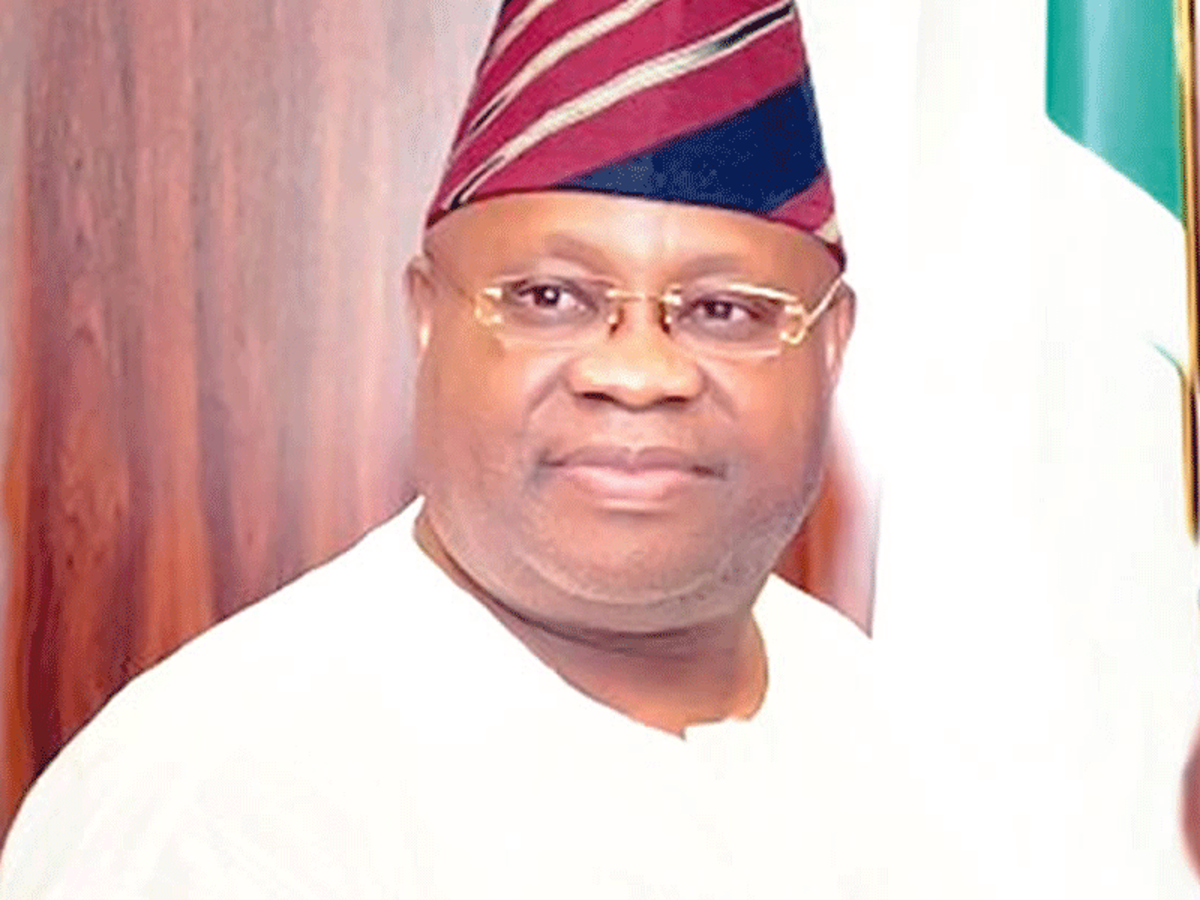
Governor Ademola Adeleke remains the most visible figure ahead of 2026. Fresh off a significant 2022 win, his camp is projecting confidence. Various groups, from PDP’s Osun West chapter to market leaders and religious figures like Primate Ayodele,  have openly endorsed his bid for a second term. These endorsements paint a picture of a governor consolidating support, even as he faces relentless attacks from opposition forces.

Exhibit 1: Topics from the headlines

Source: National Newspapers, 2024-2025; Infoprations Analysis, 2025

Adeleke’s team has been strategic, dismissing rumors of defection to the APC and actively reinforcing PDP loyalty. His aides and allies frame him as the victim of destabilization plots, pointing fingers at figures like APC National Chairman Abdullahi Ganduje and framing opposition maneuvers as external interference. The core of Adeleke’s interest is clear: secure a second term and entrench PDP’s influence in a region traditionally swung between parties.

APC: Fractured Dominance and the Oyetola Factor

The All Progressives Congress (APC), though out of power in the state, remains a potent force, albeit one riddled with factional conflict. Former governor Gboyega Oyetola has emerged as the most talked-about figure in the APC, with repeated calls from party groups and local leaders urging him to return to the ballot. A significant part of the APC establishment views him as the party’s best chance at reclaiming Osun.

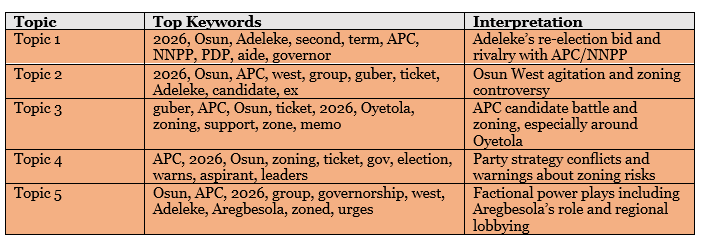
Exhibit 2: Top keywords for each of the 5 identified topics

Source: National Newspapers, 2024-2025; Infoprations Analysis, 2025

However, the road is not clear. APC is embroiled in a zoning controversy, whether to retain the governorship candidacy in Oyetola’s central zone or shift it westward. This has created visible rifts among APC chieftains. While some insist on the principle of the “right of first refusal” for Oyetola, others reject candidate imposition and call for an open field. The party’s former Secretary, Iyiola Omisore, and now-defector Rauf Aregbesola further complicate the internal arithmetic, as their support bases could sway margins in a close election.

Osun West: A Zoning Crusade

Perhaps the most coherent and determined voice in the race comes from Osun West. After more than three decades without producing a governor, stakeholders from this zone are intensifying demands for zoning the ticket in their favor. Monarchs, grassroots groups, and professional unions have launched coordinated campaigns urging both major parties to give them a shot.

The West sees 2026 as a historical reckoning. For them, it’s not just about representation, it’s about fairness. Prominent names like Bola Oyebamiji, the National Inland Waterways Authority boss have been floated, supported by agitation groups pressing both President Tinubu and Alhaji Abdullah Ganduje, chairman of the All Progressives Congress, to weigh in on the zoning issue. If the APC or PDP fails to align with these aspirations, it risks alienating a vital bloc of voters.

Third Forces and Political Realignment

While PDP and APC dominate the headlines, third-party actors like the NNPP are actively positioning themselves as viable alternatives. Their rhetoric, “Osun deserves better than Adeleke”, signals an attempt to ride the waves of public dissatisfaction and elite squabbles. Aregbesola’s defection, alongside his group’s public disavowal of APC direction, also hints at possible alliances that could reshape party loyalties.

Osun 2026 is shaping up to be more than a two-horse race. It’s a contest between continuity and disruption, central dominance and westward agitation, internal party loyalty and elite defection. Governor Adeleke seeks validation for his first-term efforts. Oyetola and APC strategists want redemption. Osun West demands justice. And fringe actors smell opportunity.

The outcome will not only determine who governs Osun but also signal the political temperament of the southwest in a post-Tinubu era. Stakeholders ignore the underlying regional currents and party fissures at their peril.

MoneyFellows Raises $13M to Scale Digitized ROSCA Model Across Africa, Eyes Expansion

0

MoneyFellows, a Cairo-based fintech has raised $13 million in a pre-series C round led by AI Mada Ventures and DPI’s Nclude Fund, with participation from Partech Africa and CommerzVentures, bringing its total funding to over $60 million.

The startup plans to scale digitized ROSCA model across Africa. Rotating Savings and Credit Association (ROSCA) is an informal financial arrangement where a group of individuals agree to contribute a fixed amount of money to a common fund at regular intervals.

Unlike most African digital lenders reliant on working capital, MoneyFellows has lent billions of Egyptian pounds with minimal debt or balance sheet exposure by digitizing the traditional ROSCA model.

As the world’s first and largest Money Circles app, the fintech has digitized the traditional ROSCA model, making it smarter, safer, and more accessible for over 7 million users since 2018. With the recent funds raised, MoneyFellows disclosed plans to shift from steady growth to regional expansion.

Founder and CEO Ahmed Wadi noted that, unlike fintechs burning through cash to scale, the startup has kept operations lean while digitizing one of the world’s oldest financial systems. “We have managed to crack this model and reach profitability. Doing this while lending out billions without relying on working capital at all is quite disruptive in itself”, he said.

MoneyFellows, launched in 2016, digitizes this model by opening access to a broader pool of users across the country. Through its app, anyone can form or join ROSCA groups or “circles.” Rather than act as a lender, MoneyFellows matches savers (usually last in line) and borrowers (typically first in line) using behavioral data, credit scores, and income tiers. Since launching, the platform has grown to over 8.5 million users, up from 4.5 million at its last funding milestone. The average payout per user has nearly doubled in the past two and a half years, from 23,000 EGP ($453) to 45,000 EGP ($906), with strong adoption among higher-income segments.

Backed by $45M+ in funding and gearing up for $100M Series C, we’re scaling fast—expanding beyond Egypt and launching game-changing financial products. Regulated by the Central Bank of Egypt, we blend community-driven finance with cutting-edge tech to empower users with seamless, secure, and trusted financial solutions. And now, we’ve taken it a step further with the launch of the Money Fellows Card—unlocking even more financial freedom and flexibility for our users.

With 8.5 million users (up from 4.5 million at its last funding) and average payouts nearly doubling to 45,000 EGP ($906), MoneyFellows has achieved profitability in Egypt. Its viral growth stems from digitizing offline ROSCAs, with users often bringing entire groups to the platform. A new card product enables payouts, repayments, and spending, while investment, payroll, insurance, and remittance products are planned, positioning it against Egyptian digital banks like Lucky, Khazna, and Telda.
The fresh capital will fuel regional expansion, starting with Morocco by year-end, leveraging its unbanked population, informal savings culture (“daret”), and digital-friendly regulations. Partnerships and approvals are secured, with Morocco’s 2030 FIFA World Cup expected to boost adoption. MoneyFellows also eyes other African and South Asian markets, though adapting to diverse financial cultures will test its model.
Driven by the power of the people joining the digital ROSCA, we are determined to revolutionize the fintech industry by building the most efficient ecosystem for financial services. By operating with minimal balance sheet dependency and exceptionally low default rates, we are committed to delivering unmatched value to our customers, thus allowing us to scale exponentially.

FEC Approves Nigeria’s Full Membership in Asian Infrastructure Investment Bank (AIIB)

0

The Federal Executive Council has approved Nigeria’s full accession to the Asian Infrastructure Investment Bank (AIIB), a move government officials say will deepen international economic cooperation and unlock funding for key infrastructure projects.

The approval formalizes Nigeria’s status as a non-regional member of the China-backed multilateral lender, joining over 100 countries, including several from Europe and Africa. Nigeria received an invitation to join the AIIB in 2021 and has now completed the legal and financial obligations necessary for admission.

Finance Minister and Coordinating Minister of the Economy, Wale Edun, who presented the accession memo, confirmed that Nigeria subscribed to 50 shares in the institution at $100,000 per share, amounting to a $5 million equity stake. He described the membership as a step toward attracting low-interest, long-term capital for roads, power, transportation, and other public infrastructure.

“We’ve concluded that process now, and we are fully-fledged members of the Asian Infrastructure Investment Bank,” Edun told reporters. “It is set up to promote infrastructure development and sustained economic growth in all its members.”

Is It More About Access to Loans Than Reform?

Beneath the official optimism lies growing public concern that Nigeria’s real motivation is to deepen its access to external borrowing—a path that has placed a significant part of the country’s future at the mercy of creditors and undermined its ability to fund homegrown development initiatives.

Analysts and economists are already sounding the alarm. While multilateral institutions like AIIB can serve as valuable partners in infrastructure development, Nigeria’s track record with concessional loans and foreign partnerships has been checkered with failed projects, opaque procurement practices, and rising debt servicing obligations.

Against this backdrop, two of Africa’s most respected voices in international economics—Dr. Akinwumi Adesina, President of the African Development Bank, and Dr. Ngozi Okonjo-Iweala, Director-General of the World Trade Organization, have both repeatedly warned that African countries must shift away from a dependency on loans and aid.

Adesina has been especially blunt, arguing that the continent is “not poor” but “impoverished by its failure to harness its wealth.” He has urged countries like Nigeria to develop their vast natural resources, rather than constantly seeking loans to finance infrastructure that does not yield returns.

Similarly, Okonjo-Iweala has cautioned against reliance on debt and aid, pushing instead for deeper investments in local industries, regional trade, and export diversification. At recent forums, both have lamented the pattern of African states, including Nigeria, taking on debt while doing little to improve domestic productivity or reduce import dependency.

“Africa really needs to change its mindset about access to aid. We should begin to see it as a thing of the past.”

“Instead of looking outward for financial support, we must strengthen our own institutions,” she urged.

The Debt Burden and Infrastructure Deficit

Nigeria’s public debt stood at approximately N144.67 trillion (US$91.46 billion) in Q1 2024. This represents a growth of 24.99% quarter-on-quarter from N97.34 trillion in Q4 2023. The Debt Management Office (DMO) reported that Nigeria’s public debt stock reached N144.67 trillion as of December 31, 2024. Thus, the country spends over 60 percent of its revenue on debt servicing, leaving little room for capital investment.

However, with Nigeria’s vast infrastructure gap, which is estimated at $100 billion annually for a decade to close, government officials argue that platforms like AIIB will help bridge that gap with concessional financing.

There’s also growing anxiety that the influx of foreign funds into infrastructure sectors dominated by Chinese and other foreign contractors has not translated into domestic capacity building or job creation.

However, the government has been touting the ongoing reforms by the Tinubu administration to address the gaps. Edun, while speaking on the sidelines of Nigeria’s recent attendance at the IMF and World Bank Spring Meetings in Washington, D.C., said that international institutions had praised Nigeria’s macroeconomic reforms, including subsidy removal and exchange rate unification. He noted that these efforts have helped stabilize the economy despite external shocks, such as the reciprocal tariffs recently imposed by the United States.

Edun also cited a recent upgrade of Nigeria’s credit outlook by Fitch Ratings, from B- to B, as evidence that the country’s reform program is gaining traction.

However, Nigeria’s overwhelming economic downturn has made it difficult to believe the government’s assertions on its economic reforms. Economists note that Nigeria’s path forward should not be determined by access to foreign lending institutions, but by the ability to build a self-sustaining economy rooted in productivity, value addition, and export diversification.

That would mean, besides developing its vast mineral deposits, creating policies that attract local and foreign investors to process raw materials domestically.

“We need to develop our processing industries to create jobs, boost intra-continental trade, and ensure we stop exporting raw materials without value addition,” Iweala added.