DD
MM
YYYY

PAGES

DD
MM
YYYY

spot_img

PAGES

Home Blog Page 1359

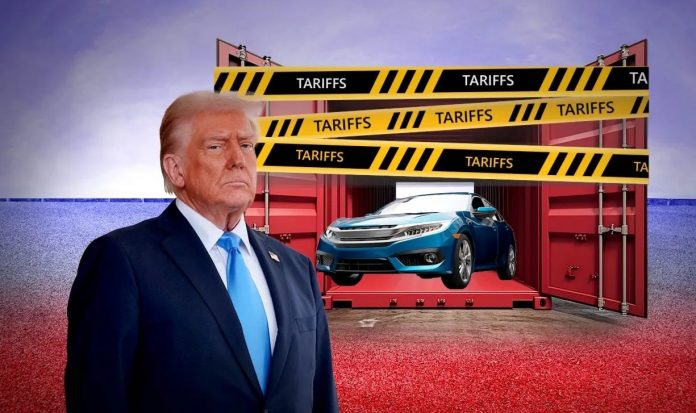
“I don’t Want Prices to Go Higher”: Trump Signals Tariff Retreat as Economic Fallout Fuels Inflation and Recession Fears

0

In a surprising shift, President Donald Trump hinted on Thursday that he might halt further tariff hikes on China, acknowledging that escalating duties could choke consumer spending and damage the U.S. economy.

Speaking to reporters in the Oval Office, Trump said, “At a certain point, I don’t want them to go higher because at a certain point, you make it where people don’t buy.”

His words mark a rare admission of the economic toll his trade war is exacting, as inflation potentially surges and economists warn of an impending recession. With markets reeling and consumer prices climbing, Trump appears to be grappling with the consequences of a policy that has sparked global retaliation and domestic unease, raising questions about the sustainability of his “America First” agenda.

Trump’s tariff offensive began with a flourish on April 2, dubbed “Liberation Day,” when he imposed a 10% duty on nearly all U.S. imports and targeted 90 nations with reciprocal levies. By April 9, tariffs on Chinese goods, which account for $143.5 billion in annual U.S. exports, soared to 145%, intensifying a trade war with the world’s second-largest economy.

The move, intended to revive American manufacturing and fund tax cuts, has instead unleashed a wave of unintended consequences. Consumer prices are spiking—apparel up 17%, food up nearly 3%, and vehicles up over 8%—as businesses pass on the costs of tariffs, which act as a tax on U.S. importers. Economists estimate these duties could slash household purchasing power by $2,100 annually, pushing inflation toward 4% by summer and threatening the consumer spending that drives 70% of U.S. economic growth.

The economic warning signs are unmistakable. The S&P 500 shed nearly $6 trillion in value in early April, with a record 4.8% plunge on April 3, as investors braced for a tariff-driven downturn. Retailers like Walmart report rising costs, while Delta Air Lines notes a stall in travel demand, with hotel bookings and airline ticket sales faltering. Consumers, squeezed by higher prices, are cutting back on discretionary spending, fueling fears of a broader economic slowdown. Major financial institutions now peg the odds of a recession within the next year at 45% to 60%, with some projecting U.S. GDP growth as low as 0.6% in 2025.

Trump’s remarks suggest he is beginning to feel this pressure. His concern that “people aren’t going to buy” reflects a growing awareness of declining demand, a stark contrast to his earlier dismissal of inflation fears. The Federal Reserve, caught in a bind, warns that tariffs could derail its dual mandate of stable prices and full employment, with interest rates likely to remain elevated, further straining growth.

The tariffs’ impact extends beyond U.S. borders, shaving nearly a percentage point off global GDP and pushing economies like Japan, South Korea, and Canada toward recession. China, hit hardest, has retaliated with an 84% tariff on U.S. goods, suspended exports of critical rare earth metals, and curbed imports of Hollywood films and Boeing aircraft, signaling a deepening global trade conflict.

China’s defiance is pushing the escalation. Dismissing Trump’s tariffs as a “numbers game” with little economic bite, Beijing’s foreign ministry has vowed to press forward with countermeasures. However, Trump, emphasizing his “very good relationship” with Chinese leader Xi Jinping, hinted at ongoing negotiations, noting Xi’s repeated outreach.

“I think we’re going to be able to make a deal,” he said, suggesting a potential path to de-escalation. He also tied the tariff standoff to the fate of TikTok, whose parent company ByteDance faces a summer deadline to divest its U.S. operations or exit the market.

“We have a deal for TikTok, but it’ll be subject to China,” Trump said, indicating trade concessions could be part of a broader agreement.

The tariffs’ domestic toll is equally stark. Automakers like Stellantis are announcing layoffs and plant closures in Canada and Mexico, while General Motors grapples with rising production costs. Retailers, wary of consumer backlash, are poised to raise prices further by summer, with a high-end smartphone potentially costing $2,300 if costs are fully passed on. Low-income households face disproportionate losses, with annual burdens estimated at $1,700, exacerbating economic inequality. Public sentiment is souring, with polls showing widespread concern about price hikes and skepticism about the tariffs’ promised benefits.

Globally, allies are bristling. Japan and South Korea, slapped with 24% and 25% tariffs, are preparing retaliatory measures, while the European Union warns of “burdensome” costs for businesses. Canada and Mexico, targeted with auto tariffs, face economic strain, with Canadian consumers boycotting U.S. travel. Trump’s insistence on “balanced bilateral trade” has met resistance, with even Vietnam’s offer to eliminate tariffs on U.S. goods rebuffed. The global growth forecast for late 2025, at just 1.4%, is the weakest since the 2008 financial crisis, excluding the pandemic era.

Trump’s shift comes amid these political and economic headwinds. His April 9 decision to pause reciprocal tariffs for 90 days briefly rallied markets, but renewed escalation fears have kept investors on edge. Senate Minority Leader Chuck Schumer’s warning of a “market crash” vaporizing retirement accounts has amplified calls for restraint. The Economic Policy Uncertainty Index reflects business caution, with firms delaying investments amid tariff volatility. The Federal Reserve’s projection of a -2.4% GDP growth rate for the first quarter underscores the urgency of addressing the crisis.

Against this backdrop, analysts believe Trump’s willingness to consider lower tariffs could stabilize markets and ease consumer burdens. However, it comes with challenges, based largely on the defensive demands of other nations involved. For instance, negotiations with China, potentially linked to TikTok and technology transfers, offer hope, but Beijing’s hardline stance complicates prospects.

If tariffs remain at current levels, economists predict unemployment could rise to 4.5% and inflation could hit 4.7%, pushing the U.S. toward stagflation—a toxic mix of high prices and low growth. The Federal Reserve, facing a “rock and a hard place,” may struggle to avert a downturn without exacerbating inflation.

Trump Admin Announces New Fees on Chinese Ships, Risks Escalating Tariff War, Threatens U.S.-China Talks and Economic Stability

0

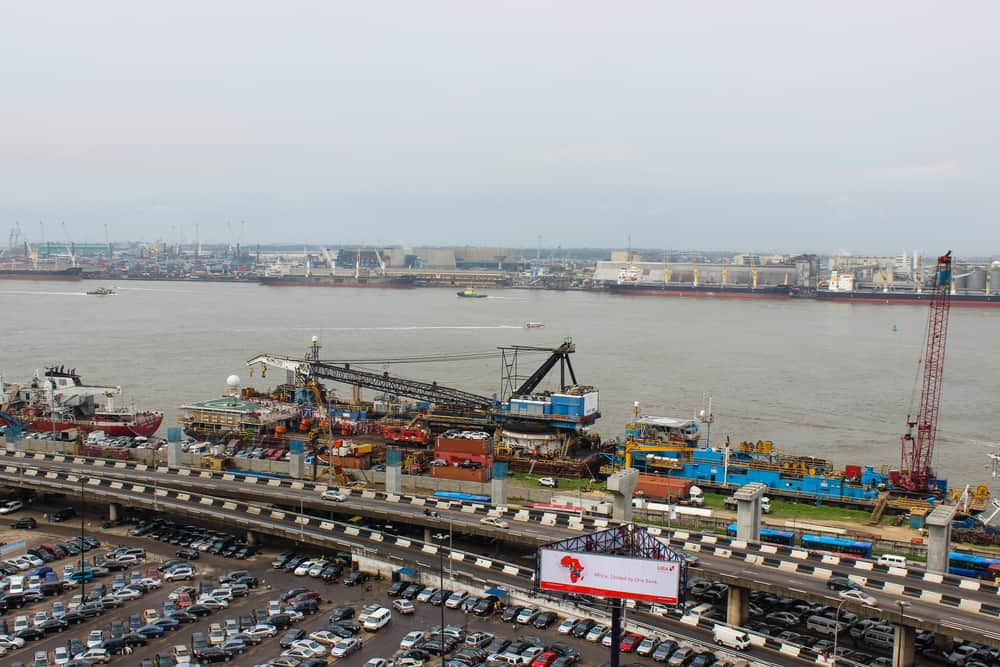
In a fresh escalation of his trade agenda, President Donald Trump’s administration unveiled steep new fees on Chinese-built vessels docking at U.S. ports on Thursday, aiming to curb China’s stranglehold on global shipbuilding and revive American maritime industries.

Announced by U.S. Trade Representative (USTR) Jamieson Greer, the policy targets what the USTR calls China’s “unreasonable” practices that burden U.S. commerce, signaling a robust push to reclaim economic sovereignty.

“Ships and shipping are vital to American economic security and the free flow of commerce,” Greer declared. “The Trump administration’s actions will begin to reverse Chinese dominance, address threats to the U.S. supply chain, and send a demand signal for U.S.-built ships.”

Analysts believe that this move, layered atop Trump’s existing 145% tariffs on Chinese imports, is likely to inflame the U.S.-China tariff war, jeopardize delicate negotiations with Beijing, and deepen economic woes as inflation surges and recession fears mount.

The new fees stem from a year-long USTR investigation, launched in April 2024 under the Biden administration and finalized in January 2025, which exposed China’s state-driven ascent to over 50% of global shipbuilding output, up from less than 5% in 1999. Through massive subsidies, forced technology transfers, and discriminatory policies, China now produces 1,700 commercial vessels annually, dwarfing the U.S.’s five. Chinese-built ships account for 98% of the global trade fleet, a dominance the USTR deems a threat to U.S. economic and national security, particularly given the Navy’s reliance on Chinese-built tankers.

The policy, enacted under Section 301 of the Trade Act of 1974, imposes a phased fee structure to penalize Chinese vessel operators, owners, and Chinese-built ships while incentivizing U.S. shipbuilding.

Starting October 14, 2025, Chinese operators face fees of $50 per net ton per voyage, rising to $140 by April 17, 2028, capped at five charges per vessel annually. Non-Chinese operators using Chinese-built vessels will pay $18 per net ton ($120 per container) in October 2025, escalating to $33 ($250 per container) by 2028. Foreign-built car carriers will incur $150 per Car Equivalent Unit from mid-October. At the same time, liquefied natural gas (LNG) vessels face restrictions beginning in 2028, mandating that 1% of U.S. LNG exports use U.S.-built ships, increasing to 15% by 2047. Exemptions cover Great Lakes and Caribbean shipping, U.S. territories, bulk exports like coal and grain, and empty vessels, shielding key U.S. sectors from immediate disruption.

A novel incentive allows operators to suspend fees for up to three years by ordering U.S.-built vessels, provided delivery occurs within that timeframe. Failure to deliver triggers immediate fee repayment, a measure designed to spur domestic shipyards. This aligns with Trump’s “Make Shipbuilding Great Again” executive order of March 31, 2025, which envisions a revitalized U.S. maritime sector bolstered by tax credits and regulatory reforms.

Unions like the United Steelworkers and International Association of Machinists hailed the policy as a lifeline for American workers, with bipartisan support evident in calls for the SHIPS for America Act to further boost shipyard capacity.

The fees, significantly softened from a February proposal of up to $1.5 million per port call, reflect intense pushback from over 300 trade groups during March hearings. The National Retail Federation, American Soybean Association, and maritime executives like Seaboard Marine’s Edward Gonzalez warned that steep levies would inflate shipping costs, disrupt supply chains, and erode U.S. export competitiveness. Agriculture exporters reported vessel booking challenges beyond May, while coal industries feared cargo diversion to Mexican and Canadian ports. The USTR’s concessions, charging per voyage, exempting bulk exports, and phasing fees over the years—aim to mitigate these concerns, but the policy still poses risks.

A 15,000-container ship could face $1.8 million in fees by October 2025, costs likely passed to importers and consumers, exacerbating inflation already fueled by Trump’s broader tariffs. Since April 2, when Trump imposed a 10% universal import tariff and 145% duties on Chinese goods, consumer prices have spiked, apparel by 17%, vehicles by 8.4%, and food by nearly 3%—reducing household purchasing power by an estimated $2,100 annually. Inflation is projected to hit 4% by summer, with core PCE potentially reaching 4.7%, threatening the consumer spending that drives 70% of U.S. GDP.

Escalating the Tariff War

Trump’s maritime fees are likely to escalate the U.S.-China tariff war, complicating delicate negotiations with Beijing. China, which retaliated to the 145% tariffs with an 84% duty on U.S. goods, suspended rare earth metal exports, and curbed Hollywood films and Boeing deliveries, has dismissed Trump’s trade measures as “discriminatory trade bullying.” On Thursday, China’s Ministry of Foreign Affairs called the tariff escalation a “numbers game” with negligible impact, signaling defiance. The new fees, targeting a sector where China holds near-total control, are seen as a direct challenge, likely prompting further retaliation—potentially targeting U.S. agricultural exports or tightening technology restrictions.

This escalation dims prospects for productive talks, despite Trump’s claim of a “very good relationship” with Xi Jinping, who has reached out repeatedly. Trump’s Thursday hint at pausing further tariff hikes, citing risks to consumer spending, suggested a willingness to negotiate, possibly tying trade concessions to TikTok’s U.S. divestiture. However, the maritime fees, announced the same day, undermine this olive branch, as Beijing perceives them as an attack on a strategic industry. Analysts warn that China could impose reciprocal port fees or restrict U.S. carriers, further disrupting global shipping, where 80% of trade relies on sea transport.

The fees also strain U.S. allies, already reeling from tariffs on Japan (24%), South Korea (25%), and Canada (auto tariffs). The European Union, warning of “burdensome” costs, is preparing countermeasures, while smaller ports like Oakland risk losing traffic as carriers reroute to avoid fees.

However, there is another layer to the challenges. U.S. shipbuilding, producing just 0.13% of global output, cannot scale quickly to replace Chinese vessels, even with incentives. Critics argue that penalizing carriers reliant on Chinese ships, virtually all major operators, could paralyze trade without viable U.S. alternatives. The SHIPS for America Act might bolster domestic yards, but experts estimate a decade-long ramp-up, leaving the U.S. vulnerable to supply chain disruptions and higher costs in the interim.

Galaxy Has Surpassed its $150M Fund-Raising Target

0

Galaxy Ventures Fund I LP, led by Michael Novogratz, has surpassed its $150 million fundraising target and is expected to close by June 2025 with $175 million to $180 million. The fund aims to back around 30 early-stage crypto and blockchain startups, focusing on payments and stablecoins. This achievement comes despite a challenging crypto venture capital market, with U.S. crypto VC investments dropping 22% to $1.3 billion in Q1 2025. The fund’s initial close was in June 2024, raising $113 million.

The cryptocurrency market has seen significant growth, with a total market cap reaching $2.66 trillion in 2024, close to its 2021 peak. However, Q1 2025 was challenging, with Bitcoin experiencing its worst first-quarter performance in seven years, dropping from a high of $108,786 on January 20, 2025, to around $83,000 by early April. Ethereum and other major altcoins also faced losses due to macroeconomic uncertainties, particularly U.S. trade tariffs. Despite volatility, Bitcoin remains the market leader, trading between $80,440 and $151,200, with projections suggesting it could hit $175,000–$185,000 by Q4 2025. Its dominance (58.77% in April 2025) reflects strong institutional and retail interest, driven by its “digital gold” narrative and fixed 21-million-coin supply.

Altcoins like Ethereum, Solana, and XRP have shown strength, with Solana leading in network activity (surpassing Bitcoin and Ethereum in active addresses). However, liquidity is increasingly concentrated in the top 10 altcoins, leaving smaller tokens struggling. The Galaxy fund’s focus on early-stage crypto startups, particularly in payments and stablecoins, aligns with the market’s bullish sentiment and the growing adoption of blockchain solutions. Its ability to raise $175–$180 million reflects investor confidence in crypto’s long-term potential, even amidst short-term volatility.

Stablecoins like USDT (Tether) and USDC (Circle) are critical to the crypto ecosystem, with their total market cap surpassing $200 billion in Q1 2025. They facilitate DeFi transactions, cross-border payments, and remittances, offering stability in a volatile market. Stablecoin activity grew 77% year-over-year in 2024, and U.S. legislation for stablecoin oversight is expected to pass in 2025, further boosting adoption. Decentralized finance (DeFi) is rebounding, with total value locked (TVL) projected to reach $200 billion by the end of 2025. Trading volumes on decentralized exchanges (DEXs) are expected to exceed $4 trillion, driven by consumer-facing dApps and AI-related tokens. DeFi’s growth is supported by regulatory clarity and institutional interest.

The Galaxy fund’s emphasis on payments and stablecoins positions it to capitalize on the stablecoin boom and DeFi’s expansion. Investments in startups building on these technologies could yield significant returns as stablecoins become integral to global finance. Institutional adoption is a major driver, with firms like BlackRock and MicroStrategy accumulating significant Bitcoin holdings. Spot Bitcoin and Ethereum ETFs, approved in 2024, have absorbed over 515,000 BTC (2.4x miner issuance), reshaping market liquidity. ETF inflows correlate strongly with price surges, and potential 2025 changes (e.g., in-kind creations or staking) could further increase demand.

Major banks like BNY Mellon and Bank of America are expanding crypto services, such as custody and stablecoin transactions. Tokenization of real-world assets (RWAs) like real estate and bonds grew to $20 billion in Q1 2025, signaling blockchain’s integration into traditional finance. The Galaxy fund’s success in raising capital reflects institutional appetite for crypto ventures. Its focus on early-stage startups positions it to back innovative projects that could attract further corporate and institutional interest.

The pro-crypto stance of the Trump administration, including an executive order establishing a Digital Asset Markets working group, has boosted investor confidence. A crypto task force led by SEC Commissioner Hester Peirce aims to develop clear regulations, potentially unlocking institutional capital. However, stablecoin legislation is more likely to pass than broader market structure laws in 2025. The EU’s Markets in Crypto-Assets (MiCA) regulation, fully effective in December 2024, provides a comprehensive framework but imposes strict compliance on stablecoin issuers. Regulatory scrutiny of scams like “pig butchering” is expected to intensify globally in 2025.

Regulatory clarity supports the fund’s investment thesis by reducing uncertainty for startups. However, stricter rules may challenge smaller altcoin projects, reinforcing the fund’s focus on high-potential areas like payments and stablecoins. AI tokens, used in blockchain protocols and decentralized machine learning, are gaining traction, with nearly 90 tokens in the market. Decentralized AI (deAI) is democratizing access to AI tools, addressing governance concerns.

Tokenization of assets like real estate and commodities is expanding, with the RWA market growing by $5 billion in Q1 2025. This trend could shift crypto’s perception from speculative trading to a foundational technology for asset management. Layer-2 solutions (e.g., Ethereum’s L2s) are outpacing alternative Layer-1 blockchains in economic activity, with L2 fees projected to reach 25% of alt-L1 fees by year-end. Solana’s dominance in active addresses and transaction volume highlights the demand for scalable networks.

The fund’s investments in blockchain startups could tap into these trends, particularly in scalable networks and tokenized assets, positioning it to support projects with real-world utility. Macroeconomic factors, such as U.S. tariffs and interest rate changes, have triggered sharp declines, as seen in Q1 2025. Posts on X highlight a $1.2 trillion market cap loss and retail panic-selling, though institutions are buying dips.

Illicit activity remains a concern, with $40.9 billion received by illicit addresses in 2024, potentially rising to $51 billion as data improves. Scams like pig butchering are prompting aggressive regulatory responses. Despite Galaxy Ventures’ success, the broader crypto VC market saw a 22% drop in U.S. investments to $1.3 billion in Q1 2025. High fully diluted valuation (FDV) launches and brain drain to AI are dampening retail interest and VC performance.

By focusing on high-growth sectors like payments and stablecoins, the fund mitigates risks associated with speculative altcoins and regulatory crackdowns, leveraging its $175–$180 million to back resilient startups. Approximately 28% of U.S. adults (65 million people) own cryptocurrencies in 2025, nearly double the 2021 figure. An additional 14% of non-owners plan to enter the market, and 66% of current owners intend to buy more.

Bitcoin, Ethereum, and Dogecoin remain the most held, but Solana and XRP are gaining traction due to their technological advantages and community support. Rising consumer adoption supports the fund’s strategy to invest in startups that enhance crypto accessibility and utility, particularly in payments, where stablecoins and blockchain solutions are gaining mainstream traction.

The crypto market in 2025 is characterized by bullish sentiment, institutional adoption, and technological innovation, tempered by volatility and regulatory challenges. Galaxy Ventures Fund’s success in exceeding its $150 million target, aiming for $175–$180 million, reflects strong investor confidence in crypto’s future, particularly in payments and stablecoins. By aligning with trends like stablecoin growth, DeFi resurgence, and tokenization, the fund is well-positioned to back startups that drive the next wave of blockchain adoption. However, it must navigate risks like market volatility and stricter regulations to maximize returns.

TRUMP Memecoin Pulled $4.6M Liquidity and into Coinbase Prime

0

The TRUMP meme coin, a Solana-based token linked to President Donald Trump, has raised concerns among investors after its developers withdrew $4.6 million in USDC from the project’s liquidity pool on April 15, 2025. This move occurred just days before a major token unlock scheduled for April 17, 2025, which will release 40 million TRUMP tokens—worth approximately $320 million at the time—into circulation, representing 20% of the circulating supply. The withdrawn USDC was bridged from Solana to Ethereum and deposited into Coinbase Prime, a platform typically used by institutional investors.

On-chain data from LookOnChain and PeckShieldAlert confirmed the transaction, sparking speculation of a potential sell-off or “rug pull” within the crypto community. Some labeling it a “classic degen exit move” and others suggesting it could be a repositioning rather than an outright exit. The TRUMP token, trading at around $7.84-$8.00, saw a 2.72% drop in the 24 hours following the withdrawal, alongside a 7% price decline on centralized exchanges and a 150% surge in trading volume, indicating heightened market activity and potential panic selling. Despite this, the token retains over $327 million in decentralized liquidity, making it one of the most funded meme coins.

The timing of the withdrawal, coinciding with the unlock and the Trump family’s broader Web3 ventures under World Liberty Financial (including a planned real estate-themed crypto game), has fueled skepticism. Critics point to patterns seen in other celebrity tokens like MELANIA, where liquidity was drained post-hype, leading to significant price drops. The developer’s wallet still holds over 15.3 million TRUMP tokens, suggesting potential for further market impact. Investors are advised to monitor developer wallets and price movements closely, as the unlock could amplify selling pressure.

No official statement from the TRUMP team or Bill Zanker, a Trump associate linked to the project, has clarified the intent behind the withdrawal. The crypto community remains divided, with some seeing it as a bearish signal and others noting the token’s resilience, having gained 6% in the past week despite underperforming other Solana meme coins.

The release of 40 million TRUMP tokens, representing 20% of the circulating supply and valued at approximately $320 million, significantly increases the token’s circulating supply. Token unlocks typically reduce scarcity, often leading to bearish price action as investors anticipate dilution. Analysts, such as Sidney Powell of Maple Finance, note that this could depress TRUMP’s price, as sustaining current levels requires substantial new demand. The removal of $4.6 million in USDC from the liquidity pool reduces the depth of the market, making TRUMP more susceptible to price swings.

The immediate 10-12% price drop following the withdrawal (from ~$9 to ~$7.95-$8.01) reflects this heightened volatility. On-chain data showing 706 wallets selling versus 456 buying further indicates selling pressure, though whale buying may temper declines temporarily. The timing of the liquidity pull, just before the unlock, has fueled speculation of a potential sell-off or “rug pull,” eroding trader confidence.

The withdrawal of significant liquidity and its transfer to Coinbase Prime, a platform for institutional investors, has sparked accusations of a possible “rug pull” or insider cash-out. While the developers still hold over 15.3 million TRUMP tokens, the lack of transparency or an official statement explaining the move heightens distrust. With 80% of TRUMP’s 1 billion token supply controlled by Trump-affiliated entities (CIC Digital LLC and Fight Fight Fight LLC), the project already faces criticism for potential conflicts of interest, given Donald Trump’s role as president and regulator of the crypto industry. The liquidity withdrawal exacerbates these concerns, suggesting insiders may be prioritizing personal gains over investor interests. Ethics experts, such as Norman Eisen, have called Trump’s crypto ventures a profound conflict of interest.

The MELANIA meme coin, launched by Melania Trump, experienced similar liquidity withdrawals and a sharp price decline (to $0.42), reinforcing perceptions of speculative manipulation in Trump-related projects. This pattern undermines the credibility of both tokens and may deter long-term investment. Meme coins like TRUMP are highly speculative, often attracting retail investors drawn by hype rather than fundamentals. The liquidity pull and unlock increase the risk of losses for late entrants, as seen in the TRUMP token’s 89% decline from its all-time high of ~$73 to ~$7.73 by April 2025.

A Bloomberg analysis highlighted that small traders lost $2 billion trading TRUMP in its first two days, while insiders profited significantly from fees. On-chain data indicates that whale wallets are driving most buying activity, potentially stabilizing the price short-term but also signaling manipulation risks. Smaller wallets selling off suggest retail investors are exiting, possibly due to fears of further declines. Unlike community-driven meme coins like Dogecoin, TRUMP lacks a strong cult following or intrinsic utility, relying heavily on Trump’s brand and whale activity.

The ongoing unlock schedule (760 million tokens over three years) and insider control may deter investors seeking sustainable projects. The TRUMP token’s controversy reinforces the perception of meme coins as speculative and prone to manipulation. Critics, including crypto executives like Erik Voorhees, argue that Trump’s involvement undermines the industry’s credibility, especially as it seeks mainstream legitimacy. Trump’s dual role as a crypto participant and regulator raises concerns about loose oversight.

Ethics watchdogs, such as Danielle Brian, warn that his financial stake in TRUMP could disincentivize crackdowns on fraudulent practices, potentially inviting stricter regulations if scams proliferate. The TRUMP launch initially pulled liquidity from other altcoins, and similar moves (e.g., MELANIA’s launch) disrupted market dynamics. While this drew attention to Solana-based meme coins, it also highlighted the fragility of liquidity in speculative assets, potentially affecting other projects during major unlocks.

TRUMP’s unique user base, including Trump supporters and first-time crypto buyers, may sustain demand despite bearish pressures. The token’s branding as an “expression of support” could maintain a niche following, though its long-term appeal is uncertain. The project retains $327.6 million in liquidity for its main decentralized pair, which could buffer against panic selling. World Liberty Financial, linked to the Trump family, holds significant USDC and ETH reserves, potentially stabilizing operations.

Investors face heightened risks of price declines and volatility, while the project’s credibility is strained by rug pull fears and ethical concerns. The broader meme coin market may suffer reputational damage, and regulatory scrutiny could intensify. However, Trump’s brand and residual liquidity might mitigate some losses, particularly among loyal supporters. Investors should exercise caution, conduct thorough due diligence, and monitor whale activity and developer communications closely, as the unfolding situation underscores the speculative risks inherent in meme coins.

How Naira Failed Me And The Challenge of Building Generational Wealth in Nigeria [video]

0

When I began work as an entry level banker in Lagos, I developed a personal wealth building plan: 45-20-20-15. When I received my salary, 15% was used to buy stocks in the Nigerian stock exchange. I did simple statistical modelling and was convinced that with small equity appreciation and dividends on those investments, for every five years worked, a two-year free bonus on income would be added. I was not an engineer for nothing; I wanted to engineer an independent financial future!

But you know what? Because of the continuous devaluation of Naira, what would have turned out as a great idea failed. When I made those investments, Naira was exchanging around the range of N100/$; today, it is N1500/$ making tons of dividends I still receive yearly largely useless. I am invested in most companies in Nigeria because I bought anything on sight then.  Of  course, nothing like any more as Naira has messed up the party!

That takes me to a message: Nigeria needs to stabilize its currency. Otherwise, generational wealth will be impossible for middle class families to build in the capital market. If what I did, which I have taught in Tekedia Mini-MBA, was done in America, I would have a bestseller right now. But you know what? I destroyed REAL value by buying those stocks because the Naira shifted the equilibrium in the middle of the game.

And that takes me to the conclusion: Nigeria’s greatest leader will be the person who can stabilize the Naira for years!