DD
MM
YYYY

PAGES

DD
MM
YYYY

spot_img

PAGES

Home Blog Page 136

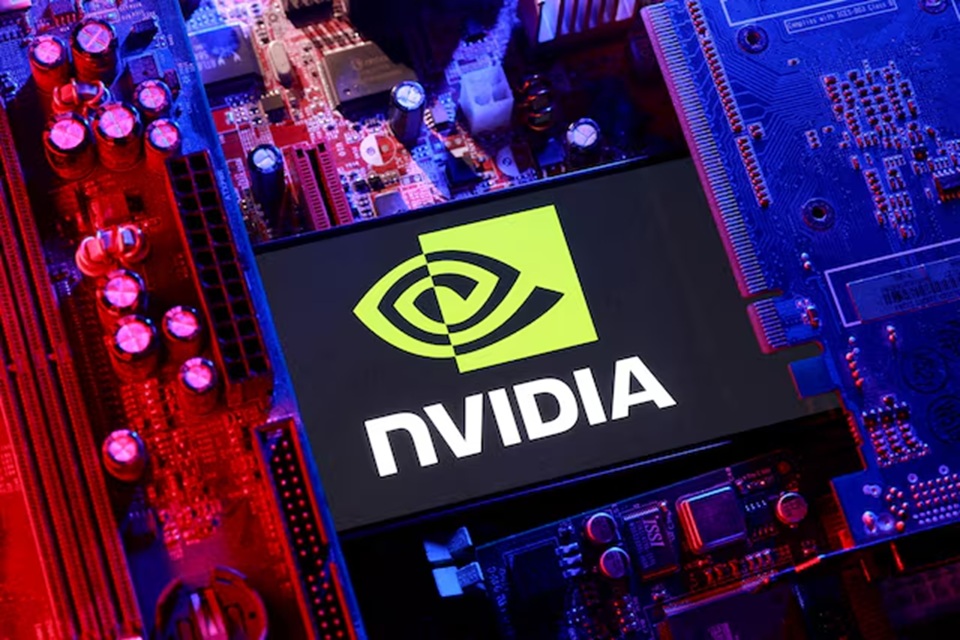
Nvidia-fueled Rout sweeps Asian chip shares, Sinks SoftBank by over 10%

0

A punishing wave of selling washed over Asia’s technology sector on Friday, erasing billions in market value as investors reacted to a paradox that has rattled global trading floors: Nvidia, the engine of the artificial intelligence boom, posted a blockbuster earnings beat, and the market hated it.

The result was a sea of red across Asian exchanges, led by a stunning double-digit collapse in SoftBank Group, as traders priced in a harsher reality for the AI ecosystem.

The damage was most acute in Japan, where SoftBank plunged more than 10%. The drop carried a bitter irony for the Japanese conglomerate. SoftBank recently liquidated its direct stake in Nvidia—securing billions in profit—yet found itself unable to escape the gravitational pull of the chip giant’s sentiment. Investors punished SoftBank for its lingering exposure to the sector through its controlling stake in Arm Holdings, the British chip designer whose architecture underpins Nvidia’s processors, and its massive capital commitments to AI infrastructure projects like the $500 billion “Stargate” data center initiative.

The bleeding in Tokyo was indiscriminate. Tokyo Electron, a bellwether for chip manufacturing equipment, shed 6.6%, while Lasertec dropped 5.2%. Even Renesas Electronics, a smaller but critical supplier in the Nvidia chain, retreated 3%.

Supply Chain Contagion

The selloff rippled rapidly through the critical supply chains in Korea and Taiwan.

  • SK Hynix plummeted nearly 10%. The South Korean titan is Nvidia’s primary supplier of High Bandwidth Memory (HBM), the “turbocharger” memory chips essential for AI accelerators.
  • Samsung Electronics, currently playing catch-up in the HBM race, was not spared, falling over 5%.
  • TSMC (Taiwan Semiconductor Manufacturing Company), the sole manufacturer of Nvidia’s cutting-edge GPUs, dropped over 4% in Taipei.
  • Foxconn (Hon Hai Precision Industry), the builder of the server racks that house these AI brains, dipped 4.86%.

The Nvidia Paradox

The catalyst for the panic occurred thousands of miles away during Thursday’s U.S. trading session. Nvidia delivered what looked like a perfect scorecard: a beat on third-quarter earnings and revenue, coupled with a fourth-quarter sales forecast that exceeded Wall Street’s wildest estimates. CEO Jensen Huang even declared demand for the new Blackwell chips to be “off the charts.”

Yet, Nvidia shares fell over 3% in New York. The market’s reaction signaled a shift in psychology—investors are no longer satisfied with “great” results; they demand perfection. The selloff suggests that fears of valuation ceilings and “execution risk” are beginning to outweigh raw growth numbers.

Analysts argue this isn’t just about one company. The semiconductor slump is colliding with a broader risk-off environment.

“Nvidia was a victim of a combination of a Bitcoin selloff, the possibility of a delayed Fed rate cut, and generally tighter financial conditions,” said Billy Toh, regional head of retail research at CGS International Securities Singapore.

Speaking to CNBC, Toh pinpointed the psychological pivot point: “Add in the ongoing talk of an AI bubble, which triggers a broader risk-off rotation, and naturally Nvidia becomes one of the first pressure points.”

With Bitcoin retreating and the Federal Reserve’s minutes casting doubt on a December rate cut, liquidity is tightening just as the AI trade demands massive new capital outlays.

Morgan Stanley Drops Call for December Fed Rate Cut After Stronger-Than-Expected U.S. Jobs Data

0

Morgan Stanley has abruptly reversed course on its forecast that the U.S. Federal Reserve would cut interest rates by a quarter-point in December, after September’s labor market report revealed resilience that caught even hawkish strategists off guard.

The bank now points to a more cautious Fed stance, shaped by complex economic data and growing political pressure.

The Labor Department’s Bureau of Labor Statistics reported a gain of 119,000 non-farm payrolls in September, a sharp rebound from a revised 4,000-job decline in August. Economists had expected only 50,000 new jobs, having based their forecasts on earlier, less accurate data. Despite that strong hiring, the unemployment rate climbed to 4.4%, marking a four-year high.

Morgan Stanley’s strategists said the rebound suggests that a “summertime slowdown might have been exaggerated,” pointing toward a durable labor market even as unemployment ticked up.

Morgan Stanley now projects the Fed will hold off on rate cuts until next year, estimating three reductions in January, April, and June 2026, bringing the policy rate down to 3.00–3.25%.

Trump vs. the Fed

The Fed has found itself navigating not just the data, but also mounting political heat from former President Donald Trump, who has repeatedly lambasted Chairman Jerome Powell for failing to lower rates more aggressively. Trump’s pressure campaign has become a recurring flashpoint — accusing Powell of being too cautious, too “stupid,” and even calling for his ouster.

In June, Trump publicly urged Powell to slash rates by a full percentage point. He later floated replacing him with someone who would cut faster — an unusually bold statement that rattled markets and raised alarms about the Fed’s independence. He’s even threatened legal action over the Fed’s $2.5 billion headquarters renovation, casting it as wasteful amid rate policy tension.

Trump’s persistent attacks come as he signals that any successor he endorses “will be somebody that wants to cut rates.” While he has backed off on outright removal for now — saying he doesn’t plan to fire Powell before his term ends in May 2026 — his repeated criticisms have added a layer of tension to what was once a technocratic process.

Despite Trump’s pressure, Fed officials have held firm. Powell has repeatedly emphasized that monetary policy decisions will be made “based solely on careful, objective, and non-political analysis,” and not as a reaction to political demands. That stance reflects a broader concern inside the Fed: that overreacting to political pressure now could undermine the central bank’s credibility and its ability to fight inflation down the road.

Policymakers have also pointed to other economic headwinds: wildcards like Trump’s tariffs, which could stoke inflation, and uncertainty in trade policy. Several Fed officials argue that a hasty rate cut might reignite inflation or fuel financial instability, undermining long-term macroeconomic health.

Morgan Stanley’s pivot away from a December cut underscores just how delicate the Fed’s current path has become. The bank’s strategists now view early 2026 as the more likely window for rate reductions — not because of political appeasement, but because the data and risks support a more measured approach.

This cautious recalibration comes amid a highly politicized backdrop, where the Fed must balance fulfilling its dual mandate (stable prices and high employment) with resisting overt pressure from political actors.

In short, many Wall Street analysts believe the Fed is walking a tightrope, but the stronger-than-expected jobs report may be giving it the leverage it needs to stand its ground — even as the public battle over rates intensifies.

HelloTrade Launch on MegaETH and USDM Pre-Deposits As Scott Bessent Visits A Bitcoin Bar

0

The team behind BlackRock’s iShares Bitcoin Trust (IBIT) ETF—specifically former BlackRock executives Kevin and Wyatt, who led the engineering for IBIT the fastest ETF to hit $100B in assets—have founded HelloTrade, a platform designed to provide global, frictionless access to leveraged trading in equities, ETFs, commodities, and crypto.

Built on MegaETH, an Ethereum Layer 2 network optimized for real-time, low-latency applications, HelloTrade aims to remove barriers like geography, high capital requirements, and legacy systems that limit retail and professional investors’ exposure to global markets.

The platform leverages MegaETH’s high-throughput design to enable seamless, directional bets on assets worldwide.In tandem with this, MegaETH is kicking off pre-deposits for its native stablecoin, USDM built in collaboration with Ethena’s USDtb infrastructure to generate yield and offset sequencer costs, via a USDC bridge capped at $250 million.

Eligible participants those who completed KYC during MegaETH’s recent MEGA token sale, which saw $1.39B in bids, and aren’t in restricted countries can deposit USDC from Ethereum mainnet starting November 25, 2025.

Deposits are first-come, first-served with no individual limits, locked until mainnet launch, and convert 1:1 to USDM in verified wallets—no restrictions or lockups post-launch. Depositors also qualify for MegaETH’s rewards campaign, earning points based on activity.

This move positions MegaETH as a hub for stable, predictable costs in high-frequency trading, aligning perfectly with HelloTrade’s vision.

By raising $4.6M in a lightning-fast seed round led by Dragonfly Capital, the platform signals robust investor faith in bridging high-frequency equity trading with DeFi’s openness.

HelloTrade’s mobile-first app eliminates crypto’s typical hurdles—no wallets, no gas fees, no jargon—while delivering brokerage-like speeds via MegaETH’s 100,000+ TPS capacity.

This could unlock leveraged exposure to U.S. stocks like Tesla for Vietnamese or Indonesian investors for billions in emerging markets, bypassing geographic and capital barriers that lock out retail traders today.

US Treasury Secretary’s Visit to a Bitcoin Bar

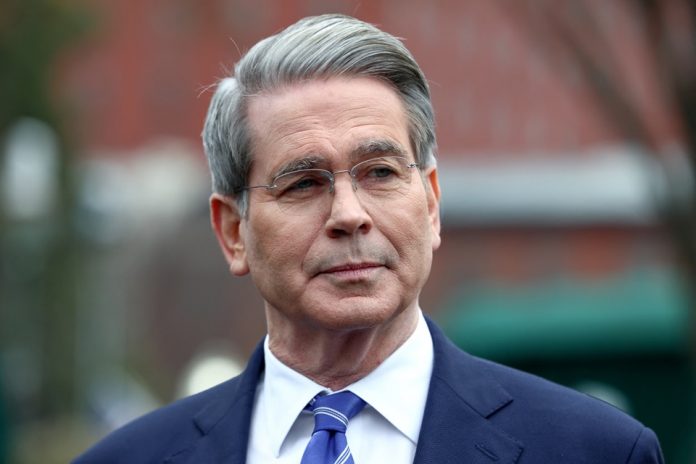
US Treasury Secretary Scott Bessent made a surprise appearance at the grand opening of Pubkey, a Bitcoin-themed bar in Washington, DC, though the buzz has spread nationwide, on November 20, 2025.

The unannounced visit ignited the Bitcoin community, with many hailing it as a “signal” of mainstream institutional embrace—especially given Bessent’s crypto-friendly track record since his 2024 nomination.

He’s advocated for policies like the GENIUS Act, using seized Bitcoin to seed a Strategic Bitcoin Reserve without sales, and praised BTC’s “always-on” resilience during the white paper’s 17th anniversary amid a government shutdown.

Prominent voices like Strive’s CIO Ben Werkman called it a pivotal moment: “Having the Secretary of the Treasury at the Pubkey DC launch seems like a moment I could easily look back on and say ‘wow, it was all so obvious’.”

Others, including Bitcoin analysts and podcasters, echoed the optimism, viewing it as symbolic validation amid a more restrained SEC under Chair Paul Atkins with enforcement down 30% in FY2025. This comes as spot Bitcoin ETFs like IBIT face $3.79B in November outflows (IBIT alone at $2.47B), highlighting volatility even as policy winds shift favorably.

These developments underscore Bitcoin and crypto’s accelerating integration into finance—from ETF innovators building on L2s to top officials mingling at BTC spots. If you’re eyeing deposits or trades, double-check eligibility and timelines.

Bitcoin’s Brutal Flash Crash is A Deleveraging Bloodbath

0

Bitcoin (BTC) endured a savage intraday plunge, briefly dipping to as low as $80,000 on derivatives platforms like Hyperliquid before stabilizing around $81,000–$82,000.

This marked the asset’s steepest 2–4 hour drop since April 2025 lows, erasing all of its 2025 gains and pushing year-to-date performance into negative territory down ~11% overall.

The move wiped out over $1.9 billion in leveraged positions across the crypto ecosystem in the past 24 hours alone, with data from Coinglass showing totals reaching $1.91–$1.97 billion and affecting 391,000+ traders—primarily those betting on upside longs accounted for ~$1.78 billion of the carnage.

This liquidation cascade amplified the volatility, creating a feedback loop of forced selling that echoed the chaos of past bear phases. The crash wasn’t isolated—it’s the culmination of mounting pressures that have battered risk assets all month.

Fed minutes revealed hesitancy on a December rate cut odds now at 37.6%, fueled by a strong U.S. jobs report. Surging Japanese 10Y yields and a robust dollar index added global liquidity squeezes.

Drove risk-off sentiment, with BTC down 25–30% from its October peak of $126,000. Crypto Fear & Greed Index hit “extreme fear” 11–15, lowest since late 2022. U.S. spot Bitcoin ETFs saw $903 million in net outflows on November 21 BlackRock’s IBIT: -$355M; Grayscale: -$199M; Fidelity: -$190M, part of $3.79 billion for the month.

Institutional retreat signaled fading appetite, with open interest in perpetual futures down 35% from October highs, thinning liquidity and worsening the slide.

A “mechanical glitch” in auto-deleveraging systems may have sparked the initial wick, liquidating $210–$250 million in minutes. Hyperliquid saw five $10M+ accounts wiped, including one $36.78M hit.

Turned a 7–8% dip into a full-blown flash crash; total crypto market cap fell below $3 trillion for the first time in five months down 8–9% in 24 hours. Ether (ETH) dropped 10–14% to ~$2,700; Solana (SOL) -10%; XRP, BNB, and Cardano -8–15%. Smaller caps like INJ and NEAR fell 16–18%.

Broader market lost $450 billion in value over the past week, with $1 trillion erased since October highs. Traders are calling it a “sentiment shock” and “bear trap,” with posts highlighting the $1B+ liquidations and ETF exodus as the “true carnage.”

One analyst noted: “This is the exact moment the market decides whether this is a healthy correction… or the beginning of a multi-month liquidation cascade.”

The most alarming signal? Bitcoin’s realized losses—profits or losses locked in when coins move on-chain—have exploded to levels unseen since the FTX implosion in November 2022, when BTC cratered below $16,000.

Glassnode data reveals: Short-term holders STHs, coins held <155 days now sit on 2.8–5.4 million BTC underwater, with 99% of their supply in loss up 24.7% since August. Daily STH realized losses hit $523 million 7-day EMA, the highest since FTX, driven by panic unwinding below the 200-day moving average.

STH profit/loss ratio flipped to -1.4, mimicking the 2022 capitulation and creating a “feedback loop” of falling prices triggering more sales. In contrast, long-term holders (LTHs) have offloaded ~452,000–815,000 BTC since July now at 14.3 million total, but their realized cap remains at all-time highs, suggesting underlying cycle confidence.

Institutions like whales are dipping in, with some buying the panic (e.g., $903M ETF outflows offset by on-chain accumulation). This feels like classic bull-market deleveraging: Sharp, painful, but often followed by rebounds once weak hands are shaken out.

Historical parallels like post-FTX lows show such extreme fear levels precede swing bottoms, with BTC’s momentum now 3.5 standard deviations below its 200-day MA—a rare setup for mean reversion.

Key levels to watch: Support: $80K Hyperliquid low or $74K next major liquidation cluster; breach could target $82K “True Market Mean.” Resistance at $86K–$88K active investors’ realized price; break above could signal stabilization.

Whales and LTHs absorb supply; Fed pivot or ETF inflows could spark a “dead cat bounce” to $100K+.  Persistent outflows and macro tightening drag to $74K, prolonging the “mild bear” phase.

X chatter is split: Some see it as the “final flush” before a rally “once that wick appears, we’ll know the rally is about to kick off”, while others warn of “multi-month liquidation.” UBS calls it a “flush of excessive leverage,” hinting at upside if sentiment holds.

This is capitulation theater—painful, but often the setup for the next leg up. HODL if you’re in for the cycle; scale out leverage if you’re not.

6 Heavily Undervalued Tokens Set to Boom Over the Next 6 Months: Shiba Inu, Cardano, Little Pepe (LILPEPE) Lead

0

The cryptocurrency landscape often hides explosive opportunities beneath mainstream noise. Over the coming six months, a group of tokens stands out as particularly attractive: Shiba Inu, Cardano, Little Pepe, Brett, Pump.fun, and Flare.  Each brings a distinct narrative, from infrastructure upgrades and burning mechanics to a hyperactive presale and emergent memecoin ecosystems, that together create asymmetric upside potential for those watching closely.

1. Little Pepe (LILPEPE)

Little Pepe’s presale metrics read like a launchpad success story. The token is deep into its presale, trading in Stage 13 at $0.0022 while having already sold more than 16.6 billion tokens and raised north of $27.4 million across stages.  That level of capital accumulation and stage progression signals intense market appetite ahead of exchange listings and suggests substantial initial liquidity when trading opens. LILPEPE is positioned as one of the leading candidates for significant gains over the next 6 months, during which it translates from presale to top-tier exchange listing.

2. Shiba Inu (SHIB)

Beyond its meme origins, Shiba Inu has added utility, which has fueled its bullish momentum. When a popular token combines utility expansion with periodic supply reduction, price elasticity to renewed demand tends to be high. Shiba Inu’s technical setup and burn activity position it as a poster child for how a large-cap meme asset can reignite a rally when the network’s utility finally catches up with market expectations.  SHIB is one to buy over the next 6 months as it takes a shot at regaining its all-time high.

3. Cardano (ADA)

Cardano’s roadmap over the past year has been focused on DeFi primitives, real-world asset integration, and tooling that appeals to institutional-grade users. That slow, methodical roll-out is now entering phases where tangible products, stablecoin frameworks, improved smart contract capabilities, and RWA integrations become marketable advantages. The result is a classic undervaluation setup: a fundamentally capable layer-one network trading below the valuation warranted by its upcoming utility. As developer activity and adoption metrics tick upward, Cardano’s price sensitivity to positive news should be amplified, making ADA a strong candidate for meaningful appreciation in the medium term.

4. Brett (BRETT)

Brett occupies a different space: a community-driven memecoin that has already secured listings and liquidity on major aggregators, trading with significant volume and a sizable circulating supply.  Tokens like Brett benefit from momentum cycles; when social sentiment, exchange visibility, and on-chain transfers align, substantial percentage moves can unfold quickly. Given Brett’s current market profile and the broader appetite for narrative-led tokens, a strategic reacceleration in social traction or a high-visibility listing could act as a catalyst for outsized returns relative to its entry price.

5. Pump.fun (PUMP)

Pump.fun is not merely a token; it is a platform enabling creators to mint and launch memecoins under a single interface. That product-market fit has translated into rapid user adoption and sizable on-platform trading activity.  Platforms that lower the barrier to token creation while taking a small revenue share can scale quickly and incubate multiple viral coins in parallel, each of which feeds back into platform valuation and utility. The resulting flywheel often yields multiple asymmetric bets for token holders as successful launches cascade into higher platform demand and deeper liquidity.

6. Flare (FLR)

Flare’s recent mainnet milestones and work on cross-chain interoperability create a compelling value proposition for DeFi composability, particularly for assets like XRP seeking liquid staking and smart-contract extension.  As Flare rolls out features that enable novel staking and cross-chain flows, the token’s role as an infrastructure layer becomes more evident, and total value locked (TVL) and developer activity could follow. Infrastructure tokens that successfully anchor new DeFi rails often see steady appreciation when usage ramps, and Flare’s technical progress places it on that pathway.

Conclusion

These six tokens form a diversified cross-section of crypto opportunity, and they have a common thread: undervaluation relative to likely near-term catalysts. Investors who care to accumulate them now have a good shot at massive gains over the next 6 months.

For more information about Little Pepe (LILPEPE) visit the links below:

Website: https://littlepepe.com

Whitepaper: https://littlepepe.com/whitepaper.pdf

Telegram: https://t.me/littlepepetoken

Twitter/X: https://x.com/littlepepetoken

$777k Giveaway: https://littlepepe.com/777k-giveaway/