DD
MM
YYYY

PAGES

DD
MM
YYYY

spot_img

PAGES

Home Blog Page 1360

U.S. House Narrowly Passes Trump’s “Big, Beautiful Bill”, but Business Leaders Warn of Debt Timebomb

0

President Donald Trump notched a major political win on Thursday after the House narrowly passed a sweeping tax and spending package that revives key parts of his 2017 economic agenda.

Dubbed the “big, beautiful bill” by Trump himself, the measure passed by a razor-thin margin of 215 to 214, marking a dramatic victory for both Trump and House Speaker Mike Johnson, R-La., after weeks of fractious intraparty negotiations and last-minute deal-making.

The bill, a sprawling multitrillion-dollar package, now moves to the Senate, where Republicans hold a majority and are expected to pass it with few changes, especially after Trump urged GOP senators to “get it done quickly.”

The legislation is anchored in an extension of Trump’s expiring 2017 tax cuts and includes a massive increase in military spending, aggressive border security funding, and provisions to support Trump’s mass deportation initiative. It also eliminates federal income taxes on tipped and overtime wages—two proposals Trump had emphasized during his reelection campaign.

But the bill also slashes funding across several domestic programs, triggering a wave of opposition from Democrats and concern from business leaders, economists, and policy analysts who argue that the legislation will deepen the national debt, further strain public services, and disproportionately benefit wealthier Americans at the expense of the poor.

An All-Night Fight and a Fragile Victory

The final vote capped a 21-hour marathon of late-night negotiations and a dramatic floor showdown. All Democrats present voted against the bill, joined by two Republicans—Reps. Thomas Massie of Kentucky and Warren Davidson of Ohio. Rep. Andy Harris, R-Md., a member of the House Freedom Caucus, voted “present,” while two GOP lawmakers missed the vote entirely.

Speaker Johnson described the bill’s path to passage as “an act of God,” recounting moments when the package nearly fell apart.

“There’s a lot of prayer that brought this together,” he told reporters after the vote. “I went to the little chapel over here and got on my knees and prayed that these guys would have wisdom and stamina.”

Economists Warn of a Debt Explosion

But outside the House floor, a more sobering tone came from corporate offices and economic think tanks. Business leaders, especially from the financial and healthcare sectors, expressed concern over the long-term fiscal implications of the bill.

Chief among those sounding the alarm is Peter Schiff, Chief Economist and Global Strategist at Euro Pacific Capital, who sharply criticized the bill’s cost structure.

“Trump claims the Big, Beautiful Bill is ‘the most significant piece of legislation signed in the history of our country.’ The only thing significant about the bill is the increase in the national debt it will produce,” Schiff said. “It’s full of gimmicks that hide the added cost of government.”

Schiff and other fiscal conservatives argue that the bill masks true costs through sunset clauses, front-loaded tax breaks, and delayed implementation of unpopular spending cuts. The nonpartisan Congressional Budget Office (CBO) projected the measure will add at least $2.3 trillion to the national debt over the next decade, though that figure could rise if temporary provisions are extended—as they often are.

The CBO also estimated the bill would result in the loss of health coverage for 8.6 million Americans, mostly through cuts to Medicaid and the Supplemental Nutrition Assistance Program (SNAP) while reducing household resources for the lowest-income earners by 4% by 2033. At the same time, it would increase household resources for the wealthiest 10% by about 2%.

GOP Internal Bargaining and Trump’s Pressure Campaign

To secure enough votes, Speaker Johnson made a series of concessions to different Republican factions. Conservative hardliners from the House Freedom Caucus pushed for—and won—an accelerated timeline for imposing work requirements on Medicaid recipients, now set to begin in late 2026. They also succeeded in fast-tracking the phaseout of clean energy tax credits passed by Democrats in 2022.

Moderate Republicans from high-tax states extracted a raise in the state and local tax (SALT) deduction cap to $40,000, a move seen as necessary for their political survival back home.

Still, the margin remained so tight that even minor absences threatened to derail the bill.

Trump played an active role in closing the deal. He joined a closed-door GOP conference meeting earlier in the week and later summoned key Freedom Caucus holdouts to the White House. His message was blunt: it was time to unify.

Rep. Ralph Norman, R-S.C., one of the fiscal hawks who ultimately voted for the bill said “some of the stuff we didn’t like stayed in.”

“Am I happy with the deficits? No,” Norman told reporters after the vote. “We held it out as long as we could to get the cuts, as long as we could. We couldn’t do it. We live to fight another day.”

Democrats Warn of Dire Consequences

Democrats lambasted the measure as a giveaway to the wealthy and a betrayal of vulnerable Americans. They accused Republicans of pushing through the bill “under the cover of darkness” and gutting critical social safety nets.

“Children will get hurt. Women will get hurt. Older Americans will get hurt. People with disabilities will get hurt. Hospitals will close. And people will die,” said House Minority Leader Hakeem Jeffries, D-N.Y., during a fiery floor speech before the vote.

Jeffries also predicted political consequences. “When the votes are ultimately cast on that first Tuesday in November next year, this day may very well turn out to be the day that House Republicans lost control of the United States House of Representatives,” he warned.

Senate Showdown and July 4 Deadline

The bill now heads to the Senate, where Republicans control the chamber and are expected to fast-track the legislation. Speaker Johnson, who lunched with GOP senators earlier in the week, urged them to make “as few changes as possible.” But even small amendments will require a second vote in the House—no easy feat given the fragile coalition that carried the bill through on Thursday.

Republican leaders say they hope to have the bill on Trump’s desk by July 4, a symbolic date Trump has touted as a celebration of “economic freedom.”

However, business leaders and economists warn that the true fireworks may come later—when the long-term fiscal costs begin to surface, and the promised benefits fail to materialize for many Americans.

“The claim that the Big, Beautiful Bill cuts taxes is a lie. The real cost of government that taxpayers must bear is total spending. Since this bill increases spending, it’s a tax hike, not a tax cut. Americans will ultimately pay the cost with higher inflation and interest rates,” Schiff added.


Carrot Credit Secures $4.2M to Expand Asset-Backed Lending Across Africa

0

Carrot Credit, a Nigerian digital lending platform that provides low-interest credit in US dollars, has raised $4.2 million in seed funding to expand its innovative lending solution across Africa.

The funding round was led by MaC Venture Capital an early-stage venture capital firm, with participation from Partech Africa and Authentic Ventures—signaling strong investor confidence in Carrot’s mission to transform access to credit for retail investors on the continent.

Marlon Nichols, co-founder and partner at MaC Venture Capital, expressed enthusiasm for Carrot’s vision, stating, “What excites me about this investment is how Carrot is leveraging digital assets to create a seamless, low-barrier credit solution in markets where credit has traditionally been out of reach.”

Carrot disclosed that the newly secured capital will be used to scale its credit infrastructure, expand its team, and strengthen integrations with digital investment platforms. Operating a B2B2C embedded finance model, Carrot is building partnerships with fintechs, brokerages, and digital wealth managers to broaden its global footprint.

Founded in 2023 by Boluwatife Aiki-Raji, Carrot Credit enables users to access lines of credit using their digital investment portfolios—including stocks, ETFs, bonds, or cryptocurrencies—as collateral. This eliminates the need to liquidate assets or undergo traditional credit checks, a major barrier to borrowing in many African markets.

Carrot’s solution is especially timely as embedded finance gains momentum in Africa. By integrating financial services into non-financial platforms, Carrot enhances the user experience while meeting a critical gap in credit access—especially for individuals underserved by conventional lenders.

The platform offers customizable credit options with flexible repayment terms. Borrowers can choose fixed repayment periods of 3, 6, or 12 months, or repay monthly at their own pace. Interest rates are competitively below market average, and the entire credit application process is digital, removing paperwork and delays.

For individuals, the startup enables access to credit collateralized by a diverse range of assets, including stocks, cash, and cryptocurrency. This provides access to credit without relying on traditional forms of collateral or having to liquidate assets.

For businesses, it empowers businesses to offer credit options to their customers, eliminating the need for them to sell off their assets to get access to funds. By providing access to credit as an alternative to liquidation of assets, businesses can preserve their Assets Under Management and maintain a stronger financial portfolio.

Carrot’s approach to lending on the continent has been popularised by global firms such as BlockFi, Quick Lend, Lantern Finance, SALT amongst others. However, the model’s appeal is yet to catch on in Africa. Aiki-Raji says Carrot hopes to make the approach more accessible to retail investors across the continent. “Everyone writes a deck claiming a trillion-dollar market,” said Aiki-Raji. “I’d rather define our market as anyone who can put money aside in digital assets—that’s who we’re building for. That includes everyday investors.”

Since launching, Carrot has processed over $2 million in loans and grown its user base to more than 10,000. While facing competition from Nigerian digital lenders like Carbon, Sycamore, Aella Credit, and FairMoney—who primarily offer unsecured, short-term loans—Carrot stands out through its asset-backed model, user-centric flexibility, and inclusive underwriting approach. The startup is present in Nigeria at the moment, with hope to extend to other African countries and the world at large 

By empowering retail investors to borrow against their investments without selling them, Carrot Credit is redefining credit access in Africa—offering liquidity, flexibility, and financial freedom to a new generation of borrowers.

AI Maps Path to 500%, 1000%, & 2000% Gains for Shiba Inu (SHIB), and Highlights 22950% Prospects in 1 New Coin

0

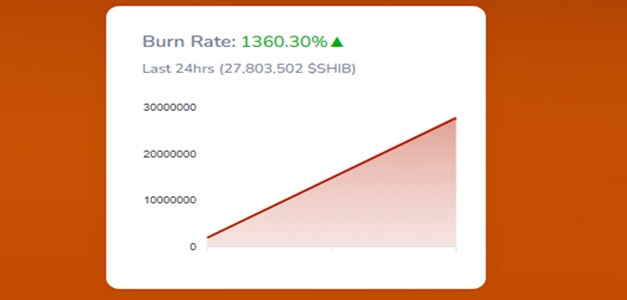
SHIB stands out in the crypto world through its viral popularity and unique burning system which increased 1360% in one day. The emergence of a new project shows promise to grow more than SHIB’s expected 500%, 1000% and 2000% gains based on AI predictions. Rexas Finance (RXS) is expected to see an incredible 22,950% increase according to market predictions. People are excited about this system because RXS transforms asset ownership methods to give everyone access to a market worth trillions of dollars.

RXS Turns Real Estate, Gold & Art into Tradable Tokens — Invest in Physical Assets Like Never Before!

Rexas Finance takes a new approach to investing in physical assets. RXS uses advanced digital token technology to turn physical assets including real estate, gold, art and intellectual property into tradable digital tokens that anyone can buy and sell worldwide. By breaking these barriers Rexas Finance helps investors without special access obtain market opportunities of significant value. The RXS token supports this ecosystem by letting users make easy transactions and transfer assets across networks while buying digitally tokenized assets. Rexas Finance converts real assets into digital tokens which creates market liquidity for investors worldwide and lets them buy and sell fractions of the assets.

Unmatched Utility: RXS at the Core of a Decentralized Economy

RXS serves as a practical token with important functions throughout Rexas Finance’s whole system. Holders can pay network transaction costs and move assets between different chains using RXS tokens to purchase asset tokens from any market. Through staking and yield farming RXS lets its users support network security and earn rewards by providing network liquidity for the community. RXS holders can make important decisions about new projects and system upgrades through their voting power while keeping the platform aligned with user requirements. RXS proves itself trustworthy by using blockchain technology to secure smart contracts that Certik audited to build investor and user trust.

RXS Presale 92% Sold — Get In at $0.20

People strongly support RXS because of its growing power. The presale enters its final stage number twelve with the token available at $0.200. The presale has achieved strong success with 92.38% completion and $48,378,909 raised out of $56,000,000 target funding along with 461,892,254 tokens sold out of 500,000,000 total available. The strong demand indicates that people believe in the platform’s business goals and practical uses. The project reaches a significant benchmark on June 19, 2025 when RXS starts trading at $0.25 while giving existing participants an opportunity to see immediate gains. The fact that RXS appears on CoinMarketCap and CoinGecko alongside its Certik audit proves its position as a reliable player in the crypto space as it develops.

RXS Set to Outpace SHIB — 22,950% Growth Forecast as Trillions in Real Assets Go Digital!

The AI-driven RXS forecast stands far beyond predicted Shiba Inu growth rates of 500%, 1000%, and 2000%. The crypto world sees RXS as an innovator that will rise by 22,950% based on its expected impact. RXS has huge potential growth because it enables trillions of dollars worth of real-world assets to become easily tradable for everyone. Investors looking to invest in tangible assets through blockchain will increase their demand for RXS tokens which will push up their value.

Conclusion

Rexas Finance stands out from other DeFi projects because its platform connects old financial systems with the decentralized future. Through its full suite of features including tokenization of RWA assets plus lending/borrowing and staking options the RXS platform gives unmatched security and practical use. The RXS project keeps growing in value as the presale runs while experts predict 22,950% future growth and expect an exchange listing soon. RXS emerges as the standout token because it has the ability to bring new asset ownership methods while creating substantial profits for investors who join early.


Website: https://rexas.com

Whitepaper: https://rexas.com/rexas-whitepaper.pdf

Twitter/X: https://x.com/rexasfinance

Telegram: https://t.me/rexasfinance

The Academic Festival Begins on June 9, 2025; Get Your Ticket Today

0

Do not miss the knowledge festival which will begin on June 9, 2025 . The knowledge of a people is the wealth of a people. Tekedia Institute is the temple for the mastery of the mechanics of entrepreneurial capitalism and business systems in Africa. Yours truly, Ndubuisi Ekekwe, will be the lead priest along with dozens of business executives from global and local companies you admire.

We have got many NEW courses developed by our world-class faculty members. Go into the future of markets with them. Be a Champion. Be an Innovator. Ascend into that New leadership position. We have got the tools to help you. But you need to come to the festival!

Come to Africa’s temple of business knowledge. REGISTER here  and get the massive discounts if you register before the early bird expires. N120,000 (or $170) for the 12-week program. Do the annual plan on the same page and get FREE one year access to blucera.com which launches on June 9 2025.

VanEck’s PurposeBuilt Fund Launching on Avalanche Blockchain Is Forward-Thinking Initiative

0

VanEck is launching the PurposeBuilt Fund in June 2025, focused on the Avalanche blockchain ecosystem. The fund aims to support projects with long-term utility in sectors like Web3 gaming, decentralized finance (DeFi), artificial intelligence (AI), and real-world asset (RWA) tokenization. It will target accredited investors and deploy capital into Avalanche-native projects, including tokenized money market funds and other on-chain financial instruments, to enhance liquidity and ecosystem growth.

Pranav Kanade, VanEck’s Portfolio Manager, emphasized Avalanche’s strong developer ecosystem as a key reason for this focus, aiming to back “real businesses” over speculative trends. The fund is managed by the same team behind VanEck’s Digital Assets Alpha Fund, which oversees over $100 million. This move is expected to boost Avalanche’s Total Value Locked (TVL) and attract institutional capital.

The launch of VanEck’s PurposeBuilt Fund focusing on the Avalanche ecosystem carries significant implications for the blockchain, its native projects, and the broader digital asset market. The fund will inject capital into Avalanche-native projects, likely increasing Total Value Locked (TVL) in its DeFi, gaming, AI, and RWA tokenization sectors. This could enhance the platform’s scalability and adoption.

VanEck’s involvement signals strong institutional confidence in Avalanche’s technology, particularly its subnet architecture and high-throughput capabilities. This could attract more institutional players, further legitimizing Avalanche as a competitor to Ethereum and other layer-1 blockchains. Early-stage Avalanche projects in DeFi, gaming, and tokenized assets will gain access to funding, potentially accelerating development and innovation. This could lead to new use cases, such as tokenized real estate or AI-driven decentralized applications.

Increased institutional interest and capital inflows could drive demand for AVAX, Avalanche’s native token, potentially increasing its price. Historical data shows that institutional fund launches often catalyze price rallies for associated tokens (e.g., Ethereum’s price surge post-ETF approvals). The fund may shift capital and attention away from other layer-1 ecosystems like Ethereum, Solana, or Binance Smart Chain, intensifying competition among blockchains for developer and investor mindshare.

The focus on Web3 gaming, DeFi, AI, and RWAs could position Avalanche as a leader in these niches, potentially drawing developers from other ecosystems. By supporting tokenized money market funds and other real-world assets, the fund could bridge traditional finance (TradFi) and DeFi, making Avalanche a hub for institutional-grade financial products. VanEck’s backing may attract more developers to build on Avalanche, leveraging its low-cost, high-speed transactions and subnet flexibility, further enriching the ecosystem.

The fund is restricted to accredited investors, creating a divide between wealthy individuals/institutions and retail investors. While accredited investors gain early access to high-potential Avalanche projects, retail investors may only benefit indirectly through AVAX price appreciation or secondary market exposure. Avalanche’s ecosystem will likely see disproportionate growth compared to other layer-1 platforms, potentially widening the gap in TVL, developer activity, and market relevance.

Smaller or less-funded chains may struggle to compete. The fund’s focus on “real businesses” may favor established Avalanche projects with proven utility, potentially sidelining smaller or experimental initiatives that lack immediate commercial appeal. Institutional funds like VanEck’s often consolidate wealth among large players, potentially exacerbating inequality in the crypto space. Retail investors may face barriers to accessing similar high-yield opportunities.

While the fund aims to support utility-driven projects, speculative hype around Avalanche could lead to volatile price swings, benefiting early investors but exposing latecomers to risks. The fund’s focus on Avalanche’s subnet architecture (scalable, application-specific blockchains) may prioritize projects leveraging subnets over those on the mainnet, creating a technological divide within the ecosystem.

Projects in gaming, DeFi, AI, and RWAs may receive more attention, potentially leaving other sectors (e.g., NFTs or social platforms) underrepresented unless they align with the fund’s priorities. The fund’s availability to accredited investors, likely based in the U.S. or other major markets, may exclude participants from regions with stricter regulations or lower wealth thresholds, reinforcing global financial disparities.

The focus on tokenized financial instruments like money market funds could attract regulatory scrutiny, especially in jurisdictions with unclear crypto regulations, potentially limiting the fund’s global impact. Avalanche could encourage VanEck to allocate some capital to smaller, innovative projects to balance growth across the ecosystem.

Secondary markets or Avalanche-based DeFi platforms could offer retail investors exposure to fund-backed projects, democratizing access. Avalanche could partner with other layer-1 platforms to share best practices, reducing the competitive divide. VanEck and Avalanche developers should engage with regulators to ensure tokenized assets comply with global standards, broadening accessibility.

VanEck’s PurposeBuilt Fund is a bullish signal for Avalanche, promising increased investment, liquidity, and institutional adoption. However, it also highlights divides between accredited and retail investors, Avalanche and competing blockchains, and established versus emerging projects. By strategically addressing these disparities, Avalanche and VanEck can maximize the fund’s impact while fostering inclusive growth in the ecosystem.