DD
MM
YYYY

PAGES

DD
MM
YYYY

spot_img

PAGES

Home Blog Page 1363

NIPOST Moves to Go Cashless by July 2025, But Nigerians Say Theft by Staff Remains the Bigger Problem

0

The Nigeria Postal Service (NIPOST) has announced it will stop accepting cash payments across all its post offices nationwide starting July 1, 2025, in a move it says is part of a sweeping modernization effort aimed at restoring trust, enhancing transparency, and aligning with global best practices.

“All post offices nationwide will cease accepting cash. Customers will transact using approved electronic payment channels,” said Postmaster-General and CEO, Tola Odeyemi, during a media briefing on Tuesday. “This move enhances security, transparency, and aligns with global best practices.”

Odeyemi described the transition as a major milestone in NIPOST’s efforts to rebuild from years of inefficiency and public distrust.

“We are not just rebranding. We are rebuilding,” she said, adding that the agency was strengthening its engagement channels to ensure Nigerians have a voice in its transformation.

She also disclosed that a new reward and recognition system is being introduced to encourage performance among staff, alongside strict disciplinary measures to deal with conduct that undermines institutional integrity.

The Other Rot: A Culture of Theft

While the cashless payment policy is being welcomed by some Nigerians as a way to curb rampant corruption and underhand dealings involving cash at post offices, many citizens say the core rot in the institution lies deeper, specifically, in the brazen theft of packages by NIPOST staff.

Across social media platforms, Nigerians have expressed doubt that removing cash alone would improve service quality at NIPOST. Numerous customers say that staff theft remains the major scourge damaging the institution’s reputation and stifling its growth.

“Received items from the states only to go to pick it up at the post-office and realize they had stolen everything in there, kept the pack inside the box and taped it back,” a user named Francis lamented on X last month.

For years, Nigerians have shared similar stories of receiving empty boxes, tampered parcels, and missing items, even when packages were tightly sealed. In most cases, victims say there is little to no accountability or redress from NIPOST.

“Hi @tola_odeyemi I want to bring to your notice the issue of theft happening under the organization you head,” a Nigerian posted last week. “My Items sent from UK to Nigeria was tampered, items stolen, left to be eaten by rodents. I don’t just understand.”

The stories have become so frequent that many Nigerians now avoid the agency altogether when sending or receiving important parcels, choosing instead to patronize private courier services despite higher charges.

The shift to cashless operations, which may help reduce petty bribery and diversion of payments, does little to address the more damaging issue of theft, critics say. While Odeyemi emphasized discipline and performance, she gave no direct assurance that the issue of stolen goods is being actively investigated or punished.

NIPOST, which operates under the Ministry of Communications, Innovation, and Digital Economy, has struggled to maintain relevance in Nigeria’s fast-growing digital and logistics space. Most of the market share in parcel delivery has been lost to nimble private courier operators, who not only deliver faster but also offer better tracking systems and security guarantees.

In 2023, Communications Minister Bosun Tijani called on Nigerians to suggest ways to reposition the agency. Some of the most popular suggestions included transforming NIPOST into a backbone infrastructure, like the Nigeria Inter-Bank Settlement System (NIBSS), for the logistics industry, supporting licensed courier companies in powering trade and e-commerce deliveries nationwide. Others suggested that NIPOST be deeply integrated with online shopping platforms to improve the delivery experience and credibility.

But these ideas, observers say, cannot materialize unless the trust deficit is addressed.

Stamp Duties Dispute Settled—for Now

Odeyemi also clarified NIPOST’s position in its long-running battle with the Federal Inland Revenue Service (FIRS) over stamp duties. She confirmed that NIPOST is not authorized to collect stamp duties, ending a legal and bureaucratic standoff that caused confusion for years.

“Our role is to provide postage stamps, the legal instruments used to authenticate documents and denote duty payment. The responsibility for collecting stamp duties lies solely with the Federal Inland Revenue Service (FIRS),” she said.

The clarification brings to a close a dispute that once saw both agencies laying claim to the same revenue stream. It had led to overlapping mandates and institutional bad blood. Though the FIRS eventually retained the role, NIPOST’s previous insistence on collecting stamp duties was seen by some as a desperate attempt to stay financially viable in the face of declining relevance.

Public Skepticism Remains High

Despite the Postmaster-General’s optimistic tone and reform promises, Nigerians remain unconvinced that the institution can regain its credibility without addressing the thefts that have become synonymous with its brand.

With less than three months to the full rollout of the cashless system, stakeholders say the agency must confront the deeper cultural and operational failings that have driven customers away if it hopes to play a meaningful role in Nigeria’s logistics and e-commerce space.
Warren Buffett Hails Tim Cook as ‘One-of-a-Kind’ Leader After Major Apple Sell-Off

0

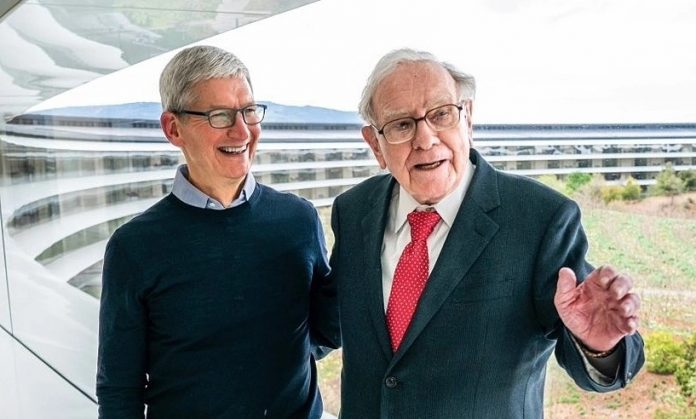
Warren Buffett, the legendary investor who built Berkshire Hathaway into a global investment powerhouse, stunned shareholders this weekend with a dual headline: a heartfelt tribute to Apple CEO Tim Cook and confirmation that he will step down from his role at the end of 2025.

Speaking at Berkshire’s annual shareholders meeting in Omaha on Saturday, Buffett lauded Cook’s leadership as unparalleled, even as he acknowledged that Berkshire has sold about two-thirds of its shares in Apple, long regarded as one of the firm’s crown jewels.

“Tim Cook has made Berkshire a lot more than I have made Berkshire,” Buffett said, drawing warm laughter from the audience. His remark underlined just how transformational Apple’s stock has been for the company. Berkshire invested around $35 billion in Apple between 2016 and 2018; by the end of 2023, the stake had ballooned to roughly $173 billion.

However, Berkshire began trimming its Apple position in early 2024 and had sold about 67% of its holdings by the end of September. By December, the conglomerate held 300 million Apple shares, valued at about $62 billion at Friday’s closing price of $205 per share.

The sell-off triggered surprise across Wall Street and raised questions about whether Buffett, known for long-term, concentrated bets, was signaling concerns about Apple’s growth trajectory or merely rebalancing Berkshire’s portfolio. He did not directly answer that question but used the opportunity to reiterate his respect for Cook, especially in the context of Apple’s evolution since the era of Steve Jobs.

“I knew Steve Jobs briefly,” Buffett said. “Nobody but Steve could have created Apple, but nobody but Tim could have developed it like it has.”

A Subtle Farewell

The compliments to Cook came in the same breath as Buffett’s own announcement: that he plans to formally step down from Berkshire Hathaway by the end of the year, closing a chapter on one of the most storied careers in financial history.

At 94, Buffett said the decision was about succession and continuity. “It’s time,” he told shareholders. “I’ve done this for nearly 60 years. The future of Berkshire is in very capable hands.”

He confirmed that Vice Chairman Greg Abel, long rumored to be his heir apparent, will take over operational control of the firm. Buffett emphasized that the company’s culture, values, and investment philosophy would remain unchanged.

The timing of the announcement, paired with the Apple divestment, suggested a broader transition underway at Berkshire. Abel has played an increasingly visible role in recent years, particularly in overseeing the company’s sprawling non-insurance businesses. Shareholders had widely expected the move, but it still marked the end of an era.

Apple’s Run Under Cook

Since assuming the CEO role in 2011, Cook has led Apple to extraordinary growth: the company’s stock has risen from under $15 (split-adjusted) to over $200, and Apple has become the first publicly traded company to reach and sustain a market capitalization of more than $3 trillion.

Cook also navigated Apple’s transition from a product-focused company to a services-and-ecosystem-driven giant. Apple’s wearables, App Store, iCloud, and Apple Pay businesses now generate tens of billions of dollars annually, helping the company offset slowing iPhone growth.

Buffett has consistently applauded Cook’s use of Apple’s enormous free cash flow, especially its aggressive share buyback program, which has made each of Berkshire’s remaining shares more valuable.

Why Sell Apple Now?

While Buffett didn’t go into specifics, analysts believe the sale of Apple shares is part of a larger strategic shift to reduce risk exposure and rebalance Berkshire’s portfolio ahead of a leadership transition. Others have speculated that Buffett may be preparing for large-scale philanthropic giving, a process that has already seen him donate billions to the Gates Foundation and other causes.

Some observers also see Apple’s move as a subtle signal about future challenges in the tech sector, including regulatory headwinds, slowing growth, or margin compression due to shifting global supply chains and AI-related competition.

However, Apple remains Berkshire’s largest publicly traded holding, and Buffett made it clear he continues to believe in the company and in Cook.

The End of an Era

Buffett’s departure caps an unparalleled career that transformed a struggling textile mill into one of the most respected investment vehicles in the world. Berkshire Hathaway today owns stakes in dozens of publicly traded companies and outright owns major businesses such as BNSF Railway, GEICO, and Dairy Queen.

Buffett’s disciplined approach, folksy wisdom, and long-term investment philosophy earned him the moniker “Oracle of Omaha.” But as he made clear on Saturday, Berkshire’s next chapter will belong to Abel and a new generation of leaders—and, in the case of Apple, to a CEO he holds in the highest esteem.

U.S. Justice Department Seeks Breakup of Google’s Ad Tech Empire in A Fresh Proposal

0

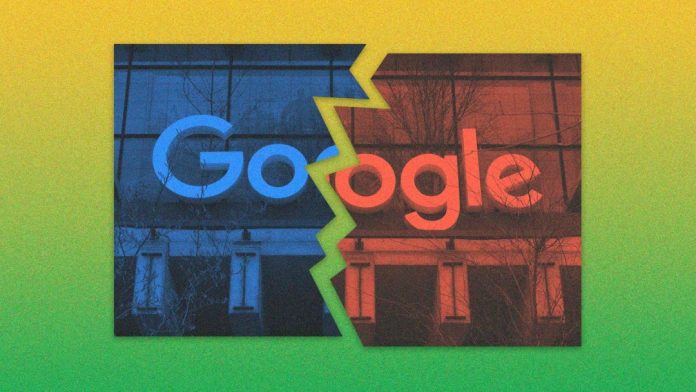
The U.S. Department of Justice (DOJ) has unveiled one of the most aggressive antitrust remedies in modern American history, proposing a full-scale breakup of Google’s digital advertising technology business.

The plan, filed in federal court on Monday, demands that the tech giant divest its cornerstone ad platforms, AdX (its advertising exchange) and DFP (DoubleClick for Publishers, now Google Ad Manager), to dismantle what the government calls a “self-reinforcing cycle of dominance.”

The move stems from an April ruling in which a federal judge concluded that Google had violated antitrust laws through a “decade-long campaign of exclusionary conduct.” At the center of that conduct was Google’s tight integration of its demand- and supply-side advertising tools, which enabled the company to operate simultaneously as broker, auctioneer, and participant in the vast online ad marketplace, giving it undue advantage and suppressing competition.

Dismantling Google’s Ad Tech Stack

Under the DOJ’s proposal, Google would be required to sell AdX and DFP to separate entities. The Justice Department argues that the company used these platforms to lock in publishers and advertisers, distort auction outcomes, and tilt the digital ad ecosystem in its favor by forcing the use of its own exchange and tools.

The DOJ outlines a three-phase plan:

  1. Open Access Integration – In the first phase, Google would be forced to open its ad management platform to competitors. This would involve creating an API to allow third-party ad exchanges to integrate with DFP and building export tools for publishers to transfer their data to rival ad servers.
  2. Auction Transparency – Google would be required to open-source the code used in its final ad auctions and be prohibited from replicating that code in its own services, including Chrome, Android, and YouTube, ensuring that the company cannot simply reintroduce the same architecture under different branding.
  3. Full Divestiture – The final step would compel Google to divest DFP to a company independent of the one that acquires AdX. The separation, the DOJ argues, is necessary to prevent continued vertical integration that gives Google outsized control over the entire ad transaction chain.

In addition, the DOJ recommends a 10-year ban on Google operating an ad exchange and strict data-use limitations that would prohibit it from leveraging user data collected through Search, Gmail, YouTube, Android, and Chrome to gain further advantages in the ad market. These mark Google’s ad tech breakup proposal as the most ambitious regulatory intervention yet in the 21st-century digital economy.

“Disruptive and Unworkable:” Google Pushes Back

Google fiercely opposes the DOJ’s proposal and has filed its own counter-remedy. The company argues that a divestiture would be disruptive not only to its business, but to the broader ecosystem of publishers and advertisers that depend on its tools. In a filing, Google maintains that it legally acquired AdX and DFP and that no evidence suggests they were obtained or operated with anticompetitive intent.

Google contends that spinning off the platforms is not a simple matter of transferring software licenses. According to the company, the source code is deeply embedded within its broader systems, meaning it would take years and considerable resources to build stand-alone versions of the platforms that could operate independently of Google’s infrastructure.

“In the meantime, this process would significantly harm the customers of AdX and DFP,” Google wrote. “During the years of rebuilding either or both of AdX and DFP, coding new versions of the tools would conscript precious resources… and leave existing clients with degraded services.”

Instead, Google has offered a narrower set of behavioral remedies. These include:

  • Allowing real-time bids from AdX to be accessible to rival ad servers.
  • Ending policies that prevent those bids from being shared with competitors.
  • Deprecating “unified pricing rules” (UPR), which the DOJ said gave Google undue leverage over pricing floors.
  • Formally discontinuing controversial auction tools like First Look and Last Look, which had allowed Google advertisers privileged early and late access to ad auctions.

The Case in Context: Big Tech and the Antitrust Reckoning

This case is only one front in the DOJ’s wider offensive against Google and Big Tech in general. The agency is concurrently pursuing a separate case targeting Google’s dominance in search, which resulted in another legal defeat for the company. In that case, the DOJ is reportedly seeking the forced sale of Google Chrome, the world’s most widely used browser.

The combined pressure threatens to fracture Google’s tightly integrated business model and potentially unravel its influence over billions of daily online interactions.

The DOJ’s offensive also dovetails with a global trend: regulators in the European Union, United Kingdom, India, and Australia have taken increasingly aggressive stances against tech monopolies, often targeting the same market structures Google relies on. Notably, EU regulators have previously levied multi-billion-euro fines on Google for antitrust violations involving search bias, Android dominance, and Google Shopping.

In 2022, the United Kingdom’s Competition and Markets Authority (CMA) launched a similar investigation into Google’s ad tech practices, examining its vertical integration and market dominance. And in France, Google was fined for self-preferencing its own advertising services at the expense of competitors. Currently, Google is facing a £5 billion ($6.6 billion) class action lawsuit in the United Kingdom, on the allegation of exploiting its “near-total dominance” in the online search market to inflate advertising prices.

If the DOJ succeeds in breaking up Google’s ad business, it will mark a turning point in global digital regulation. For years, critics have accused U.S. authorities of being too lenient, allowing corporate consolidation to hollow out competition and endanger democratic norms. Now, with bipartisan support in Congress for tech reform and mounting judicial wins, that tide appears to be turning.

But Google has made clear it intends to appeal the original antitrust ruling, and the court is not obligated to accept either party’s proposed remedy. This means a drawn-out legal battle seems inevitable. However, even the prospect of forced divestiture, or structural reform, sends a powerful message to Silicon Valley and the broader business world: the era of hands-off antitrust may be coming to an end.

Analysts believe the implications will reverberate through the entire tech ecosystem if courts uphold the DOJ’s remedy and force a Google breakup. It is also expected to embolden regulators to pursue similar action against Amazon’s logistics arm, Meta’s ad targeting system, or Apple’s App Store dominance.

Tether Could Redefine AI Accessibility and Financial Integration

0

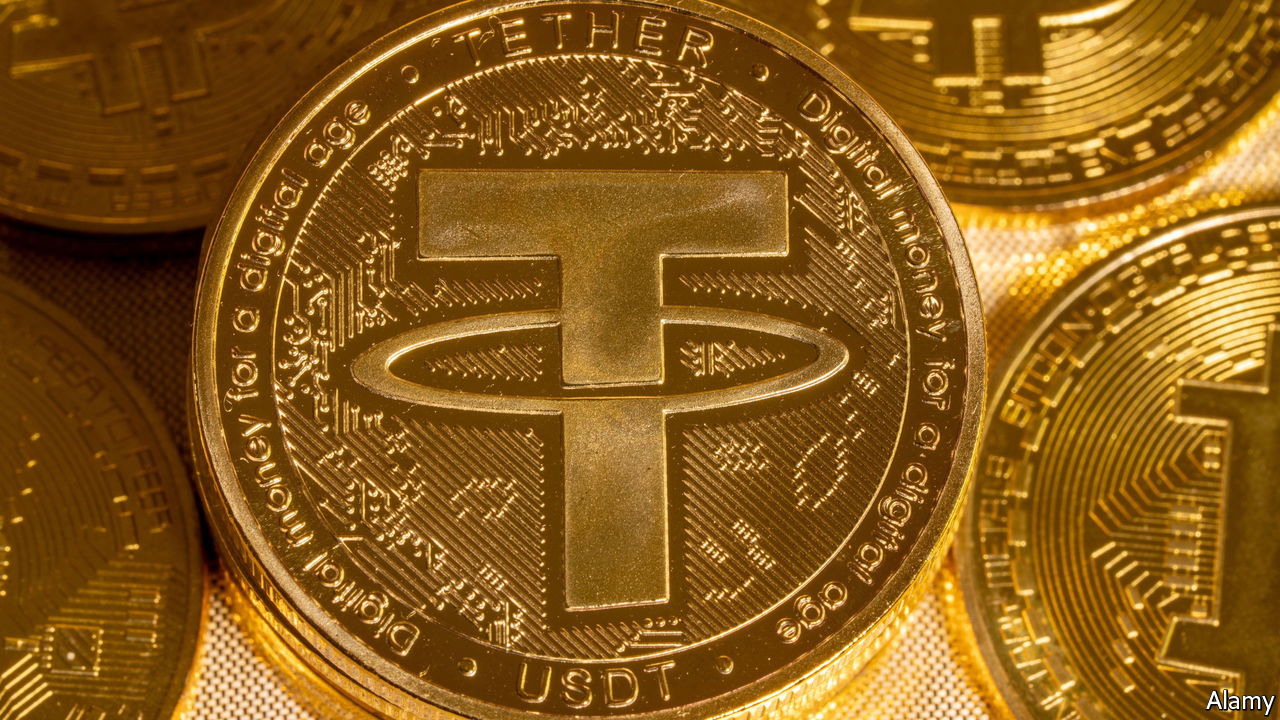
Tether, the company behind the USDT stablecoin, has announced the development of “Personal Infinite Intelligence,” an open-source AI platform designed to operate on any device without centralized control, API keys, or central failure points. The platform, part of Tether.ai, will feature a modular AI runtime and integrate USDT and Bitcoin payments via WDK, aiming to merge AI with blockchain technology. The page is tether.ai.

We envision a digital ecosystem powered by seamless, secure peer-to-peer connections without forced and unnecessary intermediaries.

Our technology empowers governments, businesses, and individuals alike, setting the foundation for a world where digital sovereignty is the norm.

CEO Paolo Ardoino highlighted its decentralized approach, emphasizing billions of AI agents in a peer-to-peer network. This move is seen as a step to enhance Tether’s dominance in the stablecoin market, which boasts a $150 billion market cap and $43 billion daily transaction volume. Tether.ai’s “Personal Infinite Intelligence” is a decentralized, open-source AI platform with key features.

Universal Hardware Compatibility: Runs on any device, from smartphones to laptops and servers, using Bare, a JavaScript runtime by Holepunch, ensuring broad accessibility.

Decentralized Architecture: Operates without centralized servers or API keys, eliminating single points of failure and enhancing resilience via a peer-to-peer (P2P) network of billions of AI agents.

Modular and Composable Design: Allows developers to customize and adapt the AI runtime by adding, removing, or modifying components, fostering flexibility for diverse applications.

Supports direct USDT and Bitcoin transactions through the Wallet Development Kit (WDK), enabling seamless in-app purchases and subscriptions without traditional payment processors. Processes data locally on users’ devices, ensuring full privacy and self-custody of both data and funds, addressing concerns about centralized data misuse.

It’s more than a P2P chat app; it’s a gateway to privacy and freedom in the digital space. Today the world is relying heavily on centralised communication systems owned by big tech corporations. Entire governments and their populations are running and trusting, with their most sacred information, a small group of centralised foreign communication infrastructures. It works until it suddenly doesn’t. Keet solves this by empowering every individual, group, organisation and country to be fully independent, truly sovereign.

AI Application Suite: Includes tools like AI Translate for contextual language translation, AI Voice Assistant for voice-based interactions, and AI Bitcoin Wallet Assistant for autonomous crypto transactions. Incorporates technologies like Keet (P2P chat) and Pear (P2P app framework), enhancing interoperability within Tether’s decentralized infrastructure. These features aim to merge AI with blockchain, offering a privacy-respecting, crypto-native platform that could transform industries like finance, healthcare, and education by enabling decentralized, intelligent applications. The development of Tether.ai’s “Personal Infinite Intelligence” carries significant implications across technology, finance, and society.

Running on any device with an open-source model lowers barriers, enabling individuals, developers, and small businesses—especially in underserved regions—to leverage AI without expensive hardware or subscriptions, fostering global innovation. Local data processing and a P2P network reduce reliance on centralized tech giants, mitigating risks of data breaches, censorship, or service outages. This aligns with growing demands for user sovereignty over data and digital assets.

Integrating USDT and Bitcoin payments via WDK creates a crypto-native AI ecosystem, potentially mainstreaming cryptocurrency for everyday transactions. This could accelerate adoption in DeFi, e-commerce, and micropayments, strengthening Tether’s $150B stablecoin dominance. Modular AI and crypto payments enable new business models, like decentralized marketplaces or autonomous AI-driven services, challenging traditional industries (e.g., finance, translation, customer support). However, it may disrupt jobs reliant on centralized platforms.

Combining AI with stablecoins could attract stricter oversight, especially given Tether’s past regulatory challenges and USDT’s systemic role in crypto markets. Governments may question privacy features or unregulated financial flows. A P2P network of billions of AI agents raises concerns about vulnerabilities, such as malicious nodes or resource constraints on low-end devices, potentially limiting reliability or adoption.

By offering a decentralized alternative to Western-dominated AI platforms, Tether.ai could appeal to regions seeking tech sovereignty, reshaping global tech dynamics but also risking tensions with major powers. Overall, Tether.ai could redefine AI accessibility and financial integration but faces hurdles in scalability, security, and regulatory compliance that will shape its real-world impact.

EU Pushes Back Against U.S. Tariff Demands, Moves to Diversify Trade as China Seeks Closer Ties

0

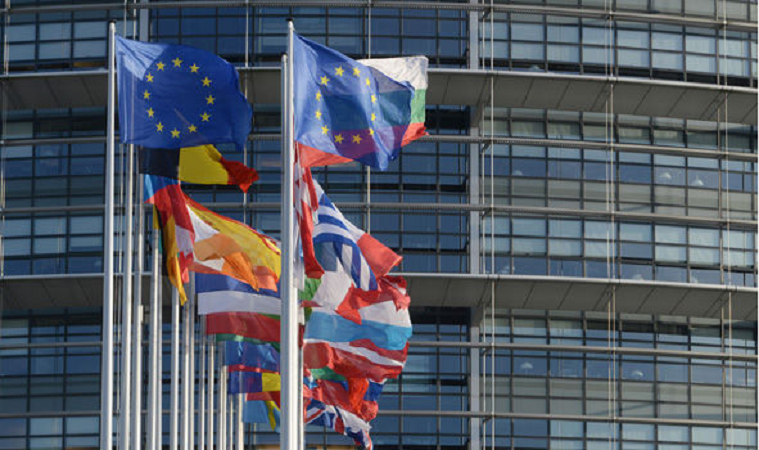
The European Union has drawn a clear line in its fraught trade negotiations with the United States, insisting it will not succumb to pressure to accept a skewed deal, even as the clock ticks down on a fragile tariff truce set to expire in early July.

European Commissioner for Trade and Economic Security, Maros Sefcovic, told lawmakers at the European Parliament on Tuesday that the EU would not agree to a trade arrangement that undermines its interests.

“We do not feel weak. We do not feel under undue pressure to accept a deal which would not be fair for us,” Sefcovic declared, making it clear that Brussels is not willing to be strong-armed into economic concessions.

The standoff comes as the EU faces persistent U.S. tariffs of 25 percent on key exports, including steel, aluminum, and cars. A 90-day pause in trade penalties, meant to give both sides time to reach a compromise, is set to expire on July 8. Without a breakthrough, tariffs could jump further, triggering retaliation from the EU and escalating an already volatile transatlantic trade relationship.

Sefcovic hinted that talks with Washington, while ongoing, have hit roadblocks despite the EU putting “tested and forward-looking” proposals on the table. “It’s not easy,” he said, acknowledging that the negotiations might ultimately collapse.

Europe Ready to Retaliate

The European Commission appears to be preparing for that scenario. Sefcovic said the bloc is “getting ready” to reintroduce rebalancing measures—retaliatory tariffs that were suspended as a goodwill gesture when talks resumed. He emphasized that such tariffs would only return if negotiations fail, but made clear that the EU would not sit idly by should the U.S. hike its levies unilaterally.

Moreover, Sefcovic signaled Brussels might revive its case against the U.S. at the World Trade Organization, calling the tariffs “simply unjust, unfair, and in total breach of international commercial law.” The EU has long criticized the U.S. approach as an act of economic aggression cloaked in the language of national security.

Looking Beyond Washington

While EU-U.S. trade tensions simmer, the bloc is actively deepening ties elsewhere, a move that could significantly alter the global trade map. Sefcovic stressed the need to tap into the “87 percent of global trade that does not involve the United States,” underscoring Europe’s drive to reduce its strategic dependency on Washington.

In recent months, the EU has sealed or advanced trade pacts with Mercosur, the UAE, and Canada—part of a broader push to diversify partnerships and de-risk its economic outlook. Trade officials say this shift is not simply about hedging against U.S. volatility, but also about building resilience amid rising protectionism and supply chain fragmentation.

China Steps In

Beijing, watching the transatlantic discord closely, has seized the moment to re-engage Europe with diplomatic overtures. On Tuesday, Chinese President Xi Jinping called for deeper EU-China cooperation, marking 50 years since diplomatic ties were established between the two powers.

Speaking through state media outlet Xinhua, Xi stressed mutual openness and dialogue as a path to “jointly safeguard fairness and justice” and oppose “unilateral bullying”—thinly veiled language aimed at Washington’s tariff-heavy trade doctrine under President Donald Trump.

Xi’s remarks omitted any direct mention of the United States, but they aligned with Beijing’s long-standing strategy to position Europe as a counterweight in global trade, particularly as China struggles to offset the impact of sweeping U.S. tariffs on its exports.

Chinese Foreign Ministry spokesperson Lin Jian confirmed that high-level dialogues between Beijing and Brussels are in the works. The agenda will span economic policy, green development, digitalization, and strategic cooperation. Beijing has also extended invitations to top EU leaders, including Council President Antonio Costa and Commission President Ursula von der Leyen, for a new round of leadership meetings.

Notably, China recently agreed to lift sanctions imposed on members of the European Parliament and its subcommittee on human rights, restrictions introduced in 2021 in retaliation for Western criticism of China’s treatment of Uyghur Muslims in Xinjiang. The move is widely interpreted as an olive branch, aimed at clearing diplomatic hurdles and restoring trade dialogue.

Lin said both sides see the renewed exchanges as “very important” under current global conditions.

“We believe this dialogue will inject new momentum into China-EU relations,” he added.

A Global Shift

The developments point to a larger realignment in global trade diplomacy. Europe, traditionally caught between the world’s two largest economies, is beginning to assert greater autonomy. That’s visible not only in its tough posture toward Washington but also in its cautious engagement with Beijing, one that seeks economic opportunity while hedging against geopolitical risks.

However, analysts warn that Europe’s balancing act remains delicate. The EU is deeply integrated with the U.S. economy and shares strategic ties through NATO and other institutions. Yet its exposure to rising tariffs and politicized trade measures is prompting a rethink of how it negotiates its global economic future.