DD
MM
YYYY

PAGES

DD
MM
YYYY

spot_img

PAGES

Home Blog Page 1367

Trump Family’s Blockchain Game Could Catalyze Mainstream Crypto Adoption

0

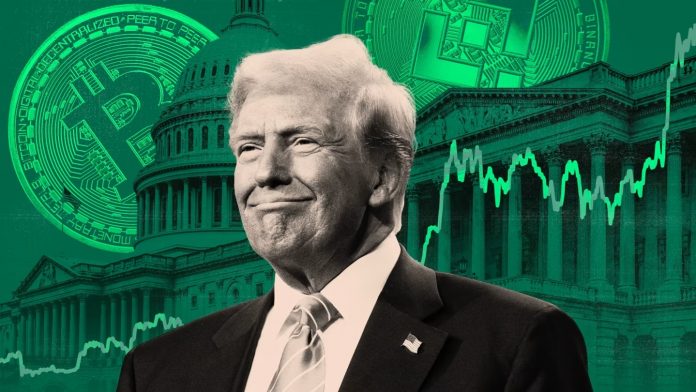
The Trump family is reportedly launching a blockchain-based real estate game inspired by Monopoly GO!, set for release in late April 2025. Led by longtime Trump associate Bill Zanker, the game features mechanics where players earn in-game currency and build digital properties on a virtual board, integrating crypto elements like NFTs and possibly meme coins. While sources compare it to Monopoly, Hasbro, the owner of the Monopoly franchise, has denied licensing its IP for this project. Zanker also attempted to reacquire rights to “Trump: The Game,” a 1989 Monopoly-style board game, but Hasbro no longer holds those rights.

This venture is part of the Trump family’s broader crypto portfolio, including NFTs, a stablecoin (USD1), decentralized finance (World Liberty Financial), and Bitcoin mining. The crypto community has expressed skepticism, citing unclear tokenomics and potential legal issues with Hasbro over gameplay similarities. The Trump family’s blockchain-based game, inspired by Monopoly GO! and incorporating NFTs and crypto elements, carries several implications across economic, legal, cultural, and political spheres.

The game could drive mainstream adoption of blockchain gaming by leveraging the Trump brand’s visibility, attracting new users to NFTs and cryptocurrencies. However, the lack of transparency around tokenomics (e.g., whether the TRUMP meme coin or other tokens will be used) raises concerns about volatility and speculative bubbles. The TRUMP token’s 89% value drop highlights risks of hype-driven investments.

The game expands the Trump family’s crypto portfolio (NFTs, stablecoin USD1, DeFi via World Liberty Financial, Bitcoin mining), potentially generating significant revenue. Financial filings indicate a Trump-linked company earns 75% of World Liberty Financial’s net revenue, suggesting a similar model could apply here. Crypto community skepticism, due to unclear details and past Trump project failures (e.g., TRUMP meme coin), may limit the game’s economic impact unless robust mechanics and transparency are delivered.

Hasbro’s denial of licensing Monopoly’s IP and Zanker’s failed attempt to reacquire “Trump: The Game” rights in 2024 suggest potential legal risks if gameplay too closely mirrors Monopoly GO!. Copyright disputes could delay or derail the launch. The integration of NFTs and crypto rewards (potentially “play-to-earn” mechanics) could attract SEC attention, especially if tokens are deemed securities. The Trump family’s crypto ventures, tied to Donald Trump’s political influence and pro-crypto policy shifts (e.g., Bitcoin Reserve executive order), raise questions about conflicts of interest. Critics argue that personal financial stakes in crypto could skew regulatory decisions, amplifying scrutiny.

The game’s high-profile branding could onboard non-crypto users via gamified mechanics, similar to Axie Infinity’s success with NFTs and crypto rewards. Media coverage explaining “what is a crypto game?” to millions could normalize blockchain concepts. The Trump brand’s polarizing nature may split reception, with supporters embracing the game as a bold innovation and critics viewing it as a “cash grab” or “rug pull.”  reflect this divide, with some predicting a “giga pump” and others an “incoming circus.”

By focusing on virtual real estate and NFTs, the game taps into growing interest in metaverse-like ecosystems, potentially shaping trends in digital ownership and virtual economies. Trump’s crypto ventures align with his administration’s pro-crypto stance, including tariff pauses benefiting global markets and crypto-friendly policies. The game could amplify his narrative as a crypto champion, influencing voter perceptions.

The timing—amid trade wars and political responsibilities—may fuel accusations of prioritizing personal ventures over governance. Eric Trump’s defense of the family’s crypto passion (“heart and soul”) aims to counter such narratives but may not quell critics. The game’s launch could reinforce Trump’s image as a disruptive innovator in digital finance, but international skepticism (e.g., from regions like China affected by U.S. tariffs) may complicate its global reception.

The game could push blockchain gaming forward by integrating NFTs for property ownership and possibly stablecoins or meme coins for transactions. However, without clear details on blockchain implementation, its technical impact remains speculative. Success hinges on delivering a seamless, engaging experience. Past Trump crypto projects (e.g., NFT collections) faced criticism for lackluster execution, so technical robustness will be critical.

OpenAI Unveils o3 and o4-mini: AI Models with Groundbreaking Image Reasoning Capabilities

0

OpenAI, the pioneering force behind ChatGPT, unveiled its latest artificial intelligence models, o3 and o4-mini, on Wednesday, introducing a transformative ability to “think with images.”

These models can analyze and discuss user-uploaded sketches, whiteboards, and diagrams, even if low quality, marking a significant advancement in AI reasoning. Building on the September 2024 debut of the o1 model, OpenAI’s latest release intensifies its lead in the generative AI race against competitors like Google, Anthropic, and xAI.

“For the first time, our reasoning models can independently use all ChatGPT tools — web browsing, Python, image understanding, and image generation,” OpenAI wrote. “This helps them solve complex, multi-step problems more effectively and take real steps toward acting independently.”

Valued at $300 billion after a March 2025 funding round, OpenAI is pushing innovation boundaries, though its safety practices have ignited controversy.

Revolutionary Features of o3 and o4-mini

The o3 and o4-mini models are OpenAI’s first to integrate visual information directly into their reasoning processes, enabling them to understand and manipulate images alongside text, code, and other data. Users can upload images, such as hand-drawn diagrams or whiteboards, and the models can interpret and discuss them, using tools like rotation, zooming, and image editing for enhanced analysis.

““Thinking with Images” has been one of our core bets in Perception since the earliest o-series launch. We quietly shipped o1 vision as a glimpse—and now o3 and o4-mini bring it to life with real polish,” Jiahui Yu, lead of the Perception Team at OpenAI, said on Wednesday.

o3 is optimized for math, coding, science, and image analysis. It achieves remarkable benchmarks, including a 96.7% score on the 2024 American Invitational Mathematics Exam (AIME) and a 71.7% accuracy on SWE-Bench Verified for coding, surpassing its predecessor o1. Its ability to reason over visual inputs makes it ideal for technical fields like engineering and data visualization.

Designed for efficiency, o4-mini offers faster performance at a lower cost, maintaining strong reasoning capabilities. It caters to applications requiring quick responses and is accessible to ChatGPT Plus, Pro, and Team subscribers, democratizing advanced AI.

These models represent a leap toward multimodal AI, expanding OpenAI’s vision of creating active agents capable of independent, human-like reasoning across diverse data types.

The launch follows OpenAI’s rapid innovation since ChatGPT’s viral debut in November 2022, which reshaped the AI industry. In March 2025, OpenAI introduced a native image-generation feature for GPT-4o, which gained widespread attention for producing Studio Ghibli-style anime images, though it sparked copyright concerns. The o3 and o4-mini models build on this, integrating image reasoning to enhance applications in education, design, and scientific research.

While OpenAI’s $300 billion valuation, secured in a $40 billion funding round led by SoftBank in March 2025, reflects its dominance in AI, the competitive landscape has been intense. Google’s Gemini 2.0, Anthropic’s Claude 3.7, and xAI’s Grok-3 pose challenges, while DeepSeek’s R1 model undercuts pricing at $0.55 per million input tokens compared to o3-mini’s $1.10. CEO Sam Altman confirmed the release on April 4, via X, noting a strategic shift to prioritize o3 and o4-mini before GPT-5, expected in summer 2025, to meet demand and refine integration.

Safety and Accountability

OpenAI claims that o3 and o4-mini underwent its “most rigorous safety program to date,” employing a “deliberative alignment” approach where models reason over safety policies before responding. However, recent changes to its Preparedness Framework have drawn scrutiny. On Tuesday, OpenAI announced it might relax safety requirements if rivals release high-risk AI, raising concerns about prioritizing speed over safety. The company’s decision to ship GPT-4.1 without a safety report and reduce testing for fine-tuned models has alarmed former employees, who filed legal briefs highlighting risks (CSO Online).

The o3-mini model, released on January 31, scored “medium risk” on model autonomy due to its advanced coding capabilities, raising concerns about potential self-improvement. Critics argue that reasoning models like o3 are harder to control, excelling at bypassing safety mechanisms, which complicates evaluations.

Unprecedented Benchmark Performance

o3 has redefined AI benchmarks, showcasing its reasoning prowess. The ARC-AGI achieved 87.5% accuracy, surpassing human performance (85%) and tripling o1’s 32%, demonstrating superior visual and abstract reasoning. In Codeforces, it scored a 2727 rating, equivalent to an International Grandmaster, ranking among the top 200 competitive coders globally. Also in Frontier Math, it solved 25.2% of problems, a 1200% improvement over prior models, highlighting its mathematical reasoning.

However, François Chollet, creator of the ARC-AGI benchmark, cautioned that o3 is not artificial general intelligence (AGI).

“There’s still a fair number of very easy ARC-AGI tasks that o3 can’t solve,” he said, noting that AGI requires consistent performance across tasks trivial for humans.

OpenAI CEO, Sam Altman hailed o3 and o4-mini, saying “they are super good at coding”, and that a new product named Codex CLI, will be released “to make them easier to use.”

“This is a coding agent that runs on your computer. It is fully open source and available today; we expect it to rapidly improve,” he said, adding, “We expect to release o3-pro to the pro tier in a few weeks.”

Trump’s Proposed 75%/50% Cuts to UN, NATO and State Department Would Reduce U.S. Global Engagement

0

President Donald Trump’s proposed cuts—75% to foreign aid, 50% to the State Department, and eliminating funding for the UN, NATO, and over 20 international organizations—would significantly reduce U.S. global engagement. Foreign aid, about $60 billion annually, would drop to $15 billion, impacting humanitarian programs and allies like Ukraine and Israel. The State Department’s budget, around $63 billion, would fall to $31.5 billion, likely affecting diplomacy and embassy operations. Defunding the UN ($3.5 billion U.S. contribution) and NATO ($1.7 billion direct funding) could weaken multilateral alliances and global security frameworks.

Critics argue this risks U.S. influence and empowers rivals like China, while supporters claim it prioritizes domestic needs and eliminates wasteful spending. Implementation would face Congressional resistance, as budgets require approval, and allies like Israel have historically been protected. Specific organizations targeted beyond UN and NATO are unclear without further details.

Trump’s proposed cuts—75% to foreign aid, 50% to the State Department, and eliminating funding for the UN, NATO, and over 20 international organizations—would have profound impacts on U.S. allies, reshaping diplomatic, economic, and security relationships. Foreign aid, currently ~$60 billion annually, would drop to ~$15 billion. This affects allies reliant on U.S. economic, military, and humanitarian support.

Ukraine: Receives ~$12 billion annually (mostly military aid). A 75% cut could reduce this to ~$3 billion, severely hampering its defense against Russia. Ukraine’s ability to sustain its military and economy would weaken, potentially emboldening Russia and destabilizing Eastern Europe. Allies like Poland and the Baltics, already wary of Russian aggression, may feel exposed.

Israel: Gets ~$3.8 billion yearly, primarily military aid. Historically, Israel’s aid is politically protected, but a blanket cut could reduce it to ~$950 million, straining its defense capabilities against Iran-backed threats. Given bipartisan U.S. support, Congress might exempt Israel, but uncertainty could erode trust. Jordan ($1.5 billion) and Egypt ($1.3 billion) rely on U.S. aid for stability and counterterrorism. Cuts to ~$375 million and ~$325 million, respectively, could weaken their governments, risking regional instability and affecting Israel’s security.

Allies like Kenya and Ethiopia receive aid for counterterrorism and development (~$1-2 billion combined). A cut to ~$250-500 million could limit their capacity to combat groups like al-Shabaab, impacting U.S. security interests and allowing China to fill the void. Countries like Taiwan ($300 million in military support) and the Philippines ($200 million) face Chinese pressure. Cuts to ~$75 million and ~$50 million could signal reduced U.S. commitment, pushing them toward China or forcing heavier defense spending.

Allies may perceive the U.S. as retreating, prompting them to seek alternative partners (e.g., China, Russia, or the EU). This could fracture trust and reduce U.S. leverage in bilateral negotiations. The State Department’s ~$63 billion budget, cut to ~$31.5 billion, funds diplomacy, embassies, and programs like USAID. This would strain relations with allies.

Reduced Diplomatic Presence: Embassy operations and staff in allied capitals (e.g., London, Tokyo, Canberra) could face closures or reduced capacity, limiting coordination on trade, security, and crises. Allies may view this as U.S. disengagement. Allies like Colombia and Indonesia benefit from USAID for development and counter-narcotics (~$500 million combined). A 50% cut could halve these, weakening governance and economic stability, potentially increasing migration or crime affecting the U.S.

Cultural and educational exchanges (e.g., Fulbright programs) with allies like Germany and South Korea foster goodwill. Budget cuts could scale these back, reducing U.S. influence and ceding ground to China’s Belt and Road Initiative. Allies may feel neglected, especially in Europe and Asia, where U.S. diplomacy counters Russian and Chinese influence. They might deepen ties with regional blocs (e.g., EU, ASEAN) to compensate.

NATO’s direct U.S. funding (~$1.7 billion) covers joint operations and infrastructure. Trump’s proposal to eliminate this, combined with his past skepticism of NATO, could destabilize the alliance. European Allies (e.g., Germany, France, UK): The U.S. provides ~22% of NATO’s budget and leads militarily. Defunding could disrupt joint exercises, intelligence sharing, and deterrence against Russia. Eastern allies like Poland and the Baltics, heavily reliant on NATO’s presence, would feel vulnerable, potentially seeking bilateral deals with the U.S. or others.

As a NATO member, Canada benefits from U.S.-led security. A U.S. withdrawal could force Canada to increase defense spending or align closer with the EU, straining U.S.-Canada ties. NATO’s ability to coordinate in crises (e.g., Ukraine, Middle East) would weaken without U.S. funds, pushing allies to fund more themselves or scale back commitments. European allies may accelerate efforts toward EU defense autonomy, reducing reliance on the U.S. Some, like Turkey, might pivot toward Russia or China, complicating NATO cohesion.

The U.S. contributes ~$3.5 billion to the UN (22-25% of its budget), funding peacekeeping, humanitarian aid, and programs allies value. Japan and South Korea support UN peacekeeping in Africa and the Middle East, which stabilizes regions affecting their trade routes. A U.S. exit could force them to fund more or accept reduced UN operations, straining their budgets. Allies like the UK and Germany co-fund UN refugee and food programs (e.g., UNHCR, WFP). U.S. cuts would shift burdens onto them, risking underfunded crises that destabilize regions (e.g., Syria, Yemen), increasing migration to Europe.

Allies relying on UN frameworks for climate or trade agreements (e.g., France, Australia) may see the U.S. as abandoning multilateralism, weakening joint efforts on global issues. Allies may deepen ties with China, which has increased UN influence, or fund the UN independently, reducing U.S. sway in global governance. Without specifics, likely targets include organizations like the WHO, IMF, or World Bank, where the U.S. plays a leading role.

The IMF and World Bank support global financial stability, benefiting allies’ economies. U.S. withdrawal could weaken these institutions, forcing allies to contribute more or face economic volatility. Australia and Canada collaborate with the WHO on pandemics. U.S. defunding could impair global health responses, leaving allies to fill gaps or face unchecked disease spread. Organizations like the IAEA, which monitors Iran’s nuclear program, rely on U.S. funds. Cuts could weaken oversight, alarming allies like Israel and Saudi Arabia.

Allies may view the U.S. as unreliable, seeking alternative frameworks or accepting reduced global cooperation, which could benefit adversaries. Reduced U.S. aid and NATO/UN involvement could embolden adversaries like Russia, China, and Iran, forcing allies to rearm or realign. For example, Japan and South Korea might accelerate military buildup or explore détente with China. Allies would face higher costs to replace U.S. aid, diplomacy, or institutional funding, diverting resources from domestic priorities and potentially causing political backlash.

The perception of U.S. withdrawal could fracture alliances, pushing allies toward regional powers or self-reliance. This risks long-term U.S. isolation. Many allies (e.g., Israel, Ukraine) have strong U.S. domestic lobbies. Congress may block or modify cuts, but uncertainty could still strain relations. Trump’s proposed cuts would force allies to adapt to a less engaged U.S., potentially weakening their security, economies, and global influence.

Europe would face heightened Russian threats, the Middle East could see instability, and Indo-Pacific allies might drift toward China. While some allies might gain autonomy, most would struggle to fill the U.S. void, risking global instability. Congressional approval is a hurdle, and exemptions for key allies like Israel are likely, but the proposal alone could chill alliances.

Why SpacePay’s Presale is the Talk of the Crypto Community in 2025

0

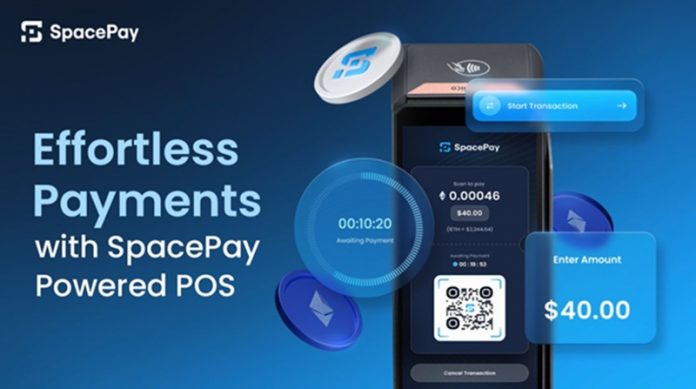
You might have heard people talking about SpacePay on X lately if you follow crypto conversations. This London-based fintech startup stands out with its practical approach to cryptocurrency payments, which simplifies crypto transactions to be as easy as tapping your debit card.

With their presale already raising over $1M and $SPY tokens currently priced at $0.003181, crypto investors are taking notice of this payment innovation.

Compatibility with Existing POS Systems

New tech usually means new hardware, new training, and new issues for business owners. SpacePay completely changes this traditional approach.

Instead of forcing merchants to buy fancy new equipment, SpacePay works with the Android-based card machines they already have. A simple software update is all it takes. The corner café, local boutiques, or even food trucks at the fair can start accepting crypto without skipping a beat.

And it’s not just limited to Bitcoin users. SpacePay plays nicely with over 325 different cryptocurrency wallets. Whether your customers are Ethereum enthusiasts or Solana supporters, they can pay with what they prefer.

Low Transaction Fees

Anyone who’s run a business knows the pain of payment processing fees. They’re like a small but persistent leak in your revenue bucket.

Traditional payment processors often charge anywhere from 2-3% per transaction. SpacePay, meanwhile, keeps it simple with a flat 0.5% fee. Think about your local restaurant. If they’re doing $5,000 in sales daily, they might be handing over $150 to payment processors every single day. With SpacePay, that drops to just $25.

What’s refreshing is that SpacePay hasn’t cut corners to offer these rates. The platform still prioritizes security and smooth transactions, just without the markup we’ve all become accustomed to.

Instant Settlement and Volatility Protection

Many merchants worry, ‘What if I accept crypto and the price crashes right after?'” This concern has kept countless merchants from embracing digital currencies.

SpacePay tackles this head-on with instant settlement to fiat currency. When a customer pays in crypto, the merchant gets dollars, euros, or pounds in their account immediately. The price of Bitcoin could plummet minutes later, and it wouldn’t affect the business one bit.

This happens seamlessly in the background – no waiting, no manual conversion, no stress. For shop owners, this means they can tap into the growing crypto market without becoming crypto traders themselves. They don’t need to watch price charts or worry about optimal times to convert.

Throughout the entire process, SpacePay employs bank-grade encryption and continuously monitors transactions in real-time. In a space often plagued by security concerns, this attention to safety builds credibility for the entire system.

Visit SpacePay Presale

$SPY Token and Community

At SpacePay’s core is the $SPY token – but unlike so many crypto projects, it’s not just another speculative asset. It’s the key to a community that’s actively shaping the future of payments.

Holding $SPY tokens gives you a voice in how the platform improves. Token holders can vote on platform decisions, which creates a genuinely democratic approach to development. The revenue-sharing model stands out as particularly innovative. Token holders receive a slice of SpacePay’s revenue, which creates an ecosystem where everyone’s incentives are aligned.

The community perks don’t stop there. Active users receive monthly loyalty airdrops, and holders get first dibs on new features before they roll out to everyone else. With quarterly webinars where the team shares updates and plans, SpacePay maintains transparency in an industry often criticized for lacking it.

With a total supply capped at 34 billion tokens, SpacePay has structured its distribution thoughtfully: 20% for the public presale, 17% for rewards and loyalty programs, and the rest divided between development, partnerships, marketing, and reserves.

How to Join

The team just pushed their Token Generation Event back to Q2 2025 – they’re not rushing things and want to make sure the market’s in good shape before they launch.

The SpacePay presale has already generated serious momentum, raking in over $1M. Join it by connecting a crypto wallet such as MetaMask or WalletConnect.

You can buy SPY tokens in presale using ETH, BNB, MATIC, AVAX, BASE, USDT, USDC, or even directly with your bank card if you’re new to crypto.

At the time of writing, tokens are priced at $0.003181 each, though this will likely increase as the presale progresses. After your purchase, follow SpacePay on social media to stay updated about development progress and token claiming information.

SpacePay definitely seems like one to watch if you care about where digital payments are headed. By solving real problems for both merchants and customers, they’re building something with staying power in an industry often dominated by hype cycles.


JOIN THE SPACEPAY ($SPY) PRESALE NOW 

Website    |    (X) Twitter    |  Telegram

The Product Banks and Fintechs Have Refused to Build in Africa

0

I wrote this in 2017: “In this videocast, I discuss the need to build a truly pan-African digital remittance/transfer banking product which is agnostic of location or currency in Africa. None of the products we have today meets that standard. Largely, I envisage a situation where all you need to buy and sell across Africa is one bank account in just one African Union country.

“With that, you do not have to even think about the specific currency of that account as technology will seamlessly make it possible to access other African markets for payments, transfer, etc. The banks or fintech companies must still comply with all regulations related to international transfers, forex, etc. The only difference is that customers will not see them as they will be hidden with technology.” The video is here 

Today, I ask: are we there yet?