DD
MM
YYYY

PAGES

DD
MM
YYYY

spot_img

PAGES

Home Blog Page 137

Wallets Connected to FTX/Alameda Research Unstake $25M in Solana

0

Wallets associated with the bankrupt FTX exchange and its trading arm, Alameda Research, unstaked 194,861 SOL tokens from a staking account, unlocking approximately $25.5 million worth of Solana at prevailing prices around $131 per SOL.

This transaction, tracked by on-chain analytics firms like Lookonchain and Arkham Intelligence, follows a predictable monthly pattern of unlocks that began in late 2023 as part of the estate’s asset liquidation process to fund creditor repayments.

The unstaked SOL was transferred to a new address controlled by the estate, increasing available liquidity for potential sales. However, the same staking address still holds about 4.048 million SOL, valued at roughly $620 million, indicating this is just one installment in a larger unwind.

Since November 2023, FTX and Alameda have unstaked over 8 million SOL—worth nearly $1 billion at various points—often depositing portions to exchanges like Coinbase and Binance for controlled sales approved by U.S. Bankruptcy Court.

Market impact appears muted so far: SOL’s price dipped 5.4% in the prior 24 hours amid broader crypto weakness, but community sentiment views these events as routine liquidity injections rather than protocol threats.

No immediate dumps have occurred, thanks to court limits on weekly sales capped at $200 million. This aligns with prior unlocks, like March 2025’s $431 million batch, which caused short-term volatility but didn’t derail Solana’s ecosystem growth in DeFi and NFTs.

BlackRock’s IBIT Bitcoin ETF Records $192M Inflows

BlackRock’s iShares Bitcoin Trust (IBIT) saw $192 million in net inflows on February 27, 2025, leading a rebound in spot Bitcoin ETF activity amid a volatile market.

This marked a strong single-day performance for the fund, which has dominated institutional demand since its January 2024 launch, amassing over $52 billion in year-to-date inflows by late 2025 and becoming BlackRock’s top revenue generator with estimated $245 million in annual fees.

The inflows contributed to a broader $290 million net positive day for U.S. spot Bitcoin ETFs, offsetting Grayscale’s GBTC outflows of $599 million. Fidelity’s FBTC added $66 million, while ARK/21Shares’ ARKB brought in $24 million.

This surge helped Bitcoin rebound 4% to around $68,000 that week, signaling renewed institutional confidence after earlier outflows tied to year-end rebalancing and macro uncertainty. By mid-2025, IBIT had grown to $70+ billion in assets under management, holding over 700,000 BTC— 3.3% of total supply and outpacing rivals like Fidelity’s FBTC.

Despite a recent six-week outflow streak totaling $2.7 billion through November 2025—reflecting Bitcoin’s 27% pullback from October highs—the fund’s annualized return exceeded 40% from debut to November, underscoring its role as a key proxy for U.S. crypto adoption.

While the immediate market reaction was a 5.4% SOL price dip amid broader crypto weakness, the implications ripple across short-term volatility, long-term ecosystem health, and regulatory oversight. The unlocked 194,861 SOL increases circulating supply, potentially flooding exchanges if sold off.

Historical data shows similar events—like the March 2025 $431M batch—triggered 13-15% drops due to heightened sell-side liquidity. Court caps limit weekly sales to $200M, mitigating instant dumps, but thin holiday volumes could amplify downside if buyers hesitate.

Analysts note SOL’s resilience, often rebounding within days as DeFi activity absorbs the supply. This move advances FTX’s court-mandated asset unwind, with ~$620M in remaining staked SOL signaling more unlocks ahead.

It underscores the bankruptcy’s maturity—total unstaked SOL now nears 9M tokens worth $1.2B—potentially accelerating payouts to defrauded users by mid-2026. Positive for justice, but it highlights lingering risks from concentrated holdings tied to one failed entity.

Solana’s network fundamentals remain strong, with institutional inflows and tools like Grayscale’s GSOL ETF providing hedges. However, repeated events erode retail confidence, as seen in declining social metrics and 22% trading volume drops post-similar unlocks.

Long-term, it could deter new projects if perceived as a “FTX overhang,” though Solana’s low fees and speed continue driving DeFi/NFT growth. Analysts see these inflows as a bullish counter to retail selling, with potential for more if Bitcoin stabilizes above $100,000 into 2026.

Binance API Hints at Tokenized Stock Offerings As Fogo Announces $1B FDV ICO Raise

0

Recent developments suggest Binance is expanding tokenized real-world asset (RWA) access via its ecosystem, with indirect “hints” through wallet integrations and API-adjacent announcements—though no explicit API updates for tokenized stocks were found in official docs.

In late November 2025, Ondo Finance integrated its Ondo Global Markets platform with Binance Wallet, enabling over 280 million users to access 100+ tokenized U.S. stocks and ETFs like Apple, Microsoft, MicroStrategy directly on BNB Chain with 0% trading fees.

USERS CAN BROWSE AND TRADE THESE IN THE WALLET’S “MARKETS > STOCKS” TAB, REPRESENTING FRACTIONAL ON-CHAIN OWNERSHIP OF TRADITIONAL SECURITIES.

This builds on Binance’s prior tokenized stock experiments like Tesla, Coinbase tokens in 2021, which faced regulatory scrutiny and were discontinued on Binance.com in 2022 to focus on other products—migrating EEA/Swiss users to CM-Equity AG’s portal.

THE ONDO INTEGRATION REVIVES THE CONCEPT WITHOUT DIRECT EXCHANGE LISTING, LEVERAGING BLOCKCHAIN FOR 24/7 LIQUIDITY AND COMPOSABILITY. BINANCE’S SPOT API DOCS— V3 ENDPOINTS FOR MARKET DATA, KLINES, ETC. REMAIN UNCHANGED AND DO NOT REFERENCE TOKENIZED STOCKS, BUT THE WALLET EXPANSION COULD IMPLY FUTURE API EXTENSIONS FOR RWA TRADING PAIRS OR DATA FEEDS.

Analysts view this as Binance’s “move fast and break things” push into RWAs amid global tokenization growth, potentially challenging platforms like Backed or Franklin Templeton.  No direct API “hints” were confirmed.

Fogo ICO Announcement

Fogo, a high-performance Solana Virtual Machine (SVM)-compatible Layer 1 blockchain leveraging the Firedancer validator client for ultra-low latency under 40ms block times and high throughput over 54,000 TPS, has officially detailed its public token sale.

The ICO is set to raise $20 million by selling 2% of the total 10 billion $FOGO token supply at a price of $0.10 per token, implying a fully diluted valuation (FDV) of $1 billion.

This follows earlier funding rounds totaling $13.5 million: a $5.5 million seed round in December 2024 led by Distributed Global with CMS Holdings participation at a $100 million FDV, and an $8 million community raise via Cobie’s Echo platform in January 2025, also at $100 million FDV, which sold out in under two hours and brought over 3,000 angel investors on board.

TGE and mainnet is slated January 13, 2026 100% unlocked at token generation event, with 2% of team supply burned. Real-time on-chain experiences for DeFi, gaming, and physics simulations, with multi-local consensus for regional low-latency validation. Devnet is live, Testnet launches Q1 2026, Mainnet Q2 2026.

Community sentiment on X is mixed: excitement around the tech and rapid prior raises contrasts with skepticism over the aggressive $1B FDV in a bearish market, with pre-market perps on Hyperliquid pricing it at ~$1.3B FDV and Polymarket odds favoring a lower launch valuation around $300M.

As a pure Firedancer chain with multi-local consensus co-located validators for regional low-latency and a curated validator set, Fogo accelerates Solana’s tech evolution. It retains full SVM compatibility, enabling seamless dApp migration which could fragment but ultimately strengthen the ecosystem by stress-testing Firedancer findings for Solana’s upgrades.

This “accretive” approach—forking open-source code—irks some Solana devs but fosters cross-pollination, potentially drawing 84M+ Solana users to experiment with real-time apps like high-frequency trading or physics-based gaming.

Fogo targets “institutional-grade on-chain finance,” bridging TradFi speed (NASDAQ-like) with decentralization for DeFi, RWAs, and derivatives. Integrations like Wormhole, Pyth, and Ambient Finance could unlock $16T in tokenized assets by 2033, especially for low-latency needs like options or prediction markets.

Early “Flames” points and potential airdrops reward 3,000+ angels from prior $13.5M raises, fostering community but risking centralization critiques. Fogo’s “Flames” points program rewards early community engagement, potentially tying into future airdrops.

This positions Fogo as a “pure Firedancer” chain aiming to outpace Solana in performance while maintaining decentralization, though some Solana devs have critiqued the reuse of open-source code.

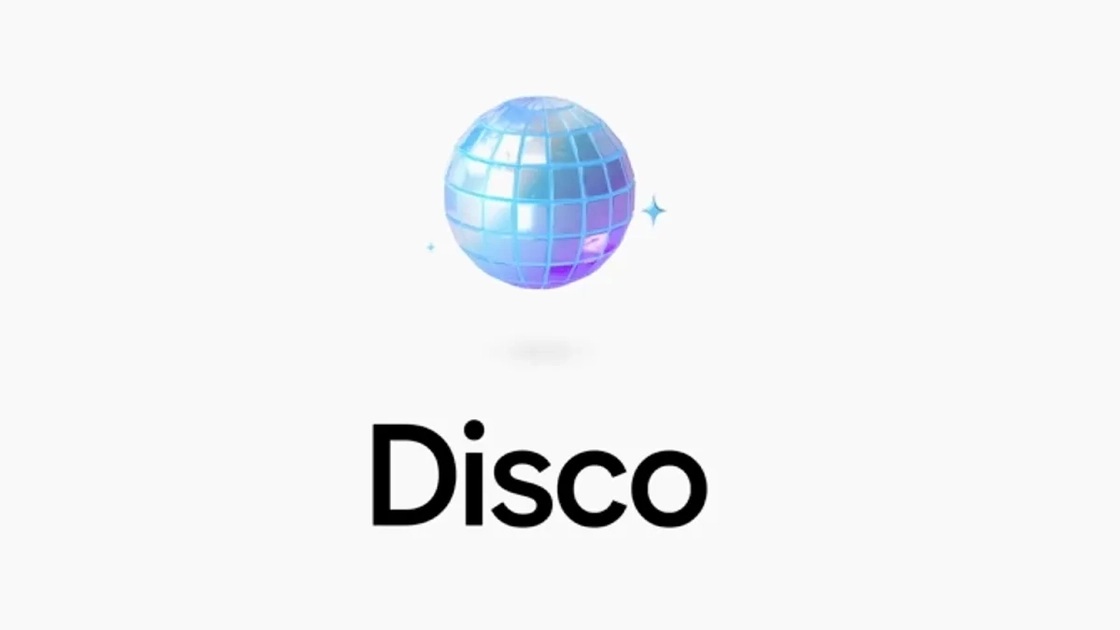
Google Deepens Its Browser-AI Strategy With “Disco,” a Gemini Tool That Turns Open Tabs Into Custom Web Apps

0

Google on Thursday introduced Disco, a new Gemini-powered AI experiment that pushes the boundaries of how a browser can reshape information on the fly.

The tool’s core feature, GenTabs, analyzes the pages a user has open and can instantly turn them into custom, interactive applications built around the user’s ongoing tasks. The system also incorporates past context from a user’s Gemini chat history, giving it a broader understanding of what the person is working toward.

Google positions Disco as an experiment meant to blend browsing, workflow management, and app creation into a single layer inside Chrome. Instead of asking an AI chatbot for help in a separate window, Disco rewires the browsing session itself. GenTabs can propose building a web app the moment it detects patterns in a user’s tabs — whether that means studying a topic, researching a purchase, planning a trip, or gathering information from several sources. Once an app is generated, users can continue refining it through natural language, making changes in real time.

The company emphasizes that the generative elements link back to the original sources, maintaining transparency on where the information came from. Disco uses Gemini 3 to assemble these on-the-fly experiences, making it effectively a web-based AI development engine that shapes itself around a user’s intent.

Google’s move reflects a broader trend in the tech industry as companies race to weave AI directly into core computing environments. Instead of launching a separate AI browser like Perplexity’s Comet or OpenAI’s Atlas, Google is taking the route of enhancing Chrome, which already dominates the global browser market share. Embedding AI at this level allows Google to leverage the familiar workflow of tabs, bookmarks, and browsing sessions while layering in intelligence that reacts to users’ habits.

Google has already taken early steps in this direction by allowing Gemini to answer questions about any webpage inside Chrome. Disco pushes that idea further by analyzing multiple tabs at once and treating the browser window as a canvas for task-specific applications. It marks one of the clearest signals yet that Google sees the browser as a future operating environment for AI — a place where apps are not downloaded but generated dynamically based on what users are doing.

The company says Disco will first roll out to a small group of testers through Google Labs. As with other Labs experiments, the goal is to gather detailed feedback on usability, performance, and the kinds of custom apps people build.

Google notes that successful ideas developed through Disco may eventually appear in larger services or consumer-facing products. The firm also makes it clear that GenTabs is the first in what is expected to be a series of experimental features under the Disco project, suggesting a longer-term vision for AI-driven browsing.

Disco will initially be available via a waitlist, starting with macOS users who will need to download a dedicated app. Google has not given a timeline for broader availability.

The introduction of Disco underscores Google’s evolving strategy in the AI era: rather than treating AI as a separate destination, the company is steadily infusing it into the most fundamental layers of digital life. If the experiment succeeds, the browser could shift from being a passive window into the web to an active workspace where AI shapes information into tools the moment they are needed.

Ultimate Tattoo Removal Guide For First Time Clients

0

Are you considering tattoo removal but feeling a bit overwhelmed? Don’t worry, you’re not alone. Many people have questions and concerns when it comes to removing their ink. In this ultimate guide, we’ll walk you through everything you need to know as a first-time client, so you can feel confident and prepared for your tattoo removal journey.

Understanding the Tattoo Removal Process

Tattoo removal works by using laser technology to break down the ink particles in your skin. The laser emits short pulses of high-intensity light that penetrate the skin and target the tattoo pigment. Over a series of treatments, the ink particles are gradually broken down and absorbed by your body’s immune system.

Choosing the Right Tattoo Removal Clinic

When it comes to tattoo removal, not all clinics are created equal. It’s essential to do your research and choose a reputable provider with experienced technicians and state-of-the-art equipment. Look for clinics with positive reviews and before-and-after photos to get a sense of their results. If you’re in the area, consider checking out Kitchener’s top tattoo removal experts for a safe and effective experience.

Preparing for Your First Appointment

Before your first tattoo removal appointment, there are a few things you can do to prepare. Make sure to shave the area around your tattoo and avoid sun exposure for at least two weeks prior to your treatment. You’ll also want to avoid taking any blood-thinning medications, such as aspirin or ibuprofen, as they can increase your risk of bleeding and bruising.

What to Expect During Your Treatment

During your tattoo removal treatment, you’ll wear protective eye shields and your technician will apply a cooling gel to your skin. The laser will be passed over your tattoo, emitting short pulses of light. Most people describe the sensation as similar to a rubber band snapping against their skin. The length of your treatment will depend on the size and complexity of your tattoo.

Aftercare and Recovery

After your tattoo removal treatment, it’s important to take good care of your skin to promote healing and prevent infection. Your technician will provide you with detailed aftercare instructions, but in general, you’ll want to keep the treated area clean and dry, avoid sun exposure, and apply any prescribed ointments or creams. You may experience some redness, swelling, or blistering, but these side effects should subside within a few days.

Realistic Expectations and Results

It’s important to have realistic expectations when it comes to tattoo removal. Most tattoos require multiple treatments spaced several weeks apart to achieve optimal results. The number of treatments you’ll need will depend on factors such as the size, location, and color of your tattoo, as well as your skin type and overall health. Be patient and trust the process – with each treatment, you’ll see your tattoo gradually fade away.

Moving Forward with Confidence

Tattoo removal can be a big decision, but with the right information and preparation, you can move forward with confidence. By understanding the process, choosing a reputable clinic, and taking good care of your skin, you’ll be well on your way to saying goodbye to your unwanted ink. Remember, every journey starts with a single step – so take a deep breath, schedule your consultation, and get ready to embrace your fresh start.

Rivian Lays Out Autonomous Driving Strategy With New Custom Chip, AI Stack, and Subscription Service

0

Rivian Automotive laid out an ambitious roadmap on Thursday at its first “Autonomy and AI Day,” revealing custom AI models, a proprietary car computer, and a new in-house chip that the company says will enable fully autonomous driving in its forthcoming vehicles.

The announcements mark a significant step in Rivian’s efforts to differentiate itself in the crowded electric vehicle (EV) market and signal the company’s strategic push toward a potential robotaxi business.

The presentation comes amid challenging market conditions for EV makers in the United States. Rivian shares were down roughly 3% during the hour-long event and fell further after OpenAI unveiled its own GPT-5.2 model on the same day, reflecting investor attention shifts toward the broader AI sector. Rivian’s stock dropped as much as 9% in afternoon trading, underscoring the pressure the company faces to demonstrate long-term growth potential.

Central to Rivian’s autonomy strategy is the Autonomy+ subscription, launching in early 2026 for second-generation vehicles. The package, priced at $2,500 upfront or $49.99 per month, will deliver continuously expanding autonomous capabilities, powered by Rivian’s new processors and autonomy computers. By comparison, Tesla’s premium Full Self-Driving (FSD) package costs $8,000 upfront or $99 per month, highlighting Rivian’s more accessible pricing approach.

RJ Scaringe, Rivian’s founder and CEO, emphasized that AI is accelerating technology development at an unprecedented pace.

“AI is enabling us to create technology and customer experiences at a rate that is completely different from what we’ve seen in the past,” he said.

The company also plans a near-term software update introducing a “Universal Hands-Free” feature, allowing hands-free driving across more than 3.5 million miles of marked roads in North America, with continuous improvement through reinforced learning as vehicles accrue mileage.

Rivian’s approach differs significantly from Tesla’s primarily camera-based system. Its R2 vehicles will employ a combination of lidar, radar, and camera sensors to support level 4 autonomous driving under SAE standards, meaning vehicles can operate without human intervention in typical traffic and weather conditions. Passengers could sleep or engage in other activities while the car navigates. Alphabet’s Waymo also classifies its robotaxi fleet at level 4, offering a clear precedent for Rivian’s ambitions.

The company indicated that the rollout of level 4 autonomous vehicles opens the door to a robotaxi strategy. Scaringe said, “While our initial focus will be on personally owned vehicles, which today represent the vast majority of miles in the United States, this also enables us to pursue opportunities in the rideshare space.”

Analysts suggest that if Rivian can successfully launch autonomous robotaxis, it could unlock a high-margin, recurring revenue stream and expand its addressable market far beyond personal EV sales.

Competition in autonomous EVs is intensifying. Tesla and General Motors continue developing proprietary systems, while Honda, Lucid, and Nissan have partnered with startups such as Helm.AI, Nuro, and Wayve. These players vary in technical approach, with Rivian emphasizing a combination of sensor fusion and AI learning through real-world driving, while others rely on cameras, mapping, or cloud-assisted decision-making.

The hardware underpinning Rivian’s AI ambitions is a new custom chip, expected in 2026, designed with multi-chip module packaging and high memory bandwidth of 205 gigabytes per second. Vidya Rajagopalan, vice president of electrical hardware, said this architecture is crucial for supporting the intensive AI workloads required for real-time decision-making in autonomous driving. Chief Software Officer Wassym Bensaid framed the strategy as a move beyond software-defined vehicles, calling Rivian’s platform an “AI-defined vehicle” capable of integrating perception, planning, and user interaction seamlessly.

Rivian also introduced the Rivian Assistant, a next-generation AI-powered voice interface to launch in early 2026 across first- and second-generation vehicles, enabling natural-language interaction for navigation, in-car functions, and information requests.

The company faces a challenging backdrop. EV sales in the U.S. have slowed after the early termination of the $7,500 federal tax credit, and Chinese EV makers are intensifying global competition. Rivian shares are up roughly 25% this year but remain over 80% below the company’s 2021 IPO price, reflecting internal production challenges, market volatility, and investor skepticism.

If Rivian can execute on its vision for level 4 autonomy and the Autonomy+ subscription, the implications will be significant. Fully autonomous vehicles operating as robotaxis could dramatically expand Rivian’s total addressable market, provide high-margin, recurring revenue, and position the company as a key player in mobility-as-a-service, not just EV manufacturing.

Unlike traditional car sales, robotaxis offer continuous revenue generation and higher asset utilization, creating the potential for Rivian to capture market share in both personal and commercial transport sectors.

By combining proprietary AI hardware, a robust software stack, and a subscription-driven model, Rivian aims to move beyond the limitations of conventional EV adoption and stake a claim in the emerging autonomous vehicle ecosystem. The company’s progress over the next two years will be critical to demonstrating whether its ambitious strategy can reshape its financial trajectory and establish it as a leader in both autonomous mobility and electric vehicle innovation.