DD
MM
YYYY

PAGES

DD
MM
YYYY

spot_img

PAGES

Home Blog Page 1370

The Product Banks and Fintechs Have Refused to Build in Africa

0

I wrote this in 2017: “In this videocast, I discuss the need to build a truly pan-African digital remittance/transfer banking product which is agnostic of location or currency in Africa. None of the products we have today meets that standard. Largely, I envisage a situation where all you need to buy and sell across Africa is one bank account in just one African Union country.

“With that, you do not have to even think about the specific currency of that account as technology will seamlessly make it possible to access other African markets for payments, transfer, etc. The banks or fintech companies must still comply with all regulations related to international transfers, forex, etc. The only difference is that customers will not see them as they will be hidden with technology.” The video is here 

Today, I ask: are we there yet?

Timing Your Startup Success in Nigeria

0

As you develop your playbook, look for critical enablers and optimize “Timing”. As a product goes to market, the function in your limit equation must be set that critical enablers are ready. Go back to  L’Hospital’s rule and evaluate limits of indeterminate forms. The differentiation of the numerator and denominator must deliver a limit which can be directly evaluated if you expect customers to pay attention. Hope you have not lost your Further Mathematics notebook!

Yes, never ignore the impact of timing on any business. Timing is an important factor for the success of any startup, anchored around critical enablers.

Take an example: Kalahari, Mocality, Efritin, and Old Konga collapsed or struggled because of timing, not because of execution or the quality of the idea. B2C ecommerce has a promise for Africa but the time is not ripe yet until someone fixes logistics at scale.

You get the idea: great market winners are those who introduce amazing products at the “perfect” time. And becoming a legend is gaming that timing.

I am still timing when Nigeria will provide 24/7 electricity for something that is at the deep of my heart: a microelectronic production line. As the founder of First Atlantic Semiconductors & Microelectronics, Africa’s only Intel programmable microprocessor knowledge partner (here ), we can do a lot of things in the nation. But how do you set up production lines with generators?

China Signals Willingness on Trade Talks with U.S. Bordering on Mutual Respect

0

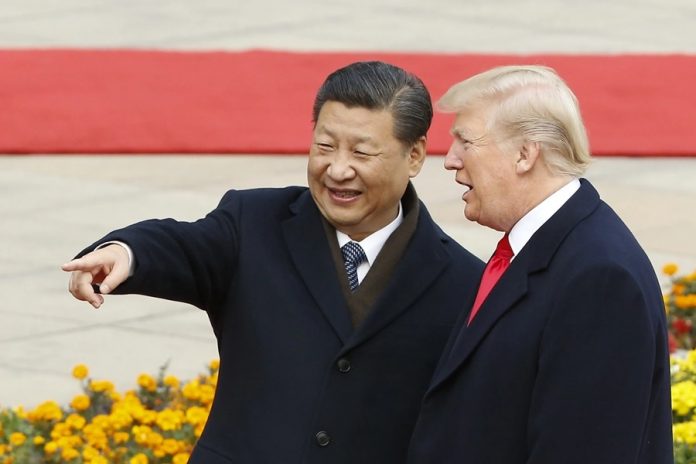
China has expressed willingness to engage in trade talks with the United States regarding tariffs, but only if the Trump administration demonstrates “mutual respect” and adopts a consistent diplomatic approach. Beijing has emphasized that dialogue must be based on equality and has called for the U.S. to address issues such as sanctions, trade imbalances, and disparaging remarks from U.S. officials. China also seeks a designated U.S. point person to facilitate negotiations, ideally leading to a deal for Presidents Trump and Xi Jinping to sign. This stance comes amid escalating trade tensions, with U.S. tariffs on Chinese goods reaching 145% and China retaliating with 125% tariffs on U.S. imports.

Despite the openness to talks, Beijing remains firm, stating it will not yield to pressure and is prepared for a prolonged trade conflict if necessary. The divide in the context of China-U.S. tariff talks likely refers to the significant differences in priorities, approaches, and expectations between the two nations, which complicate negotiations. China insists on “mutual respect” and equal footing in talks, criticizing U.S. sanctions and inflammatory rhetoric. The U.S., under Trump, has pushed aggressive tariffs (145% on Chinese goods) and demands for trade deficit reductions, viewing China’s stance as insufficiently conciliatory.

The U.S. accuses China of unfair trade practices, like intellectual property theft and market distortions, justifying high tariffs. China counters with 125% tariffs on U.S. goods and defends its economic model, refusing to bow to pressure. China seeks a structured dialogue with a clear U.S. point person and a potential Xi-Trump deal. The U.S. has not signaled agreement on this format, creating uncertainty about the process.

The U.S. aims to protect domestic industries and reduce reliance on Chinese imports, while China prioritizes economic stability and global trade leadership. Both sides are prepared for a prolonged conflict, deepening the divide.
This gap is rooted in competing national interests, differing views on fairness, and a lack of trust, making compromise challenging despite China’s signaled openness.

A trade imbalance occurs when the value of a country’s imports differs significantly from the value of its exports with another country or globally. It is typically measured by the trade balance, which is the difference between exports (goods and services sold abroad) and imports (goods and services bought from abroad). When a country imports more than it exports, resulting in a negative trade balance. For example, the U.S. has run a persistent trade deficit with China, importing far more goods (e.g., electronics, clothing) than it exports (e.g., agricultural products, aircraft).

Trade Surplus: When a country exports more than it imports, resulting in a positive trade balance. China, for instance, has historically maintained a trade surplus with the U.S. due to its large volume of manufactured exports. Countries with strong manufacturing bases, like China, may export more goods, while consumer-driven economies, like the U.S., import heavily.

An undervalued currency (e.g., China’s yuan in the past) makes exports cheaper and imports more expensive, boosting surpluses. Tariffs, subsidies, or restrictions can skew trade flows. For example, U.S. tariffs on Chinese goods aim to reduce imports, while China’s policies often favor its exporters. High domestic demand for foreign goods (e.g., U.S. consumers buying Chinese electronics) can widen deficits.

Countries like China, central to global manufacturing, export finished goods, while importing raw materials, creating surpluses with some nations and deficits with others. The U.S. trade deficit with China has been a focal point in tariff talks. In 2022, the U.S. imported $536 billion in goods from China but exported only $154 billion, resulting in a $382 billion deficit. This imbalance is driven by:

China’s Manufacturing Dominance: Low-cost labor and economies of scale make Chinese goods competitive. American consumers heavily purchase Chinese-made products. China imports fewer U.S. goods due to market access barriers, differing consumer preferences, and tariffs on American products. Deficits can weaken domestic industries (e.g., U.S. manufacturing) but provide consumers with cheaper goods. Surpluses, like China’s, boost economic growth but can lead to reliance on foreign markets.

The U.S. views its deficit with China as evidence of unfair trade practices (e.g., subsidies, IP theft), fueling tariffs and trade wars. China argues the deficit reflects global supply chain dynamics and U.S. consumption patterns. Trade surpluses often lead to capital flows (e.g., China holding U.S. Treasury bonds), tying economies together but creating dependencies. The U.S. imposes tariffs (e.g., 145% on Chinese goods) to reduce imports and encourage domestic production, though this risks retaliation (e.g., China’s 125% tariffs).

Negotiations, as China has signaled openness to, could address market access, subsidies, or IP issues to rebalance trade. Aligning exchange rates can make exports and imports more balanced, though this is controversial. Boosting U.S. manufacturing or diversifying China’s economy could shift trade patterns. In the context of U.S.-China talks, the trade imbalance is a core issue, with the U.S. pushing to shrink its deficit and China defending its surplus as a natural outcome of global trade.

Oklahoma’s House Bill 1203 on Bitcoin Reserve Failed to Pass

0

Oklahoma’s Strategic Bitcoin Reserve Act, House Bill 1203, failed to advance in the Senate Revenue and Taxation Committee on April 14, 2025, with a 6-5 vote against it. The bill, introduced by Rep. Cody Maynard, aimed to allow the state treasurer to invest up to 10% of public funds, including the State General Fund, Revenue Stabilization Fund, and Constitutional Reserve Fund, in Bitcoin and other digital assets with a market capitalization over $500 billion, as well as stablecoins.

It had previously passed the House Government Oversight Committee (12-2) on February 25 and the full House (77-15) on March 24. Opposition came from a bipartisan group of senators: Todd Gollihare (R), Chuck Hall (R), Brent Howard (R), Dave Rader (R), Julia Kirt (D), and Mark Mann (D). Despite a last-minute vote switch by Sen. Christi Gillespie, who was swayed by constituent outreach, the bill fell short. Critics likely raised concerns about Bitcoin’s volatility and the risks of investing taxpayer funds, as seen in other states like Montana, where similar bills were rejected.

Oklahoma’s exit from the “Bitcoin Reserve Race” leaves states like Arizona, New Hampshire, and Texas as leading contenders for state-level Bitcoin adoption. Currently, 47 Strategic Bitcoin Reserve bills are active across 26 U.S. states, with 40 still under consideration. The failure of Oklahoma’s Strategic Bitcoin Reserve Act (House Bill 1203) to advance carries several implications.

Oklahoma’s rejection signals caution among lawmakers, potentially slowing momentum for similar bills in other states. It highlights persistent concerns about Bitcoin’s volatility and the risks of allocating public funds to cryptocurrencies, which may influence undecided legislators elsewhere. The decision could dampen enthusiasm among crypto investors and businesses eyeing Oklahoma as a potential hub for blockchain innovation. It may also reinforce skepticism about institutional adoption of Bitcoin, affecting short-term market sentiment for cryptocurrencies.

Oklahoma misses an opportunity to position itself as a leader in the “Bitcoin Reserve Race,” where states like Arizona, New Hampshire, and Texas are advancing similar legislation. This could divert crypto-related economic activity, such as blockchain startups or investment, to other states. The bipartisan opposition (6-5 vote) underscores ideological divides, with concerns about financial risk outweighing arguments for innovation and diversification. This may set a precedent for other states to prioritize fiscal conservatism over experimental investments in digital assets.

With 47 similar bills active across 26 states, Oklahoma’s outcome fuels the broader U.S. debate on integrating cryptocurrencies into public finance. It may prompt other states to refine their proposals, addressing risk management or limiting allocation percentages to gain legislative support. Oklahoma’s decision avoids potential financial risks to public funds but also forgoes possible gains from Bitcoin’s long-term appreciation, as argued by proponents. It may delay local economic benefits tied to attracting crypto-friendly businesses or fostering technological innovation.

The failure of Oklahoma’s Strategic Bitcoin Reserve Act in April 2025 reflects broader dynamics influencing Bitcoin market trends, with implications for investor sentiment and state-level adoption. Bitcoin is trading around $83,000–$85,000, with a market cap of approximately $1.66–$1.98 trillion. It has shown resilience despite recent market turmoil, including a 30% correction and global trade tensions, such as U.S. tariffs on China. Over the past week, Bitcoin rose by 9.35%, but monthly performance remains nearly flat (+0.98%).

Bitcoin’s 30-day price volatility is relatively low at 2.82%, but analysts warn of potential sharp corrections due to macroeconomic risks. Forecasts suggest a possible drop to $74,000, signaling a bear market, or even $20,000 in a worst-case scenario, though immediate crashes below this level in 2025 are deemed unlikely. The approval of U.S. spot Bitcoin ETFs in January 2024 has been a major driver, with $110 billion in assets under management (AUM) by April 2025, representing over 1% of the ETF market. BlackRock’s IBIT is the most successful ETF debut in history. However, recent outflows from Bitcoin ETFs, driven by trade war concerns, suggest investors are awaiting clarity on U.S. tariff policies.

Companies like MicroStrategy and Semler Scientific continue to accumulate Bitcoin, with the latter filing a $500M offering to fund Bitcoin purchases. Institutional adoption is expected to grow, with 10% of large U.S. financial institutions holding Bitcoin as of 2023, a trend likely to persist. ETFs and institutional inflows have bolstered Bitcoin’s “digital gold” narrative, reducing circulating supply and supporting price growth. Analysts predict ETFs could manage $190 billion by the 2025 market peak.

The election of pro-crypto President Donald Trump and the confirmation of Paul Atkins as SEC Chair signal a crypto-friendly regulatory environment. However, Trump’s 145% tariffs on China have introduced market uncertainty, contributing to recent ETF outflows and stock market declines. Bitcoin’s resilience at $85,000 amid these tariffs suggests partial decoupling from traditional markets. Proposals for national Bitcoin reserves, such as in the U.S. and Sweden, could reduce circulating supply and drive prices higher. Oklahoma’s failed bill highlights state-level resistance, but 47 similar bills remain active across 26 U.S. states, indicating ongoing interest.

Regulatory clarity in the EU’s MiCA and adoption in countries like El Salvador contrast with restrictive policies in China and India, creating a fragmented global market. These dynamics could amplify volatility but also spur demand in crypto-friendly regions. The April 2024 Bitcoin halving reduced miner rewards, historically triggering bullish cycles. Analysts like Michael Saylor predict a “supply shock” driving prices upward, with projections ranging from $150,000 to $250,000 by year-end. However, past cycles show corrections often follow surges, with a potential 75% drop if historical patterns repeat.

Bitcoin is in the “Acceleration Phase” of its 2024–2025 cycle, with a potential price top expected in Q2 2025. Volatility and profit metrics suggest a bullish trend, but global events could disrupt this trajectory. U.S.-China trade tensions, exacerbated by tariffs, have increased market volatility. Fears of a trade war impacting Bitcoin, with 26% of Bitcoin’s supply currently in loss, a level associated with past bottoms. While U.S. policies are turning favorable, stricter regulations elsewhere or unexpected U.S. government selling could depress prices. Analysts warn of a potential crash to $78,000 or lower if macroeconomic conditions tighten.

Illicit activity, such as the $5 million ZKsync token breach, underscores security concerns in the broader crypto ecosystem, potentially dampening retail investor confidence. Optimistic predictions dominate, with targets of $150,000–$250,000 by Q4 2025 from analysts like Tom Lee, Bitwise, and Galaxy Research. More ambitious forecasts include $400,000 (Blockware Solutions) or $1 million by 2030 (Cathie Wood). Conservative estimates suggest a range of $77,000–$155,000.

Institutional adoption, ETF inflows, halving-induced supply constraints, and potential sovereign reserve adoption are key catalysts. Bitcoin’s outperformance against gold and the S&P 500 is expected to continue, with projections of reaching 20% of gold’s market cap. Rising 50-day and 200-day moving averages, a neutral RSI (52.83), and a bullish weekly timeframe support upward momentum, though short-term bearish signals on daily charts suggest consolidation.

Google Faces £5bn Lawsuit in UK Over Alleged Abuse of Search Market Dominance

0

Alphabet Inc.’s Google is confronting a £5 billion ($6.6 billion) class action lawsuit in the United Kingdom, accused of exploiting its “near-total dominance” in the online search market to inflate advertising prices.

The lawsuit, filed on Tuesday in the U.K. Competition Appeal Tribunal (CAT), alleges that Google’s anti-competitive practices have restricted rival search engines, reinforcing its market stronghold and overcharging advertisers since January 1, 2011. The case, brought by competition law academic Or Brook on behalf of hundreds of thousands of U.K.-based organizations, marks another chapter in the global scrutiny of Big Tech’s market power.

The class action, represented by law firm Geradin Partners, claims Google abused its dominant position to make itself the only viable destination for online search advertising, enabling it to charge higher prices than a competitive market would allow.

Or Brook, the lead claimant, stated, “UK businesses and organisations, big or small, have almost no choice but to use Google ads to advertise their products and services. Regulators around the world have described Google as a monopoly, and securing a spot on Google’s top pages is essential for visibility.”

She added, “Google has been leveraging its dominance in the general search and search advertising market to overcharge advertisers. This class action is about holding Google accountable for its unlawful practices and seeking compensation on behalf of UK advertisers who have been overcharged.”

The lawsuit highlights several specific practices allegedly used by Google to stifle competition:

Exclusive Deals with Smartphone Makers: Google is accused of contracting phone manufacturers to pre-install Google Search and the Chrome browser on Android devices, limiting access to rival search engines.

Payments to Apple: The suit claims Google paid Apple billions to ensure it remained the default search engine on Safari, further entrenching its market position on iOS devices.

Favoritism in Search Ads 360: Google allegedly designed its search management tool, Search Ads 360, to offer superior functionality and features for its own advertising products compared to those of competitors, creating an uneven playing field.

A 2020 market study by the U.K.’s Competition and Markets Authority (CMA) bolsters these claims, revealing that Google accounted for 90% of all revenue in the search advertising market and 90% of search queries, with over 200,000 U.K. businesses relying on its services for advertising.

Google’s Response

Google has dismissed the lawsuit as “yet another speculative and opportunistic case” and vowed to “argue against it vigorously.” A spokesperson told CNBC, “Consumers and advertisers use Google because it is helpful, not because there are no alternatives.”

The company argues that its market position stems from the quality and utility of its services rather than anti-competitive behavior.

This lawsuit is the latest in a series of legal and regulatory challenges facing Google and other U.S. tech giants. In 2018, the European Union fined Google €4.3 billion ($4.9 billion) for abusing the dominance of its Android operating system by mandating the pre-installation of Chrome and Search alongside its Play Store. Google continues to appeal this penalty. More recently, in January 2025, the U.K.’s CMA launched an investigation into Google’s search services under the Digital Markets, Competition, and Consumers Act, focusing on its impact on consumers, advertisers, and competitors.

The case also aligns with broader global actions against Big Tech. This week, Meta Platforms faced a U.S. Federal Trade Commission antitrust trial that could force the divestiture of Instagram and WhatsApp. Meanwhile, Microsoft and Amazon are under CMA scrutiny for alleged anti-competitive practices in the U.K.’s cloud computing market, following a £1 billion lawsuit against Microsoft in December 2024.

The £5 billion lawsuit follows a separate £7 billion class action certified by the CAT in November 2024, led by consumer rights advocate Nikki Stopford. That case, which focuses on Google’s practices passing higher advertising costs to consumers, was allowed to proceed to trial after the CAT rejected Google’s attempt to dismiss it. The Stopford lawsuit cites similar allegations, including Google’s deals with Apple and Android manufacturers, and draws on a 2024 U.S. Department of Justice ruling that found Google’s search practices anti-competitive.

The U.S. ruling proposed remedies such as prohibiting Google from securing default search engine agreements, selling Chrome, and restricting Android’s favoritism toward Google Search. These developments lend weight to the U.K. lawsuits, suggesting a growing international consensus on Google’s market abuses.

The £5 billion lawsuit could have severe implications for Google’s business model and the digital advertising industry. A successful claim might result in significant compensation for affected U.K. advertisers and force Google to alter its practices, potentially opening the market to greater competition. The case also underscores the U.K.’s increasing assertiveness in regulating digital markets, bolstered by new powers under the Digital Markets, Competition and Consumers Act.

However, with the lawsuit filed just days ago, legal proceedings are in their early stages. Google’s vigorous defense and the complexity of proving anti-competitive harm suggest a protracted battle ahead.

Posts on X reflect a mix of skepticism and concern about the lawsuit, with some users describing it as a “UK shakedown” while others highlight Google’s long-standing dominance in search. The case has drawn attention from financial and legal analysts, with outlets like Reuters and The Financial Express framing it as a significant challenge to Google’s market power.