DD
MM
YYYY

PAGES

DD
MM
YYYY

spot_img

PAGES

Home Blog Page 138

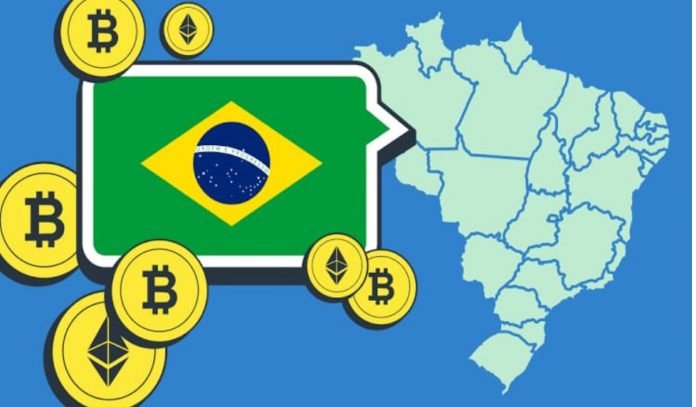
Brazil Proposes Tax on Cryptocurrency for International Payments

0

Brazil’s government is actively considering extending its IOF (Tax on Financial Operations) to cryptocurrency transactions used for cross-border payments, particularly those involving stablecoins like USDT.

This move, reported Reuters and echoed across multiple outlets, aims to close a regulatory loophole that currently exempts crypto from the IOF levy applied to traditional foreign-exchange operations.

Officials emphasize that the policy is primarily about regulatory alignment rather than revenue generation, though it could help address fiscal shortfalls amid Brazil’s ongoing budget challenges.

The tax would target international transfers using virtual assets, including stablecoin payments, card settlements, and movements to/from self-custody wallets. It builds on the Brazilian Central Bank’s recent classification of stablecoin activities as foreign-exchange operations under Resolution BCB nº 521.

New foreign-exchange rules for stablecoins take effect February 2, 2026, with specific provisions starting May 4, 2026. Crypto service providers have a nine-month compliance window. Final tax guidance from the Federal Revenue Service is expected in the coming months.

While capital gains from crypto trading are already taxed at 17.5% above a monthly exemption threshold introduced mid-2025, payments via crypto have evaded IOF. Expanded reporting rules, effective November 17, 2025, now require foreign exchanges operating in Brazil to disclose transactions.

Brazil’s crypto market has exploded, with transactions totaling 227 billion reais $42.8 billion in the first half of 2025—a 20% year-over-year increase. Stablecoins dominate about two-thirds of volume, often used for dollar hedging and low-cost remittances rather than speculation.

However, this has raised red flags. Crypto enables bypassing IOF on forex up to 6.38% on certain operations and import duties. Federal Police estimate annual revenue losses exceed $30 billion from undeclared crypto imports.

Authorities view stablecoins as a payment tool that could facilitate illicit flows, prompting calls for better tracking. The proposal coincides with Brazil’s adoption of the CARF (Crypto-Asset Reporting Framework), an OECD standard for sharing crypto transaction data internationally to combat evasion.

This mirrors trends in other nations tightening crypto oversight. The Finance Ministry has declined to comment, but sources describe the review as “careful,” noting that Central Bank classifications don’t automatically impose taxes— that’s up to the tax authority.

Crypto news outlets and X users highlight the shift as a “crackdown” on stablecoin dominance, with some warning it could stifle remittances in Latin America’s largest economy. Posts on X describe it as Brazil “quietly aligning with global tax snoops” while eyeing revenue from a $42B+ market.

Proponents argue it levels the playing field for traditional finance and boosts visibility for anti-evasion efforts. Critics, including some X discussions, fear it may drive activity offshore or increase costs for everyday users.

This development underscores Brazil’s balancing act: fostering a booming crypto ecosystem, it’s LATAM’s top market while plugging fiscal gaps. If implemented, it could set a precedent for other emerging markets grappling with stablecoin surges.

Officials estimate annual losses exceeding $30 billion from undeclared crypto imports and forex evasion, where users bypass IOF up to 6.38% and import duties by routing payments through stablecoins. Taxing these could plug this gap, providing a timely windfall amid Brazil’s fiscal struggles and missed targets.

This aligns with OECD’s CARF framework for crypto reporting, enabling international data sharing to combat evasion. It could set a precedent for taxing unrealized gains or ending exemptions (e.g., R$35,000 monthly capital gains threshold), as speculated in industry critiques.

Immediate revenue from Brazil’s $42.8 billion H1 2025 crypto volume two-thirds stablecoins could ease budget pressures without broad tax hikes. IOF would add 0.38%–6.38% to cross-border crypto transfers, eroding the low-cost appeal of stablecoins for remittances, dollar hedging, and B2B/B2C payments.

Everyday users, like remittances in LATAM’s largest economy, could see costs rise, disproportionately hitting small investors already facing 17.5% capital gains tax. Expanded reporting effective Nov. 2025 requires foreign exchanges to disclose data, potentially leading to KYC/AML hurdles and slower settlements.

Self-custody wallet movements would also qualify as forex, limiting privacy. Smaller traders may suffer most, as seen in backlash to prior 15–22.5% taxes, sparking debates on offshore migration.

Treating stablecoins as forex prevents “regulatory arbitrage,” ensuring parity with traditional channels and boosting visibility for oversight. Crypto firms must authorize operations by May 2026, potentially consolidating the market around compliant players.

While fostering stability, higher costs could stifle growth in Brazil’s booming sector 20% YoY increase, driving volume to untaxed jurisdictions. Analysts warn of a “crackdown” pushing users underground or abroad.
Ondo Finance Secures EU Regulatory Approval for Tokenized Stocks and ETFs

0

Ondo Global Markets, has received formal authorization from the Liechtenstein Financial Market Authority (FMA) to offer tokenized versions of U.S. stocks and exchange-traded funds (ETFs) to retail investors across the European Economic Area (EEA).

This approval leverages Liechtenstein’s passporting regime, extending access to all 27 EU member states, plus Iceland, Liechtenstein, and Norway—covering 30 countries and over 500 million potential investors.

The approval aligns with EU investor-protection standards under the Markets in Crypto-Assets (MiCA) framework, enabling compliant, on-chain trading of tokenized securities. Ondo Global Markets is the largest platform for tokenized stocks and ETFs, with over $315 million in total value locked (TVL) and more than $1 billion in trading volume since its September 2025 launch.

Tokenization provides 24/7 access, faster settlements, lower costs, and enhanced transparency. Users undergo standard KYC processes, with tokens representing direct claims on underlying assets held in custody.

This follows Ondo’s recent U.S. expansion via the acquisition of Oasis Pro and partnerships like BX Digital for tokenized assets in Switzerland. The firm aims to expand to over 1,000 tokenized assets by year-end.

This milestone accelerates the integration of traditional finance (TradFi) with blockchain, positioning Ondo as a leader in real-world asset (RWA) tokenization. Community reactions on X highlight its potential to merge regulated finance with DeFi, with one post noting it as a “milestone for global asset tokenization” unlocking programmable, borderless markets.

Art Blocks Announces Final 3 Artists

Art Blocks, the leading generative NFT platform, has revealed a “final 3 artists.” For context on Art Blocks: It’s a platform for algorithmic, on-chain generative art, where artists upload code that mints unique NFTs via random seeds.

Featured artists historically include Tyler Hobbs (Fidenza), Dmitri Cherniak (Ringers), Snowfro (Chromie Squiggle), and others like Hideki Tsukamoto and Kjetil Golid. Recent updates focus on platform evolution, such as new smart contracts for lower gas fees and experimental collections like “Presents” and “Explorations.”

This reinforces Art Blocks’ $500M+ secondary market influence, inspiring platforms like Foundation or SuperRare. It also highlights blockchain’s role in art provenance, royalties 10% perpetual, and anti-censorship—vital amid rising AI art concerns.

Curation shifts might alienate purists favoring the original “Curated” rigor, and Ethereum’s scalability could limit global adoption without Layer-2 integrations.

This announcement cements Art Blocks’ legacy while pivoting to sustainable growth, potentially solidifying generative art’s place in contemporary culture—much like how photography disrupted painting, but with immutable, participatory twists.

Implications of Ondo Finance’s EU Approval for Tokenized Stocks and ETFs

By enabling compliant, on-chain access to tokenized U.S. stocks and ETFs for over 500 million retail investors, this approval accelerates the tokenization of real-world assets (RWAs). European retail investors, previously limited by geography, time zones, and intermediaries, can now trade tokenized assets 24/7 on blockchain platforms like BNB Chain.

This includes over 100 U.S. equities and ETFs like S&P 500 trackers, backed 1:1 by custodied securities. Tokenization reduces costs via fee-free trading on partners like PancakeSwap, speeds up settlements T+0 vs. traditional T+2, and enhances liquidity through fractional ownership.

This could onboard millions of underserved users, fostering financial inclusion—especially in regions like Eastern Europe or for younger demographics comfortable with digital wallets. Ondo’s U.S. foothold via Oasis Pro acquisition combined with this EEA passporting creates a transatlantic corridor for tokenized securities, potentially extending to Asia/Latin America via existing integrations.

As the first major tokenized equity platform under the EU’s Markets in Crypto-Assets (MiCA) framework, Ondo sets a compliance blueprint. It enforces KYC, investor protections, and transparency, reducing risks like fraud or money laundering while building trust.

This could spur a “regulatory race” among competitors like BlackRock’s tokenized funds or Swiss platforms like SIX Digital Exchange. However, ongoing EU debates on MiCA centralization might introduce hurdles, such as stricter cross-border oversight.

While compliant, tokenized assets inherit TradFi volatility; a market downturn could amplify scrutiny on blockchain’s stability. Ondo’s $315M TVL and $1B+ trading volume since September 2025 underscore growing demand. Plans to hit 1,000+ assets by year-end could balloon the RWA market. .

Blockchain enables programmable features like automated dividends or composability using tokens as collateral in DeFi protocols, potentially cutting global settlement costs by 50-80%. Increased capital flows could boost U.S. equity demand from Europe, while blockchain adoption might create jobs in fintech.

Critically, it challenges legacy systems like DTCC, pressuring incumbents to innovate. This approval isn’t just a win for Ondo—it’s a catalyst for tokenization’s mainstreaming, potentially reshaping $100T+ global securities markets by making them more accessible, efficient, and borderless.

Mt. Gox Transfers 10,608 Bitcoin As El Salvador Purchases $100M BTC

0

The defunct Japanese cryptocurrency exchange Mt. Gox initiated a significant on-chain movement of approximately 10,608 BTC, valued at around $950–$953 million at the time based on Bitcoin’s price near $90,000.

This transfer originated from a labeled “Mt. Gox Cold Wallet” and was split between a hot wallet controlled by the exchange (185 BTC) and a new, unmarked address (10,423 BTC). Blockchain analytics firm Arkham Intelligence tracked the activity, marking it as the largest such move from Mt. Gox wallets in eight months, since a smaller transfer in March 2025.

This action has reignited concerns among investors about potential market dumps, as Mt. Gox continues its protracted creditor repayment process stemming from its 2014 hack and bankruptcy. The rehabilitation trustee recently extended the repayment deadline to October 31, 2026, delaying distributions to the remaining 19,500 creditors.

Mt. Gox still holds about 35,000 BTC ~$3.2 billion in labeled wallets, down from over 100,000 BTC earlier in 2025 due to prior repayments via exchanges like Kraken and Bitstamp. Analysts like Jacob King of SwanDesk warned on X that this could signal preparations for a “market dump,” contributing to Bitcoin’s dip below $90,000—a six-month low—amid broader market liquidations exceeding $937 million in 24 hours.

While past transfers have led to actual repayments (e.g., 166.5 BTC to BitGo earlier in November), the unmarked destination here has fueled speculation rather than confirmation. The crypto market cap fell to $2.44 trillion, its lowest since early November 2025, amplifying volatility fears.

El Salvador $100M Bitcoin Purchase

In a stark counterpoint, El Salvador announced on November 18, 2025, that it had acquired 1,090–1,098 BTC worth approximately $100 million, its largest single-day purchase to date. President Nayib Bukele confirmed the move via social media, framing it as “buying the dip” during Bitcoin’s slump below $90,000.

This boosts the nation’s total holdings to 7,474 BTC, valued at ~$688 million—up from a peak of nearly $800 million earlier in 2025, despite recent unrealized losses of ~$200 million due to price fluctuations. El Salvador has maintained a consistent accumulation strategy since November 2022, buying at least 1 BTC daily and leveraging geothermal mining.

Officials, including Bitcoin Office director Stacy Herbert, defended the purchase as transparent and blockchain-verified, emphasizing themes of “freedom, transparency, and individual empowerment.” However, it has drawn scrutiny from the International Monetary Fund (IMF), which imposed restrictions under a $1.4 billion loan agreement requiring voluntary Bitcoin use and scaled-back public initiatives like the Chivo wallet.

Some reports question if this violates terms, though Salvadoran spokespeople insist it aligns with their Strategic Bitcoin Reserve policy. The timing—amid “extreme fear” in crypto sentiment indexes—highlights El Salvador’s long-term bullish stance, positioning it as a sovereign outlier against institutional sell-offs.

These events unfolded against a turbulent backdrop: Bitcoin’s 4.5% drop to ~$89,368 on November 18, triggering widespread panic and liquidations. Mt. Gox’s supply-side pressure potential selling contrasts with El Salvador’s demand signal, potentially stabilizing narratives for Bitcoin’s resilience.

BTC trades around $91,000, with analysts watching Mt. Gox’s next moves and El Salvador’s IMF negotiations for further volatility cues. Heightened sell-off fears; contributed to BTC dip below $90K

Total holdings: 7,474 BTC (~$688M); signals sovereign confidence amid rout. The Mt. Gox transfer of ~10,608 BTC ($950–$956M) has amplified existing volatility, contributing to Bitcoin’s plunge below $90,000—a level not seen since April 2025—and triggering over $937M in liquidations across crypto markets.

Historical patterns show Mt. Gox movements often precede price dips due to fears of creditor sell-offs, with nearly every large transfer correlating to negative BTC performance. This event exacerbated “extreme fear” in sentiment indexes, pushing the total crypto market cap to $2.44T, its lowest since early November.

However, the market’s relative shrug—minimal long-term reaction post-transfer—suggests growing maturity, as institutional inflows (e.g., U.S. spot ETFs absorbing supply) have diminished the impact of such events compared to 2024.

In contrast, El Salvador’s $100M purchase acted as a counter-narrative, signaling sovereign confidence amid the rout. This “buy the dip” move, executed at $91K average, boosted national holdings to 7,474 BTC ($688M), with an estimated cost basis of $44K yielding ~100% unrealized gains despite recent volatility.

It provided psychological support, aligning with other accumulators like MicroStrategy adding 8,178 BTC for $835M and UBS ($475M), potentially capping downside by reducing available supply. BTC has rebounded to ~$91,000, hinting at stabilization.

Mt. Gox’s ongoing repayments—now delayed to October 2026—lock ~34,689 BTC ($3.1B) out of circulation longer, reducing near-term oversupply risks and allowing the market to absorb distributions via partners like Kraken and Bitstamp.

This extension, the third since 2023, eases pressure on liquidity but perpetuates uncertainty for ~19,500 creditors, potentially eroding trust in legacy crypto institutions. On-chain, the transfer to an unmarked wallet signals prudent asset management rather than imminent dumps, with analysts noting no proven directional impact from such moves alone.

Africa’s Cross-Border Money Flows Revealed: Key Insights From dLocal’s Transaction Study

0

Sub-Saharan Africa’s (SSA) digital economy is undergoing a period of rapid and profound transformation, building on a long history of mobile technology leapfrogging that has reshaped economic and social systems over the past two decades.

As internet access expands and a new generation of digitally native citizens comes of age, fresh patterns of commerce, communication, and consumption continue to emerge across the region.

To better understand these developments, dLocal, in partnership with Access, published an academic paper titled “Decoding Cross-Border Payment Flows in Sub-Saharan Africa: A Transaction-Level Analysis.” The study draws on proprietary transaction data from dLocal, one of the region’s leading payments platforms to examine how cross-border payment trends are evolving across key African markets.

Diverse and Uneven Digital Payment Landscapes Across SSA

The report highlights the deeply heterogeneous nature of digital economies across Sub-Saharan Africa. Payment methods, consumer behaviour, and market maturity vary widely between countries.

  • Kenya is characterized by high-volume, low-value mobile money transactions.

  • South Africa operates a mature, card-driven system.

  • Nigeria features a dynamic blend of instant bank transfers and rapidly expanding digital wallet adoption.

These structural differences influence consumer spending patterns. On the dLocal platform, South Africa’s transactions are dominated by e-commerce, Nigeria’s activity is concentrated in entertainment and streaming services, while Kenya’s flows reflect foundational spending on telecoms and communication services.

A Concentrated but Fast-Growing Cross-Border Payment Market

An analysis of transaction metrics presented in the study reveals a payment landscape marked by fast paced yet highly concentrated growth. According to the report, South Africa already the most established market in the sample recorded an impressive 125% year-on-year growth, signaling substantial room for further digital payment expansion.

Smaller and emerging markets exhibit even more dramatic growth trajectories. Ghana, for example, posted a staggering 891% YoY growth rate. Although countries like Zambia and Cameroon report similarly high growth from low initial bases, the overall trend indicates robust expansion across the region.

The “Recent Growth Momentum” metric, which compares the last six months to the long-term average, shows that growth is accelerating in several key markets, particularly South Africa (+56%) and Nigeria (+32%).

Despite this rapid expansion, transaction values remain heavily concentrated in a few economic hubs. As illustrated in the report’s choropleth map, South Africa, Nigeria, and Kenya collectively account for more than 97% of all transaction value processed in the dataset. These three economies form the focal point of the study for three main reasons:

  1. Materiality:
    South Africa alone represents 78.16% of transaction value, followed by Nigeria (17.14%) and Kenya (1.73%).

  2. Market Diversity:
    Nigeria leads with 58 unique merchants, followed by South Africa (44) and Kenya (20), allowing for richer cross-sectoral analysis.

  3. Comparative Regional Perspectives:
    These markets represent distinct regional payment archetypes, enabling a nuanced comparative study rather than a one-size-fits-all continental view.

Distinct Payment Patterns and Their Evolution Over Time

The high-frequency nature of the dLocal dataset provides rare insight into the evolution of payment method preferences across SSA’s three largest digital economies.

South Africa: A Card-Dominated, Bank-Led Ecosystem

The static snapshot for April 2025 shows that card payments—credit and debit—dominate South Africa’s transaction value. The time-series data illustrates the long-term stability of credit card usage, which consistently remains above 20%. This stability reflects entrenched consumer behavior and a well-developed banking infrastructure.

Kenya: The Global Archetype of a Mobile-First Economy

Kenya remains a global leader in mobile money usage. Digital wallets (mobile money) account for around 60% of transaction value on the platform. However, the report notes a sharp mid-2024 decline in mobile money’s share—from nearly 60% to below 40%—corresponding with public debate over potential increases to mobile money taxation. This demonstrates how sensitive highly digital ecosystems can be to regulatory uncertainty.

Nigeria: A Hybrid System in Rapid Transition

Nigeria features the most volatile and fast-evolving payment ecosystem among the three. Bank transfers peak above 20%, driven by widespread usage of the NIBSS Instant Payments (NIP) system. Meanwhile, digital wallets show a classic S-curve adoption pattern, rising steadily to nearly 20% by the end of the period.

External benchmarks reinforce these trends: according to the Worldpay Global Payments Report 2025, digital wallets accounted for 19% of Nigerian e-commerce transaction value in 2024. This reflects Nigeria’s growing reputation as a fintech powerhouse and a hub for innovation-driven financial inclusion.

Debit Cards: A Cross-Market Constant

Across all three countries, debit cards show relatively stable trends. While their market share differs by country, their consistency suggests that they provide a foundational baseline for digital consumption, even as more dynamic methods (like mobile money or real-time transfers) capture growing market segments.

Conclusion

 The report uncovers clear payment archetypes in Kenya, Nigeria, and South Africa, and reveals how these ecosystems are evolving in response to technology, regulation, innovation, and consumer behavior.

Overall, the findings paint a picture of a digital economy that is heterogeneous, fast-moving, and globally significant. From Kenya’s mature mobile money system to Nigeria’s hybrid fintech-driven landscape and South Africa’s stable card-based market, Sub-Saharan Africa’s digital transformation is unfolding along multiple distinct pathways, each contributing to the growth of one of the world’s most dynamic payments regions.

Fidelity’s Spot Solana ETF Launches Today

0

Fidelity Investments, the $7 trillion asset manager, has officially launched its spot Solana ETF (ticker: FSOL) on the NYSE Arca exchange today, November 19, 2025.

This marks Fidelity’s entry into the rapidly expanding U.S. Solana ETF market, following approvals from the SEC and NYSE. The fund provides investors with direct exposure to Solana’s native token (SOL) through a regulated vehicle, including staking rewards to generate additional yield.

0.25%, fully waived for the first six months or until the fund reaches $1 billion in assets under management (AUM)—whichever comes first. Fidelity will also cover staking fees on rewards from the initial $1 billion in assets.

Tracks the spot price of SOL, with in-house staking enabled for yield similar to Fidelity’s Bitcoin and Ethereum ETFs. Custody is handled via Fidelity Digital Assets. Analysts view this as a major institutional endorsement for Solana, potentially driving inflows and price appreciation.

Bloomberg’s Eric Balchunas highlighted Fidelity’s scale $6.4 trillion AUM as a game-changer, with early projections of $1 billion+ in collective Solana ETF inflows soon. The launch comes amid a “Solana ETF season,” with multiple products now live or imminent.

Over $450M across existing funds in under a month, with yesterday’s net flows showing +$26.2M for Solana ETFs vs. outflows from Bitcoin and Ethereum. Five Solana ETFs are now live, all supporting staking—a first for crypto ETFs. This contrasts with Bitcoin and Ethereum launches, where staking was absent initially.

SOL price is trading around $141 as of this morning, down ~9% in the last 24 hours amid broader market volatility (e.g., $1B+ in crypto liquidations yesterday). However, trading volume surged 60%, signaling heightened interest.

Bullish sentiment prevails. DL News predicts SOL could hit $160 by December, fueled by ETF momentum and post-shutdown regulatory green lights. Nate Geraci of the ETF Institute called it a “welcome to the future” for Wall Street’s embrace of altcoins.

BlackRock, dominant in Bitcoin/Ethereum ETFs, has yet to file for a Solana product. This launch underscores Solana’s maturation as a blockchain ecosystem, blending high-speed DeFi with traditional finance accessibility. For investors, FSOL offers a low-barrier entry via brokerage accounts, IRAs, and 401(k)s.

Fidelity’s debut of the FSOL ETF represents a pivotal moment for Solana, accelerating its transition from a high-performance blockchain to a mainstream institutional asset. As the third-largest asset manager globally with $7 trillion in AUM.

Fidelity’s entry validates SOL’s scalability and ecosystem, potentially unlocking billions in capital while reshaping crypto’s integration with traditional finance. SOL’s price dipped to around $131–$141 on launch day amid broader market liquidations $1B+ across crypto and profit-taking after a 2025 rally.

However, ETF launches historically precede recoveries—e.g., Bitcoin’s 2024 ETF debut sparked a 50%+ surge within months. Analysts forecast SOL reaching $156–$160 by late November, driven by ETF inflows and Solana’s DeFi/memecoin momentum.

Day-1 inflows for FSOL hit $2.07M, contributing to $420M+ total across five U.S. Solana ETFs. Solana ETFs have seen 15 straight days of net inflows ~$513M AUM, 0.71% of SOL’s market cap, outpacing early Bitcoin ETF debuts in relative terms.

Fidelity’s scale could eclipse Bitwise’s BSOL ($450M AUM), with projections of $1B+ collective inflows soon, creating arbitrage opportunities and boosting trading volume up 60% recently. Increased liquidity could elevate on-chain metrics like TVL ($5B+ in DeFi) and transaction volume, spilling over to memecoins and consumer apps on Solana.

FSOL is Fidelity’s third crypto ETF after Bitcoin and Ethereum, signaling altcoins’ maturation beyond “speculative fringe assets.” This could prompt BlackRock—absent from Solana ETFs—to file, elevating SOL to “top-3” status alongside BTC/ETH for dual giant exposure.

Vanguard’s crypto aversion leaves Fidelity poised to dominate.