DD
MM
YYYY

PAGES

DD
MM
YYYY

spot_img

PAGES

Home Blog Page 138

Michael Selig Faces Probing Questions from US Senate Agriculture Committee

0

Michael Selig, President Donald Trump’s nominee to chair the Commodity Futures Trading Commission (CFTC), faced probing questions from the Senate Agriculture Committee during his confirmation hearing.

The session highlighted tensions around the agency’s role in regulating the burgeoning crypto market, especially as Congress advances major legislation to expand CFTC oversight.

Selig, currently chief counsel for the SEC’s crypto task force and a senior advisor to SEC Chair Paul Atkins, emphasized a balanced, innovation-friendly approach to digital assets while avoiding firm commitments on key concerns like funding and bipartisanship.

The hearing comes at a critical juncture: The CFTC, with its 543 full-time staff compared to the SEC’s 4,200, is poised to gain primary authority over crypto spot markets under pending bills. Lawmakers expressed bipartisan support for clearer rules but voiced worries about the agency’s capacity and independence from executive influence.

Lawmakers focused on three main areas: agency independence, resource needs for crypto oversight, and preventing future crises like the 2022 FTX collapse. Sen. Elissa Slotkin (D-MI) warned that operating as the sole commissioner could make Selig “vulnerable to the pressure of the president,” urging commitments to bipartisan appointments.

She tied this to broader Trump administration efforts to remove Democrats from independent agencies, which is under Supreme Court review. Selig acknowledged valuing diverse viewpoints but deferred to the president on nominations, stating he would “honor such decisions.”

He avoided endorsing a specific number of Democratic commissioners. Sen. John Boozman (R-AR), the committee chair, pressed on regulating decentralized finance (DeFi) and spot trading for assets like Bitcoin and Ethereum. He advocated for “the CFTC, and only the CFTC” to handle digital commodities. Others asked about overhauling crypto rules and election betting markets.

Selig called crypto a “critical mission” for the CFTC, supporting a “cop on the beat” for investor protection in on-chain markets and DeFi. He advocated for frameworks that foster software developers and exchanges with proper disclosures, warning that unclear rules could drive firms overseas. He cautioned against an “enforcement-only approach.”

Funding and Resources

Multiple senators, including Democrats, repeatedly asked if the CFTC needs more funding to oversee the $4 trillion crypto market, especially with pending bills like the CLARITY Act. The draft bill proposes $150 million initially, shifting to fees later.

Selig declined to commit, calling it “premature” and saying he’d assess needs upon confirmation. He noted the agency’s recent staff reductions down ~20% but focused on internal efficiencies, like bolstering enforcement with specialized prosecutors.

Selig also addressed preventing another FTX-like scandal, stressing robust controls for exchanges and intermediaries. The hearing aligns with accelerating legislative efforts.

CLARITY Act: Would grant the CFTC exclusive jurisdiction over spot digital commodity trading (e.g., Bitcoin, Ethereum, Litecoin), requiring exchanges to register. It includes DeFi provisions targeting intermediaries rather than open-source code. The Senate Agriculture Committee is set to consider it soon, with optimism for passage before year-end despite a partial government shutdown.

Digital Asset Market Clarity Act (House-passed): Approved in July 2025 (294-137 bipartisan vote), it clarifies SEC vs. CFTC roles, covers stablecoins, custody, and DeFi. Senate reconciliation is ongoing. These bills stem from years of regulatory ambiguity, with the CFTC already handling crypto derivatives but seeking spot market authority.

If confirmed, Selig would replace Acting Chair Caroline Pham who plans to depart immediately, initially as the sole commissioner on the five-member panel. The committee scheduled a vote on his nomination for November 20, 2025, potentially fast-tracking him to the full Senate.

Crypto advocates, including The Digital Chamber’s CEO Cody Carbone, welcomed Selig’s nomination as “exciting” and pro-innovation. On X (formerly Twitter), reactions were positive but cautious. Posts highlighted Selig’s SEC experience and potential for “unified digital-asset oversight.”

Industry figures like David Sacks— White House AI/crypto czar praised him for modernizing regulation to keep the U.S. competitive. Some noted his pro-crypto stance could accelerate rulemaking on tokens and stablecoins.

Bitcoin and Ethereum saw modest gains post-hearing (~2-3%), reflecting optimism for regulatory clarity. However, critics worry about underfunding and politicization, with Democrats pushing for safeguards in the bills.

This development underscores Trump’s push to make the U.S. the “Crypto Capital of the World,” as Selig himself posted on X upon nomination. Confirmation could reshape crypto’s regulatory landscape by early 2026.
Aztec Launches Privacy-Focused L2 Ignition Chain As Bitwise Spot XRP ETF Launches 

0

Aztec Network, a leading Ethereum Layer 2 (L2) solution specializing in zero-knowledge (ZK) proofs for privacy, has officially launched its Ignition Chain on Ethereum’s mainnet on November 19, 2025.

This marks a significant milestone as the project claims Ignition Chain is the first fully decentralized L2 on Ethereum, enabling programmable privacy for decentralized applications (dApps), particularly in DeFi.

The launch followed the initiation of its AZTEC token sale on November 13, 2025, which powers staking, governance, and block rewards on the network. Ignition Chain uses ZK proofs to provide end-to-end confidentiality for transactions and smart contracts, addressing Ethereum’s inherent transparency while preserving verifiability.

This allows developers to build a “private world computer” where users can execute private DeFi trades, payments, and more without exposing sensitive data. It builds on Aztec’s public testnet rollout from May 2025.

The chain activated block production after reaching a validator queue of 500, with each validator required to stake 200,000 AZTEC tokens. Early stakers receive bonuses to accelerate decentralization, differentiating it from L2s like Optimism or Arbitrum, where sequencers often remain centralized.

The AZTEC token auction opens to the public on December 2, 2025, aiming to boost community participation. Aztec, backed by a $100 million Series B round from a16z in 2022, positions this as a step toward scalable, privacy-preserving infrastructure.

The announcement generated buzz on X, with discussions around its implications for privacy in Web3. No immediate price data for AZTEC is available pre-auction, but it underscores growing demand for compliant privacy tools amid regulatory scrutiny.

This launch positions Aztec as a frontrunner in the privacy L2 race, competing with projects like zkSync while emphasizing full decentralization from day one.

Bitwise Spot XRP ETF Launches Thursday Amid Altcoin ETF Boom

Bitwise Asset Management’s spot XRP exchange-traded fund (ETF) is set to debut on NYSE Arca today, November 20, 2025, under the ticker XRP. This comes amid a surge in U.S. altcoin ETFs, driven by clearer SEC guidance on crypto fund approvals, with recent launches for Solana, Litecoin, and Hedera paving the way.

Bitwise’s CIO Matt Hougan called it a “historic moment,” highlighting XRP’s role in modernizing global payments. The ETF provides direct, physically backed exposure to XRP (Ripple’s native token), with Coinbase as custodian. It features a 0.34% management fee, waived for the first month on the initial $500 million in assets. This follows Bitwise’s European XRP ETP (GXRP) launched in 2022.

XRP’s price is consolidating around $2.10–$2.30 after a 9% dip, showing bullish divergence on technical charts (e.g., RSI forming higher lows despite price lows). Community projections suggest strong inflows: conservative estimates predict $72.5 million on day one acquiring ~34 million XRP, potentially surpassing Canary Capital’s XRP ETF (XRPC) record of $58 million.

Over 100 crypto ETFs are expected soon, including Grayscale’s XRP ETP and Dogecoin ETF on November 24, plus filings for Cardano, Avalanche, and Polkadot. Altcoin ETFs have already pulled in $500 million+ in under a month, signaling institutional appetite beyond Bitcoin and Ethereum. Ripple’s recent $500 million funding round valuing it at $40 billion adds tailwinds.

On X, excitement is high, with users debating the simple “XRP” ticker vs. branded ones like BSOL for Solana and forecasting record volumes. Some question potential confusion, but others see it as a branding win for mainstream adoption.

This wave reflects maturing crypto markets, but analysts note XRP’s price may not rally immediately due to broader sell-offs—fundamentals like Ripple’s expansions could drive longer-term gains.

Perplexity’s Comet Browser Brings AI-Powered Search to Android, Pushing the Boundaries of Mobile Browsing

0

When it comes to web browsing, the familiar interface of Chrome or Safari has long dominated the mobile landscape. But for users seeking a new kind of intelligence at their fingertips, Perplexity is betting that AI can do more than answer questions—it can rethink the way we navigate the web.

On Thursday, the AI search startup launched its Comet browser for Android, expanding capabilities first introduced on desktop in July, and signaling a growing push to bring advanced AI tools directly into users’ hands.

The Comet browser on Android carries over much of the desktop version’s functionality. Users can set Perplexity as their default search engine, ask questions about open tabs, and use voice commands to have the assistant summarize information across all tabs. Beyond search, the AI assistant can research and shop on behalf of users, providing an experience that blends the familiar convenience of a browser with proactive task management. An in-built ad blocker further enhances usability, making the browsing experience smoother and less cluttered.

Perplexity is not stopping there. In the coming weeks, the company plans to introduce a suite of new features, including a conversational agent capable of searching across multiple sites, shortcuts that allow the assistant to take quick actions, and a fully functional password manager. These enhancements aim to make Comet a true AI-powered productivity companion, rather than just a search tool.

Android was chosen as the first mobile platform due to high demand from carriers and original equipment manufacturers, who have requested Comet for integration on their devices. While Perplexity previously partnered with Motorola to preload its AI assistant app, it remains unclear whether the new browser will receive similar treatment. An iOS version is also in development, though no timeline has been confirmed.

Perplexity’s move into mobile positions the company among an increasingly crowded field of AI browser competitors. OpenAI, Opera, and The Browser Company—now owned by Atlassian—have all developed AI-enabled browsers, though most remain desktop-focused. The Browser Company’s Arc Search was released for mobile last year, but development shifted to a new browser, Dia, which currently lacks a mobile version. This leaves Comet with an opportunity to define what AI-assisted browsing looks like on handheld devices.

Security, however, remains a critical concern. In October, Perplexity acknowledged the risks associated with AI agents in browsers, warning that new forms of AI-driven attacks could require a fundamental rethink of online security. Analysts have noted that while AI assistance can dramatically increase convenience, it may also expose users to new vulnerabilities if safeguards are insufficient. Striking the right balance between functionality and safety will be crucial for Perplexity’s success.

Incumbent browsers like Chrome and Safari dominate the global market, and dislodging them will require more than AI novelty, making the stakes high. Comet must deliver speed, reliability, privacy, and utility, proving that an AI-centric browsing experience can be both seamless and secure. The Comet browser is expected to reshape how people conduct searches, manage information, and interact with intelligent agents in daily life.

Android users, for now, have the first taste of this vision. Perplexity is betting that the combination of AI-driven search, productivity features, and proactive assistance will redefine mobile browsing. The company sees it not just as a tool for retrieving information, but as a platform that anticipates and supports the user at every step.

Google DeepMind’s New Robotics Gambit: Boston Dynamics’ Former CTO Joins as AI Lab Pushes Toward a ‘Robot OS’

0

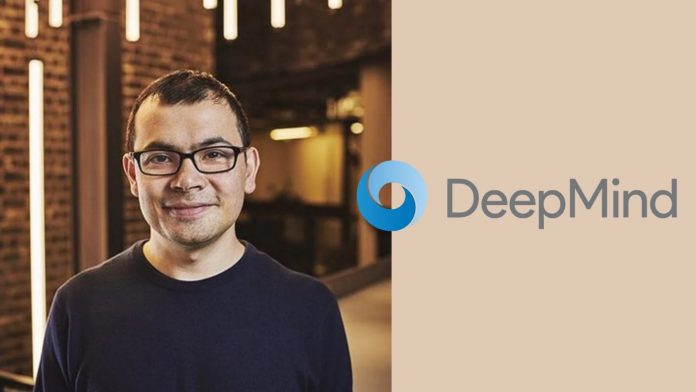
When Google DeepMind quietly brought in Aaron Saunders earlier this month, it wasn’t just another executive hire. It signaled an escalation. Saunders, the engineer who helped give the world its most famous back-flipping, crate-hauling, and occasionally dance-choreographed robots during his years at Boston Dynamics, is now DeepMind’s vice president of hardware engineering. And his arrival suggests the company is no longer content with producing only world-class AI models. It wants machines—real, physical machines—that can use them.

according to Wired, the hire folds directly into CEO Demis Hassabis’ sweeping ambition: to turn Gemini, DeepMind’s flagship model, into something like a robotics equivalent of Android. A base AI system that manufacturers everywhere could load into their humanoids, quadrupeds, warehouse bots, or whatever new chassis emerges next.

“You can sort of think of it as a bit like an Android play […] We want to build an AI system, a Gemini base, that can work almost out-of-the-box, across any body configuration,” Hassabis told WIRED. “Obviously humanoids, but nonhumanoids too.”

For Saunders, this is familiar terrain. Before becoming Boston Dynamics’ CTO in 2021, he led some of the company’s most complex engineering efforts, starting with an amphibious six-legged prototype and rising to VP of engineering in 2018. At Boston Dynamics—now majority-owned by Hyundai Motor Company after passing through SoftBank and, earlier, Alphabet itself—he helped steward the hardware behind the company’s signature creations: four-legged dog-sized robots and humanoids capable of highly precise and visually stunning acrobatics.

DeepMind, for its part, has spent years publishing robotics research rooted in large-scale reinforcement learning, imitation learning, and multimodal perception. But the industry’s recent surge of interest in humanoids has shifted that research from an academic project into something commercial. Hassabis said he’s convinced the field is nearing a tipping point. AI-powered robotics, he said, “is going to have its breakthrough moment in the next couple of years, if I was to predict.”

Outside DeepMind’s walls, the momentum has been unmistakable. In the U.S., startups such as Agility Robotics, Figure AI, 1x, and even Tesla have been racing toward humanoid production. Elon Musk said recently he intends to build a million Tesla Optimus robots over the next decade. In China, meanwhile, companies like Unitree have surged ahead on cost and scale; Unitree, based in Hangzhou, has already overtaken Boston Dynamics as the largest supplier of four-legged robots for industries ranging from construction to manufacturing.

Hassabis admitted Unitree’s progress has impressed him. But the true prize for DeepMind isn’t hardware supremacy—it’s cognitive supremacy.

“I’m most interested in the [AI] brain part of it,” he said, emphasizing Gemini’s multimodal structure.

The model’s ability to see, plan, parse language, and reason across different modalities, he argued, makes it especially suited to controlling robotic systems that need to operate in unpredictable physical environments.

That’s where Saunders’ arrival becomes strategically important. His deep, practical understanding of what real robots can and cannot do—how they behave, where they fail, and what they need at the hardware level—gives DeepMind a bridge from system-level AI to embodied intelligence. If Gemini is to become the Android of robotics, it needs precisely the sort of hardware awareness Saunders spent decades refining.

And the timing is advantageous as the components and expertise required to build legged machines have grown dramatically more accessible in recent years. Startups that once would have needed tens of millions in research grants to assemble a basic prototype can now buy actuators, sensors, and control modules off the shelf. The hardware ceiling is dropping while the software ceiling rises—an alignment that DeepMind sees as an opening.

The company, by hiring Saunders, is believed to be signaling that the next frontier for Gemini isn’t just better reasoning or smoother multimodal alignment, but embodiment. A brain that can live in many bodies, across many environments, and adapt on the fly.

Nothing in robotics ever moves as fast as the hype cycles surrounding it. But DeepMind’s latest move suggests the company sees the window opening—and intends to step through it with both hardware sophistication and AI horsepower in hand.

Brookfield Launches $100bn AI Infrastructure Program With Nvidia and Kuwait Fund

0
Leveraging AI for Startups

Brookfield Asset Management on Wednesday unveiled one of the largest financing initiatives yet for artificial intelligence infrastructure — a sweeping $100 billion program developed in partnership with Nvidia and the Kuwait Investment Authority (KIA).

The announcement lands at a moment when demand for computing power, energy supply, and physical space for AI workloads is rising at a pace that global investors now describe as unprecedented.

The backbone of the initiative is the newly launched Brookfield Artificial Intelligence Infrastructure Fund, which targets $10 billion in equity commitments. Brookfield said the fund has already secured half of that amount, with $5 billion pledged by Brookfield itself, Nvidia, and KIA. With co-investor capital and financing layered on top, the fund is expected to acquire up to $100 billion worth of AI infrastructure assets over time — a portfolio spanning energy facilities, land, hyperscale data centers, and compute capacity.

Brookfield, a heavyweight in global infrastructure and alternative investments, noted that it has already deployed more than €100 billion across the AI value chain, from digital infrastructure to renewable power and semiconductor manufacturing. The new program pushes the company deeper into the heart of an arms race among tech firms, chipmakers, and cloud providers, all scrambling to secure the physical backbone needed for next-generation AI systems.

A rapid surge in AI adoption is intensifying the scramble for these resources. Companies across industries are racing to lock in access to the high-performance computing clusters that train and run large models, and to secure the electricity required to power them. This has created a boom in data center construction, land acquisition, and long-term energy contracting, turning infrastructure — not just chips — into a defining bottleneck for AI development.

Sikander Rashid, Brookfield’s head of AI infrastructure, called the moment “one of the largest infrastructure buildouts in history” and warned that the world will need an estimated $7 trillion in capital over the next decade to keep pace with AI demand. That figure underlines the energy-intensive nature of modern AI models. Training and running them requires enormous volumes of power, far outstripping the capacity built during previous waves of digital expansion.

The fund’s first commitments are already underway. They include a $5 billion framework agreement with Bloom Energy to deploy up to 1 gigawatt of behind-the-meter power solutions for data centers and AI factories — a move aimed at supplementing strained power grids and reducing exposure to energy shortages. Behind-the-meter systems allow operators to generate power on-site, which has become critical for facilities that cannot afford downtime or an unstable supply.

Brookfield has also been moving aggressively in Europe. Earlier this year, it announced plans to invest up to 95 billion Swedish crowns (about $10 billion) in an AI data center campus in Sweden, tapping into the region’s reliable energy supply and cooling advantages. In France, the company committed €20 billion to AI-related projects, including facilities that support cloud providers and advanced compute clusters.

The partnership with Nvidia marks another sign of the chipmaker’s widening role not only as a supplier of GPUs but as a strategic investor shaping the broader AI ecosystem. As the world’s largest designer of AI chips, Nvidia has been pushing into data centers, networking technologies, and infrastructure development to ensure that the companies training large models have the capacity required for its hardware.

The involvement of the Kuwait Investment Authority highlights the growing interest among sovereign wealth funds in the long-term economics of AI infrastructure. These investors, including funds from the Middle East, Europe, and Asia, have been pouring billions into data centers, energy assets, and semiconductor supply chains, viewing AI as a decades-long growth frontier.

Brookfield’s new program amplifies the investment wave sweeping across the sector, underscoring that the AI era is no longer defined solely by algorithmic breakthroughs or frontier models. It is increasingly shaped by an industrial-scale buildout of land, power, and compute.