DD
MM
YYYY

PAGES

DD
MM
YYYY

spot_img

PAGES

Home Blog Page 1383

Worldcoin Officially Launches in the United States

0

Worldcoin, co-founded by Sam Altman, officially launched in the United States on May 1, 2025, as confirmed by multiple sources. The launch enables Americans to verify their World ID in six key cities—Atlanta, Austin, Los Angeles, Miami, Nashville, and San Francisco—using NVIDIA-powered Orbs available at standalone World Spaces and partner locations like Razer stores.

Users can download the World App to access the full experience, including anonymous human verification and the ability to claim Worldcoin (WLD) airdrops, though token distribution is restricted in certain areas like New York due to regulatory constraints.

The U.S. expansion follows international rollouts and comes with a $300,000 developer rewards program to boost platform innovation. There’s also speculation about a potential Coinbase listing, which could increase WLD’s liquidity and adoption. However, the project faces regulatory scrutiny, similar to challenges in Spain, over its biometric data collection practices, despite claims of privacy preservation through zero-knowledge proofs.

Worldcoin’s use of iris-scanning Orbs to create unique World IDs raises concerns about biometric data collection. Despite claims of privacy via zero-knowledge proofs, regulatory bodies may scrutinize how data is stored and used, especially given past investigations in countries like Spain. Public skepticism, as seen in some X posts, highlights fears of surveillance or data misuse.

The U.S. has stringent data protection and cryptocurrency regulations. Restrictions on WLD token distribution in states like New York suggest compliance hurdles. The SEC and other agencies could impose further oversight, impacting Worldcoin’s scalability and tokenomics, especially if WLD is classified as a security. The launch could drive cryptocurrency adoption, particularly if WLD gets listed on exchanges like Coinbase, boosting liquidity. The $300,000 developer rewards program may spur innovation, creating new use cases for Worldcoin’s identity verification in DeFi, governance, or universal basic income experiments. However, token value volatility remains a risk.

Worldcoin’s goal of providing a global, decentralized identity system could reshape online authentication, reducing reliance on centralized platforms. Success in the U.S. could accelerate adoption in other markets, but failure to address privacy concerns may limit trust and uptake.

The project may deepen debates over digital inclusion versus surveillance. While Worldcoin aims to onboard underserved populations, its tech-heavy approach could exclude those without access to smartphones or Orbs. Public sentiment on X shows a split—some view it as revolutionary, others as dystopian. As a major market, the U.S. launch could set a benchmark for Worldcoin’s global rollout. Regulatory outcomes here may influence policies elsewhere, while adoption rates could signal the project’s long-term viability.

These implications hinge on Worldcoin’s ability to balance innovation with trust and compliance in a complex U.S. landscape. The societal divide surrounding Worldcoin’s U.S. launch stems from conflicting views on its promise of decentralized identity versus concerns about privacy, accessibility, and control. Supporters argue Worldcoin could provide a universal identity system, enabling access to services like crypto, banking, or governance for underserved populations without traditional IDs. This aligns with its mission to create a global, equitable digital economy.

Enthusiasts, including some developers on X, see Worldcoin’s $300,000 rewards program and potential Coinbase listing as catalysts for building decentralized apps, enhancing financial systems, or testing universal basic income models. Advocates highlight Worldcoin’s use of zero-knowledge proofs, which aim to verify identities without storing sensitive biometric data, as a step toward secure, anonymous authentication.

Skeptics, reflected in critical X posts, fear that iris-scanning Orbs and biometric data collection could lead to surveillance or data breaches, despite privacy assurances. Past regulatory scrutiny in Spain fuels distrust. The tech-heavy approach—requiring smartphones, app downloads, and access to Orbs in only six U.S. cities—may exclude rural or low-income groups, undermining inclusivity claims and favoring urban, tech-savvy users.

Critics question the decentralization narrative, pointing to Worldcoin’s corporate backing and restricted token distribution (e.g., in New York) as signs of centralized influence, potentially replicating existing power imbalances. The divide mirrors broader tensions between those who embrace blockchain and AI-driven solutions as liberating and those who view them as tools for control or exclusion. X posts show some hailing Worldcoin as “revolutionary” while others label it “dystopian.”

Some Americans may see Worldcoin’s global ambitions as disconnected from local needs, especially in a regulatory environment wary of crypto and data privacy. This divide could shape Worldcoin’s adoption. Proponents may drive early uptake among crypto enthusiasts, but critics’ concerns—especially around privacy and equity—could slow mainstream acceptance unless addressed transparently. Bridging the gap requires clear communication, broader accessibility, and robust privacy safeguards.
Italy’s PM Meloni Expressed Optimism About Building Strong Ties with New German Chancellor

0

Italian Prime Minister Giorgia Meloni has expressed optimism about building strong relations with Friedrich Merz, the conservative German politician set to become chancellor on May 6, 2025. Meloni, who leads a right-wing government in Rome, has been in contact with Merz in recent weeks, following a meeting ahead of Germany’s February 2025 elections. She conveyed confidence in their future cooperation to Italy’s Adnkronos news agency, highlighting shared views, particularly on the EU’s Green Deal and competitiveness.

The two leaders are expected to meet at upcoming international summits, and Merz is slated to visit Rome shortly after taking office. Meloni’s positive outlook is further bolstered by her established ties with U.S. President Donald Trump, which she believes could complement Merz’s transatlantic priorities.

The EU Green Deal is a comprehensive policy framework launched by the European Union in 2019 to make Europe climate-neutral by 2050. It aims to transform the EU’s economy and society through ambitious environmental, economic, and social reforms. Achieving net-zero greenhouse gas emissions by 2050, with a 55% reduction target by 2030 compared to 1990 levels.

Promoting renewable energy, improving energy efficiency, and phasing out fossil fuels. Implementing a circular economy, reducing waste, and fostering green technologies. Protecting ecosystems, halting biodiversity loss, and restoring degraded environments. Reforming food systems via the Farm to Fork Strategy to promote eco-friendly farming and reduce pesticide use. Expanding low-emission mobility, including electric vehicles and sustainable aviation fuels.

Mobilizing at least €1 trillion through the EU budget, private investments, and mechanisms like the Just Transition Fund to support regions dependent on fossil fuels. Giorgia Meloni, Italy’s Prime Minister, and Friedrich Merz, Germany’s incoming chancellor, have expressed shared concerns about the EU Green Deal’s impact on economic competitiveness. Meloni has criticized certain aspects, like the 2035 ban on internal combustion engine vehicles, arguing it burdens industries, particularly Italy’s automotive sector.

Merz, leading the CDU, also emphasizes balancing environmental goals with economic growth, advocating for adjustments to Green Deal policies to protect German industries like manufacturing. Their alignment suggests potential cooperation to reshape or moderate the Green Deal’s implementation, prioritizing pragmatism and transatlantic coordination, especially with figures like U.S. President Donald Trump, who favors deregulation.

The shared stance of Giorgia Meloni and Friedrich Merz on the EU Green Deal, coupled with their intent to foster good relations, carries significant implications for the EU, transatlantic ties, and global climate policy. Meloni and Merz’s focus on competitiveness suggests they may push for revising Green Deal targets, such as the 2035 internal combustion engine ban or stringent emissions rules, to ease burdens on industries like Italy’s automotive sector and Germany’s manufacturing base.

Their influence could lead to more flexible timelines or exemptions, prioritizing economic stability over rapid decarbonization, potentially delaying aspects of the 2050 climate-neutrality goal. Their push for reform may clash with progressive EU states (e.g., Nordic countries) and the European Commission, risking divisions within the EU on climate policy. By advocating for policies that safeguard jobs in automotive, manufacturing, and energy-intensive industries, Meloni and Merz could bolster economic resilience in Italy and Germany, the EU’s second- and third-largest economies.

Slowing Green Deal measures might delay the shift to green technologies, potentially ceding leadership in renewables or electric vehicles to competitors like China or the U.S. A focus on affordability could lead to prolonged reliance on fossil fuels, impacting energy prices and security, especially given global market volatility. Meloni’s ties with U.S. President Donald Trump, combined with Merz’s transatlantic focus, could align EU policies with a U.S. administration skeptical of aggressive climate mandates.

This might foster trade agreements or energy partnerships but weaken global climate commitments. If the EU softens its Green Deal under Meloni and Merz’s influence, it risks losing its position as a global climate leader, especially if the U.S. under Trump prioritizes deregulation over emissions cuts. Meloni (Brothers of Italy) and Merz (CDU) represent conservative forces gaining ground in Europe. Their collaboration could embolden other right-leaning governments (e.g., in Hungary or Poland) to challenge EU policies, shifting the bloc’s political balance.

As Germany’s new chancellor, Merz’s alignment with Meloni could reshape the traditional Franco-German axis, with Italy gaining influence. However, this risks friction with France’s Emmanuel Macron, who supports a strong Green Deal. If Germany and Italy, key EU players, dilute the Green Deal, it could undermine global climate efforts, especially ahead of COP30 in 2025, where updated Nationally Determined Contributions (NDCs) are due.

A less ambitious EU stance might discourage other major economies (e.g., India, Brazil) from strengthening their climate pledges, slowing progress toward Paris Agreement goals. By prioritizing jobs and affordability, Meloni and Merz could strengthen domestic support among voters concerned about the economic costs of green transitions, countering far-right and populist critiques.

Environmental activists and younger voters may criticize any rollback of Green Deal measures, potentially fueling protests or boosting Green parties in future elections. Meloni and Merz’s collaboration could reshape the EU Green Deal into a more industry-friendly framework, aligning with transatlantic priorities under a Trump-led U.S. While this may protect short-term economic interests and strengthen their political standing, it risks delaying climate goals, straining EU unity, and diminishing the bloc’s global environmental leadership.

Nigeria’s Most Consequential Policy: Financialization without Factories

0
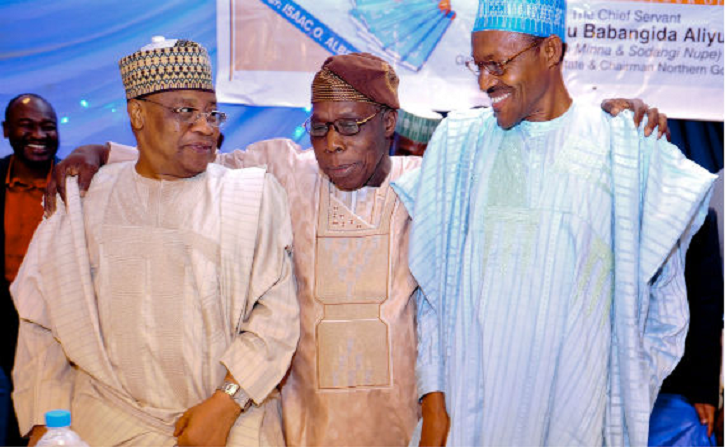
Nigerian past and present rulers

I was still in Secondary Technical School Ovim when IBB was the president, and as a village kid, my problem was never food. You were guaranteed one loaf of Ezioma bread (15 kobo) in the morning. On the days after the main Oriendu Market, you could upgrade to Our Society bread. Our Society bread was “imported” from Enugu, from the bakery of Chief Umunna, who never forgot his village even though he was serving Enugu people.

I do conclude that IBB was a good operator even though he scaled many bad economic policies in Nigeria. I mean he anchored Abuja, 3rd Mainland Bridge, etc. Yet, he messed up with SAP (structural adjustment programme), and in the bid to recover, he liberated the banking & financial sector at scale, without connecting it to manufacturing. Yes, Nigeria became a trading floor with margins!

Today, from GTBank to Zenith Bank, and beyond, some of the leading banks in Nigeria were created within 1989 to 1993, and a policy framework made that possible.  Just like that, the financialization of Nigeria began, and that started the erosion of the core pillars of Nigeria. IBB made finance better but ignored manufacturing! Why build factories when you can add your “percentage” on a financial transaction?

The late 1970s and early 1980s:

The illusion has been that the late 1970s and early 1980s were great because we had the oil boom. Not really, as we still have an oil boom today. In the 1980s, we pumped about 400,000 bpd at about $36 per barrel. Today, we do close to 1.2 million bpd at close to $80 . Even if you adjust for population, Nigeria has more resources today than the late 1970s! (Under constant US dollar, we made $14.4m daily vs $96m today which under constant currency is a 6.7 factor. Population in 1981 was 75 million for today’s 210 million which is a factor of 2.3. In other words, we have scaled oil revenue faster than population, meaning the boom of today is greater).

So, do not say the late 1970s and early 1980s were better because of oil. Something is missing and here is it: Nigeria has stopped making things in Nigeria. Today, we have financialized Nigeria’s economy, as banking and financial services rose, and manufacturing faded. In the 1980s, the known entrepreneurs in Kano, Aba, Abeokuta, etc made things. Today, we grow apps, and have mastered how to pay, receive and move money!

Simply, Nigeria’s problem is not that oil money has stopped; our problem is that post the 1980s SAP, our economy was reconfigured with finance houses, banking, etc and people found out that you could invest N1,000 and wait for a 20% return without doing anything. With that financial engineering everywhere, everyone joined the club and starved the manufacturing (old, modern, hybrid and services) sector. Of course, with easy money, productivity dropped, corruption demons grew, and a nation began the descent.

How do I know? Nigeria creates policies for financial services at more than 8:1 which means for one policy on manufacturing, we have 8 on financialization. Do you want the test? Tell me the last 8 things you know about the banking circulars and remind me of one you know for the manufacturers. You have no chance for the manufacturers but you can list those bank-focused policies.

From the Tang dynasty to the Song dynasty to modern America, and after looking at 2000 years of global GDPs, I have noticed one thing: such financial engineering unlinked to making things will destroy any decent economy.

The Financialization of Nigeria

Let’s talk about the financialization of Nigeria. Since the 1980s, despite greater resources, our economy has shifted dramatically away from making things and heavily towards financial services. This pivot, accelerated by SAP, has created a policy environment favoring finance over manufacturing at an alarming 8:1 ratio. The consequence? A drop in productivity, a rise in corruption, and frankly, a national descent. We must remember that true advancement comes from building and producing, not just shuffling finances.

On a related note, let’s consider the rise of Bureaux de Change (BDCs) and POS agents. The introduction of BDCs back in 1989, and the more recent explosion of POS businesses, highlight this financialization. It’s concerning when POS agents effectively “tax” citizens as the Naira becomes a commodity in their hands. The Central Bank’s own data shows over 90% of cash in circulation is outside banks, significantly flowing through the POS system.

To address this, I firmly believe we need a strategic recalibration. National banks must have a presence in all local government areas to reduce the reliance and cost associated with POS agents. Furthermore, the operations of BDCs should be fully digitized, with a long-term vision of integrating their functions into the banking system itself. Nigeria’s prosperity hinges on a return to a productive, manufacturing-based economy, supported by a financial sector that truly serves that purpose, not the other way around.

The Financialization of Nigeria and the Challenges Ahead

Tesla’s Europe Sales Collapse Deepens as Musk’s Politics Overshadows EV Strategy

0

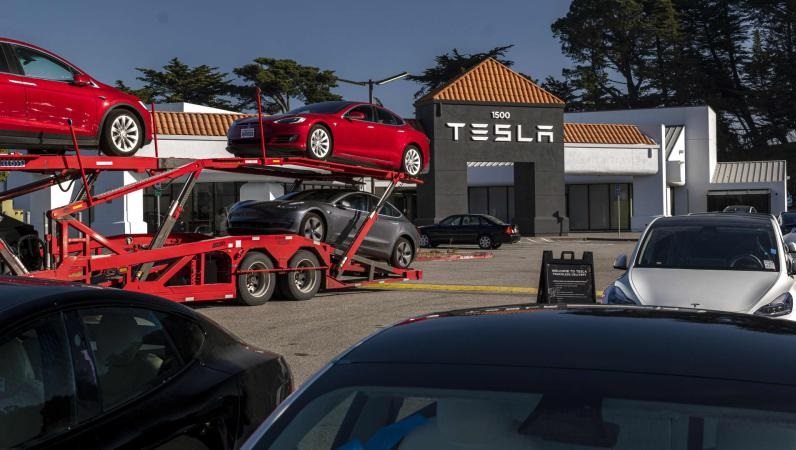
Elon Musk’s Tesla continues to experience an alarming collapse in key European markets, with high double-digit drops in car registrations reported across France, Sweden, the Netherlands, and Switzerland in April.

While the Model Y remains the world’s best-selling vehicle overall, its updated “Juniper” variant appears to be falling flat in a region where Tesla once thrived. The exception, Norway, showed only a modest gain of 12%, offering little relief for the embattled automaker.

Europe, the second-largest EV market after China, has become increasingly hostile territory for Musk’s brand. The latest figures show a 59% drop in France, 81% in Sweden—where a labor dispute continues to roil operations—74% in the Netherlands, and 50% in Switzerland. These are not peripheral markets but countries with strong economies, extensive EV infrastructure, and historically high electric vehicle adoption rates.

Political Controversy Meets Commercial Fallout

However, Tesla’s crumbling momentum in Europe is not solely due to manufacturing delays or market fatigue. A growing consensus among analysts and insiders is that the company’s woes are deeply entangled with Elon Musk’s increasingly far-right political advocacy, both in the U.S. and abroad.

Musk’s polarizing political conduct has drawn concern even from Tesla’s most loyal customers. In Germany, Musk openly supported the far-right Alternative für Deutschland (AfD), a party recently declared an extremist organization. In the UK, his vocal support for white nationalist figures like Tommy Robinson has alienated mainstream consumers, leading to widespread disillusionment with Tesla’s brand image.

The fallout appears to be reaching Tesla’s boardroom. Although publicly denied, a WSJ report claimed that Tesla’s board had begun discreetly searching for a potential CEO successor—an indication of internal unease over Musk’s ability to balance Tesla’s business strategy with his growing political crusade.

DOGE and the Distracted CEO

Adding another layer to the distraction is Musk’s leadership of the Department of Government Efficiency (DOGE), a federal agency created by President Donald Trump in 2025 to reduce wasteful government spending. Musk was appointed to lead DOGE with the goal of cutting $2 trillion from federal expenditures. So far, the agency has managed around $150 billion in reductions—a figure that has fallen far short of expectations.

DOGE’s efforts have been riddled with controversy. Musk’s use of AI to automate federal jobs, along with sweeping cuts that eliminated over 120,000 government positions, has ignited protests and legal challenges. Though Musk recently announced he would step back from DOGE to focus more on Tesla, many believe the damage, both to Tesla’s brand and investor confidence, may already be irreversible.

Critics say the agency, while ambitious in scope, became another platform for Musk’s ideological war against what he calls “woke bureaucracy.” That rhetoric has not played well in Europe, where public sentiment tends to favor institutional stability over brash libertarianism.

Sales Decline, The Cost of Musk’s Refusal to Back Down

Despite growing pressure, Musk has refused to temper his political tone. From attacking judges involved in cases against Trump to mocking opponents of his AI-powered government restructuring, Musk is believed to be leveraging the X platform as an extension of his personal ideology.

Even his limited public recommitment to Tesla, claiming he will “refocus” after stepping back from DOGE, has been met with skepticism. Investors remain uncertain whether the Tesla CEO is truly prepared to separate his political persona from the automaker’s commercial future.

While Germany and the UK have yet to release their April sales data, few expect a dramatic rebound. For a company once viewed as the vanguard of sustainable transport, Tesla now finds itself outpaced not just by rivals, but by its own CEO’s growing list of distractions and controversies.

Unless something changes drastically, either in tone, leadership, or strategy—Tesla risks cementing its decline in a market that once held its greatest promise.

Can Cardano Create a 17100% Price Explosion Like Solana Last Cycle? This Altcoin Has Better Chances

0

The cryptocurrency market is not new regarding astounding increases; a few cases highlight Solana’s explosive ascent over its last cycle. By November, Solana (SOL) surged from a meager $1.50 to an all-time high of $260—a startling 17,100% rise that made early investors overnight millionaires. Driven by lightning-fast transaction speeds, a flourishing DeFi and NFT ecosystem, and perfect market timing, Solana became the altcoin for cryptocurrency success.  As the crypto world prepares for another possible bull run, investors wonder: might Cardano (ADA), a blockchain darling noted for its exacting approach, repeat Solana’s fantastic performance? Although Cardano has advantages, a less-known altcoin called Rexas Finance (RXS) might take center stage, given a better chance for Solana-like gains.

ADA Steady Climb: Impressive, But Not Explosive

Cardano has long been a darling among blockchain purists because of its research-driven development and emphasis on scalability, security, and sustainability. ADA trades at about $0.66 now, due to recent improvements like the Plomin hard fork in January, which brought distributed governance, and continuous efforts like Hydra to increase transaction flow. With a devoted community and a market capitalization of over $22.4 billion, these developments have confirmed Cardano’s status as a significant rival in the smart contract industry. Can it, however, generate a 17,101% increase? The numbers point to a difficult task.

ADA would have to rise from $0.66 to over $130, therefore matching Solana’s last-cycle performance and surpassing the whole crypto market size—far above Bitcoin’s peak valuation. Although Cardano’s systematic approach has gained accolades, it has also come under fire for being overly reluctant to introduce features, allowing faster-moving rivals to rule DeFi and NFT adoption. Under optimistic circumstances—with price projections ranging from $5.5 to $8 by Q4-2025—that translates to a healthy 620% to 900% return. Analysts remain hopeful. That’s a positive comeback, but it’s not like Solana’s tremendous rise.

Rexas Finance (RXS): The Dark Horse with Solana-Like Potential

Cardano continues to progress steadily, while Rexas Finance (RXS) is emerging as a disruptive force capable of outpacing its more established competitors. Unlike ADA, which is competing in the crowded bright contract field, RXS is carving out a unique niche by emphasizing the tokenization of real-world assets (RWAs), such as real estate, commodities, and fine art. This opens trillion-dollar marketplaces and not only serves as a showstopper. With global real estate alone valued at $379.7 trillion, Rexas Finance wants to place a piece of the blockchain with applicable practical value to inspire mainstream adoption. At $0.20, RXS is in its last presale stage and has already raised over $47.9 million.

Analysts are making wild forecasts: a 20,000% increase to $40 or even a 38,000% leap to $76 post-listing. The hype is tangible. Why is this frenzy driven? First, RXS starts from a low base, allowing it significantly more percentage-wise space to expand than Cardano. Its presale success, CertiK-audited security, and user-friendly tools like the Rexas Token Builder and Rexas Estate—which streamline asset tokenizing for the ordinary person—echo Solana’s early momentum to popularity. The parallels between Rexas Finance and Solana’s 2021 run are remarkable. Like SOL in its early years, RXS boasts a low initial market capitalization, a clear use case, and a scalable ecosystem ready for explosive growth. Its deflationary tokenomics and rising communal acceptance.

Solana is under selling pressure so that a new altcoin could be found on the front stage. Should RXS land tier-1 exchange listings and seize the growing market for RWA tokenization, it might follow a shockingly similar path to Solana’s: low entrance price, explosive adoption, and exponential price increase. Cardano finds its success dragging her down. Its $22.4 billion market capitalization serves as a sign of stability and a constraint on the percentage gains smaller-cap tokens can achieve. With its fresh start and unrealized promise, RXS is free from the same limitations. A 17,101% increase for RXS would take it from $0.20 to $34.20—a complex but challenging realistic achievement compared to Cardano’s $5.6 trillion moonshot. RXS, with its fresh start and unrealized promise, is not bound by the same limitations.

Conclusion

Cardano’s fundamentals make it a consistent bet for steady gains; nevertheless, its size and pace make a 17,100% explosion in this cycle improbable. With its creative RWA emphasis, early-stage momentum, and Solana-esque development potential, Rexas Finance stands a higher chance of producing the kind of profits that keep crypto investors awake—in a good way. RXS could be the altcoin to keep an eye on as the market heats up; it could transform present presale customers into success tales of tomorrow. Rexas Finance might be the ticket for people running after the next Solana.


For more information about Rexas Finance (RXS) visit the links below:

Website: https://rexas.com

Win $1 Million Giveaway: https://bit.ly/Rexas1M

Whitepaper: https://rexas.com/rexas-whitepaper.pdf

Twitter/X: https://x.com/rexasfinance

Telegram: https://t.me/rexasfinance