DD
MM
YYYY

PAGES

DD
MM
YYYY

spot_img

PAGES

Home Blog Page 1384

What the CBEX Crash Reveals About Nigeria’s Ponzi Culture

0

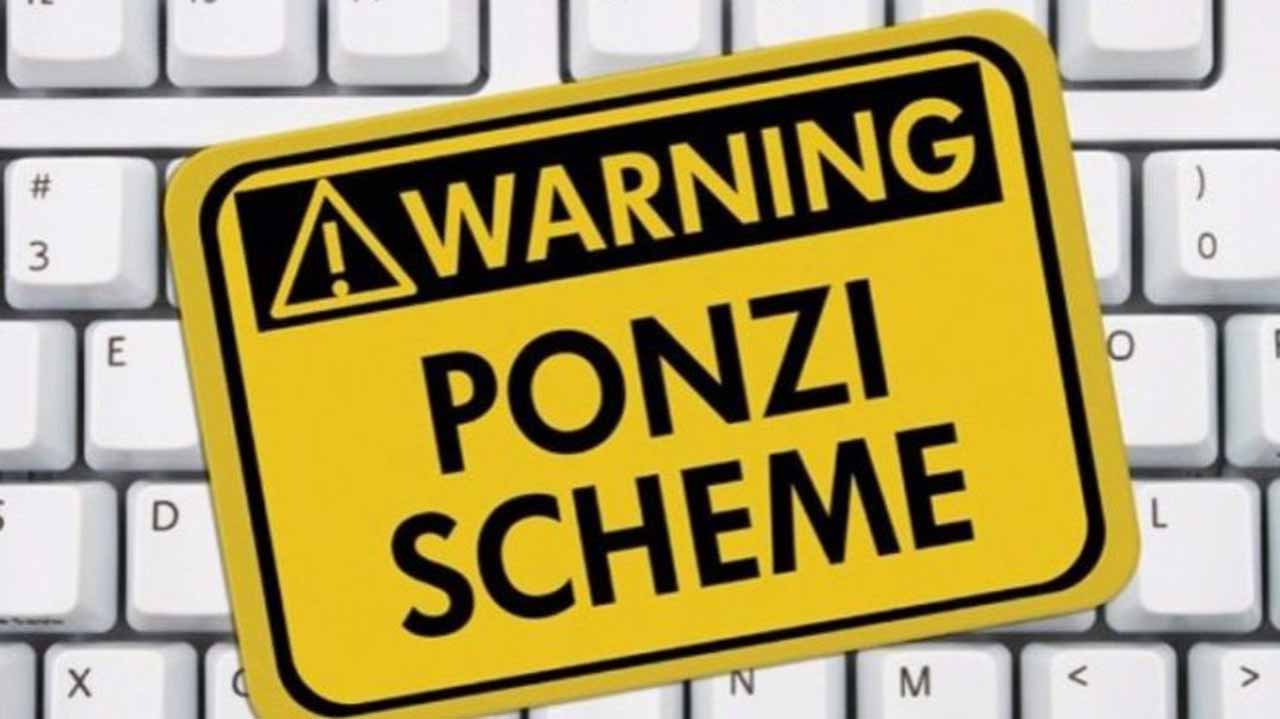
In Nairaland, Nigeria’s largest online forum, the echoes of anger, regret, and bitter wisdom have erupted once again, this time, over the collapse of CBEX, a cryptocurrency platform now widely regarded as the latest in the country’s long line of Ponzi tragedies.  Our analyst notes that the thread, which began as a simple inquiry: “CBEX… what’s happening?” in Nairaland quickly morphed into an ethnographic goldmine, offering a window into the psychological, social, and economic realities that make millions vulnerable to schemes promising overnight wealth.

CBEX, now accused of defrauding Nigerians of over N1.3 trillion, is seen as a textbook Ponzi scheme by forum participants. With promises of 100% returns in 30 days, it dangled the illusion of effortless wealth, fueled by buzzwords like AI trading, crypto arbitrage, and MLM recruitment strategies. For a time, the illusion held. Investors reported “withdrawals” and “profits” until the house of cards crumbled. As withdrawals froze, the platform demanded further “verification fees” of $100 or $200, an apparent last gasp of exploitation before it vanished.

As participants dissect the scam’s anatomy, three themes dominate: economic desperation, financial illiteracy, and regulatory impotence.

“It’s MMM all over again,” laments one user, invoking the ghost of Nigeria’s most infamous Ponzi scheme. Many see CBEX as just the latest manifestation of a cycle that has repeated itself from MMM to MBA Forex, Racksterli, and now CBEX. At the root of it, several argue, lies economic hardship. Nigeria’s rising inflation, high unemployment, and shrinking middle class have left many grasping for lifelines. Ponzi schemes thrive in such climates, offering false hope in an economy that often feels rigged against the ordinary citizen.

But poverty is only part of the equation. Financial illiteracy, a term that appears frequently in the thread, is another pillar of vulnerability. Participants note how many victims were lured in by the platform’s technical jargon and copied interface from legitimate exchanges like ByBit. The mirage of legitimacy was reinforced by fabricated AI trading dashboards and withdrawal notifications designed to convince users that profits were real. For many, these deceptive aesthetics replaced the due diligence that should precede any financial commitment.

Several commenters express bitter frustration not only at the scammers but at fellow Nigerians who, despite repeated warnings, continue to fall prey to such schemes. One user writes, “Nigerians don’t learn. If it’s not promising 100% in 30 days, they’re not interested.” This frustration reveals a cultural dimension, a normalization of financial shortcuts, even among educated populations. Greed and desperation, when mixed with digital naiveté, create fertile ground for exploitation.

The regulatory angle surfaces, but often as an afterthought or source of cynicism. The Securities and Exchange Commission (SEC) of Nigeria has repeatedly warned about unlicensed trading platforms, including CBEX. Yet users on Nairaland question the reach and effectiveness of such warnings. By the time regulators issue alerts, millions have already been swindled. Many call for more proactive enforcement, digital literacy campaigns, and real-time monitoring of suspicious platforms.

Then there’s the psychological toll. Some narrate stories of friends who took loans to invest, families who lost life savings, and breadwinners now plunged into debt. The emotional weight is heavy. Hope mingles with anger, and skepticism dances with shame. Yet, amid the bitterness, there is also peer-driven education happening. Nairaland users share advice, dissect scam patterns, and warn others, creating a kind of informal fraud prevention community that arguably does more real-time education than formal channels.

The CBEX collapse is not just a financial story. Our analyst notes that it is a mirror of Nigerian society: a society caught between survival and aspiration, between digital advancement and systemic vulnerability. It is also a story of how technology, when weaponized by fraudsters, exploits both the dreams and the desperation of its users.

If there’s a lesson in this digital ethnography, it’s that no technology can substitute for trust, transparency, and financial literacy. Until systemic reforms catch up—and until a culture of long-term thinking replaces the lust for quick riches, CBEX will not be the last crash. It is, sadly, just the latest chapter in a story still being written.

LVMH Reports Q1 Revenue Decline Amid Trump’s Tariff Wars, Signals Broader Sector Challenges

0

LVMH Moët Hennessy Louis Vuitton, the world’s largest luxury goods conglomerate, reported a 3% organic revenue decline in the first quarter of 2025, with sales totaling €20.3 billion ($23.08 billion), falling short of analyst expectations for 2% growth.

The disappointing results, announced on Monday, underscore the mounting pressures from U.S. President Donald Trump’s tariff policies, which are rippling through the luxury sector and beyond, while a new threat emerges from Chinese manufacturers flooding TikTok with discounted luxury-style goods.

LVMH’s revenue shortfall is a stark indicator of the fallout from Trump’s aggressive trade agenda, which has sparked fears of a U.S. recession and disrupted global markets. The administration’s recent tariff announcements, including a proposed 20% levy on European fashion and leather goods and a 31% duty on Swiss-produced watches, have created uncertainty for luxury brands reliant on transatlantic trade. Although Trump paused most tariffs for 90 days last week, imposing a blanket 10% duty instead, the volatility has already dampened consumer confidence and complicated supply chains.

LVMH’s finance chief, Cecile Cabanis, told analysts on Monday, “These days, parameters are changing every hour,” highlighting the challenges of navigating a trade environment marked by unpredictability. The company’s U.S. sales fell 3% in Q1, driven by weaker performance at its mass-market retail chain Sephora and in beauty products and drinks categories. High-end fashion and leather goods, including brands like Louis Vuitton, showed resilience, but the broader market slowdown signals trouble ahead.

The fashion and leather goods division, which accounts for nearly half of LVMH’s sales and over 75% of its profit, posted a 5% organic sales decline, missing expectations for a flat performance. Louis Vuitton outperformed its peers, but Dior lagged, with Bernstein analysts noting that changes in creative direction at the brand are “slow to appear.” The wines and spirits division, home to Hennessy cognac and Krug champagne, saw a 9% drop, reflecting cautious spending among U.S. consumers wary of economic uncertainty.

Ripple Effects Across Sectors

The impact of Trump’s tariff wars is not confined to luxury goods. Industries from automotive to consumer electronics are bracing for higher costs and supply chain disruptions, as tariffs threaten to inflate prices and erode profit margins. Europe’s luxury players, including Hermès, Kering, and Prada, had pinned hopes on wealthy American shoppers to offset weak demand in China, but fears of a prolonged U.S. economic slowdown are dimming prospects for a sector already grappling with its longest slump in years.

Analysts at RBC warned that LVMH’s results “amplify investor concerns around underlying demand recovery,” predicting further earnings cuts across the luxury sector due to tariff-related risks. The broader market echoed these concerns, with LVMH’s New York-listed depositary receipts plunging 7.5% after the results were released on Monday. The Stoxx Europe Luxury 10 Index, which tracks major luxury firms, has also trended downward, reflecting fears that trade barriers could choke off growth.

Beyond luxury, retailers like Amazon are intensifying competition. Cabanis noted that Amazon’s “very aggressive” pricing strategy hurt Sephora’s performance in the U.S., a sign that tariff-induced cost pressures are forcing companies to compete more fiercely on price, even in premium markets. This dynamic is squeezing margins and raising questions about the sustainability of luxury’s high-price model in a tariff-heavy world.

Chinese Manufacturers Disrupt via TikTok

Adding to LVMH’s woes, Chinese manufacturers are leveraging TikTok to hawk luxury-style goods at massive discounts, targeting consumers in Europe and the United States directly. These producers, often operating outside traditional retail channels, offer handbags, jewelry, and apparel that mimic high-end designs at a fraction of the cost. Videos showcasing “dupes” of Louis Vuitton bags or Bulgari-inspired accessories have gone viral, with some sellers reporting tens of thousands of orders monthly.

Industry experts believe this trend could erode the exclusivity that defines luxury brands.

Social media posts highlight growing consumer interest in these affordable alternatives, with some users praising the quality and others debating the ethics of buying knockoffs.

For LVMH, which owns Louis Vuitton, Dior, and Tiffany & Co., this development threatens to undercut pricing power, particularly in markets already softened by tariffs. The company has invested heavily in brand prestige and intellectual property enforcement, but the scale and speed of TikTok’s reach pose a new challenge. In China, LVMH’s sales fell 11% in Q1.

LVMH is exploring ways to mitigate tariff impacts, including expanding production in the U.S., where it operates three Louis Vuitton factories and Tiffany workshops. However, its high-profile Texas facility has faced persistent production issues, ranking among the worst-performing globally, according to Reuters. Cabanis remained cautious about scaling U.S. manufacturing.

“We’ll see at what pace and how much we want that to evolve,” Cabanis said.

However, LVMH’s scale and diversified portfolio position it better than most to weather the storm. Experts believe that the company’s ability to command premium prices for iconic products like Louis Vuitton handbags and Hennessy cognac provides a buffer against rising costs.

Nigeria Gazettes ECOWAS Tariff Schedule, Finally Commits to AfCFTA Trade as Continent Eyes $450 Billion Boost

0

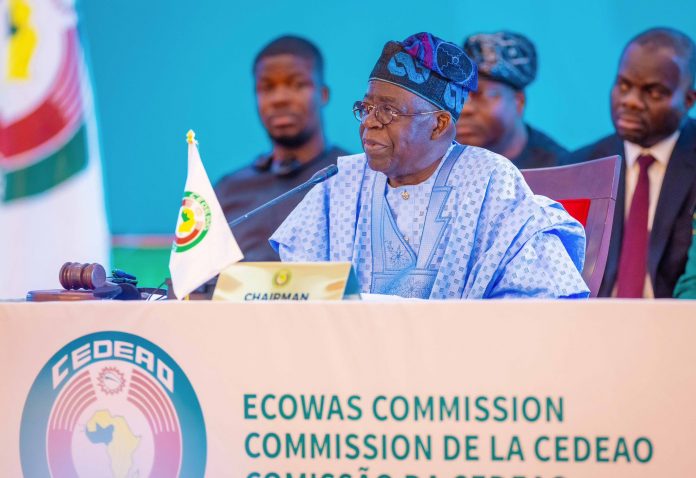
Nigeria has officially gazetted and transmitted its ECOWAS Schedule of Tariff Offers for Trade in Goods under the African Continental Free Trade Area (AfCFTA), a long-overdue but crucial step toward unlocking its participation in what is being touted as the world’s largest free trade zone.

Signed by President Bola Ahmed Tinubu and transmitted to the AfCFTA Secretariat just days before the 16th Council of Ministers Meeting on Trade scheduled for April 15 in Kinshasa, Democratic Republic of Congo, the move clears a critical bottleneck and sends a clear message that Nigeria is now ready to engage fully under the bloc’s preferential trade framework.

It marks the first formal action by Nigeria that sets the country on track to implement zero duties on 90 percent of its tariff lines, a requirement under AfCFTA rules. The gazette removes any ambiguity about Nigeria’s intentions and offers its exporters a direct path to compete more favorably in a market that spans 54 countries and over 1.3 billion people.

The African Continental Free Trade Area is an ambitious continental initiative aimed at creating a single market for goods and services, facilitating capital and people movement, and laying the foundation for a continental customs union. It officially came into force in January 2021 and is a flagship project under the African Union’s Agenda 2063.

Its primary goal is to eliminate trade barriers, reduce tariffs, and deepen economic integration across Africa. The agreement seeks to increase intra-African trade by over 50 percent by 2030, according to the United Nations Economic Commission for Africa (UNECA). Estimates from the World Bank project that AfCFTA could boost Africa’s income by $450 billion by 2035 and lift more than 30 million people out of extreme poverty. It could also raise wages by nearly 10 percent and help harmonize trade regulations across the continent—an important shift in a region often crippled by fragmented markets and red tape.

But while AfCFTA was launched with considerable fanfare, implementation has been uneven. Nigeria, despite being Africa’s largest economy and most populous nation, has been among the most sluggish to commit.

Nigeria ratified the AfCFTA agreement in December 2020, months after most African countries had signed on. Even after ratification, the country stalled on submitting its tariff offers—a requirement for trading under the bloc’s preferential rules. It wasn’t until July 2024 that Nigeria flagged off its first shipment under AfCFTA, a symbolic export more than a structured trade flow.

Critics say Nigeria’s hesitancy is rooted in internal contradictions: a stated desire to lead African economic integration, countered by protectionist instincts and domestic inefficiencies. Successive governments have expressed concern that fully liberalizing trade could expose local industries—particularly manufacturing and agriculture—to intense competition from more productive African economies like Egypt, Kenya, and South Africa.

This delay has cost Nigerian exporters valuable first-mover advantages. While smaller economies like Ghana, Rwanda, and even Togo have actively participated in AfCFTA’s guided trade initiative and pilot shipments, Nigeria’s exporters have remained in limbo—unable to take advantage of the bloc’s tariff-free benefits.

That appears to be changing. The gazetted schedule, now officially transmitted, unlocks the legal framework needed for Nigerian businesses to begin benefiting from AfCFTA’s incentives.

Under the agreement, Nigeria has committed to a phased tariff reduction plan. For trade with Least Developed Countries (LDCs), Nigeria will reduce tariffs on 90 percent of goods by 50 percent by 2025, with 10 percent reductions each year. For countries not classified as LDCs, Nigeria has opted for full tariff elimination beginning immediately, with a 20 percent reduction applied annually.

This phased liberalization is designed to protect local industries while also signaling long-term openness to continental trade. It also aligns with the African Union’s directive from the 35th Ordinary Session of Heads of State and Government in 2022, which encouraged member states to begin trading while finalizing schedules.

The expected economic benefits are immense. The removal of tariffs across 90 percent of goods opens up unprecedented opportunities for Nigerian producers, from agro-processing to textiles, machinery, and pharmaceuticals. Experts say the move could accelerate industrialization and boost non-oil exports, which have been for long a weak link in Nigeria’s economic framework. It could also help diversify revenue and reduce dependence on crude oil, which still accounts for over 85 percent of Nigeria’s export earnings.

The policy shift is expected to stimulate small and medium-sized enterprise growth, as reduced costs of entry improve the chances of regional expansion. Increased exports and higher investor confidence may also create jobs across manufacturing, logistics, and services. As Nigeria begins to shift from a consumption-heavy economy to a production-based model, there is hope that the country will finally begin addressing its structural trade deficits. Full participation in AfCFTA further enhances Nigeria’s ability to influence regional economic policy and shape the bloc’s regulatory frameworks from within.

Nigeria is also positioning itself as a champion of digital trade within AfCFTA. In February 2025, President Tinubu was praised for his leadership in advancing the bloc’s digital trade agenda, a key pillar in modernizing African commerce. As a co-chair of AfCFTA’s Digital Trade Initiative, Nigeria is helping to develop frameworks for cross-border e-commerce, digital payments, and data protection—areas that could lower transaction costs and enable young, tech-savvy entrepreneurs to break into regional markets.

The government has also hinted at rolling out a digital AfCFTA window through the Nigerian Export Promotion Council (NEPC) to help businesses navigate customs documentation, product standards, and logistics across member states.

While the gazette signals progress, questions remain over whether Nigeria can overcome its bureaucratic inertia, port congestion, forex instability, and inconsistent trade policy that have historically undermined its regional competitiveness. The Tinubu administration appears keen to rewrite that narrative, though results will depend on execution. As the continent’s economic giant, Nigeria’s full buy-in is not just symbolic—it’s pivotal. A vibrant AfCFTA without Nigeria is incomplete. A proactive Nigeria is expected to turn the trade pact into a genuine economic revolution.

A Trade War in the Making

0

At the end of March, Donald Trump reiterated his threat to impose higher tariffs on the European Union and Canada if they “economically harm the United States” in retaliation for tariffs he had imposed earlier.

Such statements from the U.S. President continue to strain relations between the transatlantic allies. As one of the key indicators of the U.S. economy, the U.S. Dollar Index (DXY) remains not only an economic parameter but also a vital factor reflected in the dynamics of global markets, especially in times of geopolitical tension.

Looking at the DXY performance, the U.S. dollar has remained relatively resilient despite ongoing global uncertainty. After peaking above 114 in late 2022, it has moderated to around 103 points in April 2025, reflecting a more balanced outlook amid interest rate adjustments and softening inflation data.

Since its peak, the U.S. currency’s strength has experienced volatility, closely tied to Federal Reserve policy expectations and global trade developments.

“If the European Union works with Canada in order to do economic harm to the USA, large-scale tariffs, far larger than currently planned, will be placed on them both in order to protect the best friend that each of those two countries has ever had,” Trump wrote on the Truth Social network.

Recently, Donald Trump renewed his call for a 25% tariff on car imports into the United States, a move he frames as essential to safeguarding American industry — a continuation of his long-standing protectionist trade agenda.

European Commission President Ursula von der Leyen responded, calling the measure “bad for businesses and even worse taxes for consumers,” while Canadian Prime Minister Mark Carney labelled the tariffs a “direct attack” on Canadian workers and signalled possible countermeasures.

On Thursday, French Minister of Economics and Finance Eric Lombard urged Washington “to return to the table for meaningful dialogue.” The European Union, he said, had no choice but to stand firm in response to the U.S. “aggressive” trade policy.

“We are in a situation where we are under attack. Either we allow it and it never ends, or we retaliate. Unfortunately, that is the rule of the game imposed by the Americans,” he added. “I hope that when everyone understands that this [trade] war is going nowhere, we will be able to achieve a reduction.”

The EU has delayed the implementation of its latest round of countermeasures, including increased duties on American whiskey and motorcycles, until mid-April. Donald Trump, in return, has threatened to impose 200% tariffs on European wines and spirits. Lombard expressed optimism that negotiations could resume ahead of the upcoming International Monetary Fund meetings in Washington.

Meanwhile, the new round of tariffs on cars imported into the United States took effect on April 3, coinciding with Trump’s announcement of reciprocal tariffs on countries with persistent trade surpluses with the U.S.

These tariffs add to the legacy of trade barriers initiated during Trump’s earlier presidency, including duties on steel and aluminium, as well as various imports from Mexico, Canada, and China.

Another round of negotiations, expected in the coming days, will determine the evolution of the US-EU trade dispute. As for the measures already in place, time will tell whether Trump’s renewed trade policy push will truly “make America wealthy again.”

China’s Xi Jinping Visits Vietnam, Bolsters Ties Amid U.S. Tariff Storm, Sparking Washington’s Alarm

0

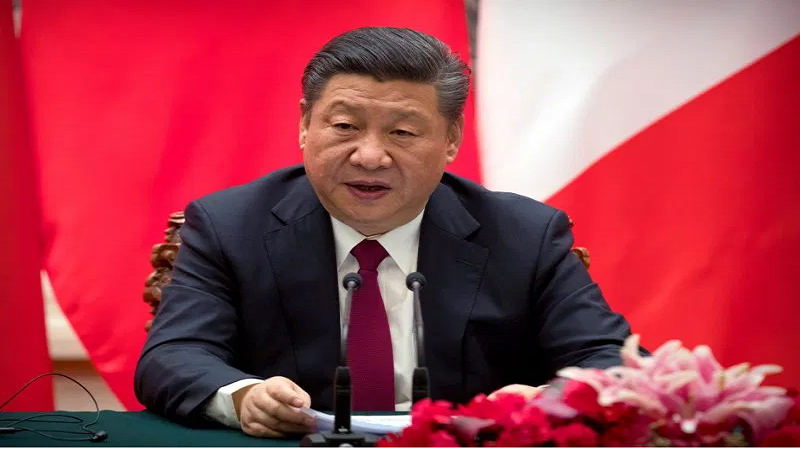
Chinese President Xi Jinping made a high-profile visit to Vietnam on Monday, intensifying global trade tensions, as Beijing and Hanoi signed 45 cooperation agreements to deepen economic ties, particularly in trade and supply chains.

The move, part of Xi’s broader Southeast Asia tour, has raised fresh concerns in Washington, with U.S. President Donald Trump accusing the two communist-led nations of conspiring to undermine American interests.

“I don’t blame China; I don’t blame Vietnam,” Trump told reporters at the White House. “That’s a lovely meeting. Meeting like, trying to figure out, ‘how do we screw the United States of America?’”

The visit comes against the backdrop of a bruising U.S.-China trade war, exacerbated by steep tariffs and protectionist policies that have reshaped global commerce. Xi’s trip, which includes stops in Malaysia and Cambodia through Friday, underscores China’s strategy to counter U.S. economic pressure by strengthening regional alliances, with Vietnam—a key industrial hub—emerging as a linchpin.

A Strategic Partnership in Hanoi

Xi’s two-day visit to Hanoi, his second in less than 18 months, saw him meet Vietnam’s top leader, To Lam, and Prime Minister Pham Minh Chinh. The leaders oversaw the signing of dozens of agreements covering supply chains, railways, artificial intelligence, and green energy, according to documents reviewed by Reuters and state media from both nations. While the specifics of these deals remain undisclosed, their scope signals an ambitious push to integrate economies amid global trade disruptions.

In an article published in Nhandan, the newspaper of Vietnam’s Communist Party, Xi called for enhanced cooperation in production and supply chains, warning that “there are no winners in trade wars and tariff wars.” Without naming the United States, he criticized protectionism as a dead-end, a sentiment echoed in his meeting with Chinh, where he urged opposition to “unilateral bullying,” per China’s Xinhua news agency.

Among the agreements, a memorandum of understanding between the China Council for the Promotion of International Trade and the Vietnam Chamber of Commerce and Industry aims to streamline certification of goods’ origins—a critical issue as Vietnam faces U.S. scrutiny over trade practices. Vietnam also greenlit Chinese loans for new rail links to boost bilateral trade, though no credit agreement was finalized. To Lam pressed China for concessional loans, Vietnamese state media reported, highlighting Hanoi’s eagerness to deepen infrastructure ties.

In a significant concession, Vietnam approved planes certified by China’s aviation regulator, paving the way for China’s COMAC passenger jets to operate in the country. On Sunday, Vietnam’s budget airline Vietjet signed an MoU with COMAC, potentially to lease two C909 jets for domestic routes, a deal that could bolster China’s struggling aviation exports.

The U.S.-China Trade War Fueling A Global Fault Line

The Hanoi summit unfolds as the U.S.-China trade war, reignited under Trump’s second term, reaches new heights. The United States has imposed 145% duties on Chinese imports, targeting electronics, steel, and other goods to curb Beijing’s economic influence and protect American industries. These tariffs, building on measures from Trump’s first administration, have pushed Chinese manufacturers to relocate operations to Southeast Asia, with Vietnam receiving billions in investments to sidestep U.S. levies.

Vietnam, meanwhile, faces its own tariff threat: a potential 46% duty on its exports to the U.S. set to take effect in July 2025, after a global trade moratorium expires. Hanoi is negotiating to reduce these tariffs, a process complicated by Washington’s demand that Vietnam ensure its exports—labeled “Made in Vietnam”—meet strict rules of origin. This has led Vietnam to tighten controls on trade with China, cracking down on goods that may be minimally processed in Vietnam to dodge U.S. tariffs.

Vietnam’s trade data underscores its pivotal role: in Q1 2025, it imported $30 billion in goods from China, primarily components for electronics, shoes, and apparel while exporting $31.4 billion to the U.S., its largest market. This near-parity reflects Vietnam’s position as a conduit between Chinese supply chains and American consumers, a dynamic that alarms Washington as Beijing and Hanoi grow closer.

The U.S. has also pressed Vietnam to address broader concerns, including market access and intellectual property protections. In recent months, Vietnam imposed anti-dumping duties on Chinese steel and ended tax waivers for low-value parcels to curb the influx of cheap Chinese goods—moves seen as aligning with U.S. demands. Additionally, Vietnam’s approval of Elon Musk’s Starlink satellite service, signaling Hanoi’s willingness to balance ties with both powers, has irked Beijing.

The Alarm in Washington’s Reaction

Xi’s visit has amplified U.S. fears that China is rallying Southeast Asian nations to counter American trade policies. Trump’s blunt remarks on Monday framed the China-Vietnam talks as a direct challenge, though he tempered his criticism by noting he didn’t fault either nation for pursuing their interests. A Trump administration official revealed that Trump and To Lam recently discussed reducing reciprocal tariffs, with plans for an in-person meeting soon, suggesting a pragmatic approach despite the rhetoric.

Trump’s comments echo broader anxieties in Washington about losing economic leverage in Asia. Vietnam’s role as a major exporter of electronics and apparel to the U.S. makes it a critical player, and any shift toward deeper integration with China could weaken America’s trade position. The Biden administration’s earlier efforts to strengthen ties with Vietnam, including upgrading diplomatic relations in 2023, have been overshadowed by Trump’s tariff-heavy strategy, which risks pushing Hanoi closer to Beijing.

Geopolitical Undercurrents

Beyond trade, Xi’s visit highlights China’s broader ambitions in Southeast Asia. His stops in Malaysia and Cambodia, countries hit hard by U.S. tariffs, aim to cement Beijing’s influence in a region wary of choosing sides. Cambodia, a close Chinese ally, and Malaysia, a key trade partner, offer Xi opportunities to promote initiatives like the Belt and Road, despite past concerns over debt and sovereignty.

However, tensions persist. Vietnam and China frequently clash over South China Sea boundaries, a sore point that economic cooperation has not fully resolved. Vietnam’s concessions to the U.S., including Starlink’s deployment, may strain ties with Beijing, even as Hanoi seeks Chinese investment and loans.

Some analysts believe that Vietnam’s leaders are walking a tightrope, leveraging Chinese capital to fuel growth while placating U.S. demands to safeguard its export-driven economy.