DD
MM
YYYY

PAGES

DD
MM
YYYY

spot_img

PAGES

Home Blog Page 1391

Tesla Beaten By Little-Known Chinese EVs in The UK, As Europe Sales Continue to Tumble

0

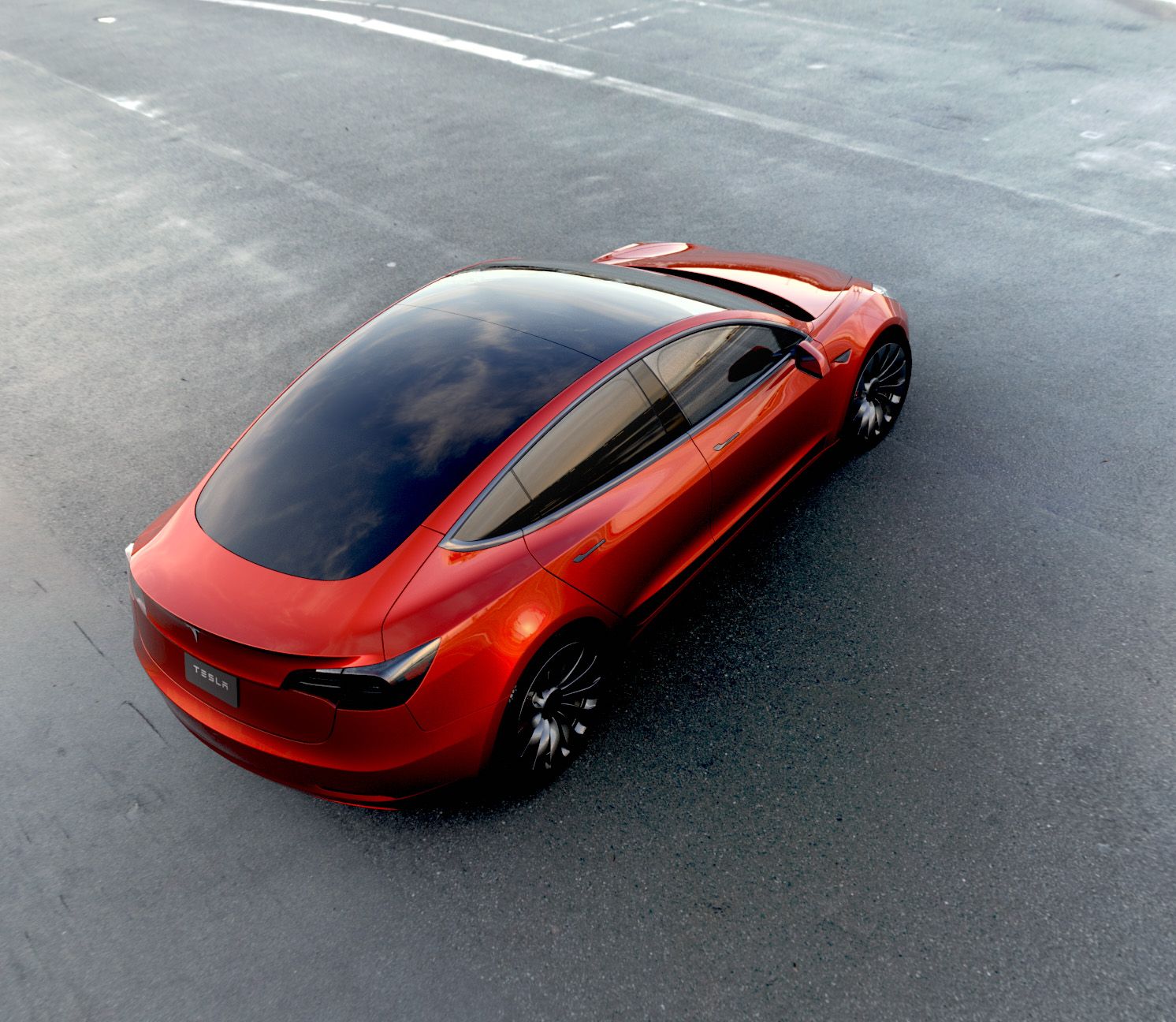
Tesla’s troubles in Europe have taken a dramatic turn for the worse. The electric vehicle giant, once the symbol of futuristic mobility, has been overtaken by two little-known Chinese brands in the UK, a market once considered friendly ground for EV expansion.

According to the Society of Motor Manufacturers and Traders (SMMT), Tesla sold just 512 vehicles in Britain in April, down from more than 1,300 the previous month. This represents not only a dramatic month-on-month slump but a symbolic collapse of the brand’s dominance in one of its most important overseas markets.

By contrast, Chinese auto powerhouse BYD surged past Tesla with 2,511 cars sold, a staggering 650% increase, while Chery-owned upstarts Jaecoo and Omoda, which only entered the UK market last year, sold 1,053 and 910 units, respectively.

The fact that Jaecoo and Omoda, barely recognized names in the UK, have now overtaken Tesla underscores the scale of the automaker’s reputational and competitive crisis across Europe. These brands offer a combination of electric, hybrid, and gas-powered vehicles, allowing them to cater to a broader segment of the market, unlike Tesla, which remains EV-only.

But the dismal sales figures are more than a reflection of shifting product preferences. Tesla is being punished by European consumers not just for what it builds, but increasingly for who leads it.

Musk’s Politics Continues to Fuel a Consumer Backlash

Tesla’s shrinking footprint across Europe comes amid a growing backlash against Elon Musk’s public alignment with far-right political causes. His endorsement of the Alternative für Deutschland (AfD) party in Germany, as well as his advisory role under President Donald Trump, has sparked protests in some cities and, in some cases, acts of vandalism and suspected arson targeting Tesla showrooms and vehicles.

While Tesla’s American fan base has largely weathered Musk’s political evolution, European buyers — particularly in liberal-leaning countries like Germany, France, and the UK — appear less tolerant of his entanglements. The result is a brand hemorrhaging not just sales but public goodwill.

European car registration data for April show that Tesla suffered double-digit sales declines across several key markets, with the updated Model Y, its most important product in the region, failing to reverse the downward trend. In a bid to slow the slide, Tesla has begun offering up to two years of free supercharging in the UK, a generous perk that underlines the urgency of the crisis.

Chinese Brands Capitalize on Tesla’s Fall

Meanwhile, Chinese automakers — once dismissed as minor players — are now capitalizing on the vacuum Tesla is leaving behind. BYD, which is already the world’s largest EV maker by volume, has expanded its UK footprint with aggressive pricing, government-aligned incentives, and rapid dealership growth.

But it’s the rise of Jaecoo and Omoda, both part of Chinese conglomerate Chery, that has startled the industry. Their quick entry and strong early performance suggest British consumers are open to exploring Chinese alternatives, especially when packaged with features that Tesla still resists, such as petrol-hybrid options and tactile interior controls.

Chery has also smartly sidestepped Tesla’s recent customer service controversies by emphasizing local partnerships and support networks, a strategy that seems to be paying off in markets where Tesla has struggled to maintain after-sales satisfaction.

Europe’s EV Market Shifts Without Tesla

Tesla’s predicament is also part of a broader shift in the European EV market, where local legacy automakers are clawing back territory after early disruption by Musk’s firm. Volkswagen, Mercedes, and BMW have stepped up EV offerings with locally tailored models and dealer incentives, while startups like Nio and XPeng, both Chinese, are plotting expansions into Western Europe despite tariff barriers.

The European Union last year imposed tariffs on Chinese EV imports in a bid to protect the domestic industry, but the policy has yet to slow China’s march. Instead, companies like BYD have begun exploring manufacturing in Europe to avoid duties — a move that could further intensify competition.

Tesla, which once had first-mover advantage and a cult-like following, now finds itself squeezed on all sides: undercut by cheaper Chinese models, outclassed by European legacy marques in customer care and localization, and bruised by a PR crisis of Musk’s own making.

An Eroding Global Image

Tesla’s European brand crisis fits within a broader global pattern where Musk’s politics and business decisions are increasingly alienating partners. His feud with regulators, advocacy for far-right speech policies on X, and coziness with Donald Trump have led to regulatory scrutiny in Brazil, uproar in Germany, and declining brand favorability ratings worldwide.

All of this marks a shift from Tesla’s earlier status as a disruptor with mass appeal. Today, it’s increasingly a lightning rod, both for praise and protest.

In Britain, the drop from over 1,300 units in March to just over 500 in April is not a blip; it’s a warning. Despite new perks like free supercharging and updates to the Model Y, UK consumers appear to be voting with their wallets, and the verdict so far is clear: Tesla’s aura is fading.


Europe Lures Scientists with €500m Super Grant After Trump’s DEI Ban, Marking a Wider Shift Away from U.S. Influence

0

The European Union on Monday launched a sweeping initiative to position itself as a global refuge for scientists and researchers, offering €500 million in new “super grants” and legal protections for academic freedom.

The move comes in direct response to U.S. President Donald Trump’s latest crackdown on federal research funding tied to diversity, equity, and inclusion (DEI) — a decision that has prompted outrage in the academic community and growing unease among America’s allies.

The new EU program, unveiled at the “Choose Europe for Science” summit in Paris, is more than a pitch for top talent — it’s a geopolitical signal. French President Emmanuel Macron and European Commission President Ursula von der Leyen took the stage at Sorbonne University to declare Europe open to those being sidelined elsewhere.

“A few years ago, no one would have imagined that one of the biggest democracies in the world would cancel research programs under the pretext that the word diversity was in this program,” Macron said. “No one would have thought that one of the biggest democracies in the world would delete with a stroke the ability of one researcher or another to obtain visas. But here we are.”

Von der Leyen followed with an equally pointed message: “We can all agree that science has no passport, no gender, no ethnicity, no political party. We believe that diversity is an asset of humanity and the lifeblood of science. It is one of the most valuable global assets and it must be protected.”

A $566 Million Bet on Global Talent

Under the new plan, the European Commission will inject €500 million ($566 million) into the European Research Council between 2025 and 2027. The goal is to provide long-term, stable funding for researchers, including those now being pushed out of U.S. institutions, while removing the bureaucratic bottlenecks that often hamper scientific work in Europe.

Von der Leyen, a former German defense minister and trained physician, said the EU will also introduce new legislation to enshrine the freedom of scientific research into law — a direct contrast to growing political interference in the United States. She also vowed to tackle other known obstacles to innovation in the EU, such as excessive red tape and limited collaboration with private industry.

“The threats rise across the world,” she said. “Europe will not compromise on its principles.”

The offer to global scientists, especially those affected by recent U.S. policy shifts, is part of a much broader pivot by the EU and its allies away from Washington’s sphere of influence, a slow but deepening rupture set in motion by Trump’s America First doctrine.

Trump’s War on DEI Sparks Global Fallout

Trump’s executive order in March to terminate all federal funding for DEI-related research has already resulted in the cancellation of more than 380 grant projects by the National Science Foundation (NSF). Among the defunded initiatives were efforts to combat misinformation, track climate change in Alaska’s Arctic with Indigenous communities, and fight online censorship in countries like China and Iran.

Some projects were aimed at simply broadening the demographics of people pursuing careers in science, engineering, and technology — a goal many experts argue is essential to sustaining innovation.

The White House defended the move as an effort to end what it called “inherently discriminatory policies.”

“If the European Union wants to embrace policies that divide, rather than focus on real scientific discovery, they should not be surprised when U.S. innovation continues to outpace Europe,” said Trump spokesperson Anna Kelly.

But while Trump frames DEI initiatives as a political liability, much of the world views them as fundamental to a healthy and competitive research environment. The backlash among U.S. and EU academics has been swift. Scientists, researchers, and medical professionals have staged protests in major cities and accused the administration of ideological censorship.

“To undermine free and open research is a gigantic miscalculation,” von der Leyen said.

The Long Arc of Transatlantic Drift

The EU’s pivot on science policy fits into a larger pattern that has been unfolding quietly over the past eight years, one that sees U.S. allies rethinking their reliance on Washington.

Since taking office in January, Trump has reignited a trade war, imposed tariffs on key European imports, and refused to endorse multilateral cooperation on issues ranging from climate change to pandemic preparedness. His previous term saw the U.S. withdrawal from the Paris Agreement and the World Health Organization, alienating even close partners.

Many in Europe now believe the old transatlantic compact cannot survive a second Trump presidency intact. What once looked like a temporary rift has matured into a fundamental reassessment of the West’s internal alliances. The EU is now pursuing trade deals independently, increasing defense collaboration without NATO, and — in this latest move — building its own scientific ecosystem no longer reliant on U.S. institutions.

Von der Leyen’s speech reflected that thinking. By making Europe “a magnet for researchers,” she is not only reacting to the U.S. policy vacuum but exploiting it.

A Message to U.S. Scientists: Come to Europe

Macron, who has sought to style himself as a global statesman amid the Western power shift, issued a direct appeal to American researchers.

“To those who feel under threat elsewhere: the message is simple,” he said. “If you like freedom, come and help us to remain free, to do research here, to help us become better, to invest in our future.”

Macron also announced that France would soon unveil new policies to ramp up investment in science and research at the national level, although no details were provided.

For both leaders, the campaign is not just about scientific output. It’s about values. The EU is betting that it can win over disillusioned scientists by offering not only money but also the moral high ground.

However, while the move marks a major step in breaking away from the U.S.-led scientific research order, it is believed that the success will depend on how fast European institutions can reform their own flaws, including slow visa processes, fragmented national funding, and poor industry linkages.

Integration of ZK-Proofs into Google Wallet Has The Potential to Exacerbate Existing Divides

0

Google Wallet has integrated zero-knowledge proof (ZKP) technology to enhance privacy in age and identity verification, allowing users to prove they meet age requirements without revealing sensitive personal data like birthdates or full IDs. This system, which leverages cryptographic principles often associated with blockchain, is live across mobile devices and apps using Google’s Digital Credential API.

The dating app Bumble is among the first partners, using digital IDs from Google Wallet for user verification while ZKPs handle age confirmation. The rollout began in the UK, with digital IDs linked to passports, and is expanding to U.S. states like Arkansas, Montana, Puerto Rico, and West Virginia, with plans for 50 more countries. Google also intends to open-source its ZKP tools, potentially setting a new standard for privacy-preserving digital identity.

While the system’s blockchain ties are unclear, it aligns with growing privacy demands in digital services like dating, e-commerce, and social media. The integration of ZK-proofs into Google Wallet for age and ID verification has several implications. ZK-proofs allow users to verify attributes (e.g., being over 18) without disclosing sensitive details (e.g., exact birthdate or full ID). This reduces the risk of data breaches and misuse of personal information, addressing growing privacy concerns in digital services.

The rollout in the UK and U.S. states, with plans for 50 more countries, could accelerate the global shift toward digital IDs. Partnerships with apps like Bumble suggest practical use cases in industries like dating, e-commerce, and social media, potentially normalizing digital credentials. While not explicitly blockchain-based, ZK-proofs are a hallmark of blockchain systems. Their use in Google Wallet could normalize cryptographic tools in mainstream tech, paving the way for broader blockchain adoption in identity management and beyond.

Google’s plan to open-source its ZKP tools could democratize access to privacy-preserving tech, enabling developers to build similar systems. This may spur innovation but also risks uneven implementation if not standardized properly. As digital IDs expand, governments and regulators may scrutinize interoperability, security, and compliance with laws like GDPR or CCPA. Google’s dominance could raise trust concerns, especially if data handling practices are questioned.

While ZK-proofs enhance privacy, their complexity could introduce vulnerabilities if not implemented correctly. Ensuring robust security across diverse devices and regions will be critical. This move positions Google Wallet as a leader in privacy-focused digital identity, potentially challenging competitors like Apple Wallet or decentralized identity platforms. It could reshape market dynamics in digital payments and identity verification.

This development signals a shift toward privacy-first, scalable digital identity systems, with significant implications for user trust, regulatory landscapes, and technological innovation. ZK-proof-based digital IDs rely on smartphones and apps like Google Wallet, which may exclude individuals without access to modern devices or reliable internet, particularly in rural or developing regions. The expansion to 50 countries may prioritize urban, tech-savvy populations, leaving others behind.

Older or lower-end devices may struggle with the cryptographic processing required for ZK-proofs, potentially limiting access for users with outdated hardware. This could widen the gap between tech-enabled populations and those without access, reinforcing inequalities in digital service participation (e.g., online dating, e-commerce).

While Google Wallet’s base service is free, the broader ecosystem (smartphones, data plans, or linked payment methods) involves costs that may exclude low-income users. Digital IDs tied to passports or state-issued credentials may also require fees or bureaucratic processes. Early adopters, like Bumble users in the UK or U.S. states, are likely to be in wealthier, tech-forward demographics. Regions or communities with lower digital literacy or trust in tech giants may lag in adoption.

Socioeconomic disparities could deepen if digital IDs become a prerequisite for accessing services, marginalizing those unable to participate. ZK-proofs offer strong privacy protections, but trust in Google—a company with a history of data controversies—may vary. Tech-savvy users may embrace the system, while others, wary of surveillance or data misuse, may opt out or lack the knowledge to evaluate it.

In countries with high privacy awareness (e.g., EU nations under GDPR), adoption may be smoother. In contrast, regions with less regulatory oversight or histories of tech misuse may see resistance. A trust divide could emerge between those comfortable with Google’s ecosystem and those who reject it, potentially fragmenting digital identity adoption.

The rollout prioritizes certain regions (UK, select U.S. states) and plans expansion to 50 countries, but many nations, especially in Africa or parts of Asia, may be excluded due to infrastructure or regulatory hurdles. This could create a global divide in access to privacy-preserving digital IDs. Differing data protection laws and ID systems (e.g., EU’s eIDAS vs. U.S. state-based IDs) may lead to uneven implementation, favoring regions with established digital frameworks.

A global north-south divide could persist, with wealthier nations benefiting from advanced identity systems while others struggle to integrate. Google’s plan to open-source ZKP tools could empower developers globally, but only those with the technical expertise and resources to leverage them will benefit. Smaller firms or developers in under-resourced regions may struggle to compete with larger players.

If Google’s Digital Credential API becomes a de facto standard, it could marginalize decentralized or competing identity solutions, favoring Google’s ecosystem. A divide could form between developers integrated into Google’s framework and those pursuing alternative systems, potentially stifling innovation in decentralized identity.

Mitigating the Divide

Google could partner with governments or NGOs to subsidize devices, improve connectivity, or provide digital literacy programs, especially in underserved regions. Supporting global standards for digital IDs (e.g., W3C’s Verifiable Credentials) could reduce fragmentation and ensure broader access. Clear communication about data practices and ZKP security could bridge trust gaps, encouraging adoption across diverse demographics.

Prioritizing low-income or underrepresented regions in the expansion to 50 countries could narrow global disparities. The integration of ZK-proofs into Google Wallet has the potential to exacerbate existing divides—digital, socioeconomic, trust-based, global, and innovation-related—unless deliberate steps are taken to ensure inclusivity and equity. While the technology promises privacy and efficiency, its benefits may initially accrue to tech-savvy, wealthier, or geographically advantaged groups, leaving others at risk of exclusion.

India Proposed Zero Tariffs on Pharmaceuticals, Steel and Autos from United States

0

India has proposed zero tariffs on pharmaceuticals, steel, and auto parts from the United States on a reciprocal basis, up to a specific import volume, as part of trade negotiations aimed at securing a bilateral trade deal by fall 2025. Beyond this threshold, standard duties would apply. The offer was made by Indian trade officials during talks in Washington in late April 2025, prioritizing select sectors to expedite an agreement before the end of a 90-day pause on US reciprocal tariffs.

This move aligns with efforts to strengthen Indo-US trade relations amid a contracting US economy, with Trump indicating potential trade deals could be finalized soon. India is also addressing US concerns over Quality Control Orders by proposing a mutual recognition agreement for regulatory standards in sectors like medical devices and chemicals.

US-India Tariff Negotiations (Up to May 2025)

US-India tariff negotiations have gained momentum in 2025, driven by the second Trump administration’s push for quick bilateral trade deals and India’s strategic aim to strengthen economic ties amid a contracting US economy and India’s robust 7% GDP growth. The current focus is a limited trade agreement targeting zero tariffs on specific sectors by fall 2025, following a 90-day pause on US reciprocal tariffs announced in early 2025.

During talks in Washington, Indian trade officials proposed zero tariffs on US pharmaceuticals, steel, and auto parts on a reciprocal basis, up to a specified import volume. Beyond this cap, standard duties would apply. This offer prioritizes select sectors to expedite a deal, aligning with Trump’s goal of finalizing trade agreements quickly.

India also proposed a mutual recognition agreement for regulatory standards in sectors like medical devices and chemicals to address US concerns over India’s Quality Control Orders (QCOs), which have been seen as non-tariff barriers. The US has welcomed India’s proposal but seeks broader market access, particularly in agriculture (e.g., dairy, poultry) and digital trade (e.g., easing data localization rules).

Trump has signaled optimism, stating in April 2025 that a deal with India could be finalized “very soon,” leveraging the tariff pause to pressure for concessions. The US is pushing for India to reduce high tariffs on goods like whiskey (150%) and electronics (20%), which have long been contentious. Bilateral trade reached ~$200 billion in 2024, with India running a $36 billion goods trade surplus. The US is India’s largest export market ($83 billion), while India is the US’s 9th largest goods supplier ($44 billion).

The negotiations build on the US-India Trade Policy Forum (revived 2021) and strategic frameworks like the Quad and iCET, which emphasize economic cooperation amid shared concerns over China. Pre-2018: Tariff disputes were frequent, with the US criticizing India’s high ttariffslike the 50% on autos, 100% on agriculture and India raising concerns over US visa restrictions and agricultural subsidies. The Generalized System of Preferences (GSP) allowed duty-free Indian exports worth $5.6 billion until its revocation in 2019.

Trump’s First Term (2018–2020): US imposed 25% steel and 10% aluminum tariffs, impacting India. India retaliated with tariffs on 28 US products (e.g., almonds, apples). US revoked India’s GSP status, escalating tensions. Talks for a limited trade deal stalled over US demands for dairy access and India’s push for GSP restoration.

Biden Era (2021–2024): Tensions eased, with some progress via the Trade Policy Forum (e.g., poultry market access). However, no major tariff reductions were agreed upon. India’s QCOs and digital trade policies (e.g., data localization) remained sticking points, alongside US steel tariffs.

The second Trump administration’s tariff pause and India’s proactive zero-tariff offer mark a shift toward pragmatic, sector-specific negotiations, though a comprehensive free trade agreement (FTA) remains unlikely in the short term. India seeks reciprocal tariff cuts to boost exports (pharmaceuticals, IT services, textiles) and secure US investment in manufacturing under its “Make in India” initiative.

Faces domestic pushback, with experts highlighting concerns about increased competition from US imports in steel and auto parts, potentially impacting local industries. Pushes for H-1B visa reforms to ease access for Indian IT professionals. US aims to reduce India’s trade surplus and secure market access for agricultural and high-tech goods, and viewed India’s tariff offer as a starting point but demands broader concessions, including on non-tariff barriers like QCOs and IP protections for pharmaceuticals.

India leverages the tariff pause to extract commitments, with Trump emphasizing “fair trade” in public statements. US seeks access for dairy and pork, but India resists due to cultural and domestic sensitivities (e.g., dairy tied to small farmers). US opposes India’s data localization rules, while India prioritizes sovereignty over digital infrastructure.

Regulatory Alignment: Mutual recognition of standards (e.g., FDA vs. Indian regulators) remains complex. Indian stakeholders worry about job losses in steel and auto sectors; US agricultural lobbies push for deeper market access. The April 2025 proposal signals a realistic approach, focusing on achievable tariff cuts in pharmaceuticals, steel, and auto parts rather than a broad FTA.

A deal by fall 2025 is plausible if both sides compromise on volume caps and regulatory alignment. Success hinges on addressing non-tariff barriers (e.g., QCOs) and balancing domestic pressures. India’s willingness to offer concessions reflects its strategic need to diversify trade partners amid global uncertainties, while the US sees India as a counterweight to China.

Africa’s Start-up Ecosystem Rebounds Strongly With $343M Raised in April 2025

0

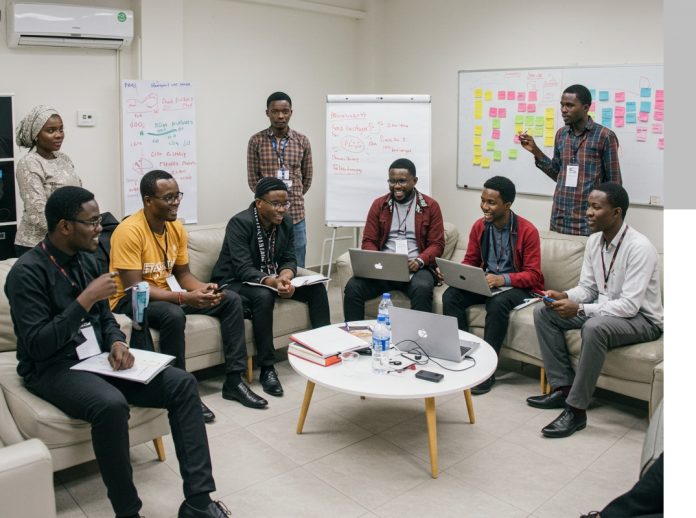
In April 2025, African start-ups made a remarkable comeback, raising a total of $343 million through deals valued at $100,000 and above (excluding exits), across 39 ventures.

Recall that last month’s March performance was poor in comparison, though, as only $50m in funding was announced, one of the lowest monthly tallies since late 2020. The number of start-ups announcing funding was on par with previous months, with no deals over $10m announced.

Following a disappointing March, April came in hot, which spurred optimism about startup funding across the African continent. This not only marked a strong rebound from a quiet March but also became the second-highest April funding total on record, trailing only the peak days of April 2022’s funding frenzy.

Compared to the same month last year, the difference is dramatic funding has surged by 4.5 times since April 2024. It’s a powerful signal that, while investors remain selective, they still firmly believe in Africa’s long-term potential.

Several mega-deals helped push April’s numbers higher. In South Africa, hearX, a health tech company, secured a $100 million boost through its cross-border merger with U.S.-based Eargo, showing bold ambition in reshaping the global hearing health market. This union marks a significant moment for Africa’s healthtech sector, positioning an African-born innovation at the heart of a global solution for one of the world’s most overlooked health challenges hearing loss. This deal also marks the first mega-deal of 2025.

In Egypt, Islamic fintech platform Bokra raised an impressive $59 million through a sukuk issuance a major leap from its $4.6 million pre-seed round just a year earlier. Meanwhile, South African payments infrastructure firm Stitch attracted $55 million from existing investors as it scales its end-to-end solutions across Africa. The funding is aimed at expanding its in-person payment offerings, improving its online payment suite, and facilitating its entry into card acquiring.

On the exit front, at least four transactions took place, three of which involved fintech:

  • ADVA (Egypt) was acquired by UAE-based Maseera. According to Maseera, this strategic deal positions ADVA as its dedicated technology and data analytics base for North Africa, marking a significant milestone in the company’s regional expansion strategy.

  • Nigeria’s Bankly was taken over by C-One Ventures. The acquisition includes Bankly’s licenses, platform, and team, which will be integrated into C-One’s ecosystem to scale technology-driven financial services.

  • Peach Payments (South Africa) acquired PayDunya, expanding its footprint into Francophone West Africa. In the process, it enters mainland Francophone Africa for the first time, following its expansion to Eswatini (2024), Mauritius (2021) and Kenya (2018).

Adding to the optimism, over $1.3 billion in VC fund capital focused on Africa has been raised since early 2024. Firms like Janngo Capital (with a gender lens), Airnergize Capital, Verod-Kepple Africa Ventures, Saviu’s Fund II (Francophone focus), and LoftyInc Capital are leading the charge.

Looking at the year-to-date figures, the outlook is equally promising. Between January and April 2025, African start-ups raised $803 million across 163 ventures up 43% from the $563 million secured during the same period in 2024. Funding is also reaching more start-ups, up from 147 in the previous year, with 225 unique investors already participating in $100k+ deals in 2025.

This surge suggests more than a temporary rebound. It’s a sign of renewed confidence and growing breadth across sectors, geographies, and stages. While two strong months don’t define an entire year, the momentum is clear.