DD
MM
YYYY

PAGES

DD
MM
YYYY

spot_img

PAGES

Home Blog Page 1393

World Liberty Financial Airdroping USD1 Could Solidify Its Stablecoin Adoption 

0

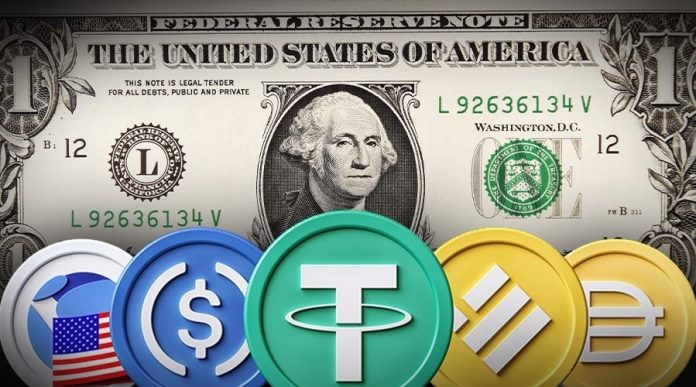
World Liberty Financial (WLFI) proposed a test airdrop of its USD1 stablecoin to all WLFI token holders to validate its on-chain airdrop system, reward early supporters, and boost USD1 visibility before a broader launch. The airdrop, planned for Ethereum Mainnet, will distribute a fixed amount of USD1 per eligible wallet, with the exact amount and timing still under review based on the number of wallets and budget. The proposal requires community feedback and a governance vote to proceed, but WLFI reserves the right to modify or cancel it even if approved. The USD1 stablecoin, launched in March 2025, is pegged to the US dollar, backed by US Treasuries, dollar deposits, and cash equivalents, and managed by custodian BitGo.

USD1 is fully collateralized by a reserve of high-quality, low-risk assets, including US Treasuries, US dollar deposits, and cash equivalents. These assets are held in segregated accounts to ensure transparency and security. BitGo, a reputable digital asset custody provider, manages the storage of USD1’s reserve assets, adding a layer of trust and accountability.

USD1 tokens are issued only when corresponding fiat or equivalent assets are deposited into the reserve. Token holders can redeem USD1 for US dollars at a 1:1 ratio, subject to standard compliance checks (e.g., KYC/AML), ensuring the peg is maintained through direct convertibility. WLFI commits to regular audits and attestations of the reserve assets by third-party firms to verify that the circulating supply of USD1 is fully backed. These reports will be publicly accessible to maintain trust.

The WLFI community, through its governance framework, can propose and vote on adjustments to USD1’s operations, such as reserve management or redemption policies, to adapt to market conditions while prioritizing stability. WLFI employs arbitrage incentives to keep USD1’s market price aligned with its $1 peg. If USD1 trades below $1, traders can buy it at a discount and redeem it for $1, profiting from the difference. If it trades above $1, new tokens can be issued against deposited collateral, increasing supply to correct the price.

WLFI monitors macroeconomic factors like interest rate changes or Treasury yield fluctuations that could affect reserve assets. The diversified reserve composition aims to mitigate risks from any single asset class. While WLFI emphasizes robust stability measures, external risks like regulatory changes, market volatility, or operational issues could pose challenges. The governance proposal for the USD1 airdrop does not directly impact these stability mechanisms but aims to increase adoption, which could enhance liquidity and price stability through broader market participation.

Distributing USD1 via airdrop could boost its circulating supply and market presence, potentially improving liquidity. Higher liquidity typically supports price stability by reducing volatility and tightening the peg to $1 through active trading and arbitrage. The airdrop will test WLFI’s on-chain distribution system and BitGo’s custodial operations. Any technical hiccups (e.g., delays, wallet errors) could undermine confidence in USD1’s operational reliability, indirectly affecting perceptions of its stability.

If a significant number of airdrop recipients redeem USD1 for fiat, it could strain WLFI’s reserve management. However, the fixed airdrop amount per wallet and compliance checks (KYC/AML) should limit mass redemptions, preserving reserve integrity. Successful execution of the airdrop could reinforce trust in USD1’s 1:1 peg, audited reserves, and governance model. Conversely, any mismanagement or deviation from the promised peg could trigger market skepticism, potentially destabilizing USD1’s price.

The airdrop rewards early supporters, potentially increasing WLFI token demand as new investors seek eligibility. This could drive WLFI token price appreciation, though speculative spikes may introduce volatility. The proposal’s reliance on community feedback and voting empowers token holders, reinforcing WLFI’s decentralized ethos. Active participation could shape USD1’s future policies, including stability measures.

Holders receiving USD1 inherit risks tied to stablecoin adoption, such as regulatory scrutiny or market fluctuations. If USD1 faces stability issues post-airdrop, it could indirectly affect WLFI token sentiment. USD1’s airdrop aims to capture market share in a crowded stablecoin space (e.g., USDT, USDC). Increased visibility could position USD1 as a viable alternative, but failure to maintain stability could cede ground to competitors.

A high-profile airdrop may attract regulators, especially given USD1’s fiat-backed model and cross-border distribution. Tighter regulations could complicate USD1’s operations or reserve management, impacting stability. If USD1 gains traction post-airdrop, it could integrate into DeFi protocols, payment systems, or remittance channels, enhancing utility. However, widespread adoption hinges on consistent stability and trust in WLFI’s governance.

An overly generous airdrop could inflate USD1’s supply beyond reserve capacity, though WLFI’s fixed-amount approach mitigates this. Recipients may sell USD1 immediately, pressuring its market price below $1. Arbitrage mechanisms should counter this, but rapid sell-offs could test the peg. While community input strengthens decentralization, conflicting voter priorities could delay or derail stability-focused decisions.

Solana’s Dev Activity Drops as Traders Turn to RCO Finance for Momentum

0

Trends in cryptocurrency can change in short periods, and as traders look for new opportunities, an investment that was once favored may swiftly lose favor. One such change is currently taking place as cryptocurrency traders focus more on RCO Finance (RCOF) than Solana.

Due to a sharp decline in recent weeks, many traders are already doubting Solana’s long-term sustainability. RCOF is busy making a name for itself in the DeFi sector as utility-driven initiatives become more prevalent.

Read on to find out more about why Solana traders are moving over to the RCOF presale to secure their spots.

The Solana (SOL) Ecosystem Experiences Reduced Activities As Whales Unstake Investments

A huge Solana [SOL] whale has prompted new speculation after unstaking and depositing 71,448 SOL—worth around $8.54 million—on Binance.

This decision comes amid rising fears about heightened sell pressure from major holdings within the Solana network.

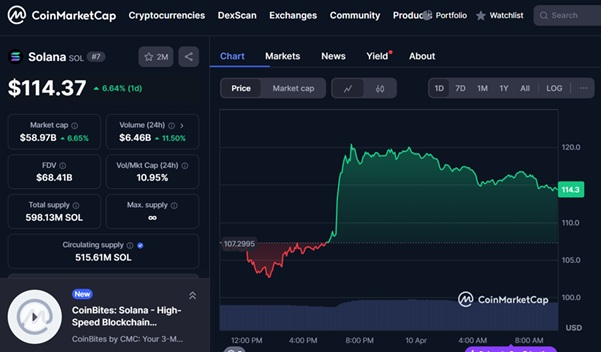
Currently, SOL is trading at about $114.38, up 6.64% in the past 24 hours. In addition to this transaction, other major investors have offloaded more than 149,000 SOL in the last 24 hours, with sales ranging from $102 to $108.

Interestingly, despite this big withdrawal, the same whale still has 568,000 SOL in staking contracts, worth around $68 million.

These on-chain transactions have revived speculation over whether Solana is headed for a short-term fall or if whales are merely reallocating ahead of the next round of market activity.

RCO Finance (RCOF): The New AI Crypto Project Drawing in Solana Traders

One of the things that draws Solana traders to the RCOF project is its comparatively modest market capitalization. Historically, low-cap cryptocurrencies with excellent fundamentals have the potential for explosive growth.

RCO Finance includes traditional financial assets in its ecosystem. Traders can use RCOF to buy stocks, bonds, real estate, and other investments without having to convert their cryptocurrency to cash. This bridges the gap between traditional and decentralized finance, providing new levels of investment freedom.

RCO Finance uses a decentralized governance architecture, which gives token holders a role in critical platform decisions. Users can vote on protocol modifications and ecosystem updates with RCOF tokens, guaranteeing that the project evolves in response to community requirements.

This democratic framework instills a sense of ownership in investors, thereby increasing long-term engagement.

RCOF runs on an Automated Market Maker (AMM) concept, which allows users to contribute liquidity while earning passive income. Unlike traditional order book trading, AMM maintains continual liquidity while reducing price slippage.

Crypto traders can stake their assets in liquidity pools and collect incentives, making RCOF a potentially profitable investment for those looking for a steady income.

One of RCOF’s standout features is its AI-powered Robo Advisor, which is intended to help cryptocurrency traders make smart investing decisions. This AI analyzes the market, detects profitable trading opportunities, and notifies users in real time.

For example, if a lesser-known cryptocurrency like Ethernity Chain skyrocketed by 67% in 24 hours, the Robo Advisor would have warned crypto traders of its quick price movement prior to the boom, allowing them to generate enormous ROI.

RCOF also provides access to over 120,000 assets across several investment classes, including traditional equities, ETFs, and tokenized real-world assets. This huge assortment offers crypto traders unique diversification choices, lowering risk and increasing returns.

Unlike many financial systems that require intrusive identity verification, RCO Finance uses a KYC-free model. This makes it an appealing option for privacy-conscious crypto traders who want to stay anonymous while using decentralized financial products.

RCOF was one of the first DeFi initiatives to release a beta platform during the presale process. This approach enables early users to try AI-powered trading tools, provide comments, and improve the platform prior to its full-scale deployment.

Over 10,000 users have already joined the beta, indicating a strong market interest in RCOF’s ecosystem.

This proactive approach to development guarantees that the end product meets user expectations. The beta launch not only fosters trust but also gives early investors an advantage in mastering RCOF’s advanced trading tools prior to wider market acceptance.

Join the RCOF Public Presale and Be the Next Crypto Millionaire

RCO Finance, which is currently in its 5th presale phase, has already gathered more than $14.45 million, indicating strong investor demand.

The RCOF crypto token is now priced at $0.100000, with analysts predicting an over  50,000% increase by mid-2025. This is another strong reason traders can’t seem to get enough of this new AI crypto coin.

The RCOF crypto project has undergone a thorough assessment by SolidProof, confirming its security and authenticity. RCOF is especially appealing to experienced traders wanting to maximize their gains during the next bull market.

RCO Finance is gradually emerging as a major player in the Crypto sector. As crypto traders shift away from speculative assets, RCOF’s AI-powered trading tools and passive income potential offer an appealing alternative.

Buy the RCOF token now and your portfolio will thank you!

For more information about the RCO Finance (RCOF) Presale:

Visit RCO Finance Presale

Join The RCO Finance Community

AfDB President Criticizes IMF for SDR Bias as Africa Gets Just 4.5% of $650bn Allocation

0

Africa’s marginalization in global financial architecture was once again laid bare as the President of the African Development Bank (AfDB), Dr Akinwumi Adesina, criticized the International Monetary Fund (IMF) for what he described as a glaringly unfair allocation of Special Drawing Rights (SDRs).

Speaking in Abuja on Sunday, Adesina revealed that Africa, home to over 1.4 billion people and some of the world’s most vulnerable economies, received only $33 billion of the $650 billion SDRs issued by the IMF in 2021.

That figure represents just 4.5 percent of the total allocation, a disbursement that Adesina argued failed to align with the continent’s urgent financial needs, especially as African countries continue to struggle with the economic aftershocks of the COVID-19 pandemic.

“Out of the $650 billion in SDRs issued globally, Africa received only $33 billion, just 4.5 percent,” Adesina said. “This is despite being the continent most in need and with the least resources to manage the economic fallout.”

A Broken System at the Heart of a Global Crisis

The SDR system, which was designed to supplement countries’ official reserves and improve global liquidity, effectively entrenched existing global inequalities. Allocations were based on IMF quotas, which heavily favored advanced economies. For Africa, the fallout has been severe. While the continent endured some of the deepest economic scarring from the pandemic, with many countries experiencing negative growth, inflationary pressures, rising debt burdens, and dwindling foreign reserves, they lacked the fiscal space to implement robust recovery plans.

African countries were left scrambling for loans with steep conditionalities, while wealthier nations parked unused SDRs in their reserves. By comparison, the United States received around $113 billion, far surpassing what was shared among all 54 African countries combined.

Adesina noted that this structural imbalance in global financing mechanisms, exposed sharply during COVID, calls for urgent reforms.

But rather than wait for the global financial order to fix itself, Adesina said Africa is already engineering a workaround. The AfDB, in partnership with the African Union, has developed a new framework with the Inter-American Development Bank (IDB) to rechannel unused SDRs from wealthier countries to multilateral development banks, where they can be more effectively deployed.

According to him, the IMF Board has already approved this innovative financing model.

“This is a game-changer,” he said. “Each dollar of SDR rechanneled can be leveraged four to eight times. That means a $50 billion reallocation could unlock up to $200 billion in new development financing—at no cost to taxpayers.”

If implemented at scale, the plan could become a lifeline for African economies currently facing a precarious mix of debt distress, capital flight, and currency devaluation. It could also provide funding for climate resilience projects, healthcare systems, and infrastructure upgrades that are often postponed due to a lack of concessional financing.

Raising $27 Billion for the Poorest Countries

Adesina also announced that the AfDB’s concessional arm, the African Development Fund (ADF), is currently raising an additional $27 billion from global capital markets. These funds, he said, will be channeled to 37 of the continent’s poorest countries—countries that rely on concessional loans to meet basic developmental goals.

This new funding drive comes amid the ADF’s 17th replenishment cycle. The AfDB president appealed to global donors not just to pledge more, but to demonstrate long-term commitment to African development.

“The world must realize that investing in Africa’s stability and prosperity is not charity—it is economic common sense,” Adesina said.

The announcement underscores a growing wave of African-led financial initiatives aimed at reducing dependency on Western donors. The AfDB has been particularly vocal in calling for reforms to the global financial system, including adjustments to the IMF quota system, debt restructuring for overburdened African nations, and greater representation in global financial decision-making bodies.

Adesina reiterated that Africa’s financial independence is achievable if international partners support innovative funding mechanisms and allow African institutions to lead implementation.

“With greater investment in health, innovation, and financing, Africa can protect its people, unlock its potential, and chart its own path to prosperity,” he said.

A Foray into European Union-India Vs. China’s Trade Dynamics

0

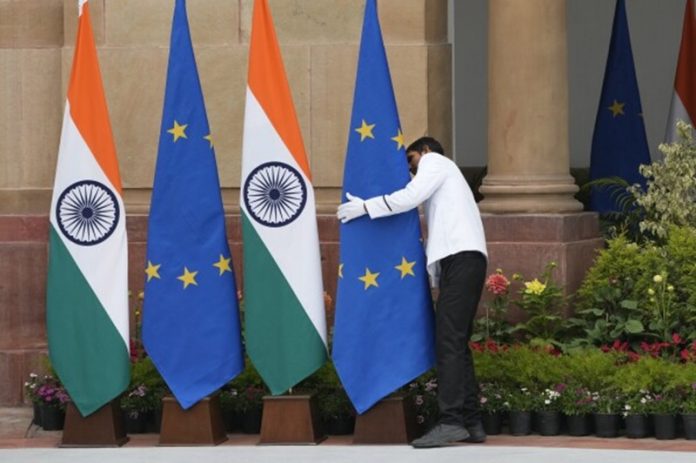
The EU-India free trade agreement (FTA) negotiations face several key hurdles; India protects its agricultural sector with high tariffs and subsidies, fearing EU competition could harm local farmers. The EU, meanwhile, pushes for market access but faces resistance due to India’s domestic sensitivities. India maintains high tariffs on goods like automobiles, wines, and dairy, which the EU wants reduced. India seeks greater access for its textiles and pharmaceuticals in the EU, but faces strict regulatory barriers.

India wants easier visa norms for its professionals in the EU, particularly in IT and services. The EU is cautious, citing immigration concerns and labor market impacts. The EU demands stronger patent protections, especially for pharmaceuticals, while India prioritizes affordable generics, creating tension over IPR standards. The EU’s push for environmental, labor, and human rights clauses, including its Carbon Border Adjustment Mechanism, clashes with India’s concerns about added costs and sovereignty.

The EU seeks access to India’s public procurement markets, but India restricts foreign participation to protect domestic industries. India’s ties with Russia and differing views on global issues complicate trust-building, slowing progress. Negotiations, ongoing since 2007, aim for a deal by late 2025, but these issues require significant compromise. Both sides see strategic value—India as a counterweight to China for the EU, and the EU as a key market for India—but bridging these gaps remains complex.

The EU and China are each other’s largest trading partners for goods, with bilateral trade reaching €739 billion in 2023. However, their relationship is complex, marked by significant imbalances and tensions, unlike the EU-India negotiations, which face different structural challenges. The EU runs a persistent trade deficit with China, reaching €292 billion in 2023, down from €396 billion in 2022. EU exports to China were €223.6 billion, while imports were €515.9 billion. This contrasts with EU-India trade, where deficits are smaller, and negotiations focus more on tariff reductions than such stark imbalances.

China accounts for 21% of EU imports but only 8% of exports, highlighting dependency on Chinese goods like telecommunications equipment and electrical machinery. The EU seeks reciprocity, as China’s market remains closed in key sectors like procurement and services. European firms face regulatory barriers, forced technology transfers, and weak intellectual property enforcement. This mirrors India’s protective stance on agriculture but differs in scale due to China’s global manufacturing dominance.

China’s push for self-sufficiency and import substitution limits EU opportunities, unlike India, where negotiations aim to open markets mutually. The EU imposed tariffs up to 35.3% on Chinese EVs in 2024, citing unfair subsidies. China retaliated with duties on EU dairy and brandy. Recent talks explore minimum pricing instead, showing pragmatic dialogue absent in stalled EU-India agricultural talks.

China dominates supply chains, refining 90% of critical raw materials, creating EU dependency. This contrasts with EU-India discussions, which focus less on tech and more on traditional sectors. The EU views China as a partner, competitor, and systemic rival since 2019, balancing cooperation with caution. Tensions over China’s Russia ties and human rights issues complicate trade, unlike EU-India talks, where geopolitics play a lesser role.

U.S. tariffs under Trump (up to 125% on Chinese goods) push China to seek closer EU ties, potentially flooding Europe with cheap goods. The EU is wary, unlike its proactive FTA push with India to counter China’s influence. Chinese FDI in the EU hit €185 billion in 2024, nearly matching EU investments in China. However, the stalled EU-China Comprehensive Agreement on Investment (CAI) since 2021 reflects distrust, unlike the EU-India focus on building a new FTA framework.

Despite a 1.6% trade rise in 2024 (€762 billion), EU exports to China dropped 4.5%, signaling vulnerabilities. China’s resilience contrasts with India’s slower integration into global trade. The EU’s tools—like foreign subsidy regulations and anti-dumping measures—target China’s distortions, a sharper approach than the negotiated tariff reductions sought with India.

EU-China trade dwarfs EU-India trade, with China as a systemic challenge due to its economic weight. India’s hurdles are more about domestic protections than global dominance. EU-China tensions center on high-tech and imbalances, while EU-India talks grapple with agriculture, labor mobility, and sustainability standards. The EU uses defensive measures (tariffs, probes) against China but seeks cooperative deal-making with India, reflecting different strategic priorities.

EU-China trade remains robust but strained by imbalances, subsidies, and geopolitics. Recent talks on EVs and trade diversion suggest pragmatic steps, driven by external pressures like U.S. tariffs. Unlike EU-India negotiations, which aim for long-term integration, EU-China dynamics hinge on managing rivalry while preserving economic ties. Both relationships underscore the EU’s challenge to balance openness with strategic autonomy in a multipolar world.

Win With People, Not Just Code

0

Knowledge has since emerged as the most powerful factor of production, and a man or a woman with knowledge is a FACTOR.  Industrial age business is about controlling Supply to shape prices. Manufacturers work to provide supply, but dominance actually comes through distribution. Dangote Group’s most important competitive weapon is that it controls more than 40% of all active trucks in Nigeria, in a nation where goods are mainly shipped via roads.

In the 19th century, railroads played a pivotal role in shaping the American economy, with intense competition and financial struggles characterizing the industry. However, this era also saw the rise of monopolies like Standard Oil, which revolutionized the oil industry through efficient production and transportation methods. In response to concerns about monopolistic practices, the Sherman Antitrust Act was introduced in 1890.

For Rockefeller’s Standard Oil, the real antitrust issue was not about crude oil. The problem was asymmetric unfair positioning on DISTRIBUTION via bulk discounts which other oil producers could not get. The government stepped in and broke the oil giant into pieces.

The implication is clear in industrial age business: winning in markets becomes managing and controlling distribution as most businesses are bounded and constrained by geography, creating advantages which are largely localized.

But today, the game has shifted from control of supply to control of DEMAND for online firms. And only companies with capabilities to control demand are going to win big. If you check, most of the greatest internet companies are simply controlling demand, and that means controlling how supplies reach users and consumers.

It comes down to aggregation: if the suppliers of local news are many, the challenge moves from the scarcity of the news to sorting out the supplier that adds value, since no person can technically visit all the individual websites before arriving at the most valuable one. Welcome Google which now becomes a gatekeeper, helping to make sense of the whole thing by guiding users to the right contents once they search. This is an evolution, shifting power from the old suppliers to a new set of entities which control access to demand

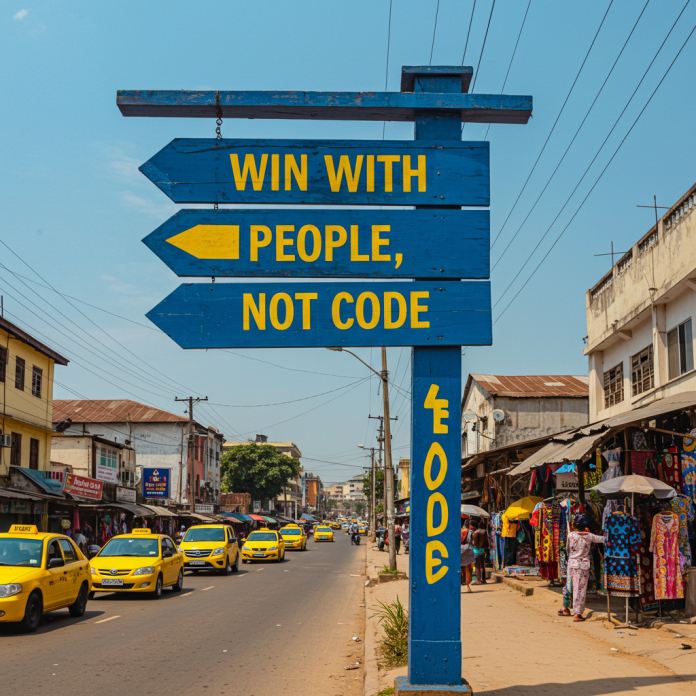
What does that tell us? Winning today begins by connecting with People (like social media followers) and nurturing Audience, not by just coding, especially if you have a limited budget as a small business owner. If you have the People and can influence, your chance of success goes up in online business. Watch some videos I made to explain.

Comment on Feed

Comment: Ndubuisi Ekekwe you’re describing with plain words the so-called platform economy. Thank you for bringing these concepts into the simplicity realm.

My Response: Actually, it is not entirely platform-economy. My focus here is how to use CONNECTING with people to build small online companies. If I do not write here on LinkedIn, Tekedia Mini-MBA will not be enrolling hundreds of people every 4 months. Tekedia may not be a platform, but Ndubuisi is connecting with people and influencing demand.  Sure, I pay a price for this since I may never get a LinkedIn checkmark as my posts have outside links, but I am happy for the growing revenue over checkmarks.

Business Model Wins Empires; Demand Wins Over Supply In Digital and why Microsoft is ChatGPT’s Best Feature