DD
MM
YYYY

PAGES

DD
MM
YYYY

spot_img

PAGES

Home Blog Page 1398

“He’s just a very nice guy:” Trump Praises Bezos for Dropping Tariff Display on Amazon, Fueling Accusations of Tech Industry Capitulation

0

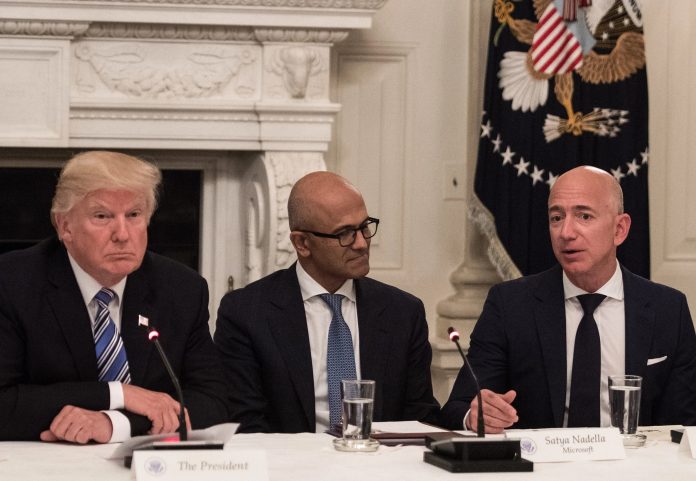
President Donald Trump has confirmed that Amazon founder Jeff Bezos reversed a plan to display tariff costs on product listings following a personal phone call between the two — a move that has drawn sharp criticism and renewed concerns about the tech industry’s growing alignment with the Trump administration.

The president made the revelation during a wide-ranging interview on NBC’s Meet the Press, where he told host Kristen Welker that Bezos immediately agreed not to go ahead with the plan after they spoke.

“He said, ‘Well, I don’t want to do that,’ and he took it off immediately,” Trump said. “He’s just a very nice guy. We have a relationship.”

The reversal, which followed a report from Punchbowl News that Amazon was preparing to start listing import tariff costs beside product prices, has triggered a backlash from critics who see it as a clear example of political intimidation shaping corporate decisions. Amazon denied the report at the time, saying the idea had only been floated internally by one team and had not been approved.

However, Trump’s account, and the fact that Bezos reportedly gave in without public resistance, have raised alarms in some quarters.

Many have accused the billionaire of pandering to the president and caving to pressure, with some describing his U-turn as “cowardly” and emblematic of what they see as Trump’s tightening grip over the tech industry. The incident has renewed claims that many of Silicon Valley’s most powerful figures — once seen as adversaries to Trump — are now falling in line.

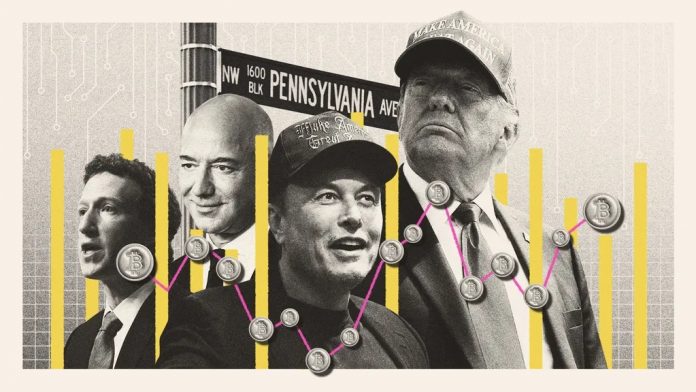
The episode has also reignited scrutiny over how major tech CEOs, including Bezos and Meta’s Mark Zuckerberg, have sought to repair relations with Trump since his reelection victory in November. Both men were previously in Trump’s political crosshairs — Bezos, frequently the target of presidential tirades over his ownership of The Washington Post; Zuckerberg, criticized over alleged censorship on Facebook. But since Trump’s return to power, both men have taken steps to reconcile. Several tech executives who once kept their distance, including Bezos and Zuckerberg, contributed millions of dollars to the president’s second inauguration, signaling a shift in posture.

For Trump, the optics of the tariff debate are critical. His administration has imposed a sweeping 10% baseline tariff on imports from most countries and a punishing 145% tariff on Chinese goods — part of a broader effort he claims is aimed at revitalizing U.S. industry and punishing unfair trade practices. However, the impact on consumers has been significant. Since the tariffs went into effect, prices have surged on a wide range of goods sold on platforms like Amazon, including electronics, clothing, and household items.

Amazon, in its most recent earnings report, disclosed a $1 billion one-time charge attributed to tariffs and customer returns. Meanwhile, Bloomberg’s Billionaires Index shows that Bezos’s net worth has plunged by more than $30 billion since January — from $245 billion at the start of Trump’s second term to $212 billion as of May 5. That drop reflects, in part, the company’s financial exposure to Trump’s trade policies.

Despite this, the administration has worked aggressively to conceal the domestic impact of the tariffs. The White House openly condemned Amazon’s reported plan to make tariff costs more transparent to consumers, with press secretary Karoline Leavitt describing it as “a hostile and political act” during a briefing last week. By displaying the extra charges, Amazon could have undermined Trump’s efforts to conceal the inflationary consequences of his trade policies on consumers.

Trump, however, remains unapologetic. Asked whether he would call other CEOs who make decisions he disagrees with, the president said, “I’ll always call people if I disagree with them.” When pressed on whether he was punishing companies for passing tariff costs to consumers, he replied, “I want them to build plants in the United States. That way, they don’t have any tariffs.”

Thus, the message the president is sending is: build at home or risk presidential pressure.

On Truth Social, Trump has lashed out at business leaders who question his tariff strategy. In a recent Easter post, he wrote, “THEY DON’T UNDERSTAND OR REALIZE THAT I AM THE GREATEST FRIEND THAT AMERICAN CAPITALISM HAS EVER HAD!” It’s a line meant to reassure his base and project confidence, but for many in the business world and beyond — the more enduring message may be the threat behind the smile.

With Bezos backing down, observers say the president has scored more than a policy win — he’s sent a message across corporate America: resist at your own peril.

The Airtel Pragmatism in Africa

0

A new era begins for Airtel Africa: “Airtel Africa has entered into a landmark agreement with Elon Musk’s SpaceX to deliver Starlink’s high-speed satellite internet across its 14 African markets, in a bold push to bridge the continent’s long-standing connectivity gap—especially in rural and underserved regions.”

This is called pragmatic business model. Yes, if the terrestrial will be disintermediated by the satellite, the best defense is to partner with the satellite. And Airtel makes the case for Starlink:

Airtel Africa’s CEO, Sunil Taldar: “Next-generation satellite connectivity will ensure that every individual, business, and community have reliable and affordable voice and data connectivity—even in the most remote parts of Africa.” Airtel Nigeria has one of the finest engineers in Nigeria – my FUTO classmate Deus Uche Osuji (FNSE, FIMC, MNISafetyE, MIET) as the Vice President and Head of Operations, and that means we expect many goodies on network quality and efficiency there. Uche – congrats again, we will wash am whenever I make it to Lagos! Lol

Airtel Nigeria: I am ordering for the provision of broadband in Ovim Community School and Secondary Technical School Ovim. I will pay for satellite broadband services within the schools, to support teaching and learning in these schools. As you roll out in Nigeria, include these two schools among the main clients.

Airtel Africa Partners With SpaceX to Roll Out Starlink Across Continent, But Affordability Concerns Loom

Airtel Africa Partners With SpaceX to Roll Out Starlink Across Continent, But Affordability Concerns Loom

0

Airtel Africa has entered into a landmark agreement with Elon Musk’s SpaceX to deliver Starlink’s high-speed satellite internet across its 14 African markets, in a bold push to bridge the continent’s long-standing connectivity gap—especially in rural and underserved regions.

The telecoms giant announced that SpaceX’s Starlink has already secured operating licenses in nine of the 14 countries where Airtel operates, with regulatory processes still underway in the remaining five. The partnership, both companies say, will see Starlink’s low-earth orbit (LEO) satellite technology integrated into Airtel Africa’s infrastructure, extending coverage to schools, health centers, and small businesses in remote communities long left behind by traditional mobile and broadband networks.

Airtel Africa’s CEO, Sunil Taldar, described the deal as a milestone in the company’s ambition to build a digitally inclusive continent.

“Next-generation satellite connectivity will ensure that every individual, business, and community have reliable and affordable voice and data connectivity—even in the most remote parts of Africa,” Taldar said.

SpaceX, on its part, views the collaboration as a strategic advantage that gives it access to Airtel’s extensive on-ground assets across the continent, potentially fast-tracking Starlink’s operational rollout and scale in Africa.

“The team at Airtel has played a pivotal role in Africa’s telecom story, so working with them to complement our direct offering across Africa makes great sense for our business,” said Chad Gibbs, Vice President of Starlink Business Operations at SpaceX.

Celebrated Move, But Affordability is a Major Hurdle

While the partnership has been widely applauded as a potential game-changer for closing Africa’s broadband gap, many have noted that pricing remains a serious concern—especially in regions where people live on modest incomes or below the poverty line.

In Nigeria, which is Africa’s largest telecom market, the current cost of accessing Starlink services is prohibitively high for most households. The standard residential plan costs N75,000 per month (about $42), while the hardware, a kit that includes a satellite dish and router, is priced at N590,000 (around $375). Even more expensive are the roaming plans: regional roaming costs N167,000 per month, while the global roaming plan is priced at a staggering N717,000.

Given that most rural dwellers in Nigeria and across many African countries live on less than $2 a day, the concern is that the technology, while promising in reach, may remain largely inaccessible to those it purports to serve.

The Rural Internet Dilemma

Though Airtel and SpaceX have not released detailed pricing plans specific to the partnership, there is concern about whether the rollout will truly address the affordability gap or simply extend Starlink’s footprint through Airtel’s existing infrastructure.

Across Africa, rural and underserved areas have struggled for decades with poor connectivity due to the high cost of deploying mobile towers and broadband infrastructure in remote or sparsely populated zones. Satellite internet, with its ability to bypass these physical limitations, has long been touted as a viable solution.

But affordability remains a critical sticking point. According to the Alliance for Affordable Internet (A4AI), Africans pay more for internet relative to income than anywhere else in the world. A 1GB mobile data plan can consume up to 8-10% of a user’s monthly income in some African countries, far above the global affordability target of 2%.

Even with efforts by some national governments to offer subsidies or zero-rate basic services, rural connectivity has remained stubbornly low, with millions still offline due to cost barriers.

Competition May Fuel Affordability

The Airtel-SpaceX deal also comes amid intensifying competition in Africa’s connectivity space. Last year, MTN Group disclosed that it was in talks with several satellite service providers, including SpaceX, as part of its broader strategy to extend services to remote communities. The company confirmed enterprise-grade trials with Starlink were ongoing in Nigeria and Rwanda, alongside additional trials with other players like Lynk Global, AST SpaceMobile, and Eutelsat OneWeb in markets like South Africa, Ghana, and South Sudan.

This growing interest in satellite solutions underlines a significant shift in strategy among mobile network operators (MNOs), who previously viewed satellite companies as rivals. But the rising cost of traditional infrastructure deployment and the need to reach new customers in areas with poor ARPU (average revenue per user) have pushed telecom firms to embrace partnerships rather than competition.

However, the involvement of other satellite internet providers is expected to fuel competition – driving down the cost across the continent, especially in rural areas.

Trump Optimistic of $9 Trillion Investments Coming to The U.S. As Economic Indicators Points to a Potential Recession

0

President Donald Trump recently claimed that $9 trillion in investments is headed to the U.S., dismissing concerns about a potential recession. This statement, reported across various platforms, reflects his confidence in the U.S. economy’s resilience despite ongoing economic uncertainties.

Trump’s assertion aligns with his administration’s narrative of attracting significant private-sector and foreign investments. For instance, earlier reports indicated that his policies had spurred commitments of $3 trillion to $7 trillion in investments, with companies like Eli Lilly, Johnson & Johnson, Toyota, and Hyundai announcing multi-billion-dollar projects in the U.S.

The $9 trillion figure was highlighted during an “Investing in America” event at the White House, where Trump showcased pledges from major corporations. However, economic data has not yet shown a corresponding increase in factory construction spending to substantiate these commitments.

Trump’s dismissal of recession fears contrasts with market volatility and economic indicators. He has described the economy as undergoing a “period of transition,” attributing any downturn to the previous administration’s policies rather than his own, such as tariffs. Recent data from the Department of Commerce indicated that the U.S. economy shrank at an annual rate of 0.3% in Q1 2025, the first contraction in three years. This was attributed to reduced government spending and surging imports as firms stockpiled goods ahead of tariffs.

The S&P 500 has experienced significant declines, losing $4 trillion to $6 trillion in value since its February 19, 2025, peak, driven by fears of Trump’s tariff policies triggering a trade war. The Nasdaq also saw a 4% drop on March 10, 2025, its worst single-day decline since September 2022. Analysts have raised concerns about a potential “Trumpcession.” Goldman Sachs increased its recession probability from 15% to 20% in March 2025, citing policy uncertainty, particularly around tariffs.

Consumer confidence dropped sharply in February 2025, with the Conference Board’s measure falling below the recession threshold. Trump’s tariffs, including 25% levies on Canada, Mexico, and China, and up to 125% on Chinese goods, have fueled inflation fears and disrupted global trade. These policies have led to retaliatory tariffs from trading partners, increasing costs for U.S. businesses and consumers.

Analyst and Investor Perspectives

Some investors initially welcomed Trump’s pro-growth agenda of tax cuts and deregulation, but uncertainty over tariffs and federal workforce cuts has dampened sentiment. Analysts note that businesses struggle to plan investments due to the unpredictable tariff timeline. Commerce Secretary Howard Lutnick has claimed there is “no chance” of a recession, while Treasury Secretary Scott Bessent acknowledged a “natural adjustment” period. These mixed messages have added to market unease.

While Trump touts trillions in pledged investments, critics argue there’s no concrete evidence of immediate economic impact. The lack of increased factory construction spending suggests these commitments may be long-term or speculative. There’s mix of enthusiasm and skepticism about Trump’s $9 trillion claim. Supporters view it as evidence of economic strength, while others question its feasibility amid market turmoil and recession risks. These posts, while not factual evidence, highlight polarized sentiment.

The $9 trillion figure is ambitious and unprecedented, dwarfing previous investment pledges under Trump’s first term or the Biden administration. Without detailed breakdowns or timelines, it’s difficult to verify. Historical data shows that announced investments often face delays or fail to materialize fully. Trump’s dismissal of recession concerns overlooks warning signs like GDP contraction, declining consumer confidence, and rising unemployment claims.

Tariffs, while intended to boost domestic manufacturing, risk inflating prices and stifling growth, as evidenced by retailer warnings and economic forecasts. Trump’s simultaneous push for lower interest rates, higher tariffs, and deregulation creates conflicting economic pressures. For example, tariffs may drive inflation, limiting the Federal Reserve’s ability to cut rates, which could hinder investment and growth.

Trump’s claim of $9 trillion in incoming investments is a bold assertion aimed at projecting economic confidence, but it lacks immediate corroboration in economic data. While his administration has secured significant investment pledges, the broader economic picture—marked by GDP contraction, market sell-offs, and tariff-induced uncertainty—suggests heightened recession risks.

Investors and analysts remain divided, with some optimistic about long-term growth and others alarmed by short-term volatility. The true impact of these investments and Trump’s policies will depend on their implementation and global economic responses.

Presidency Dismisses Adesina’s Grim Verdict That Nigerians Today Are Worse Off Than In 1960, Amid Growing Alarms Over Poverty

0
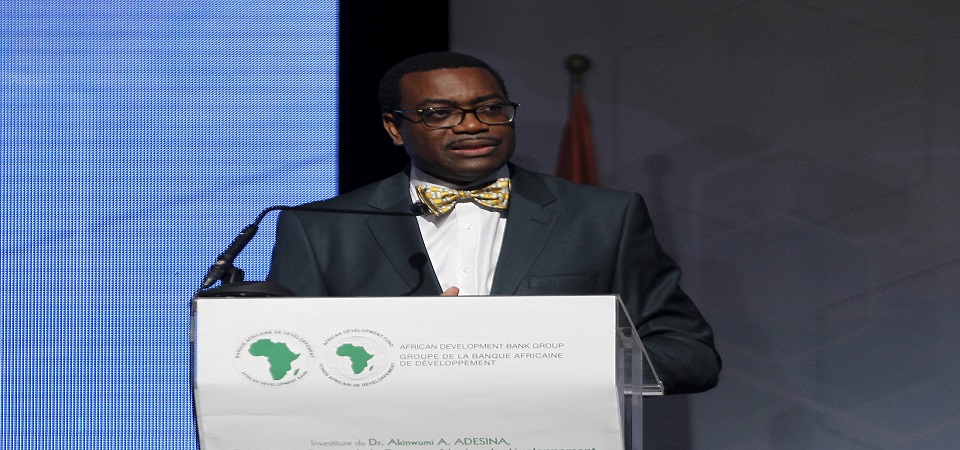
AfDB president Akinwumi Adesina
Akinwumi Adesina

The Nigerian Presidency has pushed back forcefully against a statement by the President of the African Development Bank (AfDB), Dr. Akinwumi Adesina, who warned last week that Nigerians today are worse off than they were in 1960.

In a rebuttal issued by presidential spokesperson Bayo Onanuga, the government rejected both the figures and the conclusion of Adesina’s remarks, calling them misleading and inaccurate.

Adesina had told guests at the 20th-anniversary dinner of investment firm Chapel Hill Denham in Lagos that Nigeria’s GDP per capita had fallen from $1,847 in 1960 to just $824 today, suggesting that economic hardship had deepened despite the country’s population and economy growing over the decades.

But Onanuga argued that historical data do not support Adesina’s claims. He stated that in 1960, Nigeria’s GDP stood at $4.2 billion and, with a population of 44.9 million, per capita income was no more than $93. That figure, he said, only rose significantly during the oil boom years of the 1970s and peaked at $3,200 in 2014 after a GDP rebasing exercise.

The rebuttal noted that while Nigeria’s current per capita GDP hovers around $824, the metric itself does not offer a full picture of national development. Onanuga argued that GDP per capita fails to account for inequality, wealth distribution, and informal economic activities—factors that weigh heavily in a country like Nigeria, where a large share of commerce and labor exists outside official statistics.

However, Adesina is not alone in sounding the alarm. Alongside him are other voices—most notably that of Peter Obi, former Anambra State governor and 2023 presidential candidate, who has repeatedly warned that Nigeria is edging dangerously close to collapse due to poor economic management, rising debt, and unchecked poverty. Obi has also criticized what he describes as a lack of urgency and seriousness in governance, warning that leadership appears disconnected from the realities ordinary Nigerians face.

Beyond individuals, international institutions like the World Bank and the International Monetary Fund (IMF) have raised similar concerns in recent months, painting an increasingly grim picture of Nigeria’s poverty situation. Just last week, the World Bank revealed that 75.5 percent of Nigeria’s rural population now lives below the poverty line, with rural dwellers bearing the brunt of inflation, food scarcity, and declining purchasing power. In total, more than 104 million Nigerians are now believed to live in multidimensional poverty, with many unable to afford basic necessities like food, shelter, healthcare, and education.

The IMF, in its own assessment, has called on Nigeria to urgently reform its fiscal system, curb wasteful subsidies, and expand the tax net to address the country’s developmental gaps. But such advice, often regarded as tone-deaf by local critics, has sparked debate, especially at a time when citizens are already overwhelmed by high fuel prices, rising food costs, and collapsing public services.

Meanwhile, growing public sentiment reflects frustration—not just at the worsening living conditions, but also at what many see as a government more preoccupied with defending itself than with tackling poverty. That belief is underlined by the Presidency’s swift dismissal of Adesina’s comments, which is regarded as a display of a broader culture of unwillingness to confront hard truths or accept criticism from experts and institutions.

Even as Onanuga pointed to gains in infrastructure, mobile phone access, and road networks, experts note that the benefits of such development have been unevenly distributed and remain inaccessible to many rural and urban poor. The explosion of mobile telecoms, while revolutionary, has done little to shield people from the crushing weight of inflation and unemployment.

The World Bank itself has warned that unless urgent steps are taken to stimulate inclusive growth, invest in human capital, and revamp agricultural productivity, Nigeria may not meet its poverty reduction goals for decades to come.

Dr. Adesina warned that Nigeria must radically transform its economic structure if it wants to become globally competitive and industrialized by 2050. That transformation, he stressed, must include significant investment in energy, transport, education, and industry—far beyond what per capita GDP can measure.

However, the Presidency remains adamant that progress has been made. Onanuga insisted that Nigeria’s GDP today is 50 to 100 times higher than it was in 1960 and that the country has made giant strides in many sectors, even if not all are captured by a single metric. For millions of Nigerians grappling with daily hardship, the debate over numbers may seem increasingly irrelevant unless it translates into visible improvement in their standard of living.