DD
MM
YYYY

PAGES

DD
MM
YYYY

spot_img

PAGES

Home Blog Page 14

China Weighs Tighter Export Controls On AI And Semiconductor Technologies As Tech Rivalry With U.S. Intensifies

0

Chinese authorities are considering expanding export controls to cover advanced artificial intelligence and semiconductor technologies, a move that would significantly strengthen Beijing’s oversight of strategic technologies as competition with the United States increasingly extends beyond hardware to AI models, algorithms and chip design.

According to a Financial Times report on Tuesday, regulators are consulting leading Chinese technology companies on a range of potential restrictions aimed at preventing advanced domestic AI capabilities and semiconductor intellectual property from flowing overseas.

The discussions show Beijing now sees frontier AI technologies as strategic national assets, mirroring Washington’s restrictive approach to advanced chips, AI models and semiconductor manufacturing equipment. The reported measures would mark another escalation in the global technology rivalry, with both the United States and China moving to limit the international transfer of technologies viewed as critical to national security and economic competitiveness.

The report follows Reuters’ exclusive reporting earlier this month that Chinese authorities had convened meetings with major technology companies to discuss restricting overseas access to China’s most advanced AI models, including next-generation systems that have yet to be released publicly.

Those discussions highlighted growing concerns within Beijing that capable Chinese AI models could strengthen foreign competitors or be incorporated into overseas AI ecosystems. Rather than focusing solely on hardware exports, regulators are now examining ways to control the movement of AI capabilities themselves, including model parameters, training data and underlying technologies.

The latest consultations suggest China is developing a comprehensive export-control framework covering both physical semiconductor technologies and intangible AI assets.

According to the Financial Times, China’s Ministry of Commerce has been consulting AI developers including Alibaba, ByteDance and Zhipu regarding restrictions on transferring sensitive AI training data outside China.

Officials are also reportedly evaluating whether companies should be prevented from allowing foreign users to download model weights, the numerical parameters that determine how AI systems perform after training.

Model weights are regarded as strategically valuable because they enable developers to reproduce and fine-tune sophisticated AI systems without repeating the expensive training process. Restricting access to those weights would represent a significant shift toward tighter government oversight of China’s open-weight AI ecosystem, which has expanded rapidly over the past year through companies including Moonshot AI, Z.ai, MiniMax and Alibaba.

The discussions come as Chinese firms have narrowed the performance gap with leading U.S. AI developers by releasing capable open-weight models at substantially lower operating costs.

Chip Design Exports May Also Face New Controls

Beyond artificial intelligence, regulators are reportedly considering measures that would restrict overseas production of advanced semiconductors designed by Chinese companies. The proposals could prevent foreign foundries, including Taiwan Semiconductor Manufacturing Co. (TSMC) and Qualcomm’s manufacturing partners, from fabricating cutting-edge chips based on designs developed by Chinese firms such as Huawei, Alibaba and ByteDance.

Such restrictions would represent a notable expansion of China’s export-control regime by focusing not only on manufacturing equipment and materials but also on semiconductor intellectual property. The move could complicate global semiconductor supply chains by limiting where Chinese-designed chips can be manufactured, particularly as U.S. export controls have already reduced Chinese access to the world’s most advanced fabrication technologies.

Potential Inclusion in Export-Control Catalogue

According to the report, the proposals could eventually be incorporated into the next revision of China’s catalogue of technologies that are prohibited or restricted from export.

That catalogue serves as the legal foundation for Beijing’s export-control regime and has increasingly been used to protect technologies viewed as strategically important. Officials are reportedly gathering feedback from industry participants before determining which technologies should ultimately be included.

The report also said regulators are considering restrictions on overseas acquisitions involving strategic technologies, including emerging areas such as agentic AI, where autonomous software systems perform complex tasks with limited human intervention.

The reported measures underscore how the technology competition between China and the United States has broadened significantly. Initially centered on semiconductor manufacturing equipment and advanced processors, the rivalry now encompasses AI models, algorithms, computing infrastructure, critical minerals and intellectual property.

Washington has imposed stringent restrictions on exports of advanced AI chips, semiconductor equipment and related technologies to China, while tightening rules designed to prevent Chinese entities from accessing advanced computing power through third countries. China has responded by accelerating domestic semiconductor development, expanding export controls on critical minerals including gallium, germanium and rare earth elements, and promoting indigenous AI ecosystems built around domestic hardware such as Huawei’s Ascend processors.

The latest proposals suggest Beijing is now moving toward a more comprehensive strategy that treats advanced AI systems and semiconductor designs as strategic technologies warranting export restrictions comparable to those already applied to critical minerals and other sensitive technologies.

The new controls, if implemented, are expected to further fragment global technology supply chains and reinforce the emergence of separate AI and semiconductor ecosystems led by the United States and China.

SBI Funds Shares Post Modest 7% Debut Despite $30.7bn IPO Demand, Raising Questions Over India’s Blockbuster Listing Pipeline

0

Shares of SBI Funds Management, India’s largest asset manager, made a subdued stock market debut on Tuesday, listing at a 7% premium to their initial public offering (IPO) price despite attracting nearly $31 billion in investor bids, signaling that demand for large public offerings remains selective amid a challenging market environment.

The company, a joint venture between India’s State Bank of India (SBI) and Europe’s Amundi Group, raised about $1 billion through its IPO, making it one of India’s biggest public offerings of the year.

The stock opened at a 7% premium to its issue price, falling short of expectations for a stronger listing after the IPO was oversubscribed 41.6 times, with bids totaling 2.97 trillion rupees ($30.7 billion). Institutional investors drove much of the overwhelming demand during the subscription period.

The relatively modest listing gain reflects changing sentiment in India’s equity markets, where investors have become more valuation-conscious after years of blockbuster IPO performances.

According to a KPMG India report published in May, the average listing premium for Indian IPOs during the financial year ended March fell to 8%, sharply lower than the 28% average recorded a year earlier, indicating that companies are no longer enjoying the spectacular first-day gains that characterized India’s IPO boom.

A Key Test for India’s IPO Market

Market participants viewed SBI Funds’ listing as an important barometer for investor appetite ahead of several high-profile public offerings expected over the coming months.

Among the most anticipated are the planned IPOs of Jio Platforms, the digital arm of Reliance Industries, and the National Stock Exchange (NSE), both of which are expected to rank among India’s largest-ever listings. India’s primary market could see as much as $50 billion worth of IPOs this year, although geopolitical uncertainty, particularly the ongoing Iran war, remains a major risk to investor sentiment and capital market activity.

Escalating tensions in the Middle East have pushed energy prices higher, increasing inflationary pressures for major oil-importing economies such as India and raising concerns over corporate earnings and consumer spending.

SBI Funds enters the public markets from a position of considerable strength. The company managed 29.5 trillion rupees ($395 billion) in assets as of March, making it India’s largest asset management company by assets under management (AUM).

Its scale reflects the rapid expansion of India’s mutual fund industry over the past decade, driven by rising household participation in equity markets, increasing financial literacy and growing adoption of systematic investment plans (SIPs).

Speaking ahead of the listing, Olivier Mariée, Head of Amundi’s International Partner Networks and Joint Ventures and a member of SBI Funds’ board, emphasized the company’s long-term focus.

“We should look forward to building a sustainable company which will drive this market going forward,” he said.

Managing Director and Chief Executive Debasish Mishra outlined the firm’s broader ambition.

“Our aspiration is to be the fund manager to every Indian,” Mishra said.

India’s IPO Momentum Faces New Headwinds

India has been the world’s busiest IPO market over the past two years by the number of listings, benefiting from robust domestic investor participation, strong economic growth and deepening capital markets.

However, activity slowed during the first half of this year as global and domestic market conditions became more challenging.

The Indian economy has come under pressure from higher crude oil prices linked to the Iran conflict. As one of the world’s largest importers of crude oil, India remains particularly vulnerable to rising energy costs, which increase inflation, widen the trade deficit and weigh on consumer spending.

At the same time, global investor capital has increasingly rotated toward artificial intelligence-related companies, particularly semiconductor and technology firms in the United States, Taiwan and parts of Europe. India, which lacks globally dominant AI hardware or foundation model companies, has attracted comparatively less international capital during the AI investment boom.

Those factors have contributed to weaker equity market performance.

Since the beginning of the year, the benchmark Sensex has declined more than 9%, making it one of the weakest-performing major equity indices globally, while the Nifty 50 has fallen about 7.5%.

Despite the muted listing performance, analysts continue to view India’s long-term investment case favorably. The country’s expanding middle class, rising financial savings, increasing penetration of mutual funds, and growing retail investor participation continue to support structural growth in the asset management industry.

SBI Funds, backed by the country’s largest bank and Europe’s biggest asset manager, is expected to benefit from those long-term trends, even as short-term market volatility tempers investor enthusiasm for new listings.

However, the IPO’s modest debut is seen as an indication that investors remain willing to back high-quality companies but are becoming more disciplined on valuations, a shift that could shape pricing and performance for the wave of major listings expected to reach India’s capital markets over the remainder of the year.

ADNOC Commits $6.2bn To Umm Shaif Gas Expansion As UAE Accelerates LNG Ambitions

0

Abu Dhabi National Oil Company (ADNOC) will invest $6.2 billion to develop the Umm Shaif Gas Cap, one of the United Arab Emirates’ largest offshore oil and gas projects, as the Gulf producer accelerates efforts to expand natural gas output, strengthen energy security and establish itself as a leading global supplier of liquefied natural gas (LNG).

The investment comes at a moment when global energy markets are in turmoil. The prolonged conflict in the Middle East and disruptions to shipping through the Strait of Hormuz, a strategic waterway that normally handles about 20% of global LNG trade and roughly a fifth of the world’s oil shipments, have heightened concerns over supply security and reinforced the importance of developing new gas resources outside traditional export routes.

ADNOC is developing the Umm Shaif Gas Cap alongside TotalEnergies, Eni and China National Petroleum Corporation (CNPC). The project is expected to produce more than 600 million standard cubic feet per day of natural gas and associated gas liquids once operations begin by 2030, equivalent to nearly 10% of the UAE’s current daily natural gas consumption.

The project forms part of ADNOC’s broader integrated gas strategy, which aims to monetize the country’s vast gas reserves while supporting rising domestic demand, expanding LNG exports and strengthening the UAE’s position in increasingly competitive global gas markets.

The UAE possesses the world’s seventh-largest proven natural gas reserves, while maintaining crude oil production exceeding 4 million barrels per day. Abu Dhabi is also pursuing aggressive upstream expansion after the UAE exited OPEC earlier this year, removing production quota constraints and allowing the country to target oil production above 5 million barrels per day as early as next year.

“ADNOC is accelerating its integrated gas strategy to further harness the UAE’s vast gas resources and expand our global LNG platform, as global demand for natural gas continues to rise,” ADNOC Chief Executive Sultan Ahmed Al Jaber said in a statement.

The Umm Shaif investment underscores Abu Dhabi’s ambition to diversify beyond crude oil by becoming a major player in the rapidly expanding global LNG market, where demand is expected to remain robust as countries seek cleaner-burning alternatives to coal while ensuring energy security.

ADNOC has set a target of expanding LNG production capacity to 47 million metric tons per annum by 2035, supported by investments across production, liquefaction, shipping and global trading operations. The strategy aligns with forecasts from major energy agencies that natural gas will continue to play a critical role in the global energy mix over the coming decades, particularly in Asia, where demand for LNG continues to grow as economies transition toward lower-carbon fuels.

The latest investment also shows that there is increasing commercial value of gas following repeated geopolitical disruptions that have tightened global supplies and driven price volatility.

The project has gained additional significance as military tensions in the Gulf continue to disrupt regional energy flows. With the Strait of Hormuz remaining effectively closed amid the ongoing Middle East conflict, energy markets have become increasingly focused on supply resilience, particularly for LNG exporters.

The waterway serves as the primary export route for Qatar, one of the world’s largest LNG producers, and any prolonged disruption threatens to tighten global gas markets, particularly across Europe and Asia.

Against that backdrop, expanding domestic gas production has become both an economic and national security priority for the UAE.

Currently, roughly one-third of the country’s natural gas demand is met through pipeline imports from Qatar under the Dolphin Gas Project, an agreement scheduled to expire in 2032. Increasing domestic production through projects such as Umm Shaif would reduce Abu Dhabi’s dependence on imported gas while providing additional volumes for export as LNG, improving both energy independence and long-term revenue generation.

Beyond its economic importance, Umm Shaif occupies a central place in the UAE’s petroleum industry.

The offshore field has been producing hydrocarbons for more than six decades and hosted Abu Dhabi’s first offshore oil well. It supplied the crude used in the emirate’s inaugural oil exports in 1962, laying the foundation for what has become one of the world’s largest energy industries. The latest investment transforms the historic field into a cornerstone of the UAE’s next phase of energy development, shifting its focus increasingly toward natural gas and LNG as global demand evolves.

Japan Pledges $2.28tn Investment Drive Through 2040 to Revive Long-term Growth

0

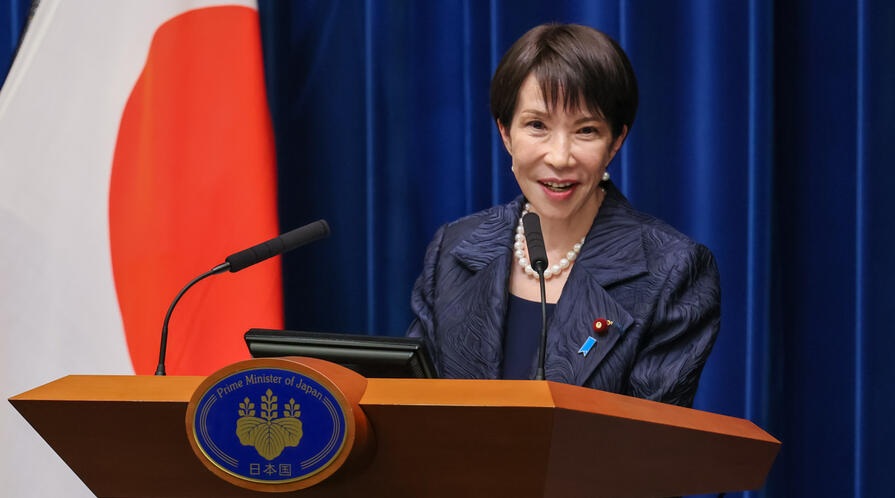
Japanese Prime Minister Sanae Takaichi on Tuesday unveiled her administration’s first comprehensive economic policy blueprint, pledging to mobilize more than 370 trillion yen ($2.28 trillion) in public and private investment through fiscal 2040 to revive long-term growth.

The plan, however, has been overshadowed by investor concerns that the government could pressure the Bank of Japan (BOJ) to keep interest rates low, fueling a selloff in government bonds.

The blueprint seeks to position investment in strategic industries as the centerpiece of Japan’s long-term growth plan, but repeated revisions to its language on monetary policy underscore growing market sensitivity over the relationship between the government and the central bank.

Japan’s government bond yields have climbed to multi-decade highs in recent weeks as investors worry that Takaichi’s emphasis on fiscal stimulus and accommodative monetary policy could delay efforts to contain inflation while worsening the country’s already heavy debt burden. The benchmark 10-year Japanese government bond yield, which reached a three-decade high of 2.9% on July 9, eased modestly to 2.73% on Tuesday but remains near levels not seen in decades.

The economic blueprint underwent several revisions before receiving cabinet approval after earlier drafts unsettled financial markets.

An initial version called for monetary policy that would “bolster private demand,” language that disappeared as bond yields continued rising. A subsequent draft linked monetary policy more directly to the government’s economic growth strategy, prompting another negative market reaction and further revisions.

The final document states that the BOJ should conduct monetary policy appropriately “to achieve stable price rises,” while adding a footnote referencing Japan’s law guaranteeing the central bank’s operational independence.

The blueprint nonetheless retains language calling for the BOJ to coordinate its policy with the government’s economic objectives, reflecting the longstanding framework established under Japanese law, which requires close cooperation while preserving the central bank’s authority over monetary decisions.

“To achieve a strong economy, it is very important for monetary policy to be conducted appropriately to see stable price rises,” the final blueprint said.

Echoes of Abenomics

Takaichi has consistently expressed support for the economic philosophy associated with former Prime Minister Shinzo Abe, whose “Abenomics” strategy relied on aggressive fiscal stimulus, ultra-loose monetary policy and structural reforms to combat decades of deflation.

Her latest blueprint amplifies that approach by emphasizing government-led investment to stimulate private sector spending.

“Under the Takaichi administration, the government will take the initiative and, together with the private sector, invest in strategic areas, thereby ending the trend of under-investment that has mired Japan,” the document said.

The government plans to work alongside private businesses to channel capital into strategic sectors over the next 15 years, with combined public and private investment projected to exceed 370 trillion yen by fiscal 2040.

Unlike previous administrations, however, the blueprint avoids making explicit commitments to restoring fiscal health, instead stating that the government will seek to balance economic growth with “fiscal sustainability.”

Markets Remain Unconvinced

Investors remain concerned that the administration’s policy mix could increase pressure on the BOJ to slow or pause further interest rate increases, allowing the government to finance additional spending at lower borrowing costs.

Those concerns have intensified since Takaichi took office in October, as she has repeatedly pledged to expand fiscal spending while expressing reservations about the BOJ’s recent tightening cycle.

The BOJ ended nearly a decade of ultra-loose monetary policy in 2024 and has since raised its benchmark interest rate several times, including a hike in June. Even after those increases, Japan’s policy rate stands at just 1%, remaining among the lowest in the developed world.

The central bank has signaled that additional rate increases remain possible if inflation and wage growth continue evolving in line with its forecasts.

Any perception that political leaders are attempting to influence those decisions risks undermining confidence in the BOJ’s independence, a cornerstone of modern monetary policy.

Japan already carries the highest public debt burden among advanced economies, with government debt exceeding twice the size of annual economic output. Higher bond yields increase borrowing costs for the government, making investors especially sensitive to policies that could require additional debt issuance.

The combination of increased fiscal spending, persistent inflation and expectations of further BOJ tightening has driven Japanese government bond yields steadily higher in recent months.

Analysts say investors are increasingly demanding higher compensation to hold long-term Japanese debt amid uncertainty over the government’s fiscal trajectory.

“We’ve guided economic and fiscal policy paying due heed to fiscal sustainability and the need to maintain market trust. We will continue to do so based on this blueprint,” Takaichi said during a government panel meeting on Tuesday.

Some economists argue that revisions to the blueprint’s wording do little to address broader concerns about the administration’s policy intentions.

Former BOJ board member Seiji Adachi said markets remain focused on the government’s broader objective of maintaining low borrowing costs.

“The administration wants the BOJ to keep rates low so that it can issue more debt,” Adachi said.

“That’s not a good message to send to markets.”

Gold Rises Above $4,060, Oil Prices Drop, Treasury Yields Hold Steady As Stocks Weigh Ceasefire Hopes And AI Earnings

0

Gold prices rebounded sharply on Tuesday as investors weighed renewed diplomatic efforts to end hostilities in the Middle East, with expectations that any progress toward a ceasefire could ease oil prices, temper inflation risks and reduce pressure on central banks to keep interest rates elevated for longer.

The rally in bullion came as global financial markets remained caught between geopolitical uncertainty, shifting expectations for U.S. monetary policy and an earnings season that is expected to determine whether the artificial intelligence-driven equity rally can regain momentum after recent volatility.

Spot gold rose 1.5% to $4,064.89 an ounce, while U.S. gold futures for August delivery gained 1.4% to $4,069.70.

The recovery follows a sharp correction from gold’s record highs earlier this year, with investors increasingly searching for signs that the precious metal has established a near-term floor after months of profit-taking.

“Gold has been in search of a price floor after its epic rally in January this year when it hit an all-time high and there is some sense the worst in terms of a sell-off may now be behind us,” said independent analyst Ross Norman.

“That said, gold does struggle to discover any upside momentum just now and caution remains the watchword,” he added.

Ceasefire Diplomacy Tempers Oil Market Anxiety

Investor sentiment improved after reports emerged that fresh diplomatic efforts were underway to prevent the conflict involving the United States and Iran from escalating further.

A senior Iranian official told Reuters that Tehran had received a proposal from international mediators calling for a 10-day ceasefire, aimed at preserving an interim agreement reached last month and creating space for renewed negotiations.

The proposal briefly eased fears of a broader regional conflict that could disrupt global energy supplies.

Oil prices initially fell about 1% before recovering later in the session as markets balanced hopes for diplomacy against continued military exchanges across the region. Brent crude nevertheless remained elevated, reflecting persistent geopolitical risks, while investors monitored developments involving Yemen’s Iran-backed Houthi movement.

The Houthis announced they intended to impose a naval blockade on Saudi Arabia, opening a potential new front in the regional conflict and raising fresh concerns over shipping lanes and global energy security beyond the Strait of Hormuz.

Any sustained decline in crude oil prices would likely help moderate inflation expectations by reducing energy costs, a development closely watched by financial markets after months of renewed inflation concerns driven largely by higher fuel prices.

The prospect of softer energy prices has important implications for monetary policy. Lower oil prices could reduce pressure on consumer inflation, potentially allowing central banks greater flexibility in determining future interest rate decisions.

Gold, traditionally viewed as both a safe-haven asset and a long-term hedge against inflation, tends to benefit when expectations for interest rate increases ease because lower yields reduce the opportunity cost of holding non-interest-bearing assets.

However, markets continue to anticipate further tightening by the Federal Reserve. According to the CME FedWatch Tool, traders currently assign roughly a 63% probability to a Federal Reserve rate increase at its September meeting. That outlook continues to cap gold’s upside even as geopolitical risks support demand for defensive assets.

Treasury Market Remains Resilient Despite Middle East Tensions

U.S. Treasury yields were broadly stable on Tuesday as investors evaluated the competing forces of geopolitical uncertainty, moderating oil prices and expectations for future monetary policy.

The benchmark 10-year Treasury yield held near 4.594%, while the 30-year Treasury bond yield remained around 5.118%. The two-year Treasury yield, which is particularly sensitive to Federal Reserve policy expectations, edged slightly higher to 4.198%.

BMO Capital Markets noted that the Treasury market had shown remarkable resilience despite the latest escalation in the Middle East, largely because renewed ceasefire negotiations had prevented a more sustained spike in oil prices.

The bank cautioned, however, that government bond markets remain highly sensitive to developments in energy markets.

“The degree to which nominal yields can decline will be tempered by the market’s ongoing focus on the energy sector and geopolitical tensions,” BMO strategists said, adding that July and August inflation reports would provide a clearer indication of whether energy-driven price pressures had begun to ease.

With few major U.S. economic releases scheduled this week, investors are expected to focus heavily on geopolitical developments until Friday’s release of the S&P Global Flash Purchasing Managers’ Index (PMI), which will provide an updated snapshot of activity across the manufacturing and services sectors.

Markets Await Defining Week for AI Earnings

While geopolitical developments continue to dominate short-term trading, investors are increasingly shifting their attention toward one of the busiest weeks of the U.S. earnings season. Corporate results from several technology giants are expected to provide a crucial test of investor confidence in the artificial intelligence investment cycle that has powered global equity markets over the past two years.

Alphabet, Tesla and Intel are among the most closely watched companies scheduled to report, with investors looking for evidence that AI-related spending continues to justify elevated market valuations.

Technology earnings carry added significance after recent weakness across semiconductor stocks. The Philadelphia Semiconductor Index, widely regarded as a barometer of AI-related hardware demand, officially entered bear market territory last week after falling more than 20% from its late-June record high.

Although the index recovered modestly with a 0.6% gain on Monday, sentiment across the semiconductor sector remains fragile. Market participants will pay particular attention to guidance from chipmakers including Intel and Texas Instruments for indications that demand from hyperscale cloud providers and AI infrastructure builders remains intact.

LSEG data currently projects S&P 500 second-quarter earnings growth of 26% year-on-year, up from earlier expectations of 23.7%, with technology companies expected to account for the majority of that expansion.

U.S. equities finished lower on Monday as investors refrained from making aggressive bets ahead of both earnings releases and further developments in the Middle East. The Dow Jones Industrial Average fell 307 points (0.59%) to 51,839.26, while the S&P 500 declined 0.19% to 7,443.28. The Nasdaq Composite, supported by renewed buying in semiconductor shares, slipped just 0.05% to 25,508.07, outperforming the broader market.

Technology Shares Showed Mixed Performance.

Microsoft was among the strongest contributors to the S&P 500, while Apple weighed most heavily on the benchmark after falling about 2%. Alphabet gained 1.5% after reports that Google is developing a new Gemini-integrated server chip designed to improve AI efficiency and reduce dependence on third-party computing hardware, reinforcing investor optimism surrounding the company’s expanding AI infrastructure strategy.

Elsewhere, Domino’s Pizza rose 2.1% after reporting quarterly revenue that narrowly exceeded analysts’ expectations, while Global Payments jumped 5.8% after Morgan Stanley upgraded the stock to “overweight” and substantially raised its price target.

At the opposite end of the market, Carvana fell 4.8%.

Market breadth remained weak, with declining stocks significantly outnumbering advancing issues on both the New York Stock Exchange and Nasdaq, reflecting continued investor caution even as AI-related shares attempted to stabilize.

Trading volumes were also relatively subdued, suggesting many institutional investors are waiting for clearer signals from both corporate earnings and geopolitical developments before making larger portfolio adjustments.

Precious Metals Broadly Stronger

Gold’s advance was accompanied by gains across the broader precious metals complex as investors increased exposure to defensive assets.

Spot silver surged 4.8% to $59.11 per ounce, platinum rose 1.9% to $1,624.88, while palladium added 2.3% to $1,281.75.

The synchronized gains highlight continued investor demand for hard assets amid heightened geopolitical uncertainty, even as hopes for diplomatic progress in the Middle East temporarily reduced fears of a prolonged energy-driven inflation shock.