
DD
MM
YYYY

PAGES

DD
MM
YYYY

spot_img

PAGES

Home Blog Page 14

How to Find The Right Girl Online

0

Finding the right girl online really takes intention, patience and good judgment. With focus and self-awareness, digital platforms can lead to genuine connections.

Online dating has moved from novelty to normal. Many people now rely on digital platforms to meet compatible partners. Success depends less on chance and more on how deliberately the process is approached.

Begin With Clear Intentions

Most online dating frustration starts with uncertainty. Opening an app without a clear goal leads to endless scrolling and shallow conversations. Before engaging, define what a good match looks like. Consider values, communication habits, lifestyle and expectations.

This clarity shapes every decision. It influences which platforms feel suitable and which profiles deserve attention. A defined purpose also makes conversations easier, because boundaries feel natural rather than forced.

Avoid chasing attention for its own sake. Focus on alignment instead. A clear sense of direction helps filter distractions and keeps the experience grounded.

Create a Profile That Feels Human

A profile should sound like a person, not a brand. Authentic photos and plain language build trust faster than polished statements. Recent images matter. They set realistic expectations and avoid awkward first impressions.

Write with intention, but keep things simple. Highlight a few interests or habits that matter most. Leave room for conversation rather than explaining everything up front.

When navigating spaces where megapersonals appear among search results or recommendations, profile tone becomes especially important. Some users value directness, while others prefer conversation first. A clear profile helps attract people with compatible expectations and reduces mismatched interactions early on.

Choose Platforms That Match Your Goal

Not all dating platforms serve the same purpose. Some focus on long-term compatibility, while others prioritize proximity and speed. Choosing the right environment saves time and emotional energy.

Filtering tools exist to help narrow choices. Use location, age range, interests and availability settings thoughtfully. Adjust filters over time based on real interactions rather than assumptions.

Understanding how mega personals listings or the megapersonal app organize profiles can also improve results. These platforms often reward clarity and responsiveness. Knowing the platform’s rhythm helps interactions feel smoother and more natural.

Communicate With Purpose and Curiosity

First messages set the tone. Generic greetings rarely stand out. Instead, reference something specific from a profile. Ask open questions that invite more than one-word answers.

Conversations work best when they feel balanced. Share information, but avoid long monologues. Ask questions, but avoid turning chats into interviews. The goal is flow, not evaluation.

Pay attention to how replies come back. Consistent engagement, thoughtful responses and clear communication often signal genuine interest. Strong early conversations usually translate into better real-world meetings.

Watch for Alignment and Warning Signs

Online spaces attract a wide range of intentions. Learning to spot misalignment early protects time and focus. Inconsistent details, avoidance of basic questions or pressure to rush are worth noticing.

Trust intuition. If something feels off, stepping back is reasonable. Discomfort rarely resolves through persistence.

Positive signs include respectful language, clear boundaries and honest expectations. These traits matter across all platforms, including mega personals environments where user goals can vary widely. Prioritizing alignment leads to healthier interactions.

Transition Offline With Care

Moving from online conversation to an in-person meeting should feel natural. Choose public locations and keep first meetings short. This reduces pressure and allows space to assess comfort and chemistry.

Share plans with someone trusted and avoid oversharing personal details too early. Safety supports confidence and confidence improves communication.

Offline meetings reveal details that text cannot. Tone, body language and presence often quickly clarify compatibility. A successful first meeting feels calm and grounded, not rushed or forced.

Practice Patience Throughout the Process

Online dating rewards consistency more than intensity. Not every conversation leads somewhere meaningful. That is part of the process, not a failure.

Pace interactions to avoid burnout. Take breaks when energy dips and return with clarity. Stepping back often improves perspective and decision-making.

Platforms evolve, features change and user behavior shifts. A flexible mindset adapts more easily. Whether exploring mainstream apps, mega personals platforms or the megapersonal app, patience remains one of the strongest advantages.

Build Confidence Through Experience

Each interaction teaches something useful. Conversations refine communication skills. Meetings clarify preferences. Even short exchanges contribute to better judgment over time.

Confidence grows from repetition, not perfection. Missteps happen, but they sharpen awareness. Over time, recognizing the right connection becomes easier and faster.

Approach the process as a learning experience rather than a test. This mindset reduces pressure and keeps engagement enjoyable rather than exhausting.

In The End

Finding the right girl online requires clarity, honesty and thoughtful engagement. Strong profiles, purposeful communication and careful transitions offline improve outcomes. Digital platforms offer opportunity, not guarantees.

When approached with patience and intention, online dating becomes a practical tool rather than a source of frustration. The strongest connections often emerge when effort aligns with self-awareness and realistic expectations.

Elon Musk’s xAI Commits $20 Billion to Mississippi Data Center

0

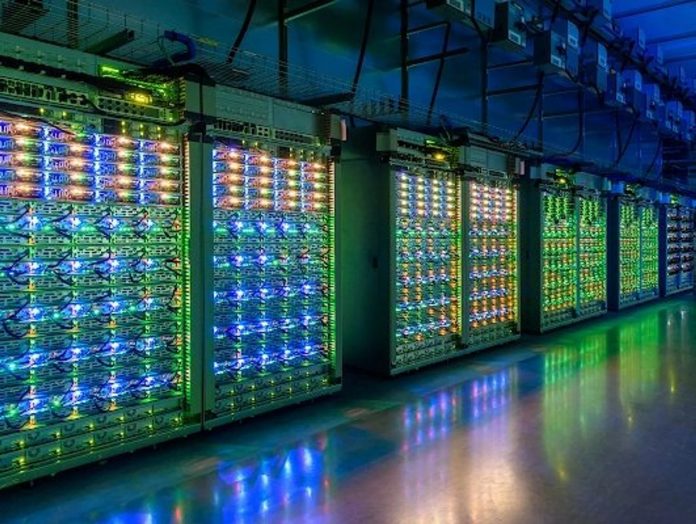
Elon Musk’s artificial intelligence venture, xAI, is investing over $20 billion to build a sprawling new data center in Southaven, Mississippi, as competition for advanced computing power intensifies across the generative AI sector.

State officials confirmed the project on Thursday, with operations at the facility, called “MACROHARDRR, expected to begin by February 2026.

The investment comes amid a nationwide surge in AI infrastructure spending, driven by the need to train increasingly sophisticated AI models. xAI, which competes directly with industry leaders such as OpenAI’s ChatGPT and Anthropic’s Claude, is seeking to expand its computational capacity and secure a strategic foothold in the AI hardware arms race.

Strategic Location and Synergies

The Southaven data center sits near xAI’s newly acquired power plant and the company’s existing data center in Memphis, Tennessee, home to its Colossus supercomputer cluster, which Musk has described as the world’s largest. By co-locating compute facilities near power sources, xAI aims to mitigate energy costs—a critical factor for running high-performance AI clusters.

The expansion is expected to raise xAI’s overall compute capacity to 2GW, enabling faster training of massive models and lowering latency across its AI services.

Timeline of xAI Infrastructure Moves (2025–26)

  • January 2025 – Memphis Expansion: xAI officially launched operations at its Memphis supercomputing hub, Colossus, solidifying its first major AI compute cluster. The facility became the central node for training large language models and powering the Grok chatbot.
  • June 2025 – Strategic Hardware Acquisitions: xAI began deploying state-of-the-art GPUs and specialized AI accelerators, with Bloomberg reporting $7.8 billion in cash outflows in the first nine months of 2025 for hardware, software, and operational costs.
  • December 30, 2025 – Southaven Purchase: Musk announced the acquisition of a site in Southaven for a new data center and nearby power plant. At the time, he described the investment as a move to boost compute to 2GW, but did not disclose the financial scale.
  • February 2026 (Projected) – Southaven Operations Begin: xAI expects the MACROHARDRR data center to go online, connecting to both its Memphis supercomputer and the adjacent power plant, creating a contiguous AI compute and energy ecosystem.
  • Q2 2026 (Projected) – Further Scaling: Additional compute capacity is expected to come online as xAI leverages its Mississippi assets and secures new high-performance servers from key suppliers, cementing its ability to train increasingly advanced models.

The scale of xAI’s investments underscores the enormous capital requirements for AI infrastructure. Training a single next-generation model can cost hundreds of millions of dollars in electricity, hardware, and personnel. Musk’s $20 billion commitment is among the largest single-site investments in U.S. AI infrastructure, signaling that xAI is taking an aggressive stance to compete with well-capitalized rivals such as OpenAI, Anthropic, and tech giants including Google and Microsoft.

Access to computing is noted as a critical differentiator in generative AI. But the largest models require both high-capacity servers and reliable, low-latency power.

The AI Infrastructure Boom

xAI’s expansion comes amid intensifying race across the tech industry to expand AI infrastructure. AI hyperscalers and cloud providers have been investing billions in data centers to keep up with surging demand for generative AI services. States are also increasingly competing to attract such projects, offering access to power, land, and logistical support. Mississippi’s success in attracting xAI highlights the growing importance of regional incentives and infrastructure in shaping the U.S. AI landscape.

While xAI has deep financial resources, the burn rate is significant. Bloomberg reported that the company spent $7.8 billion in cash in the first nine months of 2025, primarily on servers and AI accelerators. Such investments are essential, analysts say, because the speed at which a model is trained directly impacts competitiveness in the fast-moving AI market.

For Musk, the Southaven data center is not just about compute; it is a strategic signal of xAI’s ambition to challenge entrenched players. By creating a high-capacity, energy-secure AI hub, xAI is aiming to handle trillion-parameter-scale models, potentially narrowing the gap with OpenAI, Anthropic, and other well-funded startups.

The Southaven project also marks a new phase in Musk’s approach to AI infrastructure: integrating energy production with compute operations to reduce costs, ensure uptime, and maintain control over the entire AI training pipeline—a model increasingly seen as essential for any company seeking to compete at the cutting edge of generative AI.

In sum, xAI’s $20 billion Southaven investment, combined with the Memphis Colossus cluster and new power plant assets, underpins the company’s determination to become a major global AI contender. It also underscores how infrastructure—and not just algorithms—is increasingly the battlefield for AI dominance.

France Taps Mistral AI for Military Use, Marking a Strategic Shift Toward Sovereign Artificial Intelligence

0

France has taken a decisive step in reshaping how artificial intelligence is developed, deployed, and governed within its national security architecture, after formally awarding a framework agreement to domestic AI startup Mistral AI.

The deal grants France’s armed forces, defense agencies, and affiliated public institutions access to Mistral’s advanced AI models, software, and services, embedding the young company at the heart of the country’s military modernization drive.

The agreement, confirmed on Thursday by the Ministry of the Armed Forces, is being overseen by the ministry’s defense AI agency, an entity created to accelerate the operational use of artificial intelligence across defense planning, logistics, intelligence support, and administration. While financial terms were not disclosed, the strategic weight of the decision is unmistakable: France is signaling that control over AI infrastructure and data has become a matter of sovereignty, not convenience.

At the core of the arrangement is a non-negotiable condition that Mistral’s AI systems will be deployed on French-controlled infrastructure. In practical terms, this means sensitive military data will not transit or reside on foreign-owned cloud platforms, nor be subject to non-French legal jurisdictions. As governments grow increasingly wary of how and where data is processed, especially under U.S. or extraterritorial laws, France’s defense establishment is drawing a clear line around its most critical digital assets.

Mistral confirmed in a LinkedIn post that its models would be fine-tuned using defense-specific data to meet operational needs, suggesting applications that go well beyond generic chatbots or office productivity tools. These systems could eventually support everything from logistical optimization and maintenance forecasting to decision-support tools for commanders and analysts. The emphasis on customization underscores the military’s view that AI is no longer a plug-and-play technology, but one that must be deeply adapted to national doctrines and operational realities.

The defense ministry framed the partnership explicitly in terms of “technological sovereignty,” a phrase that has become central to French and broader European technology policy. In its statement, the ministry said the deal is intended to ensure the armed forces retain control over critical AI tools used across operations and administration. Bertrand Rondepierre, director of the ministry’s defense AI agency, described the agreement as “a major step” in strengthening generative AI capabilities while preparing the armed forces for future challenges without relinquishing control over the underlying technologies.

The agreement is a landmark endorsement for Mistral. Founded only in 2023, the Paris-based startup has risen at extraordinary speed, reaching an estimated valuation of $13.6 billion after announcing a 1.7 billion euro ($2 billion) funding round last year. Backed by global investors and staffed by alumni from leading U.S. and European AI labs, Mistral has consistently positioned itself as a credible European alternative to American heavyweights such as OpenAI, Google, and Anthropic.

That positioning now appears to be paying off. By winning a defense deal at home, Mistral sees support for its claim that Europe can build and operate cutting-edge AI systems without outsourcing control to U.S.-based platforms. The military contract also offers a powerful signal to other European governments wrestling with similar questions about data sovereignty, export controls, and strategic dependence on foreign technology providers.

The timing of the agreement is telling. Across Europe, policymakers are reassessing reliance on U.S. technology in sectors once assumed to be politically neutral, from cloud computing and semiconductors to AI itself. Concerns have intensified as generative AI becomes embedded in critical workflows, raising fears that access to key systems could be constrained by foreign policy shifts, regulatory actions, or geopolitical disputes beyond Europe’s control.

France’s move mirrors developments in the United States, where government agencies and the Pentagon have increasingly awarded contracts to domestic AI firms to support military and national security use cases. Recent U.S. engagements with companies such as OpenAI, xAI, Anthropic, and specialized defense startups reflect a shared understanding on both sides of the Atlantic: AI is now a strategic capability, and governments want closer alignment with the companies that build it.

Yet the French approach diverges in one important respect. While U.S. agencies often rely on commercial cloud infrastructure operated by American tech giants, France is emphasizing full national control over infrastructure, data, and customization. This distinction highlights Europe’s deeper unease about technological dependency, even on allied nations, and its desire to retain room for autonomous decision-making in a rapidly shifting geopolitical landscape.

The agreement offers access to advanced generative AI while preserving operational independence for the French armed forces. For Mistral, it delivers not only revenue and prestige but also an opportunity to refine its technology in one of the most demanding environments imaginable. Military use cases tend to expose weaknesses quickly, forcing rapid improvements in reliability, explainability, and security, areas where governments are often more exacting than commercial customers.

As generative AI becomes woven into military planning, intelligence analysis, logistics, and administrative systems, France’s decision to back Mistral underscores a broader recalibration underway in Europe. Performance alone is no longer sufficient. Control, jurisdiction, and alignment with national interests are now central to how governments choose their AI partners.

In that context, the Mistral deal stands as both a policy statement and a strategic investment. It suggests that France is no longer content to be a consumer of foreign AI systems in sensitive domains, and that it sees domestic champions as essential to maintaining autonomy in the age of intelligent machines.

Indian Stocks Sink for Fifth Straight Session as Trump Tariff Threats Spark Broad Risk-Off Mood

0

Indian equity markets ended the week under heavy pressure on Friday, with benchmark indexes logging their fifth consecutive session of losses and posting their sharpest weekly decline in more than three months.

Renewed fears over U.S. trade policy, particularly the risk of punitive tariffs tied to Russia-related transactions, unsettled investors and triggered broad-based selling across sectors.

The Nifty 50 fell 0.75% to close at 25,683.3, while the Sensex slid 0.72% to 83,576.24. Both benchmarks shed roughly 2.5% over the week, erasing gains built earlier in the quarter and underscoring a sharp deterioration in risk appetite.

Market breadth was decisively negative. Fifteen of the 16 major sectoral indexes declined during the week, signaling that the sell-off was not confined to a single pocket of the market. Mid-cap and small-cap stocks, which had been market leaders for much of the year, bore the brunt of the retreat. The Nifty Midcap 100 dropped 2.6% for the week, while the Smallcap 100 lost 3.1%, reflecting investors’ preference for safety amid rising global uncertainty.

The immediate trigger for the sell-off was renewed concern over U.S. tariffs after President Donald Trump backed a bipartisan bill that could impose tariffs of up to 500% on countries doing business with Russia, according to Republican Senator Lindsey Graham. The proposal has heightened anxiety in India, which has emerged as the world’s second-largest buyer of Russian crude after China since the start of the Ukraine war.

Market participants fear that even the threat of such measures could complicate India’s trade relations, disrupt energy supply chains, and weigh on capital flows.

“If such extreme tariffs are enacted, the immediate effect would be volatility in sectors linked to U.S. trade, pressure on export competitiveness, and renewed caution in foreign investor flows,” said Amit Jain, co-founder of Ashika Global Family Office Services.

He added that the prospect of sweeping tariffs would force investors to reprice risk across equities, currencies, and commodities.

Adding to the unease, the U.S. Supreme Court is expected to rule on the legality of Trump’s tariff actions later in the day, a decision that could have far-reaching implications for global trade dynamics and emerging markets.

Energy, banks drag the market lower

Oil and gas stocks led the decline among major sectors, reflecting their direct exposure to global trade and energy policy risks. Reliance Industries, India’s most valuable company by market capitalization, fell 7.4% over the week, marking its steepest weekly drop since October 2024. The slide followed the company’s disclosure that it does not expect any Russian crude oil deliveries in January, citing heightened uncertainty around tariffs.

The weakness in Reliance alone had an outsized impact on the benchmarks, given its heavy weight on both the Nifty and Sensex.

Banking stocks also came under pressure, amplifying the market’s losses. HDFC Bank, the country’s largest private-sector lender and the single biggest constituent of the Nifty, dropped 6.3% for the week — its worst performance in nearly two years. Investors reacted negatively to the bank’s quarterly business update, which raised concerns about slowing deposit growth at a time when competition for deposits remains intense.

The decline in HDFC Bank dragged the Nifty Bank index down 1.5% for the week, weighing on broader sentiment toward financial stocks that have been central to the market’s rally in recent years.

Within the consumer space, performance was mixed, highlighting how company-specific fundamentals continue to matter even in a risk-off environment. Clothing retailer Trent slumped 9.9% over the week as softness in revenue growth persisted into the December quarter, reinforcing worries about discretionary spending amid high inflation and uneven demand.

In contrast, jeweler Titan gained 3.7% for the week, buoyed by strong sales growth that signaled resilient demand for jewelry, even as broader consumption trends remain uneven.

Stock-specific shocks add to volatility

Beyond macro and sectoral pressures, stock-specific developments also contributed to intraday volatility. Manappuram Finance plunged 7.6% on Friday after Reuters reported that the Reserve Bank of India raised objections to Bain Capital’s plan to acquire a controlling stake in the gold loan provider. The report reignited concerns over regulatory scrutiny in the non-banking financial sector and rattled investor confidence in similar deals.

Looking ahead, investors are bracing for further volatility, with global cues firmly in focus. U.S. jobs data due later on Friday is expected to influence expectations around the Federal Reserve’s next policy moves, which in turn could shape capital flows into emerging markets such as India.

Analysts say sentiment is likely to remain cautious for now, as markets weigh the risk of an escalation in U.S. trade actions against Russia-linked economies, the durability of global growth, and the outlook for foreign investor participation in Indian equities.

Nuclear Stocks Rally as Meta Platforms Secures Up to 6.6 GW in Landmark Deals to Fuel AI Growth

0

Nuclear energy stocks experienced a significant surge on Friday following Meta Platforms’ announcement of sweeping agreements with three providers to secure up to 6.6 gigawatts of nuclear power by 2035, positioning the tech giant as one of the largest corporate buyers of nuclear energy in U.S. history.

The deals, aimed at powering Meta’s expansive artificial intelligence infrastructure, including the one-gigawatt Prometheus AI supercluster in New Albany, Ohio, highlight the escalating energy demands of AI development and Big Tech’s pivot toward reliable, low-carbon baseload power sources. The partnerships with Vistra Corp., Oklo Inc., and TerraPower LLC stem from Meta’s nuclear request-for-proposals (RFP) process initiated in December 2024, which sought 1 to 4 gigawatts of new nuclear capacity.

These agreements encompass long-term power purchase agreements (PPAs), uprates at existing reactors, and financial backing for advanced nuclear technologies, reflecting a comprehensive strategy to address both immediate and future energy needs. Under the 20-year PPA with Vistra, Meta will procure over 2.6 gigawatts from three operational plants: the Perry and Davis-Besse facilities in Ohio, and the Beaver Valley plant in Pennsylvania.

This includes funding for 433 megawatts of uprates—the largest such enhancements ever supported by a corporate entity—and license extensions to prolong operations.

Deliveries are slated to begin in late 2026, with additional capacity ramping up through 2034, providing Meta with stable pricing and reducing exposure to grid volatility.

Meta’s collaboration with Oklo, an advanced nuclear startup backed by OpenAI CEO Sam Altman—who stepped down as board chairman in August 2025—will support the development of a 1.2-gigawatt Aurora fast-reactor campus in Pike County, Ohio.

Through prepayments and development funding, Meta is enabling early procurement, site preparation, and phased deployment starting as early as 2030.

Oklo CEO Jacob DeWitte emphasized the deal’s role in realizing the company’s vision for next-generation nuclear powerhouses in Ohio, noting it as a “major step in moving advanced nuclear forward.”

The agreement with TerraPower, founded by Bill Gates, accelerates the rollout of up to eight Natrium reactors, delivering 2.8 gigawatts of baseload power integrated with 1.2 gigawatts of energy storage, potentially boosting output to 4 gigawatts.

Initial units, starting with two reactors generating up to 690 megawatts, are targeted for the early 2030s.

This modular design promises enhanced efficiency and flexibility for data center operations. These pacts build on Meta’s prior nuclear commitments, including a June 2025 deal with Constellation Energy to extend an Illinois reactor’s life for 20 years.

Combined, they underscore Meta’s strategy to mitigate the “primary bottleneck” of energy supply for AI advancement, as articulated by industry observers.

Market response was robust, with shares of directly involved companies leading the charge. Oklo surged as much as 20% in premarket trading, closing the day up 13%, while Vistra climbed 15% amid intraday highs reaching 18%.

The rally extended to peers: NuScale Power rose 6%, Constellation Energy gained 4%, and BWX Technologies advanced 5%. Broader nuclear exchange-traded funds, such as URA and URNM, also saw upward momentum.

Analysts viewed the news as “incrementally positive for the entire nuclear energy industry,” reaffirming hyperscalers’ commitment to new energy sources amid AI-driven power constraints.

The deals are projected to create thousands of construction jobs and hundreds of permanent positions, particularly in Ohio and Pennsylvania, while generating local tax revenues and bolstering clean energy workforces.

Urvi Parekh, Meta’s head of global energy, highlighted the agreements’ focus on preventing premature reactor closures and fostering early investments in new nuclear capacity. He said the deal enables the development of 1.2 gigawatts of nuclear energy in Southern Ohio, supporting Meta’s operations in the region—including our AI supercluster in New Albany.

Joel Kaplan, Meta’s chief global affairs officer, framed the initiatives as vital for U.S. AI leadership.

This move aligns with a broader industry trend, as AI’s energy-intensive nature—projected to drive substantial U.S. electricity demand growth—prompts tech firms to embrace nuclear for its 24/7 reliability and low emissions.

While financial terms remain undisclosed, the contracts could represent billions in revenue for providers, signaling a revival in nuclear investment amid competition from faster-to-build natural gas options.

Public reaction on social platforms echoed the enthusiasm, with traders and analysts noting the deals’ potential to cement Meta’s edge in AI while spurring nuclear sector growth.