DD
MM
YYYY

PAGES

DD
MM
YYYY

spot_img

PAGES

Home Blog Page 14

JPMorgan CEO Breaks With Trump on Immigration, Warning Crackdowns Risk Economic and Social Damage

0
JP Morgan Chase puts contents through its CEO account, it goes viral. But the same content via JPMC account, no one cares (WSJ)

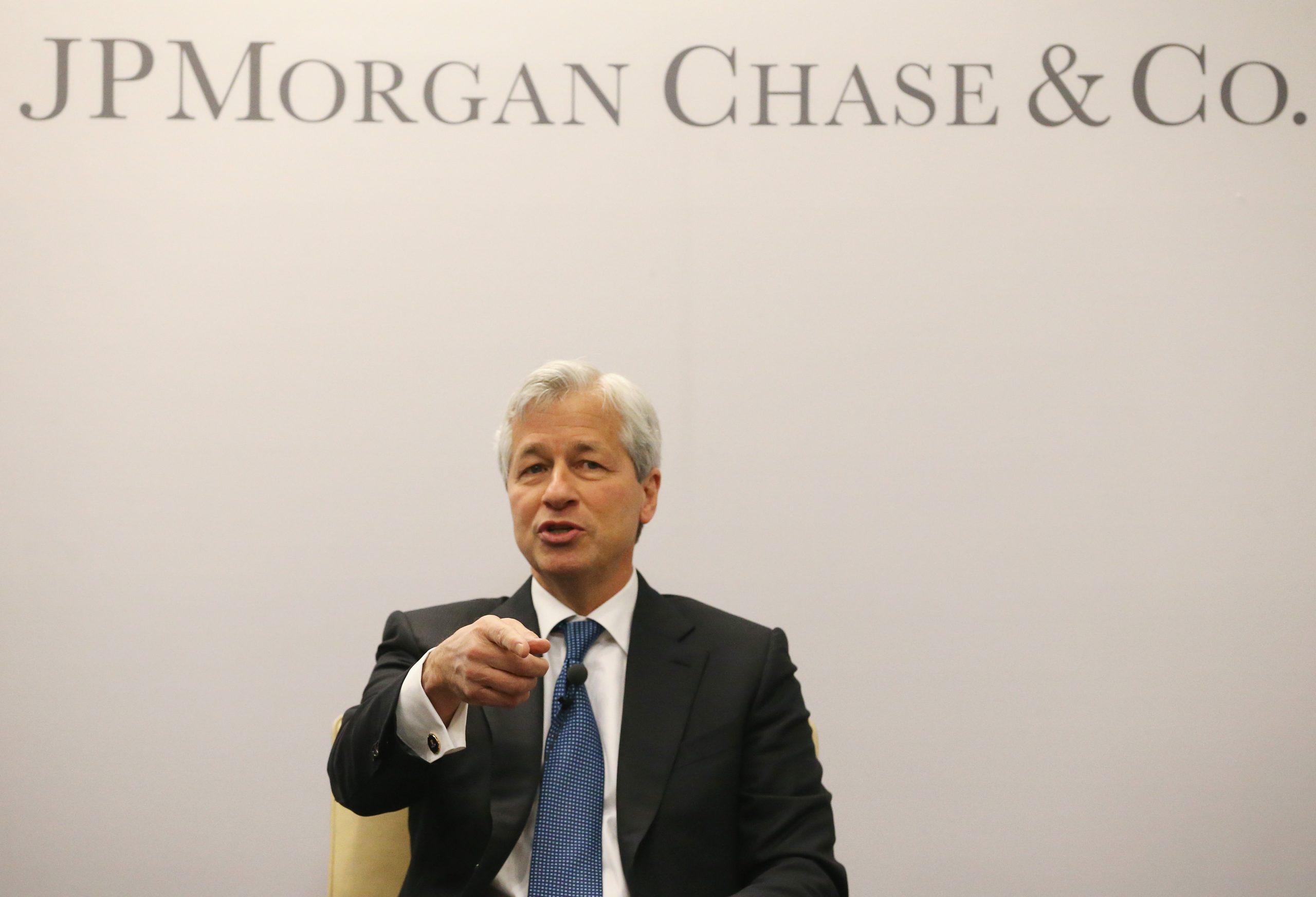
JPMorgan Chase chief executive Jamie Dimon on Wednesday delivered a rare public disagreement with President Donald Trump’s immigration agenda, warning that the administration’s enforcement-heavy approach risks harming both the U.S. economy and the social fabric.

Speaking on a panel at the World Economic Forum in Davos, Switzerland, Dimon opened by crediting Trump for tightening border controls, a priority that has long resonated with parts of the business community. Illegal crossings at the U.S.-Mexico border fell to their lowest level in 50 years between October 2024 and September 2025, according to federal data cited by the BBC, an outcome the administration has repeatedly pointed to as evidence that its strategy is working.

But Dimon drew a clear line between border control and the way immigration enforcement is now being carried out inside the United States. His sharpest comments appeared to reference widely circulated videos and reports of Immigration and Customs Enforcement operations targeting alleged undocumented immigrants.

“I don’t like what I’m seeing, five grown men beating up a little old lady,” Dimon said. “So I think we should calm down a little bit on the internal anger about immigration.”

He did not specify a particular incident, and it remains unclear whether he was referring to a single case or speaking more generally about ICE confrontations. Still, the comment marked one of the bluntest critiques of Trump’s immigration tactics from a sitting chief executive of a major U.S. corporation during the president’s second term.

Since returning to office, Trump has moved swiftly to overhaul immigration policy. His administration has prioritized mass deportations, narrowed access to asylum, and significantly expanded funding for ICE personnel and detention facilities. It has also rescinded previous guidance that limited where immigration arrests could occur, opening the door to enforcement actions at schools, hospitals, and places of worship.

Supporters say the measures restore the rule of law; business groups and immigrant advocates argue they have fueled fear across entire communities.

Dimon’s comments highlighted the economic dimension of that debate. He pressed for clarity on who is being swept up in raids, asking whether those detained are in the country legally, whether they are criminals, and whether they have broken U.S. law.

“We need these people,” he said. “They work in our hospitals and hotels and restaurants and agriculture, and they’re good people… They should be treated that way.”

That argument has been a consistent feature of Dimon’s public positions for years. As the head of the world’s largest bank by market capitalization, he has repeatedly described immigration reform as one of the most effective ways to lift U.S. growth, ease labor shortages, and strengthen long-term competitiveness.

In shareholder letters and interviews, he has supported a merit-based green card system, citizenship for immigrants brought to the U.S. as children, and a more flexible approach to skilled-worker visas such as the H-1B programme.

On Wednesday, he returned to those themes, urging Trump to pair enforcement with pathways to legality and citizenship for “hardworking people” and to preserve access to asylum for those who qualify.

“I think he can, because he controlled the borders,” Dimon said, suggesting that the administration now has political room to soften its stance without losing credibility on security.

The remarks stood out in a corporate environment where public criticism of Trump has been muted. Unlike during his first term, when executives openly challenged policies ranging from trade to climate change, many CEOs have largely stayed silent this time around. Wall Street analysts and political observers say business leaders are wary of retaliation from an administration that has sued media organizations, universities, and law firms, and has shown a willingness to use regulatory and legal pressure against perceived opponents.

That dynamic surfaced directly during the Davos discussion. Zanny Minton Beddoes, editor-in-chief of The Economist, told Dimon she was struck by how careful he and other executives had been when discussing Trump.

“You are one of the more outspoken business leaders,” she said. “I’m genuinely struck by the unwillingness of CEOs in America to say anything critical. There is a climate of fear in your country.”

Dimon pushed back, arguing that he had been clear about his disagreements with the president on immigration, tariffs, and relations with European allies.

“I think they should change their approach to immigration,” he said. “I’ve said it. What the hell else do you want me to say?”

Even so, his intervention underscored how unusual such candor has become. Although for Trump, immigration remains a core political issue and a defining feature of his presidency, it is something different for corporate America. The tension between enforcement, labor needs, and economic growth is becoming harder to ignore. Dimon’s comments suggest that, at least for some business leaders, the cost of staying silent may now rival the risks of speaking out.


OpenEvidence Closes $250m Round at $12bn Valuation, Signaling a New Phase in AI’s Medical Gold Rush

0

OpenEvidence’s rapid ascent from an obscure health-tech startup to a $12 billion company in under a year is becoming one of the clearest signals that artificial intelligence in medicine has moved beyond experimentation and into the heart of the U.S. health-care system.

The Miami-based company, often described as “ChatGPT for doctors,” said it has closed a $250 million funding round led by Thrive Capital and DST, pushing its valuation to $12 billion. The deal caps a remarkable run. In February, OpenEvidence raised $75 million from Sequoia at a $1 billion valuation. By October, that figure had surged to $6 billion. In total, the company has now raised about $700 million from investors that include Google’s venture arm, Nvidia, Kleiner Perkins, Craft Ventures, and Mayo Clinic.

The speed of the re-rating underscores both investor appetite for applied AI and the belief that health care may offer one of the largest and most defensible markets for the technology. Health spending in the U.S. now runs at roughly $5 trillion a year, close to 20% of gross domestic product, making it the single largest slice of the real economy. For venture capital, it represents a rare combination of scale, urgency, and long-term demand.

OpenEvidence was founded in 2022 by Daniel Nadler, who previously built Kensho Technologies, an AI firm acquired by Standard & Poor’s for about $700 million, and Zachary Ziegler, a Harvard PhD student specializing in artificial intelligence. Nadler’s track record has helped reassure investors wary of flashy AI startups with limited execution experience.

At its core, OpenEvidence offers a clinical decision-support chatbot designed specifically for physicians. Nadler rejects the idea that it is simply a medical-flavored version of a consumer chatbot. He says the system is trained on peer-reviewed scientific journals and trusted medical sources, not the open internet or social media, which he argues can introduce noise and low-quality information into high-stakes clinical settings.

“‘ChatGPT for doctors’ is a useful shorthand,” Nadler said, “but what we really do is help physicians make high-stakes clinical decisions at the point of care.”

That positioning matters as regulators, hospital systems, and clinicians remain cautious about AI tools that hallucinate or lack transparency. By narrowing its focus to verified physicians and curated medical data, OpenEvidence is trying to sidestep some of the reputational and legal risks that hang over more general-purpose models.

Nadler claims the strategy is working. He said more than 40% of U.S. physicians now use OpenEvidence, a figure that, if accurate, would make it one of the most widely adopted AI platforms in American medicine. The company says it topped $100 million in annualized revenue last year, driven largely by organic growth. According to Nadler, 95% of new users discover the platform through other doctors, a word-of-mouth dynamic that is rare in enterprise software and difficult for rivals to replicate.

The growth story is also tied to OpenEvidence’s unconventional business model. Unlike many health-tech startups that rely on expensive subscriptions sold to hospital systems, OpenEvidence leans heavily on advertising. Companies can pay for video promotions inside the app, allowing the core product to remain free for physicians.

Nadler argues this approach lowers barriers to adoption, especially for small practices that lack IT departments or budgets for enterprise software.

“Most health care in America isn’t happening at billion-dollar hospitals,” he said. “It’s happening in small practices.”

The ad-based model places OpenEvidence at the leading edge of a broader shift in AI monetization. For much of the past two years, leading AI companies have relied on subscriptions or enterprise contracts while absorbing heavy losses. That stance is beginning to soften. OpenAI said last week it is testing an ad-supported version of ChatGPT, an acknowledgment that advertising may be one of the few ways to support mass-market AI use without passing costs directly to users.

Nadler has been explicit about wanting to avoid the capital-burning strategies embraced by some rivals. He said OpenEvidence is trying to balance rapid growth with a credible path to profitability, distancing himself from startups that are “openly planning to burn billions or tens of billions” in pursuit of scale. The comment reads as an implicit contrast with foundation model developers whose infrastructure costs continue to balloon.

Competition, however, is intensifying. OpenAI recently launched ChatGPT Health, while Anthropic is pushing Claude Healthcare. Both products are HIPAA-compliant extensions of popular consumer chatbots, backed by companies with far deeper resources than OpenEvidence. Nadler insists his company’s moat lies in its physician-first focus, data quality, and early lead.

“We’ve already gathered hundreds of millions of real-world clinical consultations from verified physicians,” he said, describing a feedback loop that continually improves the product and is hard to reproduce quickly.

The claim highlights a broader truth about AI applications: once embedded in daily workflows, switching costs rise sharply.

The funding round also lands against a backdrop of renewed momentum in AI investing. According to CB Insights, there were six AI funding rounds exceeding $1 billion in the third quarter of last year alone. Anthropic is reportedly in talks to raise another $10 billion, while Elon Musk’s xAI announced a $20 billion round this month. For investors, OpenEvidence sits at the intersection of this capital surge and a sector long seen as ripe for technological overhaul.

Despite takeover interest from large tech companies eager to bolster their health-care offerings, Nadler says he intends to keep OpenEvidence independent. Having gone through an acquisition with Kensho, he said this time he wants to build a company that compounds over many years rather than exiting early.

On the question of an initial public offering, Nadler was blunt. He believes application-layer companies like OpenEvidence will have to wait until foundation model developers such as OpenAI and Anthropic go public first, following what he described as the natural order established during the early internet era.

OpenEvidence’s latest round cements its status as one of the most closely watched AI health-care startups. It is believed to be a confirmation that AI’s push into medicine is no longer speculative, and OpenEvidence has placed itself squarely at the center of that transformation.

Why Investors Say Ozak AI Has One of the Only Realistic 30,000%–200,000% ROI Pathways Across All 2026 Presales

0

Investors believe that Ozak AI has a lot of potential to generate an ROI ranging from 30,000% to 200,000%. This is after a stark comparison to all presales in 2026 to this point. The said ROI range for OZ, however, is projected to be recorded only after the listing phase. It could happen sooner than expected considering the AI-powered token is accelerating its growth pace.

ROI with OZ

ROIs with OZ for early investors are estimated to be as high as 200,000%, or 2,000x, with the lowest being 30,000%, which translates to a 300x gain. Ozak AI tokens currently have an offer value of $0.014, up from $0.001 by 14x.

To put these numbers into perspective, a 300x gain could turn the token value into $4.2 and a $100 investment into $30,000. Similarly, a 2,000x ROI could turn the token value into $28 and the same investment into $200,000. This is fundamentally based on the presale growth momentum wherein investors have bought more than 1.03 billion tokens for a total of over $5.78 million.

Ozak AI Tech Crafting ROI Pathways

The AI-powered technology housed within the native ecosystem is curating the said ROI pathways. This includes the likes of DePIN and the x402 Protocol, among many others.

DePIN, for one, functions as a safety layer for the financial data. It essentially protects the financial data from malicious tampering and loss. Furthermore, it supports scalability via node-addition as & when data is ingested plus processed.

The x402 Protocol, by definition, comes as an open standard and a progressive step in making Ozak AI’s agents truly autonomous. For developers, it eliminates the requirement of API keys and subscriptions to lower the cost to a fraction of a cent.

Ozak AI Alliances as Contributing Factors

Strategic alliances of Ozak AI work as contributing factors for OZ to reach 30,000%-200,000% ROI. Associations with key AI crypto market players help Ozak AI to onboard components that have been missing, like the one with Phala Network.

A partnership with Phala Network introduces a stack of CPU-GPU-TEE into the ecosystem. The objective is to blend it with Ozak AI’s Prediction Agents to architect AI predictions for financial markets. Their partnership goes on to entail efforts to accelerate workflows while supporting shared developer tools.

Key Takeaways

Investors believe that realistic ROIs for Ozak AI could be between 30,000% and 200,000%. This is because OZ is backed by AI-powered technical specifications and onboarding of critical AI crypto market players. Thorough research and risk assessment before crypto investments are always recommended.


For more information about Ozak AI, visit the links below:

Website: https://ozak.ai/

Twitter/X: https://x.com/OzakAGI

Telegram: https://t.me/OzakAGI

Top 6 Sites to Buy Facebook Likes on a Budget

0

For those attempting to grow on Facebook in 2025, it would seem like a never-ending task to gain steady ‘Likes’ without having to shell out a small fortune on advertising!

The fact of the matter is, ‘Likes’ on Facebook are much more than a superficial measure; they also help measure visibility, credibility, and ultimately, the ranking of one’s posts on the social networking site. What would it be like to boost your ‘Likes’ without having to sacrifice quality?

That’s exactly where budget-friendly engagement sites can step in. What these sites can do is provide affordable package services to help you boost your online visibility without necessarily breaking the bank.

But not all sites considered “affordable” are worth your while, as some of these sites use fake “Likes” generated solely to rip you off. Forgive us, but we tested a number of sites to find the best six budget Facebook Like purchase sites.

  1. SubscriberZ – Budget-Friendly Packages for Genuine Facebook Likes

In respect of value for money, SubscriberZ tops the list as one of the most affordable but high-quality services we tested. Unlike most other affordable services, SubscriberZ succeeds in maintaining affordable pricing without wavering on quality.

Regardless of whether you purchase Facebook Post Likes, Page Likes, or any other services, the quality of delivery is always excellent.

What’s special about SubscriberZ is it has a transparent pricing scheme. It allows you to start small, so you can purchase affordable plans, depending on your needs, and upgrade as you progress. The delivery takes only a little while, but it has a gradual Like growth pattern.

Their customer support is also excellent—very responsive, very friendly, and always ready to help. Overall, SubscriberZ provides high-quality engagement services at a very affordable price, making it the best budget option available in 2025.

  1. Socialgreg – For Long-Term Affordable Growth

The next one on the list is Socialgreg, a service which prioritizes quality over the bottom line. The thing about Socialgreg, which is quite remarkable, is how well it walks the line between being budget-friendly and being reliable, as it delivers genuine likes on a steady basis.

Socialgreg’s services are very helpful in those situations as they can be used to maintain continuous growth without having those spurts of growth, which always seem a little fishy to search engines. Socialgreg does not deliver all the likes at once, choosing instead a smooth delivery.

The system is user-friendly, the payments are secure, and the site provides promotions from time to time, so even long-term use becomes more affordable. Socialgreg would be a very viable option for any individual attempting to grow while on a tight budget.

  1. LikeWave – For Bulk Facebook Likes at Low Rates

If you’re looking to get as many as possible and have to purchase a significant number of Likes on a budget, LikeWave is definitely the service worth checking out.

The site primarily focuses on delivering a substantial number of Facebook post Likes as well as page Likes, which comes at a very affordable cost compared to the competition.

Even though it’s very affordable, LikeWave has relatively decent Like retention rates, as well as genuine-sounding accounts.

We would recommend LikeWave for promotions, especially for newly launched campaigns. The delivery of services is quite speedy, as it takes a few hours to have the order completed.

Even though their support team could be a bit faster, the site is very reliable and cost-efficient, making it a very good choice for customers on a tight budget.

  1. BoostStarter – Great for Growing Small Pages on a Budget

BoostStarter has earned a reputation as one of the best budget services because it is very flexible and always delivers high quality.

If you are trying to build credibility on a small business page, or just want your own content to seem more popular, BoostStarter has targeted services ready to help.

Their pricing plans are also crafted for those on a tight budget, allowing you to choose exactly how much interaction you want without having to break the bank.

Another feature of BoostStarter is their promotional package deals from time to time, featuring combined Post Like, as well as Page Like, bundles.

The number of Likes we got in our testing phase originated from genuine accounts, retaining well over a period of weeks. Helping small artists or local businesses have a credible online image, without a fear of being billed unnecessarily, is what BoostStarter has ensured.

  1. MediaPop – Best for Consistent Budget Performance

If you’re looking for a budget option but want it to consistently deliver well on several campaigns, MediaPop is definitely a brand you should be familiar with.

It has simple pricing, easy delivery, and genuine communication, qualities rarely found in cheaper engagement services. MediaPop’s Likes appear very natural and remain stable for weeks following delivery.

Even though the package sizes are a tad smaller compared to some competitors, the cost is definitely attractive for those looking to achieve stable results without breaking the bank.

The site also features a mix-and-match package option, so you can purchase a variety of services within a single order. It is a good option for budget-conscious marketers as well as those looking for a reliable option on a budget.

  1. LikeRocket – Fast & Cheap Facebook Engagement

Completing our lineup is LikeRocket, a relatively new player within the industry, which has gained quite a reputation for a good blend of speed, price, and quality.

What LikeRocket primarily focuses on is delivering things as soon as possible, so it would be a tailor-made option for those customers preferring speed.

The cost of Their Likes looks realistic, as it does not make your growth unnatural. The starting plans of LikeRocket are quite affordable, and the cost is less than a cup of coffee.

Even though it is very affordable, it provides secure payment processing, which is not always the case with very cheap services.

If you’re looking for fast, affordable Facebook Likes that appear natural and long-lasting, LikeRocket has one of the best bargains available in 2025.

The Role Of Budget Facebook Likes In Facilitating Growth

The fact is, purchasing Facebook Likes shouldn’t be a substitute for genuine interaction, but it can definitely be a very helpful boost to your online visibility.

Having a solid foundation of Likes is a huge indication of credibility, traffic, and popularity to both newcomers on your site as well as the algorithm.

Budget-conscious services, such as the ones mentioned earlier, are ideal for content creators or small businesses looking to:

  1. Establish a strong online presence
  2. Establish trust quickly among newer audiences
  3. Enhance early marketing campaigns
  4. Enhance reach prior to running paid advertisements

The trick, as always, is moderation – leveraging your bought likes to maximize visibility while retaining authentic interactions. By integrating this tactic with steady posting, even cheaper likes can be very effective in assisting a natural acceleration of your growth.

Conclusion

Not all “budget” Facebook Likes on the market are equal. While some services resort to using fake accounts, shady delivery, or other dubious tactics, these sites have demonstrated the best of both value and quality.

For 2025, some of the best budget services available online for purchasing Facebook Likes include SubscriberZ, Socialgreg, LikeWave, BoostStarter, MediaPop, as well as LikeRocket.

All of these have been considered to provide very affordable services, high retention rates, as well as fast delivery.

Keep in mind, though, that the point of buying Likes on a budget is not to cut corners, but to gain some speed. Platforms like these will help you grow, look more trustworthy, and gain recognition for your posts from the audiences that matter!

Sources

  • https://www.subscriberz.com/facebook
  • https://www.socialwick.com/facebook
  • https://socialgreg.com/facebook/page-likes
  • https://markwatersfilm.com/2025s-best-sites-for-buying-facebook-likes-top-10-providers/
  • https://deliveredsocial.com/buy-facebook-followers/
  • https://www.amyglaze.com/top-7-sites-for-buying-facebook-likes-without-risking-your-page/
  • https://www.3csoftware.com/understanding-the-impact-of-buying-facebook-likes-is-it-worth-it/


Why Social Proof Still Outperforms Paid Ads for Creators

0

In a world where thousands of voices seek the same audience, what makes yours stick is trust, which is known as social proof. This goes beyond just the number of likes or followers you have; it communicates that real people connect with you. Paid advertisements, while they certainly attract attention, cannot create the same power of trust that people give to real social proof.

This is made evident by the fact that ads may bring visitors, but they may not get the trust or loyalty of the audience – something that is most needed in lasting and valuable connections. In this article, you will find the reason that social proof is more beneficial for creators than paid advertisements.

Understanding Social Proof

Before delving into the advantages of social proof, it is essential to understand what exactly it is and how it is useful. It is basically the idea that people are likely to do something if they find others doing it. Inside the territory of social media and online content, dimensions like follower counts, shares, likes, and comments are immediate signals of approval; they show that others have accepted your work.

With the simple fact of seeing these signs, newcomers tend to place trust in the material the creator has made and follow it too. However, trusting only these surface metrics may lead to a mistake, as the real social proof must go deeper into the real interaction and the experience of the audience engaged with the content.

Paid Ads and Their Role

Paid ads allow you to reach out to specific groups and pay for an instant visibility boost. Advertisements allow you to arrange campaigns, analyze progress, and ensure that your message is delivered perfectly to the appropriate and desired people. Nevertheless, these advertisements provide a significant boost to traffic on a temporary basis rather than developing an active interest.

Over time, those attracted hardly become a loyal audience. What is even more striking is the fact that merely spending on paid advertisements cannot stimulate authentic connections, and such connections are established based on trust and organic conversion, which comes gradually over time.

Why Social Proof Outperforms Ads

You will discover that social proof can obtain the trust of your audience much more instantaneously than ads can. When viewers see that others like your content, they become encouraged to lend their attention, a lot to the encouragement of organic interaction. This interaction leads to the further discoverability of your content, as platforms like Facebook and Instagram value the interaction and reward it with much more exposure.

Social proof makes a picture that lasts much longer than paid ads. This, too, assists in signaling to the algorithms that the material is significant, hence the content is further pushed. This is only a part of why social proof has the capability of long-term and stable benefits, which you cannot get from advertisements.

Leveraging Social Proof Effectively

Utilizing social proof effectively is something more than generally trailing behind a few measly likes or shares. What you need to do is to actively stimulate real conversations among your audience; ask them to leave sincere thoughts on the content you develop. Show testimonials or user-generated content, which portrays real people’s experiences and opinions about what you offer.

Mention indicators such as milestones that indicate a fan base or excellent feedback. Stay in touch with your audience; all of these acts serve as a stream of credibility over time. Combine these efforts with other genuine growth techniques, such as making good content on a consistent basis, to make sure that your social proof works and helps you to create a loyal audience that is genuinely interested in what you do.

Common Mistakes Creators Make

  • Most creators simply depend too much on paid advertisements to improve growth, glossing over the critical nature of genuine community engagement.
  • Relying only on paid ads may bring you views but will not lead to any real connection or loyalty towards your work.
  • Many creators may also focus purely on their follower count rather than also backing up having engagement and conversation, which is really crucial in making a relationship, and not just numbers.
  • You can also make a mistake of sharing incorrect social proof or being unauthentic as it makes your audience suspicious.

Such mistakes can slow down the development process of your content if you don’t connect with your audience more on a real and small level.

Conclusion

Social proof works as a tremendous asset for content creators, functioning as a constant engine of growth compared to paid advertisements. Of course, paid advertisements can be helpful, but they are only momentary and do not assist in building the actual involvement and trust that social proof can create.

To build a loyal audience, it pays to spend time on true connections, appreciating what your existing audience does, and not forcing the issue. Such balancing acts will make the audience view your work as something credible and valuable. You will eventually build a well-integrated community based on trust, credibility, and genuine connection to your work.


Sources:

  • https://sproutsocial.com/insights/social-proof/
  • https://billo.app/blog/creator-partnership-ads/
  • https://commitagency.com/insights/social-proof-strategies-for-powerful-marketing-campaigns/