DD
MM
YYYY

PAGES

DD
MM
YYYY

spot_img

PAGES

Home Blog Page 14

World Liberty Financial Proposes Unlocking 62.28B Locked WLFI Tokens, as BTC Enters Post Rejection Consolidation Zone 

0

World Liberty Financial (WLFI), the Trump family-backed DeFi project, posted a governance proposal, to restructure the unlocking of approximately 62.28 billion locked WLFI tokens.

The plan differentiates between two main groups of locked tokens: Early supporters about 17.04 billion WLFI tokens: These would shift to a 2-year cliff, no tokens unlock for the first 2 years followed by a 2-year linear vesting period. Holders keep 100% of their allocation with no burn required. If they do not opt in, the tokens remain locked indefinitely under the original terms.

Founders, team, advisors, institutions, and partners about 45.24 billion WLFI tokens: These would face stricter terms: a 2-year cliff + 3-year linear vesting (total 5-year schedule), with a mandatory 10% burn upon opting in. This burn could permanently destroy up to 4.52 billion WLFI tokens. The proposal aims to provide a structured, predictable unlock schedule instead of indefinite locks, while emphasizing long-term governance alignment.

WLFI stated that passing it would keep billions of tokens committed to governance for at least 2 years and signal strong ecosystem commitment through burns and extended vesting. This comes amid broader discussions about token liquidity in the project, which has faced criticism over its tokenomics and governance. Some community members and figures like Justin Sun have pushed back, calling aspects of the proposal unfair or coercive, while others see the burn and vesting as positive for reducing supply pressure and demonstrating alignment.

The official WLFI governance forum post outlines the full details, and it is currently open for community discussion before a potential on-chain vote. Crypto proposals like this can evolve, and token values are highly volatile—always review the latest official sources and do your own research before engaging with governance or investments. The project has highlighted this as a move toward greater transparency and long-term stability.

Up to 4.52 billion WLFI ~10% of the 45.24B founder, team, advisor and partner allocation could be permanently burned if they opt in. This reduces total supply (100B max) and removes a large potential overhang. Replaces indefinite locks with predictable schedules — no meaningful unlocks for at least 2 years (cliff period). This significantly lowers near-term sell pressure on the circulating supply.

Early supporters ~17B tokens get a 4-year total schedule (2y cliff + 2y linear vest) with no burn. Insiders get a stricter 5-year schedule (2y cliff + 3y linear) + mandatory burn. Early investors gain a defined though delayed path to liquidity starting in ~2 years potentially post-Trump term in 2029, but face extended illiquidity compared to hopes for quicker unlocks.

Opt-out keeps tokens locked indefinitely.
Founders/team/advisors/partners: Must accept a 10% haircut (burn) for any vesting schedule; otherwise, tokens stay locked forever while retaining governance rights. Signals stronger skin-in-the-game alignment.
Existing open-market holders: Generally bullish in theory — reduced future dilution and clearer tokenomics could support price stability or upside.

WLFI saw short-term pops (1-7%) on the news in some reports, though the token trades near all-time lows. Project frames it as one of the strongest long-term alignment moves in DeFi, emphasizing commitment over quick exits. Community reaction is mixed — praise for the burn and structure from some less dumping risk; criticism from others including Justin Sun calling it punitive, coercive, or a hostage situation due to the opt-in-or-stay-locked dynamic and ongoing lockup frustrations.

Proposal still needs community discussion + on-chain vote. If it fails or faces low turnout, uncertainty lingers. Broader WLFI challenges remain. Short-term positive for supply discipline and perceived team commitment; medium-term introduces clarity but extends illiquidity for many. Crypto is volatile — check the official governance forum for the latest and do your own research before any decisions.

Bitcoin Sitting Comfortably in Post Rejection Consolidation Zone

Bitcoin is trading right around $75,215 sitting comfortably in that post-rejection consolidation zone after testing higher levels recently. It’s showing a modest +2.7% over the past 24 hours and +7.4% on the week, but nothing dramatic—classic hovering behavior while the broader crypto mood stays glued to Extreme Fear.

The Crypto Fear & Greed Index is locked at 23 (Extreme Fear), unchanged from yesterday and still down from last week’s 14. It’s been grinding in deep fear territory for a while now; last month averaged around 28/Fear, which historically tends to be a contrarian signal when sentiment bottoms out this hard.

Ethereum is outperforming BTC relatively. The ETH/BTC ratio has climbed to around 0.0313–0.0315, marking its highest level since January 2026 recovering from a February low near 0.028, though still well below the January peak closer to 0.038. ETH itself is trading near $2,320–$2,360, up roughly 4% over the past week versus BTC’s ~3.9%.

On-chain drivers are helping: Ethereum added a ton of new users in Q1, trading volume hit records, and total stablecoin supply on the network just crossed an all-time high of $180 billion. This ETH/BTC strength is one of the brighter spots in an otherwise cautious market—it’s the kind of rotation that often hints at capital starting to rotate into alts when BTC dominance pauses.

That said, the overall macro backdrop (high fear, BTC still ~40% off its Oct 2025 ATH of $126k) keeps things tense. Classic fear while price holds setup—capitulation vibes without the full meltdown. Thinking this is the bottoming process, or waiting for a cleaner BTC breakdown before the next leg.

Deep Extreme Fear (unchanged at 23) while price holds above recent lows ~$74,500 often marks capitulation zones. Historically, such sentiment extremes precede rebounds as weak hands exit and accumulation builds. Consolidation near $75k resistance suggests indecision; a clean break above could spark short-covering and momentum shift. Failure to hold $74k–$72k support risks deeper correction toward $70k or lower.

Still 40% off 2025 ATH ($126k) — implies room for recovery if macro conditions ease, but high fear reflects ongoing caution, possible liquidity tightness or risk-off flows. ETH outperforming BTC; ratio up, network metrics strong with rising users, volume, and stablecoin supply,  hints at early capital shifting from BTC into alts. This is a classic precursor to broader altcoin rallies once BTC stabilizes.

Could benefit more from any risk-on turn in 2026, driven by Ethereum-specific upgrades, DeFi/RWA growth, and ETF flows. Short-term: ETH may continue to hold or gain ground vs. BTC even if overall market stays choppy. Overall market fear while holding setup — often a bottoming process rather than full meltdown. Low sentiment + sideways action can lead to sharp relief rallies on positive triggers like ETF inflows resuming, macro easing.

Prolonged fear could amplify downside on any bad news; BTC dominance pausing favors selective alt plays but doesn’t guarantee a bull run yet. High-conviction holders see opportunity in the fear (buy-the-dip mentality), while cautious traders wait for sentiment improvement or clearer breakout.

Volatility likely stays elevated near these levels. In short: Cautiously constructive for patient bulls, especially on ETH relative value, but no strong directional conviction until fear eases or BTC claims $76k+.

Sequoia Capital Raises $7bn Late-Stage Fund, Betting Big on AI’s Expanding Ecosystem Beyond the Model Builders

0

Sequoia Capital has closed one of its largest funds in recent memory, securing roughly $7 billion for a new vehicle aimed squarely at late-stage investments in the United States and Europe.

The amount nearly doubles the $3.4 billion it raised for a comparable fund in 2022, signaling the firm’s conviction that the AI opportunity is not only enduring but accelerating in ways that demand ever-larger checks and longer holding periods.

The capital will support Sequoia’s “expansion strategy”, its late-stage investing arm, where the rules of the game have fundamentally changed. In the pre-AI era, late-stage funding typically meant helping already-proven companies polish their operations ahead of an IPO or acquisition.

Today, it often involves backing businesses that can achieve massive scale with startling speed and relatively modest capital intensity, thanks to cloud infrastructure, open-source tools, and the plummeting cost of training and deploying advanced models. Sequoia sees this shift as structural, not cyclical, and the bigger fund gives it the firepower to participate at the table stakes now required.

What stands out is where the firm is placing its bets. Sequoia has long been one of the most aggressive venture investors in foundational AI, backing OpenAI early and pouring substantial capital into Anthropic more recently. Both companies are reportedly preparing for potential public listings in 2026, which could deliver outsized returns if the current valuations hold.

Yet Sequoia is not limiting itself to the handful of giants racing to build the largest models. It has also invested in a growing cohort of applied-AI companies that are putting the technology to work in the real world—most notably Physical Intelligence, the Bay Area robotics startup blending AI with physical dexterity, and Factory, which develops autonomous AI agents for enterprise engineering teams.

This diversification mirrors a broader market trend: there has been a clear uptick in the number of companies raising substantial late-stage funds outside the narrow band of foundational model developers. While OpenAI, Anthropic, and a few peers continue to dominate headlines and command the largest single rounds, a widening circle of startups in vertical applications—robotics, enterprise automation, healthcare diagnostics, scientific discovery, and specialized infrastructure—is attracting nine- and ten-figure checks from top-tier firms. These companies are moving from prototype to revenue faster than previous generations of software startups ever could, often hitting meaningful traction with far smaller teams.

The result is a more crowded and competitive late-stage landscape, where capital is flowing not just to the picks-and-shovels providers of AI but to the builders who are embedding intelligence into specific industries and workflows. Sequoia’s new fund positions it to capture upside across this expanding stack.

The raise also marks the first major capital call under the firm’s updated leadership. Alfred Lin and Pat Grady now serve as co-stewards of the 54-year-old Silicon Valley institution, and the $7 billion vehicle is their opening statement: Sequoia intends to stay at the forefront of the AI wave rather than rest on decades of past success.

Their approach appears pragmatic—maintaining the firm’s historic discipline around founder quality and market timing while adapting to an environment where the best opportunities require both speed and patience.

For the broader venture ecosystem, the fund underscores a simple reality: AI has compressed timelines and inflated check sizes across the board. Founders who once needed multiple smaller rounds to prove product-market fit can now reach escape velocity with a single large infusion, provided they can demonstrate defensible moats in data, distribution, or domain expertise.

That dynamic benefits Sequoia’s portfolio companies but also intensifies pressure on the firm to pick winners early and support them aggressively.

Of course, there are risks. Valuations in AI have reached rarefied air, energy demands for training and inference continue to climb, and regulatory scrutiny is only increasing. Yet Sequoia’s willingness to commit fresh billions suggests it views these challenges as speed bumps on a multi-decade runway. The firm’s long history of riding transformative technology cycles, from the internet to mobile to cloud, has taught it that the biggest returns often come from doubling down when others begin to hesitate.

With this fund, Sequoia is not merely participating in the AI boom; it is structurally repositioning itself to own meaningful pieces of the companies that will define the next era of computing.

Food For Thought: A Decolonised Economic Measure of African Price Indexes

0

Food has emerged as an effective comparative tool in global economics because it connects abstract macroeconomic concepts to everyday consumption. The Big Mac Index, popularised by The Economist, uses the price of a standardized fast-food product as a proxy for purchasing power parity (PPP), allowing simplified comparison of currency valuation and cost of living across countries. By translating exchange-rate theory into the price of a widely recognised meal, the index demonstrates how labour costs, supply chains, and domestic inflation shape consumer purchasing power.

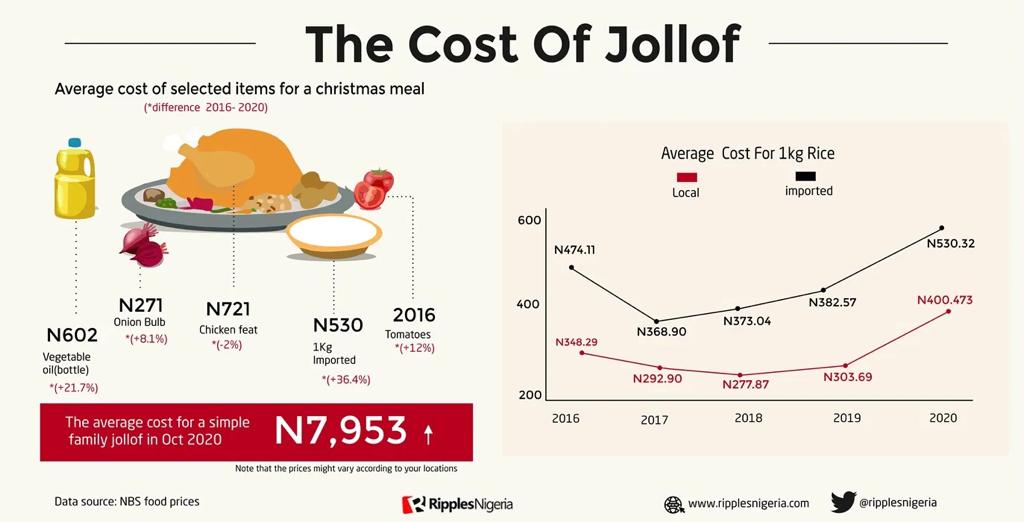
However, the rise of the Jollof Rice Index represents a shift toward culturally grounded economic indicators. Reported by CNBC Africa, the index measures the cost of preparing a staple West African dish using locally sourced ingredients.

Unlike the Big Mac Index, which reflects multinational corporate production and globalised consumption, the Jollof Index captures inflation as experienced in household food economies. Its significant increase in Nigeria highlights how food price changes reveal immediate social impacts of economic instability and currency pressures.

The contrast between the two indexes suggests a broader transformation in economic measurement. The Big Mac Index reflects a Western-centric model rooted in global corporate uniformity, whereas the Jollof Index foregrounds regional consumption patterns and cultural identity. This shift echoes the long-standing culinary rivalry between Nigeria and Ghana, often referred to as the “Jollof Wars,” noted by BBC News. In this sense, the Jollof Index functions as a decolonised counterpoint, re-centring economic analysis on indigenous food systems rather than imported consumer brands.

Together, these food-based metrics illustrate that economic comparison is not purely technical but also cultural. While the Big Mac Index globalised the language of purchasing power, the Jollof Rice Index localises it, signalling a move toward plural, context-sensitive approaches to understanding inflation, affordability, and lived economic reality.


Nnamdi O. Madichie is Professor of Marketing and Entrepreneurship. He is the author of “Going Global – A Qualitative Analysis of Nigerian Cuisine Beyond the ‘Jollof Rice’ Rivalry

Uber Expands Delivery Hero Stake with €270m as Prosus Navigates EU Antitrust Pressure and Industry Consolidation

0

Uber’s decision to acquire an additional 4.5% stake in Delivery Hero is less a routine equity transaction than a window into how capital, regulation, and competitive strategy are colliding across Europe’s food delivery sector.

The shares, purchased from Prosus for about €270 million ($318 million), were priced at €20 each. While that figure sits below Delivery Hero’s most recent closing price after a short-term rally, it represents a 22% premium to the one-month average, a structure that suggests both urgency on the seller’s side and strategic intent on the buyer’s.

For Prosus, the sale is not discretionary. It is a regulatory concession. The investor has been seeking approval for its €4.1 billion acquisition of Just Eat Takeaway.com, a deal that would further concentrate an already crowded market. The European Commission has indicated it would approve the transaction only if Prosus meaningfully reduces its stake in Delivery Hero, aiming to limit overlapping influence across major platforms.

“Prosus remains committed to selling the relevant portion of its stake in Delivery Hero within the required timeframe,” the company said, signaling that additional disposals may follow.

Its holding has already dropped to about 21% from roughly 27% at the time the Just Eat deal was announced, illustrating how regulatory conditions can reshape ownership structures even before a merger is finalized.

What makes the latest transaction notable is the identity of the buyer. Uber is not a passive financial investor but a global operator in mobility and food delivery, with its Uber Eats business competing directly and indirectly with Delivery Hero across multiple regions. By increasing its stake, Uber is strengthening a strategic position that allows it to participate in market upside without triggering the scrutiny that would accompany a full acquisition.

This reflects a broader tactical shift in Uber’s international playbook. The company has increasingly relied on partnerships, exits, and minority investments to maintain exposure rather than pursuing costly market share battles in every geography. Past examples include its sale of regional operations in exchange for equity stakes, effectively turning competitors into collaborators at the shareholder level.

In that context, the Delivery Hero investment functions as both a hedge and a bridge, offering Uber visibility into markets where it lacks scale, while preserving optionality should consolidation accelerate. It also aligns Uber with a company that has built strong positions in parts of Europe, the Middle East, North Africa, and Asia, regions where competitive dynamics differ sharply from the United States.

The transaction also highlights a deeper structural issue within the food delivery industry: profitability remains elusive for many players, and scale continues to be the dominant lever for improving margins. High logistics costs, rider incentives, and customer acquisition spending have made consolidation an almost inevitable outcome, particularly in mature markets where growth is slowing.

This is where regulatory policy becomes decisive. Europe has historically taken a stricter stance on mergers, often prioritizing market competition over the creation of large, globally competitive firms. That approach is now under review. Policymakers are beginning to weigh whether fragmentation is weakening Europe’s ability to compete with U.S. and Asian technology giants.

Teresa Ribera has indicated that the bloc wants to encourage “pro-competitive mergers” that enhance innovation and resilience, suggesting a shift toward a more flexible framework. Still, the conditions imposed on Prosus show that any such shift will be gradual and tightly managed.

Prosus CEO Fabricio Bloisi has been more direct in his critique, arguing that Europe’s traditional resistance to large-scale mergers has limited the emergence of dominant regional players.

“We have to change that to create really big companies in Europe,” he said earlier this year.

Against this backdrop, the Uber-Delivery Hero transaction becomes part of a larger reordering. It redistributes influence among major shareholders, facilitates a high-profile acquisition, and reinforces a model where strategic stakes substitute for outright ownership in sensitive markets.

There is also a financial dimension that warrants attention. The pricing structure suggests that Prosus was willing to accept a discount to the prevailing market price in exchange for execution certainty and regulatory progress. For Uber, the premium to the one-month average indicates a longer-term view, anchored less in short-term price movements and more in the strategic value of the stake.

For Delivery Hero, the implications are indirect but meaningful. A shift in its shareholder base toward a global operator like Uber could influence future strategic decisions, particularly around partnerships, market exits, or consolidation scenarios. While there is no indication of immediate operational changes, the presence of a more engaged industry player among its top investors adds a new challenge.

What emerges is a sector in transition. Ownership is becoming more fluid, alliances more nuanced, and regulatory influence more pronounced. Companies are not just competing in the marketplace; they are also negotiating with policymakers and repositioning themselves within a tightening web of cross-shareholdings.

The immediate deal may be modest in scale, but it reflects a broader reality. In Europe’s food delivery market, growth is no longer just about adding customers or expanding into new cities. It is increasingly about structuring the industry itself—who owns what, who is allowed to merge, and how global players adapt to rules that are still evolving.

Uber’s latest move suggests that, in this environment, influence can be accumulated incrementally, one stake at a time.

Are Cryptocurrencies the Future of Payments for Startups?

0

Crypto payments have moved well beyond the experimental phase. Startups across industries are now building their entire payment infrastructure around digital currencies, and the reasons are practical rather than ideological. 

Lower fees, faster cross-border transfers, and reduced reliance on traditional banking systems make cryptocurrencies genuinely attractive for businesses still finding their financial footing.

Startups Are Increasingly Accepting Cryptocurrencies

The shift toward crypto payments among startups has been steady and measurable. Early adopters were mostly tech companies and platforms with digitally native audiences, but today the trend cuts across e-commerce, SaaS, freelance marketplaces, gaming, and financial services. More startups are listing Bitcoin, Ethereum, and stablecoins as accepted payment methods from day one, rather than bolting them on later as an afterthought.

Crypto payments settle faster than traditional wire transfers, especially across borders. There are no chargebacks, which significantly reduces fraud risk for digital product sellers. 

Transaction fees through crypto networks or payment processors like BitPay or Coinbase Commerce are often lower than credit card processing fees, which typically run between 1.5% and 3.5%. For a startup watching every dollar of margin, that difference compounds quickly.

We can see this clearly in the online casino space across the Middle East. Platforms such as arabiccasinos.com, which rank and review the best and most reliable casino sites for Arab players, now predominantly feature casinos that accept cryptocurrency payments, including Bitcoin, Ethereum, Litecoin, and USDT. This reflects genuine demand from users who prefer crypto for its speed, privacy, and accessibility, particularly in regions where traditional banking for gambling transactions can be restricted or complicated.

A similar pattern is visible in the freelance and remote work sector. Platforms serving international contractors have adopted crypto payouts as a practical solution for paying workers in countries with unstable currencies or limited access to services like PayPal or Stripe. 

Why Crypto Payments Make Sense for Early-Stage Businesses

Startups operate under financial constraints that established companies do not. Opening a business bank account can take weeks in some jurisdictions. 

Getting approved for merchant payment processing often requires a trading history, a credit profile, and fees that eat into tight budgets. Crypto sidesteps most of these barriers entirely. A startup can begin accepting Bitcoin payments within hours using a non-custodial wallet or a third-party processor, with no approval process required.

Access to global customers is another major factor. A SaaS startup based in Nairobi or Beirut faces real friction when trying to accept payments from customers in North America or Europe through traditional channels. Crypto removes that friction. The payment infrastructure is the same regardless of geography, giving startups in emerging markets a level playing field they rarely get in conventional banking.

Stablecoins have made this even more practical. Coins like USDC and USDT are pegged to the US dollar, so businesses can accept crypto without worrying about price volatility affecting their revenue. A startup can invoice in USDC, receive payment instantly, and hold or convert that value without the swings that come with holding Bitcoin or Ethereum directly. 

The Challenges That Still Exist

Crypto payments are not without their own friction. Tax treatment of cryptocurrency transactions varies significantly by country, and in many jurisdictions, every crypto payment received is a taxable event that must be tracked and reported.

For a startup without a dedicated finance team, this creates a real administrative burden. Accounting software is catching up, but reconciling crypto transactions at scale still requires more manual effort than processing standard card payments.

Regulatory uncertainty remains a concern. Some countries have outright banned or heavily restricted the use of cryptocurrencies for commercial transactions. Others are still developing their frameworks, which means the rules can shift. 

A startup that builds its payment infrastructure around crypto in a jurisdiction that later restricts it faces a significant operational disruption. Founders need to understand the regulatory environment in which they operate before committing fully.

Consumer adoption also varies. In B2B contexts, crypto payments are increasingly normalized, especially in tech and digital services. In consumer-facing businesses, the picture is more mixed. Plenty of customers simply do not hold crypto or are not comfortable using it. Offering crypto as a payment option is valuable, but most startups will still need to support traditional payment methods alongside it to avoid limiting their addressable market.

What the Future Looks Like

The trajectory is clearly toward broader crypto payment adoption, not away from it. Central banks are developing digital currencies, payment processors are adding crypto rails to their platforms, and major financial institutions are building custodial services for digital assets. 

The startups that will benefit most are those that treat crypto not as a novelty but as one layer of a diversified payment strategy. 

Alongside card payments, bank transfers, and digital wallets, crypto fills specific gaps, particularly in cross-border transactions, for privacy-conscious customers, and in markets where traditional financial infrastructure is weak. That combination, rather than crypto alone, is what positions a startup’s payment system for real resilience.

Whether crypto becomes the dominant payment method for startups globally is still an open question. But that it has a permanent and growing role in how startups get paid is no longer in doubt.