DD
MM
YYYY

PAGES

DD
MM
YYYY

spot_img

PAGES

Home Blog Page 1402

How Global and Local Brands Are Shaping the Future of Digital Engagement in Africa

0

A recent analysis of advertising and promotional messages from a cross-section of local and international brands, ranging from MTN Nigeria, CheckMyPeople, Appledirectng, and Bet9ja, to global players like Spotify Africa, Veriff, Grammarly, Google, McKinsey, and Chainlink, offers a compelling glimpse into how companies are cultivating loyalty, sparking growth, and rewriting engagement rules in Africa’s dynamic consumer market.

Whether it’s through security-focused platforms, scholarship access, productivity tools, or digital finance, these brands are tapping into shared values of empowerment, identity, and trust, all while sidestepping divisive themes and embracing positivity.

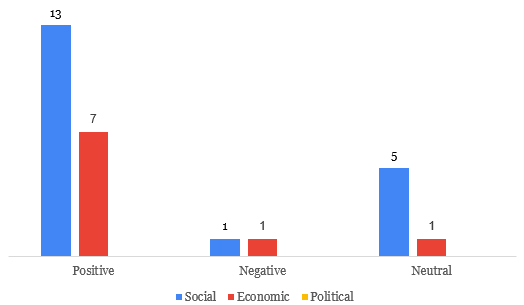
Exhibit 1: Sentiments in ads/promotional messages
Source: Brands’ social media pages, 2025; Infoprations Analysis, 2025

Digital Trust in a Scam-Prone World

In Africa’s increasingly digital environment, where cyber threats, scams, and misinformation abound, brands that prioritize security and transparency gain a vital competitive edge. Platforms like Veriff, CheckMyPeople, and Yello Card have leaned into identity verification and user protection as core value propositions.

MTN Nigeria, with its wide reach, reinforces digital safety through secure connectivity campaigns, while Easy Software and Appledirectng emphasize ease, clarity, and confidence in digital transactions. In an era where reputations are built (or broken) in a scroll, these trust-focused narratives aren’t just ethical (they’re strategic).

Career Empowerment Goes Global

A notable trend across these brands is a deliberate focus on career mobility and skill-building. Scholarship and learning platforms such as Unicaf Scholarships, Udemy, Scholarship Region, and FTMO are democratizing access to global education and professional opportunities for African audiences.

Meanwhile, global consulting firm McKinsey is investing in mentorship and capacity-building content for young professionals across Africa. Even tools like Grammarly, which assist with writing and communication, are positioned as career enablers in today’s remote-first, globalized workplace. These brands understand that when users grow, engagement deepens. It’s not just about selling a product, it’s about shaping futures.

Smarter Tools, Higher Productivity

For today’s digital professionals, efficiency is everything. Brands such as Google, Freelance Platform, and Applaunchkit are marketing smart tools and automation features that promise to streamline workflows, optimize creativity, and simplify daily tasks.

This trend resonates especially with freelancers, remote workers, and small business owners, the backbone of Africa’s informal digital economy. By offering platforms that improve productivity without complexity, these brands are winning both relevance and loyalty.

Tech-Driven Playgrounds: Gaming, Crypto, and Digital Finance

The convergence of entertainment and finance is being led by players like Deriv, Tickmill, Chainlink, Bet9ja, and SuiPlay. These platforms blur the lines between fun and financial empowerment, targeting Africa’s booming youth population with high-risk, high-reward digital experiences.

Whether through decentralized finance (DeFi), online gaming, or forex trading, the core proposition is bold: anyone can play, win, and earn (often from a smartphone). This speaks to the continent’s hunger for alternative income streams, tech exploration, and financial inclusion.

Learning as a Way of Life

Educational messaging is not confined to academic platforms. From Udemy and Google to Mat3ra and Novonesis, a wide range of brands are weaving education and self-development into their core narratives. This reflects a broader shift: learning is no longer a phase, it’s a lifestyle. As consumers navigate rapid technological change, they are actively seeking knowledge, upskilling, and new credentials. Brands that make this journey easier are becoming lifelong companions.

Creativity, Identity, and Emotional Connection

Tech brands like Infinix, Techno, and Itel, alongside content-focused platforms like Spotify Africa, are enabling self-expression and digital identity-building. Through influencer collaborations, music, and lifestyle aesthetics, they help users signal who they are—and who they aspire to be. This taps into a powerful emotional undercurrent: in a world saturated with choices, identity and relatability matter. The most effective campaigns combine storytelling, aspirational tone, and cultural insight.

The Power of Positive Messaging

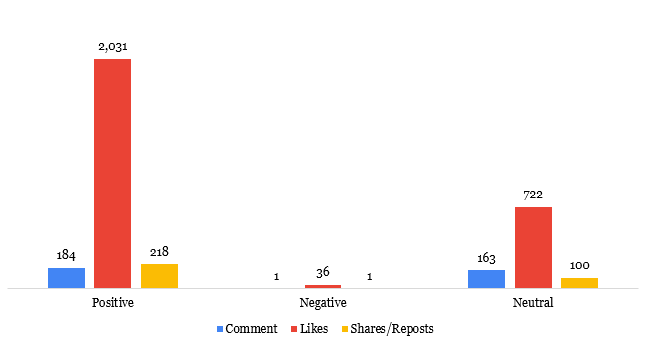
Exhibit 2: Sentiments in ads/promotional messages vs engagement patterns
Source: Brands’ social media pages, 2025; Infoprations Analysis, 2025

According to 2025 data from Infoprations’ sentiment analysis, based on 4,662 comments, 45,032 likes, and 4,967 reposts across selected brand campaigns, positive sentiment overwhelmingly drives engagement. Messages that are optimistic, solution-oriented, or empowering receive higher interaction across all metrics. Neutral messages generate comments but less virality. Negative messages, on the other hand, receive little attention, likely because they clash with user expectations or brand safety strategies.

This data reveals a simple but powerful truth: positive, emotionally intelligent storytelling isn’t just good ethics. It is a great marketing.

Infoprations’ Understanding Digital Integrated Marketing Communications Team includes Abdulazeez Sikiru Zikirullah, Moshood Sodiq Opeyemi, and Bello Opeyemi Zakariyha
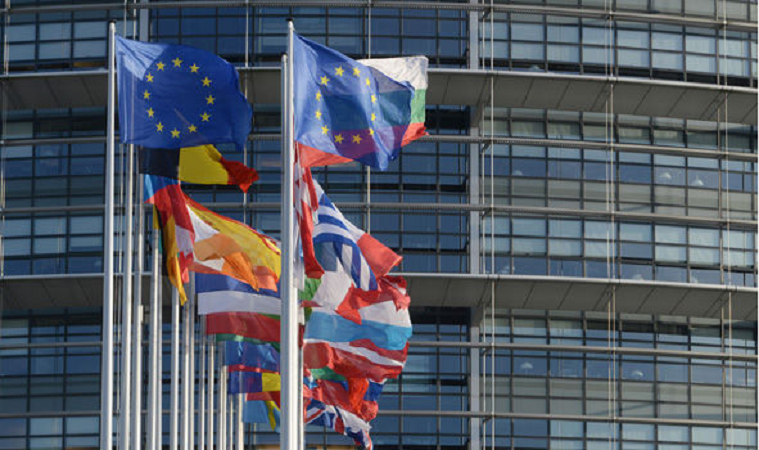

EU Pivots to New Trade Horizons as Trump’s Tariffs Push Allies Toward China

0

In the shadow of President Donald Trump’s escalating tariff war, the European Union is charting a bold course to diversify its economic partnerships, with signs of a surprising thaw in trade relations with China.

As transatlantic ties strained under the weight of U.S. protectionism, the EU is reportedly exploring lifting its tariffs on Chinese electric vehicles (EVs), a move that could pave the way for deeper business agreements and reshape global trade dynamics. This strategic pivot, driven by necessity and opportunity, underscores a broader push among U.S. allies to seek new markets amid fears that Trump’s policies have fractured long-standing alliances.

The catalyst for this shift is Trump’s aggressive trade agenda, which has hit the EU with a 20% “reciprocal” tariff on €380 billion ($432 billion) of its exports, temporarily delayed for 90 days but still looming. Additional levies include a 25% tariff on EU steel and aluminum and a 25% duty on cars and auto parts, with threats of further tariffs on lumber, semiconductors, and pharmaceuticals. These measures, part of Trump’s “America First” doctrine, have jolted the EU, which exported €532 billion in goods to the U.S. last year, making it the bloc’s largest market.

European Commission President Ursula von der Leyen, speaking in Brussels on Thursday, called the tariffs “a major blow to the world economy,” warning of spiraling uncertainty and rising protectionism.

Faced with this economic siege, the EU is accelerating efforts to diversify its trade network, a strategy von der Leyen framed as engaging with “countries that account for 87% of global trade and share our commitment to a free and open exchange.” The bloc, already boasting the world’s largest trade agreement network with 75 partners covering €2 trillion in trade, is now doubling down.

Recent months have seen renewed momentum in talks with the United Arab Emirates, Malaysia, Indonesia, Thailand, and India, while a landmark political agreement with the Mercosur bloc—Argentina, Brazil, Paraguay, and Uruguay—was reached in December, promising a market of 780 million consumers. Even post-Brexit talks with the UK are gaining traction, signaling a broad push to secure new markets.

But the most intriguing development is the EU’s warming stance toward China, particularly in the electric vehicle sector. Last year, the EU imposed tariffs of up to 35.3% on Chinese EVs, citing unfair state subsidies that threatened European automakers. Now, in a striking reversal, Brussels and Beijing are negotiating to replace these tariffs with minimum price commitments, a step that could ease tensions and open doors to broader cooperation.

China’s Commerce Ministry confirmed on Thursday that talks with EU Trade Commissioner Maros Sefcovic have restarted, focusing on EVs and industrial collaboration.

“We’re seeing a pragmatic shift,” said an EU official, speaking anonymously due to the sensitivity of the negotiations. “Lifting EV tariffs could be a goodwill gesture to unlock bigger deals.”

This pivot comes as Trump’s tariffs on Chinese goods, now at a staggering 145%, risk diverting low-cost Chinese products to Europe, a concern von der Leyen raised in a call with Chinese Premier Li Qiang this week. The EU is exploring mechanisms to monitor such diversions, but the prospect of deeper ties with China is gaining traction.

Spain’s Prime Minister Pedro Sanchez, fresh from a Beijing visit on Friday, called for a “balanced relationship,” while Hungary and others advocate closer engagement. However, skepticism persists, with French Prime Minister Francois Bayrou warning against over-reliance on China, which he accused of aiming to “replace all European producers in agriculture and industry.”

The EU’s flirtation with China is not without risks. Chinese EVs, led by brands like BYD and Nio, already hold 25% of the European market, and easing tariffs could intensify pressure on Germany’s struggling auto sector, which supports 14 million jobs.

“We’re walking a tightrope,” said Sigrid de Vries, head of the European Automobile Manufacturers’ Association. “We need new partners, but not at the cost of our industries.”

Analysts also caution that Trump’s tariffs could exacerbate existing EU-China trade imbalances, with fears of Beijing dumping excess goods in Europe.

Beyond China, the EU is eyeing broader horizons. Von der Leyen announced on Thursday plans to explore cooperation with the Comprehensive and Progressive Agreement for the Trans-Pacific Partnership, a trade bloc spanning Australia to Canada, which Trump abandoned in 2017. New Zealand’s Prime Minister Christopher Luxon has proposed using it as a foundation for a rules-based trading pact with the EU, a move that could anchor the bloc in Asia’s dynamic markets.

Currently, the EU remains open to salvaging transatlantic trade. Sefcovic heads to Washington on Monday to push for tariff reductions, armed with offers like zero-tariff deals for cars and industrial goods. But with Trump’s administration showing little appetite for compromise, Sefcovic described recent talks as “frank” but fruitless, hope is fading.

“We’re ready to negotiate, but we’re not naive,” von der Leyen said, hinting at retaliatory tariffs worth €26 billion on U.S. goods, from bourbon to motorcycles, set for mid-April if talks fail.

As Trump’s tariffs redraw the global trade map, the EU’s pivot reflects a broader trend among U.S. allies. Canada, hit with steel and aluminum duties, is matching them “dollar for dollar,” while Malaysia opts for dialogue over retaliation. Japan and South Korea, wary of losing U.S. market access, are cautiously seeking exemptions. However, the EU’s moves signal a deeper reckoning: a world where allies, once tethered to Washington, are forging their own paths.

FairMoney Revenue Surges to N121.9 Billion in 2024, Amid Shift To Customer Deposit-Funded Lending

0

FairMoney, a Nigerian digital banking and instant loan provider, is reported to have recorded N121.9 billion in gross revenue in 2024.

This represents a 62% year-on-year (YoY) growth increase in gross revenue, driven largely by its growing reliance on customer deposits to fund its lending operations. The company’s unaudited financial results revealed that profit after tax rose significantly to ?5 billion, up from ?780 million in 2023.

For the first time since it began accepting deposits in 2021, over 80% of FairMoney’s loan book was funded by customer deposits. This marks a major shift from 2020 when borrowings accounted for over 80% of funding. Deposits surged from ?2.9 billion in 2021 to ?72.9 billion in 2024, enabling the fintech to reduce external borrowing to less than 10%.

In a discussion with TechCabal, the company disclosed that its massive growth recorded last year was driven by its innovative products and competitive offerings.

It said,

“Our strong growth in customer deposits is a result of our growing customer base, increased customer loyalty and trust, innovative products, and competitive offerings. Given the high inflationary macro environment, we believe in offering customers attractive rates that provide them, as close as possible, with positive real returns.”


FairMoney generated most of its revenue from loan interest, which rose 57% year-on-year to ?116 billion. The company’s profit margin also improved moving from 1% in 2023 to 4.79% in 2024.

Non-interest income remained modest at ?5 billion, including ?3.8 billion in fees and commissions and ?1.7 billion from other sources. Operating expenses were high, totaling ?41 billion and resulting in a cost-to-income ratio of 78%. Interest expenses increased slightly to ?10 billion from ?8.3 billion in 2023.

However, impairments on loans and other assets increased by 30% to ?59.4 billion in 2024, marking the first rise in two years. FairMoney’s impairments had stabilized at around ?45 billion following a 159% jump in 2022. This rise pushed the fintech’s non-performing loan (NPL) ratio to a startling 86.8% of its ?68.4 billion loan book.

FairMoney also reported a net interest margin of 64.72%, signaling strong earnings from interest-based operations. However, this margin is heavily reliant on high-yield loans—some with interest rates of up to 10% monthly. While lucrative, this model carries significant credit risk, as seen in the impairment figures.

The lender’s total assets rose by 55% year-on-year to ?99 billion, largely due to a ?30.4 billion expansion in its loan portfolio. However, its cash holdings dipped by ?2 billion to ?8.1 billion, while prepayments (early loan repayments) grew sharply from ?1.3 billion to ?9.3 billion.

FairMoney, founded in 2017 by Laurin Hainy, Matthieu Gendreau, and Nicolas Berthozat, has grown exponentially since its launch. In its first year of operation, the company had no more than 100,000 users. Now, it claims to have over 5 million users enjoying its banking, savings, and investment services, with over 10,000 daily loan disbursements.

Three years after launching its mobile lending service in Nigeria, the company expanded to India, Asia’s second-most populous country, in August 2020. According to the CEO Hainy,  data-driven insights were behind the choice to expand to India. He noted that the Indian market is quite similar to that of Nigeria. In the Asian country, only 36% of adults have access to credit, leaving an untapped market of about 141 million people microfinance banks do not serve.

One stand-out feature for Fairmoney in its loan offerings is that it doesn’t collect collateral or documentation. Rather, the company bases the assessment of the customer on the information they provide on the app, which is their telephone number and the BVN.  

Notably, the company has a talented tech team who have created a sophisticated algorithm that scores every customer and determines the volume of loans it can offer such a person and over what period. This is based on the activities the customers carry out with their phones; such as data from their banking activity

FairMoney is building the leading mobile bank for emerging markets. The fintech is on a mission to help the average Nigerian access finance tools to take control of both their life and their finances.

“System Not Designed for Youth”: AfDB President Slams Nigerian Banks for Abandoning Young Entrepreneurs

0

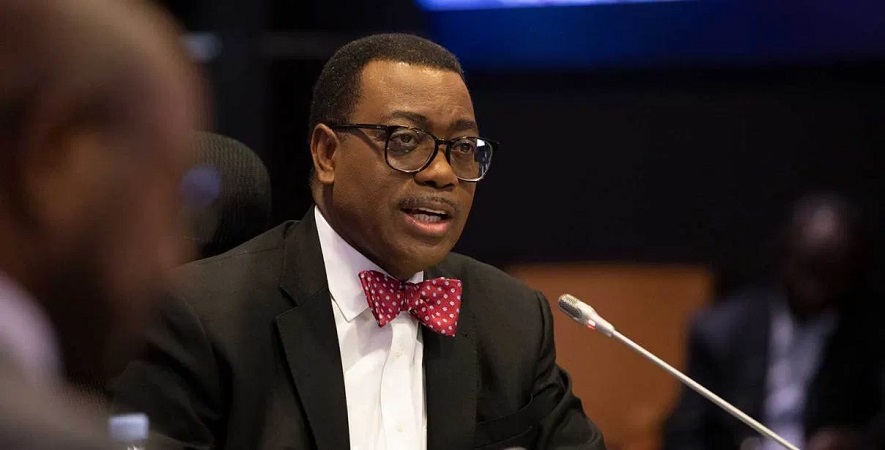
In a country teeming with youth and innovation, where nearly every street corner tells a story of ambition waiting to bloom, Akinwumi Adesina, President of the African Development Bank (AfDB), has offered a blunt verdict on the financial system that governs it: it was never meant for the youth.

Speaking on Channels Television on Thursday, Adesina, a former Nigerian Minister of Agriculture and one of Africa’s foremost economists, did not mince words. He accused commercial banks in Nigeria and across the continent of systematically shutting the doors on the very generation that carries Africa’s future in its hands.

A System Built for the Old, By the Old

Adesina’s critique goes beyond surface-level complaints about difficult loan procedures. He paints a picture of a banking system whose architecture is fundamentally rigged against young people—one that treats youthful ambition as a liability rather than an asset.

“You walk into the bank, and you see young people, 21 years old, coming in. In your risk assessment, the only thing you see is risk, risk, risk,” Adesina said. “And so you go ask them for securities that they need to bring to you—‘do you have a house, do you have a land, do you have tax for the last 40 years?’ But they’re only 21 years old.”

For most young Nigerians, these demands aren’t just steep—they’re impossible. Many are just emerging from university, hustling through the country’s ballooning unemployment and underemployment crisis, trying to turn coding skills, fashion design, or agritech ideas into tangible enterprises. But when they turn to banks, they are told to return with what they don’t have – collateral.

465 Million Youths, One Broken System

Adesina’s frustration stems from the sheer scale of the problem. Africa is home to more than 465 million young people between the ages of 15 and 35. In Nigeria alone, youth account for over 60 percent of the population. And yet, the financial sector across much of the continent continues to operate on outdated risk models and rigid credit structures that ignore the continent’s evolving demographic realities.

“The commercial banking system, the financial system, has failed young people in Africa,” he said, putting the matter plainly.

It shows every day in the statistics of failed startups, in the stories of dreams deferred, and most visibly in the growing wave of youth emigration, now widely known in Nigeria as the “japa syndrome.” For Adesina, the brain drain isn’t just a tragic consequence of bad governance, it’s a reflection of a system that refuses to back its youth.

No More Freebies. Fund Ideas, Not Slogans

One of the more striking elements of Adesina’s comments was his rejection of tokenistic government and NGO-run youth programs that often dominate headlines but deliver little in actual support.

“First and foremost, is to recognize that young people don’t need freebies,” he said. “We don’t need people just saying, ‘Oh well, I just want to give you a youth empowerment program.’ What does that mean?”

According to Adesina, the real solution lies in access to capital, and not as a handout, but as a real investment. He urged banks to abandon the conservative thinking that sees youth as high-risk by default and to embrace bold, strategic investments in their ventures.

“They need capital. They need you to put your money at risk on their behalf,” he said, calling for a rethink of risk assessment models that currently penalize innovation.

Why This Matters Now

Adesina’s remarks come at a time when Nigeria is struggling to curb rising unemployment, with youth joblessness hovering around 53 percent, according to estimates from local economists. The country’s micro, small, and medium enterprises (MSMEs) are considered its economic backbone, yet many of them operate informally or remain stunted due to a lack of financing.

The Central Bank of Nigeria (CBN) has, in the past, rolled out credit schemes targeting youth and SMEs. However, many such programs have faced implementation bottlenecks, corruption allegations, or have been mired in political patronage.

Adesina’s comments suggest that unless commercial banks, not just central authorities, step up to back the next generation, the country risks losing both its workforce and its entrepreneurial spark.

The AfDB President’s message is as much a challenge as it is a condemnation. For Nigerian banks that post billions in profit annually while offering little to the country’s young, he is calling for a shift not just in policy, but in mindset.

“Rethink your risk models,” he said. “Invest in the future. Our people are our greatest asset.”

Adesina’s words come as more young Nigerians weigh the option of fleeing to countries with friendlier climates for talent and capital. His call is expected to stimulate action, not just the banks, but an entire ecosystem that seems unwilling to bet on the very people who could transform it.

“I don’t need Elon for anything other than I happen to like him,” Trump Signals End to Musk Partnership

0

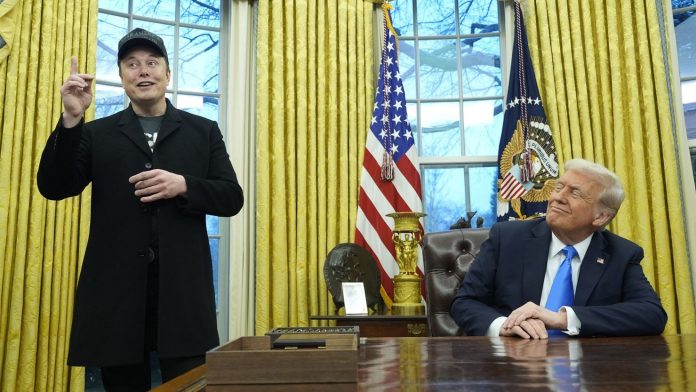
In a striking moment at Thursday’s Cabinet meeting, President Donald Trump hinted that his high-profile partnership with Elon Musk may soon come to an end, raising questions about the future of one of Washington’s most watched alliances.

Trump’s remarks, delivered with Musk seated nearby, underscored a relationship strained by policy disagreements and the mounting costs of Musk’s role as a vocal supporter, particularly as his leadership at the Department of Government Efficiency (DOGE) sparks chaos and backlash that threatens his business empire.

Trump’s statement came during a discussion at the White House, where he praised Musk’s contributions but pointedly distanced himself.

“Elon has done a fantastic job. Look, he’s sitting here, and I don’t care. I don’t need Elon for anything other than I happen to like him,” Trump told reporters.

The comment, laced with casual dismissal, suggests a deliberate pivot from a partnership that has defined much of Trump’s second term. Sources close to the administration point to Musk’s temporary status as a special government employee, limited by federal law to 130 days of service in a year, as a key factor. Trump himself fueled speculation last week, stating on April 3 that Musk would likely leave “in a few months,” a timeline echoed by White House press secretary Karoline Leavitt in an X post on April 2, which confirmed Musk’s exit once his DOGE work concludes.

Musk’s tenure at DOGE has been nothing short of seismic. Tasked with slashing government spending, he announced plans to cut $150 billion for the 2026 fiscal year, laying off thousands of federal workers and shuttering foreign aid programs. These moves, aimed at streamlining bureaucracy, have instead unleashed turmoil across agencies, with critics decrying the rapid pace and human toll.

The fallout has spilled beyond government corridors, hitting Musk’s personal and corporate interests hard. Tesla, his flagship company, has become a lightning rod for public anger, with showrooms targeted by protests and owners reporting vandalized or burned vehicles. During a Tesla all-hands meeting last month, Musk lamented the apocalyptic media coverage, saying, “I can’t walk past the TV without seeing a Tesla on fire,” and urged detractors to criticize without destroying his products.

Musk’s unwavering support for Trump has come at a steep price. His $277 million in contributions to Trump and GOP candidates in the 2024 elections cemented his role as a political powerhouse, while public appearances—like last month’s White House event where Trump test-drove a red Tesla Model S—cast him as a loyal ally. Trump recounted the purchase on Thursday, framing it as a “show of support” for Musk, though he emphasized paying full price.

“They said, ‘Oh, did you get a bargain?’ No. I said, ‘Give me the top price,’” he said.

However, this loyalty has cost Musk dearly. Tesla’s brand is under siege, its reputation tangled in the controversy surrounding DOGE’s cuts, and Musk’s personal fortune faces pressure as investors question his divided focus.

Adding to the strain is a growing policy rift, most notably over trade. Musk, a vocal advocate for open markets, has pushed for zero-tariff economic ties, recently calling for a “free trade zone” between the US and Europe during a meeting with Italy’s League Party on April 5. This stance clashes with Trump’s recent announcement of sweeping tariffs on over 180 countries, a protectionist move that could disrupt Tesla’s global supply chain and raise costs for consumers.

Musk’s frustration surfaced in a sharp critique of Trump’s top advisor, Peter Navarro, whom he called “dumber than a sack of bricks” after Navarro referred to him as a “car assembler.” The exchange highlights a broader divide: Musk’s globalist vision versus Trump’s America-first agenda, a tension that may hasten their parting.

Despite the cracks, some in Trump’s circle see a future for Musk beyond DOGE. Vice President JD Vance told Fox News last week that Musk could remain an advisor after his formal role ends, though details remain unclear. For now, Musk’s smile and nod during Trump’s Cabinet meeting remarks belied the uncertainty ahead. As he navigates the fallout from DOGE and Tesla’s challenges, Musk faces a pivotal moment: step back from the political fray to salvage his businesses or double down on a waning alliance.

The Trump-Musk saga, once a symbol of bold collaboration, now teeters on the edge of separation. With tariffs looming and DOGE’s disruptions reverberating, the question isn’t just when Musk will leave, but whether their shared vision can endure the fallout.