DD
MM
YYYY

PAGES

DD
MM
YYYY

spot_img

PAGES

Home Blog Page 1407

Economist Declares Tinubu’s $1tn Economic Agenda Unattainable, Says It Requires Over 40% Annual Growth Rate

0

The economic growth target set by President Bola Tinubu’s administration is now facing harsh scrutiny, as the Group Chief Economist at Afreximbank, Dr. Yemi Kale declared that Nigeria would require an annual growth rate of over 40% to achieve the government’s one trillion-dollar economic vision—an outcome he bluntly described as “simply unachievable” under current conditions.

Speaking at the Vanguard Economic Discourse 2025 held in Lagos on Wednesday, Kale’s remarks threw cold water on the optimism around Tinubu’s much-publicized agenda to grow Nigeria’s economy to $1 trillion before the end of his term. The ambitious target, which has been echoed repeatedly by top administration officials as a benchmark for economic transformation, now appears increasingly detached from the country’s current trajectory, given its worsening macroeconomic fundamentals.

Kale, who previously served as Nigeria’s Statistician-General, did not dismiss the idea of growth but pointed to a stark mismatch between aspiration and groundwork.

“To reach a $1 trillion economy by the end of this administration’s term, Nigeria would require annual growth rates in excess of 40%—a pace that is virtually unprecedented and, under current conditions, simply unachievable,” he said.

The comment was not just an indictment of lofty projections but a sobering reminder of the structural deficiencies that continue to limit Nigeria’s economic potential. Despite Tinubu’s rhetoric about turning Nigeria into a trillion-dollar economy by 2026, the country’s GDP growth remains slow and volatile, averaging around 2–3% annually, far below population growth and nowhere near the momentum required.

The vision, as articulated by Tinubu in his early economic roadmap, was built around plans to unlock investment, deepen industrialization, and expand Nigeria’s export base. However, persistent inflation, fiscal instability, heavy debt servicing, and a weakening currency have cast a long shadow over those ambitions.

According to Kale, unless Nigeria rapidly recalibrates its policies and makes fundamental reforms, economic resilience will remain elusive.

“The path to economic resilience, inclusive prosperity, and reducing economic hardship is neither quick nor easy, but it is clear. We know what must be done. The foundational pillars are not in question,” he said.

He outlined a roadmap hinged on macroeconomic stabilization, inflation control, fiscal and monetary credibility, and investor confidence—all of which are in deficit. More specifically, Kale urged Nigeria to diversify its economic base by unlocking the potential of agriculture, manufacturing, services, and the digital economy.

“Invest in people and institutions because sustainable growth only happens when human capital is empowered and governance systems are effective,” he added, emphasizing that long-term growth cannot be built on weak foundations and political expediency.

Rising Global Pressures, Shrinking Policy Space

Kale also warned that Nigeria’s policy space is narrowing fast in the face of global economic realignments. The U.S. tariff hike is not a one-off event, he suggested, but a signal that emerging economies like Nigeria must brace up for increasingly unpredictable global trade dynamics.

His concerns were echoed by Dele Oye, President of the Nigerian Association of Chambers of Commerce, Industry, Mines and Agriculture (NACCIMA), who urged a recalibration of Nigeria’s political and economic strategy.

“The current U.S. administration’s focus on isolationism and trade wars has led to a reevaluation of America’s long-standing alliances, leaving many nations, including Nigeria, to grapple with the complexities of a shifting world order,” Oye said.

He stressed that the country must prioritize economic sovereignty and develop a political structure that is viable, affordable, and resistant to external pressure.

“For Nigeria, these developments underscore the necessity of a shift to a homegrown democracy that prioritizes resilience,” he said.

Oye added that while Nigeria faces enormous challenges, there are also emerging opportunities—especially in the digital space, technological innovation, and youth-led entrepreneurship. But capitalizing on these prospects would require more than token policy statements.

“The balance between these challenges and opportunities will shape Nigeria’s future,” he noted.

SMEs Still Left Behind

Also speaking at the event, Dr. Femi Egbesola, President of the Association of Small Business Owners of Nigeria (ASBON), criticized the federal government for overlooking micro and nano enterprises, which make up more than 85% of the country’s SME landscape.

“How many small businesses have become the next Dangote in the last 10 years? Almost none,” he said.

Egbesola dismissed most government interventions as half-measures, adding that the real drivers of growth—small business owners—are still sidelined during the policy design and implementation phases. “We don’t need pity; we need partnership,” he said. “Policies should not be imposed but developed jointly.”

His concern is especially relevant given that the trillion-dollar vision assumes expanded domestic output and a more productive private sector—conditions that are far from being met.

The message from the 2025 Vanguard Economic Discourse underlines a belief that several experts have expressed: Nigeria’s $1 trillion economic dream, as currently formulated, is a mirage unless backed by deep, structural reforms. The required growth rate of 40% annually, as cited by Kale, is not only unrealistic—it borders on impossible given the country’s current economic structure.

And with global conditions tightening, investor confidence waning, and the government’s fiscal buffers nearly exhausted, the challenge is not just achieving growth—it is avoiding further contraction.
Trump Administration Backs Down on Nvidia GPU Ban After $1M Dinner with CEO Jensen Huang

0

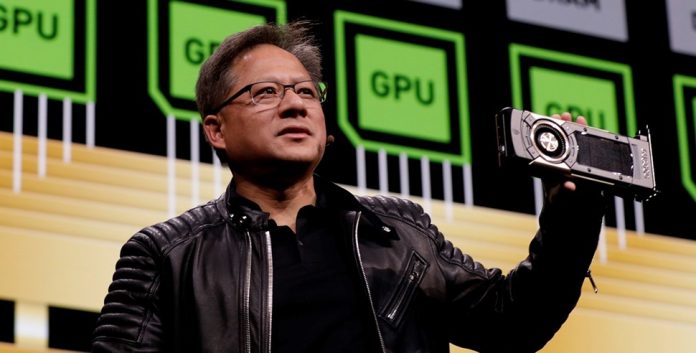
In a dramatic U-turn that underlines the complex dance between political power and corporate influence, the U.S. government has pulled back from its plan to block Nvidia’s high-performing H20 HGX GPU exports to China, following a high-level dinner between President Donald Trump and Nvidia’s CEO Jensen Huang.

The meeting, held at Trump’s Mar-a-Lago estate, came with a $1 million admission fee and is now being cited as the pivotal moment that altered the course of what was to be a new round of tech restrictions against China.

NPR, citing two sources familiar with the matter, reports that the Trump administration had been preparing for months to halt exports of the H20 GPU — Nvidia’s most powerful AI chip still legally sold to Chinese customers. That plan was expected to come into effect this week, pre-empting even the more comprehensive restrictions under the Biden-era AI Diffusion Rule, which is set to kick in on May 15.

But following the tête-à-tête over an exclusive dinner table, Nvidia reportedly committed to investing heavily in U.S.-based AI infrastructure, a gesture that appears to have swayed the administration’s position.

Trump’s $1 Trillion AI Vision Meets Nvidia’s Billion-Dollar Pivot

The sudden about-face underscores a broader political undercurrent — the Trump administration’s quest to cement the U.S. as the undisputed leader in artificial intelligence, and the role corporate giants like Nvidia play in achieving that goal. Trump may have seen an opportunity to strengthen domestic tech capacity without fully alienating industry players worried about lost Chinese revenue, by securing a pledge from Huang to pour money into American AI data centers.

Still, the optics are unmissable: a $1 million dinner with the president, followed by a policy reversal that benefits one of the world’s most powerful chipmakers.

Nvidia, which reportedly sold $16 billion worth of H20 chips to Chinese firms in the first quarter of 2025 alone, faces a significant setback if fully blocked from the Chinese market. The H20 was specifically designed to comply with existing export thresholds to China, offering a tailored solution that squeezed maximum performance under strict controls. Yet even that strategic maneuver was at risk under the proposed ban.

The company’s balancing act between adhering to national security demands at home and preserving its lucrative Chinese business has become increasingly difficult to maintain.

At the center of this geopolitical tug-of-war is the Biden administration’s AI Diffusion Rule, a sweeping regulation that will bar the sale of virtually all advanced U.S.-made AI processors to China and other high-risk nations starting May 15. The rule goes beyond the conventional metric of processing power by introducing nuanced controls that consider both volume and end-user intent.

The regulation includes exceptions under the Low Processing Performance (LPP) clause, allowing U.S. firms to sell a limited number of GPUs to countries outside the “trusted” Tier 1 circle of 18 allies. But China, being categorized as high-risk, is specifically excluded from such exceptions. All AI processor exports to China require a license, and even then, the U.S. government’s default stance is denial.

This effectively locks Chinese firms out of the American AI hardware ecosystem — at least on paper.

For Nvidia, there are multibillion-dollar monumental stakes. With $16 billion in H20 sales to China in Q1 alone, the company is caught between two political currents — one pushing for national security and tech sovereignty, the other desperate not to lose market share to Chinese startups or non-U.S. suppliers like Huawei.

The uncertainty now revolves around the fine print. It remains unclear whether the Trump administration’s decision to ease back on the export ban means Nvidia can continue H20 shipments only until May 15 or beyond that date. If the exemption is extended past mid-May, it would likely require the administration to override the AI Diffusion Rule, scrap it entirely, or carve out special licenses for Nvidia — potentially setting off another round of backlash in Washington.

The timing and setting of the policy shift have already sparked quiet criticism in diplomatic and security circles. While the Trump administration has long touted its America-first approach, critics may argue that bending the rules after a $1 million dinner dilutes the credibility of its tech crackdown on China.

For now, though, the administration is framing the move as a strategic win with rhetoric such as ‘Nvidia stays onshore, jobs are created in U.S. data centers, and the broader goal of domestic AI dominance is preserved.’ However, while the decision means that Nvidia has dodged one export bullet, another clear winner is China, which is accelerating efforts to get ahead in the AI arms race.

Approval of Options Trading on Ethereum ETFs Carries Significant Implications For Investors

0

U.S. Securities and Exchange Commission  approved options trading on multiple spot Ethereum (ETH) exchange-traded funds (ETFs). This decision allows investors to trade options on ETFs such as BlackRock’s iShares Ethereum Trust (ETHA), Bitwise Ethereum ETF (ETHW), Grayscale Ethereum Trust (ETHE), Grayscale Ethereum Mini Trust (ETH), and Fidelity Ethereum Fund (FETH). Options trading provides investors with a tool to speculate on Ethereum’s price movements or hedge their positions without directly owning the underlying asset, potentially broadening the appeal of these ETFs, especially among institutional traders.

This approval builds on the SEC’s earlier authorization of spot Ethereum ETFs, which began trading in July 2024 after initial listing approvals in May 2024. The options are physically settled with American-style exercise, meaning investors receive actual ETF shares upon exercising the contracts, and they adhere to standard exchange listing rules. To mitigate risks like market manipulation, exchanges like Nasdaq have set position and exercise limits, such as a cap of 25,000 contracts. This development reflects a growing acceptance of cryptocurrency-based financial products within regulated markets, following a similar approval for options on spot Bitcoin ETFs in late 2024.

Options trading provides a familiar and regulated tool for institutional investors to engage with Ethereum exposure. This could attract more hedge funds, asset managers, and other large players who prefer derivatives for risk management or leveraged strategies. Individual investors gain a new way to speculate on Ethereum’s price or hedge existing positions without needing to directly hold ETH or ETF shares, potentially boosting retail participation through brokerage platforms.

Options markets often deepen liquidity for the underlying asset (in this case, Ethereum ETFs). Increased trading activity could stabilize ETF prices and, indirectly, Ethereum itself, as options facilitate more efficient price discovery. The interplay between spot ETFs and their options could create tighter spreads and reduce volatility over time, mirroring patterns seen in traditional equity markets.

Investors holding spot Ethereum ETFs can use options (e.g., puts) to protect against downside risk, making these products more appealing to risk-averse participants. Call options allow traders to amplify gains with limited capital, which could drive speculative interest, especially in a volatile asset like Ethereum. However, this also heightens the potential for losses.

Broader Crypto Market Impact

Regulatory approval of Ethereum ETF options further legitimizes cryptocurrency as an asset class within traditional finance, following the precedent set by Bitcoin ETF options. This could encourage more crypto-based financial products in the future. Increased demand for ETF shares (to settle options contracts) might prop up Ethereum’s price, especially if institutional buying accelerates. Conversely, heavy shorting via options could exert downward pressure during bearish sentiment.

The SEC’s approval, paired with exchange safeguards like position limits (e.g., 25,000 contracts), signals a balanced approach to innovation and risk mitigation. This could pave the way for options on other crypto ETFs if manipulation concerns remain low. High volatility or unexpected market events tied to these options could prompt stricter regulations, especially if retail investors suffer significant losses.

Issuers like BlackRock, Grayscale, and Fidelity may compete more aggressively on fees, marketing, or additional features to capture options-driven demand, benefiting investors with better products. Success here could spur development of other Ethereum-linked derivatives (e.g., futures enhancements), further integrating crypto into mainstream finance. While options can dampen volatility long-term, their introduction might initially amplify price swings as traders adjust strategies.

Ethereum’s sensitivity to macro factors (e.g., interest rates, tech sentiment) could exaggerate this effect. This move marks a milestone in bridging crypto and traditional markets, likely boosting Ethereum’s adoption and market sophistication. However, it also introduces new dynamics—greater leverage, speculative potential, and regulatory attention—that could shape Ethereum’s trajectory in unpredictable ways. Investors should weigh these tools’ benefits against their risks, especially given crypto’s inherent volatility.

BlockDAG Readies for Mainnet with 10,000 Miners Set to Ship—XLM May Decline by 20%, AVAX Poised to Rise

0

Stellar (XLM) is at a critical point, with the chance of either a dramatic 70% rise or a worrying 20% drop due to an impending “Death Cross.” In contrast, Avalanche (AVAX) is drawing positive focus, with Standard Chartered’s optimistic long-term forecast predicting significant growth.

Amidst these varied forecasts, BlockDAG (BDAG) is rapidly advancing towards its mainnet debut, showing remarkable readiness. The latest Keynote 3 has confirmed the shipping of its X30 and X100 miners, with 10,000 units ready for delivery before the mainnet goes live. This distribution will provide the necessary infrastructure for BlockDAG to handle increased transaction demands as its adoption grows.

Stellar Price Analysis: Upcoming Breakout or 20% Drop?

Stellar (XLM) is positioned near a critical resistance level, indicating a potential sharp movement soon. After rising from $0.25 on March 31, it is currently priced at around $0.267, showing a pattern of higher highs and lows. This Stellar price analysis indicates a possible breakout, with bullish targets in the range of $0.40 to $0.46—a rise of up to 70%.

However, another aspect of Stellar price analysis points to a bearish scenario. A “Death Cross,” where the 50-day moving average falls below the 200-day, could lead to a 20% decrease to the $0.19-$0.21 range. Overall, this Stellar price analysis suggests critical upcoming days for XLM’s trajectory.

Latest Avalanche Price Forecast

Standard Chartered’s Geoff Kendrick has forecasted that Avalanche (AVAX) could reach $55 by 2025 and ascend to $250 by 2029—a potential 10x increase from its current price of $18.51. This Avalanche price forecast is supported by the platform’s interesting subnet scaling approach and the recent Etna upgrade, which has enhanced efficiency and reduced costs.

This Avalanche price forecast is reinforced by the platform’s expanding adoption and technological progress. As these improvements proceed, AVAX’s potential for substantial growth looks very promising, contributing to a bright outlook for its future value.

BlockDAG Sets to Ship 10,000 Miners as Mainnet Approaches

BlockDAG’s Keynote 3 video recently unveiled a significant step forward as CEO Antony Turner announced the imminent shipment of the X30 and X100 miners. With the beta testnet now available to the public, BlockDAG is on track to distribute 10,000 miners before the mainnet launch, aiming to ensure robust transaction processing and a solid ecosystem foundation.

This deployment of mining hardware is pivotal for BlockDAG, setting the stage for a robust infrastructure from the start. With 10,000 units lined up for delivery prior to the mainnet, these rigs will serve as a key element of the BDAG ecosystem, embodying CEO Turner’s vision that, “These miners will form the backbone of our decentralized consensus mechanism.”

The extensive rollout of BlockDAG’s mining equipment demonstrates the project’s ambition and readiness. The dispatch of almost 10,000 units solidifies the infrastructure needed for supporting BlockDAG’s high transaction throughput.

Additionally, BlockDAG’s expansion is accelerating, as evidenced by the sale of over 16,822 miners, which has generated more than $6.83 million in revenue. This success reflects strong market interest and confidence in BDAG’s future potential.

The proactive shipment of these mining rigs responds to the growing demand and expanding user base of BlockDAG. This initiative is further enhanced by BlockDAG’s impressive crypto presale results, having raised over $212.5 million with more than 19.1 billion BDAG coins sold, marking a substantial 2380% increase in value.

This strategic and timely rollout of hardware drives significant momentum towards the mainnet goals, positioning BlockDAG as a leading project actively developing its decentralized framework and establishing itself as the best crypto to mine and buy currently.

Future Outlook

Stellar (XLM) faces a critical decision point, with its future potentially swinging between a 70% increase or a 20% decline, underlining the uncertain trajectory ahead. In contrast, Avalanche (AVAX) is gaining traction, buoyed by Standard Chartered’s optimistic forecast, which sees substantial growth ahead thanks to its subnet scaling approach and recent enhancements.

Meanwhile, BlockDAG is capturing significant attention as it gears up for its mainnet debut, supported by a substantial hardware rollout and robust presale achievements. With over 16,802 miners sold and 19.1 billion coins distributed, raising $212.5 million, BDAG emerges as a leading choice as the best crypto to mine and buy, especially with the upcoming mainnet launch promising significant prospects.

Presale: https://purchase.blockdag.network

Website: https://blockdag.network

Telegram: https://t.me/blockDAGnetworkOfficial

Discord: https://discord.gg/Q7BxghMVyu

Trump’s Tariff Retreat: Strategic Pivot or Market Capitulation?

0

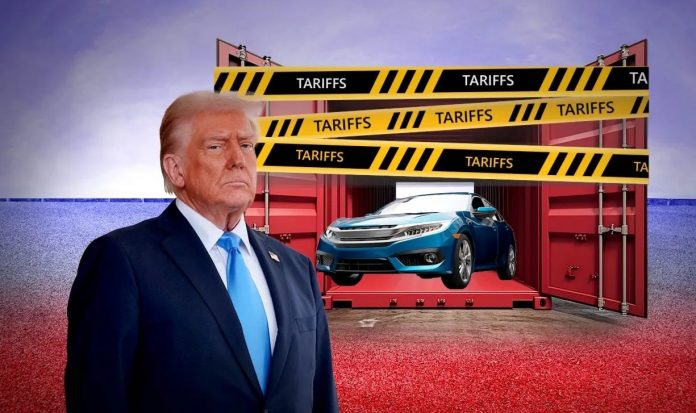
President Donald Trump’s unexpected decision to delay most of his sweeping “reciprocal” tariffs for 90 days has sparked a fierce debate over the motives and consequences of this abrupt policy shift.

Announced on April 9, the retreat scaled back planned levies to a universal 10% tariff on most trading partners—except for China, which now faces a steep 125% rate—offering a temporary reprieve to jittery financial markets.

While many of Trump’s supporters herald the move as a calculated strategy to strengthen his negotiating leverage, analysts argue it was the bond market’s mounting pressure that forced his hand—a sentiment the president himself partially conceded.

Trump’s base has rallied behind the narrative that the tariff pause is a masterstroke of brinkmanship, designed to extract concessions from trading partners while avoiding immediate economic chaos.

“This was brilliantly executed by @realDonaldTrump. Textbook, Art of the Deal,” billionaire hedge fund manager, Bill Ackman, who previously advised the president to toe that path, posted on Tuesday, praising the strategy behind the trade maneuver and market timing.

Online, MAGA forums buzzed with claims that the delay keeps foreign leaders guessing, reinforcing Trump’s image as an unpredictable dealmaker.

However, market analysts paint a starkly different picture, pointing to the bond market’s alarming signals as the real catalyst. In the days leading up to the retreat, 30-year U.S. Treasury yields spiked to 4.8%, a level not seen in months, while the 10-year yield hovered around 4.5%. These spikes reflected growing investor fears of a ballooning U.S. deficit, already strained by Trump’s tax cuts and spending plans, and the inflationary fallout of his tariff agenda.

“Bonds should do well in times of turmoil as investors flee to safety, but Trump’s trade war is now undermining the US debt market. The benchmark US 10 year government bond yield actually fell substantially when the US president announced his list of tariffs last week, but lower yields have not been sustained and the market sell-off has now hit US Treasury bonds, with other government debt markets following suit,” Laith Khalaf, head of investment analysis at AJ Bell, said.

Trump himself lent credence to this view during a White House press appearance on April 9.

“People were getting a little queasy,” he admitted, describing the financial mood as “a little bit yippy, a little bit afraid.”

He added that he was closely monitoring a “very tricky” bond market, suggesting that the retreat was, at least in part, a response to Wall Street’s distress. Reports from CNN indicate that Treasury Secretary Scott Bessent warned Trump of “catastrophic” bond market ramifications during tense White House discussions, underscoring the internal pressure to act.

Market Relief, but Uncertainty Lingers

The announcement triggered an immediate market rally, with the S&P 500 surging 9.5% on April 9, clawing back much of the 12% it had lost over the prior four trading sessions. United Airlines and Delta Air Lines soared over 20%, and the U.S. Dollar Index ticked up to 102.8 from 101.9. However, the relief was short-lived—U.S. futures retreated on April 10, signaling that global markets remain skeptical of a lasting resolution.

“The genie is still out of the bottle on policy unpredictability,” warned Deutsche Bank analysts, pointing to Trump’s history of doubling down when challenged, especially with China.

Economists caution that the pause does little to address the underlying risks. Tiffany Wilding of Pimco described the tariffs as “a large and inefficiently applied consumption tax,” predicting a stagflationary mix of slow growth and rising prices. Preston Caldwell of Morningstar pegged the odds of a U.S. recession at 40%, citing persistent inflationary pressures and a slowing economy.

For consumers, the 10% universal tariff—coupled with the 125% levy on Chinese goods—threatens higher prices for everything from electronics to furniture, while small businesses reliant on imported components face a potential squeeze.

The China Factor: A $760 Billion Wild Card

The stakes are particularly high with China, which remains a linchpin in U.S. supply chains and holds approximately $760 billion in U.S. Treasury bonds as of early 2025. Trump’s decision to hike Chinese tariffs to 125%, up from 104%, follows Beijing’s own escalation to an 84% levy on U.S. imports, intensifying a trade war that shows no signs of abating. Analysts now fear that China could retaliate by selling off a significant portion of its U.S. bond holdings, a move that could send shockwaves through the U.S. and global markets.

If China were to dump, say, $200 billion of its Treasuries, the immediate impact would be a sharp rise in U.S. bond yields—potentially pushing the 10-year yield above 5%—as bond prices fall under selling pressure. Higher yields would increase borrowing costs for the U.S. government, already grappling with a deficit projected to exceed $2 trillion in 2025, according to the Congressional Budget Office. This would ripple through to consumers, driving up interest rates on mortgages (potentially from 6.5% to 7.5% for a 30-year fixed rate), car loans, and credit cards, further straining household budgets already pinched by tariff-induced price hikes.

The U.S. dollar could initially strengthen as investors seek safety, but a sustained sell-off might erode confidence in U.S. debt, weakening the currency over time and stoking inflation via higher import costs.

Economist Jeffrey Sachs believes China is unlikely to sit idle with its large foreign exchange reserves and dollars.

“Whether it will act abruptly in a reaction or whether it will gradually continue the direction of a sell off, I don’t know. But it will continue in the direction of disgorging itself of US denominated assets,” Sachs told CNBC-TV18.

China unloading Treasuries has been described as “a nuclear option,” “It’s not just about the direct hit—it’s the signal it sends to other holders like Japan or Europe. Japan, holding over $1 trillion in U.S. bonds, might follow suit, amplifying the chaos.

For American businesses, the fallout from retaliatory tariffs from China is already huge. Manufacturers reliant on Chinese parts—think semiconductors or machinery—would face even steeper input costs, while retailers like Amazon, whose CEO Andy Jassy warned of inevitable price hikes, would pass those burdens onto consumers. Smaller firms, lacking the pricing power of giants like Walmart, could fold under the pressure, potentially triggering layoffs and slowing hiring nationwide.

Concerns of Global Economic Repercussions

Foreign leaders have already voiced alarm. Japan’s Prime Minister Shigeru Ishiba called the tariffs a “national crisis,” while Mexico’s President rebuffed U.S. claims about drug trafficking, scheduling a call with Trump to defuse tensions. Retaliatory tariffs from these nations could hit U.S. exports—agriculture, aerospace, and energy—hard, compounding domestic woes.

Domestically, Trump faced a barrage of pleas from business titans like Elon Musk, JPMorgan’s Jamie Dimon, and hedge fund manager Bill Ackman, all urging restraint. Vice President JD Vance and Treasury Secretary Bessent reportedly joined the chorus, highlighting the bond market’s fragility.

“This wasn’t just about Wall Street,” said a senior administration official, speaking anonymously. “It was about keeping the economy from tipping over.”

As the 90-day clock ticks toward July 2025, concerns over what happens next send ripples through the global economy. However, many believe that the bond market, still on edge with 30-year yields hovering near 4.8%, will be a key barometer.