DD
MM
YYYY

PAGES

DD
MM
YYYY

spot_img

PAGES

Home Blog Page 1407

Understanding The Startup Incentive Construct by Ndubuisi Ekekwe

0

The Startup Incentive Construct explains why startups often outperform established companies despite having fewer resources. The central idea is that older companies, while having advantages like money and experience, often misalign their incentives when addressing problems. They tend to adapt problems to fit their existing incentives, causing them to focus on the wrong issues and lose out to startups. Startups possess different incentives, giving them inherent advantages. Established companies often experience an “Innovation Hangover,” making it difficult for them to sacrifice current revenue for new opportunities.

In this piece, I explain why startups win, despite the efforts of older companies who challenge them in new areas they are pioneering. The older companies can come with money, experience and technology, but most times, they are solving problems, with the wrong incentives.

Consequently, they adjust the problems to accommodate their incentives and in the process, solve an entirely different problem, resulting to a loss. You read it from me: African and specifically Nigerian startups, you can win over the big players. Your incentives are different, and those are inherent advantages for you.

The established companies have what I have called Innovation Hangover which is an inertia to cannibalize existing revenue sources for new opportunities. See it this way: If you run a treasury operation in a bank which will yield $5,000 profit but your fintech unit (a subsidiary) can do the same for $200, would you dismantle that treasury unit, and allow the fintech unit to serve the public because one fintech startup has started offering the service for $200?

That is not what we do most times because of the revenue/profit hangover. So, what happens is this: to fix that problem, the bank has to create a new market friction, and try to solve it. Possibly, that new problem can yield for the bank $1,000 profit, and it can feel that it has innovated, and has challenged the startup on pricing. Indeed, it could offer more features and services than what the fintech startup is offering for $200.

Yet, that is not the original friction which the standalone startup went for. Typically, over time, the startup can still win because the incumbent is hanging onto the established profits, and solving entirely new problems. I have called this Startup Incentive Construct.

Summary

  • In a video, Ndubuisi Ekekwe discusses why startups often outperform older companies in new areas they pioneer, despite the latter having more resources and experience.
  • Established companies can struggle with an “Innovation Hangover,” being hesitant to shift focus from existing revenue sources to new opportunities, leading them to solve different problems than startups.
  • African and Nigerian startups have inherent advantages over larger players due to different incentives, allowing them to potentially succeed in competition.
  • Ekekwe highlights a scenario where a bank’s treasury unit could make $5,000 profit, but a fintech subsidiary could do the same for $200, yet the bank may resist dismantling the treasury unit due to profit concerns.
  • This reluctance to disrupt existing revenue streams can lead established companies to create new market frictions and solve different problems, ultimately diverging from the original focus of startups.
  • Despite incumbents offering more features and services than startups at competitive prices, startups can still prevail over time due to their focus on original frictions and incentives, a concept termed the “Startup Incentive Construct” by Ekekwe.

Context

In video below by Ndubuisi Ekekwe, the discussion delved into the dynamic landscape of innovation and competition between startups and established companies. To grasp the essence of this dialogue, it is crucial to understand the startup ecosystem’s fundamentals and the challenges incumbents face in adapting to change.

Key themes explored include how startups leverage their agility and fresh perspectives to pioneer new frontiers, contrasting with established firms suffering from an “Innovation Hangover,” a reluctance to disrupt existing revenue streams hindering their ability to innovate effectively. The concept of a “Startup Incentive Construct” was introduced, emphasizing the unique incentives that drive success for startups in competitive environments.

Historical context plays a pivotal role in contextualizing this discourse, tracing the evolution of disruptive technologies and business models that have reshaped industries over time. Recent events showcasing startup successes against established players underscore the ongoing shift in power dynamics within various sectors.


Google’s Iron Grip on Search Slips to 90% Amid Antitrust Heat and AI-Driven Competition

0

For more than two decades, Google has been the near-undisputed gatekeeper of the internet, guiding how billions access information. But a noticeable shift is now underway — one that could mark the beginning of a new era in digital search.

Google’s global search market share has fallen below 90% for the first time since 2015, underlining a growing disenchantment with its dominance, a mounting legal siege from regulators, and a wave of new challengers powered by artificial intelligence.

In March 2025, Google’s share of global search traffic dropped to 89.71%, according to figures from Statcounter — a continuation of a downward trend that began in October 2024. While that number might still seem unassailable, it represents a symbolic and significant threshold. Google has not dipped below 90% in almost a decade. And what’s emerging now isn’t a statistical anomaly, but a signal of a sustained shift.

On desktop devices, historically one of Google’s strongholds, the decline is sharper. From 87.65% in May 2023, its share has plummeted to 79.1%. In Europe, where regulatory scrutiny of Big Tech has long been fierce, Google’s desktop search market share fell even further to 77.78% as of March 2025.

At The Back of DOJ’s Antitrust Case

The numbers land at a precarious moment for Google. In the U.S., the Department of Justice is intensifying its efforts to dismantle what it calls an illegal monopoly. As part of its sweeping antitrust lawsuit, the DOJ is reportedly pushing for Google to sell major parts of its ecosystem, particularly its Chrome browser, arguing that its bundling with Google Search gives the company an unfair advantage by making it the default experience for millions.

Regulators allege that Chrome, Android, and exclusive agreements with Apple and other device manufacturers create a “self-reinforcing cycle” that locks users into Google products and blocks competition. If the courts agree, Google may be forced to sell or separate Chrome from its advertising and search business — a structural remedy that could radically alter the internet’s balance of power.

That legal threat coincides with real-world user behavior now beginning to reflect the cracks in that ecosystem. As users start turning off Google as their default, the company’s dominance is no longer assumed, and challengers are beginning to capitalize.

The AI Search Disruption

One of the most potent disruptions comes not from traditional competitors like Bing, but from the explosion of generative AI tools. OpenAI, in particular, has emerged as an unexpected rival in the search space — not through a search engine per se, but by fundamentally changing how users seek information.

With the launch of ChatGPT plugins and integration with Microsoft’s Bing, OpenAI has turned conversational AI into a de facto search layer. Millions now turn to AI tools to answer queries, summarize news, generate explanations, and even compare products — tasks that would have otherwise started with a Google search.

More recently, OpenAI began experimenting with its own web-browsing capabilities built into ChatGPT, directly challenging Google’s core function. Users increasingly rely on AI-generated responses instead of combing through links or ad-heavy search results. For many, it’s faster, cleaner, and less intrusive.

This AI-fueled behavioral shift is already reshaping search expectations. Google’s efforts to keep pace, including the rollout of AI-powered Search Generative Experience (SGE), have been met with mixed responses. Critics argue that Google’s results now feel cluttered, biased toward sponsored content, and overly engineered.

While AI is pulling users away from traditional search, the decline in Google’s market share is also being driven by a groundswell of privacy concerns, ad fatigue, and growing distrust of monopolistic platforms. European search engines like Ecosia and Qwant are experiencing surging user numbers. Ecosia, which donates profits to environmental causes and does not track users, reports a 250% jump in traffic since late 2024.

Microsoft’s Bing, despite years in Google’s shadow, is also regaining relevance — thanks largely to its integration with AI. Bing is now baked into Windows 11, Edge, and ChatGPT, creating new channels of discovery.

Even Apple long speculated to be building its own search engine, has intensified its efforts to reduce reliance on Google — especially as it faces heat over accepting billions annually to make Google the iPhone’s default search engine.

A Systemic Erosion, Not a Sudden Collapse

Some observers may dismiss a 1% dip as inconsequential. But when applied to the scale of the internet, where over 5 billion people use search engines, that shift represents more than 50 million users no longer defaulting to Google. And that number appears to be growing each month.

Many believe that the erosion of Google’s monopoly may not come from a single blow but from the cumulative effect of public fatigue, regulatory intervention, and evolving technology. However, the search giant is far from surrendering its crown. With nearly 90% of the global market, vast cash reserves, and technical muscle, the company remains a titan. But its grip is loosening — and that matters.

Why Smart Investors Are Betting on This Crypto Over Bitcoin (BTC) and Ripple (XRP) in 2025

0

As the 2025 bull market takes shape, seasoned investors are beginning to shift their focus from established giants like Bitcoin (BTC) and Ripple (XRP) toward emerging opportunities with higher upside potential. One standout is Lightchain AI—a project blending artificial intelligence with blockchain to create a scalable, decentralized infrastructure for intelligent applications.

Currently in presale at $0.007, Lightchain AI has already raised $18.4 million, underscoring rising confidence from early backers. With a strong roadmap, transparent governance, and real-world utility, smart investors are eyeing this altcoin as a future leader. For those seeking exponential growth, Lightchain AI is shaping up to be the smarter bet.

Bitcoin and Ripple- Established Yet Facing Challenges

Bitcoin (BTC) and Ripple (XRP) are well-known cryptographic assets and they have played a significant role in the crypto market. Bitcoin, also the digital alternative to gold, had been on a mission to become stable and kept dealing with numerous challenges. Bitcoin price has been marked out with high volatilities since 2025; thus, it fell from the highest $106,000 at the end of January to $77,000 in March, which is the sign of the increasing volatility in the market. Such huge volatility has made it hard for some institutional investors who are searching for the unmovable assets.

Ripple, which is very much famous for its niche in cross-border payments, was a victim of legal battles. In fanuary 2022, Ripple Labs decided to settle the dispute with the U.S. which also led to the company paying a 50 million dollar fine to the regulator for the unregistered security sales. Inspite of this lawsuit, it harbors the XRP sales primarily for institutional objective, thus facing a $125 million fine plus non-disclosure of some of the transactions.

These two cryptocurrencies are dealing with tricky regulations in the crypto space and also with the market dynamics. Their success in handling these hurdles is going to directly affect them in the utilization of their roles and also the stability of the digital economy that is changing.

Why Investors Are Turning to Lightchain AI

In 2025, Lightchain AI distinguishes itself through its advanced integration of blockchain and AI, offering practical, real-world applications that go beyond speculative trends. Its well-structured tokenomics are a key draw for investors, with 40% of the 10 billion total token supply allocated to presale and 28.5% reserved for staking rewards.

This strategic approach supports both short-term adoption and long-term sustainability. The project’s focus on open-source development, cross-chain compatibility, and scalable infrastructure positions it as a leader in the industry.

With a comprehensive roadmap guiding its evolution from prototype to global adoption, paired with robust tokenomics tailored to long-term engagement, Lightchain AI is capturing the attention of developers, investors, and institutions alike. It is not merely following current market trends but actively shaping the future of intelligent blockchain networks.

Lightchain AI – Next Big Thing in Crypto Investment

Bitcoin and Ripple may have laid the foundation for the crypto world, but the game is evolving. Investors now want more than just a store of value or payment solutions—they’re looking for innovation, utility, and growth. Enter Lightchain AI; a groundbreaking combination of artificial intelligence, top-tier security, and decentralized governance that’s set to redefine the blockchain landscape.

With a wildly successful presale and bold development plans, Lightchain AI is the project smart investors are watching closely. Looking for long-term gains? This could be your golden ticket. As the focus shifts to high-utility crypto projects, Lightchain AI stands out as the ultimate choice for those ready to invest in the future. Don’t just follow the trend—lead it.

https://lightchain.ai

https://lightchain.ai/lightchain-whitepaper.pdf

https://x.com/LightchainAI

https://t.me/LightchainProtocol

Tesla Emerges as the Sole Beneficiary of New U.S. Tariff Exemption on Automobiles

0

In a sweeping policy shift that could reshape the U.S. auto industry’s supply chain calculus, Commerce Secretary Howard Lutnick announced that vehicles with at least 85% domestic content will be fully exempt from the incoming auto tariffs set to take effect later this year.

That new threshold, while ostensibly neutral, leaves just one automaker in the clear: Tesla.

According to the latest figures from American University’s Kogod School of Business, only three vehicles currently meet the 85% domestic content benchmark — one variant of the Tesla Model 3 and two versions of the Tesla Model Y. Every other automaker, including legacy players like Ford, GM, Honda, and Toyota, falls short.

The new tariff structure is two-tiered: a baseline 10% tariff on all foreign automobiles and components, and a steep 25% rate for vehicles and parts that don’t meet local content minimums. While automakers can still apply for a limited-time rebate program to recoup some of the costs, the window for that assistance closes in two years.

Failing to clear the 85% mark now creates serious pricing and regulatory headwinds. Automakers will either need to rapidly reconfigure their supply chains — a costly and complex endeavor — or absorb the tariff burden at the expense of their margins and competitive pricing.

Policy or Favoritism?

The policy, while presented as a measure to bolster American manufacturing, is being met with skepticism across the auto sector and political spectrum. The decision to set the exemption bar at precisely 85% has raised eyebrows, as only Tesla meets that threshold today.

In fact, even the Ford Mustang, one of the most American cars by branding and legacy, doesn’t quite qualify. Nor does the Alabama-assembled Honda Passport. That few-percentage-point gap now determines whether a model is subject to hefty tariffs or not.

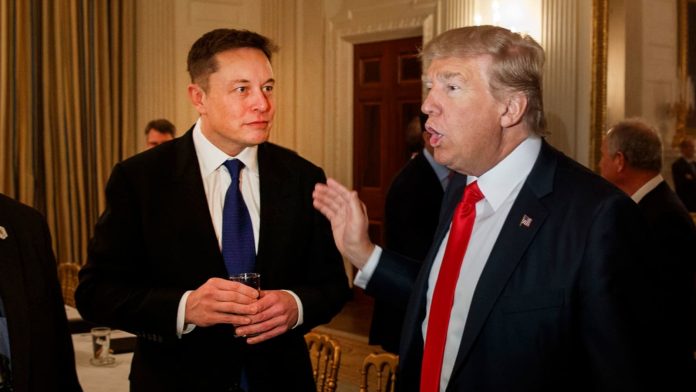
Tesla CEO Elon Musk, who has become a recurring presence at the White House in recent weeks, appears to have reaped significant political capital from those visits. While the company has posted sharp revenue declines, its profits fell 71% year-over-year amid public backlash tied to Musk’s political associations, Tesla’s stock jumped 10% after news broke last week of another regulatory rollback that favored the company.

The rollback in question: the end of a federal rule requiring automakers to report non-fatal crashes involving partially automated vehicles. The Department of Transportation announced that only Level 2 autonomous systems, like Tesla’s Autopilot, would be exempted from the crash reporting mandate. Musk had previously criticized the rule, arguing it unfairly cast Tesla in a negative light.

Industry safety analysts, however, warned that eliminating reporting requirements could reduce transparency, making it harder for regulators and consumers to monitor potential flaws in automated driving systems.

A Regulatory Pattern Favoring Tesla

Taken together, these moves reflect a broader regulatory climate that appears to increasingly accommodate Musk’s agenda. First, the White House moved to lighten the regulatory load on self-driving tech. Now, it has structured a sweeping tariff exemption around a domestic sourcing threshold that only Tesla currently meets.

Other automakers, like GM and Ford, which have long argued that global supply chains are essential to staying cost-competitive, now face urgent questions about their reliance on foreign components. Japanese and European manufacturers, even those that assemble vehicles in the U.S., may find themselves boxed out of tariff exemptions unless they significantly overhaul sourcing strategies.

Smaller EV startups that rely heavily on imported components from China, including Rivian and Lucid, will be particularly hard-hit. Many have yet to build deep domestic supply chains and may struggle to scale production under the new cost burden.

Business as Politics

The timing of the executive order — released late Monday evening alongside a White House fact sheet — has only added to the sense that business and politics are increasingly intertwined. The fact sheet confirmed the new tariff guidelines but did not address why 85% was chosen as the cutoff. Nor did it provide clarity on how domestic content will be verified or audited.

As scrutiny intensifies, critics say the administration’s close ties to Musk risk blurring the line between fair industrial policy and favoritism.

Whether these changes help revive domestic manufacturing or simply reward the most politically connected players are left to the future. What’s clear is that the road ahead for the U.S. auto sector now leads through Tesla — a company that increasingly shapes not just cars, but policy itself.

The executive order will be published in the federal register later this week, with further guidance expected for automakers and suppliers navigating the complex new rules. Industry leaders, meanwhile, are scrambling to assess how quickly they can restructure operations to avoid steep penalties — or whether, in today’s Washington, playing catch-up with Tesla is even possible.

Trump pressures Amazon to hide tariff costs from consumers, prompting retreat by Bezos’ company

0

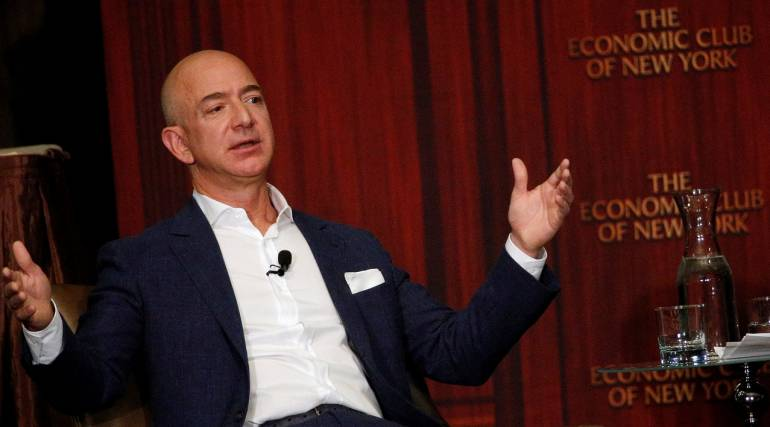
President Donald Trump personally pressured Amazon founder Jeff Bezos on Tuesday to abandon a plan that would have exposed how the administration’s new tariffs are hitting American pockets, a rare and direct intervention in the pricing strategy of one of the world’s largest online retailers.

According to sources familiar with the matter, Trump placed a phone call to Bezos early Tuesday after Punchbowl News reported that Amazon was preparing to roll out a feature that would display U.S. import tariff costs next to product prices. The feature, aimed at increasing transparency, would have informed buyers how much of what they paid was due to newly imposed duties — particularly the sweeping 145% tariff the administration has levied on Chinese imports.

The response from the White House was swift and hostile. Within hours of the report, Amazon issued a statement walking back the proposal, first claiming it was only being considered for “Amazon Haul,” a subsection focused on budget-conscious shoppers. But in a follow-up comment later in the day, the company disavowed the idea entirely, stating the plan was “never approved” and “is not going to happen.”

The sequence of events has raised concerns about the administration’s efforts to suppress visibility into the real-world consequences of its trade policies. While President Trump has repeatedly portrayed his tariff agenda as a tool to reverse decades of economic imbalance and reduce the U.S. trade deficit, analysts have warned that the true cost will be borne by American consumers, a fact that Amazon’s shelved feature would have made uncomfortably clear.

In public remarks, Trump has pitched tariffs as a patriotic lever to bring back manufacturing, punish China for years of trade violations, and “put American workers first.” He has insisted that foreign exporters, particularly China, would shoulder the cost of these duties.

However, economists across the spectrum agree that tariffs function as taxes on imports, which are almost always passed on to U.S. retailers and ultimately consumers.

The Amazon plan, according to Punchbowl, would have placed a line item next to the total price of each product, specifying how much of the cost was due to tariffs. This would have served as a rare form of transparency in an online marketplace where price hikes often go unexplained. The timing was especially sensitive, as Amazon merchants have already begun raising prices across thousands of listings in response to Trump’s tariffs.

When asked about the decision at a Tuesday press briefing, White House Press Secretary Karoline Leavitt called the move “a hostile and political act,” questioning why the company hadn’t done something similar during the Biden administration’s inflationary peak. She held up a printout of a 2021 Reuters report claiming Amazon had previously complied with censorship demands from China, using it as a rhetorical device to paint the company as untrustworthy and politically motivated.

Commerce Secretary Howard Lutnick weighed in online, posting that Amazon had made a “good move” by reversing course. But behind the coordinated front, the administration’s reaction revealed a deeper concern: that growing discontent over consumer prices could chip away at Trump’s carefully cultivated image as a defender of the working class.

Amazon’s short-lived proposal would have made it harder to maintain the illusion that tariffs are an abstract penalty on foreign governments. Instead, it risked showing with each product listing that the policy effectively functions as a stealth tax on American consumers. The potential political blowback was clear, especially as the administration touted the tariffs as part of a broader plan to revive U.S. industry and reduce dependency on Chinese manufacturing.

According to Wedbush Securities, up to 70% of the products sold on Amazon’s platform are sourced from China, meaning the impact of Trump’s 145% duty would ripple through virtually every corner of the site. The prospect of Americans seeing a specific surcharge labeled “tariff cost” next to common items like phone chargers, clothing, or kitchenware could have turned the president’s key economic message on its head.

Meanwhile, rivals like Temu and Shein, two fast-growing e-commerce platforms based in China, have already begun labeling “import charges” at checkout, in some cases increasing final prices by more than 140%. Their compliance with international shipping norms has put additional pressure on Amazon, which is still determining how to adjust its pricing model amid the rising import costs.

The attempt to display tariff charges reportedly originated from Amazon Haul’s operations team, which specializes in low-cost imported goods. Internally, the company has begun surveying its third-party sellers about how tariffs are affecting their pricing strategies and profit margins — a sign that executives are closely tracking the economic disruption triggered by Trump’s aggressive trade agenda.

However, Amazon’s hasty reversal has fueled speculation that Trump’s administration is seeking to suppress evidence that its policies are straining household budgets. Consumer advocates and trade experts argue that hiding such information may delay a broader reckoning about who ultimately pays the price for these policies.

Bezos, once a frequent target of Trump’s criticism, has made notable efforts to mend ties with the White House since the Republican’s 2024 victory. In December, Amazon contributed $1 million to Trump’s inaugural committee, and Bezos has praised the president’s more “disciplined” leadership style during his second term. The Washington Post, owned by Bezos, has also reportedly narrowed its opinion section focus to align with free-market values and individual liberties — another sign of detente between the two powerhouses.

Still, the latest scuffle suggests there are limits to that truce — especially when the public visibility of economic pain is at stake. Asked at Tuesday’s briefing whether Bezos remains a supporter of the president, Leavitt declined to answer directly, only reiterating that Amazon’s brief push for transparency was “a hostile and political action.”