DD
MM
YYYY

PAGES

DD
MM
YYYY

spot_img

PAGES

Home Blog Page 141

Eli Lilly Becomes First Health-Care Company to Hit $1tn Valuation, Riding a New Era of Weight-Loss Drug Dominance

0

For decades, the trillion-dollar club has been the province of Silicon Valley giants—names like Apple, Microsoft, and Alphabet that shaped the digital age. But on Friday, a company far from the tech corridors of California briefly muscled its way into that elite circle.

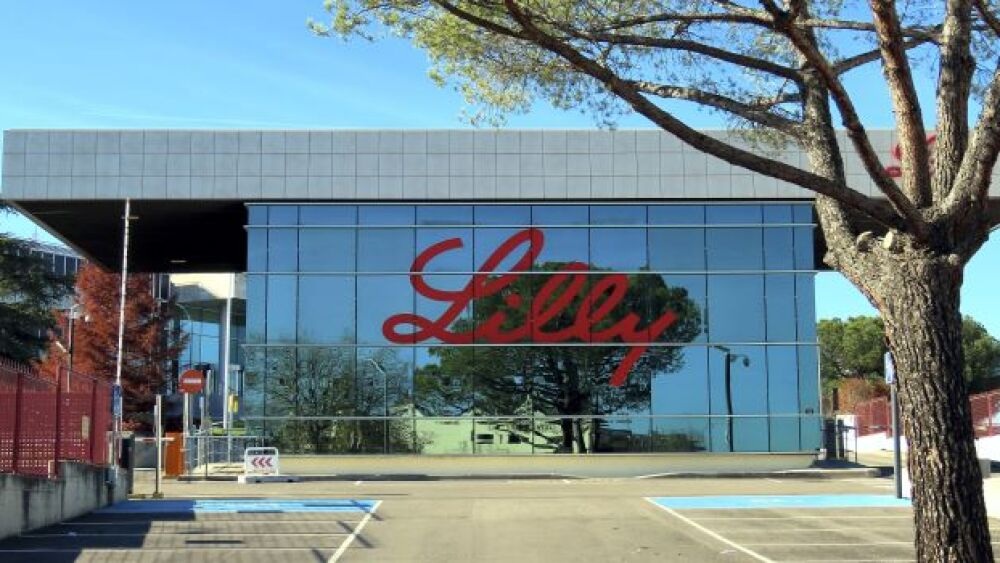
Eli Lilly, the 147-year-old drugmaker headquartered in Indianapolis, touched a $1 trillion market capitalization in morning trading, marking the first time in history a health-care company has reached that milestone.

Its stock cooled afterward but continued trading near $1,048 a share, still reflecting the astonishing momentum behind the company’s transformation into the face of the global weight-loss drug boom. In the U.S. market, only Warren Buffett’s Berkshire Hathaway had previously reached the trillion-dollar threshold as a non-technology firm.

The climb has been swift as Eli Lilly’s stock has surged more than 36 percent this year, fueled by an insatiable appetite from investors who have watched the company outpace its Danish rival Novo Nordisk in the fiercely competitive GLP-1 drug category. At the heart of Lilly’s surge are two modern pharmaceutical phenomena: its weight-loss injection Zepbound and its diabetes treatment Mounjaro, both of which have reshaped the global conversation around chronic disease and obesity management.

Last month, Eli Lilly reported that Mounjaro generated $6.52 billion in third-quarter revenue, a 109 percent jump from a year earlier. Zepbound, approved for obesity, delivered $3.59 billion in the same period, soaring 184 percent year-over-year. Few modern medicines have posted growth at that scale, and demand is still accelerating as regulators approve new uses, insurers widen coverage, and policymakers grapple with how to integrate these therapies into public health systems.

Lilly expects the momentum to continue. An oral version of its blockbuster drugs is slated to reach the market next year, promising patients a more convenient alternative to injections—while giving the company a product that is cheaper to manufacture and easier to distribute at scale. Analysts now project that the global weight-loss drug market could surpass $150 billion by the early 2030s, and Lilly appears positioned to dominate that universe for years to come.

However, other players in the market are vying for the top spot as competition evolves. Novo Nordisk, despite recent stumbles and leadership changes, remains a powerful counterweight with its GLP-1 drug Wegovy and diabetes treatment Ozempic. And another heavyweight has now muscled in: Pfizer vaulted forward this month when it beat Novo Nordisk in a $10 billion bidding war to acquire obesity-drug developer Metsera. Analysts believe it’s just the beginning of the scramble for next-generation metabolic therapies.

The frenzy around Zepbound and Mounjaro has thrust Eli Lilly back into the center of global medicine in a way few expected. But the foundations of its success are deeply rooted. The company traces its origins to 1876, when Eli Lilly, a pharmaceutical chemist and Union veteran of the U.S. Civil War, opened a small laboratory in Indiana.

By 1923, the firm had introduced the world’s first commercial insulin, laying the groundwork for a century of leadership in diabetes care. It later brought to market a string of influential drugs, including the antidepressant Prozac and one of the earliest polio vaccines. Lilly went public on the New York Stock Exchange in 1952.

Its modern rise began in May 2022, when U.S. regulators approved tirzepatide—sold as Mounjaro—for diabetes. The injectable treatment arrived at a moment when Novo Nordisk’s Ozempic had already reshaped the landscape, yet Mounjaro offered something different.

The drug mimics two gut hormones, GLP-1 and GIP. While GLP-1 reduces appetite and food intake, GIP not only helps suppress appetite but may also improve how the body processes sugar and fat. Novo Nordisk’s semaglutide, used in Ozempic and the weight-loss drug Wegovy, targets only GLP-1.

The dual-hormone mechanism helped Mounjaro smash expectations. It reached “blockbuster” status—more than $1 billion in annual sales—within its first full year. By late 2023, Lilly secured approval for tirzepatide as a treatment for obesity, launching it as Zepbound and placing it in direct competition with Wegovy. The commercial effect was immediate. By 2024, Mounjaro had raked in $11.54 billion, while Zepbound reported $4.93 billion in revenue.

That momentum has now rewritten market history. A 19th-century laboratory founded by a Civil War veteran has entered the same valuation tier once reserved for the modern titans of technology.
In Mississippi’s ‘Digital Delta,’ Amazon Bets $3bn, Signals a New Front in America’s AI Infrastructure Arms Race

0

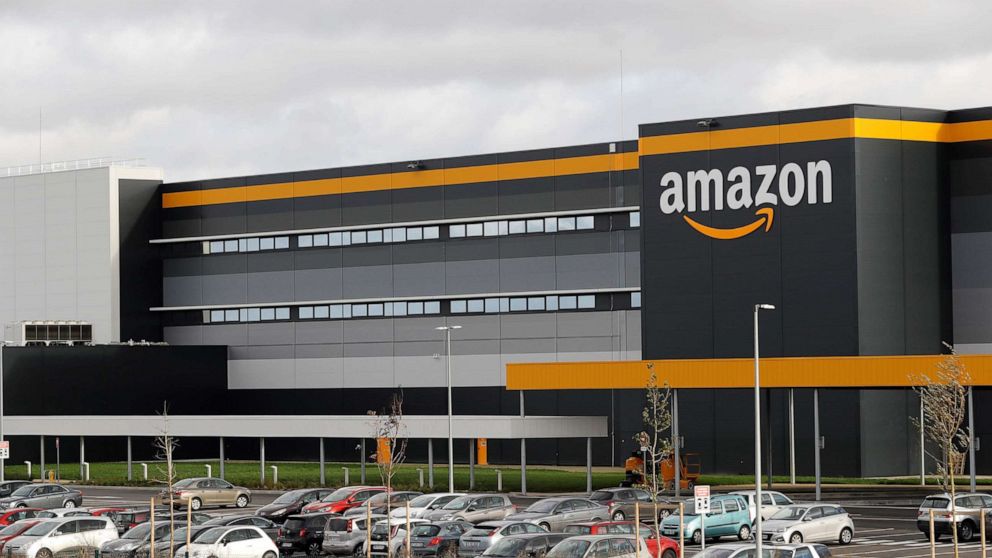
Vicksburg has lived many chapters in Mississippi’s economic story, but the latest one—scripted by a $3 billion Amazon investment—marks a shift from river-town legacy to AI-era frontier.

By 2026, the city is set to host one of the tech giant’s newest artificial intelligence data centers, a sprawling complex that state officials are already calling a transformative foothold in the South’s fast-emerging “Digital Delta.”

When Gov. Tate Reeves stepped forward Thursday to announce the project, he framed it as more than a local win.

“The future of technology is being built right here in the heart of the ‘Digital Delta,’” he said in a press release that cast the development as both symbolic and strategic.

At its core, the project is straight economic muscle. Amazon will pour $3 billion into Vicksburg and commit $150,000 to help fund a new Warren County educational grant. The data center itself will produce at least 200 high-paying full-time jobs, and another 300 jobs are expected to follow across Warren County—from engineers to network specialists, security teams, and operations managers.

But the story of how Vicksburg secured the deal wasn’t frictionless. “The decision by Amazon to build here was met with a number of challenges that the economic development team had to confront,” said Warren County Board of Supervisors President Kelle Barfield.

She credited state, city, and county officials for clearing those hurdles, arguing that the payoff is now clear.

“The result will be a major boost to our local tax base, securing revenues for services that continue to make Warren County such an ideal place to live and do business,” she said.

Amazon didn’t dispute the economic pitch. In its own release, the company emphasized the project as part of its broader cloud and AI ambitions. Amazon’s data centers power everything from cloud hosting to machine learning tools and the expanding suite of generative AI services that now underpin millions of customers’ digital operations. The Vicksburg campus will be the second Amazon Web Services hub in Mississippi, joining a massive $10 billion facility in Madison County built in 2024, which the governor’s office says created “thousands of indirect jobs.”

Still, the value proposition has been criticized. Across the U.S., the rapid build-out of data centers has been trailed by warnings from environmental groups and watchdog organizations. These facilities don’t just house servers; they drain enormous amounts of electricity and water to keep those servers cool and running. In some communities, that strain has contributed to surging power prices.

Mississippi officials insist that Vicksburg’s infrastructure can handle Amazon’s presence—helped partly by an assurance from Entergy Mississippi, which pledged long-term reliability for the center’s energy needs. The state also sweetened the deal: the project was enabled under the Mississippi Major Economic Impact Act, signed by Reeves in 2024, authorizing $44 million in state incentives.

Amazon, for its part, is trying to make its case not just as a job generator but as a community stakeholder. The company is launching the Warren County Community Fund, a grant program offering up to $10,000 each to residents, nonprofits, schools, and other organizations for projects tied to STEM education, sustainability, digital skills, culture, heritage, health, and well-being.

Amazon’s Chief Global Affairs and Legal Officer, David Zapolsky, leaned into that theme.

“We’re investing in the people and communities that make Mississippi strong, from training more than 6,500 Mississippians through our workforce development programs to our new Warren County Community Fund,” he said. “This is what responsible growth looks like—bringing cutting-edge technology infrastructure to America while ensuring local communities benefit directly from that investment.”

That training pipeline is no afterthought. Amazon already works with AccelerateMS, the Mississippi Development Authority, Hinds Community College, and Holmes Community College, delivering programs that have trained more than 6,500 workers statewide and engaged over 1,000 leaders in education and workforce development. The company has also embedded K-12 STEM initiatives in Madison County, Canton Public Schools, and Jackson Public Schools, offering everything from career-awareness sessions to hands-on workshops.

The economic stakes reflect a bigger national undercurrent. As generative AI becomes the backbone of business operations—and a centerpiece of cloud computing—data centers have become the infrastructure of geopolitical importance, coveted by states that want to anchor future industries. That has sparked what amounts to an AI infrastructure arms race across the country, with massive incentives, long-term utility commitments, and multi-billion dollar deals now commonplace.

For Vicksburg, the arrival of Amazon places the city squarely inside that contest. A river town that once defined itself by logistics and history is now being drafted into a future shaped by compute power, energy-intensive cloud clusters, and the promise—as well as the precariousness—of the AI age.

The cranes will arrive soon enough. The first server racks won’t hum until 2026. But for Mississippi policymakers, the ideal thing is that the state wants to be more than a consumer of AI – and it’s becoming a reality.

China Is U.S.’ Biggest Lender Despite Washington’s Warning to Developing Countries About Beijing’s “Debt Trap”

0

For the better part of a decade, Washington has sounded a relentless alarm across the Global South, warning developing nations that Beijing’s deep pockets come with a heavy price: a “debt trap” designed to leverage infrastructure loans for geopolitical obedience.

Yet, a sweeping new investigation reveals a staggering economic irony. While American diplomats were cautioning the world against Chinese credit, the United States was quietly becoming its largest customer.

According to a landmark report released Tuesday by the AidData research lab at William & Mary, the sheer scale of China’s global lending has been vastly underestimated, totaling a colossal $2.2 trillion between 2000 and 2023. But the true revelation lies in the destination of these funds. In a stark pivot from the bridge-and-road building of the Belt and Road Initiative in developing nations, China has increasingly directed its financial firepower toward the world’s wealthiest economies.

Standing at the top of that list is the United States itself.

The $200 Billion Surprise

The findings paint a picture of financial entanglement that defies the current “decoupling” narrative. AidData researchers, who spent 36 months combing through more than 246,000 sources, found that Chinese state-owned institutions funneled nearly $202 billion into projects across the U.S. during the studied period.

“This finding is both unexpected and counterintuitive,” the researchers noted, highlighting the dissonance between public political friction and private financial flow. Brad Parks, AidData’s executive director, put it this way: “This is an extraordinary discovery, given that the US has spent the better part of the last decade warning other countries of the dangers of accumulating significant debt exposure to China.”

The definition of “official sector” lending used in the study is broad, capturing the full weight of the Chinese state apparatus. It includes state policy banks, state-owned commercial banks, and government funds. These entities have woven themselves into the fabric of the American economy, often seeking yield and stability in what remains the world’s deepest market.

From Pipelines to Processors

The capital injection has not been passive. Chinese funds have bankrolled critical infrastructure that keeps the American economy humming. The report details how Beijing-backed financing helped construct major liquefied natural gas (LNG) pipelines in Rio Grande, Port Arthur, and Freeport, as well as the controversial Dakota Access oil pipeline.

Beyond energy, Chinese credit has flowed into the electric power transmission lines feeding New York City, data centers in Northern Virginia’s tech corridor, and airport terminals in both New York and California. The reach extends to the balance sheets of corporate America, with Chinese state lenders providing liquidity support—via working capital and revolving credit facilities—to a wide array of Fortune 500 companies.

However, the flow of funds suggests motives that occasionally transcend simple profit. The report points to specific instances where financing facilitated the transfer of “critical technologies.” A prime example occurred in 2015, when a consortium of Chinese firms utilized an $800 million loan to acquire 100 percent of OmniVision Technologies, a U.S.-listed maker of advanced image sensors. AidData flagged this as a clear case of acquiring “strategically important hi-tech companies and assets.”

A Strategic Pivot to the West

This focus on the U.S. is part of a broader, fundamental shift in Beijing’s economic statecraft. At the turn of the millennium, 88 percent of China’s lending portfolio was dedicated to low-income countries. By 2023, that figure had plummeted to just 24 percent.

Conversely, the share of financing targeting developed nations has skyrocketed. In 2000, high-income countries received only 12 percent of China’s overseas lending; by 2023, they absorbed 76 percent. The data shows that 10 of the top 20 recipients of Chinese official credit were high-income nations, with Russia ($171.7 billion) and Australia ($130 billion) trailing only the U.S. in total volume. Other major beneficiaries included the United Kingdom, Germany, and Singapore.

While the Belt and Road Initiative remains the public face of Chinese diplomacy, focusing on trade-related infrastructure in the developing world, this “shadow portfolio” in the West is arguably more significant. AidData estimates that China’s total overseas lending is two to four times larger than previously published estimates, effectively making Beijing the world’s largest official creditor—an “international creditor of first and last resort,” as co-author Brooke Escobar described it.

The Intent: Profit or Power?

The report nuances the intent behind this massive outlay. While the acquisition of OmniVision hints at strategic technology transfer, the researchers concluded that many Chinese loans to the U.S. “are guided by the pursuit of profit rather than the pursuit of geopolitical or geoeconomic advantage.” State-owned banks, awash in deposits, naturally sought the safe, high-yield returns available in Western infrastructure and corporate debt.

Yet, the scale of the lending raises questions about leverage and capacity. For every dollar the United States lends or donates to the developing world, China now provides $1.50. With an annual overseas development assistance budget hovering around $5.7 billion, the U.S. and its allies face a daunting challenge in matching Beijing’s financial ubiquity.

As the AidData team—comprising 16 full-time and 126 part-time researchers—concluded, the sheer volume of over 30,000 distinct projects funded worldwide, including nearly 10,000 in high-income countries, forces a re-evaluation of global power dynamics.

US Senate Introduces New Bill Aimed at Social Media Algorithms, To Rewrite Sec 230, Give Users Right to Sue

0

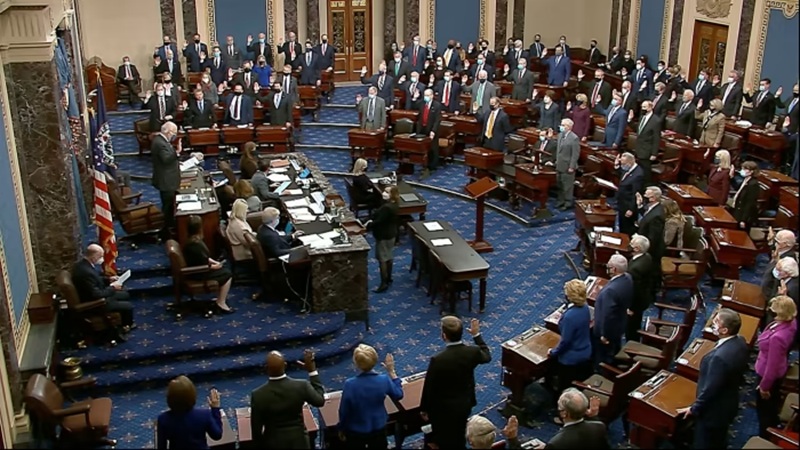
A new bill introduced on Wednesday by Sen. John Curtis of Utah is set to reopen one of Washington’s most contentious debates: whether social media giants should finally face legal consequences for algorithm-driven recommendations that push users toward harmful content.

The proposal, called the Algorithm Accountability Act, would deliver the most consequential rewrite of Section 230 in decades and could expose the platforms to lawsuits if their recommendation systems help radicalize users or contribute to real-world violence.

Curtis said the law is long overdue. He argued that Section 230, created nearly 30 years ago, was written for a small and untested internet — not the sprawling world of algorithmic feeds designed to keep billions of users online.

“Section 230 was written nearly 30 years ago for a very different internet,” he said in a statement. “What began as a commonsense protection for a fledgling industry has grown into a blanket immunity shield for some of the most powerful companies on the planet — companies that intentionally design algorithms that exploit user behavior, amplify dangerous content, and keep people online at any cost. Our bill will hold them accountable.”

At the core of the bill is a simple idea that if a platform knowingly uses an algorithm to push harmful content that sparks injury or death, it must “own” the consequences. Under the proposal, platforms could be sued directly by individuals who can prove the algorithm played a role. The measure would impose a duty of care, requiring companies to design, test, and operate their recommendation systems with safety in mind.

Curtis introduced the bill with Sen. Mark Kelly of Arizona, who said families have endured too much harm from addictive algorithmic systems designed to maximize revenue, not safety.

“Too many families have been hurt by social media algorithms designed with one goal: make money by getting people hooked,” Kelly said. “Over and over again, these companies refuse to take responsibility when their platforms contribute to violence, crime, or self-harm. We’re going to change that and finally allow Americans to hold companies accountable.”

The legislation makes clear that ordinary speech is not the target. It bars enforcement based on viewpoint, seeking to avoid any perception that the bill polices political expression. It also grants states the authority to pass similar or stronger laws, giving them flexibility to confront harms emerging from platforms within their borders.

Curtis said the issue has taken on new urgency following the killing of conservative activist Charlie Kirk, who was assassinated in September during an event at Utah Valley University. According to early FBI findings, the gunman spent extensive time in fringe online forums and had been drawn into extremist ideology.

Utah Governor Spencer Cox said the suspect had been “engulfed” by a radical left worldview. Cox welcomed the new bill and said national action is essential.

“Utah has led the nation in passing laws to protect children from the harms of social media, but these challenges don’t stop at state lines,” he said. “We need a national standard for accountability.”

Curtis has been building toward a measure like this for months, pressing tech executives in hearings and insisting they acknowledge how their products shape public behavior. In a Senate hearing last month, he told executives they must “own” the choices they make in their recommendation engines. He has also compared the current moment to the 1990s, when tobacco executives denied nicotine’s dangers until the evidence became overwhelming.

The proposal marks one of the most aggressive attempts yet to narrow the legal shield that has defined social media’s rise. Passed in 1996, Section 230 prevented platforms from being sued over user-generated posts, a protection that digital rights advocates say enabled the early internet to flourish. But Curtis and Kelly argue that the architecture of today’s technology — with personalized feeds, targeted engagement loops, and algorithmic steering — bears no resemblance to the online world Congress sought to protect nearly three decades ago.

Curtis put it bluntly during an interview with the Deseret News, noting: “If they’re responsible for something going out that caused harm, they are responsible. So think twice before you magnify. Why do these things need to be magnified at all?”

The bill arrives at a moment when lawmakers from both parties are increasingly skeptical of social media companies and are searching for ways to curb the influence of their algorithmic systems. The question now borders on whether Congress is ready to take on a reform that has eluded lawmakers for years — and whether the tech industry is prepared for what could be the most significant shift in internet liability since the 1990s.

Ripple (XRP) Loses the Spotlight as Little Pepe (LILPEPE) Emerges as the Best Cheap Crypto to Invest in Before 2026

0

Once a darling of payments-focused investors, XRP is starting to fade from the limelight as a surprising new star emerges: Little Pepe (LILPEPE). Several XRP holders have been noticed selling off their XRP holdings and diverting the funds into LILPEPE at $0.0022, before the expected 1,200% exchange launch surge.

XRP’s Struggle: Steady but Slower

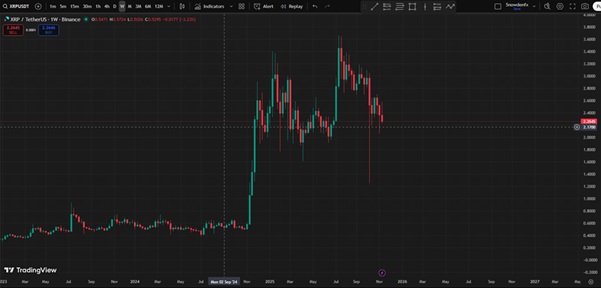
XRP’s reputation has long been built on institution-level credibility, cross-border payments, and partnerships. But lately, its momentum is showing signs of strain. According to analysts, whale activity has declined, and address growth isn’t keeping up, suggesting that fresh capital is looking elsewhere.  Some earlier bullish forecasts for XRP have been revised downward. For instance, one trader recently reduced their 2025 target from $22 to $10, citing that large holders are unloading XRP and macroeconomic headwinds are weighing on its growth. That’s quite a step back for a coin that many once viewed as a blue-chip altcoin play. On the other hand, more modest forecasts still exist: DeepSeek projects that XRP could reach $5 by the end of 2025, although skeptics argue that even this outlook is aggressive, given the current on-chain softness.  Even long-term narratives, like XRP becoming deeply embedded in global payments, are being questioned.

XRP Price Chart | Source: Tradingview

Little Pepe (LILPEPE): Meme Coin Meets Real Utility

Little Pepe (LILPEPE) is quietly creating a stir in the meantime. With each token priced at $0.0022, the presale is currently in Stage 13. After selling over 16.5 billion tokens, the team has already raised almost $27.3 million. That kind of demand from presale investors is no joke, especially for a “cheap” crypto.

So why are people paying attention? Because LILPEPE isn’t just a meme coin. It’s built on its own Layer-2 blockchain, optimized for lightning-fast, low-cost swaps, especially for meme projects. That infrastructure gives LILPEPE genuine utility, not just hype. The project has even been audited by CertiK, which gives some peace of mind to investors who might otherwise be wary of meme coins. Little Pepe is also listed on CoinMarketCap, which helps with legitimacy and visibility.

Big Upside, Big Potential

According to its roadmap and presale structure, LILPEPE could soar to $0.0030 at listing, meaning investors still in Stage 13 (at $0.0022) are looking at a 36% gain. For those who were around from Stage 1 (when the price was $0.001), the paper gains are already 120%.  However, the story doesn’t finish there. Due to its Layer-2 architecture, specific projections suggest that LILPEPE may eventually experience a rise of up to 21,365% if it completes its roadmap and expands its ecosystem. That’s the kind of return many retail investors only dream about when looking at the next big altcoin. One of the most telling shifts? Liquidity is leaving XRP. As more speculators chase high-volatility, high-upside bets, meme-driven Layer-2 plays like LILPEPE are catching that capital.  In other words, traders are favoring projects with massive asymmetrical upside, not just steady, slow growth. Little Pepe isn’t just relying on fundamentals. A $777,000 giveaway is currently underway, and the team has also launched a Mega Giveaway that rewards top presale buyers (from Stages 12–17) with over 15 ETH.  For many crypto investors, that’s a fun, community-driven way to get involved, and it’s helping drive excitement.

The Bottom Line

Yes, XRP still has a role: it’s mature, established, and tied to real-world use cases. However, for investors seeking substantial upside, Little Pepe may offer something more explosive, more viral, and potentially more rewarding. If you believe in meme coins plus real utility, LILPEPE might be the play to watch before 2026.

For more information about Little Pepe (LILPEPE) visit the links below:

Website: https://littlepepe.com

Whitepaper: https://littlepepe.com/whitepaper.pdf

Telegram: https://t.me/littlepepetoken

Twitter/X: https://x.com/littlepepetoken

 $777k Giveaway: https://littlepepe.com/777k-giveaway/