DD
MM
YYYY

PAGES

DD
MM
YYYY

spot_img

PAGES

Home Blog Page 1417

Google Strikes Deal with Elementl Power to Develop 1.8GW of Nuclear Energy as AI Demands Surge

0

Google has announced a major partnership with Elementl Power, a nuclear energy startup, to develop three new advanced nuclear reactor sites in the United States.

The deal underscores the tech giant’s growing urgency to secure reliable, carbon-free power for its data centers as artificial intelligence (AI) drives unprecedented energy demand across the company’s global infrastructure.

The agreement, announced this week, sets out plans for each site to contribute at least 600 megawatts (MW) of generating capacity, totaling a potential 1.8 gigawatts (GW) of nuclear energy. The reactors will be designed to feed power into the grid, with a commercial off-take option allowing Google to directly purchase electricity generated from the sites.

“Our collaboration with Elementl Power enhances our ability to move at the speed required to meet this moment of AI and American innovation,” said Amanda Peterson Corio, Google’s Global Head of Data Center Energy.

AI Push Fueling Massive Energy Investments

Google’s energy demand is exploding. The company plans to spend $75 billion this year alone on expanding its data center footprint, primarily to support its rapidly evolving AI ambitions. As AI models become more powerful and data-intensive, tech companies are facing growing scrutiny over their energy consumption. Nuclear power, especially small modular reactors (SMRs), has emerged as a promising solution due to its reliability, carbon-free credentials, and suitability for deployment near data centers.

The deal with Elementl Power marks a shift in Google’s energy strategy toward nuclear energy in a more direct and developmental role. The company will provide early-stage capital to help Elementl prepare the three sites, whose specific locations have not yet been disclosed.

Elementl Power Enters the Spotlight

Until now, Elementl Power had operated largely under the radar. The company was launched by infrastructure firm Breakwater North and is backed by the investment group Energy Impact Partners. Although it has not yet built a nuclear power plant, its team reportedly includes veterans of the nuclear industry.

In a statement, Elementl described itself as “technology agnostic,” meaning it has not yet committed to a specific SMR technology for the planned sites. This approach allows the company to remain flexible and potentially choose from several competing reactor technologies, depending on regulatory approvals and performance benchmarks.

That said, Kairos Power, one of the more advanced SMR developers, may emerge as a leading contender. Google has an existing agreement with Kairos Power to purchase up to 500 MW from its future reactors. Kairos’ demonstration plant is expected to produce 50 MW, with full-scale commercial deployment reaching 150 MW across two reactors.

Silicon Valley’s Nuclear Turn

Google’s nuclear pivot reflects a wider embrace of SMRs across the tech industry. The promise of modular manufacturing, quicker deployment timelines, and the ability to site reactors close to high-consumption hubs like data centers has made SMRs an attractive proposition for tech firms looking to meet carbon goals while ensuring 24/7 power.

Startups such as Oklo, X-Energy, and Kairos Power have all signed deals with major tech firms or utilities, but real-world progress has been slow. Despite strong investor interest and government backing, no SMR has yet been completed outside China. In the United States, NuScale Power came close to building the country’s first SMR before its flagship project collapsed in 2023. Its utility partner withdrew after costs more than doubled, even as NuScale scaled down its plans in a bid to salvage the deal.

However, Elementl Power believes the time is ripe for nuclear energy’s next chapter. The company says it aims to bring over 10 GW of advanced nuclear capacity online in the U.S. by 2035 and is working with utilities and regulators to identify viable project locations and partnerships.

A Crucial Step for Google’s Clean Energy Goals

For Google, the move into nuclear isn’t just about supply; it’s about securing future-proof, sustainable energy in a volatile and energy-hungry era. The company has pledged to run on 24/7 carbon-free energy by 2030, an ambitious goal that will require it to go beyond intermittent renewables like solar and wind.

The ability to tap into nuclear power, especially from modular reactors that can be co-located with or near data centers, represents a key component of that strategy. If successful, the partnership with Elementl could signal a new model for how Big Tech sources energy, blending private capital, next-gen infrastructure, and advanced technology to meet a growing climate and operational imperative.

The projects remain in the early stages, with development timelines, reactor types, and permitting processes still to be finalized.


Arizona’s Bitcoin Reserve Fund is a Bold Experiment

0

Arizona Governor Katie Hobbs signed House Bill 2749 into law, establishing a Bitcoin and Digital Assets Reserve Fund. This makes Arizona the second U.S. state, after New Hampshire, to create a state-managed crypto reserve. The fund will hold unclaimed digital assets, such as Bitcoin and other cryptocurrencies, that remain unclaimed for at least three years.

The state can stake these assets or earn airdrop rewards, with earnings deposited into the reserve fund without using taxpayer money. The law aims to modernize Arizona’s unclaimed property framework and position the state as a leader in digital asset management.

However, Governor Hobbs vetoed a separate bill, Senate Bill 1025, on May 3, 2025, which would have allowed the state’s retirement and pension funds to invest up to 10% in cryptocurrencies, citing concerns over “untested investments.” Another bill, Senate Bill 1373, which would authorize the state treasurer to allocate up to 10% of Arizona’s Budget Stabilization Fund into Bitcoin, is still awaiting the governor’s signature or veto. Supporters, including Bitcoin Laws founder Julian Fahrer, are hopeful that Hobbs’ approval of HB 2749 signals potential support for SB 1373.

Arizona’s establishment of a Bitcoin and Digital Assets Reserve Fund positions the state as a pioneer in integrating cryptocurrencies into state financial systems. By managing unclaimed digital assets and potentially earning staking or airdrop rewards, Arizona could generate revenue without taxpayer burden, modernizing its unclaimed property framework.

The law signals a crypto-friendly environment, potentially attracting blockchain startups, crypto investors, and tech talent to Arizona. This could boost the state’s economy through job creation and increased tax revenue from crypto-related businesses. As the second state after New Hampshire to create a crypto reserve, Arizona’s move may inspire other states to explore similar funds, normalizing digital assets in public finance. However, the success of the fund will depend on effective management and market conditions.

State involvement in holding and staking Bitcoin could influence local crypto markets, potentially stabilizing prices if managed well, or adding volatility if mismanaged. The scale of the fund’s holdings remains unclear, but significant state-backed buying could impact Bitcoin’s price. Governor Katie Hobbs’ approval of HB 2749 but veto of SB 1025 (allowing pension fund crypto investments) highlights a cautious approach.

This creates a mixed signal: supporting innovation in unclaimed property management while limiting riskier public fund exposure to crypto volatility. Her pending decision on SB 1373 (allowing Bitcoin in the Budget Stabilization Fund) will further clarify her stance. The law may polarize residents. Crypto advocates may see it as progressive, while skeptics may worry about the risks of state involvement in volatile assets. Public trust will hinge on transparent fund management and clear communication of benefits.

Arizona’s move could amplify debates about cryptocurrency’s role in governance, especially as the U.S. approaches the 2026 midterm elections. It may pressure federal regulators to clarify crypto policies, given the growing state-level adoption. Bitcoin Laws founder Julian Fahrer, crypto investors, and blockchain enthusiasts view the law as a step toward mainstream adoption. They argue it diversifies state assets, hedges against inflation (Bitcoin is often called “digital gold”), and aligns with Arizona’s tech-forward identity.

Proponents emphasize that the fund uses unclaimed assets, not taxpayer money, minimizing risk. They also see staking rewards as a passive income stream and believe the law could make Arizona a hub for crypto innovation, rivaling states like Texas or Wyoming. Republican legislators, who dominate Arizona’s legislature, largely supported HB 2749 and SB 1373, reflecting a broader GOP trend of embracing crypto as a free-market innovation.

Governor Hobbs’ veto of SB 1025 suggests wariness about crypto’s volatility and untested nature, particularly for sensitive public funds like pensions. Critics, including some Democrats and financial traditionalists, argue that Bitcoin’s price swings (e.g., 2022’s crypto winter) pose unacceptable risks for state-managed assets.

Opponents highlight regulatory uncertainty, environmental concerns (Bitcoin mining’s energy use), and potential mismanagement of digital assets. They fear the fund could become a liability if crypto markets crash or if unclaimed assets are mishandled. Posts on X reflect this split. Some users praise Arizona’s “forward-thinking” approach, predicting it will “moon” Bitcoin’s adoption, while others call it a “reckless gamble” with unproven assets, citing past crypto scams like FTX.

Arizona’s law underscores a growing state-federal divide on crypto. While states like Arizona and New Hampshire experiment with digital assets, federal regulators like the SEC, CFTC remain cautious, with no comprehensive U.S. crypto framework as of May 2025. This patchwork approach creates uncertainty for investors and policymakers.

The divide mirrors broader ideological debates: crypto advocates champion decentralization and financial freedom, while critics prioritize stability and consumer protection. Arizona’s fund may deepen this rift, especially if its success or failure becomes a political flashpoint.

Arizona’s Bitcoin Reserve Fund is a bold experiment with potential to boost innovation and state revenue, but it carries risks tied to crypto’s volatility and regulatory ambiguity. The divide—evident in Hobbs’ mixed policy decisions, public sentiment on X, and legislative debates—reflects broader tensions over cryptocurrency’s role in governance. The outcome of SB 1373 and the fund’s performance will shape Arizona’s crypto trajectory and influence other states. For now, Arizona is a test case in a fractured national crypto landscape.

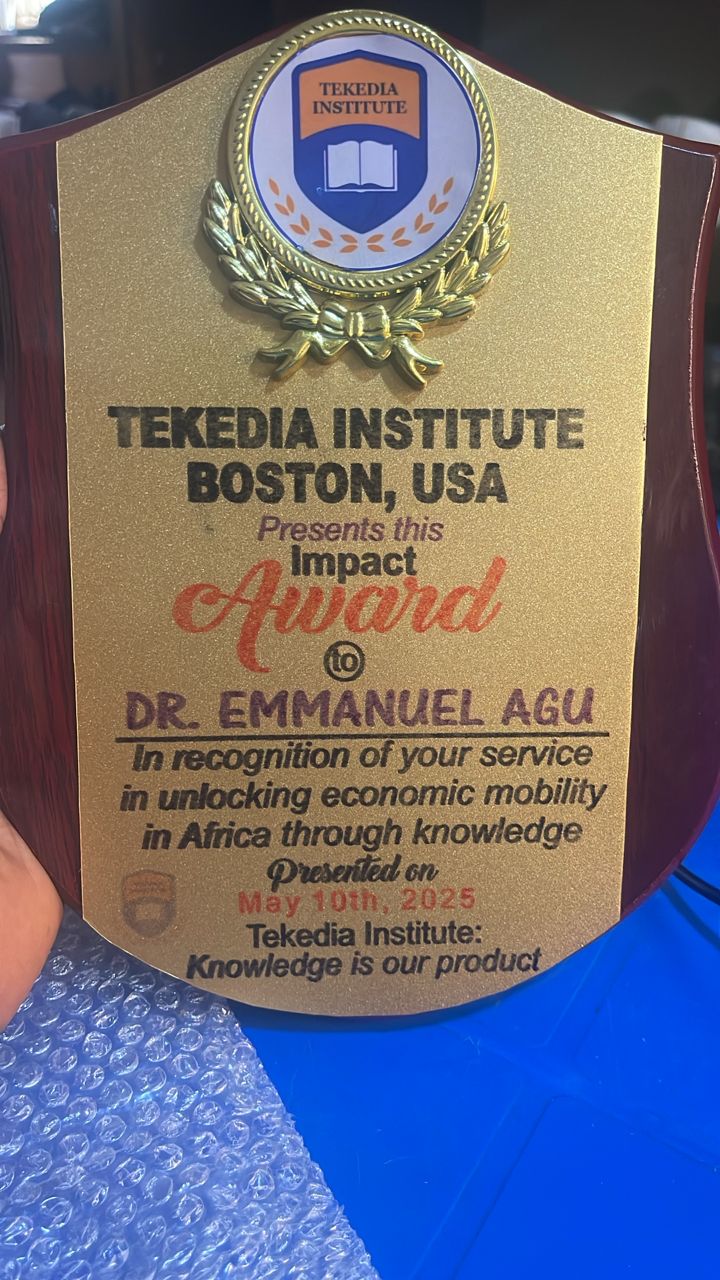
[Graduation Photos] Congrats Tekedia Mini-MBA Edition 16 Graduates

0

For 12 weeks, we studied and solved the equations of markets, and mastered the fundamental mechanics of entrepreneurial capitalism, at Africa’s finest school for builders, innovators, professionals, etc. As you celebrate your graduation in Lagos and other cities today, I wish everyone safe travels and a BIG graduation gboza. Thank you for choosing Tekedia Institute Mini-MBA; wear your muffler with pride.

Congratulations again to my fellow Tekedia Mini-MBA co-learners on the ceremony in Lagos. It is always amazing whenever young people gather to deepen their knowledge systems after our program. Tekedia Mini-MBA holds graduation ceremonies across cities, and they’re independently organized by learners.  For the Lagos event today, I want to thank LOC chairperson Motunrayo Sholabomi and other members of the LOC including Ruth Olawale-Lasore, Kuburat Abubakar, MBA, CBAP, CPM, Divine Owolabi, Chidimma Abigail Ezeokoli and Anietie Harrison-Tom, mMBA.

I also thank our Graduation Lecture Speaker, Emmanuel Agu, PhD, for today. To our program manager, Eyitayo Adeleke, thank you for making sure everything runs smoothly.

Tekedia Institute: Knowledge is our product!

Osun 2026: Between Osogbo and Osun West Agenda

0
Source: National Dailies, 2024-2025; Infoprations Analysis, 2025

A new dynamic is quietly reshaping the political landscape ahead of Osun 2026 governorship election. While public attention still gravitates toward familiar party leaders and traditional power blocs, the real story lies beneath the surface. The ongoing political conversations and coalition-building efforts suggest a significant shift in influence. At the heart of this shift is not a single politician, but an emerging force known simply as the Osun West Agenda.

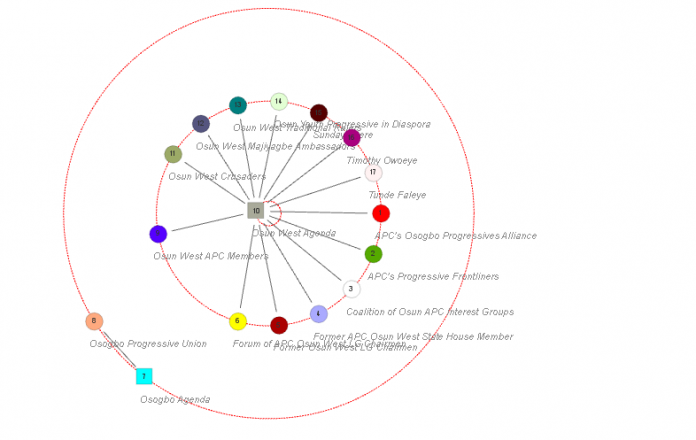
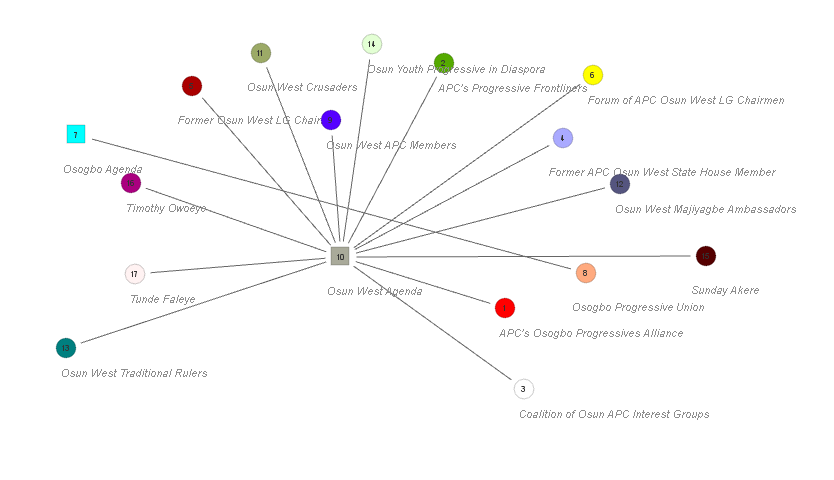
Osun West Agenda is not a person but a coordinated activity that now dominates the political discourse in the state. It stands out not only for its prominence but also for how deeply connected it has become to various actors and groups. When compared to the rest of the political ecosystem, Osun West Agenda commands the highest level of engagement and attention. This places it far ahead of many other movements and actors that have long enjoyed visibility in Osun politics.

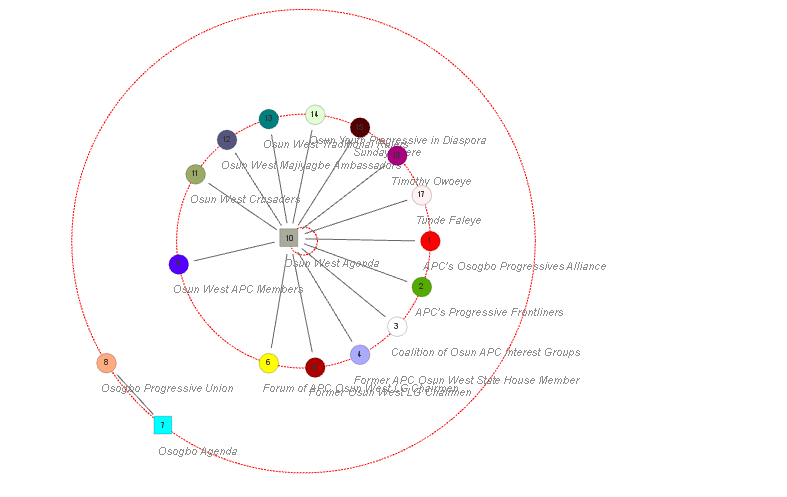
Exhibit 1: Osogbo vs. Osun West Agenda network ahead of Osun 2026 election

Source: National Dailies, 2024-2025; Infoprations Analysis, 2025

By contrast, the Osogbo Agenda, another initiative built around political identity and regional interest, appears to be losing steam. Despite Osogbo’s historical significance and its role as the capital of the state, the activities associated with the Osogbo Agenda are barely registering among key political influencers. The limited reach of this movement suggests that Osogbo’s traditional dominance is being challenged, not just in words but in action.

To understand this development, we must consider the actors rallying around each movement. Osun West Agenda enjoys broad support from individuals and platforms that stretch across political and regional divides. Some of the most active groups behind it include the Osun West APC Members, Osun West Crusaders, Osun West Majiyagbe Ambassadors, and Osun West Traditional Rulers. These groups have strong grassroots connections and are closely aligned with other influential political actors across the state.

Backing these platforms are several well-established individuals and interest groups. These include the Former APC Osun West State House Members, the Former Osun West Local Government Chairmen, and the Forum of APC Osun West Local Government Chairmen. Their long-standing involvement in party structures gives them both credibility and access. Their alignment with the Osun West Agenda is helping to propel it into the center of strategic conversations about 2026.

Exhibit 2: Who has proximity prestige among the actors

Source: National Dailies, 2024-2025; Infoprations Analysis, 2025

Notably, other statewide figures are also involved in shaping the pre-election narrative. Actors such as Sunday Akere, Timothy Owoeye, and Tunde Faleye continue to hold considerable influence. These individuals are part of a broader group of APC-affiliated leaders who include the Coalition of Osun APC Interest Groups, the APC’s Progressive Frontliners, and the APC’s Osogbo Progressives Alliance. Together, they represent a core group that continues to drive political decisions within the party, though not always from the spotlight.

Interestingly, while these leaders and groups remain active and interconnected, their attention is increasingly being drawn toward the Osun West narrative. Rather than initiating their own agendas, they are lending credibility and energy to a movement that already seems to be leading the conversation. This shift reflects a growing belief that Osun West, long underrepresented in the state’s highest offices, may finally be positioned to take the lead.

In stark contrast, platforms connected to the Osogbo Agenda such as the Osogbo Progressive Union and related cultural or civic networks are operating at the margins. Their ideas are not being picked up widely, and their calls for attention are not resonating beyond their immediate circles. While their loyalty to the Osogbo cause is clear, they are currently unable to translate that commitment into political capital.

This changing balance of influence is not just about geography. It speaks to a larger political recalibration. Osun West Agenda is being embraced because it speaks to a broader desire for equity and inclusion. It has become a banner for those seeking new leadership, new opportunities, and a reset of old expectations. It is also seen as a unifying platform that can appeal to a broad coalition of groups who feel underrepresented.

Our analyst notes that as stakeholders look toward the primaries and eventual campaigns,  those who want to be serious contenders in 2026 must find a way to align with the momentum coming from the West. This is not simply a matter of political calculation. It reflects a genuine shift in where the energy and ambition of Osun politics now reside.

The path to victory in 2026 will not be paved by legacy alone. It will depend on who listens, who adapts, and who chooses to build bridges rather than rely on old maps. In this race, the Osun West Agenda is not just a passenger. It is in the driver’s seat.

The Acquisition of Deribit Gives Coinbase a Competitive Edge But Introduces Execution Risks

0

Coinbase’s acquisition of Deribit for $2.9 billion, announced on May 8, 2025, marks the largest merger and acquisition in the cryptocurrency industry’s history. The deal, comprising $700 million in cash and 11 million shares of Coinbase Class A common stock, positions Coinbase as the global leader in crypto derivatives by open interest and options volume. Deribit, a Dubai-based platform, processed $1.2 trillion in trading volume in 2024, with approximately $30 billion in current open interest, making it the world’s leading crypto options exchange.

This acquisition enhances Coinbase’s derivatives offerings, complementing its existing U.S. futures and international perpetual futures businesses, and is expected to diversify revenue streams and boost profitability due to Deribit’s consistent positive adjusted EBITDA. The transaction, subject to regulatory approvals, is anticipated to close by year-end 2025. Deribit’s founders, John and Marius Jansen, will step down post-closure, while CEO Luuk Strijers emphasized the deal’s potential to accelerate growth in global crypto derivatives trading. Coinbase’s stock (COIN) rose 5.3% to $215.40 on May 8, reflecting market optimism, though it has declined 21% year-to-date in 2025.

However, Coinbase’s Q1 2025 earnings, released concurrently, presented a mixed picture. While specific financial details from the earnings report are not fully detailed in available sources, it’s noted that the acquisition announcement overshadowed the earnings, which reportedly missed expectations. Coinbase had previously reported doubled revenue in Q4 2024, driven by a retail trading rebound, but the Q1 2025 results suggest short-term challenges, potentially due to market volatility or operational costs.

The acquisition’s long-term strategic value—bolstering Coinbase’s institutional offerings and global reach—appears to outweigh immediate earnings concerns, with analysts like Matt Hougan of Bitwise predicting Coinbase could become a $1 trillion valuation company as derivatives trading expands. The deal aligns with a broader trend of consolidation in the crypto industry, fueled by a crypto-friendly U.S. regulatory environment under the Trump administration.

For comparison, Kraken acquired NinjaTrader for $1.5 billion, and Ripple acquired Hidden Road for $1.25 billion in recent months. Regulatory hurdles, particularly in integrating Deribit’s Dubai license with Coinbase’s U.S.-focused compliance framework, and potential volatility in derivatives trading volumes remain risks. Still, the acquisition positions Coinbase to compete with global giants like Binance and OKX, capitalizing on the growing institutional demand for crypto derivatives, which outpaced spot trading volumes threefold in 2023.

By acquiring Deribit, Coinbase secures a leading position in the crypto options and derivatives market, which is critical as derivatives trading volumes significantly outpace spot trading (3:1 in 2023). Deribit’s $1.2 trillion in 2024 trading volume and $30 billion in open interest bolster Coinbase’s portfolio, complementing its U.S. futures and international perpetual futures offerings.

Deribit’s consistent positive adjusted EBITDA offers Coinbase a stable, high-margin revenue stream, reducing reliance on volatile spot trading fees. This could enhance financial resilience amid crypto market fluctuations. The acquisition strengthens Coinbase’s appeal to institutional investors, who increasingly demand sophisticated derivatives products. This aligns with Coinbase’s pivot toward institutional services, evidenced by its custody and prime brokerage growth.

The deal positions Coinbase to compete more effectively with Binance, OKX, and Bybit, which dominate global derivatives markets. Deribit’s established brand and infrastructure give Coinbase a foothold in non-U.S. markets, particularly in Asia and Europe. The acquisition reflects a broader wave of crypto industry consolidation, with deals like Kraken’s $1.5 billion NinjaTrader acquisition and Ripple’s $1.25 billion Hidden Road purchase. This trend suggests a maturing market where scale and regulatory compliance are critical for survival.

Integrating Deribit’s Dubai-based operations with Coinbase’s U.S.-centric, compliance-heavy framework could face hurdles. Regulatory approvals are pending, and any delays or restrictions could impact the deal’s timeline or scope. The derivatives market is inherently volatile, with trading volumes tied to crypto price movements. A bear market could reduce Deribit’s profitability, while Coinbase’s $700 million cash outlay and 11 million shares dilute shareholder value short-term.

Coinbase must balance its U.S. regulatory obligations with Deribit’s international client base, which may require nuanced compliance strategies to avoid alienating non-U.S. users. Coinbase’s stock surged 5.3% to $215.40 on May 8, 2025, signaling investor confidence in the acquisition’s long-term value, despite a 21% year-to-date decline. Analysts like Matt Hougan project a potential $1 trillion valuation for Coinbase, driven by derivatives growth.

The deal capitalizes on a crypto-friendly U.S. regulatory environment under the Trump administration, which could ease compliance burdens and encourage institutional adoption. However, Q1 2025 earnings misses suggest short-term headwinds, potentially from operational costs or market volatility.

The acquisition could accelerate the mainstream adoption of crypto derivatives, particularly options, which remain underutilized compared to futures. This may attract more institutional capital, further legitimizing crypto as an asset class. Coinbase’s enhanced capabilities may pressure competitors to innovate or consolidate, potentially leading to better products and lower fees for users. However, it could also centralize market power, raising concerns about monopolistic behavior.

The acquisition highlights a divide in how different stakeholders perceive its impact, reflecting tensions in priorities, market dynamics, and regulatory contexts. Retail traders, Coinbase’s traditional base, may see limited immediate benefits, as Deribit primarily serves sophisticated traders. Spot trading fees, a key retail revenue driver, could face pressure if Coinbase shifts focus to derivatives. Additionally, the Q1 2025 earnings miss may erode retail investor confidence in short-term profitability.

Institutions, including hedge funds and asset managers, view the acquisition favorably, as it expands Coinbase’s derivatives offerings. Deribit’s robust options platform caters to their need for hedging and speculative strategies, potentially driving institutional capital inflows. In the U.S., a crypto-friendly regulatory shift under Trump supports Coinbase’s growth, but its heavy compliance costs and focus on regulated products (e.g., futures via Coinbase Financial Markets) may limit agility compared to global competitors.

Deribit’s non-U.S. client base, operating under Dubai’s lighter regulatory framework, may resist Coinbase’s stricter compliance standards. This could create friction in retaining Deribit’s existing users, particularly in Asia and Europe, where Binance and OKX dominate. The $2.9 billion price tag, including $700 million in cash, strains Coinbase’s balance sheet, especially after Q1 2025 earnings underperformed. Integration costs and regulatory delays could further pressure profitability in 2025.

The acquisition’s strategic value—market leadership, revenue diversification, and institutional growth—positions Coinbase for dominance in a maturing crypto market. Analysts’ $1 trillion valuation projections reflect confidence in derivatives as a growth driver. Some crypto enthusiasts may criticize Coinbase for prioritizing institutional products and regulatory compliance, potentially at the expense of decentralization principles. Deribit’s integration into a U.S.-listed company could be seen as a step toward centralization.

Traditional financial players, including banks and regulators, view the acquisition as a sign of crypto’s maturation. It aligns with their push for regulated, transparent markets, potentially paving the way for broader crypto adoption. Rivals like Binance, OKX, and Kraken face increased pressure to scale or acquire to compete with Coinbase’s expanded derivatives capabilities. Smaller exchanges may struggle to survive without similar consolidation.

The acquisition gives Coinbase a competitive edge but introduces execution risks. Successfully integrating Deribit’s technology, team, and client base will be critical to realizing the deal’s full potential. Coinbase’s $2.9 billion acquisition of Deribit is a transformative move that cements its leadership in crypto derivatives and positions it for long-term growth in a consolidating industry.

However, it amplifies divides between retail and institutional priorities, U.S. and global regulatory frameworks, and short-term financial pressures versus long-term strategic gains. While the deal capitalizes on a favorable regulatory climate and institutional demand, Coinbase must navigate operational risks, competitive pressures, and stakeholder expectations to fully realize its potential.