DD
MM
YYYY

PAGES

DD
MM
YYYY

spot_img

PAGES

Home Blog Page 1419

China is Considering Exempting Irreplaceable U.S. Goods From Its 125% Tariff

0

China is considering exempting certain U.S. goods from its 125% tariffs, driven by concerns over the economic fallout of the ongoing trade war with the United States. According to reports, Beijing has already granted exemptions for some U.S. imports, particularly those deemed “irreplaceable,” such as certain semiconductors and healthcare products, to protect its industries and supply chains.

A Ministry of Commerce taskforce is actively collecting lists of critical items from companies, focusing on goods like petrochemical ethane (used for plastics) and specific pharmaceuticals that lack alternative suppliers.

Financial news outlet Caijing reported exemptions for eight semiconductor-related items, though not memory chips, and a broader list of over 130 product categories, including vaccines, chemicals, and jet engines, is circulating among businesses. These exemptions are estimated to cover $45 billion worth of U.S. imports from 2024.

This move signals Beijing’s attempt to mitigate domestic economic pressures, including rising unemployment, deflation, and a backlog of unsold exports, while maintaining a hardline stance that it will fight unless the U.S. lifts its 145% tariffs. Despite U.S. claims of trade talks, China denies negotiations are underway. The exemptions have boosted global markets, with Asian stocks gaining, but uncertainty persists about the trade war’s long-term impact.

Exemptions for critical goods like semiconductors, pharmaceuticals, and petrochemicals aim to stabilize Chinese industries reliant on U.S. imports, reducing supply chain disruptions and production costs. This could ease deflationary pressures and support struggling sectors, but the $45 billion in exemptions (based on 2024 import estimates) is a small fraction of total trade, limiting broader relief.

U.S. exporters, particularly in tech, healthcare, and energy, may see increased demand, boosting revenues and potentially easing pressure on industries hit by China’s tariffs. However, the exemptions are selective, excluding major U.S. exports like memory chips, so the overall economic lift may be modest.

The exemptions signal a de-escalation in trade tensions, contributing to short-term market optimism, as seen in recent Asian stock gains. However, ongoing uncertainty about reciprocal U.S. tariff reductions could temper long-term investor confidence. By granting exemptions, Beijing balances economic pragmatism with its hardline stance against U.S. tariffs. This move projects flexibility to domestic and global audiences while avoiding concessions that could be seen as weakness amid denials of formal trade talks.

Selective exemptions may create leverage for China in future negotiations, pressuring the U.S. to reciprocate by lowering its 145% tariffs. However, without confirmed talks, the trade war’s broader tensions—rooted in geopolitical rivalry—persist, limiting prospects for a comprehensive deal. The exemptions could influence U.S. policy debates, with industries benefiting from exemptions lobbying for de-escalation, while others (e.g., memory chip producers) push for tougher measures against China.

Exemptions for “irreplaceable” goods highlight China’s dependence on specific U.S. products, underscoring the challenges of decoupling. This may prompt other nations to reassess their own supply chain vulnerabilities in the U.S.-China trade war. While exemptions reduce immediate economic strain, they don’t address the root conflict. If the U.S. maintains or raises tariffs, China could retaliate by narrowing exemptions or targeting other U.S. goods, perpetuating a cycle of escalation.

Countries like South Korea, Japan, and the EU, which supply similar goods, may face competitive pressure if U.S. products gain tariff-free access to China. This could reshape global trade flows and prompt diplomatic maneuvering. The exemptions are a tactical move, not a resolution. Without mutual tariff reductions, the trade war’s drag on global growth—estimated to shave 0.5-1% off global GDP annually—persists. Businesses may delay investments, and consumers could face higher prices due to ongoing trade distortions.

China’s focus on critical goods suggests a push for self-reliance in key sectors (e.g., semiconductors), potentially accelerating its domestic innovation but at high short-term costs. While China’s exemptions offer targeted economic relief and signal a willingness to manage trade war fallout, they don’t fundamentally alter the U.S.-China conflict. The move may stabilize specific industries and markets temporarily.


Traders Hesitate To Pull Trigger On Dogecoin and Cardano, But This Altcoin’s Volume Is Skyrocketing

0

As traders grow cautious around Dogecoin and Cardano due to stagnant price action and unclear short-term momentum, a new altcoin is making waves with surging trading volume—Lightchain AI. Currently in Stage 15 of its presale and priced at $0.007, Lightchain AI has already raised $18.3 million, drawing the attention of investors seeking high-growth potential.

While Dogecoin and Cardano continue to battle resistance levels and market uncertainty, Lightchain AI is generating early excitement thanks to its unique focus on AI integration and decentralized infrastructure. This spike in volume signals rising interest ahead of its mainnet launch and suggests growing confidence in its long-term vision. In this article, we’ll break down why traders are hesitating on older altcoins and  what’s fueling the rapid momentum behind this promising newcomer.

Why Dogecoin and Cardano Are Losing Traction

Dogecoin and Cardano face intensified distrust among traders as the market’s focus shifts towards practical utility projects. Dogecoin, despite having a community willing to go to any lengths, is not experiencing further development and besides being considered a meme by the people, is not applicable in the real-world. Problematizing such a situation led to some fiscal analysts demanding it to be obliterated of the system. Cardano, on the flip side, comes with solid beginner-academic principles as well as concentrican architecture. Yet, it has been denounced for the slow deployment of token functionality and limited application of dApp compared to competitive cryptocurrencies.

In a scenario of a propelling and changing cryptocurrency domain, where being innovative and fast are of major importance, both coins have the main problem of meeting the expectations of the investors.

The growing popularity of new projects as they bring distinct immediate value and project use cases, naturally the ones that are indeed progressing technologically and are engaged by the users are replacing the traditional altcoins eating up all the capital that naturally rotates away from the ones that do not “walk the extra mile” among the users.

How Lightchain AI Is Skyrocketing

Lightchain AI’s volume is skyrocketing as traders shift focus toward utility-driven projects that offer more than speculative momentum. A key driver behind this surge is its integration of the Artificial Intelligence Virtual Machine (AIVM)—a specialized layer that enables secure, real-time execution of AI tasks directly on-chain. This innovation allows developers to run complex computations while preserving data privacy, something legacy blockchains like Cardano or Dogecoin simply don’t support.

The AIVM is attracting attention from both technical communities and early investors looking to capitalize on the growing demand for decentralized AI solutions. Combined with a clear roadmap and strong presale performance, Lightchain AI’s architecture is proving to be more than just hype. Its rising volume reflects serious interest in its foundational technology, positioning it as a future-ready platform in a rapidly evolving crypto landscape.

Why Investing In Lightchain AI Is Worth It

Investing in Lightchain AI offers exposure to a project that’s fundamentally designed for long-term utility and scalability. One of its standout features is the Proof of Intelligence (PoI) consensus mechanism, which replaces traditional mining with meaningful AI computations. This not only secures the network but also channels resources into valuable work like model training and optimization. Additionally, Lightchain AI’s tokenomics supports ecosystem growth through structured allocations for staking rewards, liquidity, and developer incentives.

The platform also embraces decentralized governance, giving token holders real influence over future developments. With a focused mission to democratize AI and make it transparent, Lightchain AI appeals to investors looking beyond hype toward purposeful innovation. Its early-stage presale entry provides a strategic advantage, especially as demand grows for platforms that merge artificial intelligence with blockchain technology.

https://lightchain.ai

https://lightchain.ai/lightchain-whitepaper.pdf

https://x.com/LightchainAI

https://t.me/LightchainProtocol

Cardano Shows Bullish Momentum, Solana Drops Key Support, Lightchain AI Sets Sights on $1

0

The cryptocurrency market is undergoing significant changes, with Cardano (ADA) showing signs of a potential price recovery through a bullish divergence. Meanwhile, Solana (SOL) faces challenges in regaining momentum after slipping below a critical support level.

Amid these market dynamics, Lightchain AI is capturing investor interest with its bold growth strategy. The project’s presale has already raised an impressive $18.4 million during stage 15, with tokens priced at $0.007. As momentum builds, Lightchain AI is setting its sights on reaching the $1 milestone in the near future.

Cardano’s Bullish Divergence Could Signal an Uptrend

?Cardano (ADA) has recently shown a bullish reversal, which is the technical pattern hinting at a possible rise in the price. When the price detects new lows while the Relative Strength Index (RSI) creates higher lows, bearish momentum is diminishing. To be precise, ADA trades at almost $0.7442, going up by 1.93% from the previous close.?

Supporting this point of view, the Moving Average Convergence Divergence (MACD) has defined a “Golden Cross,” the moment when the MACD line surpasses the signal line, which is normally a sign of an uptrend. Furthermore, the Directional Movement Index (DMI) illustrates a lowering of the Average Directional Index (ADX) from 17.5 to 13.7, which implies a bearish trend which is weakening and a possible bullish one in the near future. ?

Should the digital currency ADAconsistently certain stay in the range of the levels of $0.67-$0.80, it may be enough ground for a movement upwards that may even reach the $1 level. A breakout above this level may open the path toward $1.02 and even $1.17, marking the first time ADA trades above $1 since March 3. ?

On the other hand, the investors who plan to continue buying the cryptocurrency ADA should be watchful of the cautionary information given out by the market authorities as the market circumstances change very fast. For the best result, the investor might also get the service of a financial advisor.

Solana Struggles to Bounce Back After Losing Key Support

?Solana (SOL) is currently trading at approximately $143.62, reflecting a 2.38% increase from the previous close.? After reaching an all-time high of $295.83 in January 2025, Solana has experienced a significant decline, losing about 57% of its value. This downturn has been exacerbated by the loss of key support levels, notably around $125, leading to increased market volatility and investor uncertainty.

Additionally, Solana’s Total Value Locked (TVL) has fallen below $9 billion, the first time since November 2024, indicating declining user confidence in its ecosystem. The combination of these factors has made it challenging for Solana to regain upward momentum, as it struggles to reclaim crucial support levels amidst a backdrop of reduced demand and market skepticism.?

Lightchain AI’s Strategy for Growth and Journey to $1

While competitors like Cardano and Solana face market volatility, Lightchain AI is steadily advancing toward its ambitious $1 milestone. By combining artificial intelligence with blockchain technology, the platform has established itself as a pioneer in decentralized automation, dApp innovation, and secure data management.

Lightchain AI’s cutting-edge privacy tools, including Zero-Knowledge Proofs (ZKPs) and Homomorphic Encryption, make it an ideal solution for enterprises dealing with sensitive information. These features allow secure computations without exposing private data, ensuring both confidentiality and efficiency.

With developers showing growing interest and institutions jumping on board, Lightchain AI is gearing up for a major breakthrough. Its stellar presale performance and surging market traction are turning heads, attracting investors eager for sustainable opportunities in the blockchain space. The $1 price target? It’s no longer just a goal—it’s within striking distance. Don’t miss the momentum!

https://lightchain.ai

https://lightchain.ai/lightchain-whitepaper.pdf

https://x.com/LightchainAI

https://t.me/LightchainProtocol

U.S. SEC Approves ProShares Trust to Launch XRP ETF on April 30th

0

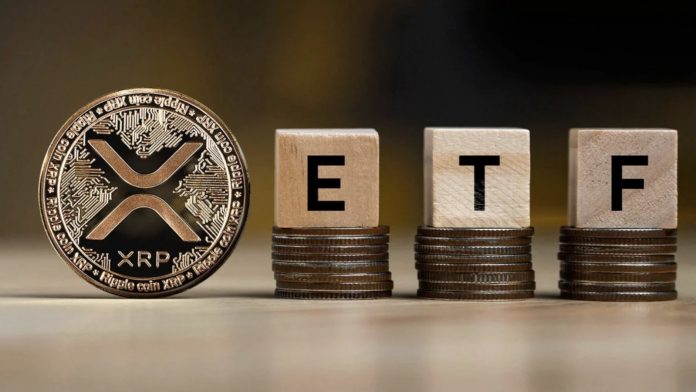
U.S. Securities and Exchange Commission (SEC) has approved ProShares Trust to launch three XRP futures-based exchange-traded funds (ETFs) on April 30, 2025. These ETFs include the Ultra XRP ETF (2x leverage), the Short XRP ETF (-1x leverage), and the Ultra Short XRP ETF (-2x leverage). Unlike spot ETFs, these funds track XRP’s price movements through futures contracts, not direct ownership of the cryptocurrency.

They will be the second, third, and fourth XRP-tracking ETFs in the U.S., following Teucrium’s 2x Long Daily XRP ETF launched earlier in April 2025. ProShares’ separate application for a spot XRP ETF remains pending, alongside similar proposals from Grayscale, 21Shares, and Bitwise.

These ETFs (Ultra XRP ETF, Short XRP ETF, and Ultra Short XRP ETF) provide investors with leveraged and inverse exposure to XRP’s price movements without directly holding the cryptocurrency. This broadens access for institutional and retail investors who prefer regulated investment vehicles over crypto exchanges.

The introduction of 2x leveraged and inverse ETFs could amplify XRP price swings. Leveraged ETFs are designed for short-term trading, attracting speculators and potentially increasing volatility, especially in a market already sensitive to regulatory and legal developments. The approval reinforces the SEC’s willingness to greenlight futures-based crypto ETFs, which it views as less risky than spot ETFs due to their regulation under the Investment Company Act of 1940. However, the pending status of ProShares’ spot XRP ETF suggests continued regulatory caution regarding direct crypto exposure.

The launch of these ETFs further validates XRP as a mainstream financial asset, especially after Ripple’s legal battles with the SEC. It could boost investor confidence and drive demand, potentially supporting XRP’s price and Ripple’s cross-border payment solutions. With Teucrium’s 2x Long Daily XRP ETF already trading, ProShares’ offerings intensify competition among ETF providers. The variety of leveraged and inverse options may spur innovation in crypto-linked financial products, though it also raises concerns about investor education given the complexity and risks of these instruments.

The Short XRP ETF and Ultra Short XRP ETF enable easier betting against XRP’s price, which could introduce downward pressure, particularly during market downturns or negative news cycles. While the ETFs don’t directly impact Ripple’s SEC lawsuit, their approval may signal a softening regulatory stance, potentially influencing future rulings or settlements. A favorable resolution could further propel XRP’s market position.

Investors should note the high-risk nature of leveraged and inverse ETFs, which are prone to significant losses in volatile markets. The broader crypto market may also watch closely for any spillover effects on other altcoins awaiting ETF approvals.

Ripple has built an extensive network of partnerships with financial institutions, banks, payment providers, and governments across 55+ countries to enhance cross-border payments and blockchain adoption. These collaborations leverage Ripple’s technology, including RippleNet, the XRP Ledger (XRPL), and its native cryptocurrency XRP, to enable faster, cheaper, and more transparent transactions.

Santander: Uses RippleNet with American Express to power real-time, trackable cross-border payments for businesses between the U.S. and U.K., streamlining transactions and reducing costs. Bank of America explores blockchain-based settlements with Ripple to enhance interbank payment efficiency, signaling institutional trust in Ripple’s tech.

Kotak Mahindra Bank and IndusInd Bank (India) adopt Ripple’s solutions to reduce costs and improve speed for international transfers, tapping into India’s massive remittance market. National Bank of Fujairah (UAE) partners with Ripple to connect with India’s IndusInd Bank for faster, cost-efficient remittances.

DZ Bank (Germany) integrates Ripple’s custody solutions via Metaco (acquired by Ripple in 2023) to offer secure digital asset services. SBI Holdings (Japan) is a long-standing partner, SBI uses Ripple’s tech for cross-border payments and has launched MoneyTap, a Ripple-powered app for domestic transfers. SBI also supports XRP on its exchange.

MoneyGram: Utilizes XRP via Ripple’s On-Demand Liquidity (ODL) for faster, cheaper global transfers, significantly reducing operational costs. Tranglo (Asia) is a major cross-border payment hub, Tranglo uses Ripple’s tech to facilitate rapid fund transfers across Asia, enhancing liquidity.

Onafriq (Africa): Partners with Ripple to open payment corridors between Africa and global markets, boosting crypto-powered remittances. Clear Junction (UK/EU) facilitates instant GBP and EUR payouts for Ripple’s customers, with plans to add more currencies, strengthening European payment infrastructure. Bitso (Latin America) uses Ripple’s ODL to improve remittance flows, making transfers faster and more cost-effective.

Ripple collaborates with 10 governments to develop Central Bank Digital Currencies (CBDCs) using its blockchain tech. Notable partnerships include: Royal Monetary Authority of Bhutan: Leverages Ripple’s CBDC platform to promote financial inclusion and digital transactions.

Saudi Central Bank (SAMA): Tests Ripple’s tech for modernizing remittances. Bank of Thailand: Assesses Ripple’s Distributed Ledger Technology (DLT) for cross-border settlements. National Bank of Georgia: Pilots the Digital Lari to enhance payment efficiency and inclusivity. Banco de la República (Colombia): Explores blockchain for high-value payment systems. These partnerships position Ripple as a leader in CBDC development, aligning with global trends toward digital currencies.

Ripple’s USD-backed stablecoin, RLUSD, is supported by major exchanges like Uphold, Bitstamp, Bitso, MoonPay, Independent Reserve, CoinMENA, and Bullish, ensuring global liquidity and compliance. RLUSD integrates with XRP for cross-border payments, enhancing transaction efficiency.

Ondo Finance: Partners with Ripple to bring tokenized U.S. Treasuries (OUSG) to the XRPL, backed by BlackRock’s BUIDL fund, enabling 24/7 minting and redemption with RLUSD. This strengthens XRPL’s role in institutional tokenization.

Airwallex (Australia): Uses Ripple’s tech for efficient global money transfers, serving businesses with high-speed transactions. LianLian (China): Facilitates rapid cross-border remittances, reducing delays and fees. World Economic Forum recognizes Ripple as a blockchain innovator, endorsing its potential to revolutionize finance.

Partnerships with major banks like Santander, Bank of America, and DZ Bank validate XRP’s utility, encouraging institutional investors to engage with XRP futures on CME’s regulated platform. This aligns with the 141% surge in CME’s crypto futures trading volume in Q1 2025. Ripple’s ODL system, used by partners like MoneyGram and Bitso, relies on XRP as a bridge currency, increasing its real-world demand. Futures will provide a hedging mechanism for these partners, enhancing market stability and liquidity.

The futures launch, coupled with Ripple’s extensive banking network, strengthens the case for an XRP spot ETF. Partnerships with regulated entities like BlackRock-backed Ondo Finance signal growing traditional finance integration, a key SEC requirement for ETF approval. Ripple’s presence in 55+ countries, covering 90% of global FX volume, ensures XRP’s relevance in diverse markets. Futures will enable traders worldwide, including retail investors via Robinhood, to capitalize on XRP’s growth in these regions.

Collaborations with central banks and compliance-focused partners (e.g., RLUSD’s New York Trust Company Charter) mitigate regulatory risks, making XRP futures more appealing to cautious investors. The partnerships drive XRP adoption, potentially pushing its price toward analyst targets of $3+ by mid-2025. Futures trading could amplify this momentum, especially if ETF approval follows.

Ripple’s partnerships with global banks, payment providers, and central banks underscore XRP’s growing role in cross-border payments and blockchain innovation. These collaborations enhance the significance of CME’s XRP futures and ProShares XRP ETF launch by driving institutional trust, liquidity, and potential ETF prospects. With over 200 partners across 55+ countries, Ripple’s ecosystem positions XRP as a cornerstone of modern finance, likely amplifying the futures’ impact on price, adoption, and market stability.

Several Critical U.S. Economic Indicators Are Scheduled For Release This Week

0

This week, several critical US economic indicators are scheduled for release, providing insights into inflation, economic growth, and labor market conditions. The PCE Price Index, the Federal Reserve’s preferred inflation gauge, is set to be released on Wednesday, April 30, at 8:30 AM ET, alongside Personal Income data. Analysts expect the March core PCE (excluding food and energy) to decelerate from February’s figures, though February’s data may be revised upward.

Headline PCE is projected to remain flat month-over-month but rise 2.6% year-over-year, with core PCE also expected to increase by 0.5% monthly and 2.6% annually. This release will be closely watched for signs of inflation trends, as it influences Fed policy decisions. The advance estimate for Q1 2025 GDP will also be released on Wednesday, April 30, at 8:30 AM ET. Economic growth is anticipated to have slowed in Q1, potentially due to surging imports and trade policy uncertainties.

The Atlanta Fed’s GDPNow model estimates a -2.5% annualized growth rate as of April 24, though an alternative model adjusting for trade data suggests -0.4%. This follows Q4 2024’s 2.3% growth, which was driven by consumer spending but tempered by inventory drawdowns and external factors like hurricanes and strikes.

Employment: Key labor market data includes the ADP National Employment Report on Wednesday, April 30, at 8:15 AM ET, offering a private-sector payroll snapshot. The Job Openings and Labor Turnover Survey (JOLTS) is due Tuesday, April 29, at 10:00 AM ET, providing insights into labor demand. The Employment Cost Index, also on Wednesday at 8:30 AM ET, will shed light on wage pressures, a critical factor for inflation.

The comprehensive April jobs report, including nonfarm payrolls and unemployment rate, is expected later, on Friday, May 2, with Bank of America economists predicting a stronger-than-expected outcome despite emerging downside risks. These releases are pivotal for assessing the US economy’s trajectory amid trade policy shifts, inflation pressures, and labor market dynamics.

Markets will likely react to deviations from expectations, particularly in PCE and GDP, as they shape monetary policy outlooks. For real-time updates, check sources like the Bureau of Economic Analysis (bea.gov) or the Federal Reserve Bank of New York’s economic calendar. The upcoming releases of PCE, GDP, and employment data will have significant implications for US economic policy, markets, and global sentiment.

If core PCE exceeds expectations (e.g., above 2.6% year-over-year), it could signal persistent inflation, reducing the likelihood of Federal Reserve rate cuts in 2025 and potentially prompting tighter policy. A lower-than-expected reading might bolster expectations for easing, supporting economic stimulus. Higher PCE could pressure bond yields upward and weigh on equities, especially growth stocks. A softer reading may boost risk assets and weaken the US dollar.

Elevated inflation erodes purchasing power, potentially curbing consumer spending, a key GDP driver. A weaker-than-expected Q1 GDP (e.g., near or below -0.4%) could heighten concerns about a slowdown, especially amid trade policy uncertainties like tariffs. Stronger growth would signal resilience, supporting confidence in fiscal and monetary strategies.

Poor GDP figures may trigger equity sell-offs and safe-haven flows to bonds or gold. Robust growth could lift stocks but raise inflation fears, impacting Fed expectations. Weak US growth could dampen global demand, affecting export-driven economies, while strong growth might stabilize international markets.

Strong employment data (e.g., high ADP payrolls or low job openings with rising wages in the Employment Cost Index) could reinforce inflation concerns, delaying rate cuts. Weak data might signal labor market cooling, supporting dovish Fed policies. A robust jobs report could strengthen the dollar and equities but raise bond yields. Soft data may weaken risk assets and increase volatility. Strong labor metrics bolster household income and spending, while weakening data could curb investment and hiring.

The Fed will scrutinize these indicators for signs of stagflation (high inflation, low growth) or cooling pressures. A mix of high PCE, weak GDP, and strong employment could complicate policy, potentially leading to a hawkish stance. With tariff-related uncertainties (e.g., Trump-era proposals), weak GDP or employment could amplify concerns about trade disruptions, while strong data might mitigate fears.

Divergence from consensus estimates in any of these indicators could spark sharp market reactions, particularly in equities, bonds, and forex. As the US economy influences global markets, weak data could pressure emerging markets and commodity prices, while strong data might stabilize global growth expectations.

Investors and policymakers will focus on whether these indicators align with a soft landing or signal deeper challenges. Monitor real-time market reactions and Fed commentary post-release for clarity on policy shifts.