DD
MM
YYYY

PAGES

DD
MM
YYYY

spot_img

PAGES

Home Blog Page 1451

Trump’s Trade War Threatens Global Financial Stability, IMF Warns Amid Rising Market Volatility

0

The International Monetary Fund has warned that President Donald Trump’s escalating trade war, anchored by waves of tariff impositions, could unravel the fragile financial stability that has cushioned the global banking system since the 2008 financial crisis.

In a report released Tuesday during its Spring Meetings with the World Bank in Washington, the IMF underscored that the tit-for-tat tariff exchanges, particularly between the United States and China, have jolted markets across continents, sparking sharp repricing of assets and a spike in volatility across equities, currencies, and bonds.

While the latest round of tariffs was announced earlier this month, its shockwaves are still being measured in the global financial system.

“Global financial stability risks have increased significantly,” the IMF said. The agency warned that some financial institutions, particularly those operating with high leverage, could face strain in the event of further selloffs triggered by deepening geopolitical tensions.

Although the immediate market reaction to the April 2 tariff announcements was “abrupt,” IMF Monetary and Capital Markets Department head Tobias Adrian stressed that it was not yet disorderly. But the risks are becoming too large to ignore.

“If things go very badly,” Adrian said, “we may end up in a concerning place from a financial stability point of view.”

Global Fallout from U.S. Tariffs

The broader consequences of Trump’s aggressive trade stance are already being felt across major economies. Tariffs on steel, aluminum, semiconductors, and other critical sectors have not only hurt Chinese exporters but also disrupted supply chains spanning Europe, Latin America, and Southeast Asia. Many developing nations, whose economies rely heavily on manufacturing inputs or exports to U.S.-linked markets, have reported declines in growth forecasts and foreign investment inflows.

The European Union has threatened retaliatory tariffs, while countries like Germany—Europe’s industrial powerhouse—have seen factory orders weaken under pressure from uncertainty and reduced demand. In Asia, South Korea, Japan, and Taiwan are facing renewed risks in their high-tech and auto sectors, sectors deeply entangled with both American and Chinese trade flows.

Even in the U.S., the tariffs have introduced inflationary pressure by raising costs for imported goods. American manufacturers and farmers, once at the core of Trump’s support base, have been among the hardest hit. The American Farm Bureau reports that retaliatory tariffs by China and others have led to a significant drop in agricultural exports. Meanwhile, businesses report that supply chain disruptions are increasing operational costs, which are being passed on to consumers.

Strain on Financial Institutions

The IMF’s report highlighted that the financial system, though more resilient today than in 2008, is not immune to these shocks. As valuations begin to adjust, particularly in heavily exposed markets, institutions that rely on leverage to boost returns are at risk.

“A normalization of asset prices could trigger significant losses for some institutions, especially those with aggressive investment strategies,” the report noted.

Of particular concern is the “basis trade”—a popular but risky arbitrage strategy used by hedge funds to profit off mispricings in U.S. government bonds. The IMF has long flagged this trade as a potential source of systemic instability. Adrian noted that there has been some unwinding of these positions, but so far, “it’s pretty contained.”

Still, the message is clear: if political brinkmanship continues unchecked, markets could rapidly shift from volatile to unstable.

Central Banks on Alert

The IMF urged central banks and financial regulators to be proactive. “Authorities should prepare to deal with financial instability by ensuring that financial institutions are ready to access central bank liquidity facilities and by being prepared to intervene to address severe liquidity or market function stress,” the report advised.

Banks are better capitalized today, thanks to post-crisis reforms like Basel III. But the IMF warned against complacency.

“We must ensure the timely and full implementation of all agreed financial reforms,” the report said, adding that capital buffers alone might not be enough in the face of rising interconnectedness between banks and nonbanks, including insurers, hedge funds, and private credit lenders.

The IMF is also watching for any signs of disorderly liquidations across these interconnected institutions—any of which could ignite a cascade across the global financial network.

Trade War in a Geopolitical Pressure Cooker

Beyond tariffs, the IMF warned of the risks posed by overlapping geopolitical tensions. The prolonged Russian invasion of Ukraine has continued to distort energy markets, while the conflict in Gaza adds another layer of geopolitical uncertainty. Each flare-up compounds market nervousness and increases the likelihood of a major market correction.

The Bank of England added its voice to the chorus earlier this month, cautioning that the trade war and geopolitical instability “could harm financial stability by depressing growth.”

For now, financial markets have avoided full-blown panic. There have been no institutional failures, and global recession fears have not materialized. But that balance is increasingly fragile. Investors and policymakers are watching Trump’s next moves. One misstep in trade negotiations or further escalation of tariffs could send the world’s financial system into unfamiliar territory.

Tobias Adrian remains hopeful that tensions may ease, offering a path back to stability. “There’s also a possibility that there’s some resolution of those tensions,” he said.

However, the IMF is advising economies not to take chances. Its advice: stay vigilant, be prepared, and don’t assume the system is shockproof. This is because as the Trump administration barrels forward with its combative trade agenda, the global economy could soon be tested in ways it hasn’t been since the collapse of Lehman Brothers.
3 Cryptos That Could Deliver 100x In Q2 2025, According To Analyst Forecasts

0

As the crypto market regains some of its lost vigor, some analysts predict that altseason is on the horizon. Historically, these breakouts have delivered massive returns for astute investors who identified breakout gems at the right time.

With Bitcoin inching closer to $90k, optimism around innovative cryptos is growing. Besides, Q2 is shaping up to be a pivotal window for these high-growth cryptos.

Among the standout predictions are three altcoins that analysts say could deliver 100x returns. Toncoin (TON), Berachain (BERA), and RCO Finance (RCOF) combine cutting-edge technology, unique ecosystems, and growing institutional adoption. Thus, they position themselves as some of the most promising picks of this quarter.

100x Cryptos to Watch: TONCOIN (TON), The Telegram-Backed Giant With Undervalued Strength

Toncoin, the native token of The Open Network, originally developed by Telegram, benefits from its association with Telegram’s extensive global user base of nearly 1 billion monthly active users. This built-in audience provides this crypto with a significant advantage in terms of potential adoption and utility.

Analyst forecasts are bullish on Toncoin’s 100x potential because it bridges social connectivity and blockchain technology, unlocking massive adoption opportunities.

TON utilizes advanced sharding mechanisms to process transactions at unparalleled speed while maintaining decentralization. With fast throughput, TON can achieve lightning-fast transaction speeds, making it hold its own against top Layer-1 blockchains. Sharding also minimizes congestion, ensuring seamless scalability as user demand grows.

Analyst forecasts indicate increasing investor confidence in Toncoin’s huge adoption potential, supported by its Telegram connection, positioning it for explosive growth in Q2 2025. Its undervalued price provides a unique opportunity for investors to capitalize before mainstream recognition revs.

Berachain (BERA): The Modular Chain Revolutionizing Liquidity and Staking

Berachain is redefining liquidity provision and decentralized finance with its modular blockchain architecture, making it one of the most innovative 100x cryptos in the market today. Its advanced technology and unique approach to staking have positioned Berachain as a strong player in the rising GameFi sector.

Berachain’s proprietary Proof of Liquidity (PoL) consensus model is a groundbreaking innovation that helps users lock up liquidity to secure the network, earning rewards in return. PoL ensures that the blockchain remains operational and robust by incentivizing liquidity directly from participants.

The platform is optimized to support GameFi applications, one of the fastest-growing sectors in the blockchain space.  Analyst forecasts show that Berachain is strategically positioned to capture a significant share of this expanding market in Q2 2025.

RCO Finance (RCOF): The 100x AI Crypto That Could Surpass Them All

RCO Finance is an AI-driven altcoin aiming to democratize access to sophisticated investment strategies. It utilizes AI machine learning to simplify the complexities associated with crypto trading and navigating financial markets, making advanced tools readily available to retail investors.

The robo-advisor is at the heart of this investment revolution. This tool provides personalized investment guidance, crafting custom strategies based on your user preferences and market conditions. This personalization ensures even beginners with no prior experience can create profitable portfolios.

This tool also offers data-backed insights to ensure you make smarter choices while providing automatic trade executions and portfolio management.

This crypto provides practical utility through its integration of real-world assets like ETFs, real estate, commodities, and more. This inclusion opens new investment avenues, enabling easier portfolio diversification.

Its KYC-free ecosystem promotes inclusivity while maintaining user privacy. Its smart contracts and infrastructure have been rigorously audited by SolidProof, ensuring that they are safe, robust, and free of vulnerabilities.

Drawing Institutional Interest

RCO Finance has attracted significant institutional interest, securing $7.5M in venture capital funding and raising over $17M in its presale so far. This investment validates RCOF’s long-term roadmap and scalability, making it one of the most sought-after presale tokens of Q2 2025. This investment could trigger a sharp rise in interest in this altcoin.

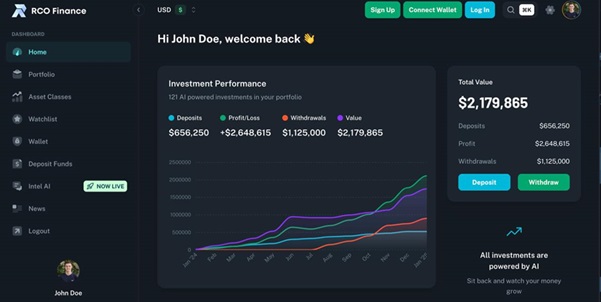
Its beta platform has pushed RCOF into the limelight, showing its ability to deliver user-friendly and valuable solutions. Analyst forecasts show over 285,000 users have already been onboarded, indicating high market interest. It has been fueled by features like its smart portfolio management, demo trading environments, multiple wallet management, and instant deposits, which streamline the investment process.

Looking ahead, this crypto has an ambitious roadmap of upcoming features, including an AI-powered simulated trading, a demo trading leaderboard, an AI trading indicator, crypto-funded demo trading, and expansion to support trading in traditional asset classes like stocks.

Capitalize on RCOF’s Hidden 100x Opportunity

With its cutting-edge AI tools, institutional validation, and rapidly growing ecosystem, RCO Finance (RCOF) is emerging as a must-watch altcoin in Q2 2025. Its ability to combine innovation and scalability makes it a strong contender for delivering 100x returns alongside Toncoin and Berachain.

Analyst forecasts show that this crypto’s cutting-edge AI-powered tools, seamless real-world asset integration, and overwhelming beta platform success have given it a leg up over TON and BERA. With the presale still underway and tokens going for $0.13, this is the best time to act. Stage 6 just started, and over 40% of the tokens have been sold.

Investors are buying up this token, so don’t miss your chance to secure your stake too. Invest in RCOF today and capitalize on the chance for 100x returns in Q2 2025.

For more information about the RCO Finance (RCOF) Presale:

Visit RCO Finance Presale

Join The RCO Finance Community

Intel to Slash More Than 20% Workforce Amidst Restructuring

0

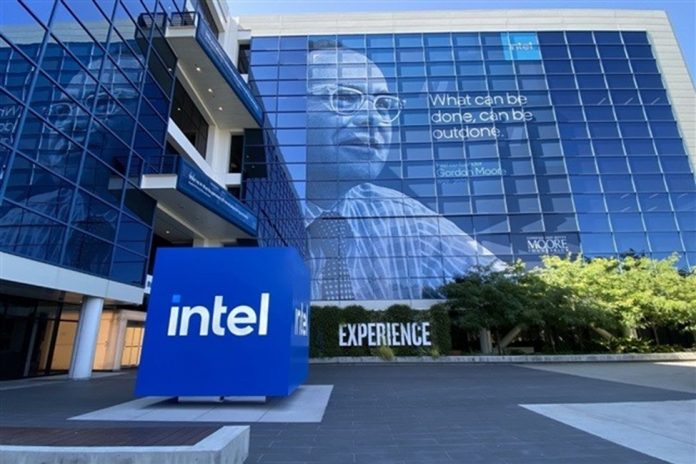
American International corporation and technology company Intel has announced plans to slash more than 20% of its workforce.

The upcoming layoffs according to Bloomberg, is part of CEO Lip-Bu Tan’s broader plan to build an engineering first culture, and restructure its balance sheet, in the light of growing competition from Nvidia and TSMC.

The move follows a challenging period for Intel, which has seen its stock plummet 67% over five years and lost technological ground to rivals like Nvidia in AI computing. The company reported three consecutive years of declining sales and mounting losses. In line with this, last year, the company cut approximately 15,000 jobs, reducing its workforce from 124,800 to 108,900 by year-end.

This drastic measure was driven by declining revenue, increased competition, and the need to reduce costs. The layoffs impacted various departments, including research and development, sales, and marketing.

Tan, who was appointed as Intel Chief Executive Officer in March 2025, is streamlining operations by having key chip groups report directly to him and rethinking Intel’s AI strategy. The restructuring includes shedding non-core assets, exemplified by last week’s $4.46 billion deal to sell a 51% stake in its Altera programmable chips unit to Silver Lake Management. The deal, which values Altera at $8.75 billion half the $17 billion Intel paid in 2015, provides critical cash after costly investments in contract manufacturing under former CEO Pat Gelsinger.

The layoffs and strategic pivot aim to address Intel’s bloated middle management and regain competitive edge. The announcement follows report of Tan’s efforts to flatten leadership and refocus the company on compelling, innovative products.

According to analysts, changes to Intel’s executive management team by the new CEO, after just over a month on the job, is proof of the sense of urgency in the company to act quickly to compete with rivals Nvidia, AMD, and TSMC. Despite being a dominant player in many markets, Intel is currently facing strong competition and numerous threats to its business.

The company is now trailing behind Nvidia, which is currently dominating the AI market, particularly in high-end training models, meanwhile, Intel has an advantage with AI accelerated CPUs for inference-based AI. Intel’s Habana acquisition also provides a custom AI chip (Gaudi) that competes with Nvidia’s A100 family. Low-end AI embedded accelerators in ARM-based systems may serve the lower end of the market, but Intel is expected to capture a significant share of the overall AI market.

While Intel has produced quality software for years and made significant contributions to industry initiatives, it will have to work hard to be perceived as a competitive enterprise-level software provider. Nevertheless, this area represents a revenue growth area if Intel can be successful.

Intel has been lagging behind in process technology, but is pursuing a “catch up and surpass” strategy by opening its production facilities to outside chip companies. While it has signed high-profile companies, such as MediaTek, it remains to be seen how competitive it can be against TSMC, GlobalFoundries, Samsung, and others.

To sum up, Intel faces several challenges in maintaining or recapturing market share, but it is effectively pushing back in several key areas. While it may take a few years before all of its efforts bear fruit, analysts are optimistic Intel is in a better position now than before.

Apple, Meta Fined Over $700m Under EU’s Digital Markets Act Amid Rising Transatlantic Tech Tensions

0

Apple and Meta have become the first companies to be fined under the European Union’s Digital Markets Act (DMA), in a landmark ruling that has reignited transatlantic tensions and drawn renewed accusations of political retaliation cloaked in antitrust enforcement.

The European Commission on Tuesday announced that Apple would pay a €500 million (approximately $570 million) fine for violating the DMA’s rules through its App Store restrictions, while Meta faces a €200 million (about $230 million) penalty over its controversial ‘pay or consent’ advertising model on Facebook and Instagram.

The Commission said both companies have 60 days to comply or face ongoing penalties that could significantly escalate. Apple and Meta have both indicated they will appeal the decisions, with Apple condemning the ruling as “unfair” and “dangerous for user privacy,” and Meta accusing the Commission of imposing what amounts to a “multi-billion-dollar tariff” on American companies.

But beyond the legal wrangling and corporate protests, the fines are being interpreted by some analysts and observers as a deeper political move — a form of economic retaliation from the EU, years in the making, in response to former President Donald Trump’s tariffs on European goods.

Europe’s Long-Memory Politics and the Big Tech Bullseye

The EU has long signaled it would not stand idle in the face of what it views as protectionist measures from Washington. When the Trump administration imposed sweeping tariffs on European steel, aluminum, and other goods during his first term, European officials publicly vowed to respond not just through direct countermeasures, but by stepping up enforcement against dominant American firms operating in Europe. Brussels’ regulatory focus turned sharply toward Big Tech, with repeated threats and formal investigations into Apple, Meta, Google, and Amazon following closely.

In essence, critics of the Commission’s latest moves argue the fines are more than legal punishments — they’re political signals aimed at Washington, particularly at Trump’s administration, which has found common cause with CEOs of Silicon Valley’s most powerful firms. Trump’s support for Apple and Meta, as well as his vocal disdain for the EU’s “anti-American” tech policies, has only deepened this perception.

Inside the Penalties

Apple was found guilty of blocking app developers from informing users about alternative payment methods or linking to external websites where subscriptions and services could be purchased at lower costs — a practice known as “anti-steering.” The Commission said this behavior “undermined user choice” and limited fair competition, directly contravening the DMA, which came into force in May 2023 to curtail the monopolistic tendencies of so-called “gatekeeper” companies.

Apple, however, insists its measures are grounded in user protection. “We have spent hundreds of thousands of engineering hours and made dozens of changes to comply with this law,” said Apple spokesperson Emma Wilson. “The Commission continues to move the goalposts… We will appeal and continue engaging in service of our European customers.”

Meta, meanwhile, was fined for offering EU users only two options on Facebook and Instagram: pay for an ad-free experience, or consent to tracking and data harvesting to continue using the platform for free. The Commission determined that this “take-it-or-leave-it” model violates the DMA’s requirement for real, meaningful user choice in how their data is processed.

Meta’s top policy official, Joel Kaplan, fired back. “The Commission forcing us to change our business model effectively imposes a multi-billion-dollar tariff on Meta while requiring us to offer an inferior service,” he said. “This isn’t just about a fine. It’s about hurting American companies under the guise of fairness.”

Mounting Frustration in Washington

Washington has taken note. President Trump, who has previously described the EU’s antitrust crusade as “economic warfare,” has reportedly raised the issue in private discussions with European leaders. American tech lobbyists have also warned that the DMA and its enforcement mechanisms — risk becoming a de facto revenue generator for the EU at the expense of Silicon Valley.

Last year, the Financial Times reported that the European Commission was weighing a shift in tone — softening its aggressive approach amid pressure from US officials. But the fines issued this week suggest Brussels has instead chosen to double down on enforcement, even as concerns about transatlantic trade tensions escalate.

The maximum penalties under the DMA are steep: up to 10 percent of a company’s global turnover for a first offense, and 20 percent for repeat violations. For Apple, that could translate to more than $39 billion, and for Meta, around $16 billion. Though the fines announced on Tuesday are well below these thresholds, the message is unmistakable.

A Broader Crackdown Looms

The Commission is not stopping with Apple and Meta. Alphabet, the parent company of Google, is currently under investigation for allegedly favoring its own services in search results and employing similar “anti-steering” measures within its Google Play app store. Amazon and Microsoft, also designated as gatekeepers under the DMA, are expected to face fresh scrutiny as enforcement efforts expand.

While Apple and Meta prepare their appeals, and Brussels readies more enforcement action, the fight over the future of the internet, and who controls it, has become entangled with deeper geopolitical currents.

At the heart of the battle is a question that now extends far beyond app stores and advertising models: who writes the rules for the digital economy — Silicon Valley or Brussels? For Europe’s regulators, the answer is increasingly clear. For US tech giants and their most powerful backer in the White House, the verdict is one they are determined to contest.

IMF Forecasts 37% Inflation in 2026 for Nigeria, Shatters Govt.’s $1tn Economy Ambition

0

The International Monetary Fund (IMF) has thrown cold water on Nigeria’s economic ambitions with its latest World Economic Outlook, projecting average inflation of 26.5% in 2025—more than 11 percentage points higher than the Nigerian government’s own optimistic estimate of 15% in its 2025 budget.

The report not only exposes the deep chasm between Abuja’s fiscal assumptions and economic reality but also calls into question the credibility of the much-trumpeted goal of transforming Nigeria into a $1 trillion economy by 2030.

In a report that spans inflation forecasts, GDP performance, and current account projections, the IMF paints a sobering picture of a country weighed down by painful reforms, external vulnerabilities, and a shrinking economic base. Inflation, it warns, may slow temporarily due to the recent rebasing of the Consumer Price Index (CPI), but this relief is superficial. By 2026, inflation is expected to spike again to 37%, highlighting the fragility of the current easing.

The gulf between the IMF’s projection and the federal government’s 15% inflation estimate is not a rounding error. It reflects a fundamental mismatch between policy expectations and economic outcomes—and one that could derail the assumptions underpinning next year’s federal budget.

The Vanishing Economy: GDP Halved in Two Years

Perhaps the most striking revelation is not just the inflation rate, but the massive collapse in the size of Nigeria’s economy, largely triggered by the floating of the naira and removal of petrol subsidies in 2023. While both moves were initially praised by international institutions for ending costly distortions, their immediate economic effect has been devastating.

According to the IMF’s figures, Nigeria’s GDP stood at $363.82 billion in 2023. But by 2025, that number is projected to fall to $188.27 billion—a staggering 48.3% decline in just two years. Such a contraction is unprecedented outside of wartime economies or states in financial meltdowns.

This collapse in dollar-denominated GDP is not just a statistical artifact. It reflects a real and painful erosion in the value of the naira, capital flight, reduced foreign investment, and a decline in real incomes. It also means Nigeria has slipped to the fourth-largest economy in Africa, behind South Africa, Egypt, and now Algeria—countries that, until recently, lagged behind in nominal terms.

Despite assurances from the government that these reforms would “unlock growth,” the short-term result has been a shrinking economy, worsened inequality, and rising poverty. The administration’s hopes of achieving a $1 trillion economy within the next five years now seem fanciful, if not outright delusional, unless there’s a dramatic turnaround in both policy execution and investor sentiment.

Inflation Masked by Technical Revisions

The recent rebasing of Nigeria’s CPI, from a 2009 base year to 2024, offered momentary cosmetic relief. Headline inflation, which stood at 34.80% in December 2024, appeared to drop sharply to 24.48% in January 2025, and slightly further to 23.18% in February. But by March, it had crept back up to 24.23%, signaling that the root causes—rising food costs, high logistics prices, and weak supply chains—remain unresolved.

Food inflation in particular has proven stubborn, driven by insecurity in farming regions, rising global food import bills, and the naira’s depreciation. The Central Bank of Nigeria (CBN) has tried to rein in inflation by keeping the Monetary Policy Rate (MPR) at 27.5%, but this has further tightened credit and stifled economic activity, especially for small businesses.

Current Account Surplus at Risk

While the balance of payments turned positive in 2024, helped by a current account surplus of 9.1% of GDP and a trade surplus of $13.17 billion, the IMF warns that this may not be sustained. It forecasts the surplus will fall to 6.9% in 2025 and 5.2% in 2026, reflecting the volatility of oil prices and the sluggish pace of structural reforms.

JP Morgan has cautioned that oil prices dipping below Nigeria’s fiscal breakeven of $60 per barrel could plunge the current account back into deficit. Fitch Ratings, meanwhile, remains more optimistic, forecasting a moderate surplus averaging 3.3% of GDP through 2026, contingent on successful energy sector reforms and the operationalization of key refinery projects, particularly Dangote’s.

Growth with No Gains: Per Capita Output Nearly Flat

The IMF revised Nigeria’s real GDP growth down to 3.0% in 2025 and 2.7% in 2026. But more critically, real per capita income is expected to rise by just 0.6% in 2025 and 0.3% in 2026. These marginal increases underscore the growing inequality in the country: while macro indicators may show mild improvement, the average Nigerian is getting poorer in real terms.

This stagnation in individual income is one reason why the Fund has urged Nigeria to go beyond headline reforms and address deep structural bottlenecks—from poor infrastructure to inefficient state enterprises and weak fiscal governance.

To its credit, the IMF acknowledges Nigeria’s recent reform efforts. It praises the end of central bank deficit financing, the unification of exchange rates, and the removal of petrol subsidies. However, it stresses that these are only first steps, and that failure to build on them with institutional reforms, fiscal discipline, and investment in human capital could see the country slide further behind its peers.

In this context, the government’s projection of a return to 15% inflation by 2025 seems less like a goal and more like a talking point. The reality, according to the IMF, is that Nigeria’s economic fundamentals remain weak, and unless major structural changes are made, both inflation and poverty will continue to worsen.