DD
MM
YYYY

PAGES

DD
MM
YYYY

spot_img

PAGES

Home Blog Page 1484

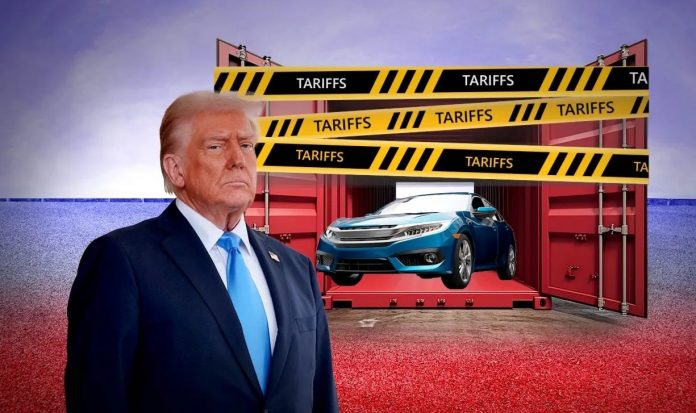
Trump Warns U.S. Automakers Not To Raise Prices As His 25% Tariff On Cars And Auto Parts Takes Effect

0

In his characteristic style of deal-making and economic brinkmanship, President Donald Trump has issued a blunt warning to some of America’s top automakers: do not raise car prices.

According to WSJ, in a recent call with industry leaders, Trump warned them not to raise car prices in response to his newly imposed 25% tariff on imported vehicles and auto parts, which will take effect on April 2.

He said the White House would take a dim view of any price hikes blamed on the tariffs. The president sought to reassure the executives, saying they should be grateful for his decision to roll back what he called Biden’s “electric-vehicle mandate”, which he argued had been an unnecessary burden on the industry.

“The tariffs will be great,” Trump said during the call, according to one of the participants who spoke to WSJ. He pitched the policy as a move that would strengthen American manufacturing and insisted that rather than complain about increased costs, automakers should view his tariffs as a positive development for the industry.

“You’re going to see prices going down, but going to go down specifically because they’re going to buy what we’re doing, incentivizing companies to—and even countries—companies to come into America,” Trump said publicly at an event announcing the tariffs.

But while Trump framed the tariffs as a way to rebuild American industry, the reaction from automakers was far less enthusiastic. Some executives left the call rattled and frustrated, worried about what form of “punishment” the administration might pursue if they increased prices anyway.

Automakers Have No Choice but to Raise Prices

Despite Trump’s warning, the reality is that automakers cannot absorb the costs of the tariffs without passing them on to consumers. Many American-made vehicles still rely heavily on foreign parts and raw materials, meaning that even domestic production will see significant cost increases.

“Tariffs, at any level, cannot be offset or absorbed,” wrote Ray Scott, CEO of Lear, a major auto parts supplier, in an email to employees. “A holistic, industrywide approach will be necessary to mitigate the impact.”

The financial consequences of Trump’s move are already being calculated. Analysts at Morgan Stanley predict that vehicle prices could rise by 11% to 12% to offset the tariffs. Automakers are preparing for this reality, stockpiling a two- to three-month supply of new cars, but industry insiders warn that by May, the impact will be unavoidable.

One auto executive, speaking anonymously, summed up the industry’s reaction saying: “The math would tell you, that’s going to cost us multibillions of dollars. So who pays for that?”

Trump’s insistence that automakers keep prices steady comes at a delicate political moment. Inflation has been a central issue in his administration, with voters increasingly concerned about the rising cost of living. Trump’s economic advisers are privately worried that tariffs will drive up consumer prices, even if Trump himself does not frequently address these concerns publicly.

“It is difficult to see how imposed tariffs over time would not have some impact on prices,” said Matt Blunt, president of the American Automotive Policy Council, which represents GM, Stellantis, and Ford.

Other industries have expressed similar concerns. Oil and gas executives from the American Petroleum Institute have warned Trump that tariffs could push gasoline prices higher, particularly in the Midwest. Although gas prices have slightly declined since Trump took office, according to AAA, analysts say that prolonged trade restrictions could reverse that trend.

The food industry is also bracing for higher costs. White House officials say that food companies have argued that tariffs will drive up prices on products Americans rely on, further complicating Trump’s strategy.

Even some of Trump’s usual allies in the business world are questioning his approach.

“Trump is obviously very fond of tariffs, but the American public dislikes higher prices as the 2024 election results clearly demonstrated,” said Clark Packard, a tariff expert at the Cato Institute.

Auto Industry Pushes Back

Rather than quietly accept Trump’s directives, automakers are mobilizing against the tariffs. Stellantis has already begun encouraging U.S. dealers to pressure lawmakers, warning that the policy favors European and Asian rivals at the expense of American manufacturers.

“We encourage you to contact your federal and state representatives to share your opinion on a matter that threatens to disrupt our business,” read an email Stellantis sent to dealers, which was viewed by The Wall Street Journal.

Many in the industry believe the tariffs could severely disrupt supply chains, making it harder for American automakers to compete globally. And while Trump argues that his policies will bring manufacturing jobs back to the U.S., experts warn that such shifts take years to materialize—far too long for automakers to absorb immediate tariff costs.

With the tariffs set to take effect on April 2, the next few months will determine whether automakers openly defy Trump’s warning. Many companies are already planning price increases, knowing that there is no realistic alternative.

The bigger question is how Trump will react if automakers refuse to comply with his demand. Could the White House use regulatory agencies as leverage against manufacturers who raise prices? Some fear government retaliation, given Trump’s history of targeting law firms, companies, and entire industries that do not align with his economic agenda.

As one industry insider put it, the situation is as much about politics as it is about economics: “Trump is telling us we can’t raise prices. But tariffs are a tax. So who’s going to pay for it? The consumer, or us?”

However, the auto industry appears determined to make its case, even as it braces for potential backlash from the White House. But if Trump’s tariffs lead to significantly higher vehicle prices in the months ahead, it may not just be automakers he finds himself at odds with—it could be the American consumer as well.


Customer Validation and Building What Customers Really Want – Ndubuisi Ekekwe

0

Join us today and let us have a conversation on customer validation and how to build what customers really want. In the grand scheme of business growth, any company which begins scaling without first attaining a product-market fit will waste money. Simply, you must have a validation before that growth pedal is pushed at scale.

I will take you to Oriendu Market Ovim to understand that ancestral Igbo proverb of “ahia oma na-ere onwe ya” which means that a great product will sell itself. It is not saying that you do not need to advertise. Rather, the proverb is saying that if the product is great, customers will come, and they will repeat, and they will recruit other customers, because great products create fandom.

Hahaha – that fandom is the validation as you must overcome the inertia customers face, to support your mission, by getting them to pay. Remember: customers are the greatest investors in any market system, and validating a product use-case will remain central in any entrepreneurial playbook. In my lecture, I will explain the mechanics of that validation, and how we can use the perception demand framework to win in markets.

Join us and pick a seat here for our next edition 

Sat, March 29 | 7pm-8.30pm WAT | Customer Validation and Building What Customers Really Want – Ndubuisi Ekekwe | Zoom link

European Commission to Invest $1.4bn in AI, Cybersecurity, and Digital Skills as EU Seeks Bigger Role in AI Race

0

The European Commission has announced a €1.3 billion ($1.4 billion) investment in artificial intelligence (AI), cybersecurity, and digital skills through the Digital Europe Programme for 2025 to 2027.

The move underscores the EU’s growing determination to strengthen its presence in the global AI landscape, where it has so far lagged behind the United States and China.

European Commission digital chief Henna Virkkunen described the initiative as a crucial step toward ensuring European tech sovereignty, emphasizing that investing in advanced technologies and improving digital competencies will be key to securing Europe’s digital future.

“Securing European tech sovereignty starts with investing in advanced technologies and in making it possible for people to improve their digital competences,” Virkkunen said.

The new funding signals a shift in strategy for the bloc, which has long been focused on regulating AI rather than leading its development.

EU Playing Catch-Up in AI Race

This investment is part of a broader effort to position Europe as a serious player in AI development, an area where the EU has struggled to compete with the massive funding and rapid advancements made by the United States and China. While Europe has led the charge in AI regulation with its AI Act, it has fallen behind in innovation and investment.

In contrast, the United States has been aggressively expanding its AI capabilities, pouring billions into cutting-edge AI infrastructure. One of the most notable investments was Stargate, a $500 million AI fund launched by President Donald Trump, which was aimed at strengthening America’s leadership in artificial intelligence. Additionally, the U.S. government has been actively working with private companies, investing in semiconductors, supercomputing, and AI models, all of which have contributed to the dominance of companies like OpenAI, Google DeepMind, and Anthropic.

China, meanwhile, has focused on cost-effective AI breakthroughs to maintain its lead. A prime example is DeepSeek, a powerful AI language model developed in China that rivals OpenAI’s ChatGPT but operates at significantly lower costs. The Chinese government has also ramped up investments in AI chips, computing clusters, and government-backed AI startups. Unlike the U.S., where private sector funding plays a dominant role, China’s AI expansion is heavily state-backed, allowing for aggressive scaling and strategic deployment of AI models across various industries.

EU’s Digital Europe Programme: A Renewed Commitment to AI and Cybersecurity

The €1.3 billion investment under the Digital Europe Programme marks a strategic shift in how the European Union approaches artificial intelligence. The funding suggests that the bloc is no longer content with simply being the global AI regulator—it wants to be a key contributor and competitor in the AI industry. The EU is now seeking to leverage its strengths in research, regulation, and digital infrastructure to carve out a significant share of the rapidly growing AI market.

The funding will be distributed across multiple areas. A significant portion will go toward AI development, supporting AI startups, research institutions, and enterprises working on cutting-edge AI solutions. This will help Europe develop homegrown AI models to rival those of the U.S. and China. Cybersecurity will also receive a boost, as AI systems become more widespread, increasing the risk of cyber threats and digital espionage.

Strengthening cyber defenses will be critical to protecting Europe’s digital economy. Another major focus will be digital skills training, as AI is expected to transform the job market. Investments will support training programs in AI, machine learning, and cybersecurity, ensuring that European workers are equipped to compete in the AI-driven economy.

Will Europe Catch Up?

As AI continues to reshape industries from finance to healthcare and defense, the global AI race is intensifying. The U.S. is leading with its massive tech investments, China is advancing with its cost-effective AI breakthroughs, and now Europe is finally stepping up with a significant funding push.

However, €1.3 billion is still a fraction of what the U.S. and China have poured into AI. To close the gap, tech analysts note that Europe will need more sustained investment, stronger public-private partnerships, and faster commercialization of AI research.

This latest funding move is seen as a step in the right direction, but only time will tell whether it will be enough to establish Europe as a true AI powerhouse.

Tekedia Capital Congratulates Portfolio Taxo for Raising $5 million

0

Tekedia Capital congratulates our portfolio company  Taxo (taxo.ai), a healthtech startup, for raising $5m. Taxo integrates with electronic health records (EHRs) to automate medical billing and coding. Its AI-powered solution reduces the time and cost of claims processing by over 90%, enabling providers to focus on patient care rather than administrative tasks.

The business of medicine is fascinating. Doctors, nurses and broad healthcare professionals are scientific miracle makers. Yet, they do suffer from a poor marginal cost regime, as it is one doctor per one patient, at a time, irrespective of the number of patients. Simply, if there are 30 people waiting for a doctor, a doctor has to deal with each one at a time. In business, that model is not easy to scale efficiently since you cannot easily scale supply to meet expanding demand.

So, how can we help doctors, nurses, etc to serve more and improve broad quality? Use technologies to handle the administrative tasks like billing, claim management , etc, so that those professionals can focus on their core missions.

On that premise, Tekedia Capital invested in Taxo to fix this friction as its technologies, used in Stanford Medicine, Boston Children’s Hospital and other key healthcare centers, accelerate productivity and evidential positive patient health outcome. To learn more about Tekedia Capital and join our next cycle, go here https://capital.tekedia.com/course/fee/

Find below the key dates for the next Tekedia Capital investment cycle.

Duration: April 7 – May 15, 2025

Startups Unveiling in Portal: April 7

Demo Day: April 26, 2025

Crypto Hubs in Nigeria Hold Immense Developmental Benefits

0

After years of oscillation—marked by the Central Bank of Nigeria’s (CBN) 2017 warnings and 2021 ban on banks facilitating crypto transactions—Nigeria has shifted toward a more structured approach. The CBN lifted the banking ban in December 2023, allowing financial institutions to engage with virtual asset service providers (VASPs) under guidelines. The Securities and Exchange Commission (SEC) followed with its Accelerated Regulatory Incubation Program (ARIP) in June 2024, mandating VASPs to register and comply with oversight. This pivot, as emphasized by Information Minister Mohammed Idris in early 2025, aims to regulate rather than restrict, fostering a predictable environment for crypto businesses while protecting consumers.

Crypto hubs in Nigeria—geographic or virtual concentrations of cryptocurrency activity, innovation, and infrastructure—hold immense potential to enshrine, or solidify, developments across economic, technological, and social spheres. As of March 24, 2025, Nigeria’s position as a global leader in crypto adoption (second on Chainalysis’ 2024 Global Adoption Index) and its evolving blockchain strategy provide a foundation for these hubs to drive sustainable progress. Here’s how they can amplify and embed developments in Nigeria.

Crypto hubs can anchor economic development by formalizing Nigeria’s massive crypto market—projected to hit $1.555 billion in revenue by the end of 2025 (Statista). Cities like Lagos, already a fintech epicenter with unicorns like Moniepoint, could evolve into crypto hubs by hosting exchanges, blockchain startups, and payment gateways. With 25.86 million crypto users (11% penetration) and 43.5% broadband access, hubs can extend financial services to the unbanked (over 30% of Nigerians), using mobile-based crypto wallets and stablecoins to bypass traditional banking barriers. Peer-to-peer (P2P) trading, where Nigeria ranks first globally, thrives in hubs.

Formalizing this via regulated exchanges could increase transaction volumes (e.g., $59 billion received July 2023-June 2024), channeling funds into local economies. Hubs can promote stablecoin use (40% of Sub-Saharan Africa’s stablecoin inflows) as a shield against Naira volatility (50% depreciation in 2023), stabilizing purchasing power and encouraging investment. Crypto hubs can enshrine technological progress by fostering a skilled workforce. Hubs could host over 20 exchanges e.g., Quidax, NairaEx, PeniWallet by SMCDAO and blockchain projects, employing hundreds in roles like smart contract development, auditing, and customer support—tackling youth unemployment (33.3% in 2021).

Initiatives like the National Blockchain Consortium could base training centers in hubs, teaching blockchain coding, DeFi mechanics, and crypto trading. This aligns with Nigeria’s 66% crypto interest in Africa (CoinGecko), upskilling a tech-savvy youth (median age under 20). By attracting venture capital—mirroring Asia’s hubs like Hong Kong—hubs could fund startups, embedding a culture of entrepreneurship. Moniepoint’s $1 billion valuation shows this potential. With hubs driving blockchain adoption (e.g., supply chain tracking), farmers could access finance via tokenized assets, addressing food security—a priority noted by the CBN. Lagos’ real estate tokenization plan (August 2024) sets a precedent.

The “Nigerium” blockchain, designed for data sovereignty, could be piloted in hubs, enhancing transparency in voting or public records, as per NITDA’s vision. Hubs can optimize Nigeria’s $205.7 million P2P remittance flow (H1 2021), cutting fees and boosting forex reserves, critical as oil weakens. Hubs could pilot SEC’s ARIP or CBN’s VASP guidelines, refining regulations (e.g., taxing crypto trades, as proposed in 2025). Success here could enshrine a balanced model—innovation-friendly yet secure—drawing lessons from Singapore. By hosting blockchain conferences or DeFi summits, hubs could position Nigeria as Africa’s crypto capital, attracting FDI and countering Gray List risks.

Post-Bybit hack ($1.5 billion, February 2025), hubs could lead cybersecurity innovation, developing local solutions like wallet encryption or fraud detection, reducing reliance on foreign tech. Though not a mining hub due to power constraints (Stears, 2021), hubs could leverage Nigeria’s renewable potential (e.g., solar) for blockchain nodes, supporting sustainable growth. Imagine Lagos as a crypto hub: Binance and local exchanges set up regulated offices, NITDA trains 10,000 developers, and Zone’s blockchain network processes bank settlements. A farmer in Kaduna tokenizes crops via a hub-backed dApp, while a freelancer in Abuja receives USDT payments instantly. Tax revenue funds rural broadband, deepening adoption. This ecosystem cements economic and tech gains

Binance’s $81.5 billion lawsuit (2025) shows enforcement gaps. Hubs need consistent rules to thrive. Unreliable power and internet (outside 43.5% broadband zones) could limit hub scalability. Rugs like Davido’s ‘ECHOKE’ and ‘DAVIDO’ coin require hubs to prioritize education and KYC to build credibility. Crypto hubs in Nigeria can enshrine developments by turning transient crypto enthusiasm into lasting economic and social infrastructure. By channeling adoption (second globally), hubs could make Nigeria a blueprint for Africa—merging financial inclusion, job growth, and blockchain innovation. Success demands collaboration between regulators, tech firms, and communities.