DD
MM
YYYY

PAGES

DD
MM
YYYY

spot_img

PAGES

Home Blog Page 1487

Jiji Expands Beyond Africa, Enters Bangladesh Booming E-Commerce Market

0

Jiji, one of Africa’s largest online marketplaces, is making its first expansion outside Africa, with a move into Bangladesh.

This decision marks a strategic shift from the company, as it aims to tap into the thriving Asian e-commerce market. With Bangladesh’s e-commerce industry projected to hit $13 billion by 2027, Jiji wants to capture its market share, replicating its successful marketplace model in the country.

In an email to TechCabal, a Jiji spokesperson said,

“With a solid financial foundation and a scalable business model, we have grown into a profitable leader in Africa’s e-commerce space. Our success in Africa has shown us how to navigate fast-growing markets, and we believe Bangladesh has the same potential for Jiji to thrive, helping to grow the e-commerce sector”.

Bangladesh E-commerce Market on The Rise

Reports reveal that Bangladesh’s e-commerce market is thriving, fueled by rapid digital transformation and increasing mobile connectivity.

The country is an emerging player in the Asia-Pacific e-commerce market, with over 125 million internet users, presenting a significant opportunity for online retail expansion. Despite being faced with challenges such as limited financial inclusion, the sector continues to expand at an impressive pace.

Bangladesh’s e-commerce market is shaped by a reliance on traditional payment methods and a strong preference for mobile shopping. According to data, the primary methods for e-commerce in Bangladesh, by share of volume are Cash on Delivery (75%), Digital Wallet (11%), Credit Card (8%), and Debit Card (6%).

Jiji, which currently operates in seven African countries, which include Nigeria, Ghana, Tanzania, Kenya, Senegal, Uganda, and Ethiopia, sees Bangladesh as a natural next step. However, its entry into the Asian country will see it compete with established players such as Bikroy, Daraz, Evaly (formerly active), Pickaboo, and AjkerDeal.

Founded in 2014 in Lagos, by Antin Volianskyi, the company entered a competitive e-commerce market in Nigeria, joining the likes of OLX, Jumia, and Konga. But soon after, it positioned itself as a major player.

In 2016, Jiji partnered with Airtel, a global telecommunications services company. This meant that customers of the Jiji site would not pay for data if they accessed the websites via the Airtel network. In April 2017, the company received the Nigeria Internet Registration Association Award as the most innovative online service of the year in Nigeria. In the same year, it emerged as the finalist of The West Africa Mobile Awards (WAMAS), having entered the top 5 representatives in the Commerce & Retail Category.

As of January 2018, it held over 800,000 ads, attracting over 160,000 sellers and 7 million original users per month, who look for bargains in cars, household goods, mobile phones, cosmetics, toys, pets, livestock, electronics, services, and most recently, to look for jobs by searching through job vacancies.

Fast forward to 2024, Jiji was ranked as the 42nd overall most visited website in Nigeria by Alexa, and as the 42nd TOP site in Nigeria for all categories by SimilarWeb.

Looking ahead

Jiji’s entry into Bangladesh signals a broader ambition to expand beyond Africa. If successful, this move could pave the way for further expansions into other high-growth emerging markets, particularly in South Asia and Southeast Asia.

By leveraging its proven marketplace model, scalable technology, and deep experience in navigating complex digital economies, Jiji is positioning itself as a global player in the online classifieds and e-commerce sector. Whether it can replicate its African success in Bangladesh remains to be seen, but the move underscores the company’s determination to grow beyond its home continent.

Ripple And Chipper Cash Partner to Revolutionize Cross-Border Payments in Africa

0

Ripple, a leading provider of cross-border payment and digital asset custody solutions, has partnered with payments provider Chipper Cash to enhance cross-border payments into Africa through Ripple payments.

This collaboration leverages digital assets to enable faster, more cost-effective, and seamless international transactions.

With over five million customers across nine African countries, Chipper Cash will now integrate Ripple’s crypto-enabled payments solution to facilitate 24/7/365 global fund transfers. This innovation significantly reduces friction and delays, making cross-border remittances into Africa more efficient than ever.

Commenting on the partnership, Reece Merrick, Managing Director, Middle East and Africa, at Ripple said,

“Our partnership with Chipper Cash marks a key milestone in the expansion of Ripple’s business in Africa. Consumers and businesses across the continent are increasingly recognizing the potential of blockchain technology, and we are excited to bring our crypto-enabled payments solution to our partners in the region. By integrating our technology into Chipper Cash’s platform, we’re enabling faster, more affordable cross-border payments while driving economic growth and innovation across the markets they serve. With over a decade of experience in tokenizing real-world assets, Ripple’s journey began by bringing fiat currencies on-chain to simplify international money transfers. As the global cross-border payments market grows, more institutions like Chipper Cash are tapping into the transformative power of blockchain technology to drive efficiency and innovation.”

Also commenting, Ham Serunjogi, Co-founder & CEO at Chipper Cash said,

“Crypto-enabled payments have the potential to enable greater financial inclusion, accelerate access to global markets, and empower businesses and individuals across Africa. Through integrating with Ripple’s global payments network, we are excited to be able to harness the transformative potential of blockchain technology to enable consumers to receive payments faster and at lower cost.”

Ripple’s secure and compliant digital asset infrastructure positions it as a trusted partner for financial institutions seeking to tokenize, store, exchange, and transfer digital assets. With a global reach spanning 90+ payout market, Ripple Payments covers over 90% of daily FX transactions and has processed more than $70 billion in volume.

With over a decade of expertise in digital assets and 60+ regulatory licenses worldwide, Ripple continues to drive innovation in cross-border payments, enabling institutions like Chipper Cash to unlock new opportunities for financial connectivity and inclusion across Africa.

The Growth of Cross-Border Payments in Africa

In recent years, Africa has witnessed a transformative shift from traditional payment methods to increased adoption of alternative payment methods for domestic and cross-border payments for individuals and businesses.

Cross-border payments on the continent are experiencing significant growth, driven by technological advancements, increasing internet penetration, and a rising demand for seamless financial transactions.

With Africa’s digital economy projected to reach $180 million by 2030, cross-border payments will play a crucial role in the continent’s economic growth.

While high transaction costs remain a hurdle, the introduction of Blockchain is making cross-border payments in Africa faster, cheaper, and more secure. In the past, payments have to go through multiple banks, which sometimes causes delays and extra fees. But with Blockchain, transactions are swift with little fees, eliminating the need for intermediaries.

This has been crucial for businesses in Africa, who rely on fast and affordable payments. Reports reveal that over time, blockchain will help African countries rely less on foreign currencies and make it easier to trade using local currencies.

In summary, Africa’s cross-border payments landscape is on an upward trajectory, fueled by digital innovation and increasing connectivity. While challenges persist, ongoing initiatives and technological advancements are paving the way for a more efficient and inclusive financial ecosystem across the continent. Notably, the partnership between Ripple and Chipper Cash represents a major advancement for cross-border payments in Africa.

A Foray into CME Group Vs Google’s Cloud Partnership

0

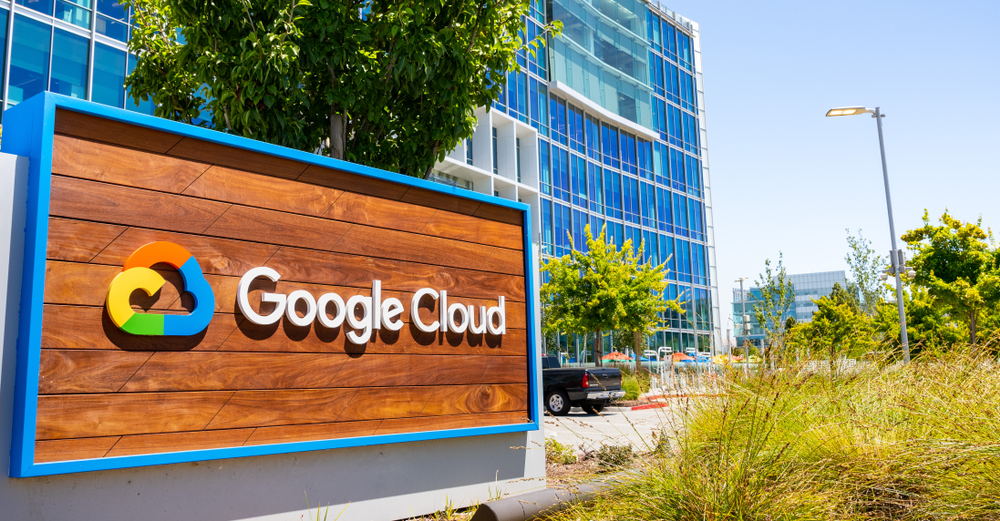
CME Group, a leading global derivatives marketplace, has indeed partnered with Google Cloud to integrate blockchain technology into its operations, though the focus is broader than just its futures trading platform. This collaboration leverages Google Cloud’s Universal Ledger (GCUL), a programmable, distributed ledger designed for institutional finance, to explore innovative solutions for the financial markets. The partnership aims to enhance capital market efficiency by piloting blockchain-based solutions for wholesale payments and asset tokenization. This includes streamlining processes like collateral management, margin requirements, settlement, and fee payments, with the potential to support 24/7 trading operations.

The initiative builds on a long-standing relationship between CME Group and Google Cloud, which began with a 10-year strategic partnership in 2021 to accelerate CME’s shift to cloud-based infrastructure. That earlier deal included migrating CME’s trading systems, data, and clearing services to the cloud, with Google also investing $1 billion in CME Group.

In the latest development, announced, CME Group has completed the first phase of integration and testing with GCUL. The next steps involve direct testing with market participants starting later in 2025, with plans to launch new tokenization-related services by 2026. While this does not exclusively target the futures trading platform, it will enhance the infrastructure supporting CME’s futures and options markets by introducing blockchain efficiencies. For example, the technology could optimize post-trade processes across various asset classes CME already trades, including cryptocurrencies like Bitcoin and Ethereum futures, which the exchange has offered since 2017.

This move aligns with broader industry trends where traditional financial institutions are adopting blockchain to modernize operations, spurred by growing demand for faster, cheaper, and round-the-clock settlements. CME’s leadership, including Chairman and CEO Terry Duffy, has emphasized the potential for blockchain to deliver significant efficiencies as markets evolve toward continuous trading, a capability that futures markets already partially support through near-24/6 access on the CME Globex platform.

Blockchain technology offers a range of benefits that make it appealing for applications like CME Group’s partnership with Google Cloud. At its core, blockchain is a decentralized, distributed ledger that records transactions across a network of computers in a secure, transparent, and tamper-resistant way. Every transaction on a blockchain is recorded on a shared ledger visible to all authorized participants. This creates an auditable trail, making it easy to track the history of an asset or payment.

For financial markets like futures trading, this could mean clearer visibility into trades, settlements, and collateral movements, reducing disputes and enhancing trust. Blockchain uses advanced cryptography to secure data. Once a transaction is added to the chain, it’s nearly impossible to alter without consensus from the network, thanks to its immutable design. This reduces the risk of fraud, hacking, or unauthorized changes—critical for high-stakes environments like derivatives markets where billions are transacted daily.

Unlike traditional systems that rely on a central authority (e.g., a bank or clearinghouse), blockchain distributes control across a network of nodes. This eliminates single points of failure and can reduce dependency on intermediaries, potentially lowering costs and speeding up processes like clearing and settlement. By automating processes through smart contracts—self-executing agreements coded into the blockchain—tasks like trade settlement, margin calculations, or fee payments can happen in real-time or near-real-time. In traditional finance, these can take days (e.g., T+2 settlement), but blockchain can enable 24/7 operations, aligning with the always-on nature of global markets. Cutting out middlemen (e.g., custodians or third-party validators) and streamlining operations can significantly lower transaction costs.

For CME Group, this might translate to cheaper collateral management or reduced fees for market participants, making trading more accessible and competitive. Once data is written to the blockchain, it’s locked in. This permanence ensures records can’t be retroactively altered without network agreement, providing a reliable “single source of truth.” In futures trading, this could prevent errors or manipulation in post-trade processes.

Blockchain platforms like Google Cloud’s Universal Ledger support programmable features via smart contracts. This allows for customizable logic—say, automatically releasing collateral when conditions are met—enhancing flexibility and reducing manual intervention. Modern blockchains can be designed to work with other systems or networks, enabling seamless data sharing across institutions.

For CME, this could mean integrating tokenized assets with existing futures contracts, bridging traditional and digital finance. CME’s initiative, blockchain could allow tokenized assets (e.g., digital representations of cash or securities) to be used as collateral, settled instantly, or traded 24/7. This aligns with the shift toward continuous markets and the growing role of cryptocurrencies, where CME already offers Bitcoin and Ethereum futures. It could also reduce counterparty risk by ensuring funds and assets are verifiably available before trades execute.

While the benefits are significant, blockchain isn’t flawless. It can be energy-intensive (depending on the consensus mechanism, like proof-of-work in Bitcoin), complex to implement, and faces regulatory uncertainty in some jurisdictions. Scalability—handling massive transaction volumes like CME’s daily trades—also remains a challenge, though solutions like Google Cloud’s GCUL are built to address this for institutional use. Blockchain’s benefits lie in its ability to make systems more secure, efficient, and transparent while cutting costs and enabling new possibilities.

For CME Group, it’s a step toward future-proofing financial markets in a digital age. While the partnership with Google Cloud introduces blockchain technology to enhance CME Group’s broader ecosystem—not solely its futures trading platform—it will undoubtedly impact futures trading by improving the underlying infrastructure with distributed ledger capabilities. Testing begins in 2025, with operational services expected in 2026.

True Layer 1 Scalability? BlockDAG’s Keynote 3 Proves It’s Miles Ahead of Toncoin & Stellar

0

While speed is crucial, it’s not all about how quickly you build. Toncoin capitalized on Telegram’s vast network to expand its reach, and Stellar has been pivotal in linking conventional finance with blockchain technology. Both present significant applications, yet they carry inherent design choices that trace back to their roots.

In contrast, BlockDAG (BDAG) embeds scalability from the ground up with its modern DAG + Proof-of-Work hybrid model. This approach sidesteps the makeshift solutions often seen in earlier Layer 1 and Layer 2 frameworks. With a growing number of testnet users and a presale that has attracted $208 million, BlockDAG is redefining expectations for crypto functionality—focusing on transparency, scalability, and readiness from the first layer.

Toncoin: From Telegram’s Vision to Blockchain Scalability

Toncoin started in 2018 as Telegram’s venture into blockchain, aiming to build a swift, scalable decentralized network. The initiative garnered around $1.7 billion through a private ICO but faced setbacks from U.S. regulatory pressures, leading Telegram to step away in 2020. The community took over, relaunching it as “The Open Network” in August 2021.

Launching at $0.70 and currently priced at $3.63 as of March, 2026, Toncoin has seen a 418% rise. It’s engineered for extensive scalability and rapid transaction completion, supports smart contracts, and integrates with Telegram’s extensive user base, which helps speed up its adoption. The architecture also includes sharding, allowing for handling thousands of transactions per second.

Despite initial regulatory challenges, Toncoin has matured into a robust and expanding ecosystem. Its community-led continuation has supported its steady growth and made it a key player in practical blockchain applications and accessible infrastructure.

Stellar: Facilitating Efficient International Transactions Since 2014

Stellar was initiated in 2014 by Jed McCaleb and Joyce Kim, with the goal of democratizing financial services through blockchain technology. Supported by the nonprofit Stellar Development Foundation, the initiative has focused on connecting fiat and digital currencies to facilitate quick, affordable international payments. Stellar launched its ICO at just $0.003.

As of March, 2026, XLM’s price has soared to $0.482, a significant increase, reflecting over 16,000% growth. Stellar operates on the Stellar Consensus Protocol (SCP), which ensures quick and energy-efficient transaction validation without the need for mining, making it ideal for remittances, small payments, and collaborations with financial entities. Additionally, partnerships with major organizations like IBM and MoneyGram have broadened Stellar’s impact in conventional finance.

Stellar continues to excel with its integrated decentralized exchange (DEX) and its commitment to real-world applicability, maintaining its position as one of the most practical and widely used blockchain platforms, aimed at providing open, borderless financial solutions globally.

BlockDAG Integrates Scalability at Its Foundation, Redefining Crypto Efficiency

While Layer 2 solutions aimed to enhance blockchain scalability, they often introduced complications like centralized sequencers, less transparent validator processes, and increased reliance on off-chain systems, which fragmented the overall user experience. Unlike these approaches, BlockDAG has embedded scalability into its foundational layer, harmonizing decentralization with performance.

BlockDAG utilizes a unique architecture that combines a Directed Acyclic Graph (DAG) with Proof-of-Work, enabling multiple block confirmations simultaneously and avoiding the common bottlenecks that push Layer 1s toward external scalability solutions.

CTO Jeremy Harkness explains, “Imagine transactions being processed in parallel, without waiting in line. Our system confirms multiple blocks at once.” This structure eliminates the need for sequencers or off-chain mechanisms, focusing instead on inherent, scalable throughput while maintaining full transparency.

The success of this model is evident as BlockDAG has amassed $208 million during its crypto presale, selling over 18.9 billion coins through 27 batches, with an impressive return on initial batches, indicating robust market reception.

By reimagining scalability from the ground up rather than retrofitting older systems, BlockDAG is poised to set a new benchmark with its forthcoming mainnet, proving that operational speed can coexist with robust decentralization.

Moving Away from Makeshift Solutions in Crypto Technology

Both Toncoin and Stellar mirror the potential and constraints inherent to their origins—Toncoin emerging from a discontinued messaging app project, and Stellar evolving from early attempts to integrate cryptocurrency with traditional finance. Although both platforms have experienced growth, their scalability and decentralization efforts are hampered by older architectural decisions and necessary compromises.

Conversely, BlockDAG confronts these challenges head-on by embedding enhanced throughput, transparency, and community-led governance right into its core architecture, avoiding the need for secondary Layer 2 enhancements or centralized components. As the crypto market transitions from experimental to established, the emphasis may increasingly lean towards systems that offer straightforward, sustainable solutions rather than temporary patches.


Website: https://blockdag.network

Presale: https://purchase.blockdag.network

Telegram: https://t.me/blockDAGnetworkOfficial

Discord: https://discord.gg/Q7BxghMVyu

XRP Price Prediction: Analyst Draws Double Digit Path for Ripple and This Altcoin

0

The XRP price has been in the spotlight again, and this time, analysts see a path to double-digit gains. After months of consolidation, Ripple’s token could be gearing up for a major breakout; and it’s not alone. Another altcoin, RCO Finance, is also flashing bullish signals, hinting at a potential rally.

But what’s fueling this optimism, and how realistic are these predictions? Let’s dive into the latest analysis.

XRP Price’s Breakout Potential Is Taking Shape

The XRP price has been a rollercoaster ride, but analysts are convinced that a major breakout is just around the corner. Vandell Aljarrah, co-founder of Black Swan Capitalist, is baffled by the number of investors offloading their XRP holdings just as the cryptocurrency inches closer to double-digit territory.

According to him, the XRP price is set to skyrocket, and selling now is a costly mistake. The ongoing legal battle between Ripple and the SEC has been one of the biggest factors affecting the XRP price. However, the SEC had recently dropped its appeal against the company. This news alone sent it soaring by 10% in a single day.

The XRP price has also demonstrated an impressive ability to rebound. Between November 2024 and January 2025, it skyrocketed by 550%, climbing from $0.50 to $3.40. With analysts predicting XRP price could touch $10 or even $13, the sentiment around Ripple’s native token is overwhelmingly bullish.

While some investors are cashing out, others are holding firm, convinced that XRP price is primed for exponential growth. Many industry insiders believe that another altcoin, RCO Finance (RCOF), is on a similar trajectory. This AI-powered asset is tackling real-world challenges and is expected to maintain strong demand, making it the perfect companion to XRP’s explosive run.

The Robo Advisor Could Redefine Trading Strategies

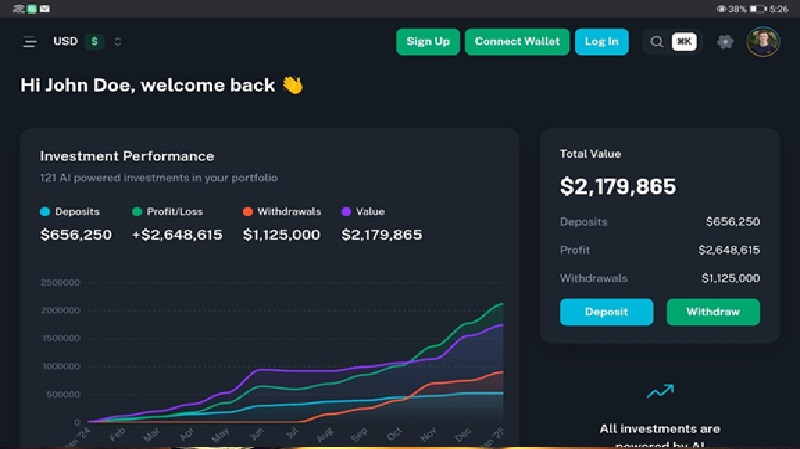
What truly sets RCO Finance apart is its AI-powered Robo Advisor, a revolutionary tool designed to make investing smarter, easier, and more profitable. RCOF’s AI operates in real time, pulling in data from Bloomberg, Reuters, and various blockchain networks to give precise entry and exit points.

It continuously scans the market for high-potential assets, ensuring that investors never miss out on the next 100x opportunity. For instance, the Robo Advisor could have flagged the recently launched MELANIA token before its explosive run. So you would have gotten in before it surged.

The AI also acts as a safeguard against market downturns. If a major sell-off is imminent, it can trigger automatic sell orders, helping users preserve profits and minimize losses.

Additionally, RCO Finance offers debit cards that allows users to spend their crypto holdings seamlessly without going through tedious conversions. RCOF holders can also diversify into over 120,000 investment options, including traditional assets like bonds, stocks, ETFs, and tokenized real estate, all within a single, KYC-free ecosystem.

Investors Are Rushing Into the RCOF Presale as Demand Surges

While the XRP price inches toward double digits, RCO Finance (RCOF) is capturing attention in the presale market like no other. Unlike typical presale projects, RCOF has already rolled out its Beta Platform, which boasts over 10,000 active users.

The upcoming Alpha release currently in testing, means even more powerful features are on the horizon.

The presale is currently in its 5th stage, with the token priced at $0.10. Once the 6th stage kicks in, the price will jump to $0.13; a 30% increase in just a matter of weeks. So far, RCOF has raised over $15 million, signaling strong investor confidence.

As the presale progresses, demand is surging, and those who secure their tokens now could see massive returns once RCOF hits major exchanges. A $1,000 investment at this stage will turn into $1,300 in the next phase. If the token climbs 100x, which is common in the crypto space, that same $1,000 could turn into $100,000.

The platform’s audit by SolidProof confirmed that RCOF is secure, eliminating concerns about smart contract vulnerabilities.

Why the Next Crypto Wave Could Be Bigger Than Expected

The XRP price has already demonstrated its ability to surge rapidly, and if it reaches $10 or more, some altcoins will likely follow suit. Meanwhile, RCO Finance is proving that presale projects can offer immediate utility rather than just speculative hype.

With its Beta Platform live, a groundbreaking AI-driven Robo Advisor, and a presale that’s gaining momentum, it’s no surprise that investors are rushing to get in early.

RCO Finance is redefining what’s possible in crypto investing, and one thing is clear: the opportunity it presents is bigger than XRP. This is the lowest the RCOF price will be and the best time to get in is now. Don’t miss out.

For more information about the RCO Finance Presale:

Visit RCO Finance Presale

Join The RCO Finance Community