DD
MM
YYYY

PAGES

DD
MM
YYYY

spot_img

PAGES

Home Blog Page 149

Prestmit Review – Cash Out Crypto, Top Up Betting Accounts And More…

0

Prestmit is a Nigeria-based web/mobile platform that allows users to cash out cryptocurrencies, top up betting accounts and carry out a range of other digital transactions.

In this review, we’ll take a deeper look at the services provided by Prestmit, what makes it stand out from competitors and whether you should use this platform.

What services does Prestmit provide?

Prestmit is an all-in-one central marketplace for various digital transactions. It offers a range of services, which primarily include:

  • Crypto cashouts: Using Prestmit, you can sell various popular cryptocurrencies ranging from Bitcoin to USDT, and get paid in cash.
  • Buy crypto: You can also buy popular cryptocurrencies directly through Prestmit. 
  • Gift card cashouts: Got a gift card for a store you’re unlikely to ever shop at? Prestmit will also buy this gift card off you and pay you cash.
  • Buy gift cards: You can also buy gift cards for a range of stores via Prestmit.
  • Top up betting accounts: You can top up betting accounts at various sites from one place using Prestmit.
  • Buy/sell airtime: You can also buy airtime for your mobile phone through Prestmit, or sell airtime credits that you’re not going to use.
  • Buy cheap data: Prestmit also sells discounted data for when you’re running low and need internet access.
  • Other features: The platform also offers a few other niche services like buying eSIMs, paying electricity bills online and paying TV subscriptions. 

Who is Prestmit aimed at?

Prestmit’s crypto cashout service makes it particularly useful for freelancers who get paid in crypto. While there are ways to spend cryptocurrencies online, you typically can’t use crypto for many everyday purchases like groceries – Prestmit allows you to turn your crypto into real money as if you were getting paid in a local currency.

If you’re into online betting, Prestmit is also a great platform for managing multiple accounts from one place. While you should of course use betting platforms responsibly, Prestmit can benefit those who want to take advantage of unique perks like free bets at different platforms.

Prestmit also allows users to make money and save money through its various other digital transaction services. If you’re looking for a new side hustle, buying discounted gift cards and selling them through Prestmit could be an option. Meanwhile, if you’re running low on cash and you’ve got some spare airtime, Prestmit is a great place to make a little extra money by selling your airtime.

The catch? Prestmit is currently only targeted at users in Nigeria and Ghana. When cashing out crypto, you only have the option to convert into Nigerian Naira or Ghanaian Cedis. Similarly, its betting site top up feature is geared towards African betting apps like Bet9ja and Nairabet. This is excellent if you’re a freelancer or sports better based in Nigeria or Ghana, but not if you’re a user from elsewhere in the world.

What makes Prestmit stand out?

There are many cryptocurrency exchanges out there that you can use to trade numerous cryptocurrencies, however many of these are peer-to-peer platforms that can be slow and carry fees.

Prestmit is different in that there are no transaction fees! Rather than having to wait for your crypto transaction to be manually approved, Prestmit also offers a fast automated service in which you receive your cash in minutes.

As a freelancer that gets most of their income paid in crypto, this could be hugely advantageous. It means that you’re not having to factor in fees every time you cash out your crypto, allowing you to enjoy your earnings in full. You also don’t have to wait around to receive your cash – this is hugely convenient for times when you may need to access your cash in a hurry, such as covering a surprise payment.

The breadth of other services offered by Prestmit also means that it’s more than just a crypto exchange. It provides all kinds of handy ways to earn and save money that you can explore from one place with the click of a button. The platform is very clean and easy to use – whether you’re using the site or the app. It’s not like some other digital marketplaces where it’s easy to get overwhelmed by technical terms and excess features.

Are there any drawbacks to using Prestmit?

As already stated, Prestmit only allows you to cash out in limited currencies – Naira and Cedi – so freelancers looking to cash out their crypto in other countries won’t find any use for this platform.

Prestmit is also not like other exchanges in which you have access to hundreds of cryptocurrencies. It focuses on the most popular cryptocurrencies such as Bitcoin, Litecoin and Dogecoin. These are the most likely cryptocurrencies to be paid in as a freelancer and are also great options for buying if you’re just getting into crypto ownership. However, those wanting to cash out more obscure cryptocurrencies or looking to dive deeper into the world of crypto trading may find Prestmit’s crypto services limited.

Should you give Prestmit a go?

If you are based in Nigeria or Ghana and have been looking for a crypto cashout service, Prestmit is highly recommended. Its speed and low cost make it one of the best options and are the reason that the platform currently has so many loyal users. 

Prestmit is also worth trying if you want to cash out gift cards into Naira or Cedi, or if you want to top up betting accounts. Many individuals in Nigeria and Ghana will be able to find different uses for this platform as it’s not all about crypto. 

Signing up to Prestmit is easy and free – you can visit the website to make an account, or download the app. Certain features like accessing e-sims don’t even require you to sign up. Try Prestmit for yourself and take a tour of some of the features. You’ll find detailed instructions on how to do everything from buying crypto to selling gift cards and you can trust that all transactions will be carried out securely. 
Monad’s Public Sale Goes Live on Coinbase As TGE Nears

0

The Monad ($MON) public token sale, marking Coinbase’s first-ever regulated token launch platform, kicked off on November 17, 2025, and remains live as of today.

This event allows verified users in over 80 countries—including the U.S.—to participate in early access to Monad’s native token ahead of its mainnet launch on November 24. The platform stems from Coinbase’s $375 million acquisition of Echo Launchpad in October 2025, aiming to provide compliant fundraising for retail investors post-SEC ICO restrictions.

Over $100 million ~53% subscribed, with $43 million in the first 30 minutes. Minimum $100; Maximum: $100,000 in USDC. If oversubscribed, lower requests filled first to promote broad distribution and limit whale dominance.

100% at TGE (Token Generation Event) on mainnet launch (November 24). Verified Coinbase account with KYC/AML compliance; 2FA enabled; phone verification. Note: Restricted in some regions like India.

Monad, a high-performance EVM-compatible Layer-1 blockchain, has already raised $244 million from VCs like Paradigm and Dragonfly. $MON will power transaction fees, staking, and validator incentives. Pre-market trading shows +64% premium over ICO price, but broader market weakness (e.g., BTC dip) has slowed momentum—fundraising hit $100M+ even as BTC fell under $90K.

Community buzz on X highlights it as a “cheapest entry” before mainnet, with users sharing allocation requests.To participate: Log into Coinbase, prepare USDC, and request allocation via coinbase.com/token-sales/monad.

Tokens distribute post-sale on November 24. Bitcoin (BTC) indeed tumbled below $94,000 over the November 16-17 weekend, erasing most of 2025’s gains and hitting a six-month low around $93,800 before a partial rebound to ~$95,700 by Monday close.

This ~24-25% drop from October’s $123,000 peak has wiped $600 billion from the total crypto market cap, driven by ETF outflows exceeding $1 billion, long-term holder sales 815K BTC offloaded, and spiking “extreme fear” on the Crypto Fear & Greed Index.

Broader factors include a tech stock sell-off, yen carry trade unwind echoes, and uncertainty around U.S. tariffs under President Trump. The “death cross”—where the 50-day moving average crosses below the 200-day MA—confirmed on daily/weekly charts, a bearish pattern last seen in April 2025.

BTC also closed below its 50-week SMA for the first time since 2022. However, history in this cycle tempers the doom: All three prior death ccrossesas as at Sept 2023 at $25K, Aug 2024 at $49K, April 2025 below $75K marked local bottoms, followed by +42% average rebounds within weeks.

$92K (CME gap fill), $88-90K major historical floor, potential deeper to $60-70K if broken. Resistance: $98-102K near-term rebound target, $100K psychological. On-Chain Signals: Whales accumulated $3B+ this week; liquidity pools cluster at $89-94K as buy zones.

Analysts like Benjamin Cowen see it as a contrarian buy if no bounce by Nov 21—post-fear Nov rallies averaged +42% historically. Gold’s +55% YTD contrasts BTC’s flat performance, but Senate crypto bills and liquidity injections could fuel a Q4 snapback to $120K EOY.

Monad is a Layer-1 (L1) blockchain designed to solve the blockchain trilemma—balancing scalability, security, and decentralization—while maintaining full compatibility with the Ethereum Virtual Machine (EVM).

Monad’s optimizations deliver hardware-efficient, high-throughput processing, making it suitable for consumer-grade dApps like high-frequency trading or real-time gaming.Metric

These metrics stem from real-world testing: Monad’s testnet processed over 2.44 billion transactions, peaking at 34 million daily, with 240+ ecosystem projects. Key Architectural InnovationsMonad’s design decouples and optimizes Ethereum’s bottlenecks—execution, consensus, state storage, and I/O—using four pillars.

Unlike Ethereum’s sequential processing one tx at a time, Monad uses an optimistic parallel execution model. Transactions are executed concurrently across multiple threads, assuming no conflicts (e.g., shared state reads). If conflicts arise (e.g., two txs writing to the same account), it reverts and retries only the affected ones.

This “wash, dry, fold, store” analogy illustrates: Multiple tasks run in parallel, then results are serialized in original order for EVM compatibility. 100-1,000x faster execution than Ethereum, enabling 10k TPS without sacrificing determinism.

MonadBFT Consensus

A pipelined Byzantine Fault Tolerance (BFT) variant of HotStuff, optimized for low latency. It uses “fan-out, fan-in” messaging linear communication overhead and tail-forking resistance to prevent honest blocks from being orphaned during delays.

Leaders repropose blocks for ~1s finality. Unlike Ethereum’s probabilistic PoS which needs 2 epochs for finality, Monad decouples consensus from execution: Headers finalize first, then txs execute speculatively in parallel pipelines. This boosts throughput by 2-5x over traditional BFT systems like Tendermint.

Execution is deferred post-consensus, with async I/O for non-blocking reads/writes (e.g., state access). Superscalar pipelining like CPU instruction overlap processes stages in overlapping waves. Combined with parallel execution, this handles Ethereum-scale workloads at Solana-like speeds, but with EVM’s security model.

A columnar, distributed database built in Rust for parallel access and low-latency queries. It replaces Ethereum’s Merkle Patricia Tries slow for high TPS with a key-value store optimized for async reads 99% of tx ops. Supports SSD-only storage, reducing hardware costs by 10x vs.

RAM-heavy alternatives like Solana’s. Enables 1B+ txs/day with sub-ms query times. 100% compatible with Ethereum’s opcode set, addresses, and gas model EIP-1559 with MON token. Port dApps from Ethereum instantly—no rewrites, audits, or new SDKs needed.

Matches Solana’s speed/decentralization but adds EVM compatibility, avoiding Rust rewrites or outages from high hardware demands. Monad’s BFT is more resilient to spam than Solana’s Gulf Stream.

As a new chain, it faces adoption risks and potential early bugs mitigated by rigorous audits. Parallelism adds minor complexity for edge-case txs, but optimistic rollback keeps it rare.

Monad’s advantages lie in its EVM-reimagined stack: Parallelism + custom DB + pipelined BFT = Solana-speed Ethereum without compromises. This positions it for mass-market dApps, with $244M+ in funding signaling strong backing. For devs, it’s a drop-in upgrade; for users, it’s cheaper/faster crypto.

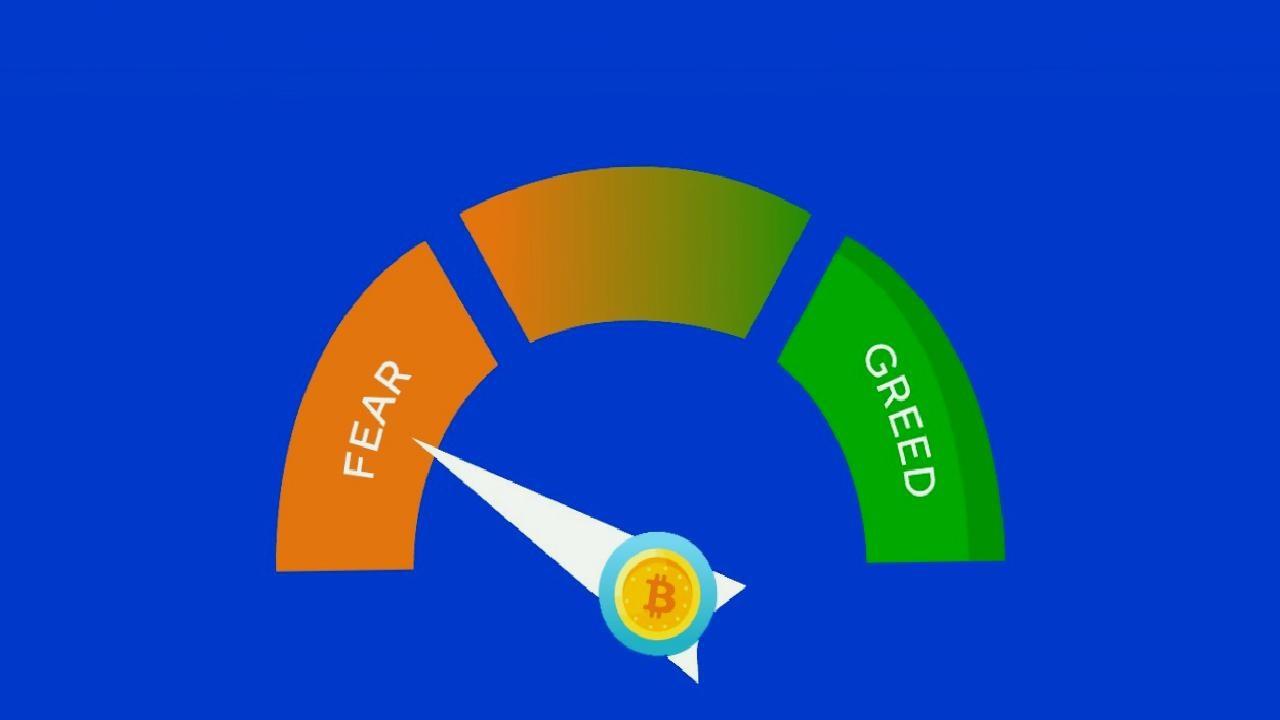
Crypto Fear and Greed continues to sit in “Extreme Fear”

0

The Crypto Fear & Greed Index is hovering in “Extreme Fear” territory right now, with a score of 11 out of 100 as of the latest daily update.

This is down from 14 yesterday, 26 last week, and 29 last month, signaling a sharp slide in market sentiment over recent weeks. This popular gauge from Alternative.me aggregates factors like volatility, market momentum, social media buzz.

Bitcoin dominance, and Google Trends to score overall investor emotion on a scale from 0 Extreme Fear to 100 Extreme Greed. Panic selling; potential undervaluation and buying opportunities for contrarians.

Caution prevails; prices may stabilize or dip further. Balanced sentiment; sideways trading likely. Optimism building; risk of overbuying. Euphoria; often precedes corrections or bubbles.

At 11, we’re in full-blown panic mode—think of it as the market equivalent of hiding under the covers during a storm. Historically, extreme fear levels like this have preceded some of crypto’s biggest rebounds, as fear tends to overshoot rational pricing.

This marks a continued slide from 14 yesterday, 26 last week, and 29 last month, reflecting heightened panic amid a broader market crash that saw Bitcoin plunge below $93,000—erasing year-to-date gains and triggering massive liquidations.

Key drivers include elevated volatility Bitcoin’s drawdowns spiking, subdued trading volumes signaling weak momentum, rising Bitcoin dominance as investors flock to the “safer” asset, and surging Google Trends for fear-laden searches like “Bitcoin crash.”

Social media sentiment is also tanking, with Twitter interactions dominated by doom-scrolling rather than hype. This isn’t isolated—November 2025 has been brutal for crypto, fueled by the Fed’s refusal to cut rates amid sticky inflation, geopolitical tensions, and a risk-off exodus from high-beta assets like altcoins.

Liquidations have surged, wiping out leveraged longs and amplifying the fear spiral. Extreme Fear readings like this the lowest since the COVID meltdown historically signal capitulation: investors are dumping assets irrationally, often overshooting fair value and creating undervaluation.

Panic selling exhausts weak hands, paving the way for stabilization and rebounds as sentiment normalizes. Post-2022 FTX crash: Index hit 10, Bitcoin rallied 300%+ in the following year.

Undervaluation Opportunities; Assets trade at discounts to fundamentals, attracting value hunters. 2020 COVID dip: Extreme Fear at 5 led to a bull run multiplying prices 10x.

Short-term swings intensify, but long-term trends often reverse upward. 2018 bear market: Lows around 12 preceded the 2021 boom. While retail panics, big players accumulate—e.g., institutions scooped up $24B in Bitcoin dips this month despite the fear gauge.

ETFs like BlackRock’s IBIT added holdings during similar 2023 fear episodes. If macro headwinds worsen (e.g., no rate cuts), fear could deepen, pushing Bitcoin toward $80K. Prolonged 2022 fear led to 70%+ drawdowns before recovery.

In essence, this level quantifies herd behavior gone haywire—contrary to Warren Buffett’s adage: “Be fearful when others are greedy, and greedy when others are fearful.”

It doesn’t predict prices but highlights emotional extremes that can inform rebalancing: extreme fear often precedes growth spurts as markets mean-revert.

The index acts as a sentiment thermometer, nudging decisions toward contrarianism rather than FOMO. It won’t dictate buys/sells but helps calibrate risk. Tailor based on your horizon and tolerance—remember, this isn’t advice; DYOR and consider diversification.

Extreme Fear screams “bargain basement.” History shows 80%+ of such readings lead to 50%+ rallies within 6 months. Institutions are already loading up—join if conviction holds.

Tight Risk Management / Wait for Signals: Prioritize stops and avoid leverage—volatility could spike further. Use the index to time entries (e.g., buy on fear spikes above 20) or short if it stays pinned low.

Avoid knee-jerk sells; DCA into dips to average down without timing the bottom. Rebalance portfolios toward stables if fear persists. View this as a “capitulation signal”—scour for undervalued alts or BTC. Tools like on-chain metrics confirm exhaustion.

In 2025’s choppy waters, this fear could be the setup for 2026’s greed-fueled surge, but only if catalysts like rate cuts or ETF approvals materialize. For context, Bitcoin dipped below $90K recently amid broader economic jitters, but contrarian voices on X are buzzing about this as a “capitulation signal.

Trump Organization Partners with Dar Global for Tokenized Ownership

0

The Trump Organization has just announced a partnership with Saudi-based developer Dar Global to build the Trump International Hotel Maldives, a luxury 80-room resort on the Raa Atoll.

This project is groundbreaking as the world’s first tokenized hotel development, where investors can purchase digital tokens representing fractional ownership shares in the property via blockchain technology. The initiative aims to democratize access to high-end real estate investments, blending traditional luxury hospitality with crypto innovation.

The development is estimated at around $300 million and is expected to open in late 2027 or early 2028. Token sales will reportedly begin soon on an as-yet-unannounced blockchain platform, with proceeds funding construction. This marks the Trump brand’s expansion into the Maldives, a popular destination for ultra-luxury tourism, following similar projects in Oman and Dubai with Dar Global.

The Trump International Hotel Maldives represents a pioneering effort in real-world asset (RWA) tokenization within the luxury hospitality sector. Unlike traditional real estate investments that often require completed properties for fractionalization, this project tokenizes the development phase itself, allowing investors to acquire digital shares from the ground up.

This approach aims to fund construction through blockchain-based securities while providing early-stage exposure to the resort’s potential growth. The initiative is a collaboration between the Trump Organization and Dar Global, a London-listed Saudi-backed developer, with the resort featuring approximately 80 ultra-luxury beach and overwater villas on Raa Atoll, set to open by late 2028.

How Tokenized Ownership Works

Tokenization converts rights to the underlying asset here, the hotel development into digital tokens on a blockchain. These tokens act as security tokens, representing fractional ownership or economic interests in the project.

High-value real estate estimated at $300 million total development cost is divided into smaller, tradable units. This democratizes access, enabling retail investors to buy portions of the project that might otherwise require millions in capital.

Tokens are issued on an as-yet-unannounced blockchain platform, ensuring transparent, immutable records of ownership and transactions. This facilitates 24/7 global trading on secondary markets, improving liquidity compared to illiquid traditional real estate.

Early-Stage Participation: Investors can enter during construction, potentially benefiting from appreciation as the resort nears completion and generates revenue (e.g., from bookings, operations). Proceeds from token sales will directly support development costs, blending venture-like funding with real estate.

Token holders may receive yields tied to project performance, such as revenue shares or priority access to bookings. Low fractional tokens, potentially $100–$1,000 per unit

Blockchain ledger for real-time verification. While full terms are pending disclosure token sales are slated to begin soon, preliminary details suggest. Tokens likely entitle holders to proportional returns, such as dividends from hotel revenues or capital gains upon project milestones.

Perks for Holders: Potential utility features, like discounted stays, priority reservations, or governance votes on minor decisions, drawing from Dar Global’s prior NFT-based perks in Oman projects. Tokens can be resold, providing exit options before the resort opens, which could attract speculative interest.

As the “world’s first tokenized hotel development,” it positions investors in a high-profile test case for RWA growth, projected to reach $4 trillion by 2035. Eric Trump, Executive Vice President of the Trump Organization, emphasized: “This development will not only redefine luxury in the region but also set a new benchmark for innovation in real estate investment through tokenization.”

Dar Global CEO Ziad El Chaar added that it “blends luxury, innovation, and technology in a way that will transform how the world invests in hospitality.” Tokenized real estate, while innovative, carries uncertainties.

Compliance with securities laws (e.g., SEC in the US, or equivalents in the UAE/Saudi Arabia/Maldives) is essential; non-compliance could lead to delisting or legal issues. Token values may fluctuate with crypto markets, travel trends, or geopolitical factors affecting the Maldives a tourism-dependent economy.

Secondary markets may lack depth initially, and blockchain risks like hacks exist, though reputable platforms mitigate this. Detailed whitepapers on token economics, smart contract audits, or yield structures are unavailable, urging due diligence.

This project builds on the Trump family’s crypto ventures (e.g., World Liberty Financial) and could accelerate RWA adoption if successful, but it’s not without the speculative edge of emerging tech.

Nvidia Perpetual Futures Now Live on Hyperliquid

0

Hyperliquid, a leading decentralized perpetual futures exchange built on its own Layer 1 blockchain, has officially launched trading for NVDA-PERP—the first community-managed perpetual swap contract tracking Nvidia (NVDA) stock.

This milestone, enabled by the platform’s HIP-3 upgrade, allows traders to go long or short on Nvidia’s price with up to 10x leverage, 24/7, without traditional market restrictions like pattern day trader (PDT) rules or centralized gatekeepers.

It’s a prime example of DeFi bridging tokenized real-world assets (RWAs) like equities into crypto-native trading. Within the first 24 hours, NVDA-PERP saw $12 million in trading volume and $5.8 million in open interest, with the contract price settling around $192.54 down 1.24% at the time.

Under HIP-3 Hyperliquid Improvement Proposal 3, market creators like Trade.XYZ bid via an on-chain auction to deploy perps. The winner stakes 500,000 HYPE tokens for governance and slashing risks, earning 50% of trading fees. This decentralizes listings, letting communities manage oracles, leverage limits, and risk parameters.

Crypto-collateralized (e.g., USDC), with mark prices blending on-chain data and external oracles for stability. Uses an 8-hour exponentially weighted moving average of mark prices to reduce volatility from spot/index oracles, similar to Hyperliquid’s “Hyperps” for pre-launch assets.

Hyperliquid’s total perp volume exceeds $300B monthly platform-wide. Tracks Nvidia’s spot price closely. Nvidia, as the AI chip powerhouse, has been a volatility magnet amid the ongoing AI boom. This perp lets crypto traders speculate on NVDA without owning shares, custody hassles, or TradFi hours—pure on-chain efficiency.

It’s part of Hyperliquid’s push into tokenized equities (e.g., Tesla, S&P 500 indices next?), democratizing access while aligning incentives through staking. As one trader noted on X, “Hyperliquid Nvidia perps has more open interest than the entirety of Aster’s stocks market.”

It’d take years of red tape; DeFi shipped this in days. Head to app.hyperliquid.xyz, deposit USDC or other supported collateral via HyperEVM. Search for “NVDA,” select leverage, and place limit/market orders. Tools like HyperDash provide real-time OI, depth, and bias.

Leverage amplifies losses—start small, monitor funding rates, and use stops. U.S. users may need VPNs due to geo-restrictions. This launch underscores Hyperliquid’s dominance in perps, blending CEX-like UX with DEX transparency.

By enabling 24/7 leveraged trading on Nvidia stock—a bellwether for the AI sector—via Hyperliquid’s HIP-3 permissionless framework, this development accelerates the tokenization of real-world assets (RWAs) and challenges entrenched market structures.

Unlike traditional stock exchanges limited to market hours (e.g., NYSE’s 9:30 AM–4 PM ET), NVDA-PERP allows instant execution worldwide, eliminating pre-market, after-hours, and weekend gaps. This levels the playing field for retail traders in regions like Asia or Europe, who previously faced timing disadvantages.

As one observer noted, it turns equities into a “completely level playing field for regular traders.” No Gatekeepers: Bypassing broker requirements, pattern day trader (PDT) rules, and custody issues means anyone with a wallet and USDC can speculate on Nvidia’s price movements.

Early volume hit $12M in 24 hours, signaling rapid adoption among crypto natives seeking equity exposure without TradFi friction. This could onboard millions from crypto into stock-like bets, potentially growing Hyperliquid’s user base beyond its current 700,000.

It also hints at a “stock market that never sleeps,” with tokenized versions of Tesla, Apple, or even private firms like SpaceX on the horizon.