DD
MM
YYYY

PAGES

DD
MM
YYYY

spot_img

PAGES

Home Blog Page 15

Binance Records Massive $2.2B Net Inflows of USDT 

0

Binance recorded a massive $2.2 billion net inflow of USDT (Tether’s stablecoin). This marks the largest single-day stablecoin inflow to the exchange since November 2025, according to on-chain data from CryptoQuant.

This surge ends several months of relatively subdued liquidity and low activity on Binance, the world’s largest cryptocurrency exchange by trading volume. Analysts, including CryptoQuant’s Amr Taha, interpret the inflow as a bullish signal, suggesting: Return of liquidity — “Dry powder” (available capital in stablecoins) is entering the exchange, which can help absorb potential selling pressure and support price stability or upside moves.

Likely driven by whales, institutions, or major market participants; rather than retail traders actively repositioning, especially as it coincided with Bitcoin testing or breaking into new price levels. Broader exchange stablecoin netflows exceeded $2.3 billion that day, the highest since Q4 2025, aligning with improving market sentiment.

The Crypto Fear & Greed Index recently rose to 28, exiting a prolonged “extreme fear” phase. Stablecoin inflows like this often precede increased trading activity or buying in volatile assets like Bitcoin, as users deposit USDT to prepare for purchases without direct fiat ramps.

This development comes amid broader crypto market dynamics in early 2026, including recovering sentiment after earlier outflows and ongoing discussions around stablecoin regulations. Stablecoin regulations have a profound impact on the cryptocurrency market, particularly in 2026, as major jurisdictions implement or refine frameworks that treat stablecoins more like traditional payment instruments than unregulated crypto assets.

This shift brings clarity, legitimacy, and institutional adoption while introducing compliance burdens, restrictions on features like yield, and potential market fragmentation. The SEC also eased broker-dealer capital requirements for holding regulated stablecoins from 100% to 2% “haircut” in February 2026, signaling reduced perceived risk.

MiCA categorizes stablecoins as asset-referenced tokens (ARTs) or electronic money tokens (EMTs), mandating EU-authorized issuers, 1:1 reserves in safe assets, transparency, and strict supervision. It categorically prohibits interest or yield on holdings to protect banking stability and monetary policy.

Other jurisdictions like UK, Hong Kong, Singapore, UAE: Similar trends toward licensing, full reserves, and sandboxes to foster innovation while ensuring stability. Ongoing debates, such as U.S. CLARITY Act negotiations highlight tensions between crypto innovation and traditional finance concerns like deposit flight from banks.

Regulatory clarity reduces uncertainty, which historically suppressed adoption. Key benefits include:Increased institutional and mainstream participation — Banks, fintechs, and retailers explore issuance and integration for payments, treasury, and cross-border settlement. Stablecoins now drive demand for U.S. debt and enable faster, cheaper on-chain transactions.

Frameworks like GENIUS and MiCA make stablecoins appear safer, attracting long-term capital and reducing extreme volatility in broader crypto (e.g., better price discovery for Bitcoin/Ethereum via stable on-ramps). Stablecoin market cap exceeds $300 billion with ongoing expansion, transaction volumes surge, and inflows reflect repositioning amid recovering sentiment.

Clear rules encourage “dry powder” returns to exchanges. Tokenized assets, regulated stablecoins and sandboxes promote real-world use cases without the “Wild West” risks. Strict licensing, audits, and reserves favor established players.

USDC benefits more than less-transparent USDT in regulated markets, leading to delistings/restrictions in regions like the EU. Divergent rules; U.S. allowing more flexibility vs. EU’s strictness create “regulatory arbitrage,” with issuers migrating to favorable jurisdictions, risking global inconsistencies.

Critics warn of deposit displacement, run risks if reserves falter, or ties to banking stress, though rules aim to mitigate this. Stablecoin regulations are largely viewed as bullish for the sector’s maturity. The massive inflows to platforms like Binance coincide with exiting “extreme fear” phases and align with improving rules that unlock institutional flows.

While debates over yield persist, the direction favors stability over speculation—positioning stablecoins as infrastructure for broader crypto growth rather than a fringe tool.In summary, 2026 regulations transform stablecoins from a source of volatility into a regulated bridge to traditional finance, driving adoption and liquidity while imposing guardrails that curb excesses. This evolution supports sustained market momentum, as seen in recent on-chain data.

Netflix Adds Cast Members to The Altruists Series, A Drama Chronicling FTX Collapse 

0

Netflix has recently announced additional cast members for its upcoming limited series— The Altruists, a drama chronicling the rise and fall of the cryptocurrency exchange FTX and key figures like founder Sam Bankman-Fried and his business partner/girlfriend Caroline Ellison.

The series, an eight-episode limited drama from co-showrunners Graham Moore and Jacqueline Hoyt with James Ponsoldt directing the premiere, is produced in association with Higher Ground; Barack and Michelle Obama’s production company. It portrays the story of two ambitious young idealists who aimed to revolutionize global finance but faced accusations of stealing billions.

Julia Garner (known for Ozark, Inventing Anna, and upcoming The Fantastic Four: First Steps) as Caroline Ellison, former CEO of Alameda Research (FTX’s sister firm). Anthony Boyle (known for Masters of the Air, Say Nothing, and House of Guinness) as Sam Bankman-Fried, FTX’s founder. These leads were announced back in May 2025 when the series was greenlit.

Netflix and outlets like Variety reported six new recurring cast members: Hudson Williams (Heated Rivalry) as Duncan Rheingans-Yoo; a colleague from Bankman-Fried’s time at Jane Street. Jennifer Grey; Dirty Dancing, Ferris Bueller’s Day Off as Sarah Fisher Ellison likely Caroline’s mother.

Terry Chen (Almost Famous, House of Cards) as CZ (Binance founder Changpeng Zhao). Elizabeth Adams (Wayward) as Hannah. Hannah Galway (The Institute, Billy the Kid) as Lucy. William Mapother (Lost, Another Earth) as Dr. Lerner.

Other previously announced cast members in series regular or recurring roles include: Matt Rife as Ryan Salame. Alex Lawther as Sam Trabucco. Madison Hu as Constance Wang. Karan Soni as Nishad Singh. Eugene Young as Gary Wang. Naomi Okada as Claire Watanabe.

Maddie Hasson as Lauren Platt. Marianna Phung as Lily Zhang. Paul Reiser as Joe Bankman (Sam’s father). Robin Weigert as Barbara Fried (Sam’s mother). No official release date has been confirmed yet, but it’s expected sometime in late 2026 or beyond, given the recent casting updates.

This project joins other media adaptations of the FTX saga, highlighting the ongoing cultural interest in the 2022 crypto collapse.

The FTX collapse refers to the dramatic downfall of the cryptocurrency exchange FTX in November 2022, one of the most significant events in crypto history. Founded in 2019 by Sam Bankman-Fried (often called SBF), FTX grew rapidly to become one of the world’s largest exchanges, valued at up to $32 billion at its peak.

It positioned itself as a user-friendly platform with strong ties to effective altruism and political influence. The core issue was a massive misuse of customer funds. FTX secretly diverted billions in customer deposits to its sister company, Alameda Research also founded by Bankman-Fried, for risky trades, personal expenses, venture investments, and other unauthorized uses.

This created an $8–10 billion hole in FTX’s accounts. Other contributing factors included: Heavy reliance on FTX’s native token $FTT as collateral and a major asset on Alameda’s balance sheet, making the empire fragile and interconnected. Poor corporate governance, lack of transparency, and commingling of funds between entities.

A liquidity crisis triggered by a bank run-like wave of customer withdrawals after public revelations. CoinDesk published a report revealing that Alameda Research’s balance sheet was heavily composed of FTT tokens (created by FTX) rather than liquid assets, raising red flags about solvency.

Binance CEO Changpeng Zhao (“CZ”) announced Binance would sell its entire FTT holdings ~$580 million worth, sparking panic and accelerating FTT’s price drop. Massive customer withdrawals began—billions flowed out in days, overwhelming FTX’s liquidity.

Binance briefly agreed to acquire FTX to bail it out but backed out after due diligence revealed the extent of the issues. FTX along with Alameda and over 100 affiliates filed for Chapter 11 bankruptcy in Delaware. Bankman-Fried resigned as CEO, replaced by restructuring expert John J. Ray III.

The filing disclosed over 100,000 creditors and a potential $10–50 billion in assets and liabilities. Bankman-Fried was arrested in the Bahamas at U.S. request. U.S. authorities charged him with fraud, conspiracy, money laundering, and more. Bankman-Fried’s close associates pleaded guilty and cooperated, testifying that he directed the fraud.

After a month-long trial in Manhattan, a jury convicted Bankman-Fried on all seven counts, including wire fraud, securities and commodities fraud conspiracies. He was sentenced to 25 years in federal prison and ordered to forfeit $11 billion.

As of 2026, with good conduct credits and programs, his projected release is around December 2044. The FTX estate, under the recovery trust, has made significant progress. Billions in assets have been recovered through asset sales, clawbacks, and litigation.

Over $7 billion has already been distributed in prior rounds. The reorganization plan confirmed in late 2024 aims for many creditors to recover 100%+ of claims some estimates up to 118% due to asset appreciation. Next major distribution: Record date February 14, 2026, with payouts starting March 31, 2026 (including a ~$1.7 billion tranche for larger claims; disputed reserves reduced to free up more funds).
Process continues into 2026 and beyond for complex claims.

The collapse shook the crypto industry, contributed to a “crypto winter,” and led to increased regulatory scrutiny worldwide. It highlighted risks in centralized exchanges and the dangers of opaque operations in the sector.

Many affected users have seen partial or full recoveries through the bankruptcy process, though trust in crypto platforms was severely damaged.

Building Investment Portfolio and Personal Economy – Ndubuisi Ekekwe 

0

I began investing from the moment I earned my first paycheck in the Nigerian banking sector. I designed a personal economy framework, deliberately allocating my income to professional development, investments, and long-term wealth creation. Yes, some of those early investments, particularly in Nigerian stock market assets, were impacted by currency depreciation and inflation. But the principle behind the strategy has endured and worked.

Tomorrow at Tekedia Mini-MBA, I will be teaching how young people can strengthen their personal economies by making intentional, proactive financial decisions. Because until money is transformed into capital, financial security remains an illusion. Money is merely a unit; true security exists at the level of capital. Yes, money is not a factor of production. If your money is not deployed as capital, it is not producing value.

Nigeria presents a striking paradox: over 90% of cash printed by the central bank remains outside the banking system. That means trillions of naira sit idle, in homes, vaults, and drawers, generating no returns and losing value over time.

This must change. Join us at Tekedia Mini-MBA as we rethink money, capital, and wealth creation, and begin the liberation of the mind: registration

ongoing for June edition here https://school.tekedia.com/course/mmba20/

Thur, March 19 | 7pm-8pm WAT | Building Investment Portfolio and Personal Economy – Ndubuisi Ekekwe | Zoom link

US SEC and CFTC Issue Joint Interpretive Guidance on Crypto Assets 

0
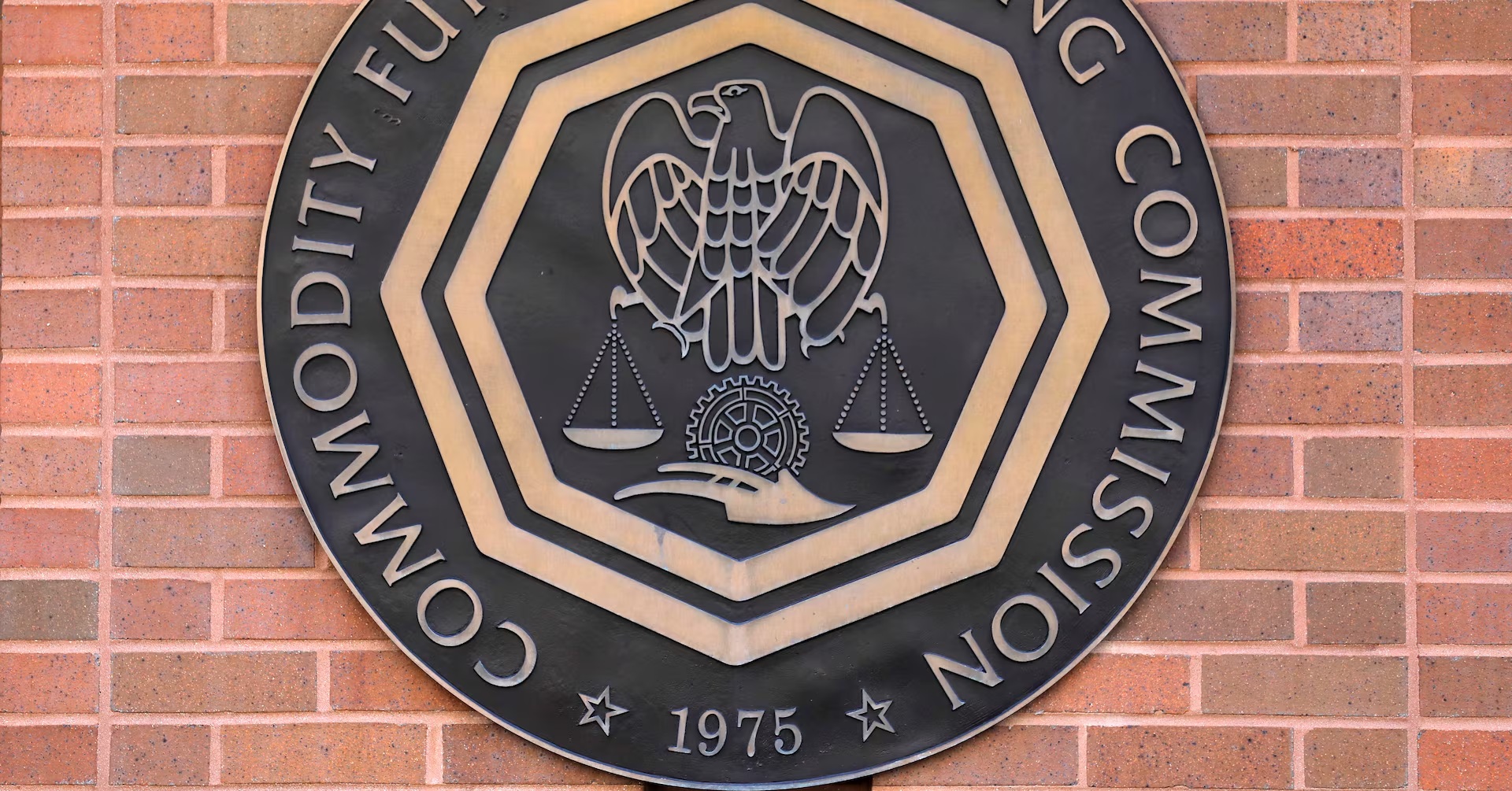
Signage is seen outside of the US Commodity Futures Trading Commission (CFTC) in Washington, D.C., U.S., August 30, 2020. REUTERS/Andrew Kelly

The U.S. Securities and Exchange Commission (SEC) and the Commodity Futures Trading Commission (CFTC) have issued a joint interpretive guidance clarifying the application of federal securities laws to certain crypto assets and related transactions.

This marks a significant shift toward regulatory clarity in the U.S. digital asset space, following years of uncertainty and enforcement-focused approaches under prior leadership. Most crypto assets are not securities: SEC Chairman Paul Atkins explicitly stated that the interpretation “acknowledges what the former administration refused to recognize—that most crypto assets are not themselves securities.”

This applies to the assets themselves in many cases, distinguishing them from investment contracts that might trigger securities laws. The guidance provides a framework often described as a “token taxonomy” for classifying digital assets, including categories like commodities, utility tokens, collectibles, stablecoins, and securities.

It addresses how a “non-security crypto asset” one not inherently a security can become subject to securities laws if involved in an investment contract via Howey Test factors, and how such status can end when issuer promises are fulfilled or fail. Specific activities clarified as generally outside securities regulation include staking, airdrops, protocol mining, wrapping of non-security assets, and secondary market trading of many tokens.

The CFTC aligns with this view and confirms it will administer the Commodity Exchange Act (CEA) consistently, treating many non-security crypto assets as commodities under its jurisdiction. This builds on earlier 2025-2026 efforts, including: A Memorandum of Understanding (MOU) between the SEC and CFTC to harmonize oversight, reduce turf issues, and support innovation.

The joint “Project Crypto” (SEC) and “Crypto Sprint” (CFTC) initiative for coordinated regulation. Reports indicate the guidance classifies major tokens like Bitcoin, Ether, Solana, XRP, Cardano, and others as non-securities and digital commodities at least 16 named in some coverage. This is seen as a pro-innovation move, providing clearer jurisdictional lines between the SEC and CFTC.

By clarifying that most crypto assets are not securities and providing a structured “token taxonomy,” it ends much of the prior enforcement-heavy uncertainty under the Howey Test. This has broad implications across markets, innovation, compliance, and global competitiveness.

The guidance has been viewed as strongly pro-crypto, boosting investor confidence and reducing perceived regulatory risk for non-security tokens. While immediate price surges were muted, analysts describe it as removing a major overhang. Long-term effects include: Increased institutional adoption and capital inflows, as clearer lines encourage participation from traditional finance.

Potential for higher valuations of major tokens classified as digital commodities. Reduced fear of SEC enforcement actions, which previously suppressed activity and drove projects offshore. Market reaction has been positive but cautious, with commentary highlighting this as a step toward the U.S. becoming the crypto capital of the world.

The SEC focuses primarily on “digital securities”, while the CFTC oversees most others as commodities under the Commodity Exchange Act. This reduces turf wars and duplicative oversight, building on the March 11, 2026, Memorandum of Understanding (MOU) and Joint Harmonization Initiative. Safe harbors and innovation exemptions anticipated: Chairman Atkins indicated upcoming proposals for “bespoke pathways” for capital raising with investor protections, plus temporary exemptions for novel platforms.

Eased compliance for activities like Staking, airdrops, protocol mining, wrapping non-security assets, and secondary trading of many tokens are generally outside securities laws, lowering barriers for DeFi, layer-1 protocols, and on-chain innovation. End of regulation by enforcement.

Shifts to transparent guidance and rulemaking, superseding prior staff statements and reducing litigation risk. Projects can build domestically without constant SEC scrutiny, fostering growth in DeFi, NFTs as digital collectibles, utility tokens as “digital tools” and stablecoins.

Token taxonomy framework: Divides assets into categories like digital commodities, collectibles, tools, stablecoins, and securities—providing a roadmap for issuers to design compliant products. Support for on-chain activities: Clarifications enable broader staking, mining, and wrapping without triggering registration requirements.

Global competitiveness: Aligns with goals to attract talent and capital back to the U.S., countering offshore migration during prior uncertainty. This complements ongoing congressional efforts by providing interim clarity via existing authority. It signals coordinated oversight between agencies, potentially streamlining future rules for exchanges, intermediaries, and tokenized assets.

The guidance is seen as a foundational win for the crypto sector—offering the “regulatory sanity” long demanded—while still requiring case-by-case review as it’s interpretive, not binding law. This could accelerate mainstream integration of digital assets into U.S. finance.

Market participants are advised to review the full interpretation for their specific cases, as it reflects agency views rather than new binding rules though highly influential. This development has been widely covered as a landmark step toward regulatory sanity in the sector.

Bitrefill Releases Post-Mortem after it Suffered Significant Cyberattack 

0

The cryptocurrency payments and gift card platform Bitrefill suffered a significant cyberattack. The company disclosed the incident in a detailed post-mortem. The attack began with a compromised employee laptop likely via malware or phishing, which allowed access to legacy credentials and parts of the internal infrastructure.

Attackers gained access to production keys, drained funds from hot wallets, and made unauthorized and suspicious purchases through supplier channels. Approximately 18,500 purchase records were accessed, exposing limited customer data such as: Email addresses. Crypto payment addresses; Metadata (e.g., IP addresses).

Some reports mention around 1,000 additional records with encrypted customer names potentially affected, but sensitive data like full payment details or passwords were not stored on Bitrefill’s systems; they use external providers for much of that. No widespread full account takeovers or major private key exposures for users were reported.

Attribution to North Korea’s Lazarus Group: Bitrefill and independent analyses pointed strongly to the Lazarus Group also associated with subgroups like Bluenoroff, a notorious North Korean state-sponsored hacking collective known for high-profile crypto thefts. Evidence cited includes: Similar malware patterns and tactics.

Reused infrastructure specific IP addresses, email addresses tied to prior attacks. On-chain tracing of stolen funds matching Lazarus and Bluenoroff behavior. The company collaborated with law enforcement and cybersecurity experts during the response. Bitrefill has since enhanced security measures, isolated affected systems, and resumed operations with added protections.

This incident highlights ongoing risks in the crypto space, especially from sophisticated state-linked actors targeting hot wallets and employee endpoints. No massive user fund losses were reported beyond the company’s hot wallets.

The Lazarus Group also known as Hidden Cobra, APT38, or subgroups like BlueNoroff and TraderTraitor is a North Korean state-sponsored cyber threat actor linked to the Reconnaissance General Bureau. Active since at least 2009, it blends espionage, destructive operations, and financially motivated theft—particularly targeting banks, cryptocurrency platforms, and exchanges to generate revenue and evade sanctions.

Their tactics, techniques, and procedures (TTPs) evolve but follow consistent patterns, mapped extensively in frameworks like MITRE ATT&CK. Here’s a breakdown of their core methods, with emphasis on cryptocurrency-related attacks (relevant to incidents like the recent Bitrefill breach). Lazarus heavily relies on human-targeted vectors rather than purely technical exploits.

Spear-phishing and social engineering — The most common method, often using fake job offers, investment scams, payroll themes, or collaboration lures. Victims download malware via attachments or links. Malware infects employee devices (laptops), exfiltrating credentials or keys.

In the Bitrefill case (March 2026), attackers started with a compromised employee laptop to steal legacy credentials, gaining access to production secrets and infrastructure.
Supply chain compromises — Trojanizing legitimate software, injecting malicious packages into open-source repositories (npm/PyPI), or exploiting upstream dependencies.

Watering hole attacks — Compromising sites frequented by targets. Use living-off-the-land techniques — Legitimate tools like PowerShell, WMI, or scheduled tasks for execution and persistence. Heavy obfuscation — Hex-encoding, variable mangling, software packing, and encrypted/encoded files to evade detection.

Multi-stage payloads — Initial droppers fetch further stages from C2 servers often via legitimate services like GitHub, Dropbox, or Slack for blending. Exploit vulnerabilities (zero-days or purchased exploits) in software.
Credential dumping. Registry modifications, run keys, or scheduled tasks for persistence.

System checks, time-based delays. Fileless techniques and masquerading as legitimate processes. Steal private keys, wallet seeds, or multisig approvals. Hot wallet drainage — Direct transfers from compromised wallets as in Bitrefill, where production keys enabled hot wallet drains and unauthorized purchases via suppliers.

In crypto hacks (Ronin, Harmony, Bybit, KuCoin, etc.): Focus on centralized exchanges, platforms via employee compromise or supply chain. Exfiltrate limited but valuable data (emails, addresses, IPs/metadata — similar to Bitrefill’s ~18,500 purchase records exposure).
Reuse infrastructure (IPs, emails, malware patterns) for attribution.

Lazarus shows high discipline: long reconnaissance, modular tools, and adaptation; shifting to open-source supply chains in 2025+. They fund North Korea’s regime, blending state goals with crime. Mitigation tips for crypto firms and users: Enforce MFA/hardware keys for all access.
Segment hot wallets, use cold storage.

Monitor for anomalous logins/credential use.
Train against phishing/social engineering.
Regularly rotate/audit credentials and patch systems. This group remains one of the most prolific threats in crypto, with billions stolen historically.