DD
MM
YYYY

PAGES

DD
MM
YYYY

spot_img

PAGES

Home Blog Page 15

Average U.S. Tax Refunds Up 22% Early in 2026 Season, Treasury Secretary Bessent Says Amid Midterm Political Spotlight

0

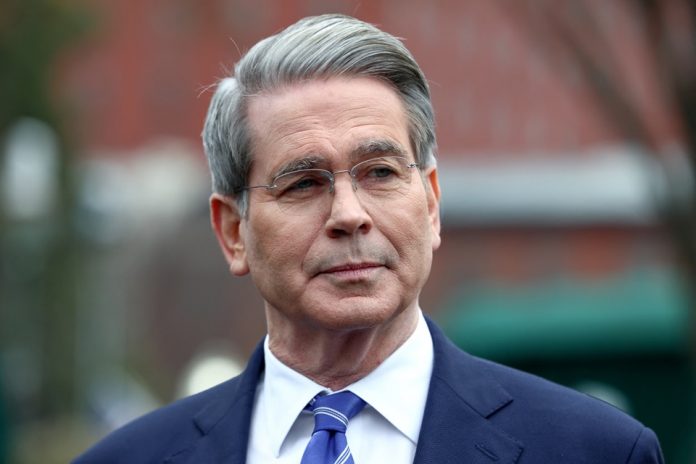
Average U.S. tax refunds are running 22% higher in the opening weeks of the 2026 filing season compared with the same period last year, Treasury Secretary and acting IRS Commissioner Scott Bessent told CNBC’s “Squawk Box” on Friday.

This is delivering an early political win for the Trump administration as it touts the benefits of its signature tax legislation ahead of the November midterms.

The 2026 tax season officially began on January 26, and the IRS has not yet released official weekly filing or refund statistics. Bessent did not specify how many days of returns his figure covers or the exact comparison period, leaving some room for interpretation. Still, the claim aligns with the White House’s narrative that the “big beautiful bill” passed in late 2025 is already putting more money back into taxpayers’ pockets.

For context, the IRS reported that the average individual refund through October 17, 2025 (late in the prior season) stood at $3,052. A sustained 22% increase would push the season-long average meaningfully higher, though final figures will depend heavily on the mix of returns filed later in the spring.

But tax experts caution that early-season refund data can be misleading. Andrew Lautz, director of tax policy at the Bipartisan Policy Center, noted in a January guide that “early data can be deceiving.”

In recent years, average refunds have started relatively modest and then “risen sharply” in mid-February once the IRS begins processing returns that include the refundable Earned Income Tax Credit (EITC) and Additional Child Tax Credit (ACTC). After that February peak, the average typically declines slightly through the April 15 deadline as higher-income filers—who are more likely to owe balances—file closer to the cutoff.

The larger refunds this year stem largely from changes in the 2025 tax law. Trump’s legislation expanded or introduced new tax breaks, including adjustments to the standard deduction, child tax credit, and certain business and investment provisions. Importantly, the IRS did not fully update paycheck withholding tables to reflect these changes, meaning many workers over-withheld during 2025 and are now positioned for bigger refunds when they file.

Garrett Watson, director of policy analysis at the Tax Foundation, previously told CNBC that there could be “a lot of variation between taxpayers.” Whether someone receives a larger refund, owes money, or breaks even depends on which new or expanded tax breaks apply to their situation, how accurately they withheld or made estimated payments, and other factors such as income changes, filing status, dependents, and itemized deductions.

The Earned Income Tax Credit and Additional Child Tax Credit — both refundable and often paid out in larger amounts starting in mid-February — are expected to drive the typical seasonal bump in the average refund figure. Lautz has noted that in prior years, this mid-February surge has been followed by a slight decline in the average through the April deadline.

The political stakes are high as President Trump has repeatedly promised that 2026 would deliver “the largest tax refund season of all time,” tying the expected surge directly to his tax overhaul. Larger refunds could provide a timely boost to consumer spending and household finances heading into the midterm elections, particularly for middle- and lower-income families who rely most heavily on refundable credits.

Economists note that while the early data is encouraging for the administration’s narrative, the ultimate economic impact will depend on how the refunds are used. If households spend the money rather than save or pay down debt, it could provide a modest stimulus to consumption in the second quarter. However, if many filers ultimately owe balances due to under-withholding or changes in their tax situations, the net effect could be more muted.

The IRS is expected to begin releasing official weekly filing statistics in the coming days, providing greater clarity on refund trends. The mid-February processing of EITC and ACTC returns will be a key inflection point for the season-long average.

Currently, Bessent’s claim of a 22% increase offers the first tangible signal that the 2025 tax changes may indeed be translating into larger refunds for many Americans. As more data rolls in and the April 15 deadline approaches, the full picture of how Trump’s tax overhaul is affecting household finances will come into sharper focus — with significant implications for consumer sentiment and the political landscape heading into the midterms.

U.S. Inflation Slows Further in January, Bolstering Case for Midyear Rate Cuts

0

January’s inflation report showed broad-based cooling, with headline CPI at 2.4% and core at 2.5%, strengthening market expectations for a Federal Reserve rate cut as early as June.

U.S. inflation cooled more than expected in January, delivering a welcome data point for policymakers and investors navigating a delicate balance between resilient economic growth and lingering price pressures.

The consumer price index rose 2.4% from a year earlier, down from 2.7% in December, according to the Bureau of Labor Statistics. The reading returned inflation to levels seen shortly after President Donald Trump announced sweeping tariffs on imports in April 2025.

Core CPI, which strips out food and energy, increased 2.5% year over year, the lowest since April 2021. Economists surveyed by Dow Jones had expected 2.5% for both headline and core measures.

Every month, headline CPI rose 0.2% while core increased 0.3%, slightly below forecasts for the overall index.

Financial markets reacted with measured optimism. Treasury yields fell, and traders in interest-rate futures increased the probability of a June rate cut to about 83%, according to CME Group data. Stock futures were little changed.

Broad Cooling Across Key Categories

The January data pointed to easing pressures in several categories central to household budgets.

Shelter costs, which account for more than one-third of the CPI weighting, rose 0.2% for the month. The annual increase slowed to 3%, helping drive the overall deceleration. Rent moderation is particularly significant because housing inflation has been one of the most persistent components in recent years.

Energy prices declined 1.5% in January. Vehicle prices were subdued, with new vehicles up 0.1% and used cars and trucks falling 1.8%. Food prices rose 0.2%, with most grocery categories posting modest gains.

Airline fares jumped 6.5%, illustrating ongoing volatility in travel pricing. Egg prices fell 7% and are down 34% from a year earlier following a sharp surge tied to supply disruptions.

Heather Long, chief economist at Navy Federal Credit Union, called the report “great news on inflation,” adding that cooling in food, gas, and rent “will provide much needed relief for middle-class and moderate-income families.”

Economists had expected President Trump’s tariffs to generate broader price increases. Instead, impacts appear concentrated in specific goods such as furniture and appliances rather than across the broader consumer basket.

Growth Holds Firm as Labor Market Softens

The inflation report adds to a mixed macroeconomic picture.

Economic growth has remained solid. The Federal Reserve Bank of Atlanta’s GDPNow tracker estimates fourth-quarter growth at 3.7%, suggesting momentum carried into early 2026.

At the same time, the labor market has shown signs of cooling. The U.S. added an average of 15,000 jobs per month last year, a marked slowdown from prior years. Consumer spending held up through most of 2025 but was unexpectedly flat heading into the holiday season, raising questions about household momentum.

Treasury Secretary Scott Bessent said Friday that he sees an “investment boom” supporting growth while inflation moves back toward the Federal Reserve’s 2% target in the middle of this year.”

“We’ve got to get away from this idea that growth automatically has to be tampered down, because growth, per se, is not inflationary,” Bessent said. “It’s growth that leaks into areas where there’s not sufficient supply, and everything this administration is doing is creating more supply.”

The interplay between moderating inflation and slower job creation presents policymakers with competing priorities: sustain expansion without allowing price pressures to reaccelerate.

Policy Outlook and Fed Crosscurrents

The Federal Reserve does not use CPI as its primary inflation gauge, instead focusing more closely on the Commerce Department’s personal consumption expenditures index. Even so, CPI trends heavily influence market expectations.

Inflation remains above the Fed’s 2% target, but the trajectory has improved. With three rate cuts already delivered in late 2025, the central bank is widely expected to remain on hold until at least June.

The policy environment is further shaped by leadership dynamics. A rotating group of regional Federal Reserve presidents is seen as maintaining a firm stance on inflation control, while chair-designate Kevin Warsh is expected to advocate for lower rates.

January’s CPI report, delayed several days because of a partial government shutdown, does not resolve the debate. It does, however, reinforce the view that price pressures are easing without a sharp deterioration in growth — a combination that could give the central bank room to pivot toward additional easing later this year if the trend continues.

For markets and policymakers, the question now is whether January marks a sustained downshift in inflation or another temporary reprieve in a still-fragile disinflation process.

European Central Bank Moves to Make Euro Liquidity Backstop Global and Permanent with €50bn Facility

0

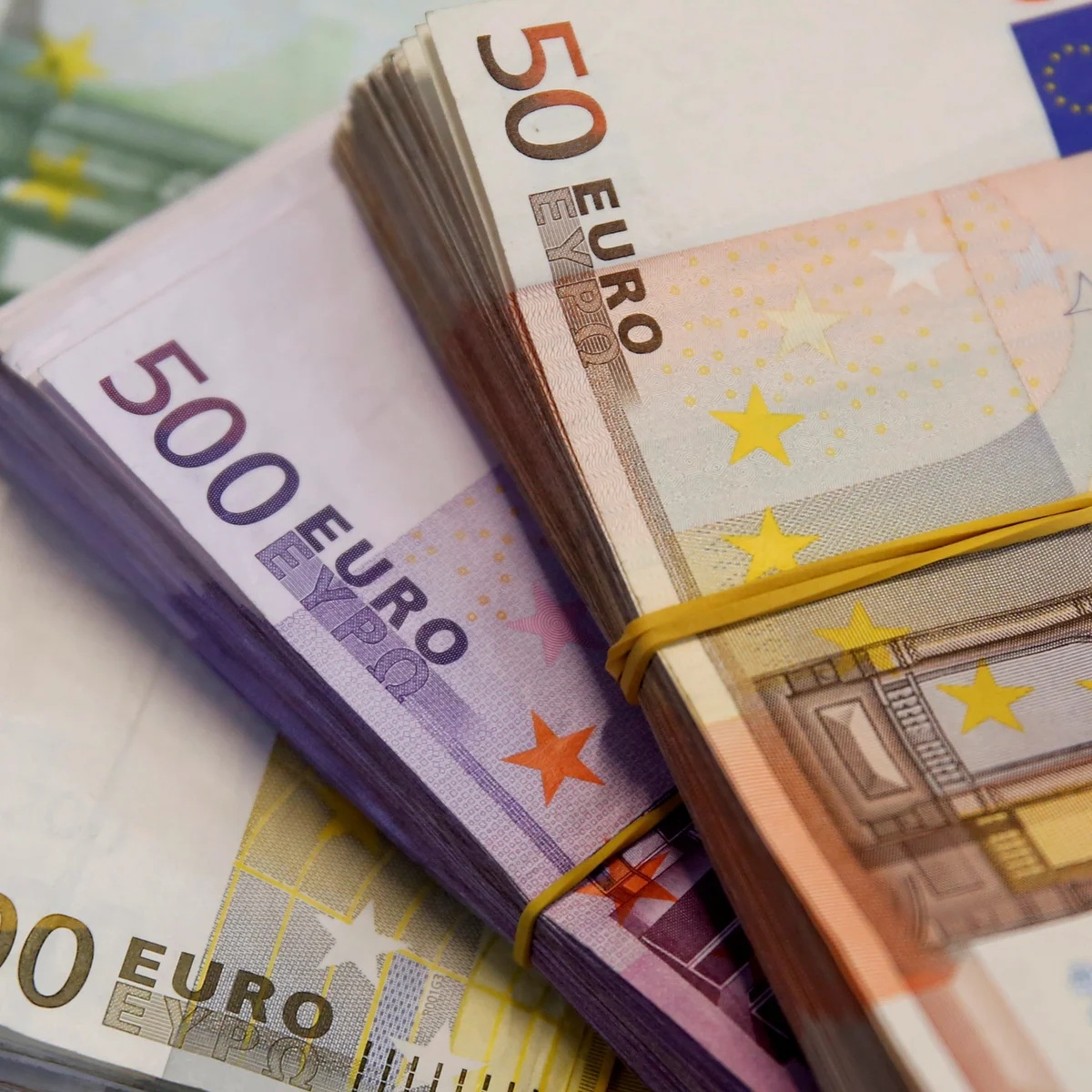
The European Central Bank will open a standing €50 billion euro liquidity facility to central banks worldwide from 2026, aiming to strengthen the euro’s global role and guard against market stress.

The European Central Bank said on Saturday it will widen and permanently establish access to its euro liquidity backstop, making the facility globally available in a move designed to enhance the international standing of the single currency.

The announcement, delivered by ECB President Christine Lagarde at the Munich Security Conference, marks the first time an ECB chief has addressed the forum.

“The ECB needs to be prepared for a more volatile environment,” Lagarde said. “We must avoid a situation where that stress triggers fire sales of euro-denominated securities in global funding markets, which could hamper the transmission of our monetary policy.”

The new facility, which will take effect in the third quarter of 2026, will allow central banks worldwide to access euro liquidity through repo operations of up to €50 billion. Access will be open to all central banks except those excluded for reputational reasons, including concerns related to money laundering, terrorist financing, or international sanctions.

A Permanent Global Backstop

The repo line allows foreign central banks to borrow euros from the ECB against high-quality collateral, with the funds to be repaid at maturity along with interest. It is typically used when commercial banks face difficulty obtaining funding in private markets during periods of stress.

Until now, such euro liquidity lines were available to only a limited number of central banks, mostly in Eastern Europe, and required periodic renewal. By contrast, the new framework will provide standing access rather than temporary arrangements.

“These changes aim to make the facility more flexible, broader in terms of its geographical reach and more relevant for global holders of euro securities,” the ECB said in a statement.

Lagarde framed the move as both a financial stability measure and a strategic step to expand the euro’s global footprint.

“The availability of a lender of last resort for central banks worldwide boosts confidence to invest, borrow and trade in euros, knowing that access will be there during market disruptions,” she said.

By guaranteeing access to euro funding in times of turmoil, the ECB is seeking to reduce the risk that foreign institutions holding euro-denominated assets would be forced into disorderly sales during liquidity squeezes.

Competing With the Dollar

The decision comes as investors reassess the role of the U.S. dollar amid policy uncertainty under President Donald Trump. Lagarde has argued in recent months that global financial volatility presents an opportunity for the euro to gain international market share, provided the euro area strengthens its financial architecture.

The U.S. Federal Reserve operates a comparable mechanism known as the Foreign and International Monetary Authorities (FIMA) Repo Facility, which allows foreign central banks to obtain dollars by temporarily exchanging U.S. Treasury securities. That tool is designed to stabilize the Treasury market during periods of funding stress and prevent forced selling of government bonds.

By institutionalizing its own standing liquidity facility, the ECB is aligning more closely with that model. A predictable and permanent euro backstop may encourage foreign central banks and global investors to increase holdings of euro-denominated sovereign and corporate bonds.

In practical terms, wider access to euro funding could deepen liquidity in euro-area capital markets, lower funding costs, and enhance the euro’s appeal as a reserve currency. It may also strengthen the transmission of ECB monetary policy beyond the bloc’s borders by limiting external shocks to euro funding markets.

Implications for Financial Stability and Capital Flows

The new facility could have several structural effects. First, it reduces the risk of abrupt cross-border capital flows during crises, as foreign institutions would have direct access to euro liquidity rather than needing to liquidate assets.

Second, it signals the ECB’s intent to play a more assertive role in global financial stability discussions, positioning the euro as a credible alternative funding currency.

Third, by making the backstop permanent, the ECB removes uncertainty associated with temporary arrangements, which can themselves become a source of market anxiety during stress episodes.

The initiative does not immediately alter monetary policy within the euro zone. Instead, it operates as a structural safeguard intended to prevent disruptions that could impair policy transmission.

It is not clear whether the measure will significantly shift global reserve allocations. Some analysts believe that a significant shift will depend on broader factors, including fiscal integration within the euro area, capital markets union progress, and geopolitical developments. Still, the ECB’s decision represents one of its most explicit steps in years toward reinforcing the euro’s international role through institutional design rather than rhetoric alone.

Anthropic’s $30B Raise Highlights Ongoing Race for AI Supremacy 

0

Anthropic officially announced that it has raised $30 billion in a Series G funding round at a $380 billion post-money valuation. This marks one of the largest private funding rounds in tech history and the second-largest venture deal ever behind only OpenAI’s $40 billion round in 2025.

The round was led by Singapore’s sovereign wealth fund GIC and Coatue, with co-leads including D. E. Shaw Ventures, Dragoneer, Founders Fund, ICONIQ, and MGX. Other notable participants include Accel, General Catalyst, Jane Street, the Qatar Investment Authority, and prior backers like Nvidia and Microsoft with some of their earlier commitments rolled in.

This more than doubles Anthropic’s previous valuation of around $183 billion from its Series F in September 2025. The company highlighted explosive enterprise demand for its Claude models including Claude Code, with key stats shared: Annualized revenue run rate now around $14 billion.

Rapid year-over-year growth reportedly 10x in recent periods. Heavy adoption among large enterprises—eight of the Fortune 10 are customers. Claude powering a significant portion of global developer workflows, 4% of GitHub commits in some reports.

The fresh capital will support frontier research, product innovation, and massive infrastructure scaling to meet demand. The news sparked reactions across the industry, including sharp commentary from Elon Musk, who called Anthropic’s models “misanthropic and evil” amid intensifying AI rivalry.

Some observers noted bubble concerns in the broader AI market, given sky-high valuations and skittish public tech stocks, but enterprise traction appears to be driving the momentum. This positions Anthropic as a major contender in the race for frontier AI leadership, with speculation about a potential IPO in the coming 12–18 months.

This more than doubles Anthropic’s prior $183 billion valuation from September 2025, positioning it as one of the world’s most valuable private companies—trailing only OpenAI ($500 billion in some reports) and ahead of or alongside entities like SpaceX in startup rankings.

It intensifies direct rivalry with OpenAI which raised $40 billion previously, Google, Meta, and others. Anthropic’s enterprise-focused traction; 8 of the Fortune 10 as customers, Claude powering developer workflows like 4% of GitHub commits gives it a strong moat in business adoption, where Claude’s safety-aligned models and tools like Claude Code and Cowork agent are seeing explosive uptake.

The capital fuels massive scaling: frontier model research, product innovation, and infrastructure buildout to meet “insatiable” enterprise demand. This could accelerate Anthropic’s path to market leadership in enterprise AI agents and coding assistants.

Anthropic disclosed a $14 billion annualized revenue run rate—up dramatically reportedly 10x+ year-over-year growth over three years, with ~80% from enterprises. Claude Code alone hits ~$2.5 billion run rate, enterprise subscriptions up 4x, and over 500 customers spending $1M+ annually.

This validates AI’s shift from hype to real revenue engine, proving frontier models can generate massive cash flow in business use cases. It counters earlier doubts about AI monetization and sets a benchmark for peers. Validates continued massive investor appetite for top-tier AI despite broader tech volatility.

Backers like GIC, Coatue, Founders Fund, Nvidia, Microsoft rolling in prior commitments, and others show belief in sustained growth. At ~27x forward revenue multiple; higher than many mature SaaS giants, the valuation embeds expectations of dominant market share, pricing power, and continued hyper-growth.

Critics highlight risks like: Capital intensity (huge GPU/infra spend could lead to underutilized capacity if demand slows).
Margin compression from competition.
Potential “AI bubble” dynamics—echoing prior software stock selloffs tied to AI disruption fears.
Broader AI capex arms race continues, benefiting infra players (Nvidia, data centers, power) but pressuring application-layer software incumbents.

Tools like Cowork and Claude Code threaten legacy software contributing to recent selloffs in software stocks as investors weigh AI’s transformative potential. Positions Anthropic alongside OpenAI and possibly xAI as a prime candidate for a blockbuster public debut in the next 12–18 months, though public markets may demand stricter proof of profitability and sustained growth.

Heavy sovereign wealth involvement and big-tech ties raise questions about power concentration in frontier AI. The scale intensifies the compute and talent race; Anthropic’s “safety-first” ethos may face tension under growth demands.

This round cements Anthropic as a genuine contender for AI supremacy, backed by real revenue traction rather than pure speculation. However, it also heightens scrutiny: the bar for execution is now extraordinarily high, with limited margin for error in a hyper-competitive, capital-hungry field.

If Anthropic delivers on scaling and innovation, it could redefine enterprise software; if not, it risks becoming a high-profile case of overvaluation in the AI boom.

OPEC+ Leans Toward Resuming Oil Output Increases from April as Brent Nears Six-Month High Amid U.S.-Iran Tensions

0

OPEC+ is leaning toward resuming phased oil output increases from April 2026, three sources from within the group told Reuters on Wednesday, as the alliance prepares for rising summer demand and seeks to regain market share lost to sanctioned producers and constrained output elsewhere.

The eight key OPEC+ producers—Saudi Arabia, Russia, the United Arab Emirates, Kazakhstan, Kuwait, Iraq, Algeria, and Oman—are scheduled to meet on March 1 to review market conditions and quotas. All three OPEC+ sources indicated the group is tilting toward restarting increases in April. Three additional sources familiar with OPEC+ deliberations expressed similar expectations. No final decision has been made, and discussions will continue in the coming weeks, two of the sources said.

OPEC and authorities in Russia and Saudi Arabia did not immediately respond to requests for comment. The eight members had raised production quotas by 2.9 million barrels per day (bpd) from April to December 2025—equivalent to roughly 3% of global demand—before freezing further planned increases for January through March 2026 due to seasonally weaker consumption.

Resuming increases would allow Saudi Arabia and the UAE, which have maintained voluntary cuts beyond formal quotas to support prices, to reclaim market share from sanctioned producers like Russia and Iran, as well as Kazakhstan, which has been hampered by repeated pipeline constraints and field maintenance issues.

Brent crude futures are trading near $68 per barrel, close to a six-month high of $71.89 reached in January on heightened U.S.-Iran tensions. Despite earlier fears of a 2026 supply glut suppressing prices, the market has remained supported by geopolitical risk premiums, steady demand recovery in Asia, and disciplined OPEC+ supply management.

Russian Deputy Prime Minister Alexander Novak, asked about potential quota increases, told reporters last week that delegates expect demand to rise gradually from March and April: “Starting from around March and April, demand is gradually increasing. This will be an additional factor to ensure the balance.”

OPEC’s latest monthly oil market report forecasts demand for OPEC+ crude in the second quarter of 2026 falling by 400,000 bpd from the first quarter but projects full-year demand 600,000 bpd higher than in 2025. The International Energy Agency (IEA) this week lowered its 2026 global oil demand growth forecast to 850,000 bpd—still above 2025’s 770,000 bpd growth—citing slower economic momentum in some regions offset by resilient transport fuel demand.

The potential resumption comes as OPEC+ continues to manage a complex landscape. Saudi Arabia and the UAE have voluntarily withheld additional output to support prices, while Russia and Iran face Western sanctions that limit their effective output and market access. Kazakhstan has struggled with pipeline constraints and field maintenance issues, reducing its ability to fully utilize allocated quotas.

Brent’s stability near six-month highs reflects a combination of factors: geopolitical risk premiums tied to U.S.-Iran tensions, steady demand recovery in Asia, and disciplined OPEC+ supply management. Earlier fears of a 2026 supply glut have eased as non-OPEC+ production growth (led by the U.S., Brazil, and Guyana) has moderated, while demand has proven more resilient than anticipated.

A resumption of increases would aim to balance the market ahead of peak summer demand while allowing compliant members to regain share from sanctioned or constrained producers. However, any decision will depend on updated demand forecasts, inventory levels, non-OPEC supply trends, and geopolitical developments.

The March 1 meeting will be closely watched as a signal of OPEC+’s confidence in the demand outlook and its willingness to prioritize market share over short-term price maximization. With Brent holding above $68 and summer driving season approaching, the group appears poised to gradually unwind restraint, provided macroeconomic and geopolitical conditions remain supportive. OPEC+ collectively pumps about half of the global oil supply, giving its decisions outsized influence on prices. The potential shift from freeze to modest increases would reinforce the group’s flexible, consensus-driven approach to balancing supply with demand in an uncertain global environment.

However, market participants note that any resumption would likely be gradual and data-dependent, with Saudi Arabia and the UAE likely to retain some voluntary cuts to maintain price support. Energy analysts expect the interplay between OPEC+ policy, U.S.-Iran tensions, and non-OPEC supply dynamics to remain central to oil price formation through 2026.