DD
MM
YYYY

PAGES

DD
MM
YYYY

spot_img

PAGES

Home Blog Page 15

Thiel’s Hedge Fund Takes $76M Stake in Argentina’s Vista Energy, Shares Rise

0

Shares of Argentine oil producer Vista Energy rose in premarket trading Monday after a regulatory filing revealed that billionaire investor Peter Thiel’s hedge fund had acquired a stake in the company, adding to growing investor interest in Argentina’s rapidly expanding shale industry.

Thiel Macro LLC held nearly 1.2 million American depositary shares of Vista Energy worth about $76 million as of June 30, according to a U.S. Securities and Exchange Commission filing published Friday. Vista shares were last up 5.4% in premarket trading.

The investment was Thiel Macro’s second-largest disclosed position at the end of the second quarter, behind Amazon, in which the fund held about 495,000 shares valued at roughly $118 million.

The filing also showed a broader shift toward energy and utilities. Six of the fund’s seven newly disclosed positions were in the sector, including American Electric Power, DTE Energy, FirstEnergy, CMS Energy, Vistra and X-Energy.

The concentration of new investments in energy-related companies suggests Thiel Macro is increasing its exposure to power generation, electricity infrastructure and energy production at a time when rising electricity demand from data centers and artificial intelligence is reshaping the investment outlook for the sector.

Vista, Argentina’s largest independent oil and gas producer, is focused on the Vaca Muerta shale formation, one of the world’s most significant undeveloped oil and gas resources. The company has invested more than $6.5 billion in Argentina as it expands production from the formation.

The investment also carries a clear connection to Argentina for Thiel.

Thiel recently moved with his family to Buenos Aires, where he purchased a mansion. Since arriving in Argentina in April, he has met senior officials in President Javier Milei’s administration, including Economy Minister Luis Caputo, Deregulation Minister Federico Sturzenegger and presidential adviser Santiago Caputo.

Thiel also met Milei earlier this year.

Milei has pursued sweeping economic reforms aimed at reducing state intervention, attracting foreign capital and expanding private investment in Argentina’s natural resources. The government has identified oil and gas, lithium and other mineral resources as important areas for attracting international investment and increasing exports.

Vaca Muerta is central to that aim.

Argentina has sought to increase oil and gas production from the formation to strengthen energy exports, generate foreign currency and reduce the country’s reliance on energy imports. Improved infrastructure and investment have helped unlock more of the formation’s potential, although transport capacity and other infrastructure remain important constraints on how quickly production can expand.

For Vista, Thiel’s investment provides a high-profile endorsement at a time when international investors are increasingly examining Argentina’s energy assets as the country’s economic policy shifts toward greater market liberalization.

The timing also matters because Thiel’s fund is not making an isolated bet on oil. Its newly disclosed holdings span electricity utilities, power generation and energy technology, giving the portfolio exposure to several parts of an energy market undergoing structural change.

The combination of AI-driven electricity demand, growing investment in power infrastructure and Argentina’s efforts to expand its energy exports has made the sector particularly attractive to investors seeking long-term growth opportunities.

Vista’s position in Vaca Muerta gives Thiel Macro direct exposure to that Argentine energy story.

The investment does not necessarily indicate that Thiel personally directed the purchase or that he plans additional investments in Argentina. But it adds to the significance of his recent move to Buenos Aires and his meetings with senior government officials.

For Milei’s administration, high-profile investments by foreign billionaires and institutional investors can also serve as a signal that Argentina’s efforts to attract capital are gaining attention beyond traditional emerging-market investors.

Vista’s immediate market reaction shows how closely investors are watching the company. Its shares had already benefited from expectations for continued growth in Vaca Muerta, and the disclosure of Thiel Macro’s position has added another layer of attention to the stock.

Trump-Backed World Liberty Ties Up With WorldClaw, Platform Offering Chinese AI Models

0

President Donald Trump-backed cryptocurrency venture World Liberty Financial is collaborating with Hong Kong-based AI platform WorldClaw, which provides access to dozens of artificial intelligence models developed by Chinese technology companies that the U.S. government has flagged over national security and technology concerns.

The relationship is drawing scrutiny because it places a business linked financially to the Trump family alongside Chinese AI developers at a time when the administration is seeking to strengthen the United States’ technological position against China and has imposed restrictions on several Chinese technology companies.

A Reuters review found that 43 of the 90 AI models available through WorldClaw were developed by Alibaba, Baidu, Z.ai and other Chinese companies. The platform also provides access to models from U.S. companies including OpenAI and Anthropic.

There is no indication that the arrangement itself violates U.S. law. Chinese AI models are generally available for use by individuals and businesses in the United States, even when their developers face government restrictions. The issue is instead the apparent tension between the Trump administration’s national security policies toward Chinese technology and the commercial relationship involving a venture in which the Trump family holds a substantial ownership interest.

Sam Bresnick, a fellow at Georgetown University’s Center for Security and Emerging Technology, described the arrangement as potentially hypocritical given Washington’s efforts to counter China’s AI industry, according to Reuters.

The White House rejected the suggestion of a conflict.

“There are no conflicts of interest” in the relationship between World Liberty and WorldClaw, White House spokesperson Anna Kelly said, adding that Trump “only acts in the best interests of the American public.”

David Wachsman, a spokesman for World Liberty, said WorldClaw is independent and argued that major U.S. companies also provide access to AI models developed in different countries.

A WorldClaw spokesperson said the company helps U.S. AI companies reach international users and stressed that making an AI model available does not amount to endorsing its developer.

Chinese AI Models Dominate A Large Part Of WorldClaw’s Offering

The scale of Chinese participation on WorldClaw is central to the controversy. Of the 90 models listed on the platform, almost half were developed by Chinese companies. They include models from Alibaba and Baidu, as well as Z.ai, DeepSeek, and Moonshot.

The Trump administration has taken action against several of these companies. The U.S. Department of Defense has designated Alibaba and Baidu as Chinese military companies, a designation that restricts the Pentagon from doing business with them.

Z.ai, formerly known as Zhipu AI, is on the Commerce Department’s entity list, which imposes significant restrictions on access to U.S. technology. The U.S. government has said Z.ai contributes to China’s military modernization through AI research. The companies have disputed those allegations. Alibaba, for example, said it is not a Chinese military company and described its inclusion on the Pentagon’s list as “arbitrary and capricious.”

DeepSeek and Moonshot have also come under scrutiny from U.S. officials over allegations involving intellectual property. The companies have disputed such accusations.

The situation illustrates one of the complications in Washington’s effort to contain China’s technological rise. Government restrictions may limit certain commercial relationships, but they do not necessarily prevent companies and consumers from accessing Chinese-developed software and AI models.

World Liberty Has A Financial Interest In The Relationship

The commercial connection becomes more significant because World Liberty’s tokens can be used to pay for WorldClaw’s services. WorldClaw accepts World Liberty’s USD1 stablecoin, among other cryptocurrencies, as payment for access to AI models.

The Trump family owns 38% of World Liberty, according to Reuters. The family therefore has a financial interest in the broader use of the venture’s tokens.

USD1 is designed to maintain a value of $1 and is backed by traditional assets such as U.S. Treasury securities. World Liberty generates revenue from the stablecoin, including interest earned on the assets backing it, with the Trump family entitled to a share of that income.

This matters because the relationship does not appear to be simply a technology partnership. The use of World Liberty’s stablecoin on a platform offering Chinese AI models potentially creates a commercial link between the Trump family’s crypto interests and a business whose services include technology developed by companies targeted by the administration on national security grounds.

WorldClaw says it is independently owned and operated and is not managed or controlled by World Liberty or its affiliates. There are, however, personnel and promotional links between the two ventures.

Ryan Fang, World Liberty’s head of growth, serves as an external adviser to WorldClaw. The company said his work has focused on USD1 adoption, partnerships and expanding access to AI services.

Trump’s sons have also publicly promoted WorldClaw.

Donald Trump Jr. said in May that he would meet winners of a WorldClaw contest at Mar-a-Lago, while Eric Trump described the collaboration as “the future of finance.”

The Trump family has already generated more than $1.4 billion from World Liberty token sales, according to a Reuters report cited in the material, forming the largest component of the family’s reported $2.3 billion in cryptocurrency earnings.

Trump retains ownership of his interests through a trust while his sons, Donald Trump Jr. and Eric Trump, operate the Trump Organization.

The Security Question Extends Beyond Politics

The relationship also raises a separate question about the security implications of giving users access to Chinese AI models through a single aggregation platform. WorldClaw’s WorldRouter service acts as an intermediary between users and different AI models. The company’s website says the platform has more than 10,000 users and handles more than 50 million requested tasks a day.

WorldClaw is also developing AI-agent products capable of performing tasks such as ordering food and summarizing emails. That creates a potentially greater security concern than simply allowing users to ask a chatbot questions.

AI agents can be given access to applications, data, and digital services in order to perform tasks on a user’s behalf. If an AI system is compromised, manipulated or exposed to malicious instructions, the consequences can extend beyond an inaccurate answer to actions being carried out within connected systems.

Daniel Remler, a senior fellow at the Center for a New American Security and a former State Department policy adviser, said Chinese AI models could present risks including government monitoring, censorship and malicious code that could potentially compromise AI agents.

WorldClaw says on its website that it may share user inputs with the companies providing the underlying models. That raises an additional privacy consideration for businesses or individuals using the platform to process sensitive information.

The company said it applies privacy and security safeguards and takes security seriously.

The Broader U.S.-China AI Race Complicates The Picture

The WorldClaw relationship comes at a particularly sensitive moment in the global AI competition.

Washington has sought to limit China’s access to advanced semiconductors and other technologies while encouraging U.S. companies to maintain leadership in artificial intelligence. At the same time, Chinese developers have produced competitive models, often at lower costs, making them difficult to exclude entirely from the global AI ecosystem.

That creates a tension between national security policy and commercial reality.

Peter Jeydel, an attorney specializing in sanctions and trade controls at Troutman Pepper Locke, said the relationship could be viewed as inconsistent with a China-hawk approach but also fit with a more business-oriented interpretation of Trump’s policies.

The contradiction is likely to become more pronounced as Chinese AI models become more capable and cheaper to operate.

For U.S. companies, investors and consumers, the question is not simply whether a Chinese AI model can be accessed, but what data is sent to it, where that data is processed, who controls the underlying infrastructure, and what an AI system can do once it is connected to other applications.

WorldClaw’s business model puts those questions directly alongside the political and financial interests surrounding World Liberty.

Meanwhile, the arrangement highlights a difficult policy dilemma for the Trump administration. Washington can restrict Chinese companies, limit technology transfers and warn about national security risks, but Chinese AI models can still gain international users when they are competitive, inexpensive and distributed through global platforms.

The World Liberty and WorldClaw relationship therefore sits at the intersection of three rapidly expanding industries: cryptocurrency, artificial intelligence and cloud-based digital services.

Ethereum’s Roadmap: Privacy, Quantum Security and a Simpler Future

0

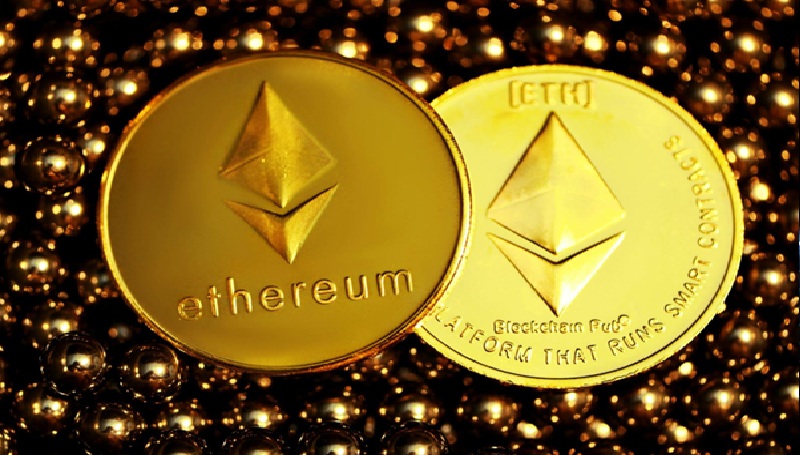
Ethereum’s long-term roadmap is expanding beyond its traditional focus on scalability. As the network matures, developers are increasingly prioritizing privacy, quantum security, native rollups and protocol simplification, reflecting a broader effort to ensure Ethereum remains resilient, efficient and competitive for decades to come.

For years, Ethereum’s most visible challenge was scalability. The network’s roadmap became heavily centered on rollups and other layer-2 technologies designed to increase transaction capacity while keeping Ethereum as the underlying settlement and security layer.

That strategy has helped create a large ecosystem of scaling networks, but Ethereum’s future development is now being framed around a much wider set of technical priorities.

One of the most important additions is privacy. Ethereum has historically operated as a transparent blockchain, allowing transactions and account activity to be publicly inspected.

While transparency is valuable for verification and accountability, it can create serious limitations for individuals, businesses and institutions that do not want every financial interaction exposed on a public ledger.

Greater privacy could therefore become an important component of Ethereum’s next phase. Developers are exploring cryptographic technologies that could allow users to prove information without revealing unnecessary underlying data.

Such capabilities could make decentralized applications more practical for financial institutions, businesses and ordinary users while preserving the verifiability that makes public blockchains useful. Quantum security represents another increasingly important consideration.

Quantum computing remains an emerging technology, but sufficiently powerful quantum machines could eventually threaten some cryptographic systems used by blockchain networks.

Ethereum’s willingness to consider quantum-resistant infrastructure before such threats become immediate demonstrates a long-term approach to protocol security.

Native rollups remain central to Ethereum’s scaling ambitions. Rather than treating scaling networks as separate experiments, Ethereum’s roadmap increasingly envisions a deeper integration between rollup-based execution and the core protocol.

The objective is to make transactions cheaper and faster while preserving Ethereum’s decentralization and security assumptions. Protocol simplification is equally significant. Ethereum has become an extraordinarily complex system after years of upgrades, experimentation and expanding functionality.

Complexity can create technical debt, increase maintenance costs and make the protocol harder for developers and validators to understand. Simplifying Ethereum’s architecture could therefore improve security and make future upgrades easier to implement.

These priorities illustrate how Ethereum’s evolution is changing. The network is no longer pursuing a single technological objective. Scalability remains critical, but privacy, security, usability and simplicity are becoming equally important pieces of the long-term strategy.

The roadmap could influence Ethereum’s position in the broader digital-asset economy. As tokenized assets, decentralized finance and institutional blockchain applications expand.

Infrastructure will increasingly be judged not only by transaction speed but also by confidentiality, reliability and resistance to emerging technological threats. Ethereum’s roadmap acknowledges these changing expectations.

The broader implication is that Ethereum is attempting to build infrastructure capable of surviving multiple technological eras. The network must accommodate increasing demand, support sophisticated financial applications, protect users against emerging threats and remain decentralized enough to preserve its core principles.

Ethereum’s roadmap therefore represents more than a collection of upgrades. It is an attempt to redefine what a global blockchain infrastructure should become.

By combining native scaling, stronger privacy, quantum resilience and a simpler protocol, Ethereum is positioning itself not merely for the next market cycle, but for a technological future that could look dramatically different from today.

Institutional Demand Returns to Bitcoin and Ether Funds

0

U.S. spot Bitcoin and Ether funds attracted a combined $1.1 billion in their strongest weekly inflows since April, providing a powerful signal that institutional appetite for digital assets may be returning.

After months of uneven flows, the renewed demand suggests that professional investors are once again becoming more comfortable allocating capital to crypto through regulated investment products.

The significance of the $1.1 billion figure extends beyond the size of the inflows. Spot exchange-traded funds have become one of the most important bridges between traditional finance and cryptocurrency.

They allow institutions, asset managers, financial advisers, and other investors to gain exposure to Bitcoin and Ether without directly managing wallets, private keys, or crypto exchanges. As a result, ETF flows have increasingly become an important indicator of institutional sentiment.

Bitcoin funds accounted for the larger share of demand, reflecting Bitcoin’s continued position as the dominant institutional cryptocurrency. The approval and growth of U.S. spot Bitcoin ETFs transformed the market by creating a familiar investment vehicle for institutions that previously faced regulatory, operational, or custody barriers.

Strong inflows therefore suggest that investors may be increasing their strategic exposure rather than simply trading short-term market movements. Ether’s participation is equally important.

Spot Ether ETFs have struggled at times to match Bitcoin’s momentum, but renewed inflows could indicate that investors are broadening their crypto allocations beyond the original digital asset.

Ether’s investment case is increasingly connected to the growth of decentralized finance, tokenization, stablecoins, and blockchain infrastructure. If institutional investors begin treating Ether as a strategic asset rather than merely a speculative alternative, its role within diversified portfolios could expand significantly.

The timing of the inflows matters. Crypto markets have faced persistent uncertainty surrounding interest rates, liquidity conditions, economic growth, and regulatory policy. Strong ETF demand despite those challenges indicates that institutional investors may be looking beyond short-term macroeconomic volatility toward the longer-term adoption of digital assets.

One strong week should not automatically be interpreted as the beginning of a sustained bull market. ETF flows can change rapidly as investors respond to prices, monetary policy expectations, geopolitical developments, and broader risk sentiment. A continuation of inflows over several weeks would provide a much stronger confirmation that institutional demand is structurally strengthening.

The $1.1 billion inflow represents an important psychological and market milestone. It demonstrates that regulated crypto investment products continue to attract substantial capital even after the initial excitement surrounding their launch has faded. This is particularly significant because institutional adoption is no longer simply a future narrative.

It is increasingly visible through actual capital flows. If the trend continues, Bitcoin and Ether could benefit from a reinforcing cycle in which stronger institutional demand supports prices, higher prices attract additional allocations, and growing liquidity makes digital assets increasingly acceptable within traditional portfolios.

For now, the latest figures suggest that institutional investors are not abandoning crypto. Instead, after a period of caution, they appear to be returning to the market with renewed conviction. The next question is whether the $1.1 billion surge represents a temporary burst of demand or the beginning of a much larger institutional accumulation cycle.

Chinese AI Models Gain Ground Globally as Alibaba’s Qwen Reportedly Surges Ahead of Google, Meta

0

Chinese artificial intelligence models are gaining a stronger foothold among developers worldwide, with Alibaba’s Qwen emerging as one of the most widely used open AI model families and other Chinese systems including DeepSeek, Kimi, Zhipu AI and MiniMax rapidly expanding their global reach.

The growth is occurring while the United States continues to impose restrictions on China’s access to advanced chips and AI technologies. Rather than limiting the global adoption of Chinese models, those measures appear to be coinciding with an acceleration in the use of Chinese open-source and open-weight systems by developers looking for models that can be downloaded, customized, and deployed at relatively low cost.

Alibaba’s Qwen reportedly recorded more than 3 billion downloads worldwide over the six months through August, according to an August 14 report from Hugging Face, an open-source AI platform. That put Qwen ahead of open models from Meta and Google on the platform during the period.

Google’s open models recorded 418 million downloads, while Meta’s reached 227 million, according to the report.

The scale of Qwen’s lead is notable because downloads provide an indication of how developers are choosing the underlying technology for applications, fine-tuning, and deployment. Unlike proprietary systems that remain controlled by their developers, open-weight models can be downloaded and adapted, allowing companies and individual developers to modify them for specific applications.

Hugging Face described Qwen as “one of the largest foundations of the open AI ecosystem” and said it had become embedded in the workflow developers use when deciding which models to fine-tune and deploy.

Alibaba said the Qwen family now includes more than 460 open-source models, while more than 300,000 derivative models have been developed from them.

The breadth of that ecosystem could prove more important than the popularity of any individual model. Every derivative model represents another application, modification, or deployment built on the underlying technology, potentially expanding Qwen’s influence well beyond Alibaba’s direct users.

Tian Feng, former dean of SenseTime’s Intelligence Industry Research Institute, said the adoption figures showed that Chinese open models were gaining traction despite U.S. export controls.

The trend is also visible in the scale of models being released by Chinese AI laboratories.

According to Hugging Face’s analysis cited in the report, in almost every month of 2026 the largest and most capable open model released by a Chinese laboratory was larger by parameter count than the largest model released by a U.S. laboratory. China’s monthly maximum ranged from 754 billion to 2.78 trillion parameters, while the U.S. ceiling remained below 130 billion in five of the seven months examined.

Parameter count is not a direct measure of an AI model’s performance, but the figures indicate the scale of resources Chinese laboratories are putting into open models.

The Chinese AI industry is also continuing to release new tools aimed at developers.

Zhipu AI launched GLM-5.3 on Friday, describing the open-source release as a way to make security capabilities available to developers globally.

DeepSeek released Harness on Thursday, its first agent runtime framework. The system enables AI models to interact directly with software repositories, locate files, modify code, run tests, and repeatedly correct errors.

Moonshot AI has also fully open-sourced Kimi K3, which has 2.8 trillion total parameters and is currently the largest open model by parameter count, according to the information provided.

These releases show that competition is increasingly moving beyond chatbot applications toward the underlying infrastructure developers use to build AI products.

Chinese companies are also seeking to close the performance gap with proprietary systems developed by U.S. companies such as OpenAI and Anthropic. Models including Qwen, DeepSeek and Kimi are now being positioned as alternatives for developers who want access to advanced capabilities without being locked into a closed commercial platform.

That is creating pressure on U.S. technology companies to expand their own open-model offerings. Meta and Nvidia have released new open models in recent weeks, adding to the competition for developers and researchers who prefer models that can be downloaded and modified.

The shift toward open weights could have implications well beyond AI model developers. More accessible models can increase competition across cloud computing, semiconductors, applications and AI services by giving businesses more choices over the systems they use.

Tian said greater availability of open-weight models could stimulate innovation, reduce costs and make advanced AI capabilities more accessible and adaptable.

The debate over open AI models has also reached policymakers in Washington.

Companies and institutions including Nvidia, Microsoft, IBM, Meta, OpenAI, Cisco, Dell Technologies, GitHub and Hugging Face have signed a joint statement urging U.S. policymakers to support open-weight AI models rather than imposing restrictions that could limit their development or use.

The companies noted that U.S. leadership in AI depends on maintaining an open ecosystem across the technology industry.

Nearly 200 Silicon Valley startups operating under the Little Tech Association have also written to the U.S. government opposing restrictions on American companies’ use of Chinese open-weight AI models.

The concern among some U.S. startups is that restricting access to capable Chinese models could increase costs and limit their ability to experiment with AI technology, particularly for smaller companies that lack the resources to build models from scratch.

The growing international use of Chinese models is also extending into emerging markets.

Liu Gang, chief economist at the Chinese Institute of New Generation Artificial Intelligence Development Strategies, said Chinese open models were becoming part of the global AI supply chain and helping expand access to AI in developing economies.

Alibaba has been distributing Qwen models to enterprise customers in Southeast Asia and Africa through its cloud platform. The Qwen family supports text and multimodal applications and covers 119 languages and regional dialects, according to the Qwen team.

The potential impact is high in markets where businesses and institutions may not have the financial resources to build or license the most expensive proprietary AI systems.

Chinese open models are increasingly being used in areas including agriculture, education and healthcare, according to Liu, who said their adoption was helping narrow the digital divide across developing economies.

The latest usage data points to the scale of the shift.

Global AI model usage reached 69 trillion tokens during the week of August 3-9, according to calculations by National Business Daily based on OpenRouter data. Weekly usage increased 21.48% from the previous week.

Chinese models accounted for 34.25 trillion tokens during the period, up 21.76% week-on-week. They surpassed U.S. models for the 15th consecutive week, giving Chinese systems the largest share of global AI model usage in the period.

The figures should not be interpreted as a definitive measure of model quality or overall market share, since token usage varies according to model architecture, application, and how developers interact with different systems. But they point to a growing level of engagement with Chinese AI models among global users.

The strategic significance is becoming clearer. China’s AI industry is not competing only to produce models that match the capabilities of U.S. systems. It is increasingly trying to establish an open development ecosystem around those models, encouraging developers to download, modify, redistribute, and build on them.

That approach could give Chinese AI companies influence beyond direct commercial revenue. If developers build thousands of applications and derivative models around Qwen, DeepSeek, Kimi, or other Chinese systems, those models can become embedded in software infrastructure even when the underlying developer is not directly paying the Chinese company.

Now, the trend presents a more complicated challenge for the U.S. than simply restricting China’s access to advanced chips. Export controls can limit access to some hardware and technologies, but they do not necessarily prevent developers elsewhere from downloading and using open models that have already been released.