DD
MM
YYYY

PAGES

DD
MM
YYYY

spot_img

PAGES

Home Blog Page 1500

Gold Hitting ATH of $3,220 Shows Its Resilience As Inflationary Hedge

0

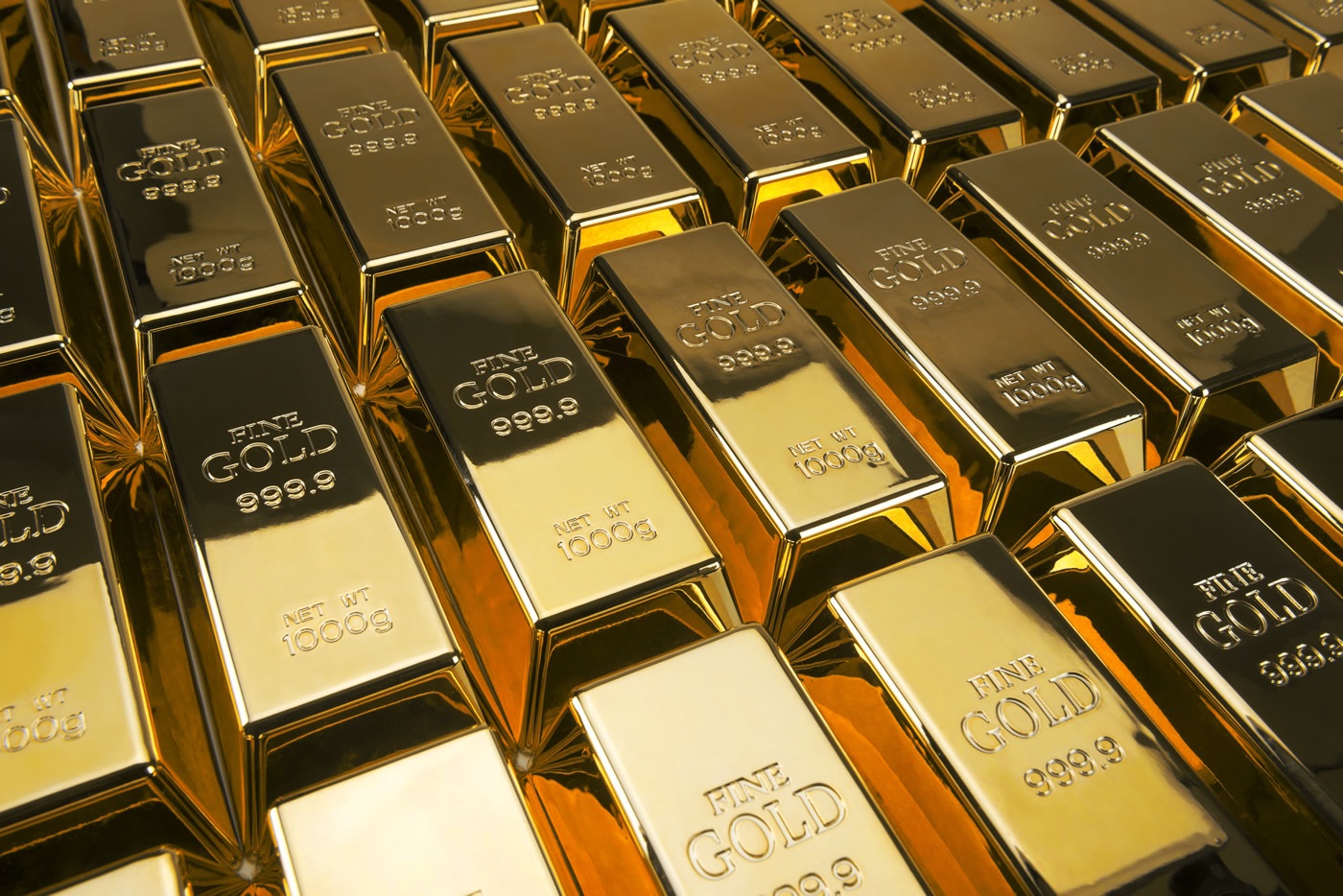
Gold reaching $3,220 per ounce reflects strong safe-haven demand amid economic and geopolitical uncertainty. Factors like tariff tensions, inflation fears, central bank buying, and stock market volatility are likely driving the surge. While some sources suggest prices could climb further—potentially to $3,300 by year-end—others warn of profit-taking or resistance at these levels. Always consider market dynamics and risks before acting on such trends.

Inflation fears drive gold prices higher as investors seek safe-haven assets to protect wealth. When people expect rising inflation—say, from loose monetary policies or supply chain shocks—they worry fiat currencies will lose purchasing power. Gold, historically viewed as an inflation hedge, becomes more attractive because its value isn’t tied to any currency and tends to hold up over time. This increased demand pushes prices up, as seen with gold hitting $3,220 amid recent economic uncertainty.

Quantitatively, gold often tracks inflation expectations. For example, if U.S. inflation fears spike like when CPI data exceeds forecasts, gold can rally 5-10% in weeks, as happened in late 2023. However, the impact isn’t absolute—high interest rates to combat inflation can strengthen the dollar, capping gold’s gains by making it pricier in other currencies. Speculative trading can also amplify price swings beyond fundamentals. Overall, inflation fears fuel bullish sentiment for gold, but competing factors like monetary policy or market sentiment can modulate the effect.

Historically, several assets and strategies have been used as hedges against inflation, each with varying effectiveness depending on economic conditions. Below is a concise overview of key inflation hedges, with a focus on their historical performance and relevance, given your interest in gold prices and inflation fears: Gold is a tangible asset not tied to fiat currencies, often retaining value when inflation erodes purchasing power.

During the 1970s stagflation, gold surged from $35/oz in 1971 to $850/oz by 1980 (a ~2,300% rise) as U.S. inflation hit double digits. In the 2008-2011 post-financial crisis period, gold climbed from ~$700 to $1,900 amid QE-driven inflation fears. Recently, gold hit $3,220 in 2025, partly due to persistent inflation concerns. Gold doesn’t always keep pace with inflation in real terms (e.g., flat in the 1980s-1990s). High interest rates or a strong dollar can suppress gains, as seen in 2022. It also generates no income, unlike other assets.

Property values and rents often rise with inflation, preserving wealth and generating income. In the 1970s, U.S. home prices rose ~8-10% annually, outpacing CPI at times. Post-2008, real estate rebounded strongly, with U.S. home prices up ~50% from 2012-2020, aligning with mild inflation. In 2021-2022, housing surged 20%+ as inflation spiked to 9%. High interest rates (e.g., 2023-2024) can dampen demand, slowing price growth. Real estate is illiquid and region-specific, with risks like market crashes (2008).

Commodities (Oil, Metals and Agriculture)  

Raw materials often rise in price during inflation, as costs for energy, food, and metals increase. In the 1970s, oil prices quadrupled (1973-1979), and commodity indices soared. From 2020-2022, oil jumped from $40 to $120/barrel, and agricultural goods like wheat rose ~50% amid supply shocks and inflation. Copper and other metals also track industrial demand tied to inflation. Volatile and cyclical, commodities can crash during recessions (e.g., oil in 2020). Speculative bubbles or oversupply can distort prices.

Stocks of companies with strong pricing power (e.g., consumer staples, energy) can pass on rising costs, preserving returns. In the 1970s, stocks lagged (S&P 500 flat in real terms), but sectors like energy outperformed. Post-2008, U.S. equities (S&P 500) grew ~400% through 2021, beating inflation, driven by tech and low rates. In 2022-2023, high inflation and rate hikes hit stocks, but value stocks held up better.

Stocks are vulnerable to high interest rates and economic slowdowns, which often accompany inflation (e.g., 2022 bear market). Not all sectors hedge equally—tech can falter. U.S. government bonds with principal and interest adjusted for CPI, designed explicitly to counter inflation. Introduced in 1997, TIPS have delivered modest real returns (~1-3% above inflation). In 2021-2022, TIPS yields rose as CPI hit 9%, protecting investors better than regular bonds, which fell ~10%. Low yields in low-inflation periods (e.g., 2010s). Real returns can lag assets like stocks or gold during high inflation surges.

Rarely a true hedge, but cash or short-term bonds were used in stable periods to avoid volatility. In the 1970s, cash lost value as inflation outpaced savings rates (e.g., 5% interest vs. 14% inflation). In 2022, bonds tanked (Bloomberg Aggregate Bond Index -13%) as rates rose to fight inflation. High-yield savings or I-bonds (post-2000) fare better but cap gains. Cash erodes in real terms during high inflation; bonds lose value when rates rise, as in 2022-2023.

Gold’s current high reflects its historical role as a go-to inflation hedge, especially with inflation fears lingering from 2021-2023’s 7-9% CPI spikes and ongoing global uncertainties (e.g., tariff risks, central bank policies). Unlike stocks or real estate, gold’s lack of income makes it a purer store of value, but its ~20% rise in 2024-2025 aligns with periods like 1979 or 2011, when inflation fears peaked. However, real estate and commodities (e.g., oil at $80+/barrel) are also rallying, suggesting investors are diversifying hedges. TIPS and equities (e.g., S&P 500 up ~10% in 2024) offer alternatives but face headwinds from tighter monetary policy.

Gold remains a premier inflation hedge due to its historical resilience, but real estate, commodities, and TIPS also play roles, each with trade-offs. Gold’s edge lies in its simplicity and global trust, though stocks or property can outperform in milder inflation or growth cycles. Always weigh liquidity, risk, and economic signals (e.g., rates, dollar strength) before choosing a hedge.
 

Head or Tail, The Best Will Find WINS as Goldman Sachs Rides Uncertainty to Record Apha

1
The logo for Goldman Sachs is seen on the trading floor at the New York Stock Exchange (NYSE) in New York City, New York, U.S., November 17, 2021. REUTERS/Andrew Kelly/Files

Uncertainty, Calm, Paralysis, Whatever; it does not matter: ‘Goldman Sachs…”riding a wave of volatility triggered by an emerging global trade war,” … posted a record quarter, with equity-trading revenue up 27% from a year earlier. Revenue came in at $15.1 billion, beating Wall St. expectations of $14.8 billion. Goldman echoes JPMorgan and other peers that reported strong quarterly earnings Friday.’ – LinkedIn News

Yes, top or bottom or sideways, Wall Street’s best can always make money. In short, when the market is calm, trading volume may be limited. But under uncertainty when everyone is running for a shelter, banks like Goldman Sachs rake in tons of fees and those are revenues!

How can you build a business that no matter what happens, you will always be in the right spot? How do we create a resilient business model? Goldman Sachs takes companies public, raking tons of money for the IPO process, via the investment banking unit. But during uncertainty, IPOs dry up, but the bank has another fudge factor to compensate, via its traders.

In the finest Igbo novel ever written – “Isi Akwu Dara N’ala” by Tony Ubesie – Chike laughed and made it clear that the plan was to build “osisi na ami ego” [a tree that produces money as the fruits] because when that happens, it is a virtuoso circle of abundance, triggering shareholders’ superior returns. The best will always have great seasons because they have the capacity to predict since they create the future. 

This week, “Donald Trump defined intelligence as the ability to predict the future.” Check balance sheets and income statements, you can see the smart people! My desire is to become better because in a world of numbers as Pythagoras made clear, those who understand the connections will always WIN, irrespective of whatever!

Chinese Manufacturers Counter U.S. Tariffs with TikTok Strategy, Luring U.S. and European Consumers to Buy Direct at Steep Discounts

0
The brand is growing

As U.S. tariffs on Chinese goods soar to a cumulative 145%, Chinese manufacturers are striking back with a bold new playbook: bypassing luxury brand middlemen and wooing consumers in the U.S. and Europe directly through TikTok.

These factories aim to reshape global trade dynamics by exposing the low production costs of high-end goods and offering identical quality at significant discounts, leveraging social media to challenge the dominance of luxury labels and capitalize on tariff-driven disruptions.

A Tariff-Fueled Pivot to Direct Sales

The U.S.-China trade war, intensified by President Donald Trump’s tariff hikes, has upended traditional supply chains. With duties including a 20% levy tied to fentanyl disputes and the expected end of the de minimis exemption for Chinese goods on May 2, exporters face steep costs to reach American markets. To circumvent the hurdle, Chinese manufacturers see TikTok, a platform with over 70 million U.S. users, as a way to connect directly with consumers, bypassing Western brands that rely on their factories.

Posts on X reflect the buzz, with users noting that Chinese vendors are “exposing the manufacturing of luxury bags” and offering contact details for direct purchases at “ridiculously lesser” prices. This sentiment underscores a strategic shift: rather than absorbing tariff costs or losing orders from Western brands, manufacturers are going public, revealing how items like Birkin bags or Lululemon apparel are made for a fraction of their retail price.

TikTok’s algorithm-driven platform, known for its viral reach, has become a megaphone for these Chinese factories. Videos showcasing production lines, cost breakdowns, and side-by-side comparisons of branded versus unbranded goods have racked up millions of views, dubbed “trade war TikTok” or “Chinese Manufacturer Tok” by users.

“The Chinese bag manufacturers said the 45,000usd bikin bags you all want costs 1000usd to make and the extra 44000usd you pay is for the brand so if you want the same quality without a brand name, buy from them,” an X user said.

These videos don’t just inform—they sell. Manufacturers guide viewers to buy directly, offering QR codes, contact details, or links to factory storefronts. The pitch is simple: why pay thousands for a designer label when you can get the same bag, made in the same factory, for hundreds? This direct-to-consumer model leverages TikTok Shop, which reported $100 million in single-day U.S. sales on Black Friday 2024, signaling its growing e-commerce clout.

Significant Discounts as the Hook

The key incentive driving this movement is price. Chinese manufacturers are slashing costs to undercut luxury brands, offering discounts that make high-end goods accessible to the average consumer. For instance, a bag retailing for $45,000 at a luxury boutique might cost $1,000 to produce, with the markup covering brand prestige. Factories are now selling these unbranded equivalents for prices closer to production costs—sometimes as low as $300 to $500 for items that would fetch thousands.

On TikTok, manufacturers highlight deals like “$300 items for $10,” though such claims may exaggerate for effect. More realistically, factories offer 50-80% off retail prices, capitalizing on the tariff squeeze that’s forced brands like Gucci and Chanel to raise prices or rethink supply chains. In Europe, where TikTok Shop launched in France, Germany, and Italy in March 2025, similar tactics are gaining traction, with sellers like fast-fashion retailer AboutYou joining the platform to tap discount-hungry shoppers.

The strategy is tailored to Western audiences, particularly Gen Z and millennials, who dominate TikTok’s user base. In the U.S., where 70% of TikTok users report discovering new brands on the platform, manufacturers are tapping into frustration with inflated prices amid rising living costs.

Potential Impact on Luxury Brands

Luxury giants like LVMH, Kering, and Hermès are likely going to feel the heat. With 25% of LVMH’s 2024 revenue from the U.S., tariff hikes and factory exposés threaten profit margins. The revelation that many “European” luxury goods are made in China, and then shipped to France or Italy for labeling, has sparked consumer skepticism.

“So basically the Louis Vitton sold in Sandton Mall is the same as the one sold in small street?” someone asked on X.

There is concern that this trend will mirror the situation in China, where luxury consumption has dropped, with 50 million consumers turning away from Western brands post-COVID, favoring local alternatives or experiences over status symbols. Now, as factories bypass these brands globally, the illusion of exclusivity is crumbling, prompting calls for brands to localize offerings or rethink pricing.

The Risks and Challenges

However, the strategy isn’t without pitfalls. TikTok’s low Trustpilot rating and reports of scams highlight risks for consumers clicking unverified links or buying from dubious sellers. Factories also face legal hurdles, as brands guard intellectual property fiercely, though some manufacturers dismiss these concerns, citing tariff-driven desperation.

Moreover, TikTok’s U.S. future remains uncertain. Despite Trump extending ByteDance’s divestiture deadline in April 2025, a potential ban looms if Chinese ownership isn’t resolved, which could disrupt this direct-sales channel. In Europe, regulatory scrutiny over data privacy and product authenticity may temper growth.

Economically, this move could reshape trade flows. By cutting out middlemen, Chinese factories retain more revenue, offsetting tariff losses. For U.S. and European consumers, access to affordable goods may ease inflation pressures, though it risks undermining local retailers. Culturally, the trend challenges the status-driven allure of luxury, empowering consumers to prioritize value over labels—a shift one X user hailed as “Xi Jinping wins round one.”

Risks of Nigeria’s Budget Oil Benchmark Gamble Deepen as Goldman Sachs Projects Oil to Average $63 in 2025

0

The deepening trade rift between the United States and China, which has pushed oil prices further down this week, is more than just a geopolitical scuffle for Nigeria. It’s a direct threat to the heart of its 2025 budget — a fiscal blueprint that leans heavily on a $75 per barrel oil benchmark to fund a fragile economy already staggering under debt and persistent inflation.

Goldman Sachs expects Brent crude to average $63 for the rest of 2025, a full $12 below Nigeria’s projection. That alone, if it holds, will blow an even bigger hole in an already battered federal budget, which currently carries a projected deficit of N14 trillion.

In a country where oil earnings still account for over 70% of foreign exchange and a significant share of government revenues, this kind of mismatch between fiscal expectations and market reality is a red flag. If oil prices stay in Goldman’s predicted range or fall further amid deteriorating demand, Nigeria could find itself scrambling for financing in an increasingly tight global environment, where borrowing is more expensive and donor enthusiasm is dwindling.

Budget Built on Hope, Not Market Signals

President Bola Tinubu’s administration has pinned much of its 2025 spending plan on assumptions that many observers already consider out of step with global trends. The benchmark crude price of $75 per barrel was set against a backdrop of hope that OPEC+ cuts, stable demand from Asia, and improved local production would buoy prices enough to fund government operations.

But none of those pillars are holding firm. China’s demand is stalling. OPEC’s influence is under stress from non-aligned producers. And Nigeria itself is still unable to consistently meet its own production quota, largely due to oil theft, vandalism, and underinvestment.

The situation is so dire that, in real terms, Nigeria may be producing below 1.4 million barrels per day, a figure far short of the 2 million bpd target set by Tinubu for 2025. Add a lower price to lower output, and you have a double-edged blow to revenues.

What’s making matters worse is that the global oil market is shifting in ways that punish countries that rely solely on crude for survival. With the U.S.-China trade war hitting global manufacturing and consumer demand, Goldman projects that oil consumption in Q4 2025 will grow by just 300,000 barrels per day globally — a slowdown not seen in recent years.

This downturn is most acute in the petrochemicals sector, which relies on industrial inputs and is heavily tied to Chinese factories. Nigeria doesn’t just sell crude, it exports a lifeline. But now, that lifeline may be delivering diminishing returns.

This shift is particularly painful for oil economies that don’t have the refining capacity to add value before export, and Nigeria is still in that group, despite the promise of Dangote Refinery. Although the refinery has begun refining crude and is expected to produce more in 2025, pricing uncertainty and lack of transparency in supply agreements raise more questions than answers. There’s still no clear roadmap on whether the facility can meaningfully reduce Nigeria’s import bill or boost state revenues in the short term.

Mounting Deficits, Rising Borrowing, and Limited Options

The N14 trillion deficit in Nigeria’s 2025 budget is expected to be financed largely through borrowing. But with oil underperforming, that financing gap could widen substantially. And Nigeria no longer has the comfort of a robust Eurobond appetite or a buoyant domestic borrowing market. Last week, JPMorgan told investors to exit long positions in Nigerian Open Market Operation (OMO) bills, citing deepening macroeconomic vulnerabilities linked to declining oil prices and an increasingly unstable global economy.

The country’s external reserves are under pressure. The naira remains volatile despite exchange rate reforms. And inflation — driven by fuel costs, forex scarcity, and food insecurity — continues to erode the purchasing power of citizens. That puts more pressure on the government to spend, just as its revenue sources look increasingly uncertain.

The real fear is that Nigeria may be forced to choose between slashing capital projects, piling on more debt, or reverting to subsidy regimes to soften domestic discontent. Any of these options would further delay the economic transformation Tinubu promised when he took office — a transformation that, on paper, hinged on subsidy removal, exchange rate unification, and improved revenue-to-GDP ratios.

Time for Economic Diversification?

What’s becoming clear is that Nigeria’s oil-heavy economic strategy is not sustainable in a world where demand patterns are increasingly unpredictable, prices are swayed by non-market shocks, and energy is being weaponized by major players like the U.S. and China.

While countries like Saudi Arabia are investing in green hydrogen, massive sovereign funds, and tourism infrastructure, Nigeria is still struggling to repair its pipelines and collect taxes effectively. Without a serious pivot — towards gas monetization, renewables, or even functional refining and petrochemical industries, the country risks missing the bus on energy transition and economic resilience.

Nigeria’s Petroleum Industry Act (PIA) was supposed to usher in reform, transparency, and investment. But implementation remains patchy, and regulatory risk still clouds investor confidence.

The oil price drop triggered by U.S.-China tensions reinforces what many analysts and advocates of economic diversification have warned for years: relying on oil to fund the budget is a dangerous game, especially when the rules of the global economy are being rewritten.

Nigeria Signs $1bn Sugar Pact With China’s SINOMACH to Boost Domestic Production

0

Nigeria has secured a $1 billion investment from China’s state-owned industrial giant, SINOMACH, in a new deal that signals a renewed push to scale up domestic sugar production and cut the country’s dependence on imports.

The partnership inked through a Memorandum of Understanding (MoU) with the National Sugar Development Council (NSDC), is designed to kickstart a large-scale sugarcane cultivation and processing project. It’s one of the first tangible deals to emerge from the Nigeria-China Strategic Partnership promoted by President Bola Tinubu as part of his administration’s efforts to revive local industry.

Executive Secretary of the NSDC, Mr. Kamar Bakrin, confirmed the agreement in Abuja, describing it as a major milestone in Nigeria’s long-stalled plan to attain self-sufficiency in sugar production.

“2025 is a pivotal year for Nigeria, and we must make bold moves towards food security and economic self-sufficiency,” Bakrin said, adding that the initiative aims to cut sugar imports, conserve foreign exchange, and drive industrialization in rural Nigeria.

From Import Reliance to Export Dreams

Under the MoU, SINOMACH will construct a sugar processing facility and establish an extensive sugarcane plantation. The project is expected to begin with an annual processing capacity of 100,000 metric tons, with an eventual target of hitting one million tons. That scale could dramatically reshape Nigeria’s sugar industry, which has struggled for decades to gain footing despite successive policy pushes.

“This partnership with SINOMACH is unique,” Bakrin said. “It combines engineering, procurement and construction (EPC) with development financing, an essential model for agro-industrial transformation.”

The NSDC plans to facilitate swift implementation by assisting with land acquisition, regulatory clearances, and all necessary approvals.

The Sugar Council was set up through a decree in 1993 to provide strategic planning and coordination for sugar development after previous government efforts fell apart due to mismanagement and weak institutional support. The goal has always been to meet at least 70 percent of the country’s domestic sugar demand from local production—an ambition that has remained out of reach.

Speaking on behalf of the Chinese conglomerate, SINOMACH Vice President Li Yu praised Nigeria’s commitment to reviving its sugar industry under the Nigeria Sugar Master Plan (NSMP), describing the policy as a “sweet revolution.”

“We believe this partnership will not only boost Nigeria’s sugar self-sufficiency but also promote rural development, create employment, and enhance agricultural modernization,” Li said.

He noted that the company is exploring innovative financing models using China’s Renminbi (RMB) currency, a move intended to cut financing costs and accelerate approvals from Chinese authorities.

SINOMACH, known for its involvement in major infrastructure and industrial projects across Africa, said the investment is part of its broader interest in Nigeria’s agricultural transformation, with the potential to make the host state the “Sugar Bowl of West Africa.”

Beyond Sugar: Rebuilding Industrial Nigeria

The $1 billion deal adds a new layer to President Tinubu’s effort to deepen economic ties with China amid growing concerns over Nigeria’s food insecurity, joblessness, and reliance on imports. With a battered naira, a shrinking foreign reserve base, and an economy struggling to find its footing post-COVID, the administration is leaning on foreign direct investment to fill financing gaps.

While details on the selected host state and project timelines remain under wraps, the NSDC says it is preparing a full implementation roadmap.

Bakrin emphasized that this deal isn’t just about sugar—it’s about rural revitalization and industrial independence. “It’s not just a transaction,” he said. “It’s a strategic intervention in Nigeria’s food and industrial ecosystem.”

The NSDC’s vision extends beyond sugar sufficiency. The council has plans to position Nigeria as a future exporter of refined sugar, a shift that could earn the country foreign exchange and reduce its vulnerability to global commodity price shocks.

However, experts caution that the road to sugar self-sufficiency won’t be easy. Past efforts to reform the industry have been derailed by land disputes, infrastructure deficits, and inconsistent policy support. Even the Nigeria Sugar Master Plan, launched in 2012, has achieved only modest gains.

Still, with backing from a global industrial heavyweight like SINOMACH and a renewed government drive, the latest partnership is expected to offer a fresh chance to rewrite that narrative. However, its success may depend on Nigeria’s ability to match political will with execution on the ground.