DD
MM
YYYY

PAGES

DD
MM
YYYY

spot_img

PAGES

Home Blog Page 1509

Nigeria Announces Launch of $654m Mortgage Fund to Tackle Worsening Housing Deficit

0
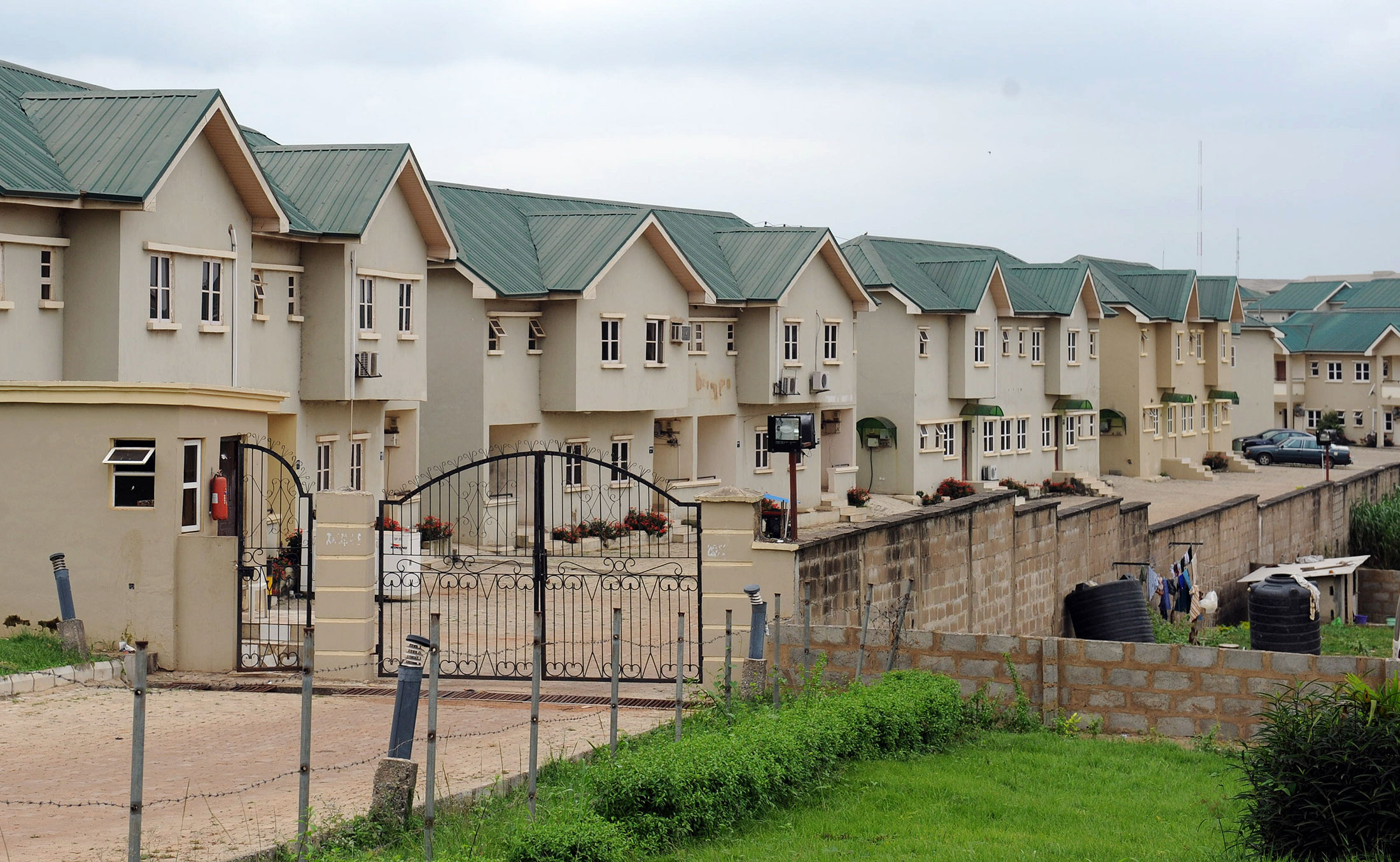
A detached three-bedroom apartments are pictured at Haggai Estate, Redeption Camp on Lagos Ibadan highway in Ogun State, southwest Nigeria on August, 30, 2012. The high cost of living and the massive urbanization of Lagos, the largest city and the economic capital of Nigeria, has engineered a migration of residents mostly middle class and the poor to neighbouring towns in Ogun State, both in southwest part of the country in search of cheap accommodations. Estate developers are quick in exploiting the high cost and scarcity of accommodation leading to emerging new towns, modern estates to accommodate the spillover in Lagos. AFP PHOTO/PIUS UTOMI EKPEI (Photo credit should read PIUS UTOMI EKPEI/AFP/GettyImages)

The Federal Government of Nigeria is set to establish a N1 trillion ($654 million) housing fund to provide affordable mortgages, a move aimed at addressing the country’s massive housing deficit.

Finance Minister Wale Edun announced the initiative on Tuesday, explaining that the fund will provide single-digit and low double-digit interest rate mortgages to enable more Nigerians to own homes.

The first phase of the project has already secured N250 billion, sourced from a combination of concessional loans and private-sector contributions. A key component of the funding structure includes a 40-year concessional loan from the World Bank’s International Development Association (IDA) at a 1% interest rate. Local pension funds, banks, and insurance firms are also contributing matching funds.

“Nigeria’s housing finance market needs deep reform to make homeownership more accessible,” Edun said. “This fund will enable Nigerians to access mortgages at single-digit and low double-digit interest rates, making homeownership more attainable.”

A Housing Crisis Decades in the Making

Nigeria, Africa’s most populous country, has struggled with an acute housing shortage for years. The Federal Mortgage Bank of Nigeria estimates that the nation requires at least 28 million new homes to meet demand, a staggering deficit that has only worsened as urbanization accelerates.

Despite this pressing need, mortgage financing remains underdeveloped. Mortgages account for less than 1% of Nigeria’s GDP, a stark contrast to developed economies where housing finance is a key driver of economic growth. High interest rates—often exceeding 20%—have made mortgages unaffordable for most Nigerians, forcing the majority of real estate transactions to be conducted in cash. This cash-based system has fueled corruption, inflated property prices, and made homeownership nearly impossible for low- and middle-income earners.

The new fund is expected to help stimulate a construction boom by providing developers with guaranteed off-takers, thereby ensuring a steady supply of new homes. The initiative is also designed to formalize homeownership by making financing more accessible, which in turn would create jobs and stimulate economic growth.

Road Infrastructure Projects Also in the Pipeline

Alongside the housing initiative, the Federal Government is also advancing plans to upgrade Nigeria’s road infrastructure. Edun revealed that contracts are being finalized with private investors to construct and manage 40 major roads, covering a total distance of 5,000 kilometers (3,100 miles).

The Africa Finance Corporation (AFC), a Lagos-based multilateral financial institution, is among the key investors backing this infrastructure push. The government hopes that these projects will enhance connectivity, reduce transportation costs, and improve access to new housing developments.

Strong Private Sector Participation in the Housing Fund

Last week, the Ministry of Finance Incorporated Real Estate Investment Fund (MREIF) successfully closed its N250 billion pilot fundraising, marking a significant milestone in Nigeria’s effort to address its housing finance gap.

The second series of the MREIF issuance, worth N100 billion, was fully subscribed, signaling strong investor confidence in the fund’s structure. The first series had raised N150 billion, demonstrating robust demand from institutional investors seeking stable, long-term returns in the real estate sector.

“The full subscription of Series 2 demonstrates pent-up demand for structured housing finance solutions and investor confidence in MREIF as a sustainable investment vehicle,” Edun noted.

The initiative is expected to transform Nigeria’s housing sector by unlocking new sources of capital and reducing reliance on government budgets. The success of the pilot phase indicates that private investors see housing finance as a viable sector, which could lead to further investments in mortgage-backed securities and affordable housing projects.

With both housing and road infrastructure projects in motion, the government hopes to address two of Nigeria’s most pressing challenges—affordable housing and poor infrastructure. However, experts note that the success of these initiatives will depend on effective implementation, transparency in fund allocation, and ensuring that the mortgages remain accessible to those who need them most.

Crypto Gurus Calls The Best Crypto For Gains In 2025 And It’s Not XRP or Solana

0

Solana Price Prediction is the topic of many arguments with experts providing their views on the best cryptocurrency to invest in 2025. The current report indicates that even though XRP and Solana have done so well, emerging projects are set to transform the world of finance.

Specifically, there is a new DeFi project that differs from the rest with its practical approach of tackling actual payment problems in the real world. It solves real pain points in cross-border payments and therefore is one of the most promising new DeFi projects.

XRP: Recent Update and Technical View

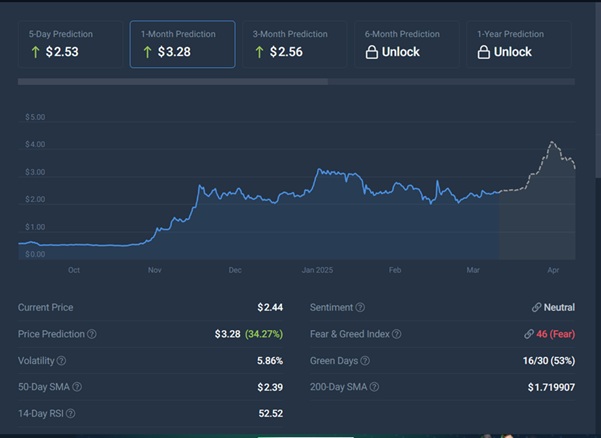
XRP remains in the spotlight as its adoption picks up pace in most sectors. Latest news shows that XRP recently traded at around $2.44 after registering a marginal fall of about 1% from the previous close.

Commentators observe that the use of XRP in some banking networks has contributed to its survival. Its technology uses Ripple’s On-Demand Liquidity network, which facilitates faster cross-border payments and greatly lowers costs.

The technical analysis of XRP indicates that there is a strong support level of around $2.00 and resistance level of around $2.65. The analysts estimate that if the current banking integration gains even further momentum, XRP may witness incremental price appreciation over the next few months.

XRP’s recent performance and improved liquidity position it as one of the top cryptos to invest in long-term steady growth. XRP is also anticipated to rise by 34.27% to reach $3.28 on April 24, as forecasted by experts.

Latest Solana News, Technical Analysis and Solana Price Prediction

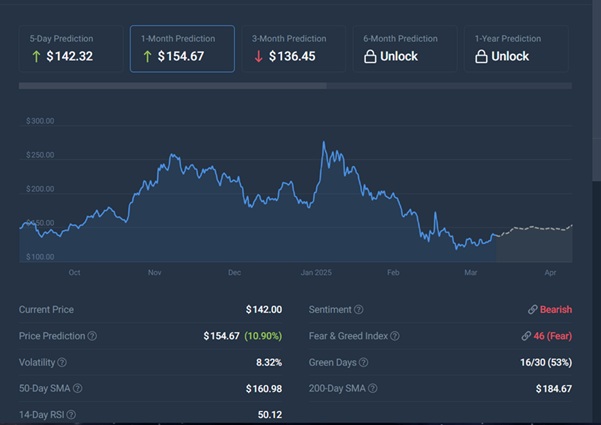
Solana continues to attract attention with its high transaction speed and low cost. Recent news reports highlight that Solana has been subject to volatility in its market capitalization and its current cost of trading is around $141.77.

Experts attribute the network’s high throughput as one of the reasons. Solana Price Prediction 2025 remains optimistic, with some experts putting the estimates of a massive push to the upside if the network maintains its high levels and other network upgrades are completed.

Solana Price Prediction is fueled by upcoming protocol updates and increasing developer activity. Since it has a developing ecosystem, increasing decentralized apps and NFTs should draw increasing volumes and that will lead to higher prices.

Investors who believe Solana is one of the best cryptos to invest in are optimistic about it expanding its use cases even more. Solana price prediction shows that it is expected to rise by 10.90% to $154.67 by April 24 with its growing use cases.

Remittix: A New DeFi Project That Fixes Cross-Border Payment Problems

Remittix (RTX) is a fresh DeFi initiative with a clear aim: to fix the inefficiencies of cross-border payments. Conventional banking in most of the globe does not support immediate, low-fee cross-border payments.

Millions do not have a bank account and use transactions such as those provided by Western Union in order to send and receive money. Remittix solves the problems by combining blockchain with contemporary finance.

Remittix offers a crypto-to-fiat solution that enables the direct conversion of cryptocurrency to bank accounts in over 30 fiat currencies. It is a revolutionary solution for recipients in regions with limited access to conventional banking.

For example, an individual who is unbanked can receive crypto in an e-wallet, exchange it through Remittix, and receive cash via a local outlet. This accomplishes the actual purpose of cryptography, which is to offer anonymity and control of personal property without giving up to day-to-day financial activity.

The project has already sold over 522 million RTX tokens in its ICO. This strong start shows a high level of interest among early investors. With its current DeFi coin price of $0.0734, Remittix is affordable for anyone who wants to invest in a project that has the potential for real-world impact.

Remittix is not hype-based like most meme coins. It was designed to solve the issues of expensive cost, delayed processing and unavailability of financing for billions of individuals across the world.


Discover the future of PayFi with Remittix by checking out their presale here:

Website: https://remittix.io/

Socials: https://linktr.ee/remittix

Waymo Expands Robotaxi Service to Washington, D.C., Further Leaving Tesla Behind in the Robotaxi Race

0

Alphabet-owned Waymo is accelerating its dominance in the self-driving taxi market with a newly announced expansion into Washington, D.C., set for 2026.

The move solidifies Waymo’s position as the leader in the autonomous ride-hailing industry while further exposing Tesla’s lagging progress in the robotaxi space.

Waymo made the announcement on Tuesday, stating that it has officially begun the process of launching its commercial robotaxi service in the U.S. capital. The company, which has been steadily expanding its presence in major cities, said its rollout in Washington will involve test drives conducted by human operators to gather data on the city’s roadways. These initial tests will be followed by full-fledged autonomous rides once regulatory approvals are in place.

“We’ll continue introducing ourselves to D.C.’s communities and emergency responders over the coming months,” the company said in the release. “We’ll also continue to work closely with policymakers to formalize the regulations needed to operate without a human behind the wheel in the District.”

The expansion follows Waymo’s growing footprint in key markets. The company’s Waymo One ride-hailing app is already available in San Francisco, Los Angeles, Phoenix, and Silicon Valley. Recently, it extended services across a 27-square-mile area in California, covering Mountain View, Palo Alto, Los Altos, and parts of Sunnyvale.

Beyond Washington, D.C., Waymo also plans to enter Miami in 2026 through a partnership with the startup Moove.io.

While Waymo’s dominance continues to grow, Tesla has struggled to keep up. Just a few years ago, Tesla was seen as the frontrunner in the race to bring autonomous ride-hailing to the masses.

Elon Musk had long promised a fleet of self-driving robotaxis, even claiming in 2019 that Tesla would have one million of them on the roads by 2020. However, the reality has been far different. Despite repeated assurances, Tesla has yet to manufacture a dedicated robotaxi or launch a fully autonomous ride-hailing service. Its Full Self-Driving (FSD) software remains in beta mode and still requires human supervision, preventing Tesla from competing directly with companies like Waymo that have already deployed driverless services.

In contrast, Waymo has surged ahead, completing over 4 million paid autonomous rides in 2024 alone—far more than any other self-driving company. Unlike Tesla, which relies on camera-based vision for its self-driving technology, Waymo has leveraged a combination of LiDAR, radar, and AI-powered software to create a highly sophisticated system that has been widely regarded as the most advanced in the industry.

“I’ve experienced firsthand how safely the Waymo Driver operates around pedestrians, cyclists, and other vulnerable road users,” said Jonathan Adkins, CEO of the Governors Highway Safety Association. “Waymo has worked with GHSA and our first responder network as they’ve expanded their service, always putting safety first. As someone who walks to work almost every day, I’m excited to share the road with Waymo in Washington, D.C.”

Tesla’s struggles have only been compounded by growing regulatory scrutiny. While Waymo has secured permits to operate fully driverless taxis in multiple cities, Tesla’s FSD software has been criticized for safety concerns, with regulators hesitant to approve a fully autonomous deployment.

Meanwhile, General Motors’ Cruise division has also suffered setbacks, including the shutdown of its robotaxi service in December following a series of safety incidents.

Waymo wants to take its robotaxis to Washington, D.C., aiming to launch its Waymo One service in the nation’s capital by 2026. Doing so, however, would first necessitate a change to local law, which requires the presence of “safety drivers” in autonomous vehicles. Washington is also one of the country’s most congested cities, The Verge notes, and operating there could draw the attention of the federal government, which has largely left regulation of autonomous vehicles up to local jurisdictions.

NERC Reports N509.84bn Revenue Collection by DisCos in Q4 2024, Despite $8.84m Owed By Togo and Benin

0

The Nigerian Electricity Regulatory Commission (NERC) has revealed that Electricity Distribution Companies (DisCos) in the country collected N509.84 billion in the fourth quarter of 2024 (Q4 2024), marking an increase from previous quarters despite $8.4 million owed by Togo and Benin.

The report, released on NERC’s website, disclosed that DisCos billed customers a total of N658.40 billion during Q4 2024, achieving a collection efficiency of 77.44 percent. This marks an improvement compared to the 74.55 percent recorded in Q3 2024, where N466.69 billion was collected from the N626.02 billion billed.

DisCo Performance: Eko Leads, Jos Struggles

A breakdown of the DisCos’ performance shows that Eko DisCo recorded the highest collection efficiency at 90 percent, followed by Ikeja DisCo at 82.63 percent. These two companies retained their positions as the best-performing DisCos in Nigeria.

At the other end, Jos DisCo recorded the lowest efficiency rate at 49.68 percent, reflecting persistent challenges in revenue collection. Abuja DisCo also experienced a decline, contributing to the wider issue of collection inefficiencies in certain regions.

NERC attributed the overall improvement in revenue collection to enhanced metering initiatives, stricter enforcement measures by DisCos, and increased regulatory oversight. However, it noted that issues such as non-payment by customers, energy theft, and inadequate infrastructure remain major obstacles to further progress.

However, while the increase in collection efficiency suggests a better revenue stream for DisCos, it has not translated into improved power supply. Nigerians continue to experience frequent blackouts, unstable voltage, and poor service delivery from electricity providers.

Amid these concerns, the Minister of Power recently announced that the government intends to review the current Band A electricity tariff, admitting that it has failed to attract the expected level of investment into the power sector. The tariff, which was introduced as part of the service-based electricity pricing model, aimed to charge higher rates for consumers who receive at least 20 hours of power daily.

Benin and Togo Owe Nigeria $8.84 Million for Electricity

While local DisCos continue to grapple with revenue challenges, Nigeria is also dealing with unpaid electricity debts from neighboring countries. Benin Republic and Togo owe Nigeria a total of $8.84 million for electricity consumed in the fourth quarter of 2024.

According to NERC’s report, six international bilateral customers were supplied electricity by Nigerian power generation companies (GenCos) during Q4 2024. These international customers were billed a cumulative $14.05 million by the Market Operator but only managed to remit $5.21 million, translating to a remittance performance of 37.08 percent.

Paras-SBEE in Benin Republic was billed $2.65 million but has yet to make payments. Paras-CEET, also in Benin, was billed $1.64 million and has not paid. Transcorp-SBEE (Ughelli) in Benin Republic was billed $3.59 million but only paid $1.71 million. Transcorp-SBEE (Afam 3) was billed $1.2 million but only remitted $0.90 million. Odukpani-CEET in Togo still owes $2.37 million for power consumed.

The report showed that only Mainstream-NIGELEC fully paid its invoice of $2.60 million. It further indicated that some bilateral customers made partial payments to clear previous debts from earlier quarters. Paras-CEET, Paras-SBEE, and Transcorp-SBEE collectively paid a total of $2.98 million towards outstanding invoices from prior periods.

Local Debt and Special Customer Defaults

On the domestic front, bilateral customers within Nigeria were billed N1.98 billion in Q4 2024 but only managed to remit N1.25 billion, representing a remittance efficiency of 63.36 percent.

Ajaokuta Steel Company and its host community once again failed to make any payments toward their outstanding electricity debts, which amounted to N1.27 billion for power supplied by the Nigeria Bulk Electricity Trader (NBET) and N110 million for Market Operator invoices.

NERC described the non-payment by Ajaokuta Steel as a longstanding issue, stating that it has formally communicated the need for government intervention. Despite repeated attempts to address this problem, no concrete solutions have been implemented to recover the outstanding funds.

Financial Growth Amid Systemic Challenges

The increase in DisCos’ revenue collection efficiency indicates a gradual improvement in revenue mobilization within Nigeria’s electricity sector. However, experts argue that financial gains will not translate into meaningful progress unless deeper structural issues are addressed.

While DisCos have recorded increased collections, the financial health of the power sector remains fragile due to high Aggregate Technical, Commercial, and Collection (ATC&C) losses. Many DisCos continue to struggle with infrastructure deficits, metering gaps, and energy theft, which erode profitability.

In response, stakeholders are advocating for several reforms to enhance revenue collection and improve service delivery, including expanding metering programs under the National Mass Metering Initiative (NMMI) to address estimated billing complaints, introducing digital payment solutions to encourage easier and more transparent customer remittances, and imposing stronger penalties for defaulting customers, both locally and internationally, to reduce unpaid electricity debts.

Crypto Market is Experiencing a Dynamic Period Shaped by Macroeconomic Shift

0

The crypto market is experiencing a dynamic period shaped by macroeconomic shifts, regulatory developments, and industry consolidation. The Circle/USDC approval in Japan and Bitcoin (BTC) is trading around $88,000, nearing its all-time high of $108,268 set in December 2024. Analysts attribute this to a post-halving rally (April 2024) and renewed institutional interest, with over $4 billion flowing into BTC spot ETFs in the U.S. in Q1 2025 alone. Proposed tax breaks for BTC miners and clearer stablecoin guidelines are fueling investment. Japan’s USDC approval, the EU’s MiCA rollout, and Dubai’s crypto hub ambitions (relevant to Deribit’s license) suggest a synchronized push toward regulated crypto growth, reducing uncertainty.

Ethereum (ETH) hovers near $2,100, bolstered by staking demand and DeFi growth, while Solana (SOL) and newer tokens like SUI and APT see gains from ecosystem expansions. The total crypto market cap sits at approximately $2.97 trillion, up 15% since January. Daily price swings have increased, with BTC’s 30-day volatility index hitting 60%, driven by leveraged trading in derivatives markets. Derivatives trading volumes are outpacing spot markets 20-to-1, with daily turnovers exceeding $70 billion for BTC alone.

Deribit, a key player, saw $1.2 trillion in 2024 volume, highlighting why Coinbase’s potential acquisition is a game-changer. Perpetual futures (“perps”) remain popular due to their flexibility, with open interest at record highs ($35 billion for BTC perps). Hedge funds and proprietary trading firms are piling into options, with Deribit reporting a 40% uptick in institutional clients since Q3 2024. This trend could accelerate if Coinbase integrates Deribit’s infrastructure.

Coinbase’s bid for Deribit (valued at $4-5 billion) reflects a broader consolidation wave. Kraken’s $1.5 billion NinjaTrader buyout and Binance’s rumored $2 billion push into custody services signal exchanges diversifying amid maturing markets. Acquiring derivatives platforms allows spot-heavy players like Coinbase to capture higher-margin businesses, especially as spot trading volumes soften (e.g., Coinbase’s 29% traffic drop in March). The Trump administration’s pro-crypto stance—evidenced by SEC Chairman Gary Gensler’s exit in January 2025 and a new “Crypto Bill” draft—has unleashed optimism.

DeFi and Layer-2 Growth

Total value locked (TVL) in DeFi protocols has hit $150 billion, with Ethereum still leading (60% share) but Solana and Arbitrum gaining. Stablecoins like USDC are increasingly powering DeFi liquidity pools. Rollups like Optimism and zkSync are cutting Ethereum fees by 80%, driving user growth. This supports scalable trading and NFT ecosystems, with daily active addresses up 25% since January.

The U.S. Federal Reserve’s rate cuts (down to 4% from 5.5% in 2024) have loosened monetary conditions, favoring risk assets like crypto. Gold’s parallel rise to $2,700/oz reflects similar investor sentiment. Tensions in Eastern Europe and Asia are pushing some capital into BTC as a “digital gold” hedge, with on-chain data showing $1 billion in net inflows to cold wallets this month.

The crypto market is experiencing a dynamic period shaped by macroeconomic shifts. Bitcoin’s push toward $100,000, fueled by ETF inflows and derivatives leverage, could trigger an altcoin season if sentiment holds. Stablecoins like USDC are cementing their role as financial rails, while M&A activity (e.g., Coinbase-Deribit) points to a maturing industry. Risks include regulatory reversals or a macro downturn, but for now, tailwinds dominate—especially with institutional FOMO kicking in as Q2 2025 approaches.