DD
MM
YYYY

PAGES

DD
MM
YYYY

spot_img

PAGES

Home Blog Page 1515

Physics of Product Pricing and Optimizing Profitability – Ndubuisi Ekekwe

0

In Oriendu Market, Ovim, I learnt the construct of pricing, after school. Lechi, my grandmother, understood the dynamics of the market. On the big Orie market days, every 8 days, Oriendu would welcome the world, with traders from Enugu, Aba, etc arriving for business. Unlike the small Oriendu market (Igbo runs on a 4-day week), the big one has more buyers, flipping the pricing equilibrium where produce could command more money.

“Isi Uwa…if after 4pm, sell this yam lower by …Naira”, she would say [the full name of Ndubuisi is Ndu bu isi uwa meaning life is supreme above all things]. That price reduction did not make sense until later on I realized that from 4pm, those outside traders would begin to depart, and anything not sold would lose value considering that storage facilities were limited.  There was no technology, but timing was used to model the price positioning considering the nature of the product.

Good People, from Oriendu Market to Wall Street, pricing is fundamental and strategic. And the price you put on a product or service is largely inconsequential. The real deal is the perception of the customers on the specific amount. This is where the social science of pricing moves into physics. Yes, two salespeople can introduce the same product to the same customers, and each of the customers will come out with different perceptions of the product price.

In other words, the best Pricing Power is creating perception which will move the customers, without necessarily adjusting the actual price of the product. Yes, how do you make a product seem “cheap” by not actually reducing the actual price but through perception? But note: it goes beyond being “cheap” to affordability since something could be cheap and still not affordable.

The greatest moment in a business is when a company discovers and operates a great business model. Why? It is through a business model that companies create value. Yes, a business model encapsulates the logic of a firm, and the way it combines and uses factors of production to create value for stakeholders.

But how do you create value? Do you go cost plus or value-based pricing? How is that pricing going to help you scale, looking at your marginal cost? Your pricing strategy affects value capture which can shape your unit economics. When the unit economics is bad, you are not SCALING, but growing! The greatest companies SCALE, not just grow. And that happens when revenue and profit grow faster than your cost. So, if you plot the transaction cost, distribution cost, fixed cost, revenue, and profit, against Growth, the first three will be largely flat even as the last two are shooting into space. Go exponential on PROFIT!

Amazing People, when marginal cost continuously tends towards zero (i.e. asymptotically to the horizontal line) even as growth happens, you have a GREAT company. Meet me in class for Physics of Pricing!

Sat, April 12 | 7pm-8.30pm WAT | Physics of Product Pricing and Optimizing Profitability – Ndubuisi Ekekwe | Zoom link

Implications of El Salvador’s Shift From Level 4 to Level 1 U.S. State Department Travel Advisory

0

The U.S. State Department’s travel advisory for El Salvador has dropped from Level 4 (“Do Not Travel”) to Level 1 (“Exercise Normal Precautions”) over the past five years, reflecting significant improvements in security. This shift is largely attributed to President Nayib Bukele’s aggressive anti-gang policies, including mass arrests and the construction of high-security prisons, which have drastically reduced violent crime rates. Official data from El Salvador’s government shows the homicide rate fell from 38 per 100,000 in 2019 to under 2 per 100,000 in 2024, among the lowest in the Western Hemisphere.

Tourism metrics support the claim of El Salvador becoming a safe destination. In 2024, the country welcomed over 3.5 million visitors, a 30% increase from pre-pandemic levels, with tourism revenue surpassing $2 billion. International outlets like Travel + Leisure and Lonely Planet have recently ranked El Salvador above traditional favorites like Sweden, France, and Germany for safety and traveler experience, citing its vibrant culture, beaches, and archaeological sites.

Some critics argue the safety comes at a cost. Human rights groups have raised concerns about due process violations and prison conditions during the gang crackdowns. Others note that while urban tourist areas are secure, rural regions may still face sporadic risks. Still, the data and traveler sentiment align: El Salvador’s turnaround has made it a standout in global tourism.

With over 3.5 million visitors in 2024 and $2 billion in tourism revenue, El Salvador’s economy is diversifying beyond remittances and agriculture. This influx supports jobs in hospitality, transport, and local businesses, reducing unemployment (down to 5% in 2024 from 7% in 2019, per government stats). A safer image attracts investors. El Salvador has seen interest in real estate, renewable energy, and tech (e.g., Bitcoin City plans).

The World Bank noted a 10% increase in FDI inflows since 2022, partly tied to stability. Tourism demand drives upgrades in airports, roads, and attractions like El Tunco and Suchitoto. However, rapid development risks straining resources if not managed sustainably. Lower crime (homicide rate under 2 per 100,000) has made public spaces safer, fostering community pride and social cohesion. X posts often highlight locals enjoying nightlife in areas once avoided.

The gang crackdowns, while effective, have led to over 80,000 arrests since 2022, according to Amnesty International reports. Allegations of arbitrary detentions and prison abuses raise concerns about civil liberties, potentially alienating some citizens. Tourism spotlights Salvadoran heritage—Mayan ruins, cuisine, and festivals—boosting national identity. But there’s a risk of commercialization diluting authenticity.

The safety turnaround has cemented Nayib Bukele’s domestic and international clout. Polls e.g., CID Gallup, 2024 show approval ratings above 80%, strengthening his grip on power. However, critics warn of authoritarian tendencies, as constitutional checks weaken. Bukele’s approach is studied by leaders in Honduras, Guatemala, and beyond. Its success could inspire similar hardline policies, but failures in due process might deter democracies like Costa Rica from following suit.

El Salvador’s Level 1 status elevates its diplomatic standing, outshining regional peers. Yet, tensions with NGOs and some Western governments over human rights could complicate relations. El Salvador’s success contrasts with neighbors like Honduras (Level 3 advisory) and Guatemala (Level 2). This could redirect tourism and investment flows, pressuring others to reform security policies.

Safer conditions and economic growth may reduce emigration. According to U.S. Customs and Border Protection data shows a 20% drop in Salvadoran migrant encounters at the U.S. border from 2021 to 2024, easing regional migration pressures. Displaced gang activity could destabilize borders with Honduras or Guatemala, though no major uptick in cross-border crime has been reported yet. Maintaining safety and tourism growth requires balancing security with rights, plus investing in education and healthcare to ensure long-term stability.

Overreliance on tourism could expose the economy to global shocks. Beating countries like Sweden or France in safety rankings sets a precedent for rapid transformation but invites scrutiny. If crime rebounds or governance falters, El Salvador risks losing its newfound status. El Salvador’s leap to a safe tourism hub reshapes its economy and global image while sparking debates about security versus freedom.

J.P. Morgan Pulls Plug on Nigerian T-Bills Over Oil Price Slump, Warns Investors To Exit OMO Bills

0
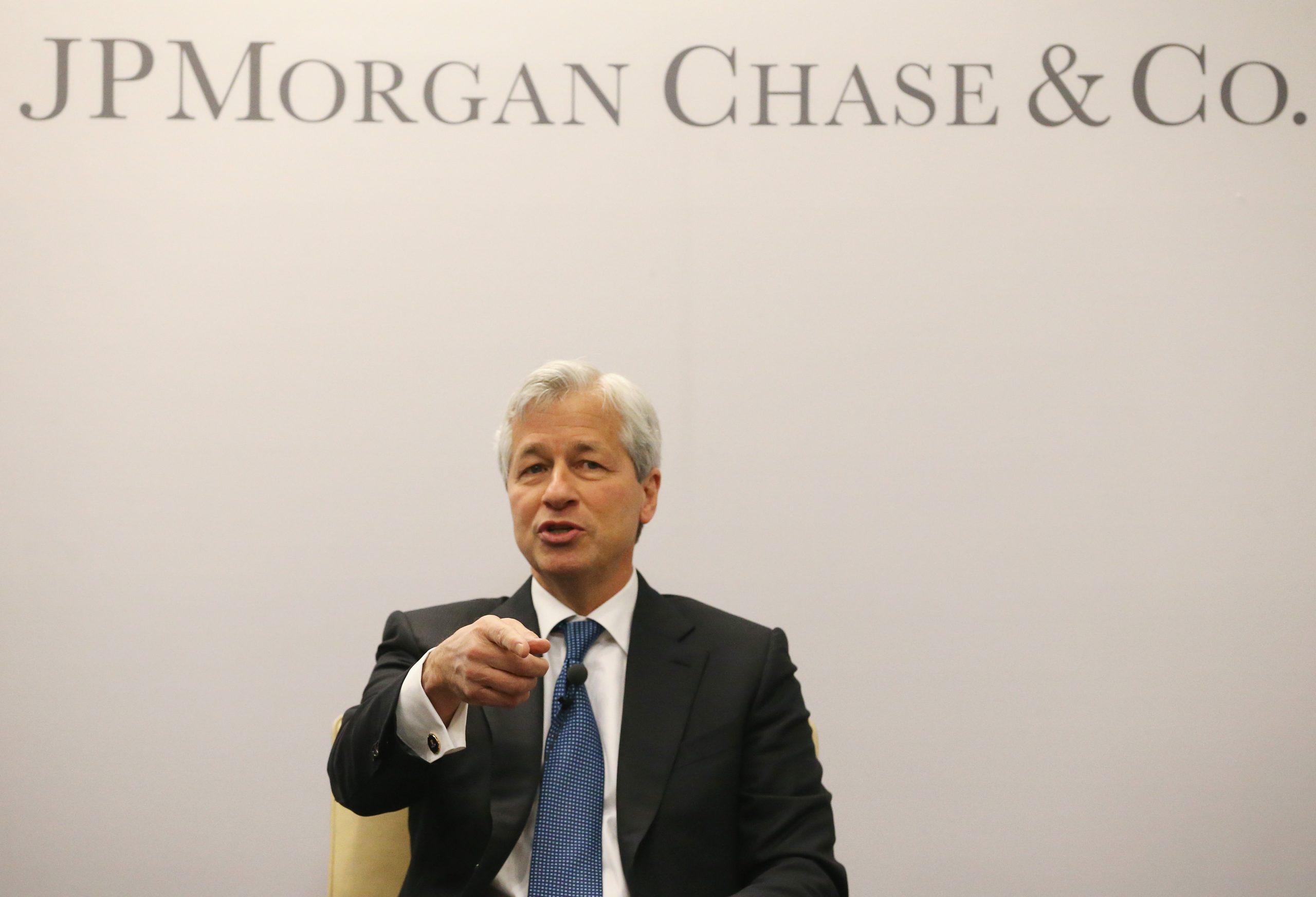
JP Morgan Chase puts contents through its CEO account, it goes viral. But the same content via JPMC account, no one cares (WSJ)

A renewed wave of global economic uncertainty is dimming the lights on Nigeria’s reform-driven optimism, as U.S. investment bank J.P. Morgan pulls the brakes on its bullish stance over the country’s debt instruments.

In a sharp departure from its earlier position, the bank has told investors to exit long positions in Nigerian Open Market Operation (OMO) bills, citing deepening macroeconomic vulnerabilities linked to declining oil prices and an increasingly unstable global economy.

The April 9 research note, titled “Frontier Local Markets Strategy: Reducing risk further,” is the strongest signal yet that foreign appetite for Nigerian debt may be drying up. J.P. Morgan had previously recommended Nigerian treasury bills as a high-yield opportunity, particularly after the Central Bank of Nigeria (CBN) initiated market reforms last year to unify exchange rates and end costly fuel subsidies. But now, with Brent crude heading below $60 per barrel, dangerously close to Nigeria’s budgetary break-even point, the bank is sounding the alarm.

“We’re advising clients to close their positions in Nigerian T-bills,” the report stated, warning that oil below $60 could sink Nigeria’s current account back into deficit and pile pressure on the naira.

The shift in tone comes amid a swirl of global uncertainties. J.P. Morgan pointed to the global tariffs by the U.S. President Donald Trump. The bank says Trump’s stance on sweeping global tariffs could reignite trade wars that hurt emerging markets like Nigeria, where export earnings remain precariously tied to crude oil.

This geopolitical backdrop, coupled with the reality of falling oil prices, now threatens to upend Nigeria’s fragile economic recovery.

CBN’s optimism meets investor caution

Just days before J.P. Morgan’s note, Nigeria’s central bank had offered a more hopeful picture. It reported a $6.83 billion balance of payment surplus in 2024 and said external reserves, which hovered around $23 billion, were expected to climb due to improved oil output and export diversification.

“We anticipate a steady uptick in reserves, underpinned by improved oil production levels, and a more supporting export growth environment that is expected to boost non-oil FX earnings,” the CBN said.

But that optimism may now be colliding with crude realities. As oil prices tumble, so too do the prospects of a genuine FX buffer. J.P. Morgan warned that if oil remains under $60—a level seen as Nigeria’s fiscal red line—it could trigger renewed dollar demand, spark portfolio outflows, and lead to a current account deficit.

The bank even floated a worst-case scenario: if the tide of oil-linked FX dries up, the naira could weaken past the 1,700/$1 mark. It currently trades over 1,500, but analysts say that’s largely propped up by central bank intervention.

To defend the naira, the CBN has stepped up its interventions. According to J.P. Morgan, the apex bank sold around $550 million into the market in March alone. That figure has since surged past $1 billion this month, based on estimates from financial analysts.

The bank says this increasing reliance on CBN support highlights a deeper vulnerability: Nigeria’s FX market remains too dependent on a single revenue stream—oil.

“Any disruption to CBN dollar inflows—primarily from oil—could create panic in both currency and bond markets,” the note warned.

J.P. Morgan estimates that potential portfolio outflows from Nigeria could hit $10 billion, although it acknowledged that a portion of this is likely locked in illiquid assets or long-term placements. Still, even a fraction of that leaving the system could rattle already-shaky investor confidence.

OMO bills under pressure, yields spike

Beyond the currency market, cracks are now showing in the domestic fixed-income space. The report notes that liquidity in Nigerian T-bills and OMO instruments has thinned significantly, as rising inflation, foreign outflows, and geopolitical shocks spook investors.

Yields on short-dated securities have surged by as much as 300 basis points in recent weeks, a signal that risk appetite is waning. With fewer buyers in the market, the CBN has had to step in—either injecting liquidity or directly participating in auctions to avoid failed bids.

The shift may seem technical, but the implications are broad. When investor demand weakens for government debt, borrowing costs rise. And when a country like Nigeria is already struggling to plug fiscal holes, this compounds the burden.

At the heart of Nigeria’s dilemma is its dependence on oil, which still accounts for more than 90 percent of FX earnings. The government had pinned its hopes on higher crude exports and economic diversification, especially with the Nigerian National Petroleum Company (NNPC) now fully commercialized. But oil’s global downturn is threatening that push.

The country’s fiscal plans are also built on the assumption of improved tax collection and revenue reforms—yet neither has materialized at the pace needed to offset oil volatility.

“The government had hoped for increased FX inflows through oil exports and multilateral support. However, with oil prices falling and no clear path to alternative revenue streams, the pressure on fiscal and external balances is likely to grow,” J.P. Morgan warned.

However, It’s Not All That Bad

Despite the caution, J.P. Morgan hasn’t written Nigeria off entirely. The bank maintains a medium-term positive outlook, suggesting that reforms like the FX unification and subsidy removal will eventually pay off. It also expects the country to continue its shift towards market-determined exchange rates and local revenue mobilization.

But it hinges all that hope on one condition: Nigeria must withstand the current wave of global headwinds without losing control of its currency or fiscal position.

In essence, Nigeria’s economic recovery remains a balancing act—one that is now swaying under the combined weight of geopolitics, oil market dynamics, and investor nerves. And with oil slipping below the red line and Trump’s sweeping tariffs echoing across markets, the outlook seems gloomy.

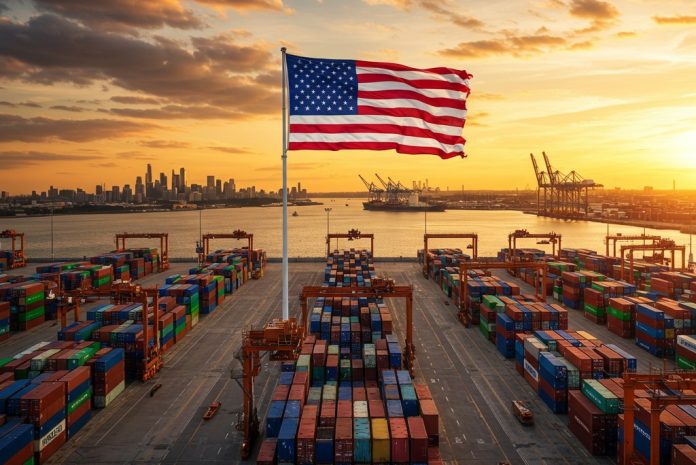
US Trade Tariff and How Nigeria Can Move From 14% To 0%

1

We continue to wish that the US and China will find how both will operate in this 21st century since they are the REAL countries while others are just voting Present. But besides the mercantilist framework of physical goods, positing that trade must deliver profitable balances, even at the flavour of protectionism, let me add the other “goods”.

Yes, when you add services and software, America wins the world and runs a huge “trade” surplus with every country on earth. Of course, those other “goods” are not cleared at the typical ports, and may not enter some dossiers of nations since they pass via IP addresses of computers, and banks’ digital wallets. In other words, from banking services to digital products which include Google ads, Apple Store, ChatGPT subscriptions, etc does any country come close to the modern “tariff” with US?

When this tariff conversation began, I asked the Nigeria’s trade czar to prepare a small table which shows two things: the physical trade goods surplus Nigeria enjoys over US (US imports crude oil and African foods from Nigeria while we rarely import much from the country) and Services/software (Nigeria has a huge trade deficit there, from Netflix to Microsoft to correspondence banking services). When those are taken together,  President Trump will see that Nigeria is running a trade deficit against the US. And can make our tariff “0%” lol.

In other words, America leads on trade when you combine the traditional and modern trades, and President Trump should include everything in his calculation. Using only the physical goods may not capture much, since those Adam Smith postulations were promulgated well before the invention and scaling of the Internet, and they need to be upgraded.

In summary: If Country A imports physical goods worth $10m  from the US,  and US imports physical goods worth $30m from Country A (usually raw materials), Country A has a trade surplus of $20m. But look deeper, on services, banking and software, Country A is importing things valued at $50m from US, when US records zero from Country A. If we include everything, you can even notice that the US is the one with a comprehensive trade surplus when you include all “ports”, beyond air, land and sea, to include “internet ports”.

Take a look at the ranking of mobile apps and their downloads, the US is top in all categories. So, Nigeria’s trade czar must update its playbook when he/she visits Washington DC to negotiate for the nation. I am confident that the US will understand this point and remove the extra 14% for us because Naira needs space to breathe!

Comment on Feed

Comment 1: Ndubuisi Ekekwe which economical and statistical tools can fairly measure total trade balance in an unbiased way for all trade partners to agree on? Maybe it is already done and should be the basis of trade negotiation

My Response: “which economical and statistical tools can fairly measure total trade balance in an unbiased way” – I will not blame the tools; the issue is the data fed into the tools. Lesotho has a GDP of $2.2b but owns banks which have corresponding banks with New York, use Microsoft software, watch Netflix, use apps stores, etc. It has a trade surplus with the US because it exports jeans but imports minimal physical goods. Check its central bank on what it pays for software, etc, you will see that it is on deficit if ALL goods are included.  The challenge is that people are still feeding tariff data using Adam Smith mercantilism and theory of physical comparative advantages which were purely built on atoms, with no bits and bytes.

Comment 2: Adam Smith’s postulations have since been improved by the Keynesians, New Keynesians, and neoclassical economists to incorporate modern-day technological progress. And ways to measure intangible services over the Internet have been designed as well, in terms of taxation and open economies. But since some of the big companies normally register their businesses in some of the countries they operate in, this changes the game. For instance, Meta in Ireland is seen as a European company by virtue of its incorporation in the EU.

My Response: I am not sure about that. All banks in Nigeria have correspondent banks in New York. Also, it is not the problem of Nigeria if Microsoft US wants to collect money via a shell in Ireland when we know that Ireland did not create Microsoft. As a Central Bank making that trade reconciliation payment, I will ask Microsoft to create your US bucket for me to pay; otherwise, we will not pay you. That you’re using Ireland as a wallet does not mean Microsoft is no more American.  If a vessel leaving Nigeria with crude refuels in Belize before arriving US, would that not still be Nigerian crude?

ChatGPT Becomes World’s Most Downloaded App, Surpassing Instagram and TikTok in March

0

In a major shift that underlines the rising mainstream appeal of artificial intelligence tools, ChatGPT has overtaken Instagram and TikTok to become the most downloaded non-gaming app globally in March, according to new data from Appfigures.

The chatbot app hit 46 million new installs during the month, marking its largest monthly growth since launch and a 28% jump over February figures.

The surge in downloads pushes ChatGPT ahead of usual top contenders Instagram and TikTok, which took the No. 2 and No. 3 spots respectively. It also underscores how AI, and OpenAI in particular, is no longer just a tech buzzword but a consumer mainstay.

While the March spike coincided with upgrades to ChatGPT’s image generation tools and loosened content moderation rules, updates that helped the app go viral thanks to its Ghibli-style meme-making capabilities, Appfigures believes the growth was more about brand dominance than product changes.

“It’s starting to feel like ChatGPT is becoming a verb, a lot like how Google did in the 2000s,” said Appfigures founder and CEO Ariel Michaeli. He pointed out that even conversations around other AI chatbots like Grok or Claude ultimately drive users to ChatGPT because of its name recognition.

That association has helped solidify ChatGPT’s position in popular culture, with many casual users now referring to “ChatGPT” when they mean AI in general — a branding feat that even tech giants struggle to match.

Why This Matters

ChatGPT’s rise to the top of the app charts is about more than numbers. It suggests that OpenAI has successfully bridged the gap between experimental AI and widespread utility. This latest milestone coincides with the growing integration of AI tools across industries, including education, customer service, coding, and content creation.

The app’s massive year-over-year growth, 148% compared to Q1 2021, also puts it in a different league from other AI tools trying to break into the market. While rivals like Anthropic’s Claude have struggled with traction, and DeepSeek or Manus AI remain largely niche, ChatGPT’s dominance shows no signs of slowing.

Even Elon Musk’s Grok, which benefits from his celebrity status and the X platform for distribution, may face an uphill battle. Appfigures noted that the problem for new entrants isn’t necessarily a lack of quality — it’s that users looking for AI just download ChatGPT by default.

Instagram, TikTok Knocked Down — For Now

Instagram, which had held the No. 2 position on the App Store and Google Play in both January and February, fell behind ChatGPT in March. TikTok, usually the top dog, dropped to third place — a shift that reflects changing consumer interest amid regulatory concerns.

TikTok’s earlier download bump this year was driven in part by fears of a U.S. ban. While that threat has eased, with President Trump now reportedly seeking a deal with China to keep the app accessible to American users, uncertainty remains. Instagram, meanwhile, has maintained strong popularity, especially among U.S. teens.

A new survey by Piper Sandler showed Instagram as the most-used social app among American teens, with 87% monthly usage. TikTok followed with 79%, and Snapchat with 72%.

Other social apps continued to hold spots in the global top ten in March, including Facebook, WhatsApp, Telegram, Threads, and CapCut. The top 10 collectively pulled in 339 million downloads, a notable jump from February’s 299 million.

End of the Road for GPT-4 in ChatGPT

As ChatGPT enjoys a record-breaking month, OpenAI is also preparing to retire the GPT-4 model from the app by April 30, replacing it entirely with GPT-4o, the newer model now set as the default.

GPT-4o has been praised by OpenAI for its improved performance in writing, coding, STEM tasks, and conversational flow. The company says it outperforms GPT-4 in head-to-head evaluations and better follows instructions.

Originally launched in March 2023, GPT-4 cost more than $100 million to train and introduced multimodal capabilities for image and text understanding. It was later followed by GPT-4 Turbo, and now GPT-4o. While GPT-4 will no longer be available in the ChatGPT app, developers will still be able to access it via OpenAI’s API.

The company is also preparing to roll out more models, including the GPT-4.1 family (featuring GPT-4.1-mini and GPT-4.1-nano) and a new reasoning series called o4-mini. These efforts suggest OpenAI is pushing to scale its capabilities even further while keeping the user experience fast and accessible.