DD
MM
YYYY

PAGES

DD
MM
YYYY

spot_img

PAGES

Home Blog Page 1520

FairMoney Revenue Surges to N121.9 Billion in 2024, Amid Shift To Customer Deposit-Funded Lending

0

FairMoney, a Nigerian digital banking and instant loan provider, is reported to have recorded N121.9 billion in gross revenue in 2024.

This represents a 62% year-on-year (YoY) growth increase in gross revenue, driven largely by its growing reliance on customer deposits to fund its lending operations. The company’s unaudited financial results revealed that profit after tax rose significantly to ?5 billion, up from ?780 million in 2023.

For the first time since it began accepting deposits in 2021, over 80% of FairMoney’s loan book was funded by customer deposits. This marks a major shift from 2020 when borrowings accounted for over 80% of funding. Deposits surged from ?2.9 billion in 2021 to ?72.9 billion in 2024, enabling the fintech to reduce external borrowing to less than 10%.

In a discussion with TechCabal, the company disclosed that its massive growth recorded last year was driven by its innovative products and competitive offerings.

It said,

“Our strong growth in customer deposits is a result of our growing customer base, increased customer loyalty and trust, innovative products, and competitive offerings. Given the high inflationary macro environment, we believe in offering customers attractive rates that provide them, as close as possible, with positive real returns.”


FairMoney generated most of its revenue from loan interest, which rose 57% year-on-year to ?116 billion. The company’s profit margin also improved moving from 1% in 2023 to 4.79% in 2024.

Non-interest income remained modest at ?5 billion, including ?3.8 billion in fees and commissions and ?1.7 billion from other sources. Operating expenses were high, totaling ?41 billion and resulting in a cost-to-income ratio of 78%. Interest expenses increased slightly to ?10 billion from ?8.3 billion in 2023.

However, impairments on loans and other assets increased by 30% to ?59.4 billion in 2024, marking the first rise in two years. FairMoney’s impairments had stabilized at around ?45 billion following a 159% jump in 2022. This rise pushed the fintech’s non-performing loan (NPL) ratio to a startling 86.8% of its ?68.4 billion loan book.

FairMoney also reported a net interest margin of 64.72%, signaling strong earnings from interest-based operations. However, this margin is heavily reliant on high-yield loans—some with interest rates of up to 10% monthly. While lucrative, this model carries significant credit risk, as seen in the impairment figures.

The lender’s total assets rose by 55% year-on-year to ?99 billion, largely due to a ?30.4 billion expansion in its loan portfolio. However, its cash holdings dipped by ?2 billion to ?8.1 billion, while prepayments (early loan repayments) grew sharply from ?1.3 billion to ?9.3 billion.

FairMoney, founded in 2017 by Laurin Hainy, Matthieu Gendreau, and Nicolas Berthozat, has grown exponentially since its launch. In its first year of operation, the company had no more than 100,000 users. Now, it claims to have over 5 million users enjoying its banking, savings, and investment services, with over 10,000 daily loan disbursements.

Three years after launching its mobile lending service in Nigeria, the company expanded to India, Asia’s second-most populous country, in August 2020. According to the CEO Hainy,  data-driven insights were behind the choice to expand to India. He noted that the Indian market is quite similar to that of Nigeria. In the Asian country, only 36% of adults have access to credit, leaving an untapped market of about 141 million people microfinance banks do not serve.

One stand-out feature for Fairmoney in its loan offerings is that it doesn’t collect collateral or documentation. Rather, the company bases the assessment of the customer on the information they provide on the app, which is their telephone number and the BVN.  

Notably, the company has a talented tech team who have created a sophisticated algorithm that scores every customer and determines the volume of loans it can offer such a person and over what period. This is based on the activities the customers carry out with their phones; such as data from their banking activity

FairMoney is building the leading mobile bank for emerging markets. The fintech is on a mission to help the average Nigerian access finance tools to take control of both their life and their finances.

“System Not Designed for Youth”: AfDB President Slams Nigerian Banks for Abandoning Young Entrepreneurs

0

In a country teeming with youth and innovation, where nearly every street corner tells a story of ambition waiting to bloom, Akinwumi Adesina, President of the African Development Bank (AfDB), has offered a blunt verdict on the financial system that governs it: it was never meant for the youth.

Speaking on Channels Television on Thursday, Adesina, a former Nigerian Minister of Agriculture and one of Africa’s foremost economists, did not mince words. He accused commercial banks in Nigeria and across the continent of systematically shutting the doors on the very generation that carries Africa’s future in its hands.

A System Built for the Old, By the Old

Adesina’s critique goes beyond surface-level complaints about difficult loan procedures. He paints a picture of a banking system whose architecture is fundamentally rigged against young people—one that treats youthful ambition as a liability rather than an asset.

“You walk into the bank, and you see young people, 21 years old, coming in. In your risk assessment, the only thing you see is risk, risk, risk,” Adesina said. “And so you go ask them for securities that they need to bring to you—‘do you have a house, do you have a land, do you have tax for the last 40 years?’ But they’re only 21 years old.”

For most young Nigerians, these demands aren’t just steep—they’re impossible. Many are just emerging from university, hustling through the country’s ballooning unemployment and underemployment crisis, trying to turn coding skills, fashion design, or agritech ideas into tangible enterprises. But when they turn to banks, they are told to return with what they don’t have – collateral.

465 Million Youths, One Broken System

Adesina’s frustration stems from the sheer scale of the problem. Africa is home to more than 465 million young people between the ages of 15 and 35. In Nigeria alone, youth account for over 60 percent of the population. And yet, the financial sector across much of the continent continues to operate on outdated risk models and rigid credit structures that ignore the continent’s evolving demographic realities.

“The commercial banking system, the financial system, has failed young people in Africa,” he said, putting the matter plainly.

It shows every day in the statistics of failed startups, in the stories of dreams deferred, and most visibly in the growing wave of youth emigration, now widely known in Nigeria as the “japa syndrome.” For Adesina, the brain drain isn’t just a tragic consequence of bad governance, it’s a reflection of a system that refuses to back its youth.

No More Freebies. Fund Ideas, Not Slogans

One of the more striking elements of Adesina’s comments was his rejection of tokenistic government and NGO-run youth programs that often dominate headlines but deliver little in actual support.

“First and foremost, is to recognize that young people don’t need freebies,” he said. “We don’t need people just saying, ‘Oh well, I just want to give you a youth empowerment program.’ What does that mean?”

According to Adesina, the real solution lies in access to capital, and not as a handout, but as a real investment. He urged banks to abandon the conservative thinking that sees youth as high-risk by default and to embrace bold, strategic investments in their ventures.

“They need capital. They need you to put your money at risk on their behalf,” he said, calling for a rethink of risk assessment models that currently penalize innovation.

Why This Matters Now

Adesina’s remarks come at a time when Nigeria is struggling to curb rising unemployment, with youth joblessness hovering around 53 percent, according to estimates from local economists. The country’s micro, small, and medium enterprises (MSMEs) are considered its economic backbone, yet many of them operate informally or remain stunted due to a lack of financing.

The Central Bank of Nigeria (CBN) has, in the past, rolled out credit schemes targeting youth and SMEs. However, many such programs have faced implementation bottlenecks, corruption allegations, or have been mired in political patronage.

Adesina’s comments suggest that unless commercial banks, not just central authorities, step up to back the next generation, the country risks losing both its workforce and its entrepreneurial spark.

The AfDB President’s message is as much a challenge as it is a condemnation. For Nigerian banks that post billions in profit annually while offering little to the country’s young, he is calling for a shift not just in policy, but in mindset.

“Rethink your risk models,” he said. “Invest in the future. Our people are our greatest asset.”

Adesina’s words come as more young Nigerians weigh the option of fleeing to countries with friendlier climates for talent and capital. His call is expected to stimulate action, not just the banks, but an entire ecosystem that seems unwilling to bet on the very people who could transform it.

“I don’t need Elon for anything other than I happen to like him,” Trump Signals End to Musk Partnership

0

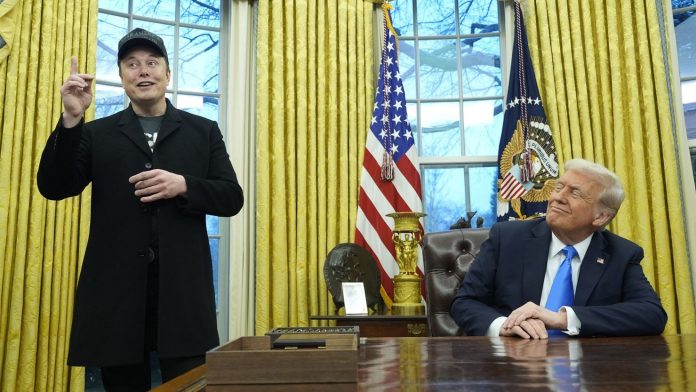
In a striking moment at Thursday’s Cabinet meeting, President Donald Trump hinted that his high-profile partnership with Elon Musk may soon come to an end, raising questions about the future of one of Washington’s most watched alliances.

Trump’s remarks, delivered with Musk seated nearby, underscored a relationship strained by policy disagreements and the mounting costs of Musk’s role as a vocal supporter, particularly as his leadership at the Department of Government Efficiency (DOGE) sparks chaos and backlash that threatens his business empire.

Trump’s statement came during a discussion at the White House, where he praised Musk’s contributions but pointedly distanced himself.

“Elon has done a fantastic job. Look, he’s sitting here, and I don’t care. I don’t need Elon for anything other than I happen to like him,” Trump told reporters.

The comment, laced with casual dismissal, suggests a deliberate pivot from a partnership that has defined much of Trump’s second term. Sources close to the administration point to Musk’s temporary status as a special government employee, limited by federal law to 130 days of service in a year, as a key factor. Trump himself fueled speculation last week, stating on April 3 that Musk would likely leave “in a few months,” a timeline echoed by White House press secretary Karoline Leavitt in an X post on April 2, which confirmed Musk’s exit once his DOGE work concludes.

Musk’s tenure at DOGE has been nothing short of seismic. Tasked with slashing government spending, he announced plans to cut $150 billion for the 2026 fiscal year, laying off thousands of federal workers and shuttering foreign aid programs. These moves, aimed at streamlining bureaucracy, have instead unleashed turmoil across agencies, with critics decrying the rapid pace and human toll.

The fallout has spilled beyond government corridors, hitting Musk’s personal and corporate interests hard. Tesla, his flagship company, has become a lightning rod for public anger, with showrooms targeted by protests and owners reporting vandalized or burned vehicles. During a Tesla all-hands meeting last month, Musk lamented the apocalyptic media coverage, saying, “I can’t walk past the TV without seeing a Tesla on fire,” and urged detractors to criticize without destroying his products.

Musk’s unwavering support for Trump has come at a steep price. His $277 million in contributions to Trump and GOP candidates in the 2024 elections cemented his role as a political powerhouse, while public appearances—like last month’s White House event where Trump test-drove a red Tesla Model S—cast him as a loyal ally. Trump recounted the purchase on Thursday, framing it as a “show of support” for Musk, though he emphasized paying full price.

“They said, ‘Oh, did you get a bargain?’ No. I said, ‘Give me the top price,’” he said.

However, this loyalty has cost Musk dearly. Tesla’s brand is under siege, its reputation tangled in the controversy surrounding DOGE’s cuts, and Musk’s personal fortune faces pressure as investors question his divided focus.

Adding to the strain is a growing policy rift, most notably over trade. Musk, a vocal advocate for open markets, has pushed for zero-tariff economic ties, recently calling for a “free trade zone” between the US and Europe during a meeting with Italy’s League Party on April 5. This stance clashes with Trump’s recent announcement of sweeping tariffs on over 180 countries, a protectionist move that could disrupt Tesla’s global supply chain and raise costs for consumers.

Musk’s frustration surfaced in a sharp critique of Trump’s top advisor, Peter Navarro, whom he called “dumber than a sack of bricks” after Navarro referred to him as a “car assembler.” The exchange highlights a broader divide: Musk’s globalist vision versus Trump’s America-first agenda, a tension that may hasten their parting.

Despite the cracks, some in Trump’s circle see a future for Musk beyond DOGE. Vice President JD Vance told Fox News last week that Musk could remain an advisor after his formal role ends, though details remain unclear. For now, Musk’s smile and nod during Trump’s Cabinet meeting remarks belied the uncertainty ahead. As he navigates the fallout from DOGE and Tesla’s challenges, Musk faces a pivotal moment: step back from the political fray to salvage his businesses or double down on a waning alliance.

The Trump-Musk saga, once a symbol of bold collaboration, now teeters on the edge of separation. With tariffs looming and DOGE’s disruptions reverberating, the question isn’t just when Musk will leave, but whether their shared vision can endure the fallout.

Implications of Chinese Companies Raising Prices or Exiting Amazon’s U.S. Marketplace

0

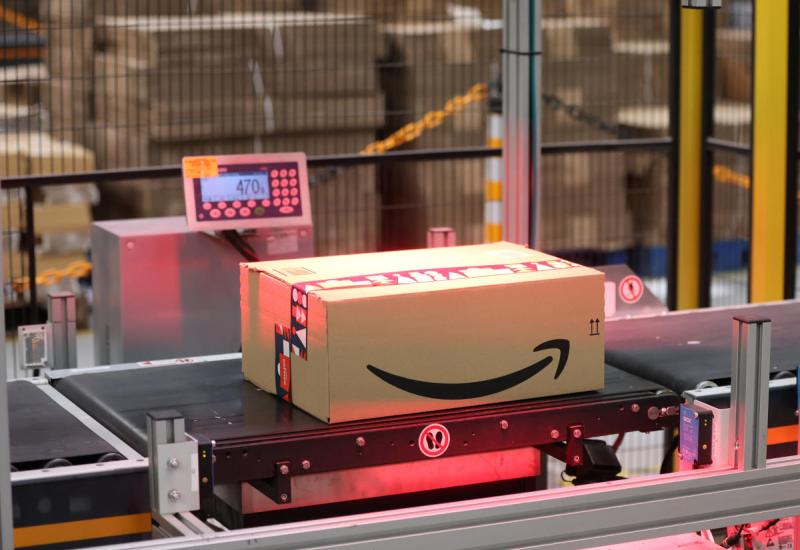
The situation with Chinese companies on Amazon facing U.S. tariffs is a messy one. Tariffs, which act like a tax on imports, jack up the cost of goods coming from China. For these sellers, it’s a gut punch—either they raise prices to cover the extra costs, or they eat the loss and risk going under. Some are already talking about pulling out of the U.S. market entirely because the math just doesn’t add up anymore.

On one hand, hiking prices could push away customers who are used to cheap deals on Amazon. U.S. consumers might grumble, but they’ll likely still pay for stuff they need. On the other hand, exiting the market means losing access to a massive chunk of revenue—China’s sellers make up a huge portion of Amazon’s marketplace, with billions in sales. Moving production to places like Vietnam or Mexico is an option, but it’s not a quick fix; setting up new supply chains takes time and money.

The tariffs are also a double-edged sword. They’re meant to protect U.S. businesses by making foreign goods pricier, but they could backfire. Higher prices might fuel inflation, and small American sellers who rely on Chinese manufacturing are getting squeezed too. Plus, Amazon itself isn’t immune—its whole low-price model gets wobbly if sellers pass on costs or bail.

Both sides have their logic. Tariffs could force companies to rethink reliance on China, maybe even bring some manufacturing back to the U.S. But in the short term, it’s chaos—higher prices, supply chain headaches, and probably some empty virtual shelves. Long term, it depends on how stubborn everyone gets. If tariffs stick, Chinese sellers might pivot to other markets like Europe or Southeast Asia, and Amazon could see a shakeup in who’s selling what. If they fold under pressure, things might stabilize, but don’t hold your breath for that anytime soon.

If Chinese sellers pass on tariff costs, expect pricier goods on Amazon—everything from electronics to clothes. Shoppers might grumble, but many will still buy essentials, squeezing budgets. Inflation could tick up if this spreads across enough products, especially since Chinese sellers dominate categories like home goods and tech accessories.

If sellers quit the U.S. market, Amazon could face inventory shortages. Fewer options mean less competition, which often leads to even higher prices. Smaller U.S. sellers who rely on Chinese manufacturers might also struggle, either raising their own prices or getting stuck with delayed shipments. Amazon’s business thrives on low prices and variety. Price hikes could push customers to competitors like Walmart or eBay, while a mass exodus of sellers might thin out product listings, denting the platform’s appeal.

Amazon’s stock ($AMZN) could take a hit if investors see its marketplace losing steam, though its logistics and cloud arms might cushion the blow. Tariffs aim to level the playing field for American businesses, but it’s not all rosy. Small U.S. sellers sourcing from China face the same cost spikes, and scaling up domestic production isn’t quick or cheap. Some might gain market share if Chinese competitors bail, but only those already positioned to pivot fast.

Chinese companies might redirect focus to markets like Europe, Southeast Asia, or Latin America, where tariffs don’t bite as hard. Some could relocate production to countries like Vietnam or India, but that takes years and big bucks. This could reshape global supply chains, with ripple effects on shipping costs and trade balances. Higher consumer prices could stoke inflation, a headache for policymakers already juggling growth and interest rates. Tariffs might create some U.S. jobs long term but risk short-term pain—lost sales for Amazon-dependent businesses, higher costs for startups.

Politically, it’s a gamble; voters love “tough on China” talk but hate paying more at checkout. Tariffs could force a reckoning on over-reliance on Chinese goods, potentially strengthening U.S. manufacturing. But the immediate hit—price spikes, shortages, and small-business pain—could sour consumers and rattle markets. If tariffs stick, expect a rocky transition; if they soften, things might stabilize, but global trade’s already shifting fast.

Maximizing Chromebook PDF Editing Capabilities

0

Maximizing the capabilities of your Chromebook PDF editor can significantly enhance your productivity, whether you’re using it for business or personal purposes. You can choose from several PDF editors for Chromebook. They all have unique features geared toward a specific purpose, such as collaboration, or are specifically for Google Workspace users. In this blog post, we’ll explore how you can optimize your Chromebook PDF editor and Google Chrome viewer. We’ll select the right PDF editor for your Chromebook, leverage online PDF editing platforms, and benefit from using these services, such as annotating PDFs in Chrome. Let’s dive in!

Optimizing Chromebook settings for document handling

Before you choose a Chromebook PDF editor, you need to understand its capabilities, which are different for every Chromebook PDF editor. You can start by checking for software updates from the developer, as these updates often include improvements to the PDF editor Chrome extensions if you’re using one instead of a dedicated, multi-feature Chromebook PDF editor.

Naturally, your next step to optimize the settings of your Chromebook PDF editor is to familiarize yourself with the Chrome PDF Viewer, which is the default PDF viewer on Chromebooks. This viewer offers basic viewing and editing features like zooming, scrolling, and printing. You can also use third-party PDF editing extensions from the Chrome Web Store to enhance your editing capabilities further.

But if you need more features than a simple PDF editor Chrome extension can offer, or if the scope of your project requires a large team that needs an easier way to communicate, collaborate, and interact, you can always consider third-party PDF editors for Chromebook. This type of software comes with free and premium features, making it easier for team members to share and edit PDFs.

Selecting the right PDF editing tools for your needs

When considering which PDF editing tools you need, remember that you are in control. Your priority should be your specific needs and requirements. If you can complete your project or meet your goals with a standard Chrome PDF viewer or Chrome PDF editor, use it. But if your needs are more significant, you should look for tools that offer a range of editing features, such as text editing, annotation, and form filling. Additionally, consider whether you need offline access to your PDF files, as some tools require an internet connection.

Some popular PDF editing tools for Chromebooks include Lumin, Smallpdf, and PDFescape. These tools offer a variety of editing features and are compatible with Chromebooks. However, these tools have different features, pricing, and capabilities, so you’ll need to investigate further to determine which one is best for you. We’ll give you a detailed description of each at the end so you have the basic facts and features.

Leveraging online PDF editing platforms

Online PDF editing platforms offer a cost-effective and accessible solution for PDF editing, particularly beneficial for individuals, small businesses, and non-profit groups. These platforms, which don’t require software installation on your Chromebook, provide important PDF editing features that are on par with their more expensive counterparts. In fact, they often offer more features than a PDF editor Chrome extension.

For example, with some online PDF editors, you can upload your PDF files directly to the website and edit them using a web-based interface. However, the best part of online platforms is that many of their tools and features are free. They offer premium versions so you can access more advanced features, but you can perform any number of vital PDF editing tasks, such as annotating PDFs in Chrome for free. Some premium features include collaborative editing, allowing multiple users to simultaneously work on the same document.

The benefits of using Chromebook PDF editors

There are several benefits to using both Chromebook PDF editors and online PDF editors. First, both Chromebook PDF editors and online PDF editors offer a range of editing features for how to edit a PDF in Chrome. These features rival traditional desktop PDF editing software, which is often expensive. They have so many features that it’s hard to figure out all of them. However, they also provide a high level of accessibility, allowing you to edit PDF files from any device with or without an internet connection.

Another advantage of using online PDF editors is the ability to collaborate with others simultaneously. This can be particularly useful for everyone, from students to project managers, who need to work on PDF files with colleagues or clients remotely. Many online PDF editors also offer cloud storage integration, allowing you to save your edited PDF files directly to services such as Google Drive or Dropbox.

Detailed review of leading online PDF editing services

Lumin

Lumin is a Google-integrated PDF editing tool that offers a range of editing features, including text editing, annotation, and form filling. The service is easy to use and provides a clean, intuitive interface while boasting offline capability. You can download the program to your device and work from anywhere offline. Additionally, since Lumin was designed with Google users in mind (although it is also iOS compatible), you can easily sync your Google Drive with Lumin, making it a convenient choice for Chromebook users.

SmallPDF

SmallPDF is another leading online PDF editing service that offers a variety of editing features, including PDF conversion, compression, and merging. The service is known for its user-friendly interface, fast processing speeds, and online security measures that erase all uploaded documents from the company’s servers. SmallPDF also offers a range of pricing plans, including a free plan for basic editing needs, although it does not have a downloadable version and has no offline capability.

PDFEscape

PDFescape is a comprehensive online PDF editing service that offers a wide range of editing features, including text editing, annotation, and form filling. This program is available in both online and desktop versions, with the latter costing more than the online version, although it does enable you to work offline. The service is easy to use and offers a range of pricing plans to suit different needs.

Conclusion

Mastering Chromebook PDF editing capabilities is not just about enhancing your productivity, it’s about taking control of your document management. By optimizing your Chromebook settings, selecting the right PDF editing tools, and leveraging online platforms, you can streamline your workflow and achieve more in less time. Additionally, with a wide range of third-party Chromebook PDF editors available, you have the flexibility to choose the tool that best suits your needs. By following these tips and utilizing the features available, you can unlock the full potential of your Chromebook for PDF editing and take your productivity to new heights.