DD
MM
YYYY

PAGES

DD
MM
YYYY

spot_img

PAGES

Home Blog Page 1521

Ramadan: Muslims Seek Night of Majesty

0
xr:d:DAFcEkcL2JY:35,j:271121524,t:23030618

As the final days of Ramadan unfold, millions of Muslims across the world intensify their prayers and spiritual devotion in search of Laylatul Qadr, the Night of Majesty. Widely regarded as the holiest night in Islam, Laylatul Qadr is the night when the first verses of the Quran were revealed to the Prophet Muhammad (PBUH). This sacred occasion, which falls within the last ten nights of Ramadan, holds immense significance for believers who seek divine mercy, forgiveness, and blessings. In this piece, our analyst examines the views and feelings of Muslims around the world as expressed on Twitter in the past few hours.

A Global Night of Worship and Reflection

From the bustling mosques of Mecca and Medina to small community prayer gatherings in remote villages, Muslims are uniting in their quest for spiritual elevation. Social media platforms have been flooded with messages, prayers, and reflections, showcasing the universal appeal of Laylatul Qadr. “#LaylatulQadr is the night of attaining and elevating the self through prayer and devotion,” one user shared, capturing the essence of the occasion. Many believers consider this night a once-in-a-lifetime opportunity to seek divine intervention, with some traditions indicating that prayers made on this night are equivalent to worship spanning a thousand months.

Educational Resources and Spiritual Guidance

In a bid to maximize the benefits of Laylatul Qadr, scholars and religious organizations have been disseminating educational materials and guides. Some have taken to social media to provide detailed instructions on how to observe the night, recite specific supplications, and engage in acts of worship. “Your complete guide to Laylatul Qadr—Thread,” reads a post from a well-known Islamic scholar, followed by a step-by-step breakdown of recommended prayers and rituals. Others have shared translations of Sura Al-Qadr in different languages to ensure a broader audience understands the spiritual depth of the night. A post featuring the Japanese translation of the chapter garnered thousands of engagements, highlighting the global diversity of the Muslim community.

Spirituality in the Digital Age

Beyond physical worship spaces, Laylatul Qadr has found a strong presence in the digital realm. Virtual gatherings, live-streamed sermons, and prayer sessions have allowed Muslims from different parts of the world to connect in a shared spiritual experience. Some have used social media to share reflections and motivations, urging others to take advantage of the blessed night. One widely circulated post read: “#LaylatulQadr offers a chance for reflection & renewal. May Allah accept our prayers and grant us His mercy.” Such messages resonate deeply with believers, reinforcing the communal nature of this night.

Communal Gatherings and Special Prayers

In major Islamic cities such as Istanbul, Jakarta, and Lagos, mosques have been filled with worshippers performing Qiyam-ul-Layl (night prayers). Aerial footage from Lekki Central Mosque in Nigeria captured thousands of Muslims in deep devotion, emphasizing the collective energy of the night. For many, Laylatul Qadr is a moment to strengthen their connection with God, seek atonement for past mistakes, and set intentions for the future. “On the #LaylatulQadr, one asks God for a new destiny,” another user posted, emphasizing the transformative power of the night.

A Message of Hope and Redemption

At a time when the world faces numerous challenges, including conflicts, economic hardships, and social uncertainties, Laylatul Qadr serves as a beacon of hope. The night encourages self-improvement, kindness, and unity among believers. Many see it as an opportunity to make heartfelt prayers for peace, justice, and a better future for all of humanity.

Major Updates from BlockDAG! Testnet, $30M Grants, & New Hires—Can Tron’s Rally or LINK’s Supply Crunch Keep Up?

0

Crypto markets remain in the spotlight as investors weigh new opportunities. Tron’s upward trend benefits from a surge in memecoin trading and leads USDT settlements, handling over $100 billion every day. Chainlink (LINK) stays steady at $17.30, with its shrinking exchange supply raising its scarcity appeal.

If LINK manages to break through the $19 resistance, it could aim for $21—placing it among the best cryptos to consider. At the same time, BlockDAG (BDAG) is gaining attention with its beta testnet launch, a $30 million grants program, and important additions to its leadership team. As BlockDAG’s presale nears $205.5 million, is it shaping up to be the top crypto opportunity for 2025? Let’s take a closer look.

Tron Gains Momentum as Memecoins Surge & USDT Activity Expands

Tron (TRX) is showing signs of a potential comeback, even though it’s still trading 47% below its high from earlier in 2024. The platform is experiencing renewed interest, especially in memecoins. Tokens like Sundog have gained 77%, while others such as Tron Bull Coin and Suncat have lifted the total memecoin market cap to nearly $90 million.

Tron also maintains a lead in USDT transaction volume, moving over $100 billion every day. This increase in network activity has so far generated $441 million in revenue for 2025. If this pace holds, analysts suggest TRX could climb 85% and reach $0.45. But to maintain its bullish trend, Tron will need to hold steady above the $0.2075 support level.

Chainlink’s Lower Exchange Supply Could Boost Price Prospects

Chainlink (LINK) is holding its ground at $17.30, offering some stability despite wider market shifts. Unlike other tokens facing recent pullbacks, LINK has gained support thanks to a reduction in circulating supply on exchanges. This scarcity factor continues to appeal to investors watching for potential growth.

On-chain data highlights that 2.2 million LINK were pulled from exchanges at a price of $17.80, triggering a slight recovery in price. If LINK can push past $19, it might set its sights on the $21 range. However, any slip below $17 could send the price sliding back to $15. With demand remaining steady and supply thinning, LINK presents itself as a solid option for those seeking cryptos with strong upside potential.

BlockDAG’s AMA Introduces Testnet, $30M Grants, and Key Leadership Appointments

BlockDAG’s latest AMA gave the community valuable insight into its plans for the months ahead. More than 800 participants tuned in as the team shared details about the March 2025 beta testnet launch, a $30 million grants initiative for developers, and new leadership additions to strengthen the project.

Meanwhile, BlockDAG’s presale shows no signs of slowing. It has now raised $201.23 million, with 18.8 billion BDAG tokens sold. Batch 27’s price sits at $0.0248—a remarkable 2,380% increase since the presale began—highlighting continued buyer enthusiasm.

The AMA also introduced two strategic hires: Marcus Xavier as the Head of Learning at BlockDAG Academy and mining expert Joshua Sack. Their expertise adds to the project’s long-term strategy and suggests BlockDAG is serious about building a skilled team to sustain its rapid progress.

Summing Up!

As trends evolve, Tron’s role in memecoin activity and USDT transactions cements its status as a bullish option. Chainlink’s shrinking exchange supply and price stability enhance its buying appeal. But BlockDAG appears to stand apart, with its beta testnet launch, developer grants, and key hires generating significant momentum.

BlockDAG continues to raise the bar, with over $205.5 million collected through its presale and growing backing from industry leaders. Its swift adoption, forward-looking technology, and expanding ecosystem make it one of the most talked-about crypto projects for 2025. With these developments in motion, BlockDAG could well be the project to watch as it moves toward its next major milestone. The question is: how far can its momentum carry it?

Presale: https://purchase.blockdag.network

Website: https://blockdag.network

Telegram: https://t.me/blockDAGnetworkOfficial

Discord: https://discord.gg/Q7BxghMVyu


MultiChoice Price Hike: NGO Accuses Pay-TV Giant of Discriminatory Pricing Against Nigerians

0

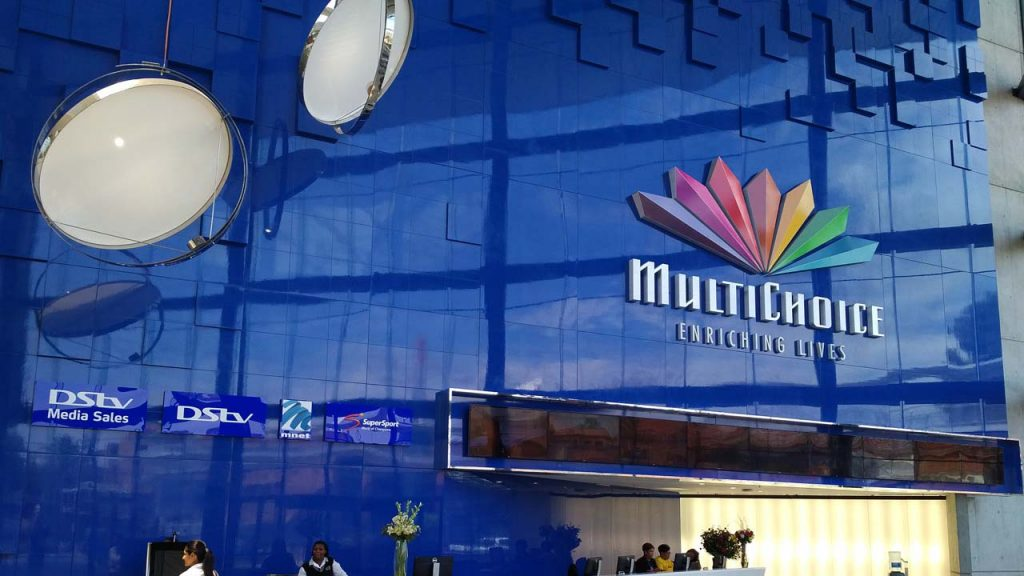
A consumer rights advocacy group, Save the Consumers, has launched a scathing attack on MultiChoice Nigeria over its recent 21 percent price increase on DStv and GOtv subscriptions, which took effect on March 1, 2025.

The group described the hike as exploitative, discriminatory, and a blatant disregard for Nigerian consumers, particularly in light of the company’s decision to slash prices by up to 38 percent for its South African subscribers.

This latest backlash against MultiChoice adds credence to a growing perception that Nigerians are quick to protest against multinational corporations, particularly when it comes to pricing and service delivery. While local businesses and essential goods suppliers have significantly increased costs amid rising inflation and economic hardship, few consumer advocacy groups have taken up the fight against these domestic price surges with the same intensity.

The development has also put regulatory authorities and legal bodies on high alert, with MultiChoice now facing regulatory scrutiny and legal action over its tariff hike. The Federal Competition and Consumer Protection Commission (FCCPC), which had earlier directed MultiChoice to halt all price increases pending an ongoing investigation, is under pressure to act decisively.

In a statement condemning MultiChoice’s action, Executive Director of Save the Consumers, Dr. Aliyu Ilias, accused the company of ignoring regulatory directives and treating Nigerian subscribers unfairly compared to their South African counterparts.

“Coming less than a year after the May 2024 price hike in Nigeria, this new increase openly defies a directive from the FCCPC to suspend all price adjustments pending the conclusion of ongoing investigations. It reflects MultiChoice’s clear disregard for both Nigerian consumers and regulatory authority,” he said.

Dr. Ilias argued that MultiChoice’s justification for the price hike—economic difficulties in Nigeria—was inconsistent, given that the company lowered fees in South Africa and even introduced additional content and features to enhance consumer experience.

“In South Africa, MultiChoice has lowered fees on various products, added new channels, and introduced features that improve the user experience, all while acknowledging the financial pressures faced by South African households. Yet, in Nigeria, the same company claims that economic difficulties justify higher tariffs,” he added.

The South Africa-Nigeria Comparison: A Dismissed Argument?

Some observers have pushed back against the NGO’s comparison of MultiChoice’s pricing strategies in Nigeria and South Africa. Many have noted that the economic environments of both countries are vastly different, making direct price comparisons misleading.

South Africa’s economy, while facing challenges, operates within a more stable macroeconomic framework compared to Nigeria, which has been grappling with currency devaluation, inflation, and worsening economic headwinds.

South Africa has a much more stable exchange rate, lower inflation, and different regulatory frameworks, leading many to conclude that it is unrealistic to expect MultiChoice to apply the same pricing model in both markets.

Even within Nigeria, businesses across all sectors have been forced to increase prices due to escalating costs. From food prices to transportation, utilities, and household essentials, almost every service and product has seen sharp price surges.

Why Are Nigerians Protesting MultiChoice but Not Food Prices?

This raises a critical question: Why are Nigerians protesting against MultiChoice but not mobilizing against the increase in the cost of goods and services, particularly food?

Over the past year, food prices have skyrocketed, with staple items like rice, bread, and tomatoes more than tripling in cost. The cost of transportation, healthcare, and education has similarly risen, yet there have been no large-scale protests against these issues.

A common explanation is that MultiChoice operates in an industry where consumers have historically felt exploited, due to its dominance in the pay-TV market. Many Nigerians perceive the company as taking advantage of limited competition to set prices arbitrarily, unlike the food industry, where price fluctuations are often attributed to external economic factors beyond retailers’ control.

MultiChoice’s Defense

MultiChoice has defended its decision, citing rising operational costs, currency fluctuations, and inflationary pressures in Nigeria. The company maintains that it is not alone in increasing prices, as nearly every business operating in Nigeria has been forced to adjust pricing to stay afloat.

The company also pointed out that despite the price hike, Nigerians still have access to a variety of packages at different price points, ensuring affordability for a broad consumer base.

However, Save the Consumers insists that the increase is unjustifiable and has called for regulatory intervention to prevent future price hikes. The NGO has urged the FCCPC and the National Broadcasting Commission (NBC) to:

  • Investigate MultiChoice’s pricing model and determine whether its tariff structure is anti-competitive.
  • Enforce consumer protection laws to prevent monopolistic practices.
  • Introduce new policies to encourage competition in the pay-TV sector and break MultiChoice’s dominance.

Additionally, consumer advocacy groups are urging Nigerians to explore alternative streaming platforms as a means of protesting what they describe as MultiChoice’s exploitative pricing policies.

The Limits of Scaling: AI Researchers Grow Skeptical About AGI As Predictions Fail to Materialize

0

For years, tech leaders have assured the world that artificial general intelligence (AGI)—AI that matches or surpasses human cognition—was just around the corner. But despite unprecedented investments and a relentless push to scale AI models, AGI remains elusive.

A new survey of 475 AI researchers, conducted by the Association for the Advancement of Artificial Intelligence (AAAI), reveals a growing consensus: simply throwing more computing power at AI is unlikely to lead to AGI.

The findings challenge a widely held assumption among major AI players, who have spent the last decade racing to build larger and more complex AI models in the hope that one would eventually “crack” intelligence. However, 76% of surveyed researchers now believe that scaling up existing models is “unlikely” or “very unlikely” to lead to AGI.

This growing skepticism comes as the self-imposed timeline for AGI by industry leaders is beginning to elapse—with little to show for it.

Industry Predictions Are Falling Apart

In 2014, Elon Musk famously claimed that AI could surpass human intelligence within a decade. By 2017, he doubled down, warning that humanity was “summoning the demon” and that superintelligent AI could arrive by 2025. His aggressive predictions have been echoed by other tech figures, including OpenAI’s CEO Sam Altman, who has frequently suggested that AGI could emerge in the near future.

Yet, despite billions in investment and the development of AI models with trillions of parameters, AGI has yet to materialize. Instead, the most advanced AI models, like OpenAI’s GPT-4, Google’s Gemini, and Anthropic’s Claude, are still limited to pattern recognition and language prediction. They remain far from demonstrating genuine reasoning, problem-solving, or self-awareness—the hallmarks of true AGI.

Even Demis Hassabis, CEO of Google DeepMind, has struck a more cautious tone. In contrast to Musk’s warnings, Hassabis estimates that AGI might emerge within the next five to ten years—a far more reserved prediction than those made by some of his peers. But even this timeline remains speculative, as researchers increasingly argue that fundamental breakthroughs will be needed before AGI becomes a reality.

Why More Computing Power Isn’t Enough

The last few years have seen unprecedented investment in AI research. In 2023, venture capital funding for generative AI exceeded $56 billion, according to TechCrunch, and demand for AI accelerators contributed to the semiconductor industry hitting a record $626 billion in 2024. Companies like Microsoft, Google, and Amazon have gone as far as securing nuclear power deals just to meet the energy demands of training and running these massive AI models.

Yet, despite these investments, AI progress appears to be hitting a wall. OpenAI’s latest models, while introducing new capabilities, have shown only marginal improvements over their predecessors. AI researcher Stuart Russell of UC Berkeley described the situation to New Scientist.

“The vast investments in scaling, unaccompanied by any comparable efforts to understand what was going on, always seemed to me to be misplaced,” he said.

This problem has become more apparent as models hit performance plateaus. In the past, expanding model sizes from 10 billion to 100 billion parameters yielded substantial improvements. But more recent expansions—from 100 billion to 1 trillion parameters—have produced diminishing returns. This has led many in the AI research community to question whether scaling alone will ever be enough to reach AGI.

A Shift in AI Research Priorities

As skepticism grows, AI researchers are rethinking their priorities. Many are now shifting their focus from simply building larger AI systems to ensuring these systems operate within an acceptable risk-benefit profile. While AGI remains an area of interest, only a small fraction of researchers are actively pursuing its development.

There is also growing support for the idea that if AGI is developed by private companies, it should be publicly owned to mitigate risks. Despite concerns about safety, a majority of researchers believe that AGI research should continue, rather than be halted until full safety mechanisms are in place.

Some researchers are exploring alternative approaches to scaling, such as “test-time compute.” Instead of blindly increasing model size, this method allows AI to spend more time “thinking” before generating responses, leading to performance improvements without a massive surge in computing power. OpenAI has experimented with this approach, but Arvind Narayanan, a computer scientist at Princeton University, warns that it is “unlikely to be a silver bullet.”

Tech CEOs Still Cling to the Scaling Dream

Some industry leaders refuse to abandon the belief that scaling alone will lead to AGI. Google CEO Sundar Pichai recently stated that the industry can “just keep scaling up”, though he acknowledged that the era of easy AI breakthroughs is coming to an end.

This divide between corporate optimism and academic skepticism raises the question: is AGI truly within reach, or has the industry been chasing a mirage?

Presently, AI is advancing, but not in the way that was promised. The lofty predictions of AGI arriving by 2025 are looking increasingly unlikely, and even the more cautious estimates—such as Hassabis’ 5-10-year timeline—remain speculative. Against this backdrop, the belief that AGI is not for the near future is gaining traction.

As scaling shows diminishing returns and researchers shift toward more cautious, risk-aware development, the AI industry may soon be forced to rethink its entire approach. If AGI is to be achieved, it will likely require new paradigms—not just bigger models and more data.

NigComSat Calls Innovators To Build Nigeria’s Satellite Future

0

My position is that 25% of the Nigerian military non-personnel budget should be spent on Nigerian companies and startups, on systems development, and production. If we implemented that policy when I pushed it in 2017, Nigeria today would be a net exporter of military-grade gadgets because many defense-related startups would have mushroomed. Sure, defence gadgets, not offence.

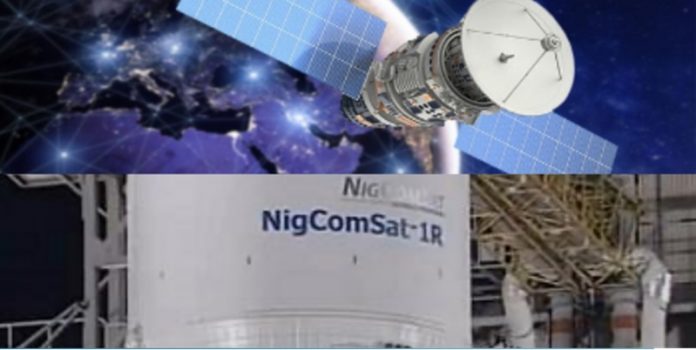
So, reading that a Nigerian agency is examining a construct where those with ideas could be supported, I want to share in case there are young people with great ideas. NigComSat, the government satellite agency, is looking for entrepreneurs and startups  in the broad domain of satellite and digital communication.

The NIGCOMSAT Accelerator Programme 2025 is now open for applications! Gain access to mentorship, funding opportunities and cutting-edge satellite technology to scale your innovation.

Application Deadline: April 11, 2025

Who Can Apply? Nigerian startups in tech, space, and digital solutions

Apply Now: https://lnkd.in/dmDzEPkP

After you have gone through the NIGERIAN COMMUNICATIONS SATELLITE LIMITED (NIGCOMSAT) program, and you are able to demonstrate a possibility to use infra-red or related tech to track movements of people in the bush in near real time, Tekedia Capital will like to explore investment in your company. And through FASMICRO partnership with Intel Corp (the only in Africa), my electronics business will provide you with cutting edge programmable processors to scale (see on Intel website ). Together, we can secure cities and build a security fortress across Nigerian communities.

Jane Egerton-Idehen, CEO of NigComSat, I hope you discover great startups, and if you do, we will provide support.