DD
MM
YYYY

PAGES

DD
MM
YYYY

spot_img

PAGES

Home Blog Page 1530

Concerns Mount Over Akanu Ibiam Airport Concession as Enugu Govt. Confirms 70% Progress

0

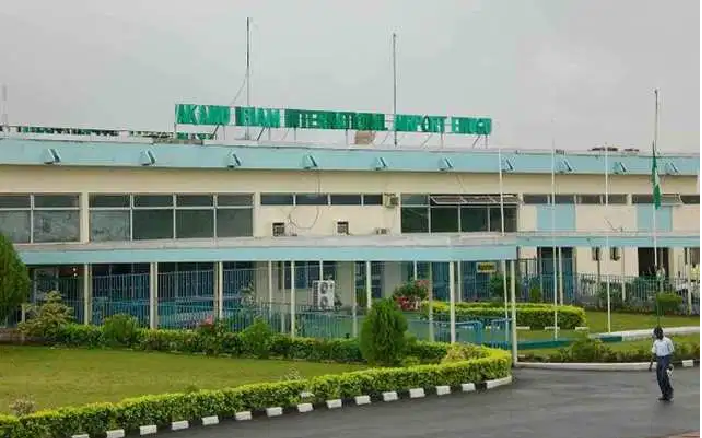
The Enugu State Government has announced that the concession process for the Akanu Ibiam International Airport in Enugu is now over 70 percent complete, with expectations that it will be finalized by the second quarter of 2025.

This was disclosed by the State Commissioner for Transportation, Dr. Obi Ozor, during a program on Afia TV.

According to Dr. Ozor, the process is being managed by the Federal Ministry of Aviation in collaboration with private investors. Once completed, the concessionaire will commence upgrades to the international wing of the airport, including the long-abandoned international terminal, the cargo terminal, aircraft maintenance, repair and overhaul (MRO) facilities, hangars, and runway extension.

But while the state government is optimistic, the airport concession has sparked growing unease among citizens, particularly those from the Southeast where Akanu Ibiam remains the only functional international airport. Many believe that the current move might not be to make the airport more efficient but to weaken it through a calculated strategy masked as a concession deal.

Allegations of Sabotage and Lack of Transparency

The distrust is not new. For years, the Southeast has had to lobby for the reopening or rehabilitation of the Akanu Ibiam Airport, which has repeatedly suffered neglect and funding delays. Now that the Federal Government has approved its concession, critics argue that the manner of the process raises red flags.

Financial analyst and commentator, Kalu Aja, took the questions directly to Aviation Minister Festus Keyamo, demanding answers to what he describes as glaring omissions and a lack of transparency surrounding the deal.

“Who exactly is Aero Alliance Consortium?” Aja asked. “Are they registered in Nigeria? Who are their promoters?”

Despite being named as the preferred bidder, virtually no public information exists about the Aero Alliance Consortium—its history, its executives, or its financial and technical credentials. This opacity has fueled suspicions about the motives behind the concession and whether due process was followed.

Did the Concession Follow Nigeria’s PPP Guidelines?

Aja pointed to the guidelines under the Infrastructure Concession Regulatory Commission (ICRC) Act of 2005, which mandates that all public-private partnerships (PPPs) must follow a competitive bidding process. He raised issues of concern and questioned whether the process adhered to the key provisions of the law:

Competitive Bidding: There is no evidence that multiple bids were invited or evaluated in a competitive manner. The ICRC rules require the bidder with the most technically and economically sound proposal to be selected through a transparent process. Did that happen here?

Technical Expertise: According to the ICRC, any private sector firm vying for an airport concession must demonstrate strong technical capacity in managing international aviation facilities. Yet there are no publicly available records of Aero Alliance Consortium’s involvement in any airport management project, either within or outside Nigeria.

Financial Capacity: Bidders are required to show a net worth of at least N30 billion (around $72 million) and obtain support letters from credible financial institutions to prove they can manage airport infrastructure. Many believe there is no evidence that Aero Alliance has met this threshold.

The 80-Year Tenor: A New Precedent?

Another concern that’s drawn public outrage is the unprecedented length of the concession period—80 years. That is more than double the tenors given for the concessions of other Nigerian airports, most of which are under 30 years.

“What’s the rationale behind locking down a strategic infrastructure asset for 80 years?” Aja questioned. “That’s two generations. Airports in Lagos and Abuja have 20 to 30-year concessions. Why is the East different?”

As the unusually long tenor deepens fears that the aim may not be efficient management, but a calculated sidelining of the only international gateway in the region, some Southeast stakeholders are calling for the agreement to be published and scrutinized by the National Assembly or a public oversight body before it is allowed to proceed.

What Happens to the Free Trade Zone?

The uncertainty doesn’t end with the concession contract itself. There are also concerns about what parts of the airport complex fall under the deal. Aja raised a pointed question: “Is the Free Trade Zone at Akanu Ibiam International Airport covered under this concession?”

The Free Trade Zone, if included in the concession, would mean ceding a potentially lucrative economic zone to a private entity for the next 80 years, without input from the state government or even clarity on how such assets will be managed.

Revenue Guarantees and Risk Transfer

Perhaps the most worrying detail to emerge is that the Federal Government appears to have agreed to “guarantee” the concessionaire’s projected revenues over the 80-year period—an arrangement critics argue is reckless and places enormous financial risk on taxpayers.

“If the concessionaire fails to meet its revenue targets, will the government really cover those shortfalls with public funds?” Aja asked. “Why should Nigerian taxpayers be saddled with 80 years of projected revenue risk for a deal they had no say in?”

Such an arrangement, if true, would amount to privatizing the gains while socializing the risks—a model that has repeatedly failed in Nigeria, especially in power, rail, and telecoms concessions.

“This is the most outrageous agreement I have seen. According to the Enugu Airport concession, if this concession is terminated and the termination is a result of the FGN default, then the FGN must pay outstanding loans, third-party liabilities, equity investment, and projected returns,” Aja noted.

He went further to ask: “Have we gone mad in this nation? Nigeria will repay “equity investment” and PROJECTED returns? So if the concessionaires say they projected to make 500%, FGN will repay 500%? On whose authority is Keyamo signing this contingent liability on the Federation? Is the Debt Management Office (DMO) aware that a contingent liability is being created here? Is the ICRCNG going to really sign off on an 80 year lease? Is this in the public interest?”

Aja went further to liken the concession to the P&ID controversial deal. “This is how P&ID’s liability was created: You draft a nonsense contract, get it signed, you get paid, and if it’s cancelled you also get paid. The same method was used in Ajaokuta Steel Mill and Mambila Power; both projects are now dead.

“This is a tactic to burden Enugu airport with debt and kill it, making it inoperable. Why would any government agree to be liable for “projected returns”? This is a setup against the entire region.”

State Government Optimism

In contrast to the criticism, Enugu’s state government remains hopeful. Dr. Ozor insisted the Federal Government and private investors are working closely to ensure the airport becomes fully operational with modern facilities. He said the aim is to turn the airport into a regional hub for international travel, commerce, and logistics.

He also noted that the airport upgrades align with broader plans, including the upcoming launch of Enugu Air—a state-backed airline scheduled to commence operations in May 2025.

Against the backdrop of the questions being raised, the government has been urged to release more information about the Aero Alliance Consortium, the concession agreement, and the future governance structure of the airport if it hopes to regain public trust and secure buy-in for the project.


OpenAI Faces Scrutiny Over Benchmark Discrepancy in o3 Model Performance

0

A glaring mismatch between internal and independent benchmark scores for OpenAI’s recently released o3 AI model is raising fresh questions about the company’s transparency and the reliability of industry claims.

While the discrepancy is not unprecedented, it underlines an uncomfortable truth that artificial intelligence, still sold on the promise of human-level reasoning and logic, is not yet ready to be trusted at face value.

When OpenAI introduced its o3 model in December, it was with no shortage of flair. During a live-streamed event, Chief Research Officer Mark Chen said the model could correctly solve just over 25% of problems in FrontierMath, a challenging benchmark designed to test mathematical reasoning at a level far beyond standard AI performance. The next-best model at the time managed just under 2%.

“Today, all offerings out there have less than 2% [on FrontierMath],” Chen said. “We’re seeing [internally], with o3 in aggressive test-time compute settings, we’re able to get over 25%.”

The claim stunned much of the AI research community, who viewed it as a major leap in machine reasoning. But months later, as the o3 model finally reached public hands, the shine has dulled. Independent testing from Epoch AI, the group that created the FrontierMath benchmark, has found that the released version of o3 achieves a much lower score of around 10%, far below what OpenAI originally showcased.

Epoch acknowledged that several factors could explain the difference. Their testing used a newer version of the benchmark dataset, and the model evaluated was the production-grade o3 — not the more powerful internal version OpenAI likely used for its earlier tests. The compute settings, model scaffolding, and even the subset of questions were different.

“The difference between our results and OpenAI’s might be due to OpenAI evaluating with a more powerful internal scaffold, using more test-time [computing], or because those results were run on a different subset of FrontierMath,” Epoch noted in its statement.

In other words, OpenAI’s headline result was real — just not representative of the model the public can use.

Supporting this, the ARC Prize Foundation, which also tested o3 before its public release, confirmed that the production model is “a different model […] tuned for chat/product use,” and that all the available o3 compute tiers are smaller than the one originally benchmarked. That technical gap matters, as more computing typically enables better performance.

OpenAI did not refute Epoch’s findings. Instead, it offered a familiar rationale: the version of o3 now available is optimized for speed and practical use, not for peak benchmark performance. Wenda Zhou, a technical staff member at the company, said last week during a livestream that the production o3 was deliberately engineered to be more cost-efficient and responsive at the expense of benchmark scores.

“We’ve done [optimizations] to make the [model] more cost efficient [and] more useful in general,” Zhou said. “You won’t have to wait as long when you’re asking for an answer, which is a real thing with these [types of] models.”

Still, the shift from one model to another without clearly distinguishing between them in public-facing benchmarks has once again spotlighted the credibility gap growing in the AI industry.

While technically not a lie, OpenAI’s choice to showcase the best-case results of a high-performance internal model and then release a significantly dialed-down version plays into a broader pattern. In a rush to dominate headlines and capture market attention, AI firms often blur the distinction between what is achievable in theory and what is available in practice.

Meta recently admitted it had benchmarked one model but released another. Elon Musk’s xAI was accused of misleadingly promoting Grok 3’s benchmark charts. Even Epoch, now on the side of scrutiny,  was previously criticized for not disclosing its funding from OpenAI until after the company unveiled o3.

The pattern is growing familiar: model scores are gamed, fine print is overlooked, and developers and the public are left navigating a fog of performance claims they can’t independently verify.

And yet, for all the frustration, this may be part of the necessary turbulence that comes with the evolution of an emerging field. AI is still learning to walk, and the companies building it are trying, sometimes awkwardly, to translate research breakthroughs into practical tools. The road from lab to real-world deployment is rarely smooth. Models are often re-engineered for usability, cost, and latency, which inevitably introduces performance tradeoffs.

The benchmark discrepancy around o3 is not just a technical note — it is also a reminder that artificial intelligence, at this stage, still straddles the line between promise and practicality. It reveals that, for now, trust in AI remains elusive. And perhaps more importantly, it reinforces the need for independent verification, clearer disclosures, and transparent model reporting standards.

But viewed from another lens, these stumbles can be seen as evidence of progress. The fact that researchers like Epoch can even test and compare these models in the open and that they are holding even the largest labs accountable is a sign of a maturing industry. The tension between public utility and internal performance may not disappear soon, but the pressure to bridge that gap is growing.

OpenAI appears to be aware of this dynamic. The company says newer variants like o3-mini-high and o4-mini already outperform the standard o3 on FrontierMath, and a higher-end model, o3-pro, is expected to launch in the coming weeks. If true, the company may once again make headlines — but with them, the same responsibility will follow: clarity, accountability, and respect for the people using these tools.

Ultimately, artificial intelligence is not failing, it is revealing how fragile trust can be when science and marketing collide. And in that, the discrepancy over a math benchmark becomes less about numbers and more about the story the AI industry chooses to tell about itself.

Until that story becomes more consistent, analysts believe that critical scrutiny will remain essential. While the evolution of AI will likely bring better models, faster tools, and more capability, the path forward must include the humility to admit  — openly and early, when the technology doesn’t yet live up to its promises.

ZKSYNC’S $5M Hack Had Significant Impact to its Total Value Locked (TVL)

0

ZKsync, an Ethereum Layer-2 scaling solution, confirmed a security breach where a compromised admin account led to the theft of approximately $5 million in unclaimed ZK tokens from its June 2024 airdrop. The attacker exploited the sweepUnclaimed() function in three airdrop distribution contracts, minting 111 million ZK tokens, which increased the circulating supply by 0.45%. The compromised account was identified as wallet 0x842822c797049269A3c29464221995C56da5587D.

ZKsync emphasized that the breach was isolated to the airdrop contracts, with no impact on user funds, the core protocol, ZK token contract, or governance systems. The team is conducting a full investigation, collaborating with cybersecurity experts and exchanges for recovery efforts, and has urged the attacker to negotiate to avoid legal consequences. The incident caused a sharp 20% drop in ZK token price, later recovering slightly to around $0.046.

ZKsync quickly revoked the compromised admin key to prevent further unauthorized access to the airdrop distribution contracts. This ensured no additional tokens could be minted via the exploited sweepUnclaimed() function, as confirmed by the team on April 16, 2025. The team verified that the breach was isolated to three airdrop contracts, with no impact on the core ZKsync protocol, ZK token contract, governance systems, or user funds. All vulnerable tokens were minted, closing the exploit vector.

An internal investigation was launched to determine how the admin account wallet address was compromised. ZKsync’s co-founder, Alex Gluchowski, noted that the unclaimed tokens were meant to return to the Token Assembly, and the team is probing why this didn’t occur. A full incident report was promised, with Gluchowski stating it would be published once the investigation and recovery efforts are complete. ZKsync is collaborating with the Security Alliance (SEAL), a blockchain cybersecurity group, to track the attacker’s movements and recover the stolen funds. SEAL is assisting in tracing the 111 million ZK tokens, most of which remain in the attacker’s wallet (0xb102…d6a8).

The team is working with cryptocurrency exchanges to freeze the stolen assets. Approximately 44 million tokens ($2.1 million) are unaccounted for, while 2,200 ETH ($3.4 million) from swapped tokens are traceable, indicating active efforts to monitor and potentially recover these funds. Security teams froze suspicious transactions within hours of the breach, limiting further damage.

ZKsync publicly urged the attacker to contact their security team at security@zksync.io to negotiate the return of the stolen funds, warning of legal consequences if they fail to comply. This approach aims to recover assets without escalating to law enforcement, though no updates on negotiations have been reported. ZKsync has used X to provide updates, reassuring users that their funds are safe and the protocol remains secure. Posts on April 15 and 16, 2025, detailed the breach, the compromised wallet, and containment measures.

Despite these efforts, community backlash has been significant, with accusations of mismanagement and skepticism about the breach’s legitimacy. Some users suggested it might be an “inside job” or a cover for other issues, though no evidence supports these claims. ZKsync has acknowledged the criticism and pledged enhanced security protocols.

ZKsync developers have committed to implementing stronger security measures, including transitioning to multi-party computation (MPC) wallets, real-time transaction monitoring, and decentralized governance controls for treasury management. These aim to address vulnerabilities in admin key management and restore investor confidence. The breach highlighted centralization risks in airdrop contract management, prompting calls for more robust multi-signature wallet protections and regular security audits.

The ZK token price dropped 15-20% following the breach, from $0.047 to as low as $0.039, but later recovered slightly to around $0.046-$0.0475. ZKsync’s assurances about protocol security helped mitigate panic selling, though trading volume surged 96% to $71 million, reflecting market volatility. The team is addressing community frustration over the loss of airdrop tokens, which were meant to incentivize ecosystem participation. While no specific compensation plans have been announced, users anticipate governance reforms or potential reimbursement strategies.

The recovery of the stolen $5 million remains uncertain, as the attacker still holds most of the tokens. Tracing and freezing assets across decentralized exchanges is complex, and negotiations may not yield results. Community trust has been strained due to prior criticism of ZKsync’s airdrop distribution (e.g., weak Sybil protection) and the current breach. Restoring confidence will require transparent reporting and tangible security improvements.

ZKsync’s total value locked (TVL) was reported at $57.3-$60 million, down significantly since February 2025, adding pressure to demonstrate resilience. ZKsync’s recovery efforts involve immediate containment, collaboration with security experts and exchanges, an ongoing investigation, and plans for enhanced security protocols. While the team has taken steps to limit damage and pursue the stolen funds, rebuilding community trust and fully recovering the assets remain significant challenges.

Oil Prices Rebound Above $65, Offering Cautious Hope for Nigeria Despite Budget Benchmark Still Out of Reach

0

Global crude oil prices have bounced back above $65 per barrel after a steep plunge earlier this month, offering a sliver of hope to oil-dependent economies like Nigeria.

The rebound, though modest, comes as a relief following weeks of volatility triggered by resurgent global trade tensions and fears that the U.S. economy might slip into a recession under President Donald Trump’s renewed hardline stance on tariffs.

Brent crude—the international benchmark and Nigeria’s flagship blends such as Bonny Light are currently trading above $65, recovering over 10% since April 9, when prices had crashed to their lowest point this year. Though still below the $70 threshold, the price movement signals the potential for further recovery if market conditions stabilize.

However, for Nigeria, this rebound, while welcome, remains insufficient to meet its fiscal targets. The 2025 national budget, passed in December, is based on a benchmark oil price of $75 per barrel. As of April 15, oil prices are still roughly $10 short of that mark, raising concerns about a potential revenue shortfall for the government.

Trade Fears and Currency Decline Fuel Price Slump

The recent slump in oil prices, which saw Brent drop from a high of $82.03 in January to below $65 in early April, was largely triggered by escalating fears of a global trade war. President Trump’s return to the White House brought with it an aggressive push for reciprocal tariffs, unsettling investors and reigniting concerns that his economic strategy could further destabilize international markets.

The renewed trade tensions didn’t just weigh on commodities—they also dragged down the U.S. dollar. The greenback has shed over 8% of its value since the start of the year, a development analysts say reflects waning confidence in Trump’s economic stewardship and growing unease about the country’s fiscal direction. Typically, a weaker dollar drives oil prices higher, but that pattern has begun to shift.

According to analysts at J.P. Morgan, the longstanding inverse relationship between the dollar and crude oil is beginning to break down. As the United States has grown into a dominant oil exporter, fluctuations in crude markets now exert more influence on the dollar, creating a more synchronized relationship between the two. That’s more common among large exporters like Russia or Saudi Arabia—but it’s a relatively new territory for the U.S.

Data from the U.S. Energy Information Administration (EIA) show that America’s crude oil exports have hit record highs, averaging over 4.1 million barrels per day in 2024. This represents a slight increase from 2023, which itself saw a 14% jump in exports after a 21% rise in 2022. The export surge has reshaped global oil flows, with Europe absorbing nearly half of U.S. shipments.

The Netherlands continues to lead among importers, receiving an average of 825,000 barrels daily, up 32% from the previous year. Asia and Oceania follow, with North and South America trailing in third place.

This export surge has helped cushion the impact of domestic demand fluctuations in the U.S. but has also tied the dollar’s fate more tightly to oil prices. When oil crashes, the dollar often follows, amplifying the effects across global markets.

The Impact on Nigeria’s Fragile Budget

For Nigeria, the world’s sixth-largest oil exporter, oil remains the backbone of government revenue and foreign exchange earnings. While non-oil revenue sources have grown slightly in recent years, they remain insufficient to offset a significant dip in oil receipts.

The 2025 budget, set at N49.74 trillion, was predicated on an oil production target of 1.78 million barrels per day and a benchmark price of $75 per barrel. With current prices hovering around $65–$67, the government faces a potential funding gap if the recovery stalls or reverses. This shortfall could affect critical public expenditure, debt servicing, and capital projects—especially as Nigeria grapples with rising inflation, high debt servicing costs, and a weakening naira.

Although prices have rebounded from the low in early April, the difference between the current market and the budget benchmark has forced economic managers in Abuja to quietly revise revenue expectations. Analysts warn that if crude fails to climb back toward $75 soon, the country may be compelled to ramp up borrowing, further straining its already precarious debt profile.

Volatility Still Looms

Despite the recent bounce, oil markets remain volatile. Prices have declined more than 9% year-to-date, having opened 2025 at $74.93 before peaking briefly in mid-January. February and March brought steep declines as tariff-related anxieties gripped investors. A short-lived rally in late March pushed Brent back toward $74, but the commodity tumbled again in April, shedding nearly 16% before the current rebound.

Market watchers say the trajectory remains uncertain. If Trump intensifies his trade offensive, or if global demand softens, oil could slump again. However, tighter OPEC+ supply, escalating tensions in the Middle East, or a weakening dollar could push prices higher in the months ahead.

For Nigeria, the recent rally, though modest, offers some hope. Even a partial recovery helps shore up foreign reserves, support the naira, and sustain dollar inflows from crude exports. But the country needs oil to not just recover, but remain stable above its budget benchmark to maintain fiscal balance.

China Warns of Retaliation Against Countries Accepting U.S. Deal to Isolate Its Economy

0

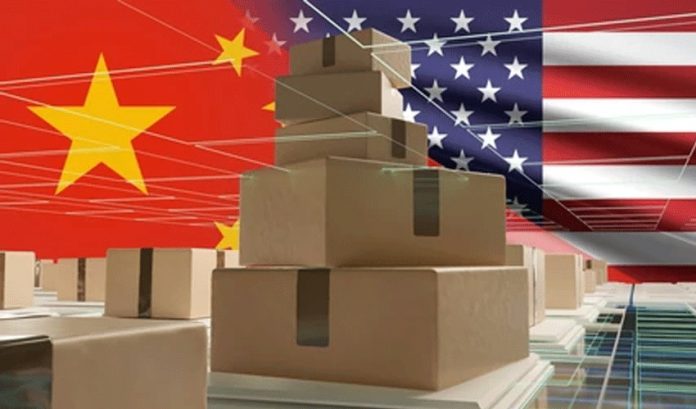
Beijing has signaled a sharp turn in its diplomatic tone as it warned on Monday that it will “resolutely” retaliate against any country that aligns with U.S. efforts to economically isolate China.

The warning, issued by the Ministry of Commerce, comes just as U.S. President Donald Trump intensifies a campaign that now seeks not only to pressure China directly through tariffs but also to force Washington’s trading partners to curb their dealings with Beijing.

China’s statement underlines a significant shift in posture. What began as an appeal to cooperation, rule-based trade, and diplomatic resolution has now taken on the contours of a threat. The message denotes that nations that sacrifice China’s interests to curry favor with the United States should expect consequences.

“China firmly opposes any party reaching a deal at the expense of China’s interests. If this happens, China will not accept it and will resolutely take reciprocal countermeasures,” the Commerce Ministry said, according to a CNBC translation. It added that the international trade system risks descending into the “law of the jungle” if such practices are allowed to take root.

Until now, Chinese officials had taken a more restrained tone even as relations with Washington deteriorated. President Xi Jinping has repeatedly called for multilateral dialogue and global economic inclusiveness. But with Trump’s latest tariff hikes, now set at 145% on Chinese goods, and reports that the U.S. is using trade deals as leverage to pressure other countries to cut ties with Beijing, China appears to have concluded that appeals to fair play are falling on deaf ears.

Trump’s decision to suspend major tariff hikes on other countries for 90 days, while simultaneously ratcheting up duties on China, is seen in Beijing as a calculated move to recruit allies into an anti-China economic bloc. The new strategy has deepened fears among Chinese policymakers that Washington is attempting to reconstruct global trade networks around Beijing’s exclusion.

In response, China is escalating its own retaliatory tools.

Earlier this month, it imposed new duties of up to 125% on a wide range of American imports. It also restricted the export of critical minerals needed for semiconductor and green tech manufacturing—a direct hit to supply chains already strained by geopolitical tensions. In parallel, Beijing added several small and mid-sized American firms to its “unreliable entities” blacklist, curbing their ability to do business inside China.

These countermeasures were matched with a broadening diplomatic front. In his first overseas trip of 2025, Xi Jinping visited Vietnam, Malaysia, and Cambodia—three Southeast Asian nations that are strategically vital in the tug-of-war between Washington and Beijing. At each stop, Xi called for joint resistance to “unilateral bullying” and emphasized the need for developing nations to stand together against protectionism.

The shift in its message aligns with Beijing’s defiance of the United States. Though no country was mentioned by name, the warning was loud and clear.

“Any deal that compromises China’s interests will be met with reciprocal action,” the Ministry stated. The use of the word “reciprocal” is not a mere euphemism for tariffs—it hints at a broader toolkit that includes export controls, regulatory pressure, and selective market access.

Countries such as Vietnam, Malaysia, and even long-standing U.S. allies in Europe now face a precarious dilemma. Many depend on Chinese imports and investments, yet are under growing pressure from Washington to choose sides. The stakes are especially high for nations that form part of complex global value chains—particularly in electronics, rare earth minerals, and critical infrastructure.

China last week replaced its chief international trade negotiator, indicating its readiness to confront the trade war from all angles. Li Chenggang, formerly Beijing’s ambassador to the World Trade Organization, was promoted to vice minister of commerce, in what insiders see as a preparation for a more aggressive strategy at the WTO and beyond.

Shortly after his appointment, China filed a new complaint against the United States at the WTO over the 145% tariff rate hike. While Beijing’s chances of obtaining swift relief at the WTO are slim—given the appellate body’s paralysis caused by Washington—filing the suit underscores China’s long-term strategy of documenting grievances for future legal and diplomatic leverage.

The tariff war pressure is getting more intense for China in Southeast Asia. With the U.S. remaining China’s largest single-country trading partner and Southeast Asia now its largest regional one, the region has become central to both superpowers’ economic strategies.

Trump’s trade team has reportedly offered tariff waivers and investment incentives to countries that agree to reduce technology and investment links with China. But for countries like Vietnam and Malaysia, both of which hosted Xi this month, cutting ties with China is economically risky.

While these countries have tried to maintain neutrality, the squeeze is tightening. The message from both Beijing and Washington hints that future economic cooperation will increasingly be tied to political alignment.

Analysts believe the current standoff could morph into a permanent reshaping of global trade, with nations being forced to pick a side or risk exclusion from both.