DD
MM
YYYY

PAGES

DD
MM
YYYY

spot_img

PAGES

Home Blog Page 1531

Build Your Personal Economy at Tekedia Mini-MBA

0

Come and let us have a conversation on your Personal Economy, not your company or your country, at Tekedia Mini-MBA. Yes, from balance sheet to balance self, from income statement to home statement, and more. Build your personal economy and have a great professional career because you can compound positioning, deepen leverages and accelerate your leadership ascent in the GLOBAL economy.

Sat, March 22 | 7pm-8.30pm WAT | Building Investment Portfolios And Personal Economy– Ndubuisi Ekekwe | Zoom link

Tekedia Mini-Mba >> our product is knowledge

Cardano, XRP, Rexas Finance (RXS): 3 Altcoins with a Big Year Ahead, But Here’s Why Only 2 Are Worth Your Time

0

Blockchain technology is still being used in practical ways as the cryptocurrency market moves into a fresh stage of expansion. Among the several cryptocurrencies vying for supremacy, Cardano (ADA), XRP (XRP), and Rexas Finance (RXS) have positioned themselves as some of the most likely initiatives in 2025. Though all three are likely to have a strong year, only two are worth looking at: XRP and Rexas Finance (RXS). Cardano’s slow pace, lack of widespread adoption, and declining developer engagement call questions about its long-term survival even with its robust community and research-driven development. Conversely, XRP and Rexas Finance are proven to be game-changers, each with special, practical value ready to propel broad acceptance and value appreciability. These two initiatives merit investors’ attention even if Cardano is lagging.

The Next Great Thing in Real-World Asset Tokenization: Rexas Finance (RXS)

Rapidly rising as a major player in real-world asset (RWA) tokenization, Rexas Finance (RXS) lets people and companies own, trade, and fractionalize physical objects including real estate, art, commodities, and intellectual property on the blockchain. Rexas Finance is transforming the way investments and ownership structures operate by adding actual value to the crypto market, unlike many altcoins without valuable uses. RXS’s outstanding presale performance and clever launch approach are among the main factors influencing its worth to investors. Rexas Finance has already raised over $46 million, selling more than 454 million tokens at a presale price of $0.20, and is now in Stage 12 of its presale. Early investors, with a launch price of $0.25, stand to make big profits when RXS goes public. Security also greatly influences investor confidence.

Following a comprehensive CertiK assessment, Rexas Finance ensures its smart contracts are secure and free of vulnerabilities. This vital phase is essential for any project that aims to attract institutional investors and mainstream acceptance. Moreover, CoinMarketCap (CMC) and CoinGecko listings have raised Rexas Finance’s profile and legitimacy in the crypto market. With intentions for significant exchange listings, including three tier-one platforms, RXS is expected to have more demand and liquidity after its debut.

Beyond prospects for investment, Rexas Finance’s ecosystem is meant for long-term viability. Its traits comprise:

  • A potent tokenizing tool for actual objects
  • Launchpad for fresh token initiatives
  • A safe and effective DeFi environment including yield-enhancing techniques
  • Multi-chain fit for flawless asset transfers

Rexas Finance is among the most likely cryptocurrencies of 2025. Given its clear path map and great institutional interest in RWA tokenization, it surely deserves investors’ time and attention.

XRP: Leading Cross-border Trade and Institutional Adoption Agent

XRP is still among the most battle-tested and durable cryptocurrencies available on the market. It remains the top blockchain option for cross-border payments and institutional finance, even though the SEC lawsuit presented legal difficulties that have now mostly cleared. XRP’s actual acceptance by banks, payment processors, and financial institutions explains why it is valuable for investors’ time. Companies trying to avoid slow and costly conventional banking systems choose RippleNet, the network running XRP transactions, since it allows quick, cheap international transfers. XRP has lately been rather prevalent since big financial companies include Ripple’s technology.

XRP has a strong competitive edge because of the increasing need for effective payment options, especially for remittances and corporate transactions. Furthermore, XRP’s market endurance is quite remarkable. Still among the top cryptocurrencies by trading volume, it has a market capitalization of around $124 billion. Unlike speculative meme coins or initiatives with no apparent use case, XRP is supported by a robust basis of real-world utility, regulatory compliance, and corporate acceptance. XRP is positioned for long-term development as the SEC litigation is no longer a significant barrier and Ripple is extending its alliances globally. It is among the few cryptocurrencies worth investing in.

Why Cardano (ADA) Is Behind?

Although Cardano has long been seen as a potential blockchain project, it has failed to catch up with speedier, more creative rivals such as Ethereum, Solana, and even more recent arrivals like Rexas Finance. Cardano is not worth investors’ time for three main reasons, compared to XRP and RXS:

  • Slower Development and Insufficient Adoption

Cardano’s peer-reviewed method of blockchain development has produced sluggish feature rollouts and updates. While competing initiatives keep innovating quickly, Cardano has been slow to develop scalable solutions and practical uses.

  • Rising Developer Interest: Declining

According to recent statistics, fewer projects are opting to build on Cardano’s blockchain as developer activity on the cryptocurrency seems to be declining. This is an alarming trend because long-term success depends on an active development ecosystem.

  • Restricted Practical Applications

Cardano still lacks broad adoption and major real-world use cases, unlike XRP, which has a clear use case in finance and Rexas Finance, which is pioneering real-world asset tokenizing. Although it is still an intense project, its slow development and lack of institutional acceptance make it a less enjoyable investment.

XRP and Rexas Finance Are the Greatest Altcoins Suggested for 2025

As cryptocurrencies are increasingly accepted globally, investors are increasingly seeking projects with actual value, solid institutional support, and long-term expansion possibilities. While Cardano (ADA) continues to suffer from delayed development and declining market interest, Rexas Finance (RXS) and XRP stand out as two of the most exciting cryptocurrencies heading into 2025. Rexas Finance is changing the tokenization of actual assets, opening new investment prospects and guaranteeing liquidity in usually illiquid markets. This must-watch project has outstanding presale success, a security audit, and forthcoming significant exchange listings. Conversely, XRP keeps ruling the cross-border payments market as banks and financial organizations increasingly use it.

Among the safest and most strategic investments available in the crypto market, its legal clarity, solid alliances, and institutional support help to define it. Meanwhile, Cardano’s slow growth and lack of general acceptance raise grave questions about its long-term survival. Although it still experiences temporary price swings, it does not provide the same degree of institutional support or actual acceptance as XRP and Rexas Finance. Rexas Finance and XRP stand out as the most excellent options for investors seeking long-term, high-potential crypto investments in 2025. Both provide real-world use cases, innovation, and significant expansion possibilities.


For more information about Rexas Finance (RXS) visit the links below:

Website: https://rexas.com

Win $1 Million Giveaway: https://bit.ly/Rexas1M

Whitepaper: https://rexas.com/rexas-whitepaper.pdf

Twitter/X: https://x.com/rexasfinance

Telegram: https://t.me/rexasfinance

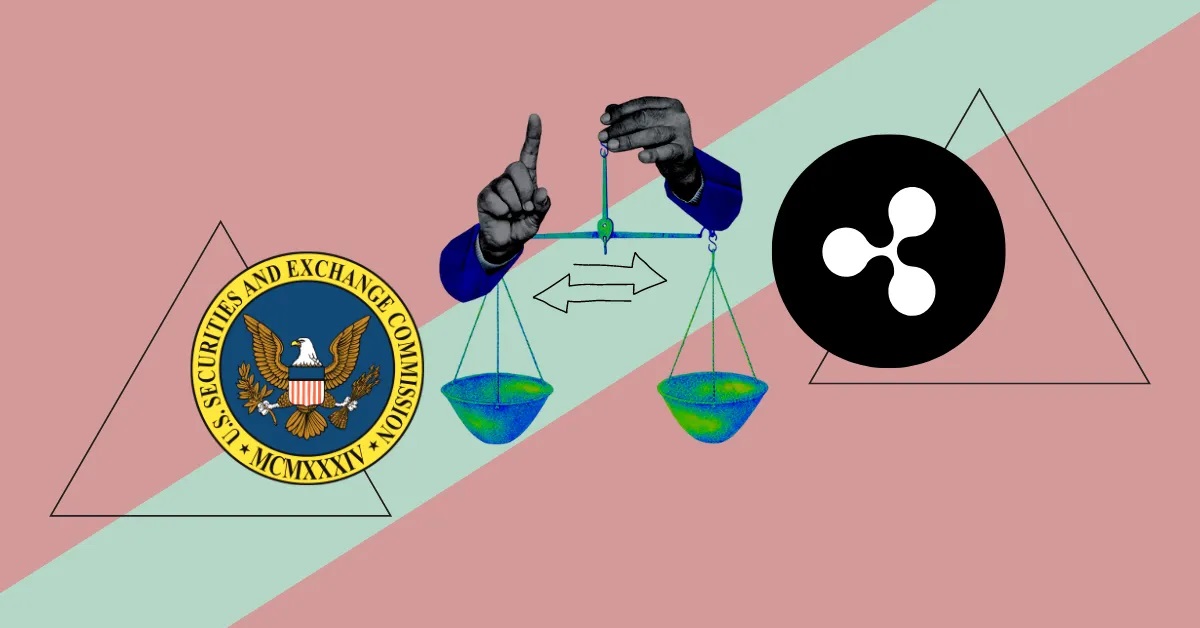
The Implications of SEC Ending Its Appeal Against Ripple

0

The U.S. Securities and Exchange Commission (SEC) has ended its appeal against Ripple Labs Inc. This development stems from a court ruling in July 2023 by U.S. District Judge Analisa Torres, which determined that the XRP token sold by Ripple on public exchanges did not meet the legal definition of a security. The SEC had initially appealed this decision, but recent updates indicate the agency has withdrawn its appeal. The decision to drop the appeal marks a significant moment in the legal battle that began in December 2020, when the SEC accused Ripple of raising over $1.3 billion through an unregistered securities offering by selling XRP.

While the SEC achieved a partial victory with Torres ruling that $728 million in XRP sales to institutional investors violated securities laws—resulting in a $125 million fine for Ripple—the dropping of the appeal solidifies Ripple’s position regarding its public exchange sales. Ripple’s CEO, Brad Garlinghouse, described this as a “resounding victory” and a “long overdue surrender” by the SEC, reflecting a shift in the regulatory approach under new leadership since President Donald Trump’s second term began in January 2025.

The ruling that XRP sold on public exchanges is not a security establishes a precedent that not all cryptocurrencies are automatically subject to securities laws. This strengthens the argument that tokens with decentralized use cases or those primarily functioning as currencies (rather than investment contracts) may fall outside the SEC’s jurisdiction under the Howey Test. This clarity could embolden other projects with similar token structures, reducing regulatory uncertainty for developers and companies operating in the crypto space.

The SEC’s loss in this high-profile case, coupled with its decision to abandon the appeal, may signal a retreat from its aggressive “regulation-by-enforcement” strategy under previous leadership (notably during Gary Gensler’s tenure, which ended with the change in administration in January 2025). With new leadership in place, the agency might shift toward a more collaborative or defined regulatory framework rather than pursuing litigation against crypto firms. Critics of the SEC, including Ripple’s CEO Brad Garlinghouse and figures like Mark Cuban, have long argued that the agency’s approach stifled innovation.

The resolution is widely viewed as a victory for the broader cryptocurrency industry, potentially weakening the SEC’s leverage in ongoing and future cases against other firms like Coinbase or Binance. If courts continue to rule that tokens traded on secondary markets (e.g., public exchanges) are not securities, it could limit the SEC’s oversight of much of the crypto market. This might encourage more institutional adoption and investment, as legal risks diminish for companies dealing with tokens resembling XRP in structure or distribution.

The Ripple case has already fueled momentum for legislative action to define crypto regulations more explicitly. With the SEC’s appeal dropped, Congress may face increased pressure to pass bills like the Financial Innovation and Technology for the 21st Century Act (FIT21), which aims to delineate jurisdiction between the SEC and the Commodity Futures Trading Commission (CFTC). The CFTC could gain more authority over tokens like XRP, treating them as commodities rather than securities. Lawmakers supportive of crypto, bolstered by a pro-crypto shift in the political climate under President Trump’s second term, might use this as a catalyst to accelerate regulatory reform.

Internationally, regulators in jurisdictions like the EU, UK, or Asia often look to U.S. precedents. The Ripple outcome could influence how other countries classify and regulate cryptocurrencies, potentially fostering a more unified global approach—or at least reducing the U.S.’s outlier status in its historically stringent stance. Companies previously hesitant to operate in the U.S. due to regulatory ambiguity might now see it as a more viable market, especially if paired with lighter enforcement under the new SEC regime.

In the short term, the decision has already boosted XRP’s market performance, with its price reportedly jumping nearly 20% following the news on March 19, 2025. This could signal renewed investor confidence in altcoins broadly. Longer term, reduced fear of SEC lawsuits might spur innovation, particularly in decentralized finance (DeFi) and token issuance, as projects feel less constrained by the threat of being labeled unregistered securities.

The ruling is specific to Ripple and XRP, so its applicability to other tokens remains untested until further cases or legislation clarify the broader landscape. The SEC could still pursue different angles in future enforcement actions, particularly against tokens with stronger ties to centralized control or investment promises. The $125 million fine for Ripple’s institutional sales shows that the SEC retains authority over certain crypto transactions, meaning compliance with securities laws remains critical for targeted sales to institutions.

The SEC dropping its appeal against Ripple is a pivotal moment that weakens the agency’s grip on crypto markets, empowers the industry to push for clearer rules, and may herald a more innovation-friendly regulatory environment—especially under a Trump administration perceived as more crypto-sympathetic. However, it’s not a complete deregulation; it’s a step toward redefining boundaries that both regulators and the crypto community will continue to navigate.

Abia State Diaspora Commission To Offer Scholarship to Young Girl Driver

0

We have watched this video of how one of our young Abia daughters was expertly driving a 40-foot container truck. While her spirit and tenacity symbolize the can-do individual libertarian attitude of Abians, to improve themselves over depending on others, we do not celebrate our young people driving trucks in this framework.  Odinakachi is just 19 years old and should be in school.

Possibly, she could be one of the young people in Abia who emerged overall #1 in Nigeria on NECO’s national exams. Abia led in NECO and in the last SSCE, Abia was also on top.  This week, I thanked our Governor, Dr Alex Otti, during  a Zoom meeting, for whatever his administration did that made Abia to leapfrog outside the top 10 for a decade to return back to top-3 within two years. We spent time with His Excellency discussing education in Abia State.

In Abia, we do not want our young people to be driving trucks

We’re trying to locate her and please if you do, let her connect. The Abia State Diaspora Commission will offer her a full scholarship to attend any public university in Nigeria. Sure, when she finishes, if she wants to participate in logistics, trucking and broad supply chain business, that would be her choice.

But right now, the Commission wants Odinakachi to return back to school. Ask her to email info@tekedia.com for linkage with secretariat, so that the Commission will work out her scholarship so that she returns back to school.

We’re Abians; we’re God’s Own State: prosperity through enterprise!

Ndubuisi Ekekwe

Board Member, Abia State Diaspora Commission

Members of Board – Abia State Diaspora Commission

Rev. Annie Onwuchekwa – Executive Secretary

Chief Alwell Okey Agbara – Chair

Chief Leonard Ibeka

Engr. Bob Ibeneme

Ndubuisi Ekekwe


MoonPay Secures $200M Credit Line from Galaxy Digital

0
Fund, money cash dollar

MoonPay has secured a $200 million revolving credit line from Galaxy Digital, a prominent digital asset financial services firm. This move, announced on March 20, 2025, aims to bolster MoonPay’s ability to manage surging transaction volumes and liquidity demands in the crypto market. The funding is designed to support MoonPay’s global expansion and ensure seamless service delivery, particularly during periods of heightened activity, such as the recent spikes tied to events like the $TRUMP memecoin launch.

MoonPay’s CEO, Ivan Soto-Wright, highlighted that this credit line provides the financial flexibility needed to meet growing demand while maintaining a top-tier user experience. This comes at a time when MoonPay is already cash-flow positive and profitable, having achieved 112% year-over-year net revenue growth in 2024.

Galaxy Digital, a leading digital asset and blockchain-focused financial services firm. Founded by Mike Novogratz, Galaxy plays a multifaceted role in the cryptocurrency and blockchain ecosystem, providing services and infrastructure to institutions, startups, and investors. In the case of MoonPay’s $200 million line of credit, Galaxy acts as the lender, offering financial backing to support MoonPay’s operational and growth needs. Galaxy is providing MoonPay with a $200 million revolving credit facility.

This means MoonPay can draw funds as needed up to that amount, use them to manage liquidity or scale operations, and repay over time. Galaxy’s involvement ensures MoonPay has the financial flexibility to handle large transaction volumes and market volatility, which are common in the crypto space. Galaxy brings deep expertise in digital assets, which likely influenced its decision to partner with MoonPay. With its experience in trading, asset management, and market analysis, Galaxy can assess the risks and potential of a crypto on-ramp provider like MoonPay.

Beyond this specific deal, Galaxy plays a broader role in fostering the crypto economy. It offers services like trading, lending, investment banking, and venture capital for blockchain projects. By extending credit to MoonPay, Galaxy is indirectly supporting the infrastructure that enables users to buy and sell cryptocurrencies easily, aligning with its mission to accelerate mainstream adoption of digital assets.

Galaxy often serves as a bridge between traditional finance and the crypto world. Its participation in this credit line underscores how established financial mechanisms (like revolving credit) are being adapted to support fast-growing crypto businesses, signaling confidence in MoonPay’s profitability and market position. The $200 million line of credit from Galaxy to MoonPay is poised to have several significant impacts, both for MoonPay specifically and the broader cryptocurrency ecosystem.

The credit line provides MoonPay with immediate access to capital, allowing it to handle spikes in transaction volumes without liquidity constraints. This is critical during high-demand periods, like the recent Trump memecoin surge, ensuring uninterrupted service for users converting fiat to crypto or vice versa. It supports scalability, enabling MoonPay to onboard more users and process larger transactions as the crypto market grows.

With additional financial flexibility, MoonPay can accelerate its international rollout, targeting new markets where crypto adoption is rising. This aligns with its 112% year-over-year revenue growth in 2024 and strengthens its position as a global leader in crypto on-ramp services. The funds allow MoonPay to maintain seamless operations, avoiding delays or disruptions during peak usage. This reinforces its reputation for reliability, a key factor in retaining and attracting users in a competitive space.

Securing backing from a heavyweight like Galaxy signals financial stability and market trust in MoonPay’s business model, especially since it’s already cash-flow positive and profitable. This could attract further partnerships or investments. MoonPay’s role as an on-ramp/off-ramp provider is central to bringing new users into crypto. Enhanced capacity means more people can easily buy digital assets, potentially accelerating mainstream adoption, especially in regions with growing interest.

By ensuring MoonPay can manage high transaction volumes, the credit line indirectly supports market stability. It reduces the risk of bottlenecks or failures during crypto rallies or crashes, which can erode user confidence. Galaxy’s involvement exemplifies how traditional financial tools (like revolving credit) are being applied to crypto businesses. This fusion could pave the way for more institutional capital to flow into the sector, bridging the gap between legacy finance and blockchain innovation.