DD
MM
YYYY

PAGES

DD
MM
YYYY

spot_img

PAGES

Home Blog Page 1537

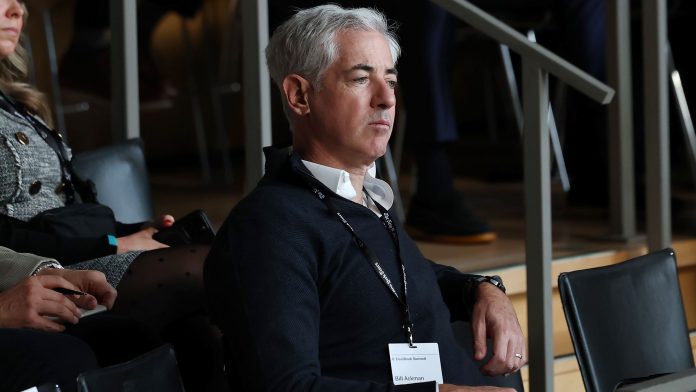
90-Day Pause and Trade Rethink: Bill Ackman Proposes Alternate Approach to Trump’s Tariffs

0

Billionaire hedge fund manager Bill Ackman has put forward what he calls a more practical and strategic alternative to the Trump administration’s sweeping tariff policy, warning that the current path could drag the global economy into a “self-induced, economic nuclear winter.”

In a lengthy social media post titled “How’s this for a simple approach?”, the Pershing Square CEO called for an immediate 90-day pause in reciprocal tariff escalation, arguing that such a window would allow for private negotiations with trade partners. His intervention comes amid mounting concerns from economists and business leaders over the long-term implications of President Donald Trump’s protectionist agenda.

Ackman criticized both the intent and execution of the tariff strategy, saying the administration’s formula for measuring foreign tariffs inflated their size “four times larger than they actually are.” That miscalculation, he said, is now steering the U.S. toward what could be a major economic misstep.

“The global economy is being taken down because of bad math,” Ackman wrote. “The President’s advisors need to acknowledge their error before April 9th and make a course correction before the President makes a big mistake based on bad math.”

Tariff Pause and Realignment

At the core of Ackman’s proposal is the idea of a modest, across-the-board 10% tariff for countries doing business with the U.S.—a blanket fee meant to compensate for America’s longstanding investments in global security and health, as well as past trade deficits. But beyond that, he urged for a targeted, case-by-case approach.

“We keep the pressure on China to resolve materially unfair trading practices, IP theft, currency manipulation, and other practices that have disadvantaged our nation,” he said, emphasizing the need for specificity and diplomacy rather than blanket punishment.

The plan, he noted, would begin with a 90-day halt in tit-for-tat tariff escalation, focusing instead on bilateral talks with countries whose policies have most impacted U.S. competitiveness, especially in manufacturing.

Rethinking Trade Deficits

Ackman also challenged some of the foundational ideas that have shaped Trump’s hardline approach to trade, particularly the obsession with reducing the U.S. trade deficit on a country-by-country basis.

“It does not make sense to have balanced trade with countries that are smaller than us and that have fewer resources to spend on U.S. goods,” he argued. “We will forever be buying more from Madagascar than they will buy from us.”

He warned against using export-import parity as a benchmark, calling it a misguided target for a country like the U.S., which has the largest economy and highest standard of living in the world. Instead, Ackman urged the administration to recognize the value of less visible American exports—such as software, intellectual property, and financial services—that don’t show up in traditional trade data but contribute significantly to the economy.

“If these were included, the balance of trade statistics would look much more balanced,” he said.

He added that U.S. multinationals that operate subsidiaries abroad also generate returns in the form of profits, dividends, and strategic influence, even though those revenues are often missing from standard trade metrics.

Manufacturing Realities

Ackman, whose investment firm manages billions in assets, also dismissed the idea of bringing low-wage manufacturing back to the U.S., calling it economically unrealistic and strategically flawed.

“Attempting to bring back jobs in low-wage manufacturing is not good for America,” he said, noting that countries like Bangladesh and Vietnam are naturally better suited for industries such as textile and footwear production.

Instead, he encouraged U.S. policymakers to embrace high-value services and technology exports as the new face of global competitiveness.

A Plea for Prudence

In his closing remarks, Ackman acknowledged the flaws in the existing global trade system but cautioned against tearing it down without a viable plan to replace it.

“The current trading system, while far from perfect or fair to the U.S., has served us extremely well,” he wrote. “We need to be prudent in how we change it so as not to upset the world order in such a manner that it disadvantages our country over the long term.”

The post shared just days before a critical April 9th deadline for the next wave of tariff decisions marks one of the strongest warnings yet from a Wall Street heavyweight about the potential cost of Trump’s approach.

However, it is not clear if the Trump administration will take the advice. Trump has doubled down on the tariff policy, calling on Americans to support it as it’s meant to make the economy better.

“The United States has a chance to do something that should have been done DECADES AGO. Don’t be Weak! Don’t be Stupid! Don’t be a PANICAN (A new party based on Weak and Stupid people!). Be Strong, Courageous, and Patient, and GREATNESS will be the result!” The president said on Monday.

However, with global markets showing signs of strain and recession alarms sounding in key economies, the pressure is mounting for a recalibration. Ackman, like several other investors, is calling for a replacement of hardline posturing with intelligent recalibration, before the U.S. ends up isolating itself in a trade war of its own making.
The Nigeria’s Double Whammy And Need for Urgency

0

Nigeria faces a double whammy: potential oil crash, and insecurity which has cut-off most activities in the rural areas. These two vectors could potentially expire the 2025 budget and soon-to-be crafted 2026 budget even before they go mainstream. If oil price crashes, and people cannot even enter farms due to insecurity, what next? We’re getting closer to the Malthusian catastrophe and our options are narrowing.

Everyone is a victim: I shut down Zenvus due to insecurity as it was becoming dangerous to send young people to farms to deploy tech for clients. My fear was this: if a young person is kidnapped working for me, what would I tell the spouse, kids and parents? To avoid that possibility, I closed the business and moved on despite a huge contract from Rice Farmers Association of Nigeria (RIFAN).

Read Goldman Sachs on the trajectory of oil: “The prospect of global oil prices tumbling to below $40 per barrel has triggered alarm far beyond Wall Street, with fresh fears mounting in Nigeria over the fate of its fragile economy.

“In a Monday note that underscores the vulnerability of oil-dependent nations, analysts at Goldman Sachs warned that Brent crude — the international benchmark, could fall under $40 by late 2026 in a worst-case scenario marked by a global slowdown and the collapse of OPEC+ production cuts.”

At the center of the looming crisis is the Nigerian government’s 2025 fiscal blueprint, which is built around a $75 per barrel oil benchmark. The country, still heavily reliant on crude oil exports for revenue, has projected an N14 trillion oil revenue target for 2025 — a figure that becomes a fantasy if Brent prices slide anywhere near the $40 mark.

Nigeria typically earns over 70% of its foreign exchange and about half of its government revenue from oil. With production volumes struggling to exceed 1.3 million barrels per day, well below OPEC quotas, the only way Nigeria has managed to keep its books somewhat balanced is through the elevated oil prices seen in recent years.

Nigeria’s insecurity is a huge threat and I do hope people understand how this will play on investment decisions especially outside the major cities. This problem did not begin today and cannot be fixed overnight. But our leaders must show urgency. Whenever I remember my hobby – visiting university campuses across Nigeria to teach electronics, from Sokoto to Ife, Owerri to Kano, and beyond (see photos  ) and how that is IMPOSSIBLE now, I feel bad. Our past must not be more memorable than the present! We must show urgency on dealing with insecurity everywhere.

Goldman Sachs Warns Oil Could Sink Below $40 — Nigeria Faces Renewed Budget & Economic Crisis

0

The prospect of global oil prices tumbling to below $40 per barrel has triggered alarm far beyond Wall Street, with fresh fears mounting in Nigeria over the fate of its fragile economy.

In a Monday note that underscores the vulnerability of oil-dependent nations, analysts at Goldman Sachs warned that Brent crude — the international benchmark, could fall under $40 by late 2026 in a worst-case scenario marked by a global slowdown and the collapse of OPEC+ production cuts.

For Nigeria, this is more than a market forecast. It’s a direct threat to the foundation of its economic planning and a signal that the government’s 2025 budget, already under pressure, could unravel.

Goldman Sachs’s current base-case outlook pegs Brent at $55 per barrel by December 2026. But the analysts outlined a darker possibility: should there be a full unwinding of OPEC+ production restraints coupled with a global recession, prices could dive to levels not seen since the COVID-19-triggered crash of 2020. A slump of that magnitude would deal a crushing blow to Nigeria’s finances.

Nigeria’s Budget Math Doesn’t Add Up Anymore

At the center of the looming crisis is the Nigerian government’s 2025 fiscal blueprint, which is built around a $75 per barrel oil benchmark. The country, still heavily reliant on crude oil exports for revenue, has projected an N14 trillion oil revenue target for 2025 — a figure that becomes a fantasy if Brent prices slide anywhere near the $40 mark.

Nigeria typically earns over 70% of its foreign exchange and about half of its government revenue from oil. With production volumes struggling to exceed 1.3 million barrels per day, well below OPEC quotas, the only way Nigeria has managed to keep its books somewhat balanced is through the elevated oil prices seen in recent years.

A price collapse now would leave gaping holes in its revenue projections and force another round of emergency borrowing or austerity. Already, the country is spending more than 60% of its revenue on debt servicing, with limited fiscal space to respond to new shocks.

Economists warn that such a scenario would widen Nigeria’s fiscal deficit significantly. Last year, the National Assembly approved the extension of the 2024 Budget’s lifespan to June 2025, a decision aimed at ensuring the continuity of fiscal operations and the uninterrupted execution of critical government projects. This situation is expected to repeat itself if oil prices linger below Nigeria’s budget benchmark in 2025.

OPEC+ Uncertainty and Trump’s Tariffs Compound the Threat

Goldman Sachs’s bleak forecast comes on the back of twin developments that have rattled the global oil market. The first is President Donald Trump’s renewed trade offensive, including fresh tariffs that have shaken investor confidence and triggered fears of a slowdown in global economic activity. The second is a surprise decision by OPEC+ to increase output, despite earlier commitments to maintain production cuts that helped stabilize prices in previous months.

Those two shocks sent oil prices plunging more than 7% last Thursday, with Brent and WTI extending declines to four-year lows by Monday.

“Increased production combined with growing concerns about global economic growth has shifted market psychology from scarcity to surplus,” wrote Angie Gildea, KPMG’s U.S. energy leader.

That shift is toxic for Nigeria. The country needs high oil prices not just to balance its books, but to attract foreign investors and stabilize its volatile currency. The Central Bank of Nigeria (CBN), which recently floated the naira in an attempt to unify exchange rates, has been hoping for increased oil receipts to shore up reserves. That lifeline could now be slipping away.

U.S. Shale Producers Also Under Pressure

Ironically, while Nigeria and other resource-dependent economies brace for impact, U.S. oil producers are hardly in better shape. With breakeven costs above $62 per barrel for many shale operators, prices around $60 — let alone $40, would force a wave of production cuts, capital expenditure reductions, and dividend suspensions.

“The corporate reality for public players means that already modest growth could be at risk,” said Matthew Bernstein of Rystad Energy. He added that U.S. producers may soon have to choose between profitability and output.

Trump’s energy agenda, which once touted “drill, baby, drill” as a pathway to energy dominance, is now colliding with the reality of his own tariff policies. Rising costs, including those from tariffs on imported steel used in oil well construction, are eating into margins and worsening the uncertainty that investors hate.

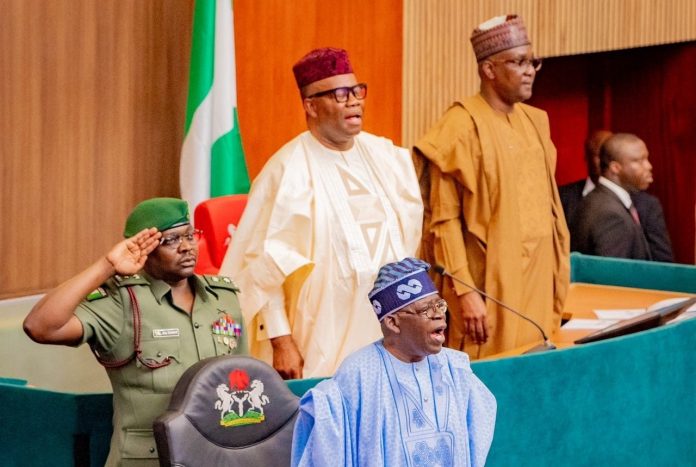
For Nigeria, however, the stakes are existential. The country entered multiple recessions over the last decade due to oil price volatility and has struggled to diversify its economy despite repeated promises. President Bola Tinubu’s administration is now under pressure to avoid repeating the mistakes of the past.

Analysts say the government must urgently revise its fiscal assumptions, explore alternative revenue sources, and reduce its dependence on oil exports. But that’s easier said than done. Non-oil tax collection remains abysmally low, and previous efforts to widen the tax net have met stiff resistance from a population already grappling with inflation, unemployment, and rising fuel costs.

If Brent does slide to $40, the federal budget will need drastic revisions. Subnational governments that rely on monthly allocations from the Federation Account could face cash crunches, public sector salaries may be delayed, and capital projects could be stalled across the board.

In the end, the only silver lining of Goldman Sachs’s under-$40 forecast could be —– a lower oil price that will result in a cheaper cost of transportation — which many believe would take some financial pressure off the Nigerian people.

Afreximbank Breaks New Ground with $299.9m Chinese Panda Bond, Opens Door for African Issuers

0

In a landmark step toward expanding its access to global capital, the African Export-Import Bank (Afreximbank) has raised $299.90 million (2.2 billion renminbi) through its debut Chinese Panda bond issuance, becoming the first African multilateral financial institution, and only the second African entity, to tap into China’s onshore bond market.

Issued with an interest rate of 2.99%, the bond was fully placed in China’s domestic capital market, with Bank of China Limited serving as the lead underwriter and bookrunner. The Exim Bank of China and the Industrial and Commercial Bank of China (ICBC) also participated as joint lead underwriters.

Afreximbank’s issuance comes at a time when African economies are grappling with volatile global markets, foreign exchange pressures, and growing debt servicing burdens. The successful bond sale not only provides a fresh pool of renminbi-denominated liquidity but also signals a widening door for African borrowers seeking to diversify their funding away from Western-dominated capital markets.

In its statement on Tuesday, Afreximbank emphasized that this latest move fits within its broader strategy of accessing diversified and cost-effective funding sources.

“The issuance followed Afreximbank’s successful navigation of the rigorous regulatory and approval processes for Panda bond issuance,” the lender said.

Setting a Precedent

This is only the second Panda bond by an African entity, the first being Egypt’s 2022 foray into the market, yet Afreximbank’s multilateral status, financial clout, and pan-African reach make this issuance especially significant. It is likely to encourage other African institutions to consider China’s local bond market as a viable platform for fundraising.

“This issuance highlights Afreximbank’s commitment to diversifying its funding sources and to tapping into new pools of capital,” said Chandi Mwenebungu, Afreximbank’s Head of Treasury and Markets Division. “This transaction is a culmination of years of work engaging with Chinese authorities and investors, and it marks a turning point in our engagement with the Chinese financial system.”

China has signaled a clear intent to deepen financial integration with Africa through initiatives like Panda Bonds. In recent years, Chinese regulators have stepped up efforts to allow more foreign issuers into their tightly controlled debt market, positioning it as a long-term funding alternative.

A Rigid but Rewarding Market

Panda bonds—renminbi-denominated bonds issued by foreign entities in China were introduced in 2005 with issuances from the Asian Development Bank and the International Finance Corporation, part of the World Bank Group. However, access remains highly restricted, requiring issuers to meet strict accounting, disclosure, and regulatory standards.

Afreximbank’s entry into this space underscores the bank’s financial sophistication and long-term ambition. The fact that the bond issuance was completed despite the complexities of operating in a market where the renminbi remains only partially convertible adds to the significance.

“Successfully issuing a Panda bond signals a high level of financial credibility,” said a fixed-income analyst familiar with African sovereign and supranational markets. “This isn’t just about the money raised. It’s a proof of confidence in Afreximbank’s balance sheet and its long-term strategic importance to African economies.”

Surging Demand for Panda Bonds

The broader market appetite for Panda bonds has grown significantly, with total issuance hitting a record 195 billion yuan in 2024, according to Deutsche Bank figures. That rise comes as China seeks to internationalize the renminbi and deepen its economic ties with developing regions—especially Africa.

Afreximbank’s bond not only gives it access to renminbi liquidity that can be used in trade finance operations involving Chinese partners, but it also helps reduce currency mismatch risks in projects funded in local currencies. That flexibility is becoming increasingly critical as African countries work to manage their debt profiles amid a stronger dollar and rising global interest rates.

The Timing And Africa’s Shifting Economy

The bond sale comes against a backdrop of shifting macroeconomic conditions across Africa. Many countries are facing tighter external financing conditions, and institutions like Afreximbank are being called on to play a greater role in economic stabilization, trade facilitation, and infrastructure development.

In that context, Afreximbank’s success in raising nearly $300 million through a non-traditional source is likely to be seen as a strategic win, especially as conventional eurobond markets remain largely out of reach for many African borrowers due to elevated yields and investor caution.

The issuance also adds momentum to China’s pledge to support African financial integration and infrastructure investment. While Chinese loans to Africa have slowed in recent years, initiatives like Panda bonds provide a less debt-heavy alternative to traditional lending.

Afreximbank’s foray into the Panda bond market could prompt similar moves by other African multilateral, national, or regional institutions. Analysts say more issuers may begin considering renminbi-denominated funding as a way to reduce dependency on dollar debt, especially as U.S. interest rates remain high.

Whether that wave materializes depends on how quickly China can ease access for more African issuers while maintaining its tight control over capital flows. But Afreximbank’s successful issuance has already pushed the door open—and other African entities may soon follow.

U.S. Treasury Secretary Bessent Says China Has More to Lose As Tariff War Escalates, Investors Disagree

0

U.S. Treasury Secretary Scott Bessent on Tuesday declared the United States holds a clear advantage in the increasingly fraught trade dispute with China, brushing off Beijing’s retaliation and portraying the latest escalation as a bluff in a game it cannot win.

“I think it was a big mistake, this Chinese escalation, because they’re playing with a pair of twos,” Bessent said during a CNBC Squawk Box interview. “What do we lose by the Chinese raising tariffs on us? We export one-fifth to them of what they export to us, so that is a losing hand for them.”

His remarks came on the eve of a fresh wave of tariff increases targeting China and dozens of other trading partners. The duties, described by the administration as “reciprocal tariffs,” are meant to pressure countries into fairer trade arrangements, Bessent said, while jumpstarting U.S. manufacturing and generating new revenue streams for the federal government.

“If we put up a tariff wall, the ultimate goal would be to bring jobs back to the U.S. But in the meantime, we will be collecting substantial tariffs,” he said. “There should be some level of symmetry between the taxes we begin taking in with the new industry from the payroll taxes as the tariffs decline.”

According to Bessent, the administration is already seeing signs of success. Japan, he said, has moved to the front of the line in initiating talks, and the White House expects several more countries—especially those running large trade surpluses with the U.S.—to follow.

“I think you are going to see some very large countries with large trade deficits come forward very quickly. If they come to the table with solid proposals, I think we can end up with some good deals.”

However, the idea that trade deficits are inherently bad and that tariffs are the right response is facing sharp criticism, not just abroad but also within U.S. policy circles. While the Trump administration argues that the tariffs are aimed at correcting long-standing trade imbalances, economists and trade analysts have pointed out that the U.S. economy has, in fact, flourished over decades of trade deficits.

Tom Giovanetti, President of the Texas-based Institute for Policy Innovation (IPI), noted that trade deficits have coincided with extraordinary growth.

“The United States has run trade deficits for 48 straight years, during which time the U.S. economy has grown by 255% in real terms,” Giovanetti said. “Decades of trade deficits have corresponded with increases in manufacturing output, wealth, and household incomes.”

He argued that the trade imbalance narrative misses the bigger picture: “In the United States, GDP per capita has increased more than in our top trading partners like Canada, China, the European Union, Japan, Korea, and Mexico, even though we tend to run trade deficits with them.”

Echoing that view with more pointed criticism, former Treasury Secretary and Harvard economist Lawrence Summers dismissed the Trump administration’s trade philosophy as “utterly confused.”

“While I support open markets and oppose protectionism, that is not my problem with the @realDonaldTrump Administration policies,” Summers wrote on X (formerly Twitter). “The problem is an utterly confused and incoherent doctrine that says bilateral deficits are a sign a country is exploiting us. Trump’s economic theory makes Laffer curve look like Newton’s law of gravity and Modern Monetary Theory look like Darwin’s theory of evolution. They are far beyond wrong.”

Also, investors have noted that the belief that the U.S. has less to lose in the tariff war is far from the truth.

“OK mashed potato brains. Let’s do the math slowly for you,” said Spencer Hakimian, founder of Tolou Capital Management.

He noted that China exports $400 billion worth of goods and services to the U.S., and $3.3 trillion to the rest of the world every year. But the U.S. exported $3.2 trillion to the world in 2024. That number is certain to go down in 2025.

“If that number just goes down by 12%, which is a very conservative estimate, and the rest of the world looks to fill that with Chinese product (which is cheaper than the U.S. and has less profit built in), then the U.S. gets completely boxed out here,” he said. “China replaces us easily (just as they have since we peaked our trading relationship in 2018). We sell less. The rest of the world moves on rather quickly.”

“Thinking we are invincible and have all the cards is a fatal mistake.”

Despite the chorus of dissent, neither Washington nor Beijing appears willing to back down. In a fiery post on Truth Social late Monday, Trump slammed China’s latest move to impose 34% retaliatory tariffs on American goods, accusing Beijing of decades of “tariff abuse” and vowing a severe response if the new levies aren’t rolled back.

“Yesterday [Sunday], China issued Retaliatory Tariffs of 34%, on top of their already record-setting Tariffs, Non-Monetary Tariffs, Illegal Subsidization of companies, and massive long-term Currency Manipulation,” Trump wrote. “Despite my warning that any country that Retaliates against the U.S. by issuing additional Tariffs … will be immediately met with new and substantially higher Tariffs.”

He said that unless China withdraws the increase by April 8, the U.S. will impose a fresh round of 50% tariffs effective April 9 and cut off all trade talks with Beijing.

“Additionally, all talks with China concerning their requested meetings with us will be terminated! Negotiations with other countries, which have also requested meetings, will begin taking place immediately,” Trump added.

The high-stakes back-and-forth comes as the U.S. continues to wrestle with a nearly $300 billion trade deficit with China, which accounted for roughly one-third of the entire U.S. trade imbalance in 2024. While the Trump administration views this as a glaring sign of unfair trade, many believe the deficit is the natural byproduct of a consumption-driven economy and a globally integrated manufacturing system.

In Bessent’s telling, however, tariffs are both a short-term revenue engine and a long-term lever for reshaping global trade, especially when it comes to elusive non-tariff barriers such as currency manipulation and regional tax regimes.

“Everything is on the table,” he said. “The academic literature shows that it’s actually the non-tariff barriers which are harder, both harder to quantify and more insidious because they’re hidden, they’re obfuscated.”

Stock market futures, already trending higher on Tuesday morning, climbed further after Bessent’s appearance, suggesting that investors are at least temporarily confident in the administration’s aggressive stance. But with new tariffs set to kick in and China vowing to hold its ground, the world’s two largest economies are barreling toward an economic showdown with no end in sight.